
Diet and Acne: Foods That Cause Pimples and What the Research Actually Says
No single food has been proven to cause pimples, but two groups keep showing up in the studies: high-glycemic foods (white bread, sugary drinks, sweets) and milk, especially skim milk. The evidence is real but small, so diet can support your skin without replacing treatment. Below you’ll find what each study found, the easy low-glycemic swaps, what’s true about chocolate, dairy and zinc, and what to do with a spot that’s already there.
I get asked about this more often than you’d think, usually by someone who has just cut out dairy, or sugar, or both, and is waiting for their skin to change. I wanted one honest page to send them to: what the research shows, what it doesn’t, and which changes are worth making anyway because they’re simply good food.
A note before we start: OMMA is our family brand, built by the two of us, a husband-and-wife team, around the same idea we have on this blog: simple routines that work in real life. The patches at the end of this article are ours, so this recommendation isn’t neutral, and we want you to know that up front. Nobody paid for this article, and everything about diet comes from the studies listed at the end.
Diet and acne at a glance
- Strongest link (still modest): a low-glycemic diet reduced acne lesions in two small trials of 10-12 weeks.
- Milk: consistently linked to more acne in observational studies, most strongly skim milk. Yogurt and cheese: mixed results.
- Chocolate: a few tiny studies found more spots, but nobody has separated the cocoa from the sugar and milk.
- Supplements: omega-3, zinc, probiotics and green tea extract rest on small trials. Zinc doses used in studies are above the EU safe upper limit.
- Official advice: dermatology guidelines in the UK, US and Europe make no specific diet recommendation for acne.
Table of Contents
- Can food really cause pimples?
- High-glycemic foods: the strongest link we have
- Low-glycemic swaps that are easy to make
- Does dairy cause acne? Milk vs yogurt and cheese
- Does chocolate cause acne?
- Sugar, sweet drinks and processed snacks
- Omega-3, zinc and other nutrients for skin
- Does a vegan or vegetarian diet help acne?
- What dermatologists actually recommend
- How to find your own triggers
- When to see a dermatologist
- Pimple patches: what to do with a spot that’s already there
- Frequently Asked Questions
- Sources
Can food really cause pimples?
For decades the official answer was “no”, then a few trials suggested food matters more than we thought. Today the honest answer is somewhere in between. Acne starts in the hair follicle: too much sebum, dead skin cells that clog the pore, bacteria and inflammation. Hormones drive most of it, which is why it flares in your teens, around your period and under stress.
What food may do is turn the volume up or down. The best-supported idea is that fast-digesting carbohydrates raise insulin and a growth hormone called IGF-1, which in turn push the skin to make more oil. That chain has been shown in the lab and partly in blood markers, but not proven in people with acne. Keep that in mind when you read “foods that cause acne” lists online: most of them are built on associations, not on trials.
High-glycemic foods: the strongest link we have
The glycemic index (GI) tells you how fast a food raises your blood sugar. White bread, white rice, sugary cereals, soft drinks and sweets are high; lentils, chickpeas, barley, rolled oats and most whole fruit are low.

Two randomised trials tested a low-glycemic diet directly:
- Australia, 2007: 43 young men aged 15-25 followed either a low-glycemic diet or a diet rich in fast carbohydrates for 12 weeks. Total lesions dropped by 23.5 in the low-glycemic group and by 12 in the other. The catch: the low-glycemic group also lost almost 3 kg, so we can’t tell how much of the effect came from the weight loss.
- Korea, 2012: 32 people with mild to moderate acne ate low-glycemic for 10 weeks. They had fewer inflamed and non-inflamed spots, and skin biopsies showed smaller oil glands and less inflammation.
A Cochrane review that pooled the trials rated this evidence as low quality, mostly because the studies are so small and short. Still, it’s the most consistent result in the whole field, and the change itself is easy and healthy.
Low-glycemic swaps that are easy to make
You don’t need a special “acne diet”. These are the swaps I’d start with, because they don’t take anything away from the plate, they just change the base:
| Instead of | Try |
|---|---|
| White rice | Barley, bulgur or quinoa |
| White sandwich bread | Wholegrain sourdough or rye bread |
| Sweet breakfast cereal | Rolled oats, cooked or soaked overnight |
| Potatoes every day | Lentils, chickpeas or beans a few times a week |
| Soft drinks and sweetened juice | Water, sparkling water, unsweetened tea |
| Dessert after every meal | Whole fruit with a handful of nuts |
If you need ideas, start with my rainbow quinoa salad, the stuffed zucchini with quinoa and lentils, a homemade hummus and falafel plate or one of these overnight oats recipes. For baking, my guide to healthy sugar alternatives explains which sweeteners raise blood sugar less.
Does dairy cause acne? Milk vs yogurt and cheese
Milk is the food most consistently linked to acne, and the surprising part is that skim milk shows the strongest link, not whole milk. Three meta-analyses of observational studies found the same direction:

- 14 studies with 78,529 people aged 7-30: any dairy was linked to 25% higher odds of acne, skim milk to 32% higher odds.
- Another meta-analysis found 82% higher odds with skim milk and no link at all with yogurt or cheese.
- A third, with 71,819 people, found the link for moderate and severe acne, not for mild acne.
These are associations, not proof, and one of the analyses found signs of publication bias. There is no trial where people stopped drinking milk and their skin was measured. Yogurt and cheese show mixed results, so there’s no reason to drop them on a hunch. Whey protein powder has been linked to breakouts only in small case reports, mostly in bodybuilders.
What about plant milks? I looked for studies on soy, oat or almond milk and acne and found none, so nobody can say whether switching helps. If you suspect milk, write down what you eat for a while and talk to your doctor before you cut out a whole food group, and keep an eye on calcium if you do.
Does chocolate cause acne?
The chocolate question has been studied, but only in tiny groups. In one study, 54 students ate either milk chocolate or jelly beans with the same glycemic load: two days later, the chocolate group had about 5 more spots on average. In another, 25 men ate 25 g of 99% dark chocolate a day and their acne score went up over four weeks, but there was no control group. A third, with 14 men taking pure cocoa capsules, found more spots after four and seven days.
So “chocolate causes acne” and “chocolate has nothing to do with acne” both go further than the evidence. The milk chocolate study can’t separate cocoa from milk and sugar, and the other two are too small to settle anything.
Sugar, sweet drinks and processed snacks
The largest study comes from France: 24,452 adults in the NutriNet-Santé cohort. People who ate more fatty and sugary products had 54% higher odds of reporting current acne, sugary drinks were linked to 18% higher odds and milk to 12%. It’s an observational study and the acne was self-reported, but it points in the same direction as the glycemic trials. Sweet, refined food is the common thread.
Omega-3, zinc and other nutrients for skin
Most of the “best foods for acne” you see online come from supplement studies, and they’re all small:
- Omega-3: in a trial with 45 people, 2,000 mg of EPA and DHA a day for 10 weeks reduced both inflamed and non-inflamed spots. That dose came from fish oil. Vegetarians get EPA and DHA only from algae oil, which hasn’t been tested on acne, and the plant omega-3 from flax, chia and walnuts hasn’t been studied for acne either.
- Zinc: people with acne tend to have slightly lower zinc levels in the blood, and zinc supplements helped in trials, but in a trial with 332 people, 30 mg of zinc a day worked half as well as an antibiotic. That dose is above the safe upper limit for adults in the EU (25 mg a day), so don’t take it without a doctor.
- Vitamin D, probiotics, green tea extract: a few small trials, mostly positive, one of them with only 20 people. Vitamin D helped only in people who were deficient, and green tea extract capsules are not the same as the tea you drink.
What I’d take from this for a vegetarian kitchen is simple: get enough zinc and omega-3 from food, because your skin needs them like the rest of your body does. Zinc contributes to the maintenance of normal skin (that’s the official EU wording), but no food is approved for any claim about acne. Vegetarians need a little more zinc, because the phytates in whole grains and legumes reduce how much you absorb.
| Food (USDA values) | Portion | Zinc |
|---|---|---|
| Hemp seeds, hulled | 30 g (3 tbsp) | 3.0 mg |
| Lentils, cooked | 200 g (1 cup) | 2.5 mg |
| Tofu, firm | 150 g | 2.4 mg |
| Pumpkin seeds | 30 g (¼ cup) | 2.3 mg |
| Cashews | 30 g (a handful) | 1.7 mg |
| Tempeh, cooked | 100 g | 1.6 mg |
For comparison, the EU reference intake for zinc is 7.5-12.7 mg a day for women and 9.4-16.3 mg a day for men, depending on how many phytates your diet has. Chia, flax and hemp seeds are also the easiest plant sources of omega-3 (ALA).
Does a vegan or vegetarian diet help acne?
Probably the question I hear most. The truthful answer: nobody has studied it. There are no trials and no cohort studies on acne in vegetarians or vegans, only review articles that guess at a benefit because these diets skip milk. A Mediterranean-style diet, rich in vegetables, legumes and olive oil, was linked to less severe acne in a few small case-control studies, but the evidence is rated low quality.
A well-planned vegetarian or vegan diet covers everything your skin needs. Just don’t expect the switch alone to clear your skin, and don’t let anyone sell it to you that way.
What dermatologists actually recommend
This surprises people: none of the big guidelines recommends a specific diet for acne. NICE in the UK tells doctors to advise that “there is not enough evidence to support specific diets for treating acne”, partly because strict diets can push teenagers towards eating disorders. The American Academy of Dermatology’s 2024 guideline has no diet recommendation either, although its advice for patients mentions that small studies suggest a low-glycemic diet may help. The 2026 European guideline doesn’t mention diet at all.

So the sensible approach is the boring one: a balanced diet built on whole foods, fewer sugary drinks and refined snacks, and real treatment for the acne itself.
How to find your own triggers
If you think a food makes your skin worse, a simple food diary works better than cutting things out at random. Write down what you eat, but also your cycle, sleep, stress and any new skincare products, because all of these move acne too. Change one thing at a time and give it time: the diet trials ran for 10-12 weeks before measuring results. Take the notes with you when you see a doctor.
When to see a dermatologist
See a dermatologist, not a diet plan, if your acne leaves scars or dark marks, if you get deep, painful lumps (nodules or cysts), if two treatments haven’t worked, or if your skin is affecting how you feel day to day. Acne that comes on suddenly with fever or joint pain needs to be seen the same day. Prescription treatments, including isotretinoin for severe acne, work far better than any change in diet.
Pimple patches: what to do with a spot that’s already there
Food is the long game. In the meantime, spots still appear, and the worst thing you can do is pick at them. I know that one first-hand: OMMA started with my own skin, with atopic dermatitis since I was little, adult acne and a spot-picking habit I kept trying to break. After years of trial and error, I wanted the products I wish I’d had back then, so my husband and I made them together. On the OMMA site I go by Adrienne, the English form of my middle name, Adriana, because it’s easier to say in the US. The idea behind the patches is simple: a small, almost invisible patch that keeps your fingers off a spot and looks after it overnight.
There are two kinds, because a spot changes as it grows:
- Hydrocolloid patches are for a whitehead that has already come up. The gel absorbs the fluid and turns white, and the patch protects the spot from touching and picking. In a small pilot trial with 20 people, hydrocolloid patches made spots look less severe after seven days than a plain plaster.
- Microdart patches are for the tender bump under the skin that has no head yet. The underside has 420 tiny cones that dissolve into the outer layer of the skin over a few hours and release ingredients like salicylic acid, niacinamide and centella. Studies on dissolving microneedle patches are still small too, so we won’t promise more than this: the spot looks calmer and less visible, and results vary from person to person.
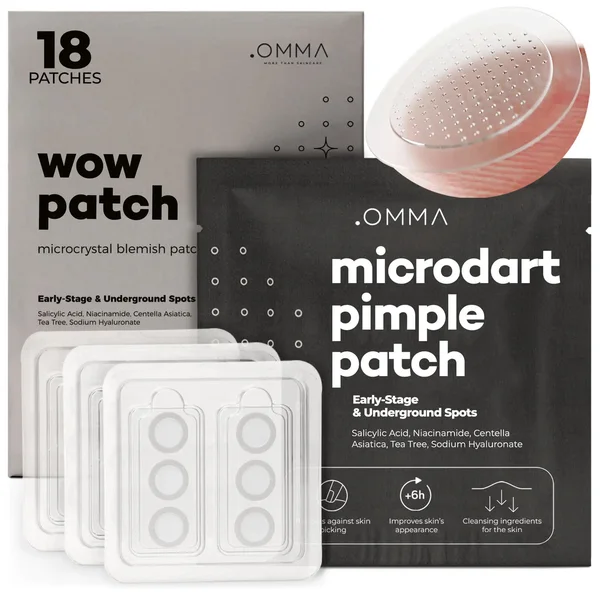
OMMA Microdart Acne Patch
For the tender bump under the skin that has no head yet: 420 self-dissolving microdarts, worn overnight.
Shop at OMMA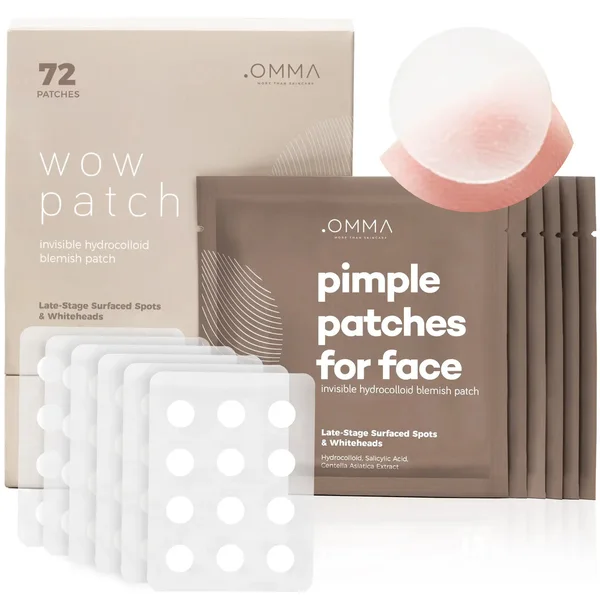
OMMA Hydrocolloid Pimple Patches
For a whitehead that has already come up: the gel absorbs the fluid and the thin patch keeps your fingers off it.
Shop at OMMA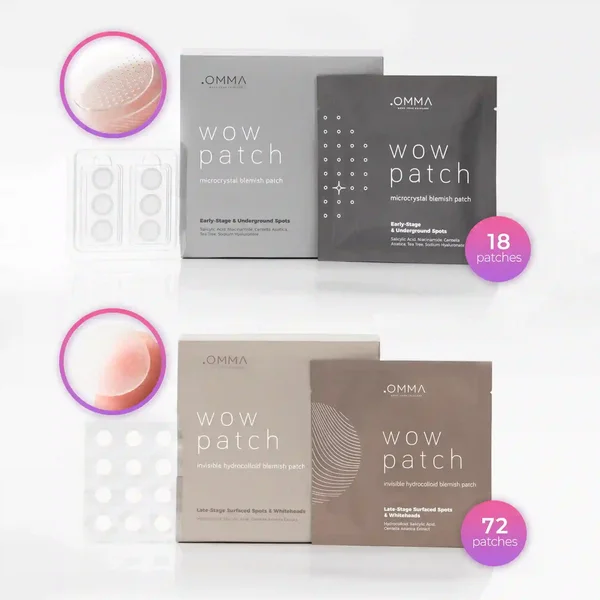
OMMA Pimple Patch Kit
Both patches in one box, for the days when you get both kinds of spots.
Shop at OMMAPatches are for single spots, not a treatment for acne. If you have many inflamed spots or deep cysts, go back to the section above and see a dermatologist.
Frequently Asked Questions
No food has been proven to cause pimples, but high-glycemic foods (white bread, sweets, sugary drinks) and milk, especially skim milk, show the most consistent links in studies. Yogurt and cheese show mixed results.
Nobody knows yet, because there are no trials where people stopped drinking milk and their skin was measured. Studies only show that milk drinkers have acne a little more often. If you want to try, keep a food diary, talk to your doctor and replace the calcium.
There are no studies on soy, oat or almond milk and acne, so there’s no evidence either way. If you switch, choose an unsweetened plant milk fortified with calcium.
In the trials that showed a benefit, people followed a low-glycemic diet for 10-12 weeks before their skin was measured. A few days without sugar won’t tell you much.
Whey protein has been linked to breakouts only in small case reports, mostly in bodybuilders and teenagers who took supplements. That’s very weak evidence, but if your spots started with a new protein powder, it’s worth pausing it and seeing what happens.
Hydrocolloid patches absorb fluid from a whitehead and protect it from picking, and one small trial found spots looked less severe after a week. Microdart patches deliver ingredients into the outer layer of the skin. The studies on both are small, and results vary.
Sources
- Smith RN et al. A low-glycemic-load diet improves symptoms in acne vulgaris patients: a randomized controlled trial. Am J Clin Nutr, 2007. PubMed 17616769
- Kwon HH et al. Clinical and histological effect of a low glycaemic load diet in treatment of acne vulgaris in Korean patients: a randomized, controlled trial. Acta Derm Venereol, 2012. PubMed 22678562
- Cao H et al. Complementary therapies for acne vulgaris. Cochrane Database Syst Rev, 2015. PubMed 25597924
- Juhl CR et al. Dairy Intake and Acne Vulgaris: A Systematic Review and Meta-Analysis of 78,529 Children, Adolescents, and Young Adults. Nutrients, 2018. PubMed 30096883
- Aghasi M et al. Dairy intake and acne development: A meta-analysis of observational studies. Clin Nutr, 2019. PubMed 29778512
- Dai R et al. The effect of milk consumption on acne: a meta-analysis of observational studies. J Eur Acad Dermatol Venereol, 2018. PubMed 30079512
- Penso L et al. Association Between Adult Acne and Dietary Behaviors: Findings From the NutriNet-Santé Prospective Cohort Study. JAMA Dermatol, 2020. PubMed 32520303
- Delost GR et al. The impact of chocolate consumption on acne vulgaris in college students: A randomized crossover study. J Am Acad Dermatol, 2016. PubMed 27317522
- Vongraviopap S, Asawanonda P. Dark chocolate exacerbates acne. Int J Dermatol, 2016. PubMed 26711092
- Caperton C et al. Double-blind, placebo-controlled study assessing the effect of chocolate consumption in Subjects with a History of Acne Vulgaris. J Clin Aesthet Dermatol, 2014. PubMed 24847404
- Jung JY et al. Effect of dietary supplementation with omega-3 fatty acid and gamma-linolenic acid on acne vulgaris: a randomised, double-blind, controlled trial. Acta Derm Venereol, 2014. PubMed 24553997
- Dreno B et al. Multicenter randomized comparative double-blind controlled clinical trial of the safety and efficacy of zinc gluconate versus minocycline hydrochloride in the treatment of inflammatory acne vulgaris. Dermatology, 2001. PubMed 11586012
- Yee BE et al. Serum zinc levels and efficacy of zinc treatment in acne vulgaris: A systematic review and meta-analysis. Dermatol Ther, 2020. PubMed 32860489
- Shields A et al. Safety and Effectiveness of Oral Nutraceuticals for Treating Acne: A Systematic Review. JAMA Dermatol, 2023. PubMed 37878272
- Taha S et al. The mediterranean diet and acne vulgaris: a systematic review and meta-analysis. Nutr Metab (Lond), 2025. PubMed 41194132
- Reynolds RV et al. Guidelines of care for the management of acne vulgaris. J Am Acad Dermatol, 2024. PubMed 38300170
- NICE guideline NG198: Acne vulgaris: management, 2021 (updated 2026). nice.org.uk
- Chao CM et al. A pilot study on efficacy treatment of acne vulgaris using a new method: results of a randomized double-blind trial with Acne Dressing. J Cosmet Sci, 2006. PubMed 16688374
- EFSA. Scientific Opinion on Dietary Reference Values for zinc, 2014. DOI 10.2903/j.efsa.2014.3844
- USDA FoodData Central (SR Legacy) for the zinc values in the table.