Koulourakia (Greek Easter Cookies)
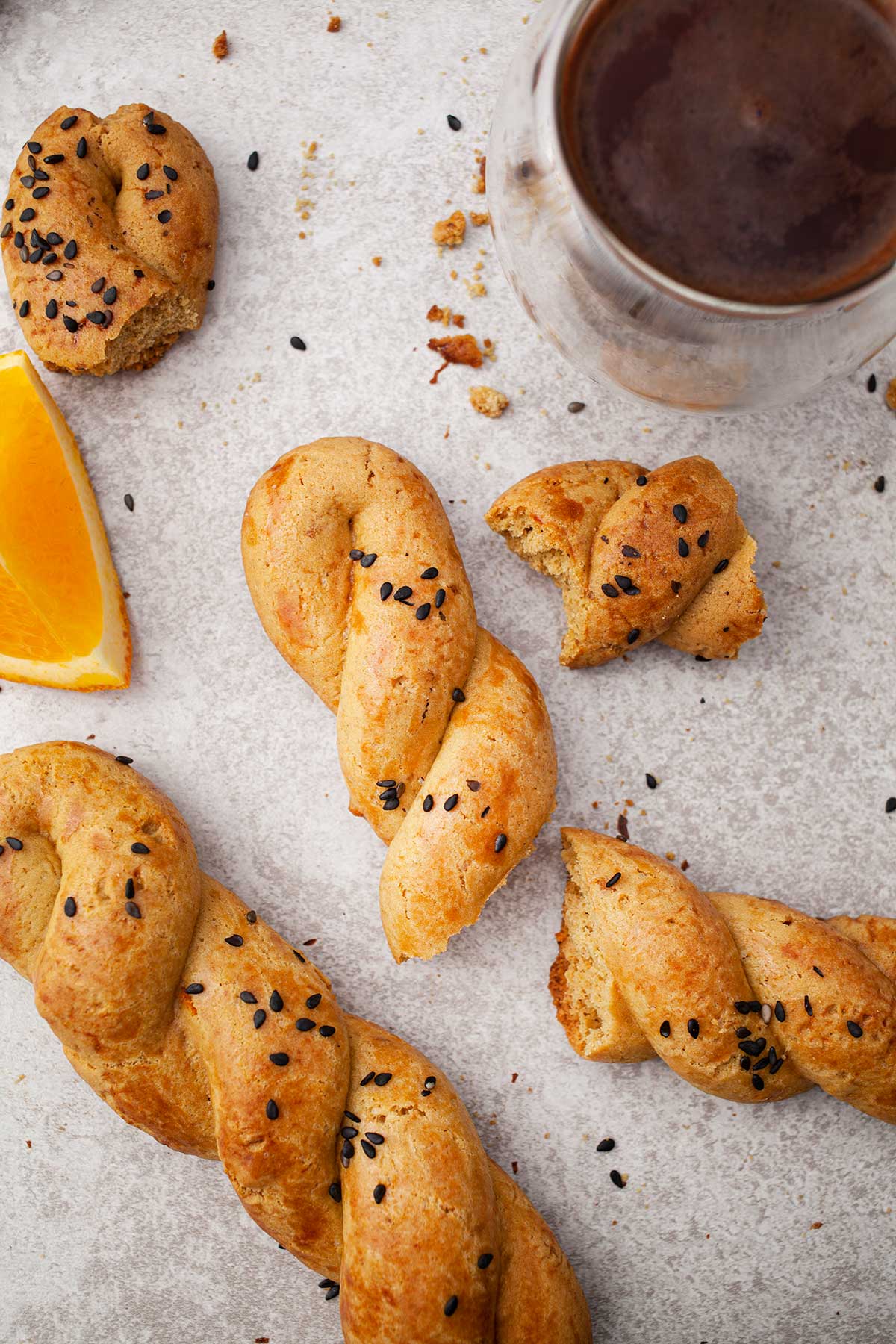
Koulourakia are traditional Greek Easter cookies with a buttery, slightly crumbly texture and a warm vanilla-orange flavour. Shaped into twists, braids, or spirals and glazed with egg, they are one of the most recognisable treats of the Greek Easter table.
Every Greek household has its own koulourakia recipe, passed down through generations, and every family is convinced theirs is the best. The differences are subtle: a little more orange zest here, anise seeds there, a tighter braid or a looser twist. What they all share is that same golden glaze, the faint scent of vanilla, and the satisfying snap when you break one in half.
This recipe is straightforward and reliable. The dough comes together quickly, it shapes easily, and the cookies keep well for over a week in an airtight tin. Make a big batch the day before Easter and you will have enough for family, guests, and a few to keep for yourself.
Why You’ll Love This Recipe
- The dough is forgiving. It holds its shape well when you roll and twist it, and the cookies do not spread much in the oven, so the shapes stay defined.
- They keep beautifully. Stored in an airtight tin at room temperature, koulourakia stay fresh and crisp for 7 to 10 days. They are one of the few cookies that actually improve slightly on day two.
- Great for gifting. Wrap a stack in parchment and tie with twine and you have a simple, beautiful Easter gift that anyone will appreciate.
- Endlessly customisable. The base dough works with many flavour additions. See the variations section below for ideas.
Koulourakia vs. Koulouri
These are two different things, though the names sound similar. Koulouri are large ring-shaped sesame bread rings sold on street corners across Greece and Turkey, made from a plain yeasted dough. Koulourakia are sweet, buttery cookies, much smaller, and made without yeast. Koulourakia are richer, sweeter, and perfumed with vanilla and orange. Both are Easter staples in Greece but they are completely different in texture and purpose: koulouri is a bread snack, koulourakia is a dessert cookie.
Ingredient Notes
Butter: Use unsalted butter at room temperature so it creams properly with the sugar. Cold butter will not incorporate well and the dough will be uneven. Soften it for at least 30 minutes before you start.
Orange zest: This is non-negotiable in a traditional koulourakia recipe. Use an unwaxed orange if possible and zest it finely so the flavour distributes evenly through the dough without leaving chewy bits.
Vanilla: Pure vanilla extract gives a better result than vanilla sugar or artificial vanilla. The flavour is more rounded and less synthetic.
Sesame seeds: Optional but traditional. Press them lightly onto the shaped cookies before baking so they stick to the egg wash. They add a subtle nuttiness and a nice visual texture.
Egg wash: Beat one egg with a splash of milk and brush it on just before the cookies go into the oven. This is what gives koulourakia their characteristic deep golden glaze.
How to Shape Koulourakia
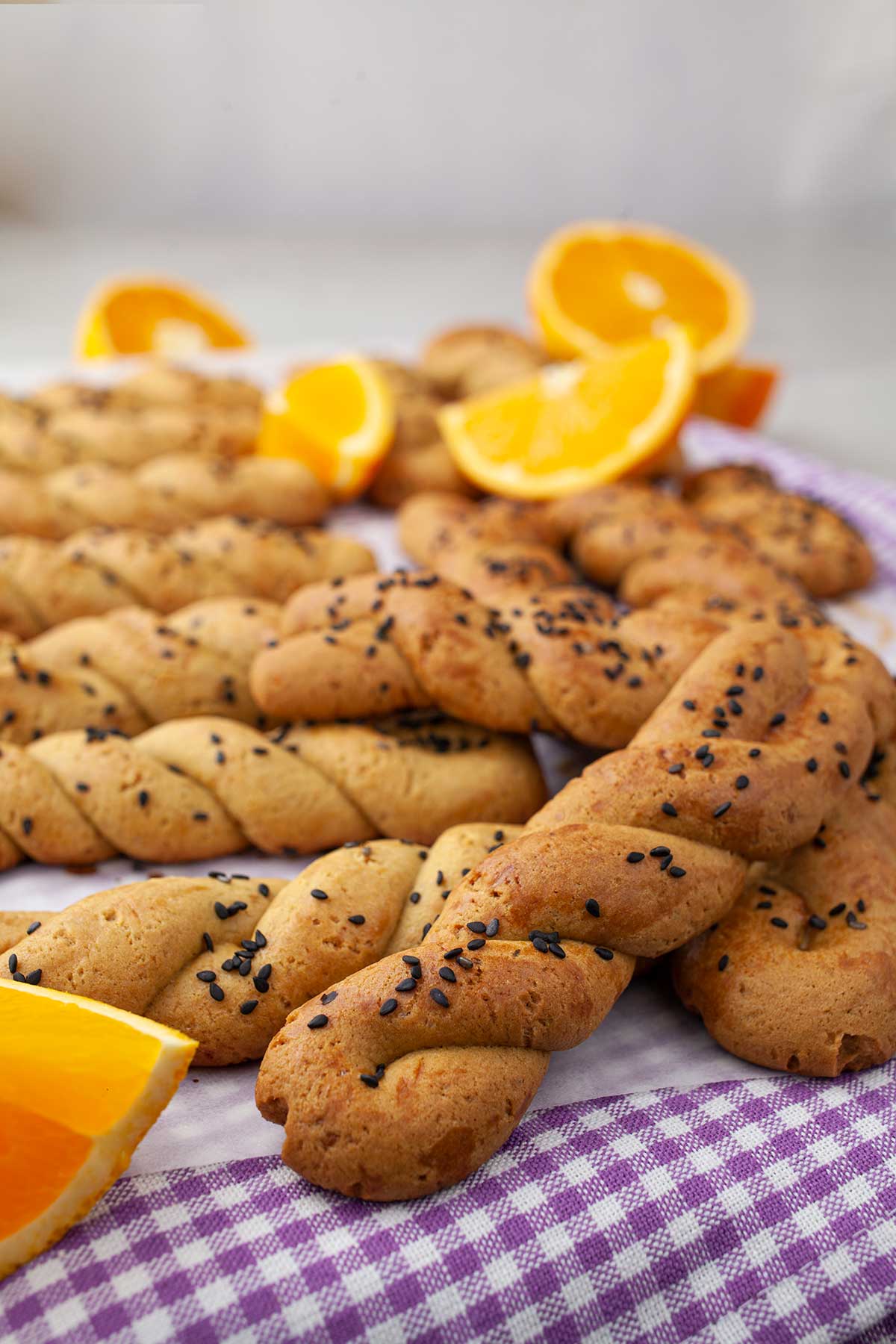
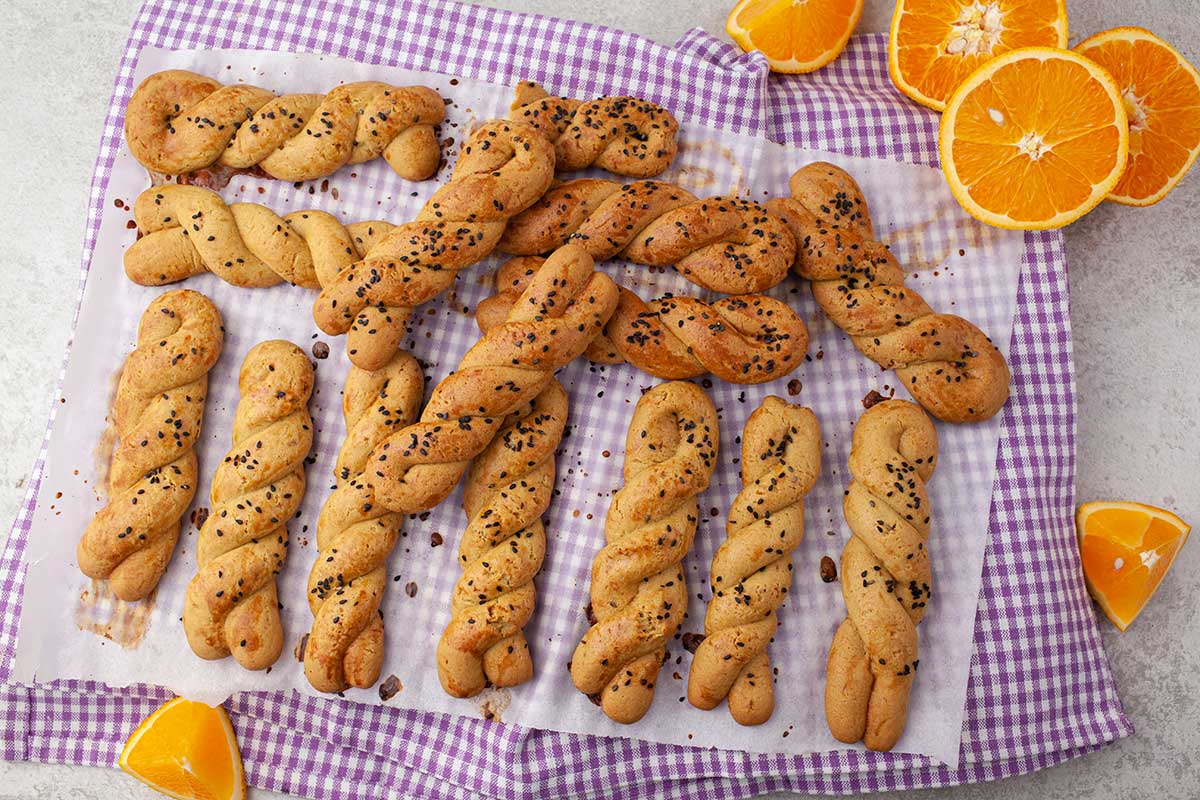
Shaping is the most enjoyable part of making koulourakia and there are no rules. The three most common shapes are:
- Twist: Roll a piece of dough into a rope, fold it in half, and twist the two strands around each other. Press the ends together to seal.
- Braid: Divide a portion of dough into three equal ropes and braid them together. This takes slightly more time but looks impressive on a serving plate.
- Spiral: Roll a rope and coil it into a tight circle, pressing the end underneath. This is the quickest shape and works well for children to help with.
Keep the ropes roughly the same thickness so all the cookies bake at the same rate. Thicker cookies will need a minute or two more; thinner ones can overbrown quickly, so keep an eye on the oven toward the end of baking.
Flavour Variations
The base dough is a good canvas for other flavours. Some combinations that work well:
- Anise or mahlab: Both are traditional Greek additions. Anise gives a gentle liquorice note; mahlab adds a slightly cherry-almond warmth that is hard to describe but very good.
- Lemon zest: Swap the orange for lemon or use both together for a brighter, more citrusy flavour.
- Cinnamon and cloves: A pinch of each gives the cookies a warmer, spiced quality that works well in autumn or winter batches.
- Cocoa: Replace about 20g of the flour with cocoa powder for a chocolate version. Pairs well with a little orange zest in the dough.
- Chopped nuts: Fold in finely chopped walnuts or almonds for added texture. Press a halved almond on top of each cookie before baking as a decoration.
Storage and Make Ahead
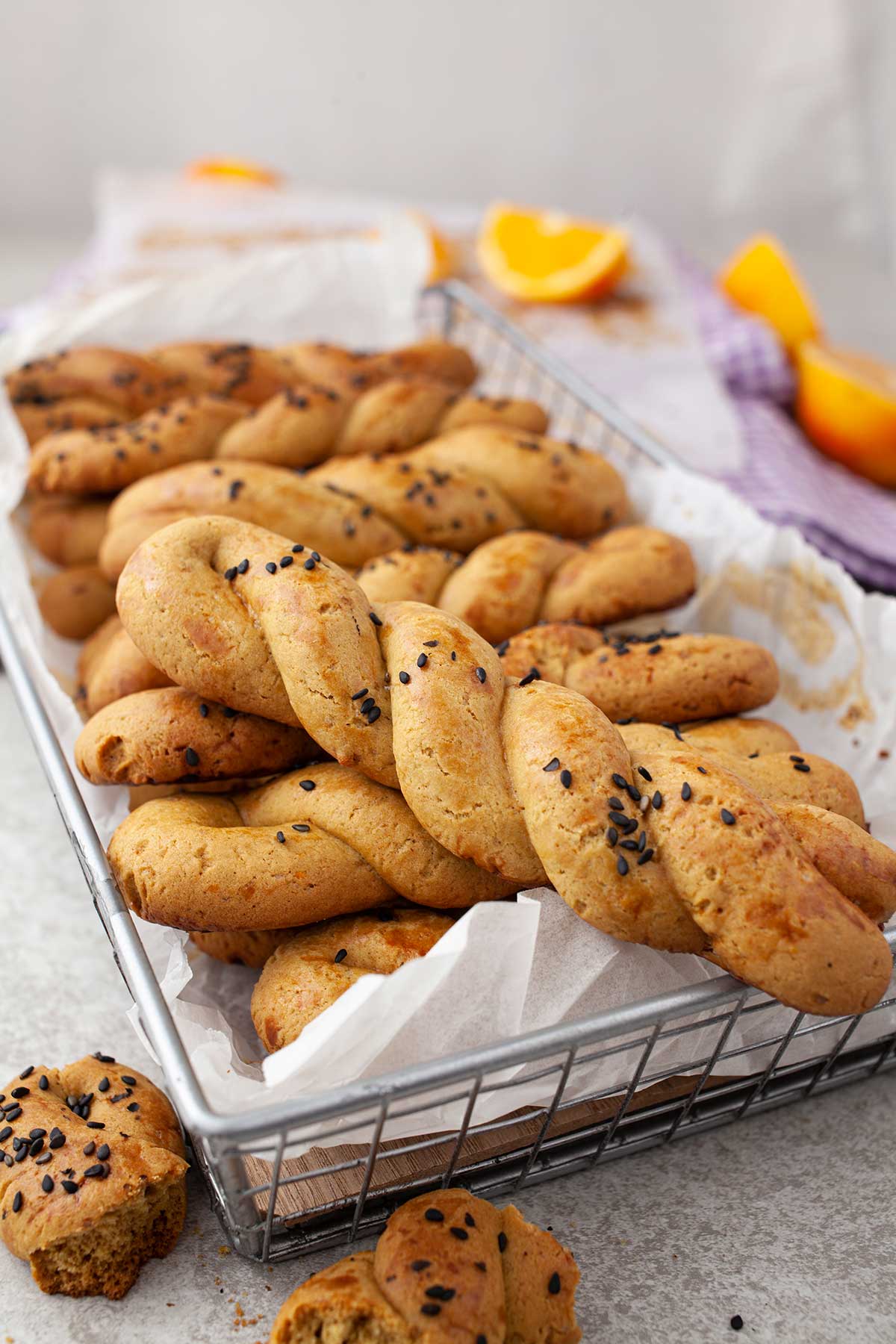
Koulourakia store exceptionally well, which makes them ideal for Easter baking in advance. Once fully cooled, transfer to an airtight tin or container and keep at room temperature. They stay crisp and fresh for up to 10 days. Do not refrigerate them as the moisture softens the texture.
The unbaked dough can also be frozen. Shape the cookies, place them on a lined tray, and freeze until solid before transferring to a freezer bag. Bake from frozen at the same temperature, adding 3 to 4 minutes to the baking time. Baked cookies can also be frozen for up to 2 months.
Looking for more Easter baking ideas? Try the Easter Swiss Roll, Easter Trifle, or browse all Easter desserts.
Summarise & Save This Recipe
★ Add us as a trusted Google source
Koulourakia (Greek Easter Cookies)
Ingredients
- 125 g ½ cup butter, soft
- 250 g 1 ¼ cup sugar
- 2 eggs
- 2 teaspoons of vanilla
- 2 teaspoons grated orange peel
- 500 g 1 ¼ cup flour
- 1 tsp baking powder
- ¼ cup milk
- 2 tablespoons of black sesame for topping
Instructions
- Heat the oven to 180C (360F) and line two large baking sheets with baking paper.
- In a bowl, add butter, sugar, eggs, vanilla and grated orange peel.
- Beat with a mixer until you get a creamy texture.
- Add the flour and mix until you get a crumbly dough.
- Tear off a piece of the dough, approximately the size of a spoon.
- Shape each piece into long and thin sticks, about 30 cm long.
- Fold and twist them in a spiral shape. Place the formed cookieson the prepared baking trays.
- Brush the cookies with milk and sprinkle with black sesame. Put in the oven for 25 minutes or until browned.
Notes
Frequently Asked Questions
The dough is likely too dry or too cold. Make sure the butter is properly softened before you start, and if the dough feels stiff or crumbly when you try to roll it, let it rest at room temperature for 10 minutes before shaping. Adding a teaspoon of milk at a time can also help bring it together without making it sticky.
The eggs in the dough provide structure and richness, so replacing them takes a little adjustment. A flax egg (1 tablespoon ground flaxseed mixed with 3 tablespoons water, left to gel for 5 minutes) works reasonably well as a substitute. For the egg wash, brush with plant-based milk instead. The texture will be slightly different but still very good.
They should be a deep golden colour on top and the bottoms should be lightly browned when you lift one with a spatula. They will still feel slightly soft in the centre when they come out of the oven, which is normal. They firm up to a crisp, crumbly texture as they cool completely on a wire rack. Do not overbake or they become dry and hard.
Koulourakia are traditionally made for Greek Orthodox Easter, specifically on Holy Thursday, the day before Good Friday. They are part of the Easter table alongside dyed red eggs and other seasonal foods. Outside of Easter, they are also commonly made for other celebrations and as everyday cookies enjoyed with coffee or milk throughout the year.