
Thai Peanut Noodles
These Thai peanut noodles come together in under 20 minutes and are packed with flavor: a creamy, spicy-sweet peanut sauce over rice noodles, crisp stir-fried vegetables, and smoked tofu. It is a fast, plant-based main that tastes like takeout but is high in protein and made entirely from real ingredients you can pronounce.
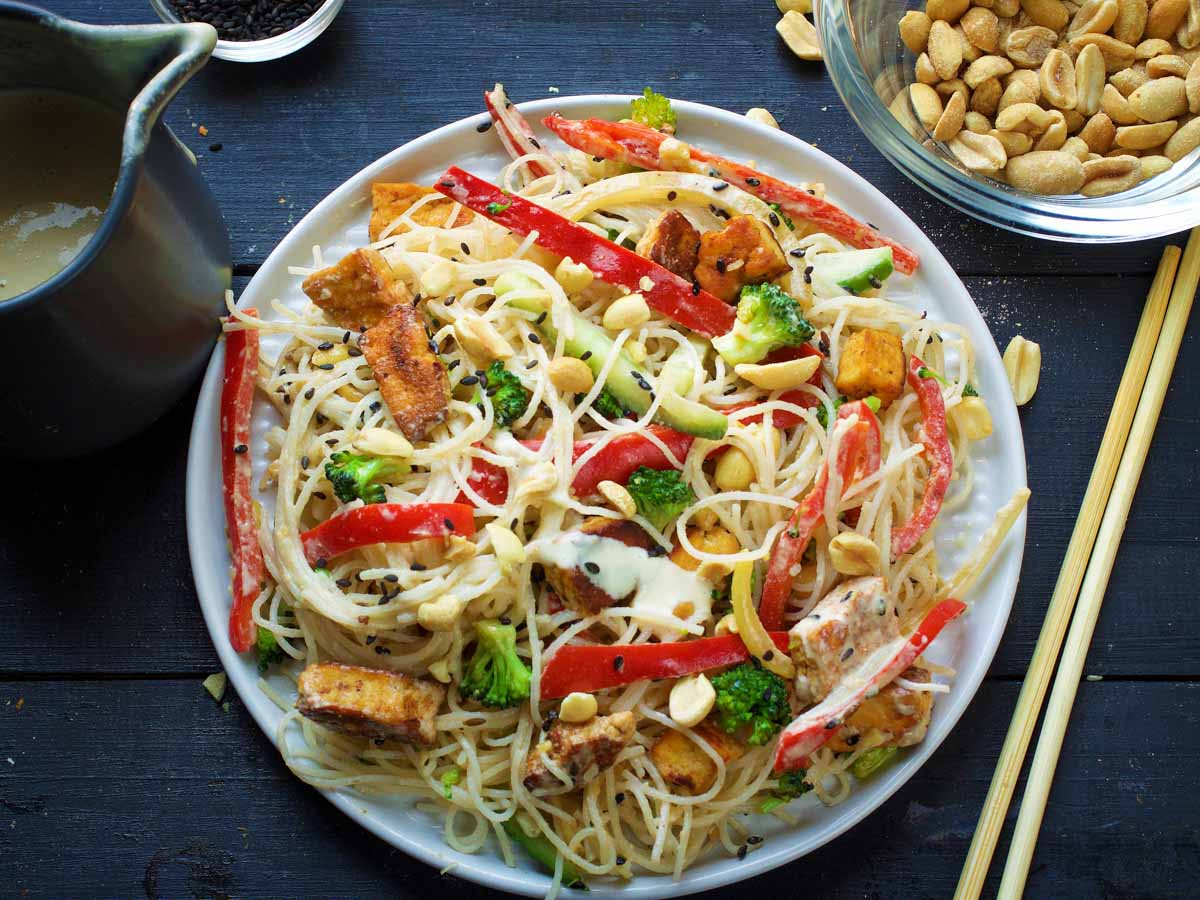
Peanut sauces are a staple of Thai cooking, and I simply love them, so I couldn’t miss showing you my favorite Thai peanut noodles as part of this month’s vegan noodle recipes lineup. The base of any good Thai peanut sauce is, of course, peanut butter. You can use store-bought or make it yourself in a blender with roasted peanuts (here’s how I make my homemade peanut butter). Every time I make peanut sauce, I also add a little sesame oil. I use it for sushi as well and add it to almost any Asian recipe I cook.
The Ingredients That Make This Sauce Sing
The sauce is where all the character lives, and it is built from just a handful of pantry staples. Creamy peanut butter gives it body; soy sauce (or tamari, if you keep it gluten-free) brings the salty umami; maple syrup rounds out the edges with a gentle sweetness; and fresh ginger and garlic keep it bright instead of heavy. A little warm water loosens everything into a pourable, drizzle-friendly consistency.
Sriracha is another favorite of mine and can’t be missing from my spicy Asian-inspired recipes. I love spicy food and have a high tolerance for it, but if you don’t usually eat spicy, add less sriracha. This is what I usually do when I cook for a mixed crowd: start light, taste, and add more only if you want the heat. If you love the burn as much as I do, you’ll find plenty more ideas in my collection of hot and spicy vegan recipes.
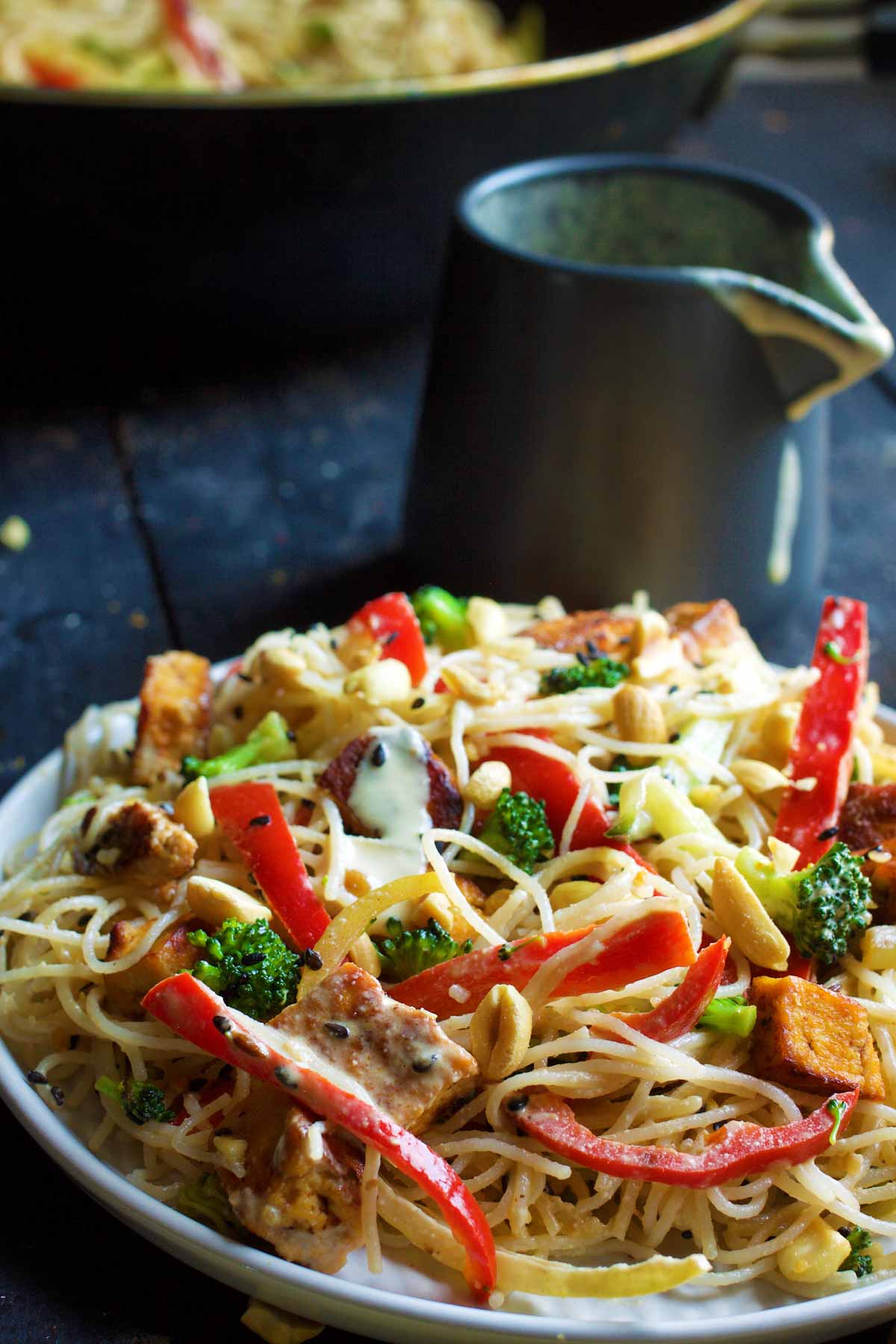
Why the Sauce Comes Together in a Blender
Blending the sauce instead of whisking it by hand does two things. First, it emulsifies the peanut butter with the warm water and oil so the sauce turns silky rather than grainy or split. Second, it pulverizes the raw ginger and garlic completely, so their flavor distributes evenly through every bite instead of landing in one sharp mouthful. Warm water matters here too: peanut butter thins far more easily into warm liquid than cold, which is why the sauce loosens smoothly without needing extra oil.
Tips for Getting It Right
Rice noodles are the one thing that can go wrong, so treat them gently. Soak them in hot water only until just tender, following the package timing, since they keep softening once they hit the hot wok. Stir-fry the vegetables on medium heat for just a few minutes so the bell pepper, onion, and broccoli stay crisp and colorful rather than turning soft. Toast the smoked tofu lightly before it goes in so it holds its shape and firms up at the edges. Taste your sauce before serving and adjust: more soy for salt, more maple for balance, more sriracha for heat.
How I Make It More Filling
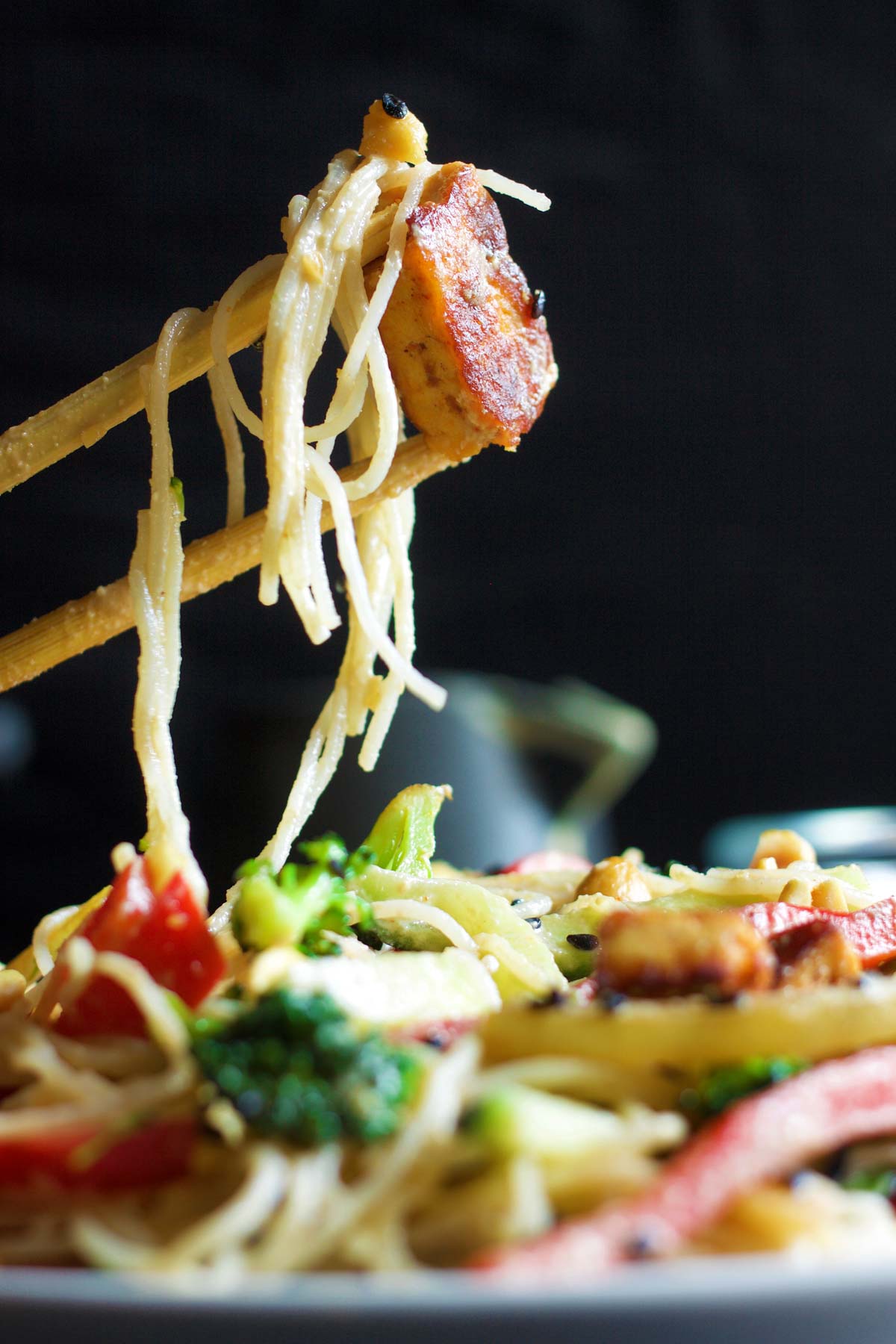
To make these Thai noodles more filling and high in protein, I added some smoked tofu chunks. Between the tofu, the peanuts, and the peanut butter in the sauce, this bowl carries real staying power, which is one of the reasons it works so well as a full meal rather than a side. If you want to understand where that protein comes from on a plant-based plate, I’ve written more about protein in the vegan diet. The chopped roasted peanuts on top also add crunch, so every forkful has a bit of texture against the soft noodles.
What to Serve Alongside
This bowl is a complete meal on its own, but it plays beautifully with a few other Asian-inspired dishes if you’re feeding a crowd or want a small spread. Crispy vegetarian tempura makes a great starter, and a warm bowl of soba noodles with mushrooms rounds things out if you want a second noodle option with a different flavor profile. For more ways to use that jar of peanut butter beyond the sauce, browse my recipes with peanut butter.
Make-Ahead and Storage
The peanut sauce is the ideal make-ahead component. Blend it up to three or four days in advance and keep it in a sealed jar in the fridge; it will thicken as it chills, so just stir in a splash of warm water to bring it back to a drizzle. Leftover assembled noodles keep for two to three days in an airtight container, though rice noodles are always at their best fresh and just tender. If you love a good noodle bowl, you’ll find plenty more in my roundup of vegan noodle recipes to keep in rotation.
If you make these Thai peanut noodles, I’d love to know how much sriracha you went for and whether you kept the veggies crisp. Give the recipe a star rating below and leave a comment with your tweaks, so other readers can find the version that suits their spice tolerance.
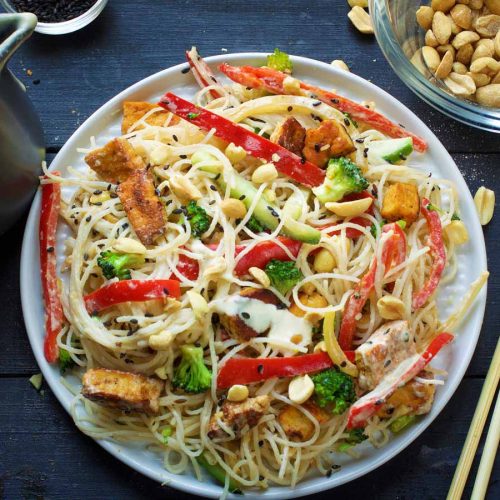
Thai Peanut Noodles
Ingredients
- 200 g rice noodles
- 1 red bell pepper sliced into thin strips
- 2 cucumber sliced into thin strips
- 100 g broccoli cut into small florets
- 1 onion sliced
- 80 g peanuts lightly salted roasted, roughly chopped
- 250 g smoked tofu sliced, lightly toasted
- black sesame seeds for garnish
- 1 tsp coconut oil
Peanut Sauce:
- 80 g peanut butter creamy
- 60 g water warm
- 3 Tbsp soy sauce or tamari
- 2 Tbsp maple syrup
- 1 Tbsp sriracha
- 1 ½ Tbsp fresh ginger peeled and minced
- 1 Tbsp garlic minced
- 1 Tbsp sesame oil
Instructions
- Soak the noodles in hot water according to the directions on the package, then drain.
- Meanwhile, prepare the peanut sauce: in a food processor, combine all the sauce ingredients and blend until smooth.
- In a wok, heat a teaspoon of coconut oil over medium heat.
- Add the bell pepper, onion, and broccoli, and stir-fry for about 3 minutes.
- Add the toasted tofu and drained noodles and toss everything together.
- Top with the cucumber strips and chopped peanuts, sprinkle with black sesame seeds, and serve with the peanut sauce drizzled on top.
Notes
Frequently Asked Questions
Yes, this recipe is fully vegan. The peanut sauce is sweetened with maple syrup instead of honey, the protein comes from smoked tofu, and every other ingredient (rice noodles, vegetables, peanuts, soy sauce, sriracha) is plant-based. Use tamari in place of soy sauce if you also need it gluten-free.
The heat comes entirely from the sriracha, so simply add less. I love spicy food and have a high tolerance for it, but when cooking for people who don’t, I start with a small amount, taste, and add more only if needed. You can also leave the sriracha out completely and serve it on the side.
Yes, the sauce is perfect for making ahead. Blend it and store it in a sealed jar in the fridge for up to three or four days. It thickens as it chills, so stir in a splash of warm water to loosen it back to a pourable drizzle before serving.
Smoked tofu is what I use to make these noodles more filling and high in protein, and it adds a lovely savory depth. If you can’t find it, plain firm tofu works too; toast it lightly and it will soak up the peanut sauce. The peanuts and peanut butter also contribute plenty of protein on their own.
This recipe uses rice noodles, which soak in hot water rather than boil and stay pleasantly soft under the sauce. Soak them only until just tender, since they keep softening in the hot wok. If you want to swap, any thin Asian-style noodle you’d use in a stir-fry will carry the peanut sauce well.
Absolutely. Store-bought creamy peanut butter works perfectly in the sauce, or you can make your own in a blender with roasted peanuts. Whichever you use, a little sesame oil blended in gives the sauce that extra layer of Asian flavor I add to almost every dish like this.



How long do you think a fresh peanut sauce like this would keep in the fridge?
I’d keep it for about a week.
This was delicious!
Glad you liked it! 😀
The peanut sauce was so good! I made more and used it as a salad dressing too. Thank you for the recipe!
You’re welcome!