
Vegan Biryani
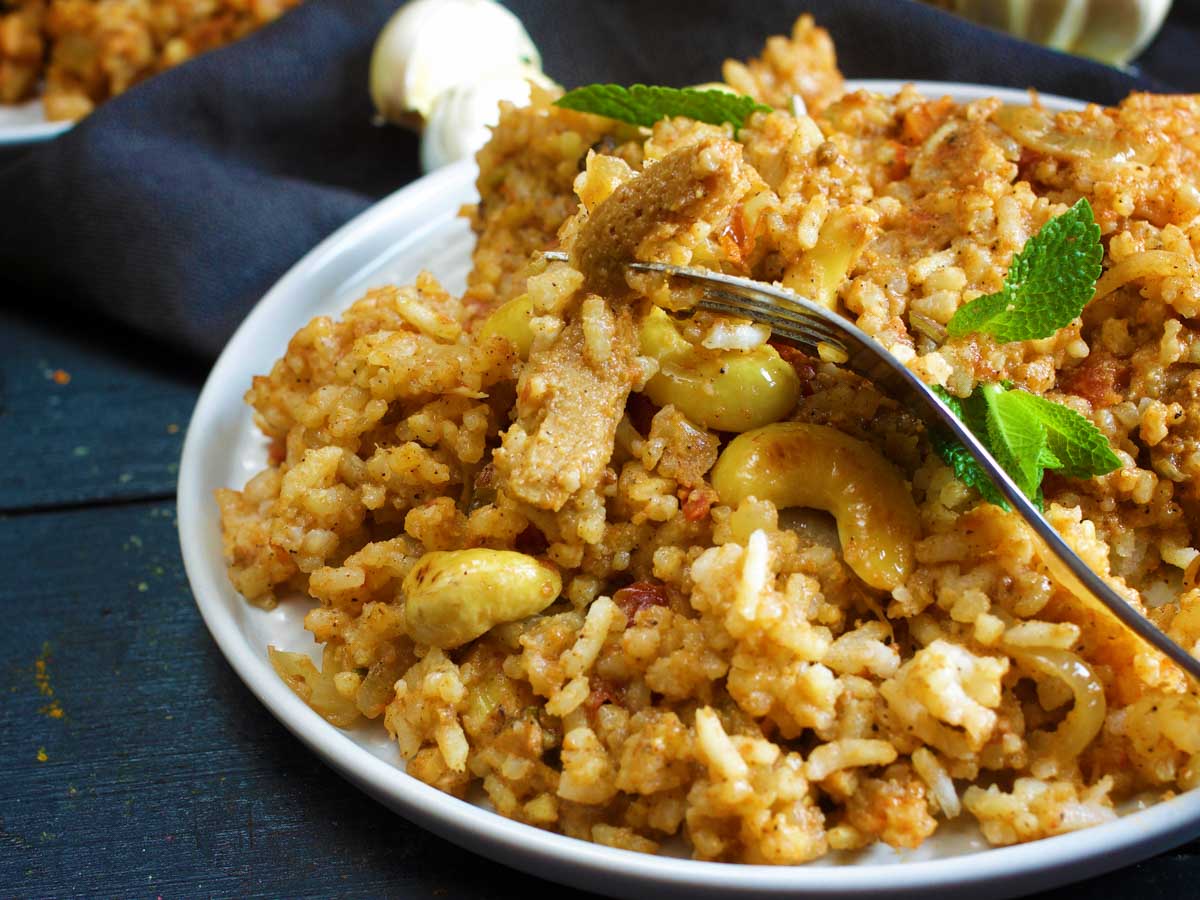
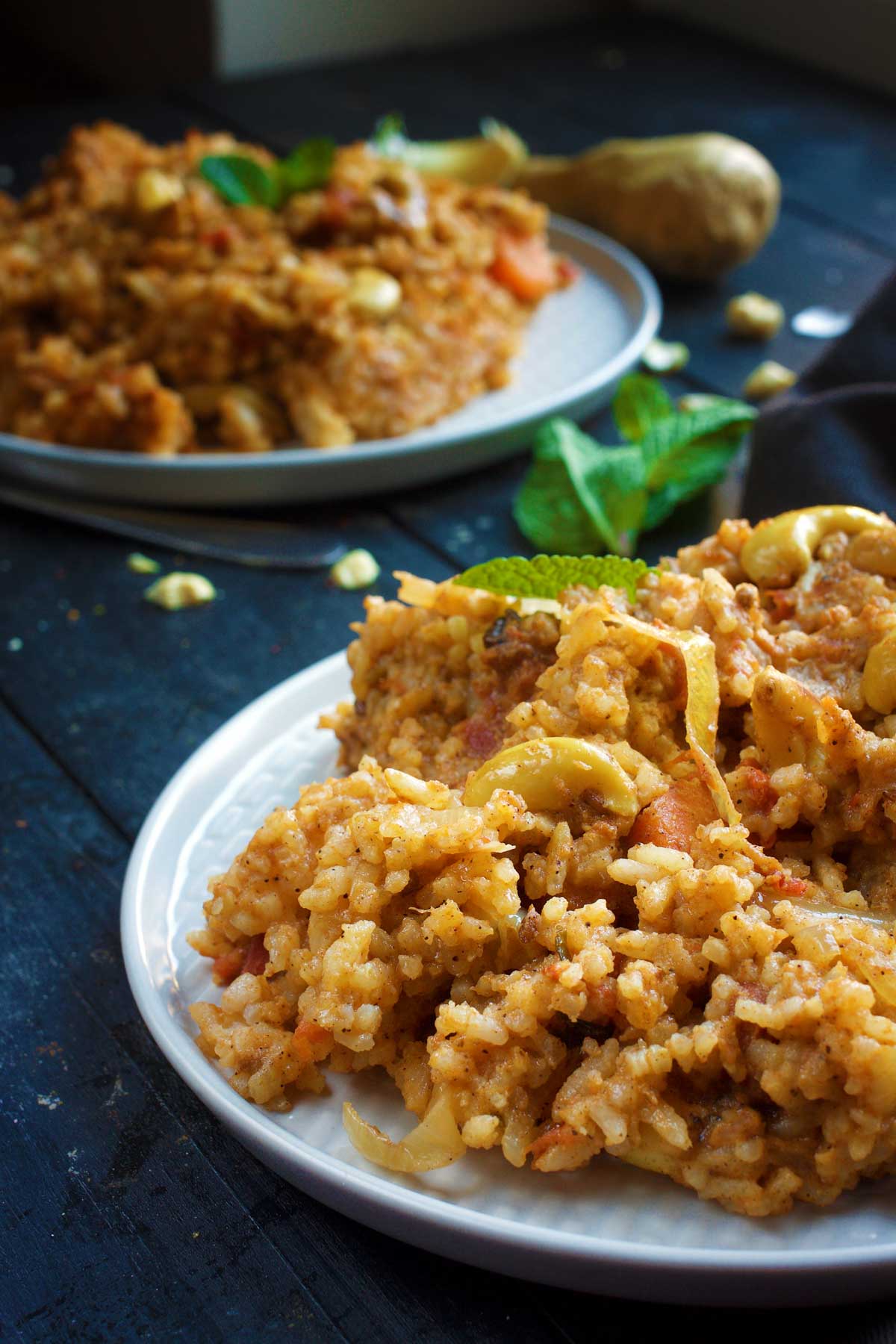
This vegan biryani is a rich, spice-layered Indian rice dish built from basmati, a silky cashew paste, golden onions and hearty soy chunks that stand in for meat. It delivers all the warmth and aroma of a classic biryani without any dairy or animal products, and it happens to be high in protein too. If you have ever wondered whether a plant-based version can taste as satisfying as the traditional one, this recipe is my answer: yes, and you can make it at home with pantry spices.

What Makes This a Real Biryani, Minus the Meat
Traditional biryani is made with basmati rice, a yogurt-based sauce, a long list of spices and a meat such as lamb or chicken. The vegan version keeps the soul of the dish intact and swaps the two animal-based parts: the yogurt sauce becomes a smooth cashew paste, and the meat becomes textured soy protein chunks. Everything else, the whole spices, the aromatics, the layering, stays true to the original. That is why it still reads as biryani on the plate and not as a generic spiced rice.
I love textured soy protein here because it mimics meat perfectly. Just make sure you buy non-GMO only. Soaked and seasoned, the chunks soak up the spice base and give the dish that substantial, meaty bite people expect from a proper biryani.
The Ingredients That Do the Heavy Lifting
Most of the magic in this dish comes from a handful of key components. Here is what each one brings and how to choose it:
- Basmati rice is the classic choice for its long, separate grains and floral aroma. Brown rice works too if you prefer more fiber, though it will need a longer cook and a little more water.
- Textured soy protein chunks replace the meat. Soak them first so they hydrate and turn tender before they hit the pan. Buy non-GMO.
- Raw cashews, soaked, blend into the creamy paste that replaces yogurt. A second portion of roasted cashews goes in at the end for texture and richness.
- Whole spices such as cumin seeds, cloves, cardamom pods, cinnamon stick and bay leaves are what give biryani its signature depth. They are toasted rather than added ground, which pulls out far more aroma.
- Ground spices including chili powder, coriander, garam masala and turmeric build the color and the warm, layered heat.
- Coconut oil carries the fat-soluble aromatics and adds a subtle roundness that suits the spice blend.
Why This Method Works
A few of the steps here are not just tradition, they are the reason the dish tastes the way it does. Dry-frying the cumin seeds for a minute before any oil goes in wakes up their volatile oils and gives you that toasted, nutty aroma you cannot get from raw seeds. Sauteing the whole and ground spices in hot fat next is called blooming, and it dissolves the fat-soluble flavor compounds so the spice reaches every grain of rice instead of sitting on the surface. Cooking the rice separately and folding it in near the end keeps the grains distinct rather than mushy, which is exactly the texture a biryani should have.
Tips for Getting It Right
- Soak ahead of time. Both the cashews and the soy chunks need soaking. Raw cashews blend into a smoother paste when they have softened, and the soy hydrates fully so it does not stay chewy in the center.
- Want a smoky, meaty flavor? If you want it to have a “meaty”, smoky flavor, I recommend you add some smoked paprika in the water in which you soak the soy. It will taste even better and deepen that savory note.
- Do not over-blend the paste. Use as little water as possible when blending the cashews, garlic and ginger so the paste stays thick and does not water down the pan.
- Toast, then bloom. Dry-fry the cumin seeds first, then add oil and the rest of the whole spices. This two-stage approach maximizes the aroma.
- Add liquid only if needed. When you fold the rice in at the end, splash in a little extra liquid only if the mixture looks dry. You want it fragrant and fluffy, not wet.
Easy Swaps and Variations
- Rice: basmati is traditional, but brown rice works for a nuttier, higher-fiber version. Adjust cook time and water accordingly.
- Protein: the soy chunks are the star, but the technique also suits other hearty plant proteins if you have them soaked and ready.
- Heat level: the chili powder sets the base heat. Scale it up or down to taste, or add fresh chili if you like it fiery.
- Nut-free note: the cashews create the creamy sauce, so this particular recipe leans on them. Keep them in for the intended texture.
What to Serve With Vegan Biryani
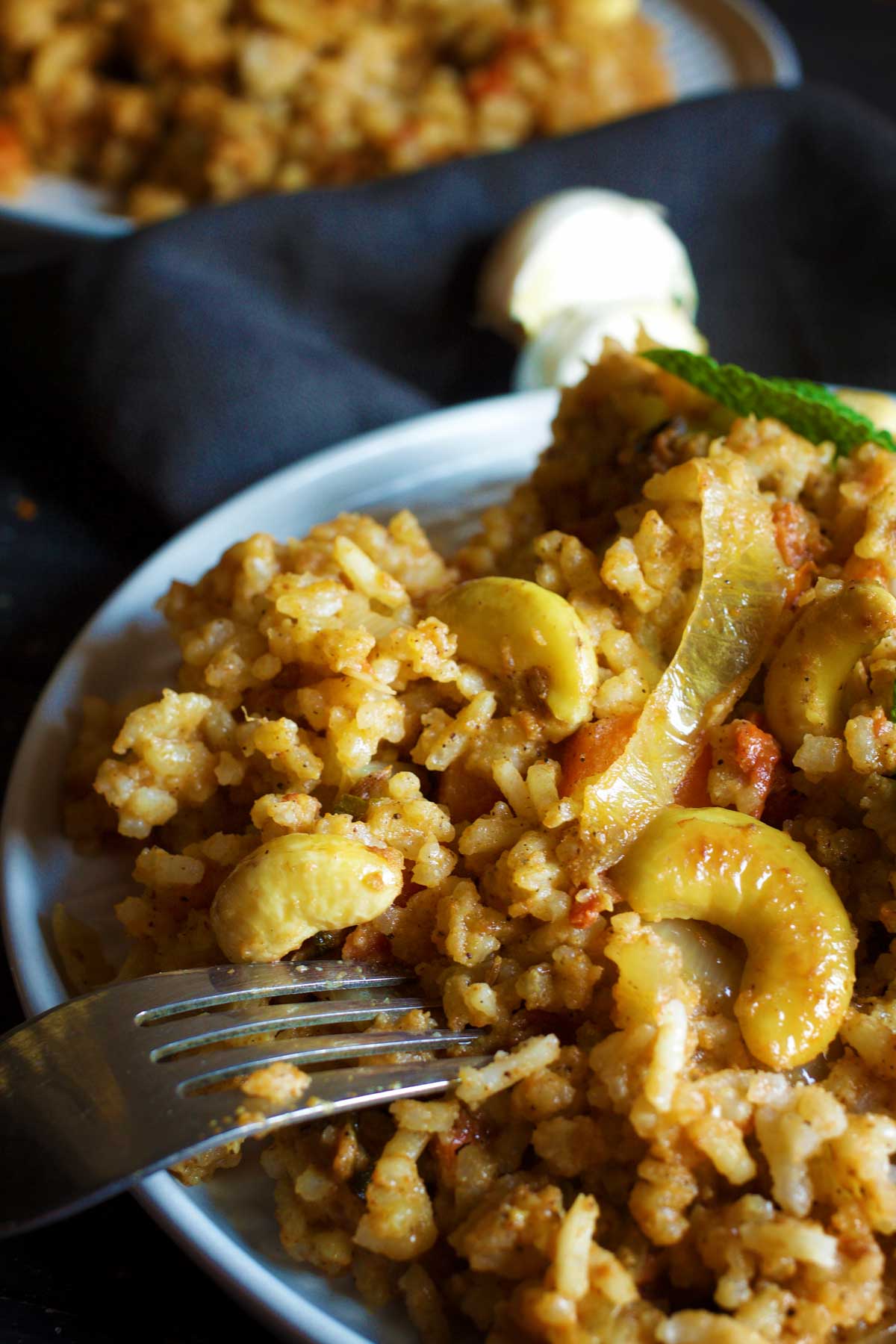
Biryani is a full meal on its own, but a few sides round it out beautifully. Finish it with chopped mint leaves on top for freshness, and serve it with a simple cucumber salad or a bowl of something warm alongside. If you are building an Indian-inspired spread, a light soup makes a lovely starter, and my vegan red lentil soup pairs the same warm-spice palette with a lighter, brothy contrast. For a heartier plant-based table, you could round out the menu with healthy vegan falafel for a protein-rich starter your guests can nibble on while the biryani finishes.
Storage and Make-Ahead
Biryani stores well, which makes it a great candidate for batch cooking and weekday lunches. Once cooled, keep leftovers in an airtight container in the fridge for up to four days. Reheat gently on the stovetop or in the microwave with a splash of water so the rice loosens back up and does not dry out. You can also freeze it: portion it into containers, freeze for up to two months, and thaw overnight in the fridge before reheating. The cashew paste and spice base can be prepped a day ahead if you want to split the work, which turns dinner into a quick assembly job. If you like cooking in big batches like this, you might enjoy browsing more of my vegan meal-plan ideas and hearty mains such as vegan lasagna with mushrooms for the nights you want to cook once and eat well all week.
If you make this vegan biryani, I would love to know how it turned out. Did you try the smoked-paprika trick with the soy chunks, or add your own twist to the spice blend? Leave a star rating and drop a comment below to tell me how yours came together.

Vegan Biryani
Ingredients
- 1 ½ cups basmati rice or brown rice
- 2 carrots diced
- 4 tablespoons coconut oil
- 2 onions medium
- 4 cloves garlic
- 2 tsp ginger grated
- 3 tomatoes cubed
- 2 cups textured soy protein chunks, soaked
- ½ cup cashews raw, soaked
- 1 tsp chili powder
- 2 tsp cumin seeds
- 4 cloves
- 3 cardamom pods
- 2 tsp ground coriander
- 2 tsp garam masala
- 2 tsp turmeric
- 1 cinnamon stick
- 2 bay leaves
- ½ cup cashews roasted
- salt to taste
Instructions
- In a small pot, add the rice and water (about 5-6 cups) and bring to a boil over high heat. Reduce the heat to the lowest setting and cook, covered, for 15 minutes. Remove from the heat and let it sit, covered, for 10 minutes. Strain off the excess water.
- In a food processor, blend the soaked cashews, garlic, ginger, and 1 teaspoon of the cumin seeds into a smooth paste, using as little water as possible. Set aside.
- Heat a large pan over medium-high heat, add the rest of the cumin seeds and let them dry-fry for a minute. Then add a little oil to the pan, followed by the cinnamon stick, cloves, cardamom pods, chili powder, ground coriander, garam masala, turmeric, and bay leaves. Sauté for a minute.
- Add the blended cashew paste and sauté for one more minute.
- In a small pan with a little oil, stir-fry the onions until golden-brown, then move them into the spice and cashew mix in the large pan. Add the carrots and continue to cook for another 5 minutes.
- Now add the tomatoes and hydrated soy chunks, mix well, and let the mixture cook for 5 minutes.
- Once the mixture is ready, add the rice and roasted cashews.
- Cover with a lid and let the vegetable biryani cook for 5-7 more minutes. Add a little more liquid if needed.
- Serve with chopped mint leaves on top.
Notes
Frequently Asked Questions
Yes. Every ingredient is plant-based. The traditional yogurt sauce is replaced with a smooth cashew paste and the meat is swapped for textured soy protein chunks. There is no dairy, egg, honey or other animal product in the recipe.
This recipe uses textured soy protein chunks, soaked before cooking so they hydrate and turn tender. They mimic the bite of meat and soak up the spice base well. Choose non-GMO soy for the best quality.
Yes. Basmati is the classic choice for its long, separate grains and aroma, but brown rice works for a nuttier, higher-fiber version. It needs a longer cook time and a little more water than basmati.
Add some smoked paprika to the water in which you soak the soy chunks. The paprika infuses the soy as it hydrates and gives the finished dish a deeper, smoky-savory note that reads as meaty.
Dry-frying the cumin seeds and blooming the whole spices in hot oil releases their fat-soluble aroma compounds. This spreads the flavor through the whole dish rather than leaving it on the surface, which is what gives biryani its signature depth.
Cool it, then keep it in an airtight container in the fridge for up to four days, or freeze for up to two months. Reheat gently on the stovetop or in the microwave with a splash of water so the rice loosens back up instead of drying out.






03-20-23: Your recipe for: Vegan Biryani sounds like it would make a rice lover out of the blandest of rice palettes. It sounds flavorfully vibrant and wonderful, all the while waking up the taste buds. A ‘Zing’! of a rice recipe like: Vegan Biryani could make allowances for a quicker timed meat, chicken or fish accompany-ment on the same plate. Appreciate the cooking lesson today! Thanks!
Love Indian food! Will try this one tonight. Looks so good!
Let me know if you liked it! 🙂