
Easy Vegetarian Tempura
Vegetarian tempura is a light, crispy Japanese-style batter fried around vegetables like zucchini, eggplant and red bell pepper. This version is completely vegan: instead of the traditional egg yolk, it uses aquafaba (the water from a can of chickpeas) plus a little psyllium husk to bind the batter, so you still get that shatter-crisp coating without any egg. It comes together fast and makes a fun starter or light meal served with a good dipping sauce.
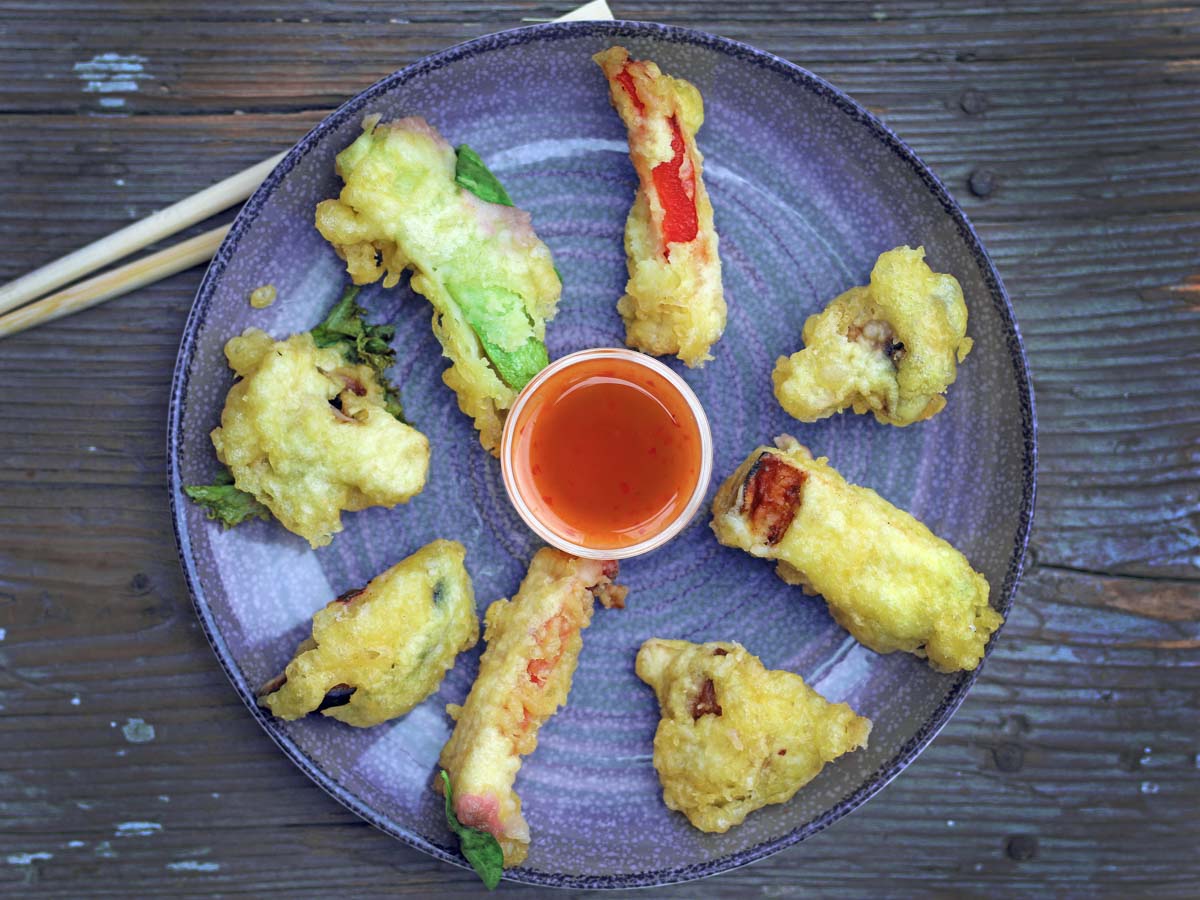
This one came out of my Asian recipes challenge, part of my project of exploring the world cuisines and veganizing their most popular recipes. I discovered so many interesting dishes, and turning some of them vegan was quite difficult. The challenge here was finding something that could replace the egg yolk. After some testing, I landed on psyllium husks, the same ingredient I use in all my vegan patties, and it worked beautifully. One fun fact I stumbled on along the way: tempura actually has Portuguese origins. It was a shock to me too. It was brought to Japan and became the crisp, delicate fried dish we know today.
What you need for the batter and vegetables
The vegetables are flexible: I use zucchini, eggplant and red bell peppers cut into roughly 1 cm sticks so they cook through in the same time it takes the coating to crisp. The batter is where the technique lives. Aquafaba, whisked until frothy, stands in for the egg and helps the coating cling and puff. Cold sparkling water keeps the batter airy, cornstarch and baking soda make it crisp rather than bready, and a tablespoon of ground psyllium husks binds everything so the coating holds together in the oil. I used all-purpose wheat flour here, but rice flour works too if you prefer. You can also make this gluten-free, though I haven’t tested that version yet.
Why cold batter makes crispier tempura
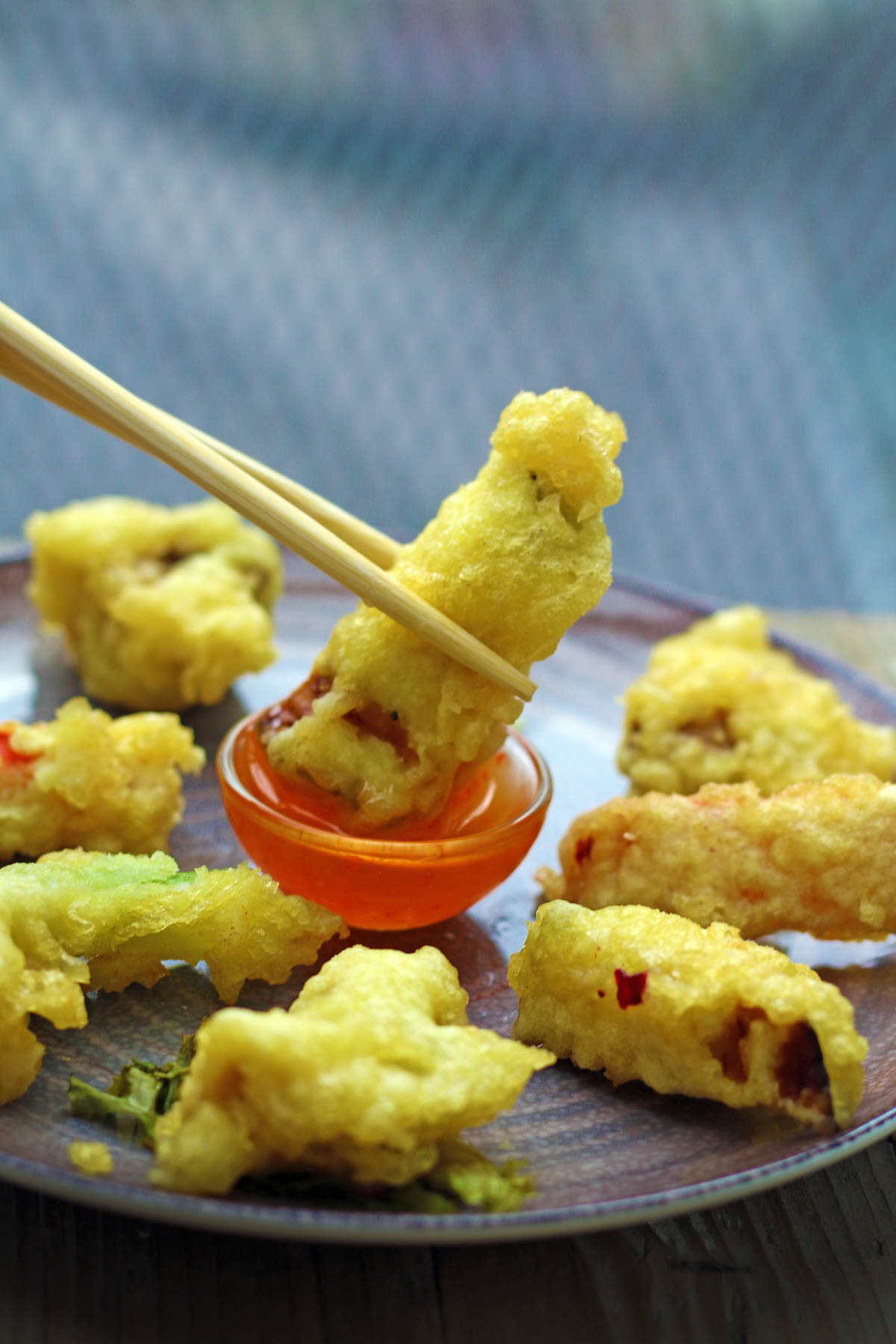
The single biggest trick with tempura is keeping the batter cold and barely mixed. That is why the recipe has you set the mixing bowl over a bowl of ice and reach for cold sparkling water. When cold batter hits 180C (360F) oil, the temperature gap makes the coating turn crisp and lacy fast, before it can soak up grease. Over-whisking develops gluten and gives you a thick, doughy crust, so stop as soon as the batter reaches the consistency of a thin crepe or cooking cream, lumps and all. A quick dusting of flour on each vegetable before it goes into the batter gives the coating something to grip, so it does not slide off in the oil.
Frying tips for light, non-greasy results
Get the oil right first. Drop a little batter in: if it sinks and then rises back up right away, you are at the right temperature. If it stays floating on top, the oil is too hot and the coating will brown before the vegetable cooks. Fry only about three pieces at a time. Crowding the pan drops the oil temperature and the tempura ends up oily and prone to sticking together. Cook each piece 1 to 2 minutes on one side, turn it, and give it another minute until both sides are pale golden, not deep brown. Lift the pieces out with a slotted spoon onto paper towels to drain.
What to serve with vegetable tempura
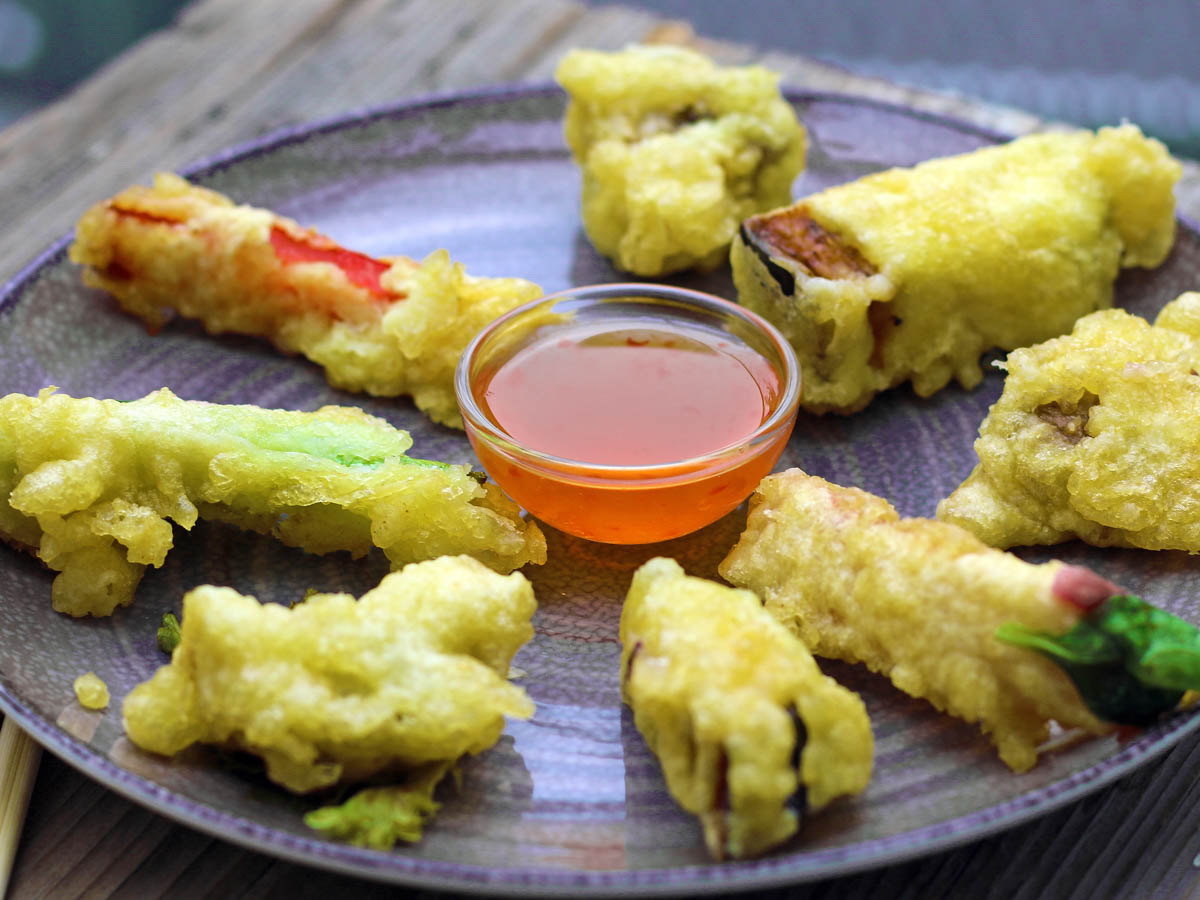
Tempura is best eaten right away, straight from the pan, with a dipping sauce on the side. I like sweet chili sauce for something a little sticky and sweet, or plain soy sauce or tamari for a saltier, savory dip. It makes a lovely starter, but you can easily turn it into a meal alongside steamed rice and something with more substance. If you want to build out a full spread, browse my Asian cuisine guide for more ideas, or pair it with other vegan zucchini recipes if you have extra courgettes to use up.
Storing and making it ahead
Tempura is really a make-and-eat dish, so I would not plan to store it. The crisp coating softens within minutes as it cools and the vegetables release steam, so leftovers lose the very thing that makes tempura special. If you do end up with extras, keep them in the fridge and reheat in a hot oven or air fryer to bring back some crunch rather than the microwave, which turns the coating soggy. What you can prep ahead is the vegetables: cut your sticks in advance, then mix the batter fresh and cold right before frying. For more world-cuisine cooking, my full guide to exploring the world cuisines is a good next stop.
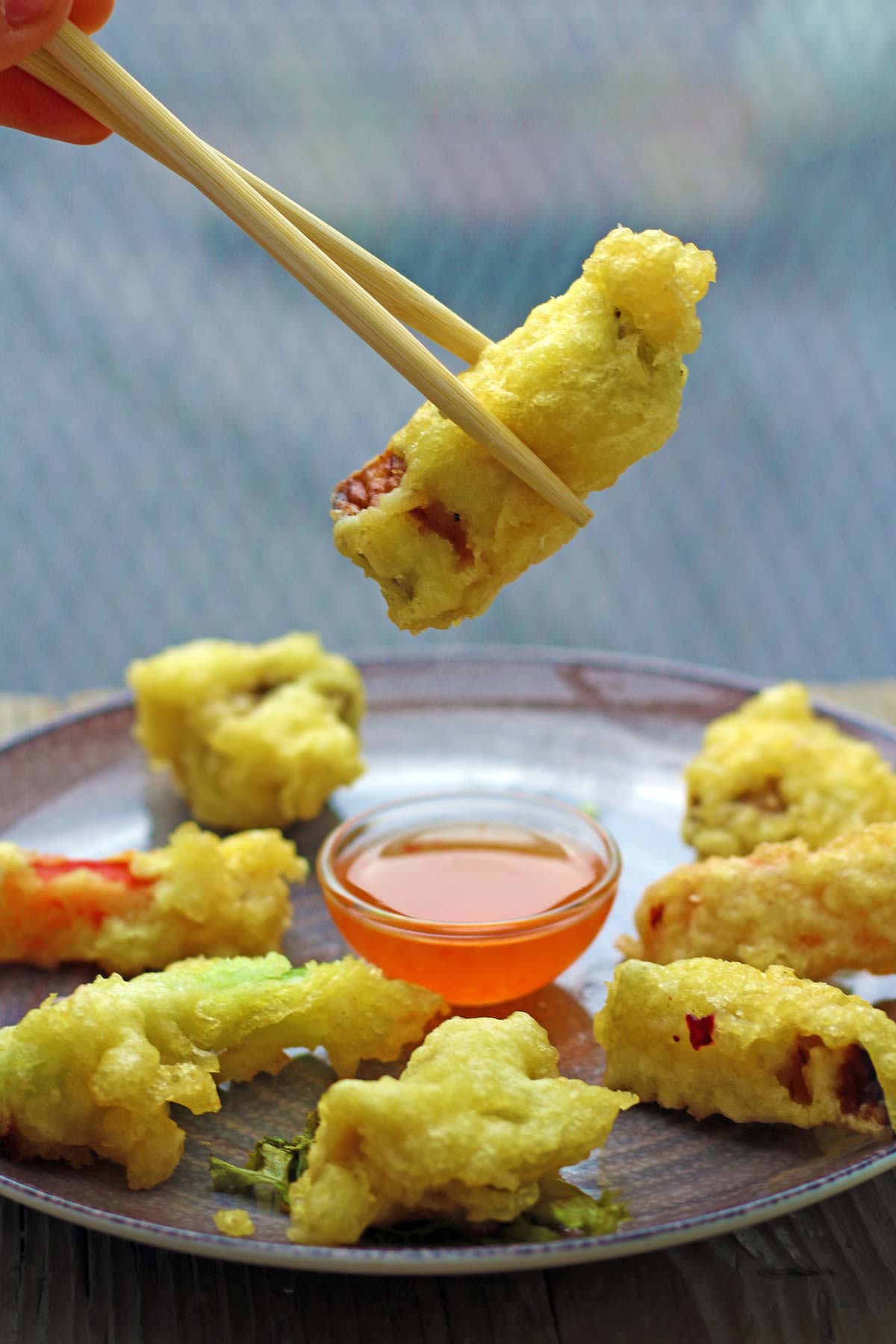
If you try this vegetable tempura, I would love to know how your batter turned out and whether you went for sweet chili or soy for dipping. Please rate the recipe and leave a comment below with any tweaks you made, especially if you test a gluten-free or rice-flour version before I do.
Summarise & Save This Recipe
★ Add us as a trusted Google source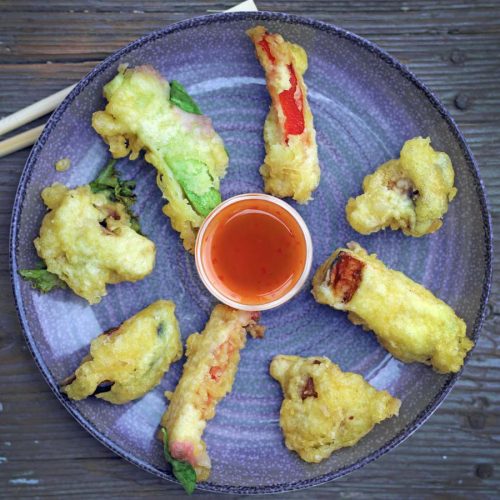
Easy Vegetarian Tempura
Ingredients
- 2 zucchini medium
- 2 eggplant medium
- 2 red bell pepper
- 4 tbsp aquafaba canned chickpea water, cold
- 1 tbsp psyllium husks ground
- 1 cup sparkling water cold
- 1 tsp baking soda
- 2 tbsp cornstarch sifted
- 1½ cup all-purpose flour sifted + more for dusting
- 2 cups oil for frying (I used sunflower oil)
- ice for the ice bath
Dipping sauce:
- sweet chili sauce for serving
- soy sauce or tamari for serving
Instructions
- Cut the vegetables into ~1 cm sticks.
- In a large bowl, combine the sifted flour with the cornstarch and baking soda.
- Add ice to a large bowl and place another bowl inside it. Add the aquafaba to the smaller bowl and whisk until frothy. Pour in the cold sparkling water, then mix in the dry ingredients: psyllium husks, flour, cornstarch and baking soda.
- Whisk until it reaches the consistency of a crepe batter (similar to cooking cream). Be careful not to over-whisk or it will get too thick.
- Pour the oil into a pot and place it on the stove over medium heat. Wait until it reaches 180C (360F).
- Dust each piece of vegetable with some flour, then gently add it to the batter and coat it. You can use a pair of chopsticks for this.
- Test whether the oil is ready by dropping a small tempura piece in it. If it sinks to the bottom and then comes up immediately, it’s the right temperature. If the piece doesn’t drop at all, the oil is too hot.
- Fry about 3 pieces at a time and don’t overcrowd the pan, or they will end up greasy and stick together.
- Cook the vegetable tempura for 1-2 minutes on one side, then gently turn it over for one more minute, until both sides are golden.
- Fish the veggies out using a slotted spoon and place them on a paper towel.
- Serve right away with the dipping sauce.
Notes
Frequently Asked Questions
Yes. This tempura is fully vegan because it swaps the traditional egg yolk for aquafaba, the water from a can of chickpeas, plus a little ground psyllium husk to bind the batter. Every other ingredient is plant-based too, so the whole dish contains no egg, dairy or other animal products. Just make sure your dipping sauces are vegan as well.
Whisk 4 tablespoons of cold aquafaba until frothy and use it in place of the egg yolk, then add 1 tablespoon of ground psyllium husks to help the batter bind and cling to the vegetables. The aquafaba adds lift and the psyllium gives structure, so the coating holds together and crisps up in the oil without any egg.
The two usual culprits are warm batter and over-mixing. Keep the batter cold by resting the bowl over ice and using cold sparkling water, and mix it only until it reaches a thin crepe or cooking-cream consistency, leaving small lumps. Also make sure the oil is at 180C (360F) and fry only about three pieces at a time so the temperature does not drop.
Aim for 180C (360F). If you do not have a thermometer, drop a small bit of batter into the oil: if it sinks and then rises back up right away, the oil is ready. If the batter stays floating on the surface, the oil is too hot and the coating will brown before the vegetable cooks through.
This recipe uses zucchini, eggplant and red bell peppers cut into roughly 1 cm sticks so they cook evenly in the time it takes the coating to crisp. Firm, quick-cooking vegetables are ideal for tempura. Cutting everything to a similar thickness helps them fry at the same rate.
It should be possible, but I have not tested a gluten-free version yet, so I cannot promise the exact result. I used all-purpose wheat flour here and rice flour works as a swap too. If you experiment with a gluten-free flour, use a tamari that is certified gluten-free instead of soy sauce for dipping.





The batter turned out great! Thank you for the recipe!
You’re welcome!