
Vegan Miso Soup
Vegan miso soup is a light, savory Japanese soup built on kombu dashi (a plant-based seaweed broth) and stirred through with miso paste, silken tofu, wakame, spinach and shiitake. It comes together in about 20 minutes, needs no fish or dashi granules, and tastes clean, warming and deeply umami. Make it when you want something gentle on the stomach but still satisfying.
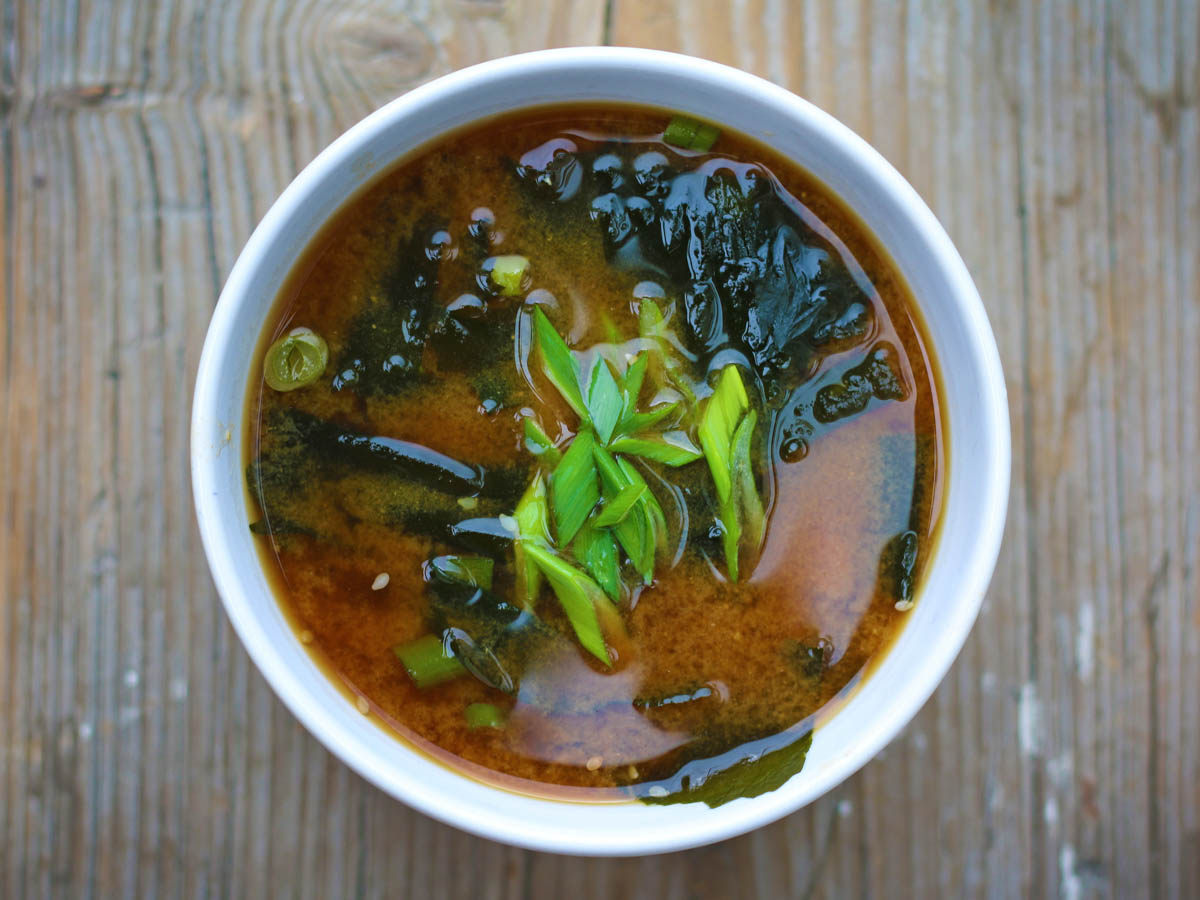
This was the first time I ate miso soup and also the first time I made it at home, and I must say I was quite impressed by its taste. I wasn’t expecting much because it looks all brown and not that appetizing, but I was surprised: it has a unique flavor and it’s light but filling at the same time. For the broth I followed a recipe that walks you step by step through making kombu dashi, the vegan dashi version, and that made the whole thing feel easy.
What goes into a vegan miso soup
The ingredient list is short, but each item is doing a specific job. Here is what to look for and why it matters:
- Kombu (dried kelp): this is the backbone of a vegan dashi. It carries natural glutamates that give the broth its savory depth, standing in for the bonito flakes used in traditional dashi.
- Miso paste: the recipe uses dark miso, which is bolder and saltier than white miso. It seasons the soup and gives it body, so add it gradually and taste as you go.
- Silken tofu: soft and delicate, it should be cubed gently and added late so it stays intact. Firm tofu will work but the texture is less traditional.
- Dried wakame: a little goes a long way. It rehydrates quickly and expands, so soak it separately before it goes in.
- Shiitake mushrooms: dried and rehydrated, they add another layer of umami and a pleasant chew.
- Spinach, scallion and sesame oil: fresh spinach wilts in seconds, scallion brings freshness, and a touch of toasted sesame oil at the end rounds everything out.
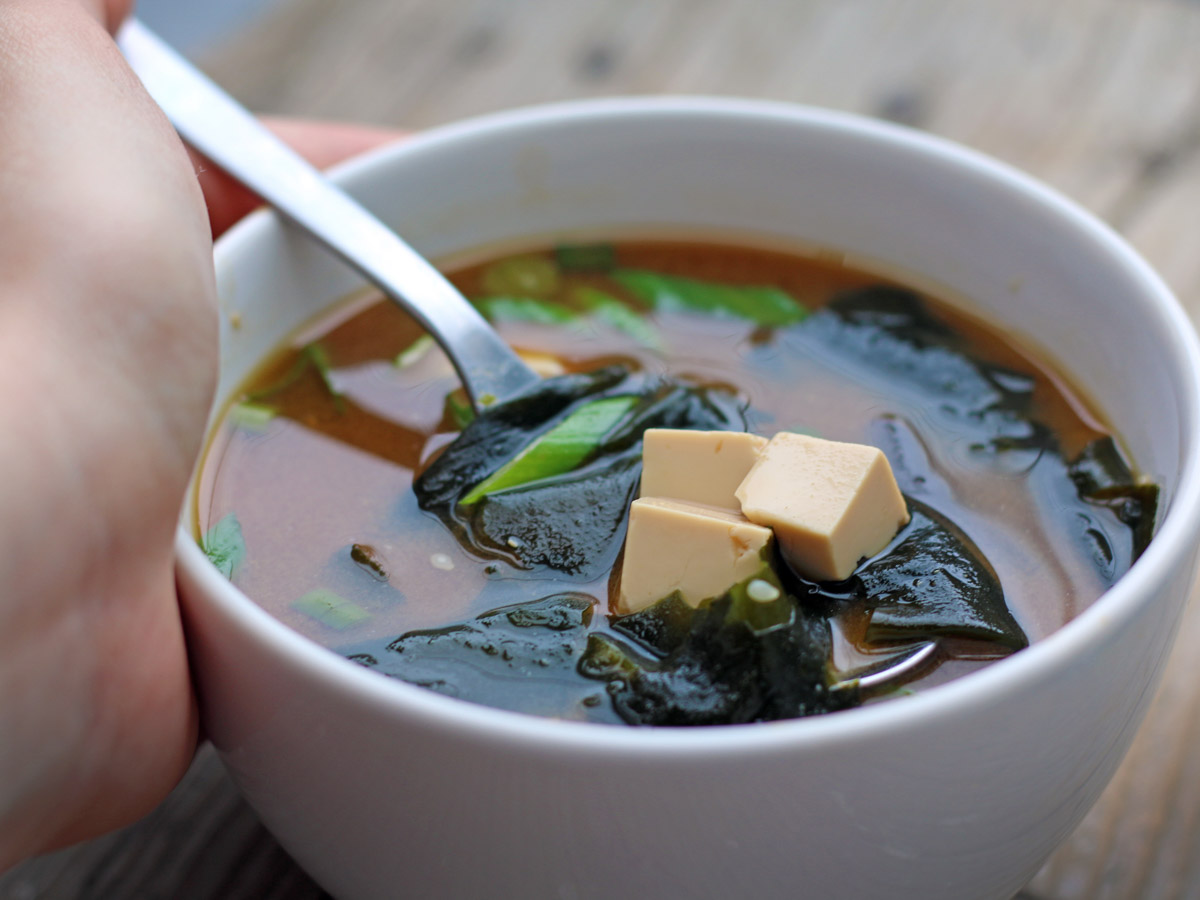
The secret is in the dashi
Kombu dashi is what makes this soup taste like the real thing without any fish. The technique matters here: bring the water and kombu up slowly on medium-low heat and pull the kombu out right before the water reaches a full boil. If you let kombu boil, the broth can turn slimy and slightly bitter, so those few seconds of attention pay off. Making a couple of slits in the kombu first helps it release more flavor into the water.
Kombu dashi sits at the heart of Japanese cooking, and it is a great entry point if you are exploring more of that world. If you want to go deeper, this Asian cuisine guide is a good place to start, and miso soup also fits naturally into a macrobiotic way of eating.
Tips for getting it right
Miso soup is simple, but a few small habits make a big difference:
- Never boil the miso. Add the miso paste to broth that is on low heat, one tablespoon at a time, and let each spoonful dissolve. Boiling miso kills its delicate flavor and the beneficial live cultures.
- Dissolve, don’t dump. Whisk the miso into a ladle of warm broth first, or press it through a small strainer, so you don’t end up with clumps.
- Add tofu and greens near the end. Silken tofu only needs to warm through, and spinach wilts almost instantly, so they go in last to keep their texture.
- Soak the wakame separately. Rehydrate it in a bowl of water before adding it to the soup so it plumps up evenly and doesn’t overexpand in the pot.
- Finish off the heat. Remove the pot from the burner before adding the wakame, scallions, sesame oil and a scatter of sesame seeds.
How to serve vegan miso soup
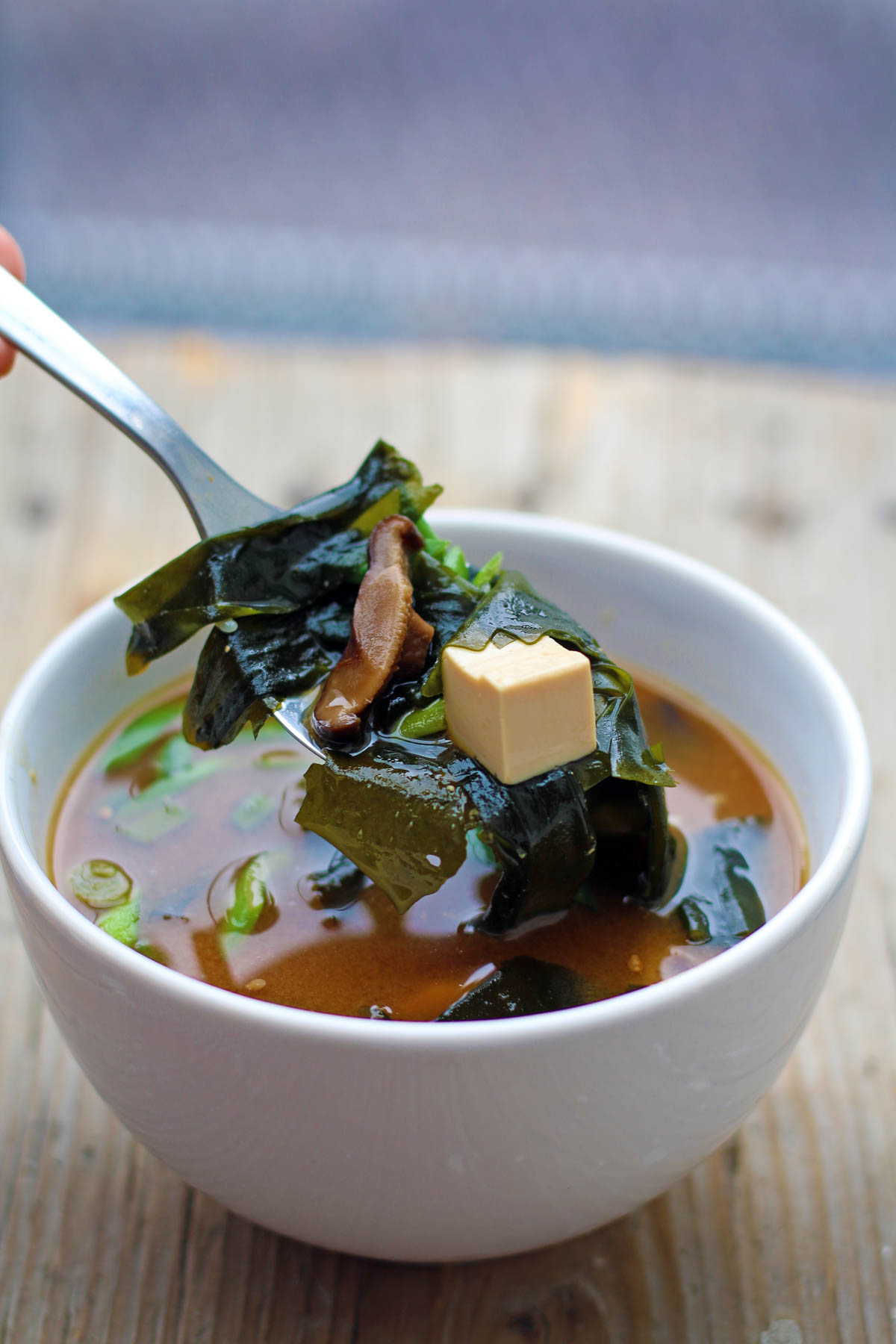
In Japan, miso soup is usually served alongside steamed rice as part of the meal, not as a starter before it the way soup is served in many other countries. I only found this out after I made the recipe, so I ate mine by itself, before a salad, and it was lovely that way too. Serve it hot in small bowls with rice on the side, or lean into a bigger soup spread and pair it with a vegan red lentil soup or a clear veggie noodle soup for a cozy, brothy meal.
Storage and make-ahead
Miso soup is best enjoyed fresh, right after it’s made, while the tofu is silky and the greens are bright. If you have leftovers, store them in an airtight container in the fridge for up to two days and reheat gently over low heat without letting it boil, so the miso keeps its flavor. If you know you’ll want it later, a smart trick is to make the kombu dashi ahead and keep it in the fridge, then add the miso, tofu and vegetables fresh just before serving. This soup is a nice light option to have in your rotation alongside other comforting bowls like a cream of mushroom soup with thyme.
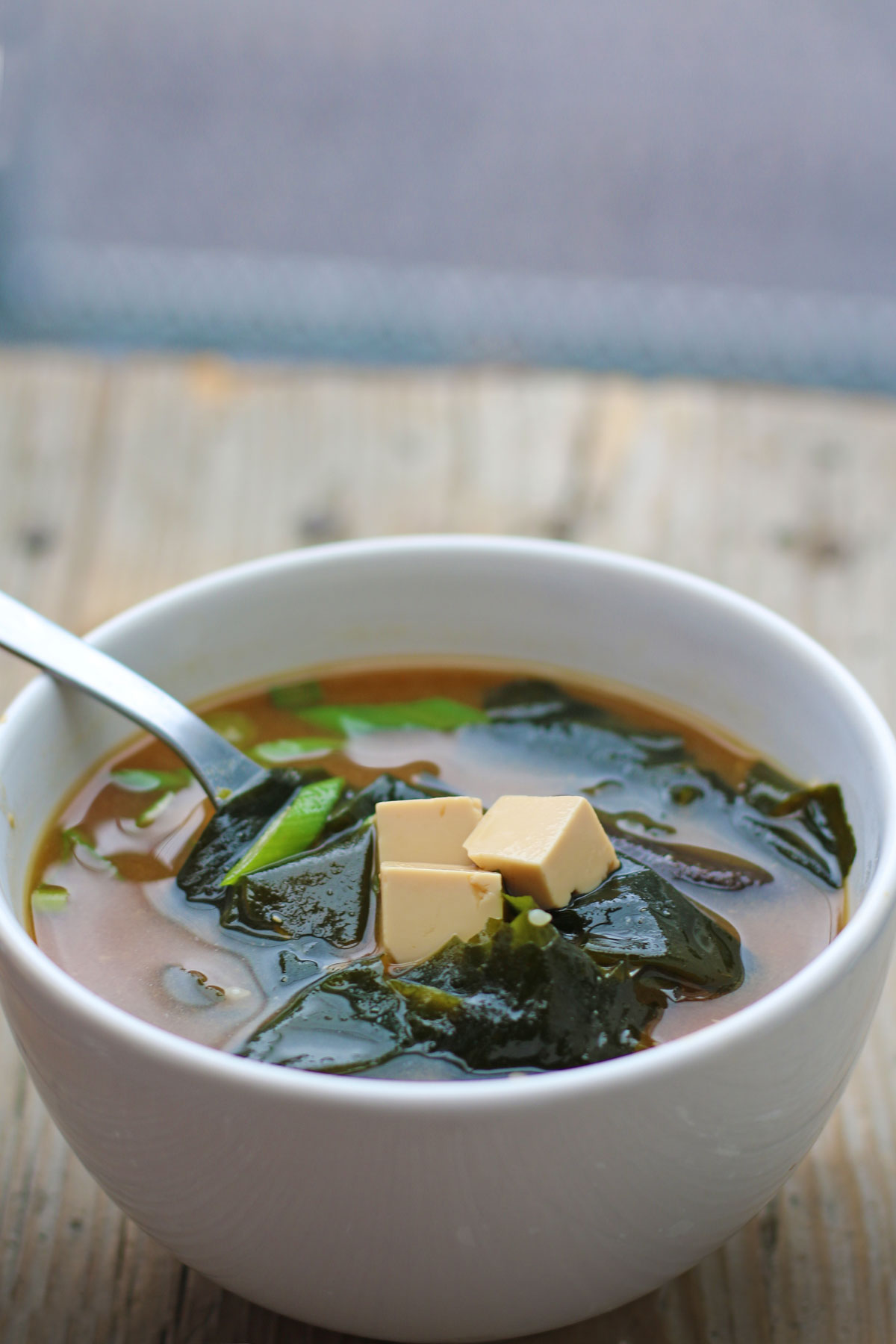
If you make this vegan miso soup, I’d love to know how your kombu dashi turned out and whether you served it with rice or on its own like I did. Please rate the recipe and leave a comment below with any tweaks you tried.
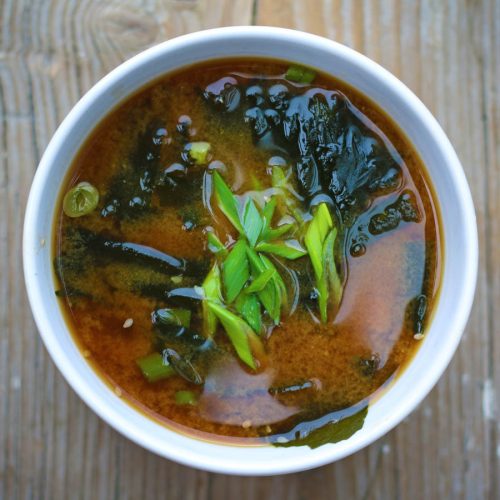
Vegan Miso Soup
Ingredients
Dashi:
- 1 oz kombu dried kelp
- 4 cups water
Miso Soup:
- dashi the whole quantity
- ½ cup spinach fresh
- ¼ cup silken tofu cubed
- 4 shiitake mushrooms dried, rehydrated
- 1 Tbsp wakame dried
- 3 Tbsp dark miso paste
- 1 scallion chopped
- 1 tsp sesame oil
Instructions
- Make a couple of slits in the kombu.
- Add the water to a pot, put in the kombu and slowly bring it to a boil over medium-low heat.
- Skim the surface to clean the dashi.
- Just before it starts boiling, remove the kombu.
- Strain the dashi, then return it to a clean pot over low heat.
- Add the spinach and mushrooms.
- Add the miso paste, one tablespoon at a time.
- Once the miso paste is dissolved, add the tofu.
- Remove from heat and add the rehydrated wakame (soak it in a bowl of water before adding it to the soup), chopped scallions, sesame oil and some sesame seeds.
Notes
Frequently Asked Questions
This version is fully vegan because it uses kombu dashi, a broth made from dried kelp, instead of the traditional dashi made with bonito (dried fish) flakes. Everything else in the bowl is plant-based too: silken tofu, miso paste, wakame, spinach, shiitake and scallion. Always double-check your miso paste label, since a few brands include fish-based dashi.
Dashi is the savory Japanese stock that forms the base of miso soup. The classic version uses kombu and bonito flakes, but you can make a fully vegan kombu dashi using just dried kelp and water. Simmering kombu slowly releases natural glutamates that give the broth its deep umami flavor without any fish.
Miso paste should be added to broth that is on low heat and never brought to a boil once it’s in. Boiling dulls miso’s delicate aroma and destroys the beneficial live cultures it contains. Add the miso one tablespoon at a time, dissolve it fully, then serve.
This recipe uses dark miso paste, which is fermented longer and tastes bolder and saltier than white miso. Because it’s stronger, add it gradually and taste as you go. If you only have white or yellow miso, it will still work, but the soup will be a little milder and sweeter.
Silken tofu is the traditional choice because it’s soft and delicate and melts into the broth. Cube it gently and add it near the end so it warms through without breaking apart. Firm tofu also works if that’s what you have, though the texture will be less classic.
In Japan miso soup is usually served alongside steamed rice as part of the meal rather than as a starter. You can also serve it on its own as a light first course, or pair it with other brothy dishes for a bigger soup-forward meal. It’s warming, low in fat, and gentle on the stomach.







Used firm tofu instead, but it was delicious nonetheless! Thanks!
Yup, it is ok with firm tofu too. You’re welcome! 🙂