
Vegan California Roll | Tofu Uramaki
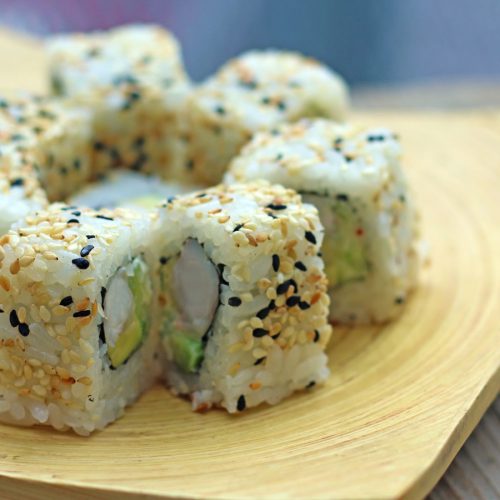
This vegan California roll swaps the usual crab meat for silken tofu, then wraps it with creamy avocado and vegan mayo in an inside-out (uramaki) roll where the seasoned rice sits on the outside. It comes together with pantry-friendly ingredients and tastes surprisingly close to the original, so it is a great way to make restaurant-style sushi at home without any animal products.
I love vegan sushi, and ever since I discovered an awesome online store with relatively cheap Asian foods, I started making homemade sushi at least once a month. Now that I host the world cuisines challenge on my blog, I decided to experiment with new types of sushi, like this California roll made with tofu, mayo and avocado. My previous vegan sushi recipe was packed with all kinds of veggies, so this time I wanted to simplify it and try something different.
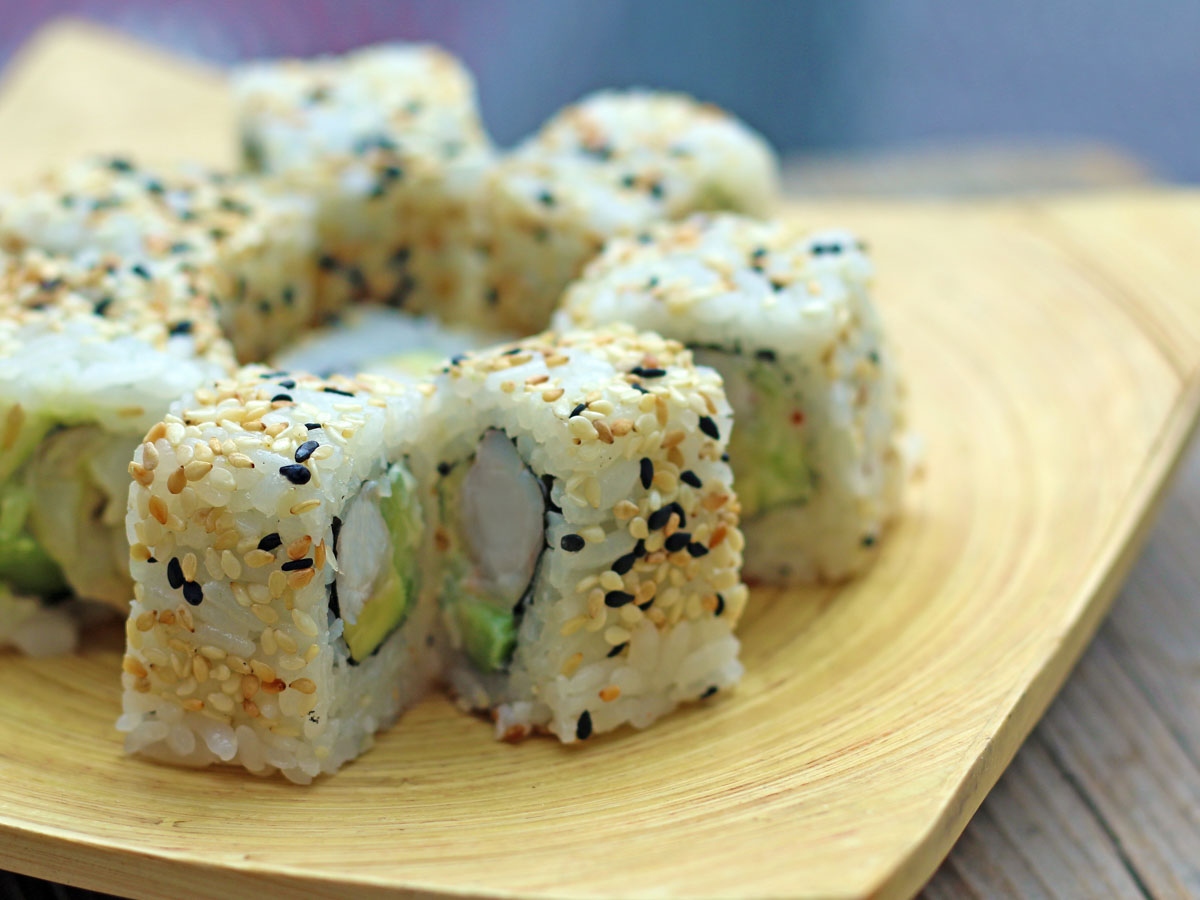
This was the first time I made a California roll or uramaki sushi. I always thought it was complicated and avoided it, but it is actually quite easy once you do it once or twice. That is the whole reason I wanted to share it here, because the technique looks intimidating long before it actually is.
The ingredients that make it work
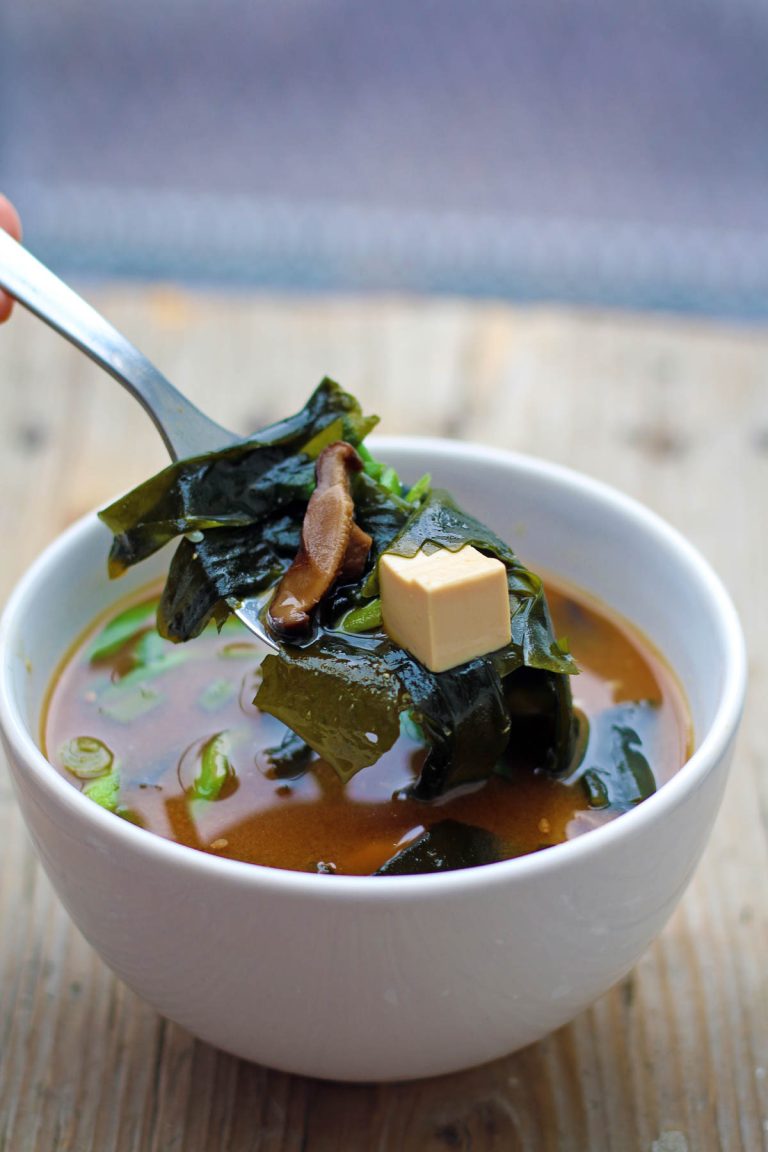
The build is short, and a few notes will help you shop with confidence. I used silken tofu to replace the crab meat traditionally used in California rolls, since it has a soft, delicate texture that mimics the original well. I happened to have some tofu leftovers from my miso soup recipe, which is exactly the kind of thing that inspires a roll like this.
- Sushi rice: use short-grain sushi rice, not long-grain. The extra starch is what makes the grains cling together so the roll holds its shape.
- Rice vinegar, sugar and salt: this trio seasons the rice. Mixing them until fully dissolved before folding into the rice gives you that signature tangy-sweet balance.
- Silken tofu: cut it into sticks. It is fragile, so handle it gently when layering.
- Avocado: choose ripe but still firm avocados that yield slightly to a gentle press. Too soft and they turn to mush; too hard and they will not slice into clean strips.
- Vegan mayo: a spoonful adds the creamy richness the crab normally brings. I used vegan mayo here.
- Sesame seeds and nori: sesame coats the rice on the outside, and nori is the seaweed sheet that wraps the filling.
Getting the rice right
The rice is the part most people rush, and it is the part that decides whether your roll holds together. Start by rinsing the rice until the water runs clear; this washes off surface starch that would otherwise turn the rice gluey. Then cook it with the water, bringing it to a boil and simmering for about 10 minutes from the moment it starts boiling, before removing it from the heat and letting it sit covered so it absorbs all the remaining liquid.
Once the rice is cooked, stir in the vinegar, sugar and salt mixture, then let it cool thoroughly before you start rolling. Warm rice will steam the nori and avocado and make everything slip, so this step matters. To speed it up, you can spread the rice out and pop it in the fridge or freezer, stirring every 5 minutes so it cools evenly.
How to roll it inside-out
The inside-out roll is what separates a California roll from a standard maki. Lay a sushi mat down and cover it with plastic wrap, then place the nori sheet rough side up and spread the rice in a thin, even layer all the way to the edges. Sprinkle the sesame seeds over the rice now, while it is still exposed, so they stick.
Lay another piece of plastic wrap over the rice and flip the whole thing over so the rice ends up facing the mat and the nori faces you. Remove the top layer of wrap (the one now sitting on the nori), spread a little mayo on the seaweed, then layer the avocado and tofu strips along the bottom edge and roll it up snugly using the mat. The trick here is a firm but gentle hand: too loose and it falls apart, too tight and the soft tofu and avocado get crushed.
Slicing and serving
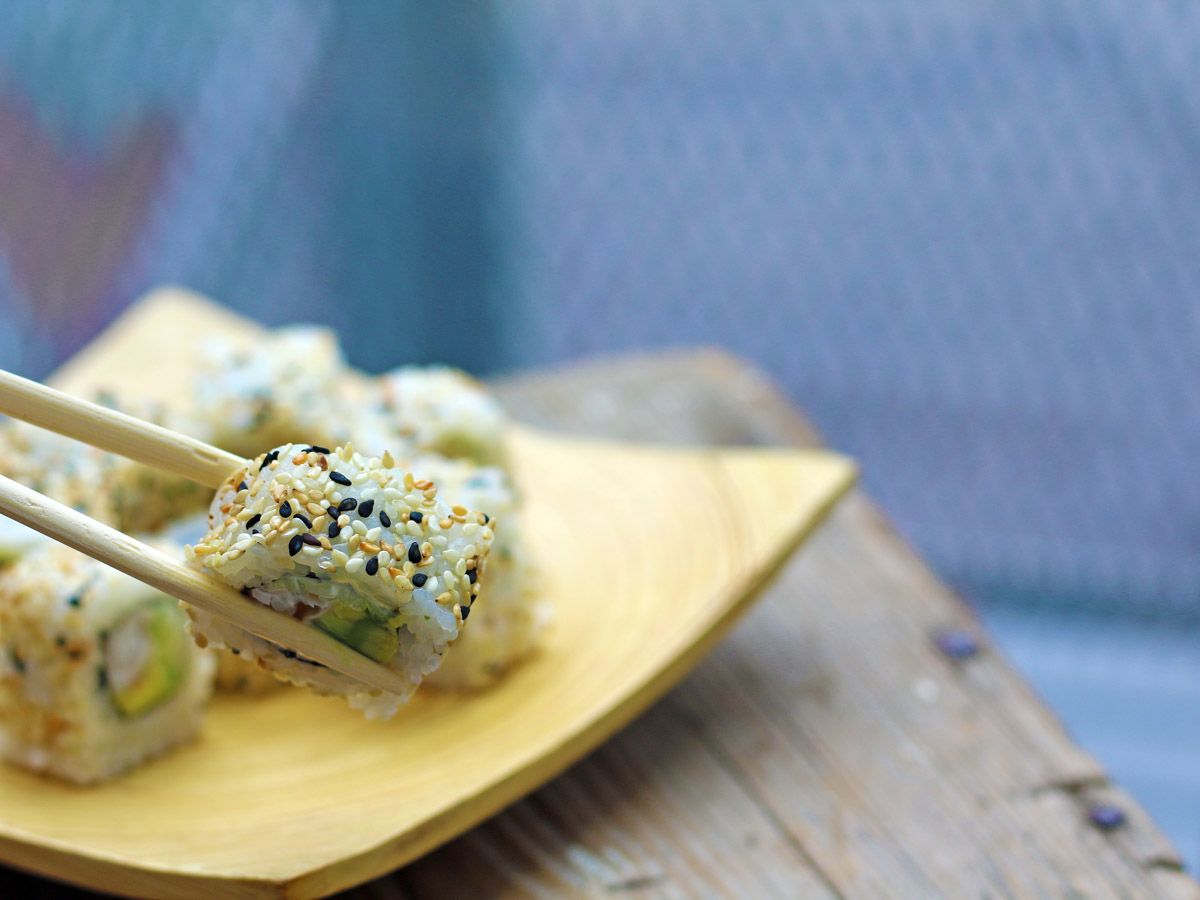
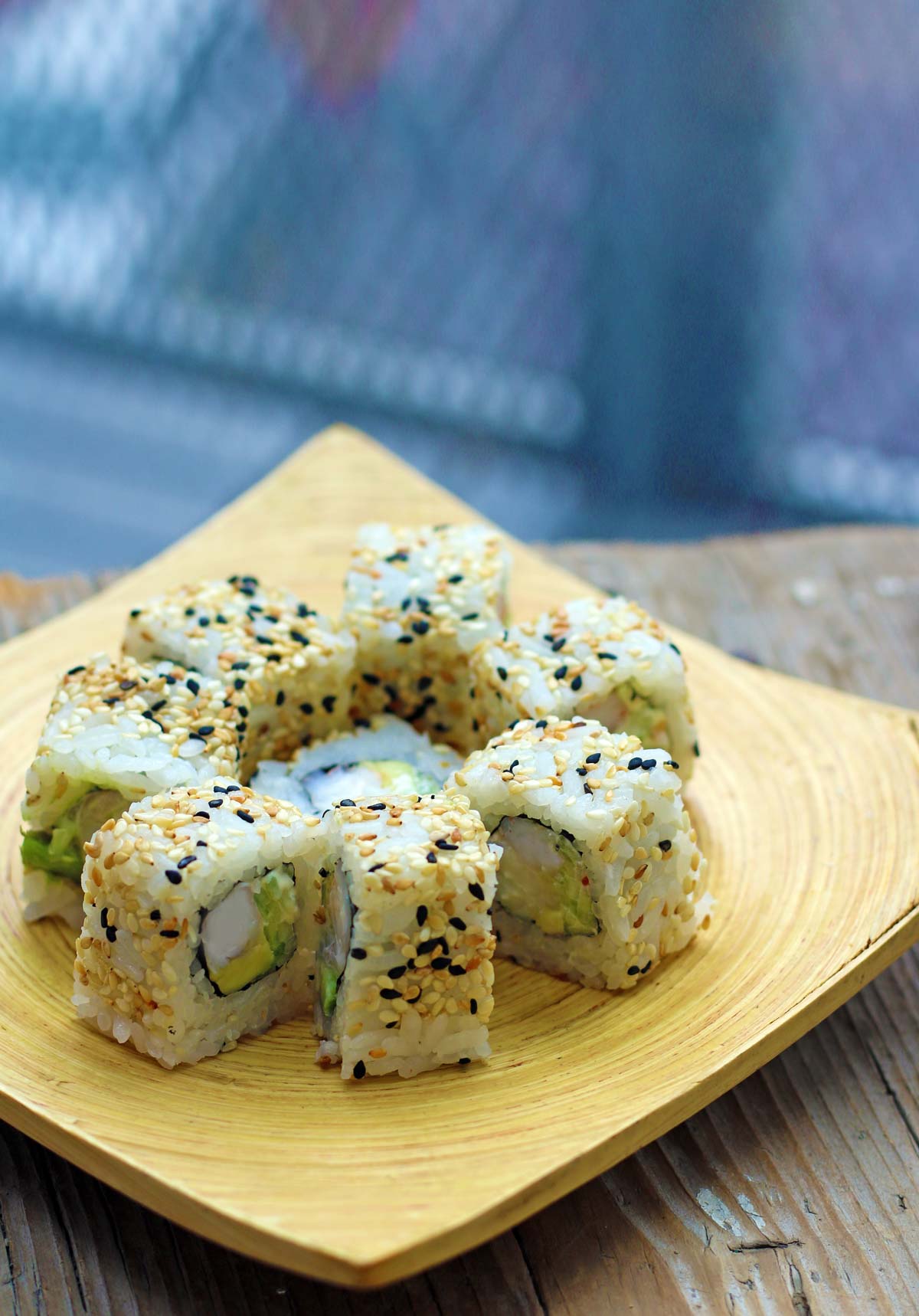
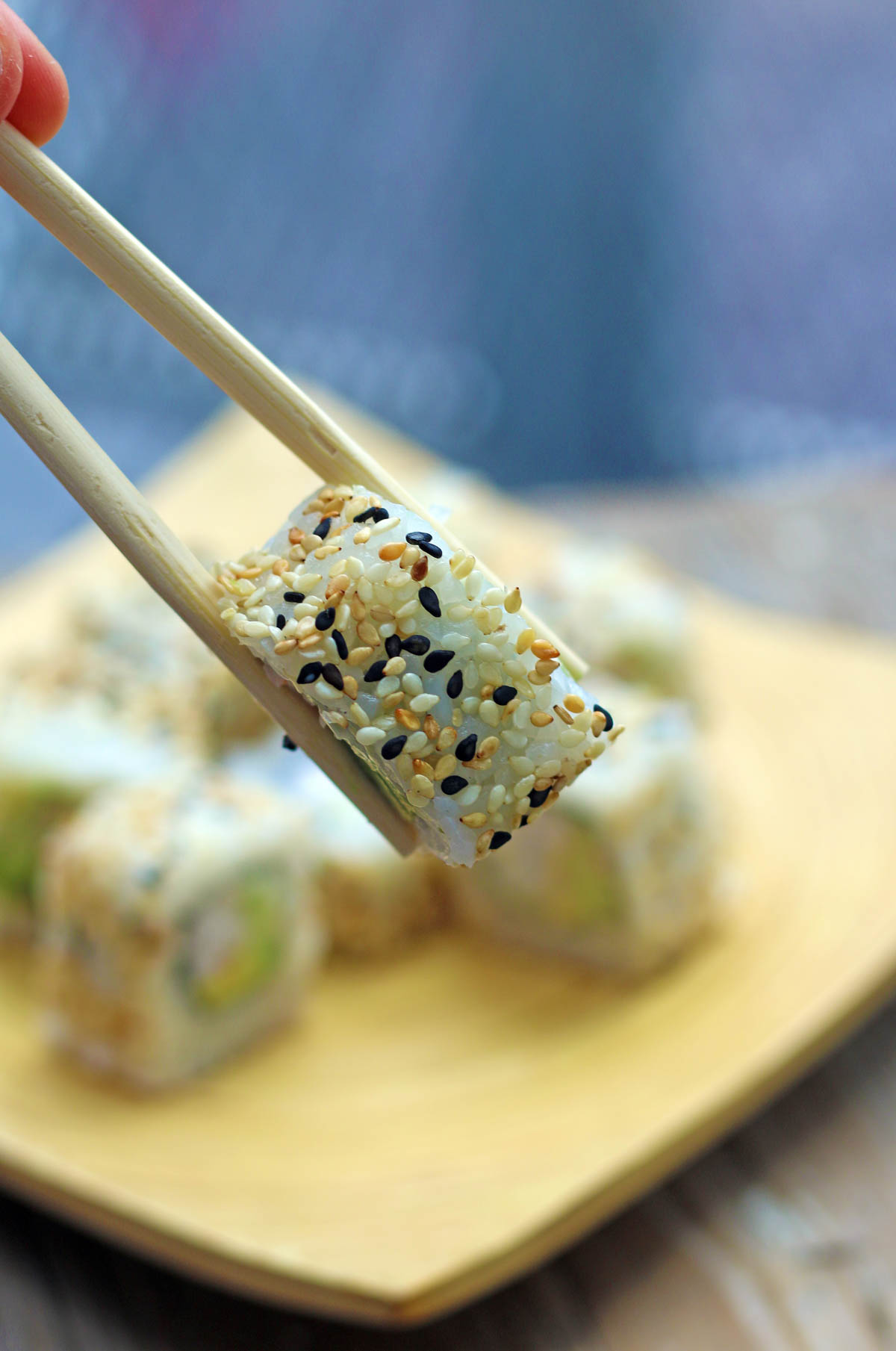
Slice the roll with a wet knife. Dipping the blade in water (or wiping it between cuts) keeps the rice from sticking and dragging, so you get clean rounds instead of squashed ones. For coating these vegan California rolls I used a mix of raw, toasted and black sesame seeds, which looks beautiful against the white rice and adds a nutty crunch.
To serve, I dipped these in soy sauce combined with sesame oil, which gives the rolls an extra layer of savory, toasty flavor. Plain soy sauce or tamari works perfectly well too if you want to keep it simple, and tamari is the way to go if you need it gluten-free.
Make-ahead and storage tips
Sushi is at its best the day it is made, so I recommend eating these rolls fresh. If you do have leftovers, store them in an airtight container in the fridge and finish them within a day; the rice firms up when cold and the avocado will start to brown, so they are really a same-day treat. You can save time by cooking and seasoning the rice in advance and letting it come back to room temperature before assembling, which spreads the work out without sacrificing texture.
If you enjoy this, it pairs naturally with a bowl of vegan miso soup for a complete Japanese-style meal, and it fits right into my wider world cuisines challenge. Once you have the inside-out technique down, try my veggie-packed vegan sushi rolls next for a different take.
Vegan California Roll
Ingredients
- nori sheets
- 1 cup sushi rice
- 2 cups water
- 3 tbsp rice vinegar
- 1 tbsp sugar
- 1 tsp salt
- 2-3 avocados cut into strips
- silken tofu cut into sticks
- 3 tbsp vegan mayo
- sesame seeds
- soy sauce or tamari, for dipping
- sesame oil optional
Instructions
- Rinse the rice until the water runs clear.
- Put the rice into a pot, add the water and bring to a boil. Cook for 10 more minutes from the moment it starts boiling, then remove from heat. Cover the pot with a lid and let the rice absorb all the liquid.
- Mix the vinegar, sugar and salt until dissolved, then pour over the rice and mix well.
- Let the rice cool thoroughly. You can place it in the freezer or fridge, stirring every 5 minutes to speed up the process.
- Cut the avocado and tofu into strips.
- Lay out a sushi mat and cover it with plastic wrap.
- Place a nori sheet on the sushi mat, rough side facing up. Apply the rice to the nori in a thin layer, covering all the edges.
- Sprinkle the sesame seeds over the rice.
- Place another piece of plastic wrap on top of the rice and flip it over. For California rolls, the rice should be on the outside, not the nori sheet.
- Now that it is flipped, remove the plastic wrap from the upper side, the one on the nori sheet.
- Spread some vegan mayo on the nori sheet, layer the avocado and tofu along the bottom edge and carefully roll it up.
- Slice the vegan California roll with a wet knife.
- Serve with soy sauce or tamari for dipping, optionally mixed with a little sesame oil.
Notes
Frequently Asked Questions
This vegan California roll is built from seasoned sushi rice, nori, silken tofu cut into sticks, avocado strips, vegan mayo and sesame seeds, with soy sauce or tamari for dipping. The silken tofu and vegan mayo stand in for the crab meat and creaminess of a classic California roll, so every ingredient is plant-based.
Silken tofu is the swap used here. Cut it into sticks and layer it with avocado, where its soft, delicate texture mimics the crab meat traditionally used in California rolls. A spoonful of vegan mayo adds the creamy richness the crab would normally bring.
A California roll is an uramaki, or inside-out roll, which means the rice sits on the outside and the nori wraps the filling on the inside. You achieve this by spreading rice over the nori, sprinkling on sesame seeds, then flipping the sheet so the rice faces the mat before adding the filling and rolling.
Use short-grain sushi rice rather than long-grain. Its higher starch content makes the grains cling together so the roll holds its shape. Rinsing the rice until the water runs clear, then seasoning it with the rice vinegar, sugar and salt mixture, gives you the right tangy-sweet flavor and sticky texture.
The most common causes are rice that is too warm, a roll that is too loose, or rice that was not rinsed and seasoned properly. Let the cooked rice cool thoroughly before assembling, spread it all the way to the edges of the nori, and roll firmly but gently so the soft tofu and avocado are not crushed. Slicing with a wet knife also keeps the rounds clean.
Sushi is best eaten the day it is made. Leftovers can be stored in an airtight container in the fridge and finished within a day, but the rice firms up when cold and the avocado starts to brown, so freshness fades quickly. To get ahead, cook and season the rice in advance and assemble the rolls just before serving.


Made sushi for the first time today and it was wayyy easier than i thought it would be and super tasty. Thank you so much for this recipe ❤️
You’re very welcome!
Great recipe! First time making California rolls but they were easier to make than expected!
Glad you liked them! You’re welcome!
Gaaaah! Thanks for pointing it out! :))) I had the same mistake for my other sushi recipe too. I corrected it. 😀