
Magnesium for Sleep: What the Studies Say and the Best Magnesium-Rich Foods (Vegetarian)
Magnesium for sleep is one of the most searched wellness topics right now, and there’s a reason it keeps coming up: small studies suggest magnesium can help some people fall asleep a little faster, especially people who don’t get much of it from food. The easiest place to start is your plate, so below you’ll find what the studies show, how much magnesium you need, and the vegetarian foods richest in it, with real portions.
Magnesium is part of my own evening routine: I eat a small handful of pumpkin seeds every evening and take magnesium bisglycinate every night, plus magnesium citrate now and then when I want to keep my digestion regular. But what surprised me most when I started reading was the food list: nearly everything on it was already in my pantry, from oats and beans to spinach and cashews. So this guide is mostly about how easy it is to cover your magnesium in a normal vegetarian week.
A note before we start: OMMA is our family brand, built by the two of us, a husband-and-wife team. The nasal strips and mouth tape at the end of this article are ours, so this recommendation isn’t neutral, and we want you to know that up front. Nobody paid for this article, and everything about sleep and snoring comes from the studies listed at the end.
Magnesium and sleep, at a glance
- An encouraging signal: in older adults, magnesium helped people fall asleep about 17 minutes faster than a placebo, and the effect looks clearest in people who eat little magnesium.
- How much you need: 300 mg a day for women and 350 mg for men, according to the European Food Safety Authority (EFSA).
- Food first: 30 g of pumpkin seeds gives you about 178 mg, almost half of the daily reference.
- Supplements: in the EU, the safe upper limit for magnesium from supplements is 250 mg a day; more can cause diarrhea.
- Good to know: magnesium contributes to the normal functioning of the nervous system, but no EU-approved claim links it to sleep.
Table of Contents
- Does magnesium help you sleep? What the studies say
- How much magnesium do you need?
- The best vegetarian foods rich in magnesium
- Easy ways to eat more magnesium every day
- Magnesium supplements: what to know
- The rest of our evening routine
- Frequently Asked Questions
- Sources
Does magnesium help you sleep? What the studies say
The research is still small, but it points in a hopeful direction, especially for people who don’t eat much magnesium:
- Older adults with insomnia (46 people): 500 mg of magnesium a day for 8 weeks improved insomnia scores and helped people fall asleep faster than a placebo, and melatonin levels in the blood went up. Total sleep time didn’t change. Everyone in this study ate little magnesium to begin with.
- Three trials pooled (151 older adults): magnesium shortened the time to fall asleep by about 17 minutes compared with a placebo.
- The largest trial so far (155 adults who slept poorly): 250 mg a day of magnesium bisglycinate for 4 weeks improved insomnia scores more than a placebo. The effect was small, and people with a low magnesium intake seemed to benefit most.
- Magnesium L-threonate (80 adults): about 75 mg of magnesium a day for 3 weeks gave better deep and REM sleep scores on a sleep-tracking ring. This study was funded by the ingredient’s distributor.
Large population studies point the same way: in more than 3,900 young American adults and in another 21,800 adults, people who ate more magnesium tended to sleep longer.
The honest caveat, in short: these are small studies, reviews rate the evidence as low quality, and a 2026 review doesn’t recommend magnesium as a routine treatment for insomnia. So think of magnesium as a gentle helper worth getting right through food, not as a sleeping pill.
How much magnesium do you need?
EFSA sets an adequate intake of 300 mg a day for women and 350 mg a day for men, and the same 300 mg in pregnancy and breastfeeding.
The good news: you can cover that from food. For example, 30 g of pumpkin seeds, a cup of cooked quinoa and a cup of cooked spinach add up to about 450 mg, more than the daily amount for both women and men.
The EU’s safe upper limit of 250 mg a day applies only to magnesium from supplements (and magnesium added to foods or water), not to the magnesium found naturally in food.
The best vegetarian foods rich in magnesium

| Food | Portion | Magnesium | % of the daily reference (375 mg) |
|---|---|---|---|
| Hemp seeds, hulled | 30 g (3 tbsp) | 210 mg | 56% |
| Pumpkin seeds | 30 g | 178 mg | 47% |
| Spinach, cooked | 1 cup (180 g) | 157 mg | 42% |
| Black beans, cooked | 1 cup (172 g) | 120 mg | 32% |
| Quinoa, cooked | 1 cup (185 g) | 118 mg | 32% |
| Edamame | 1 cup (155 g) | 99 mg | 26% |
| Sunflower seeds | 30 g | 98 mg | 26% |
| Buckwheat, cooked | 1 cup (168 g) | 86 mg | 23% |
| Cashews | 28 g (a handful) | 82 mg | 22% |
| Chickpeas, cooked | 1 cup (164 g) | 79 mg | 21% |
| Almonds | 28 g (about 23) | 76 mg | 20% |
| Tofu, firm | 126 g | 73 mg | 19% |
| Lentils, cooked | 1 cup (198 g) | 71 mg | 19% |
| Dark chocolate, 70-85% | 28 g | 64 mg | 17% |
| Rolled oats, dry | 40 g | 55 mg | 15% |
| Peanut butter | 2 tbsp (32 g) | 54 mg | 14% |
| Chia seeds | 15 g | 50 mg | 13% |
| Wholegrain bread | 2 slices (64 g) | 48 mg | 13% |
Values from USDA FoodData Central (SR Legacy). The % column uses the EU reference value of 375 mg.
Banana and avocado often show up on “foods for sleep” lists, but with about 27-29 mg per 100 g they’re not actually good sources of magnesium. They’re lovely foods, just not for this.
Easy ways to eat more magnesium every day
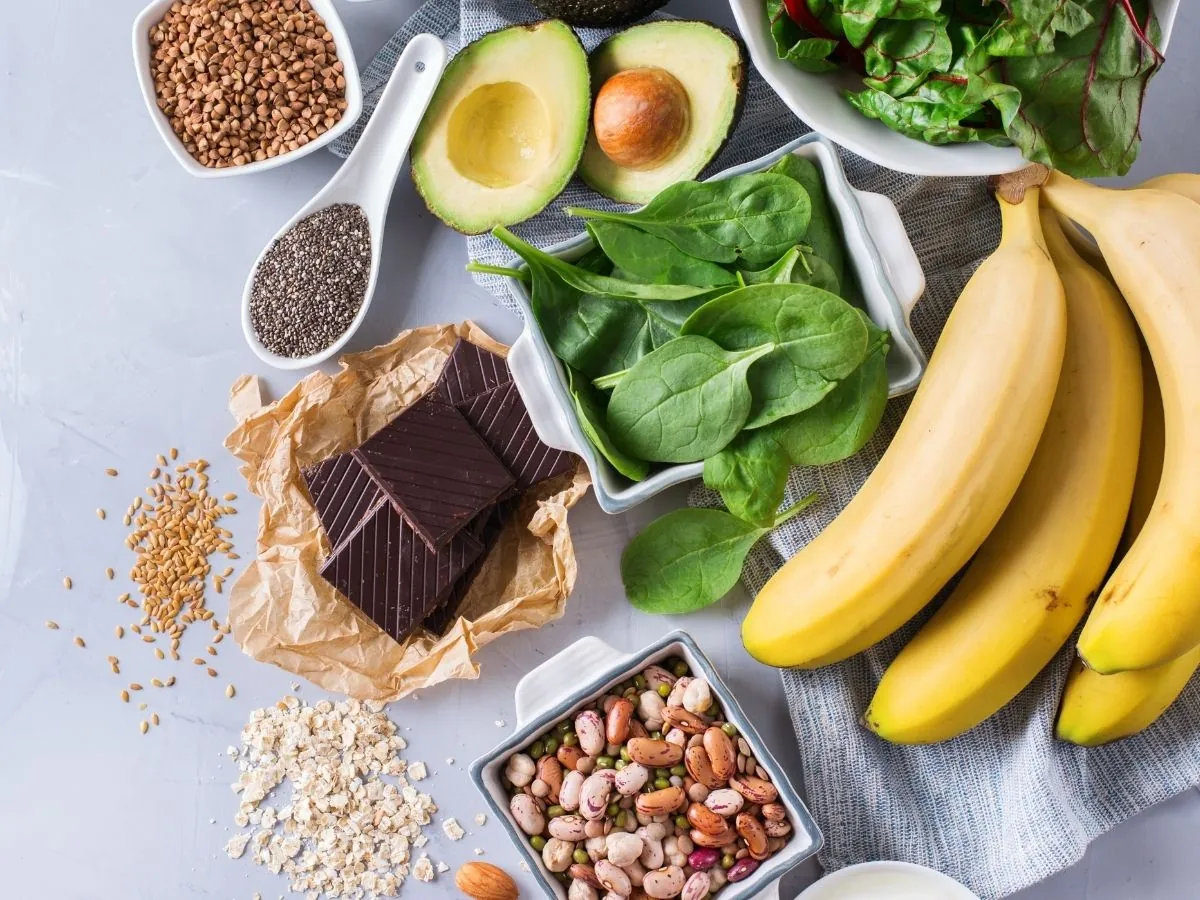
- Sprinkle seeds on everything: a spoonful of pumpkin or hemp seeds on porridge, salads and soups. My own habit is a small handful of pumpkin seeds every evening. Toast them in a dry pan for a minute and they taste twice as good.
- Start the day with oats and chia: my overnight oats have both, plus tahini.
- Eat legumes a few times a week: a three bean salad, lentil soup or chickpeas in a bowl.
- Swap white grains for whole ones: quinoa, buckwheat and wholegrain bread, like in this rainbow quinoa salad.
- Keep nuts for snacks: a handful of cashews or almonds, or a couple of no-bake protein balls with nut butter.
- Add greens: cooked spinach shrinks a lot, so a cup of it is easier than it sounds; try it in this spinach salad with tahini dressing or wilted into a soup.
- Dark chocolate counts too, but it has caffeine, so enjoy your square earlier in the day rather than at bedtime.
Magnesium supplements: what to know
If you’d like to try a supplement, there are a few forms: oxide, citrate, bisglycinate and L-threonate. They have never been compared head to head in sleep studies, so no form has been shown to be the best one for sleep. In the studies, people usually took it in the evening, one of them about 2 hours before bed. Personally, I take magnesium bisglycinate every evening, and magnesium citrate occasionally, when I want to keep my digestion regular.
A few safety rules:
- Don’t go above 250 mg a day from supplements without talking to your doctor. Too much magnesium from supplements usually causes diarrhea, sometimes with nausea and cramps.
- Kidney disease: don’t take magnesium supplements without your doctor, because the kidneys can’t clear the extra.
- Antibiotics: take tetracyclines or quinolones at least 2 hours before or 4-6 hours after a magnesium supplement.
- Osteoporosis medicines (bisphosphonates): keep at least 2 hours between them and magnesium.
- Stomach medicines (proton pump inhibitors): taken for more than a year, they can lower your magnesium, so ask your doctor about checking it.
If you’ve been sleeping badly for several weeks, talk to your doctor rather than trying stronger and stronger supplements.
The rest of our evening routine
Food is one part of a good night. The other part we think about a lot at home is breathing at night, which is why my husband and I made the OMMA Sleep Kit, with a nasal strip that helps open the nose and a mouth tape that helps keep your mouth closed, so you keep breathing through your nose until morning. More in my guide on how to stop snoring naturally, and if you’d like a fruity evening drink, try my homemade tart cherry juice.
Don’t use the mouth tape if you can’t breathe comfortably through your nose, if you have or suspect sleep apnea, after alcohol or sleeping pills, if you feel sick, or on children.
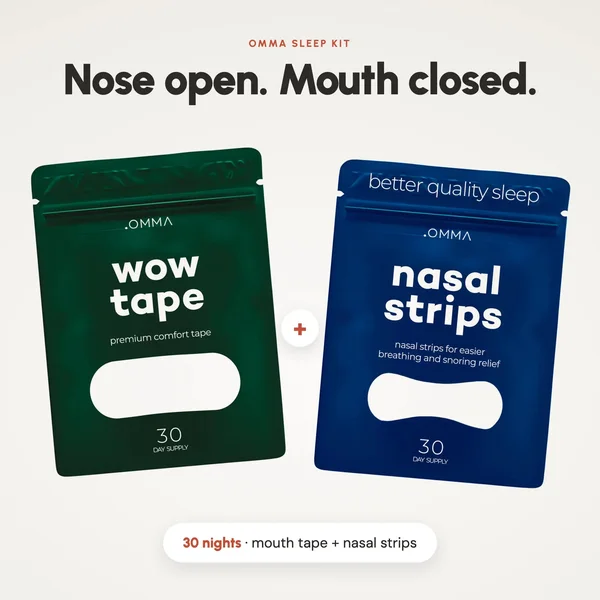
OMMA Sleep Kit: Mouth Tape + Nasal Strips
One nasal strip and one mouth tape for every night: nose open, mouth closed. 30 nights.
Shop at OMMA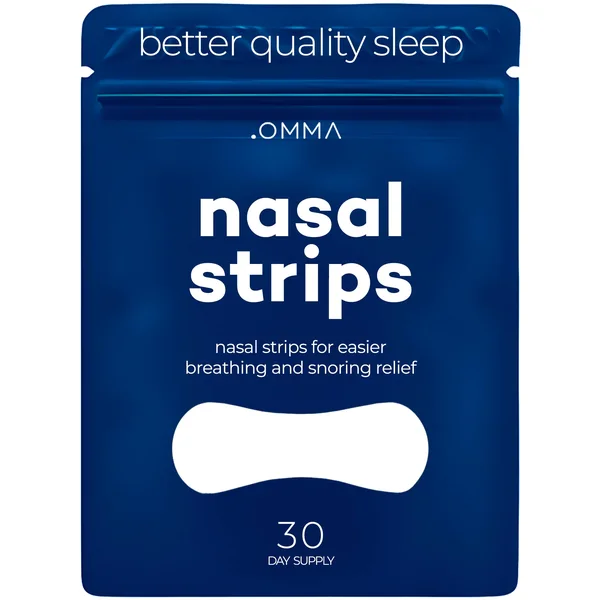
OMMA Nasal Strips
A flexible band gently lifts the sides of your nose, so air moves more easily at night.
Shop at OMMA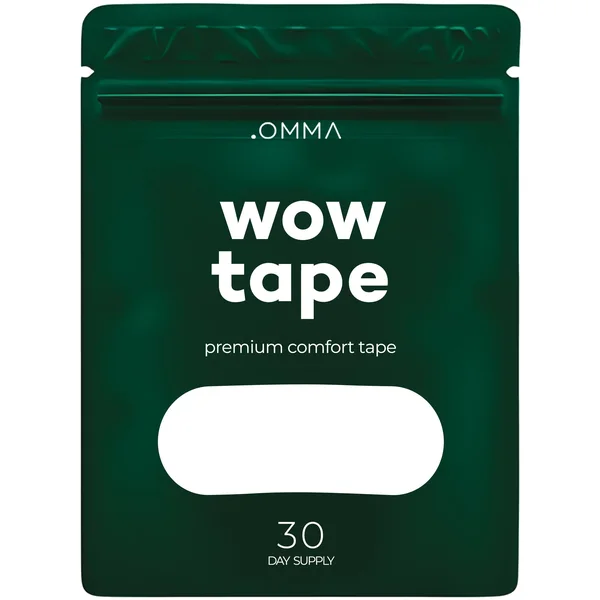
OMMA Mouth Tape for Sleeping
Pre-cut cotton strips that keep your lips closed, so you keep breathing through your nose.
Shop at OMMA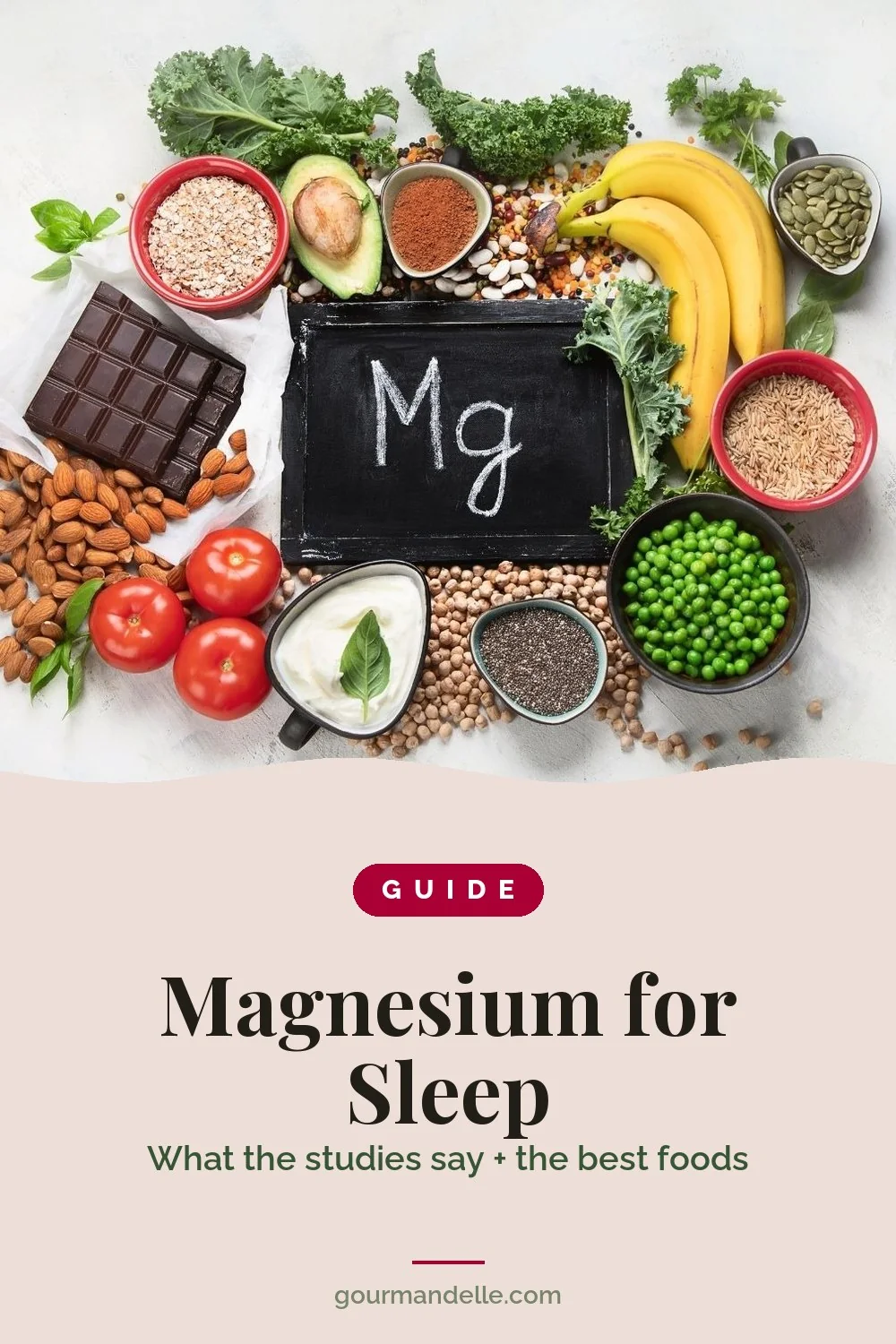
Frequently Asked Questions
Small studies suggest it can help some people fall asleep a little faster, especially older adults and people who eat little magnesium. In three pooled trials, people fell asleep about 17 minutes faster than with a placebo, although the evidence is still limited.
No form has been shown to be the best, because oxide, citrate, bisglycinate and L-threonate have never been compared directly in sleep studies. Food sources like pumpkin seeds, beans, spinach and whole grains are a good place to start.
EFSA sets an adequate intake of 300 mg a day for women and 350 mg a day for men. From supplements, the EU safe upper limit is 250 mg a day.
Among vegetarian foods, hemp seeds, pumpkin seeds, cooked spinach, black beans, quinoa, edamame, cashews and almonds are some of the richest sources.
In the studies, people usually took magnesium in the evening, and in one study about 2 hours before bed. No study has compared different times of day.
From food, it is very unlikely for healthy people. From supplements, more than 250 mg a day can cause diarrhea, and people with kidney disease should only take magnesium with their doctor’s advice.
Sources
- Abbasi B et al. The effect of magnesium supplementation on primary insomnia in elderly: a double-blind placebo-controlled clinical trial. J Res Med Sci, 2012. PubMed 23853635
- Mah J, Pitre T. Oral magnesium supplementation for insomnia in older adults: a systematic review and meta-analysis. BMC Complement Med Ther, 2021. PubMed 33865376
- Schuster J et al. Magnesium bisglycinate supplementation in healthy adults reporting poor sleep: a randomized, placebo-controlled trial. Nat Sci Sleep, 2025. PubMed 40918053
- Hausenblas HA et al. Magnesium-L-threonate improves sleep quality and daytime functioning in adults with self-reported sleep problems: a randomized controlled trial. Sleep Med X, 2024. PubMed 39252819
- Lopresti AL et al. Magnesium supplementation for sleep in adults: a systematic review of randomized controlled trials. J Diet Suppl, 2026. PubMed 42661485
- Zhang Y et al. Association of magnesium intake with sleep duration and sleep quality: findings from the CARDIA study. Sleep, 2022. PubMed 34883514
- Zhao S et al. Dietary magnesium intake is associated with self-reported short sleep duration but not self-reported sleep disorder. Brain Behav, 2025. PubMed 39910836
- EFSA. Scientific Opinion on Dietary Reference Values for magnesium, 2015. DOI 10.2903/j.efsa.2015.4186
- EFSA. Overview on Tolerable Upper Intake Levels, 2025.
- NIH Office of Dietary Supplements. Magnesium: Fact Sheet for Health Professionals, 2026.
- USDA FoodData Central, SR Legacy, for the magnesium values in the table.