How to Choose Good Honey: A Guide to Honey Types (and What Each Is Best For)
Knowing how to choose good honey mostly comes down to three things: knowing which plant it came from, reading where it was produced, and not panicking when it crystallizes. Below I compare ten honey types side by side (taste, color, sweetness, how fast they set and what each one is best for), then go through what the research actually says about them and how to spot a jar worth buying.
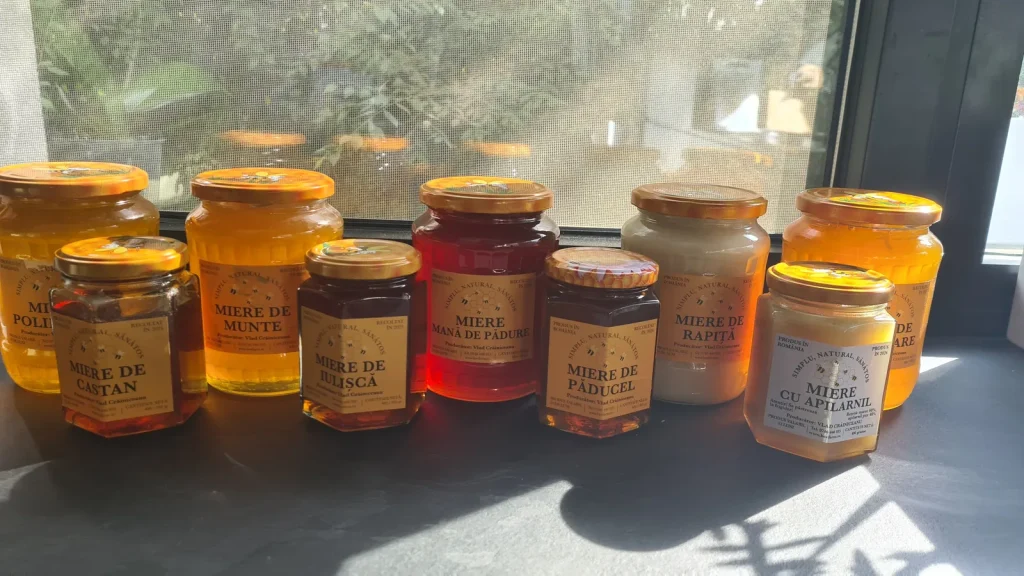
I go through a jar of honey embarrassingly fast. A spoonful goes into my tea most evenings, and my favorite dessert, honestly my favorite of all of them, takes two minutes: thick Greek yogurt, a generous drizzle of honey and a handful of walnuts. Living in Romania, where honey is sold by plant rather than as “honey”, I’ve ended up with a shelf of very different jars, and the thing that surprised me most is how little most of them taste like the honey in the squeezy bear. So this is my personal guide, from someone who eats honey every single day.
Quick answer: how to choose good honey
- Pick the type by taste and use, not by health promises: pale honeys (acacia, rapeseed) are mild, dark honeys (honeydew, chestnut, knotweed) are bold and less sweet.
- Read the origin. Since June 2026, EU honey blends must list every country of origin with percentages. A single named country, ideally a named beekeeper, beats “blend of EU and non-EU honeys”.
- Crystallized is fine. It’s natural chemistry, not a sign of fake honey.
- Suspiciously cheap is a red flag. In an EU check, 46% of imported honey samples were suspected of being cut with syrups.
- Never give honey to babies under 12 months.
Honey Types Compared at a Glance
Each honey takes its color, taste and texture from the plant the bees worked. Here’s how the ones in my kitchen compare, roughly from palest to darkest:
| Honey | Color | Taste | Sweetness | Crystallizes | Best for |
|---|---|---|---|---|---|
| Acacia | Almost clear to pale yellow | Mild, floral, vanilla-like | Very sweet | Very slowly, stays runny | Tea, syrups, dressings |
| Rapeseed | White to cream | Mild, buttery, faintly bitter | Gentle | Fast, into a fine creamy set | Toast, yogurt, baking |
| Wildflower (polyfloral) | Light gold to amber, varies | Balanced, fruity-floral | Medium | Medium | Everyday use, tea, baking |
| Mountain | Golden | Complex, sweet-bitter | Medium | Medium | Tea, porridge |
| Hawthorn | Dark yellow to amber | Sweet-tart, delicately fruity | Medium | Gradually | Tea, toast |
| Thistle (“artichoke”) | Amber-gold | Balanced, fine bitter finish | Medium | Slowly, creamy | Yogurt, cheese boards |
| Chestnut | Dark amber to reddish-brown | Bitter, malty, lingering | Low | Slowly | Aged cheese, marinades, poached fruit |
| Japanese knotweed | Very dark, almost black | Rich, caramel-like | Medium-low | Slowly, creamy | Yogurt, pancakes, dark bakes |
| Heather | Reddish-amber, jelly-like | Strong, aromatic, slightly bitter | Low | Sets like a gel | Toast, cheese, small doses |
| Honeydew (forest) | Deep ruby red | Malty, woody, resinous | Low | Slowly | Greek yogurt with walnuts, tea |
Acacia honey
Acacia honey is the palest, sweetest and most liquid honey you can buy. It comes from black locust (Robinia pseudoacacia) blossoms, and Romania is one of Europe’s big producers. It stays runny for a very long time because it contains a lot of fructose relative to glucose (Bratosin et al., 2025). To be honest, it’s too sweet for me on its own, but it’s my first pick for tea and homemade syrups: it dissolves instantly and doesn’t fight other flavors. It’s also the honey with the lowest glycemic index in the international GI tables: Romanian acacia honey measured 32, against an average of about 55 for the honeys tested (Foster-Powell et al., 2002).
Rapeseed honey
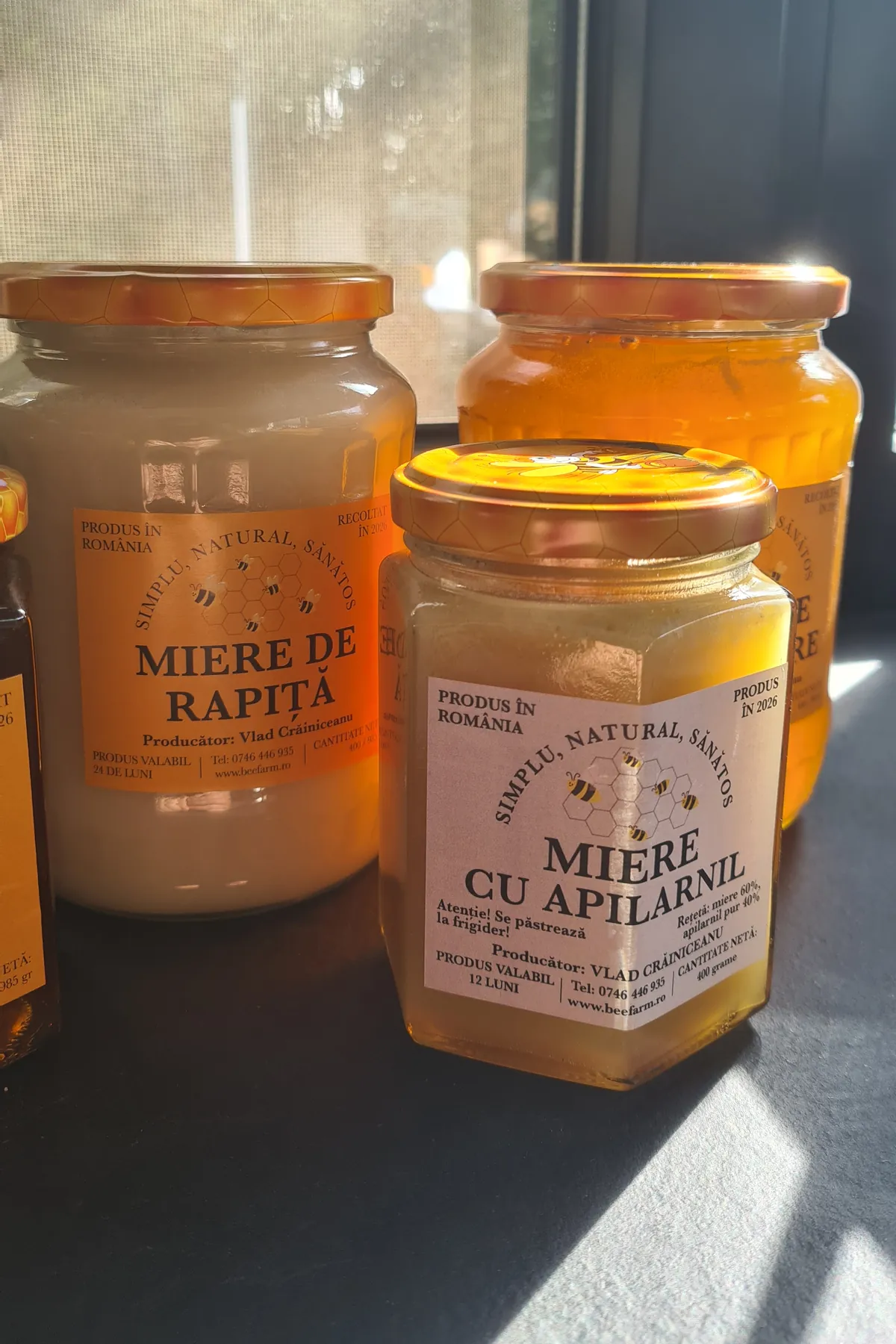
Rapeseed honey is the one that turns white and creamy within days of harvest. It has a lot of glucose, so it crystallizes fast into a fine, spreadable texture (Bratosin et al., 2025). Many people return it thinking it has “gone off”, and that’s a shame, because it’s my number one. It’s pale, buttery, not very sweet, and spreads on toast like soft butter. It’s also one of the cheapest honeys, which makes it my baking honey.
Wildflower (polyfloral) honey
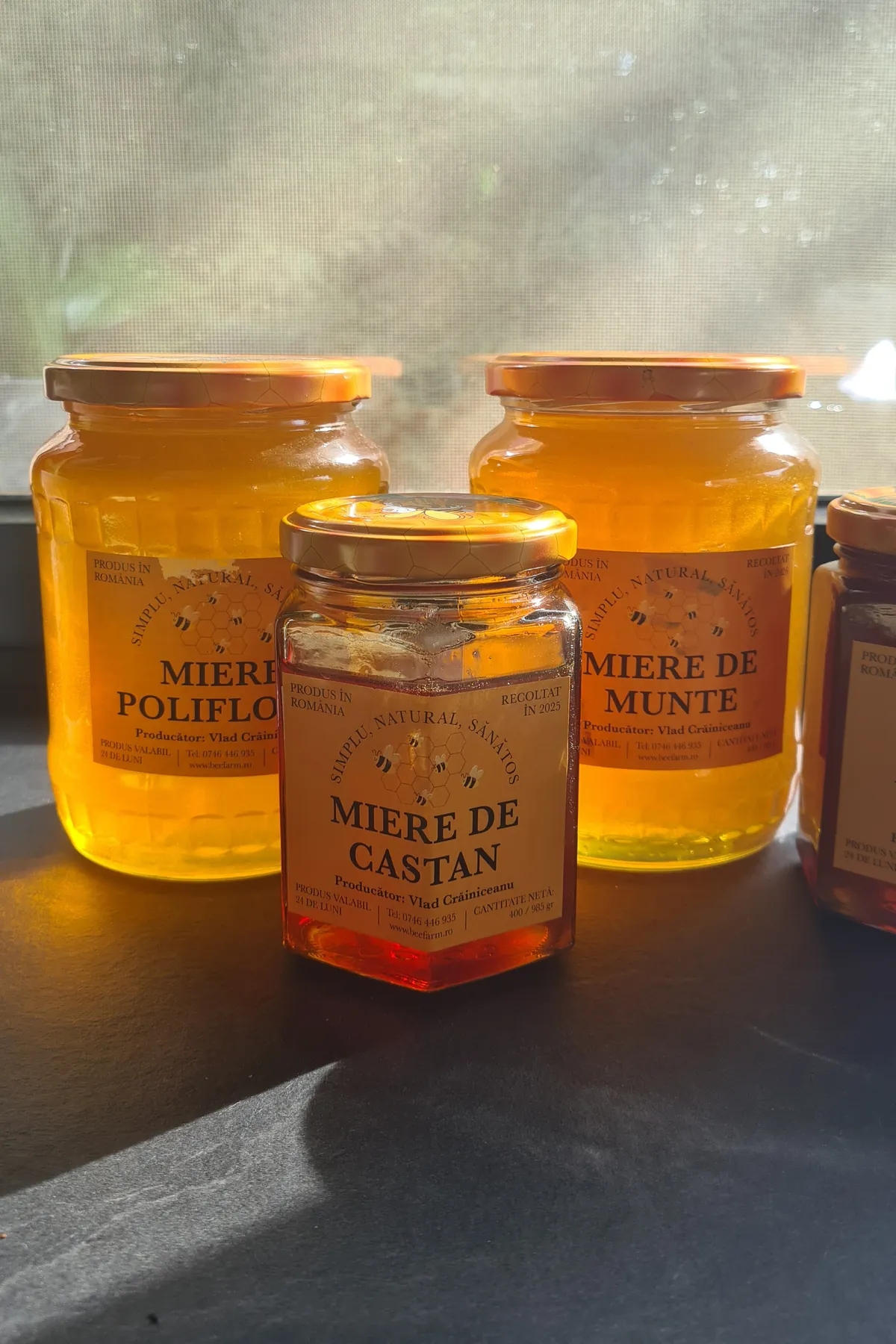
Wildflower honey is made from many plants at once, so no two jars taste exactly the same. It’s usually golden, balanced and slightly fruity, the “default honey” taste most people grew up with. It’s a good all-rounder when you don’t want to think about it.
Mountain honey
Mountain honey is a wildflower honey from high-altitude meadows, usually darker and more complex than lowland honey. The jar I have is golden, as bright as the wildflower one, but with a pleasant sweet-bitter finish that lingers. It’s great stirred into porridge or tea when acacia feels too plain.
Hawthorn honey
Hawthorn honey is a delicate, slightly tart honey from hawthorn blossoms (Crataegus). It’s amber and fruity, a bit like a softer, more interesting wildflower honey. You’ll often see heart-health claims attached to it; those come from studies on the hawthorn plant, and I couldn’t find a single study on the honey itself.
Thistle honey (sold as “artichoke honey”)
What Romanian beekeepers call “artichoke honey” usually comes from wild thistles on the southern plains. It’s amber-gold, creamy and balanced, with a fine bitter note at the end that makes it lovely with cheese. Labels sometimes promise liver benefits “from cynarin”, the compound in artichoke leaves. The few studies on thistle honey look only at its composition, and none has reported cynarin in it (Tuberoso et al., 2011).
Chestnut honey
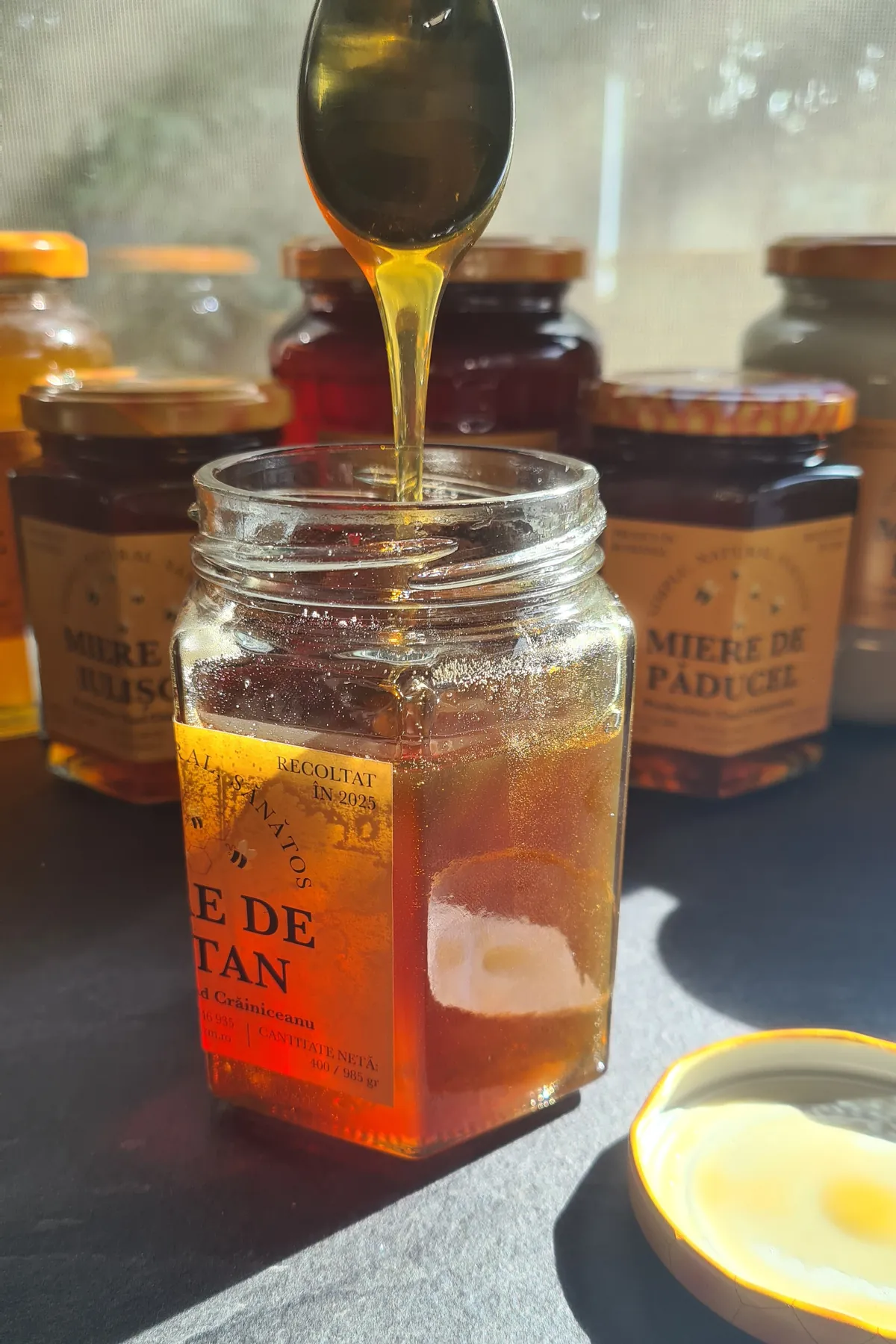
Chestnut honey is the most bitter honey in this list, and that’s exactly the point. It’s dark, malty and lingers for a long time. I don’t use it in tea, but with aged cheese, in a marinade, or drizzled over stewed quince it’s wonderful. It contains unusually high amounts of kynurenic acid compared with other honeys (Turski et al., 2016), but the anti-inflammatory effects of that compound have only been shown in rodents so far, so treat that as a curiosity, not a reason to buy it.
Japanese knotweed honey
Knotweed honey is an almost black, caramel-like honey from the late-summer flowers of Japanese knotweed. In Romania beekeepers sell it as iulișcă. A Romanian study found its phenolic content and antioxidant activity were comparable to buckwheat honey (Cucu et al., 2024). Producers often advertise “resveratrol” (knotweed root is a commercial source of it). The honey does contain some, but only in trace amounts (0.17–1.69 mg per kg), far too little to matter.
Heather honey
Heather honey is the one that behaves like jelly: it sets in the jar and turns runny only when you stir it. That’s called thixotropy, and it’s a known trait of heather honey (Witczak et al., 2011). It’s strong, aromatic and slightly bitter. In an Irish study it had the highest phenolic content of the honeys tested (Browne et al., 2025), and in lab tests it inhibited bacterial biofilms (Shirlaw et al., 2020). It is sometimes marketed as a “local manuka”. In a Scottish comparison it was active, but less so than manuka (Fyfe et al., 2017).
Honeydew (forest) honey
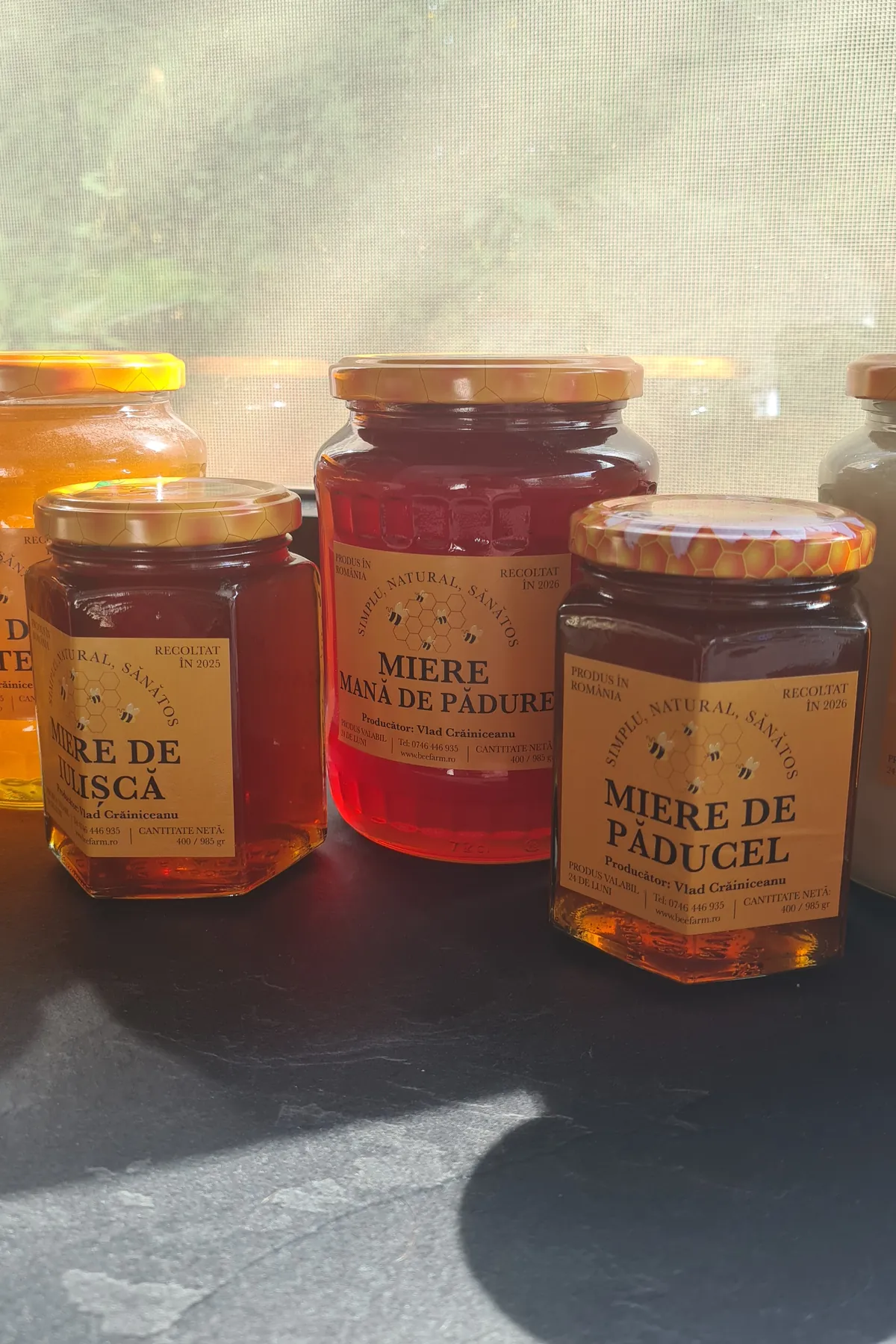
Honeydew honey isn’t made from flower nectar at all: bees collect the sweet secretions that sap-sucking insects leave on tree leaves and needles. That’s why it’s dark (mine is a deep ruby red that glows in the light), malty, woody and much less sweet than flower honey. Mine comes from maple, beech and oak forests, and it’s my number two. There is always a jar in my house, and it’s the one on my yogurt with walnuts. I explain how it differs from blossom honey just below.
Blossom Honey vs Honeydew Honey: What’s the Difference?
Blossom honey comes from flower nectar; honeydew honey comes from secretions on trees. EU law treats them as two separate categories. Compared with blossom honeys, honeydew honeys are darker and less sweet. They have fewer simple sugars, higher acidity and higher electrical conductivity (a proxy for mineral content), and they contain more protein, minerals and phenolic compounds (Seraglio et al., 2019). In a study of 24 Romanian honeys, honeydew came out as “the most valuable” type, and antioxidant activity rose with phenol and flavonoid content (Al et al., 2009). In the lab, honeydew honey also shows strong antibacterial activity (Bucekova et al., 2018).
The general rule that follows is simple: the darker the honey, the more antioxidants it tends to have. A Slovenian study found the lowest antioxidant activity in the palest honeys (acacia, linden) and the highest in the dark forest and fir honeys, with color clearly linked to the numbers (Bertoncelj et al., 2007).
Which Honey for What
| Use | My pick | Why |
|---|---|---|
| Tea | Acacia, wildflower | Mild, dissolves fast, doesn’t clash |
| Greek yogurt with walnuts | Honeydew, knotweed | Less sweet, deep flavor that stands up to the nuts |
| Toast | Rapeseed, heather | Spreads instead of dripping |
| Baking | Rapeseed, wildflower | Affordable, neutral |
| Cheese boards | Chestnut, thistle | The bitterness balances salty cheese |
| Drinks and syrups | Acacia | Stays liquid, clean taste. Try it in hibiscus lemonade |
| Raw desserts | Acacia, wildflower | Mild enough not to dominate, as in raw halva or coconut balls |
A note on tea: I let the tea cool to drinking temperature before stirring in the honey. Heat forms HMF and breaks down honey’s natural enzymes, which is why these are used as freshness markers for honey (Shapla et al., 2018). No study shows that honey in hot tea becomes “toxic”, as you sometimes read online. You just lose some of what makes raw honey raw. The same goes for rose petal tea or any herbal infusion.
What the Studies Say (and What They Don’t)
Honey is still sugar. The WHO counts it as a “free sugar” and recommends keeping free sugars under 10% of daily calories, ideally under 5%, which is about 6 teaspoons (WHO, 2015). With that in mind, this is where the evidence actually stands:
| Claim | What the research shows | Strength |
|---|---|---|
| Honey helps with cough | In children over 1 year, honey probably relieves cough better than no treatment or placebo (Cochrane review, 2018). In adults and children with colds, it beat usual care for cough symptoms (Abuelgasim et al., 2021) | Human trials, moderate |
| Honey vs sugar for blood sugar and cholesterol | A meta-analysis of trials found small improvements in fasting glucose and blood lipids with honey, especially raw honey and acacia (robinia) honey, eaten within a healthy diet (Ahmed et al., 2023). The authors call for more research | Human trials, low-moderate |
| Dark honeys have more antioxidants | Consistent in lab analyses (Al et al., 2009; Bertoncelj et al., 2007) | Lab |
| Honeydew and heather honey are antibacterial | Shown in the lab only (Bucekova et al., 2018; Shirlaw et al., 2020) | Lab only |
| Hawthorn, thistle and linden honey have specific health benefits | No studies on these honeys themselves. The claims are borrowed from the plants | None |
How to Choose Good Honey
- Look for a named origin. In 2021-2022, EU authorities sampled 320 imported honey consignments, and 46% were suspected of being bulked out with sugar syrups (European Commission, “From the Hives”). Since 14 June 2026, EU labels on honey blends must list every country of origin, largest share first, with percentages (Directive (EU) 2024/1438). Jars packed before that date can still be sold until stocks run out.
- Buy from a beekeeper when you can. A named producer, a region and a harvest year are the best guarantees you’ll get without a lab.
- Be suspicious of a very low price. Good honey takes bees, time and transport. If a 1 kg jar costs less than the sugar it would take to fake it, ask why.
- Don’t judge by runniness. Liquid doesn’t mean pure, and crystallized doesn’t mean fake. How fast a honey sets depends on its glucose-to-fructose ratio and water content (Escuredo et al., 2014). Rapeseed sets in days; acacia can stay liquid for a very long time.
- Choose by taste, not by health claims. The health differences between honey types are small and mostly measured in the lab. Pick the one you’ll actually enjoy using.
Honey Myths I Stopped Believing
- “Crystallized honey is fake or spoiled.” No. It’s just glucose coming out of solution. Warm the jar gently in a water bath (not above about 40°C / 104°F) if you want it runny again.
- “The water test (or thumb test, or flame test) shows if honey is pure.” None of these home tricks can detect syrup. Adulteration is found with lab analysis, which is exactly why the EU had to run its own checks.
- “Honey in hot tea turns toxic.” There’s no evidence of that. Heat does reduce enzymes and freshness markers, so let the tea cool a little first.
- “Darker honey is always better.” It tends to have more antioxidants, but you won’t eat a honey you don’t like. Rapeseed is pale and still my favorite.
What About Apilarnil?
Apilarnil is not honey: it’s a paste made from drone bee larvae, often sold mixed into honey. That also means it is not vegetarian. It’s rich in protein, fats and vitamins, and contains small amounts of hormones such as testosterone. It’s marketed in Eastern Europe for “vitality” and male potency. The research is almost entirely in rats, including studies showing raised testosterone (Sidor & Dżugan, 2020; Elashal et al., 2024). I haven’t found a single controlled trial in humans. I’m mentioning it because it’s everywhere in Romanian honey shops, not because I recommend it.
How to Store Honey
Keep it in a closed glass jar at room temperature, away from the stove and direct sun. The fridge only speeds up crystallization. Use a dry spoon, because water is what lets honey ferment. Stored well, honey keeps for years; most producers print a 2-year best-before date.
FAQ
No. Honey shouldn’t be given to children under 12 months in any form (not in food, drinks or on a pacifier) because of the risk of infant botulism (CDC).
Honeydew, chestnut and heather honey are the least sweet. Rapeseed is the mildest of the pale honeys.
Acacia, because it dissolves instantly and has a clean, mild taste. Add it once the tea has cooled to drinking temperature.
No. Crystallization is natural and depends on the honey type. Rapeseed sets within days, acacia stays liquid much longer. Warm it gently to make it runny again.
Slightly, in some studies: trials found small benefits for blood sugar and cholesterol, especially with raw and acacia honey. But it still counts as free sugar, so it’s a “better sugar”, not a health food.
Yes, honey is vegetarian (though not vegan). Apilarnil, sold alongside honey, is not vegetarian, because it’s made from bee larvae.
Honeydew honey is made from sweet secretions on tree leaves and needles rather than from flower nectar. It’s darker, less sweet and richer in minerals and phenolic compounds than blossom honey.
Sources are linked throughout. The health information here is general and is not medical advice.