Pickled Purslane
Pickled purslane is a tangy, crunchy condiment made by briefly blanching fresh purslane and packing it into a jar with a hot, spiced vinegar brine. It takes a common garden weed and turns it into something you can spoon over soups, stews, potatoes, and fish. Below is exactly how I make it at home, along with a few notes to get the texture and flavor right.
A Weed Worth Foraging
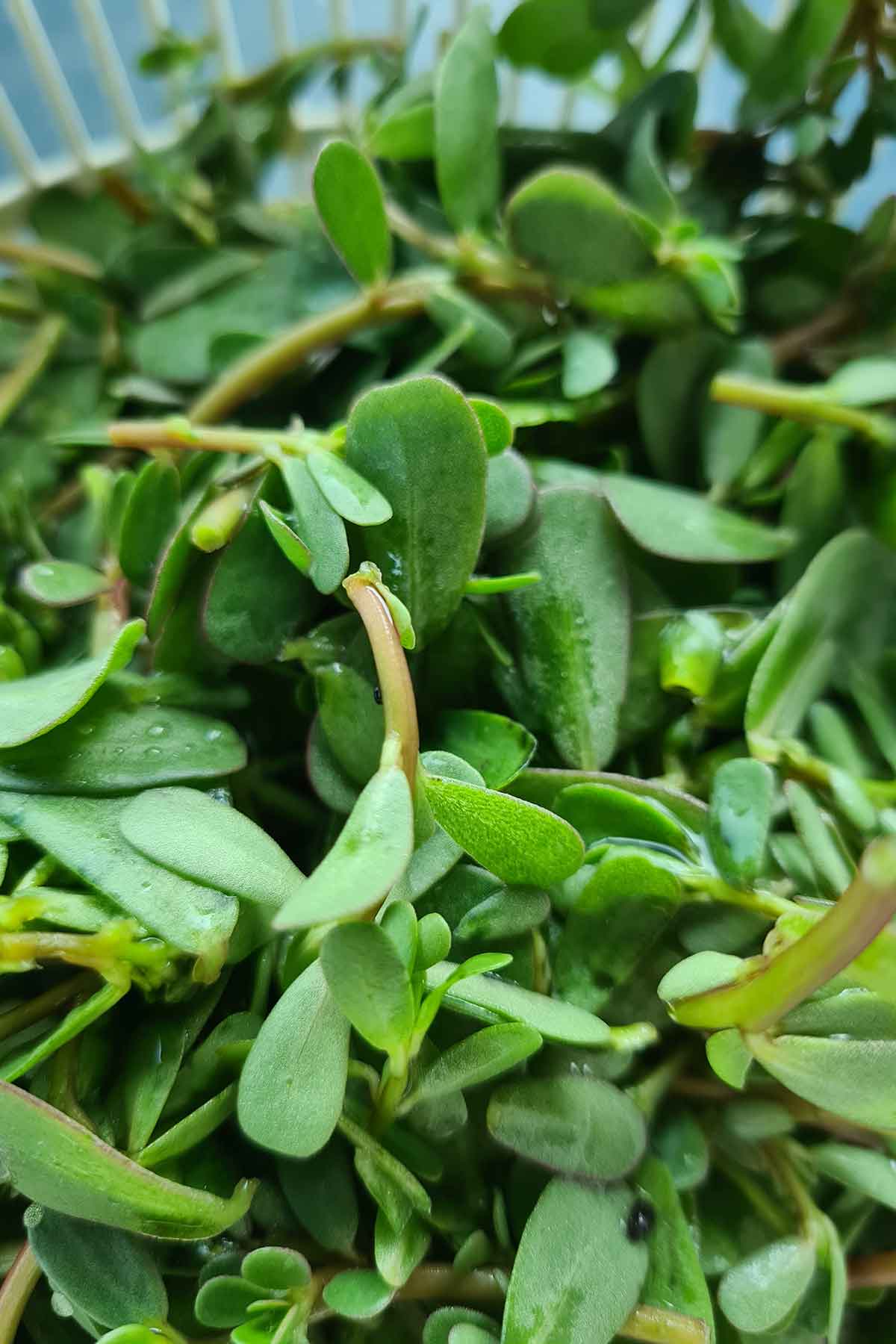
Purslane is a very common weed where I live, and you can find it almost everywhere. It thrives in hot and dry conditions, pretty much everywhere in my opinion, which makes it a popular choice for drought-tolerant gardens. I have it in many places over my garden and it self-seeds regularly. Ever since I discovered its benefits and started eating it, the spread stopped a little. But each plant comes with so many tiny seeds, so as long as I leave a couple of flowering purslanes in my garden, I will always have some for the next year.
If you want to know more about why this humble plant is worth eating, I wrote a whole post on the benefits of purslane that goes into detail. The leaves, stems, and flowers are all edible, and they work in salads, sandwiches, or cooked dishes.
Why This Is My Favorite Purslane Recipe
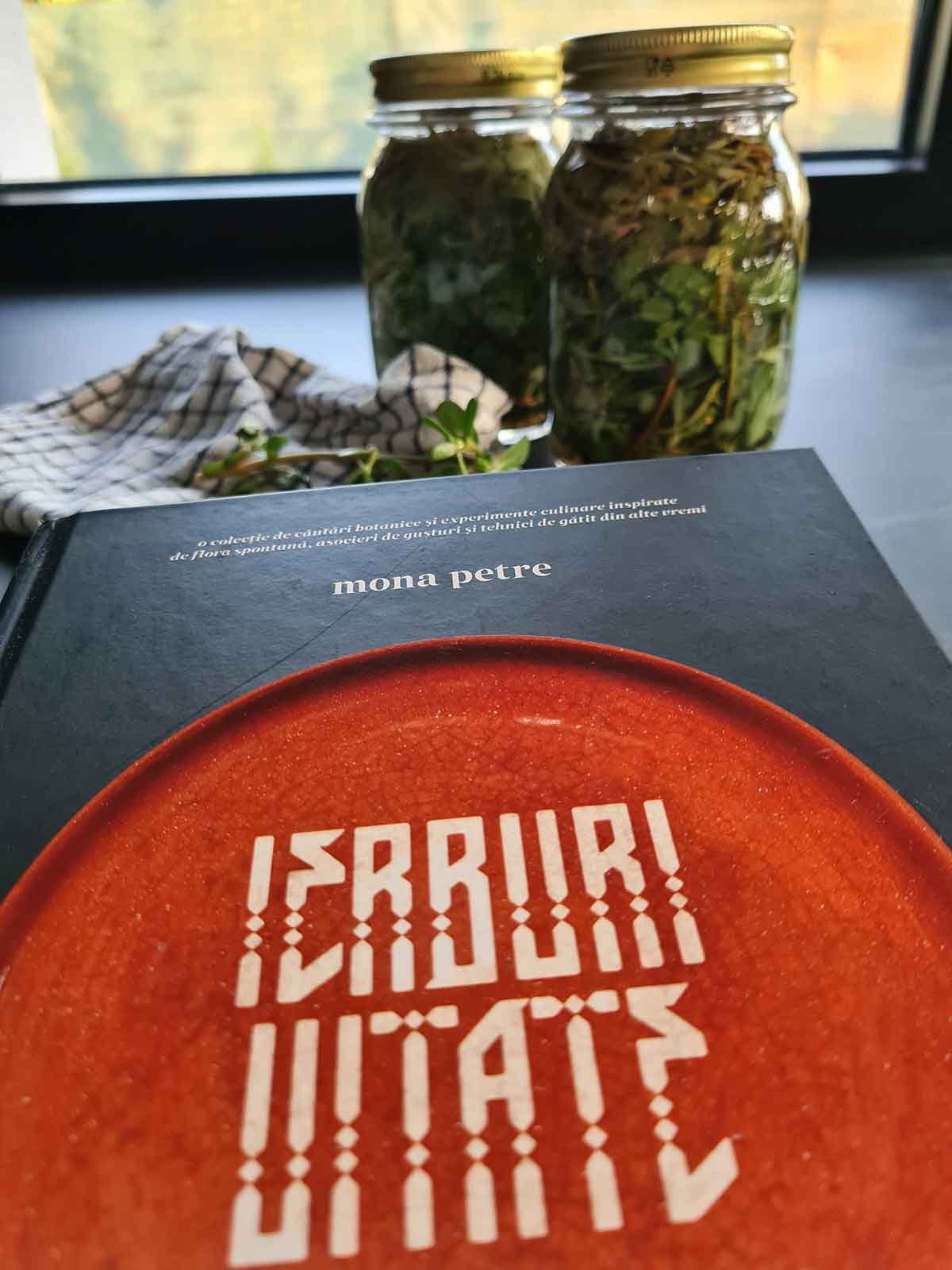
There are so many delicious and interesting recipes with purslane you can try, but my favorite by far is pickled purslane. I discovered this recipe in one of my favorite cookbooks, “Ierburi uitate” (“Forgotten herbs”), which features recipes built around weeds and lesser-known plants. It is the kind of preserve that makes you look at your garden differently, because suddenly the thing you were pulling out becomes the thing you reach for at the table.
What Goes Into the Jar
This is a short ingredient list, and every item earns its place. Here is what you will pack into the jar:
- Fresh purslane, whole leaves and stems, about two handfuls. Younger stems stay tender and crisp, so those are the ones to pick.
- 4 garlic cloves, sliced, for a savory backbone.
- 200 ml white wine vinegar plus 100 ml water, which together make the tangy brine.
- 1 tsp pickling salt, which seasons the brine and helps preserve.
- A whole-spice mix: about a third of a teaspoon of peppercorns, a third of a teaspoon of fennel seeds, half a teaspoon of mustard seeds, and half a teaspoon of whole allspice.
The whole spices are what give the jar its warm, aromatic edge. Keep them whole rather than ground so the brine stays clear and the flavor releases slowly.
How to Pickle Purslane Step by Step
Start by harvesting fresh purslane, choosing the younger stems with leaves, and rinsing them well under cold water. While you prep, sterilize your jar. I simply wash it and place it in the oven at 150C for 15 minutes so it is clean and dry when the purslane goes in.
Next, bring a large pot of water to a boil, add the purslane, and let it boil for just one minute. This quick blanch is important, so do not walk away from it. Lift the purslane out and drop it straight into a bowl of ice water to stop the cooking. That ice bath is what keeps the leaves and stems from going limp, so it is the difference between crunchy pickles and mushy ones.
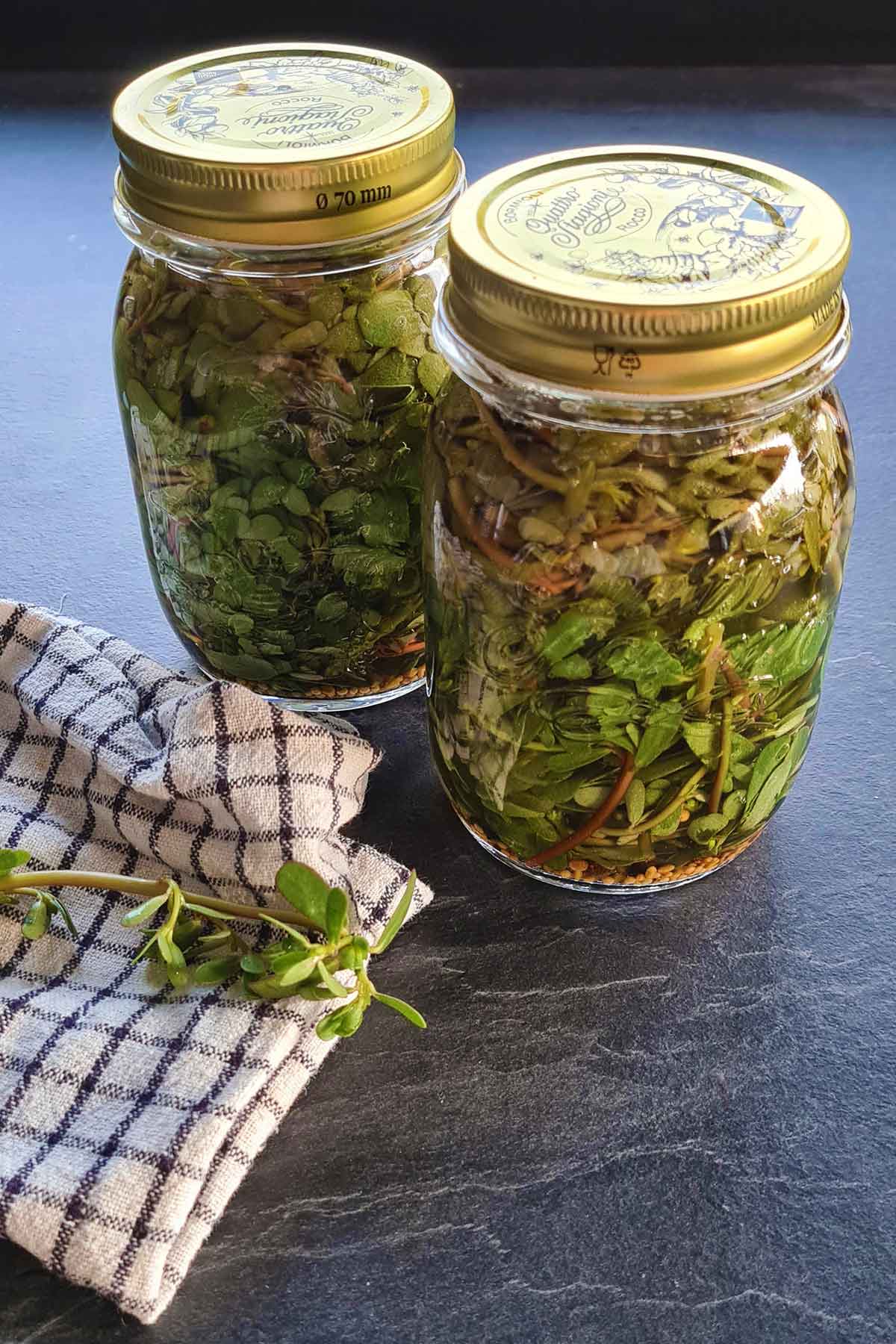
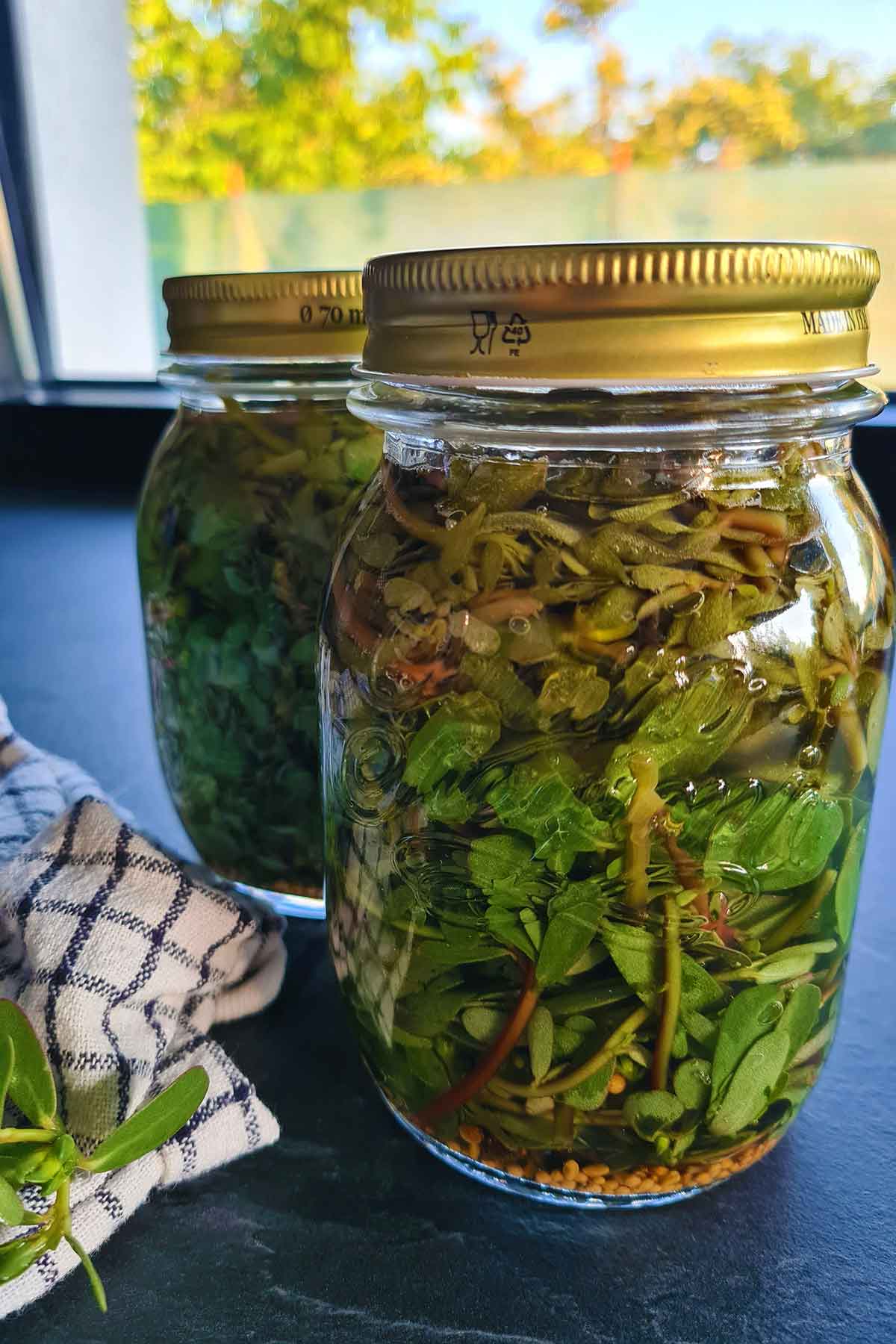
In a small pot, heat the vinegar, water, salt, and spices, and bring the brine to a boil. Stuff all the blanched purslane into the sterilized jar, then pour the hot vinegar solution over the top so everything is submerged. Put the lid on and let the jar cool slowly at room temperature. Pouring the brine in while it is hot helps create a good seal as the jar cools.
Storing Your Pickled Purslane
Once the jar has cooled and sealed, it can last a few months in the pantry. After you open it, keep it in the fridge and use a clean utensil each time you reach in. A properly sterilized jar and a fully submerged batch are your best insurance for a long, safe shelf life, so take the extra minutes at the start.
Ways to Enjoy It
You can add pickled purslane to soups, and it goes so well with fish and also with potatoes, but I pretty much eat it with anything. It brings a bright, briny lift to rich or starchy dishes, the way any good pickle does. Spoon a little onto a grain bowl, tuck some into a sandwich, or set it out as part of a snack board and let it do its job.
If you forage a jar of your own, I would love to know where you ended up spooning it. Give the recipe a star rating and leave a comment below to tell me what you paired your pickled purslane with.
Summarise & Save This Recipe
★ Add us as a trusted Google source
Pickled purslane
Ingredients
- fresh purslane whole (leaves and stems), about two handfuls
- 4 cloves garlic sliced
- 200 ml white wine vinegar
- 100 ml water
- 1 tsp pickling salt
- ⅓ tsp peppercorns
- ⅓ tsp fennel seeds
- ½ tsp mustard seeds
- ½ tsp allspice whole
Instructions
- Harvest the fresh purslane. Choose the younger stems with leaves and rinse them well under cold water.
- Sterilize the jar: wash it, then place it in the oven at 150C for 15 minutes.
- In a large pot, bring water to a boil – enough to submerge the purslane. Add the purslane and boil for just one minute, then remove it and transfer to a bowl of ice water.
- In a small pot, heat the vinegar with the salt, spices and water. Bring to a boil.
- Pack all the purslane into the jar and pour the hot vinegar solution over it.
- Put the lid on and let it cool slowly at room temperature.
Notes
Frequently Asked Questions
Yes. This recipe is made only with purslane, garlic, white wine vinegar, water, pickling salt, and whole spices, so it contains no animal products. It is both vegan and naturally gluten-free.
Yes, a quick one-minute blanch followed by an ice-water bath is the key step. The boil softens the purslane just enough, and the ice bath stops the cooking so the leaves and stems stay crunchy instead of turning limp. Skipping the ice bath is the most common reason pickles come out soft.
A properly sealed jar can last a few months in the pantry. Once you open it, store it in the fridge and use a clean utensil each time. A well-sterilized jar and fully submerged purslane are what keep it good for the long haul.
It is tangy and briny from the white wine vinegar, with a savory note from the sliced garlic and a warm aroma from the peppercorns, fennel, mustard, and allspice. The purslane itself stays pleasantly crunchy, so it eats like a bright, herbaceous pickle.
Add it to soups, or pair it with fish and potatoes, which is how I use it most often. It also works spooned onto grain bowls, tucked into sandwiches, or set out on a snack board. It brings a fresh, acidic lift to rich or starchy dishes.
You can use the whole plant, both leaves and stems. Choose the younger stems, since they stay tender and crisp after blanching, while older, tougher stems can be woody. Rinse everything well in cold water before you start.