
Stewed Quince Dessert (Romanian Autumn Recipe)
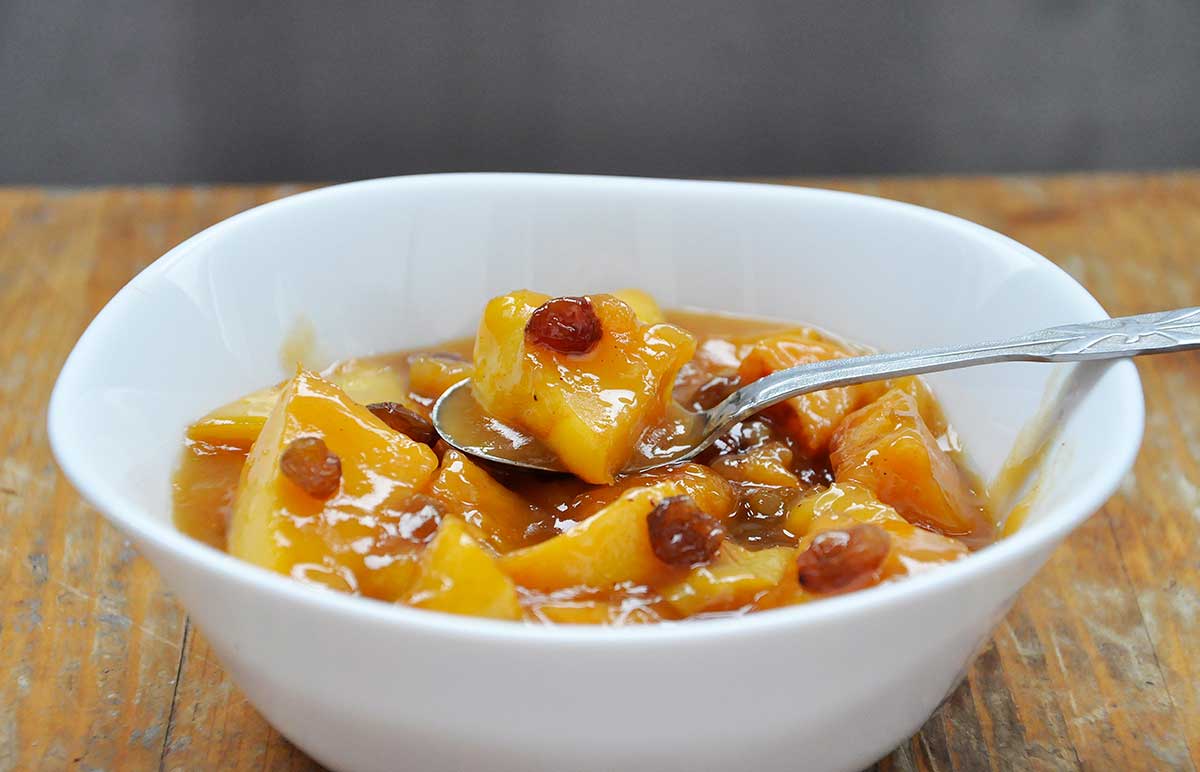
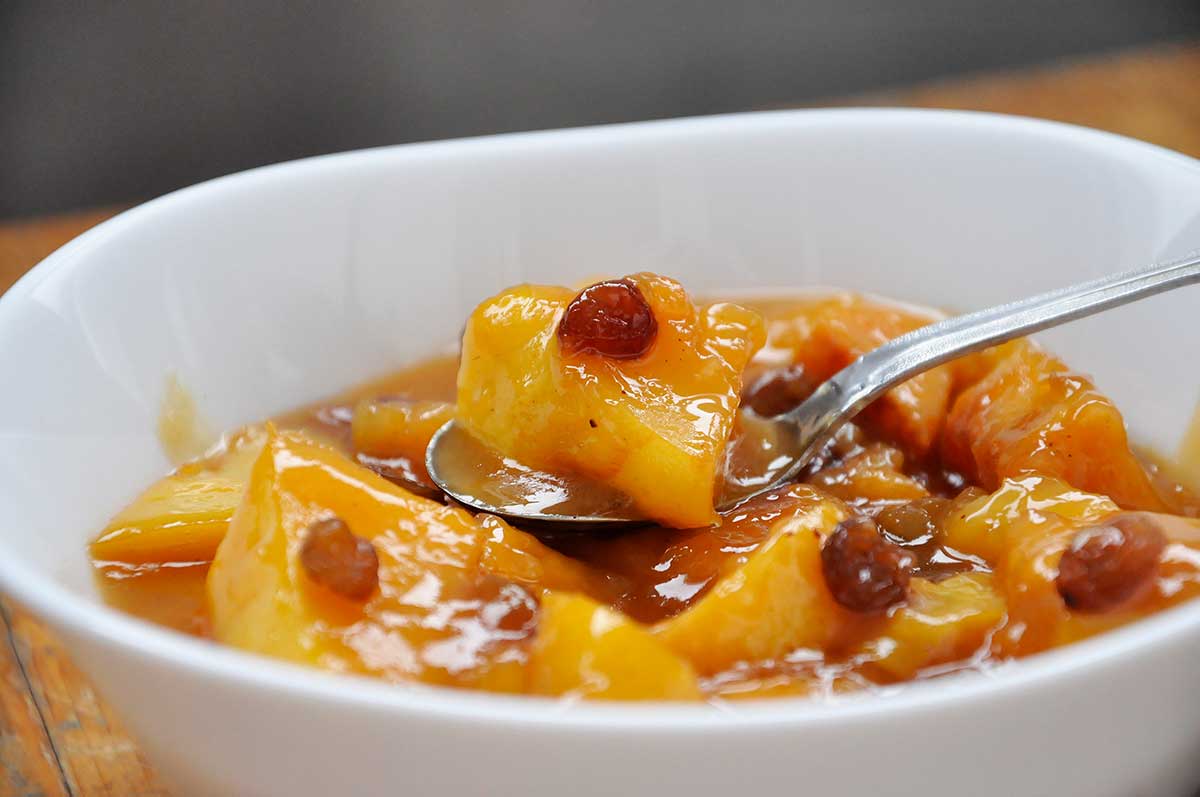
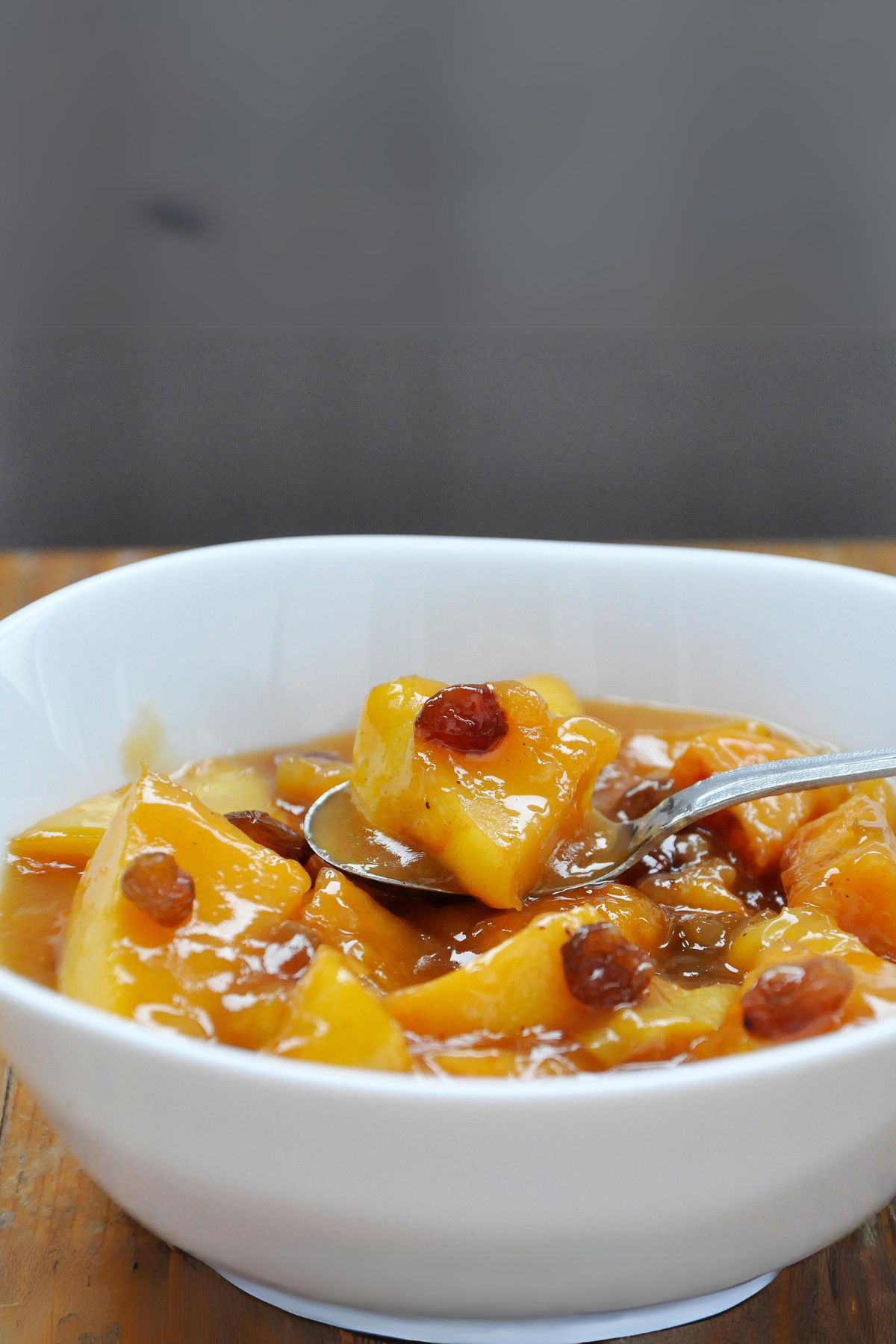
Stewed quince dessert is a Romanian autumn recipe made with peeled and diced quinces cooked with sugar, raisins, cinnamon, vanilla, and lemon juice until the fruit softens and the cooking liquid reduces to a light amber syrup. It takes about 40 minutes and serves 4. The quinces start pale and firm, then turn deep pink as they cook — a natural color change from their tannins reacting with heat that requires nothing extra. Serve warm on its own or with a spoonful of vegan yogurt or coconut whipped cream.
This Recipe Works If You Need
- A seasonal autumn dessert that uses a fruit most people overlook
- A one-pot recipe with no baking required — done entirely on the stovetop
- A traditional Romanian recipe for a holiday table or family gathering
- A naturally vegan dessert that is not overly sweet and tastes even better the next day
Why You’ll Love This Recipe
- One pot, 40 minutes — no baking, no complicated steps, everything happens in a single pan
- The quinces turn deep pink on their own — no food coloring, just the fruit reacting to heat
- Keeps for 3 days in the fridge — the syrup intensifies overnight, so leftovers are genuinely better
- Works warm or cold — equally good as a warm dessert in autumn or chilled straight from the fridge
About Quinces
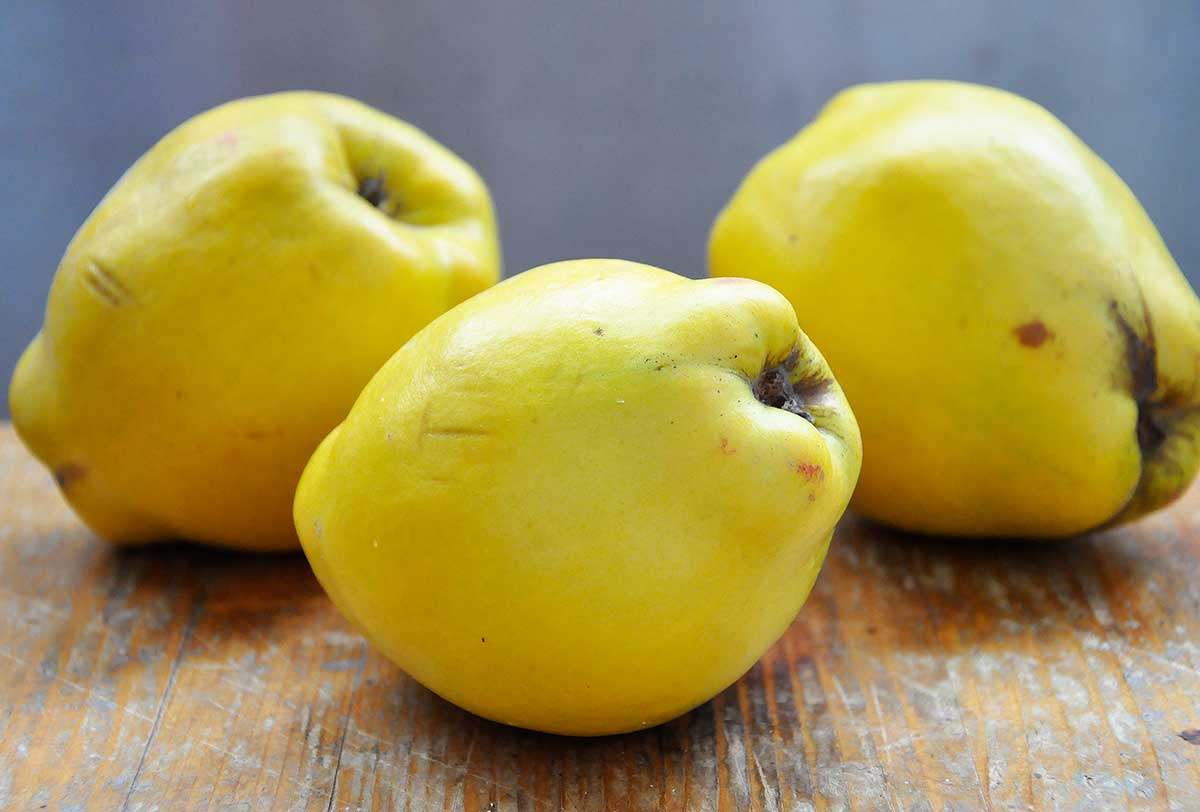
Quinces are one of those fruits that very few people eat raw — they are hard, astringent, and have almost no sweetness straight off the tree. Cooked, they transform entirely. The flesh softens, the bitterness disappears, and the natural floral aroma becomes much more pronounced. They are also one of the few fruits that turn a vivid pink-red during cooking without any added color, which makes them spectacular in desserts.
In Romanian cuisine, quince recipes appear every autumn and are treated as a seasonal staple — stewed like this recipe, baked whole, made into jam, or preserved in compote. The same fruit appears in very different forms across Eastern European and Mediterranean cooking: in Spain it becomes membrillo paste served with cheese, in Persia it goes into a savory stew with saffron, in Greece it is cooked in thick syrup and served over yogurt, in Morocco it appears in lamb tagine. The same fruit, very different uses — all relying on the way cooking unlocks what raw quinces hide.
Ingredient Notes
Quinces — Choose ripe, fully yellow quinces that have a strong floral fragrance. Avoid any with soft spots or brown patches. Underripe quinces are too astringent and will not develop the pink color or rounded flavor during cooking. Quinces have a fuzzy film on the skin that must be scrubbed off under cold running water before peeling. They oxidize quickly once cut, so keep them in water with a squeeze of lemon juice until ready to cook.
Sugar — Regular white sugar works well. Brown sugar adds a slightly caramel note to the syrup, which pairs well with the cinnamon. Honey can be used instead — add it at the end of cooking rather than at the start, as boiling honey changes its flavor.
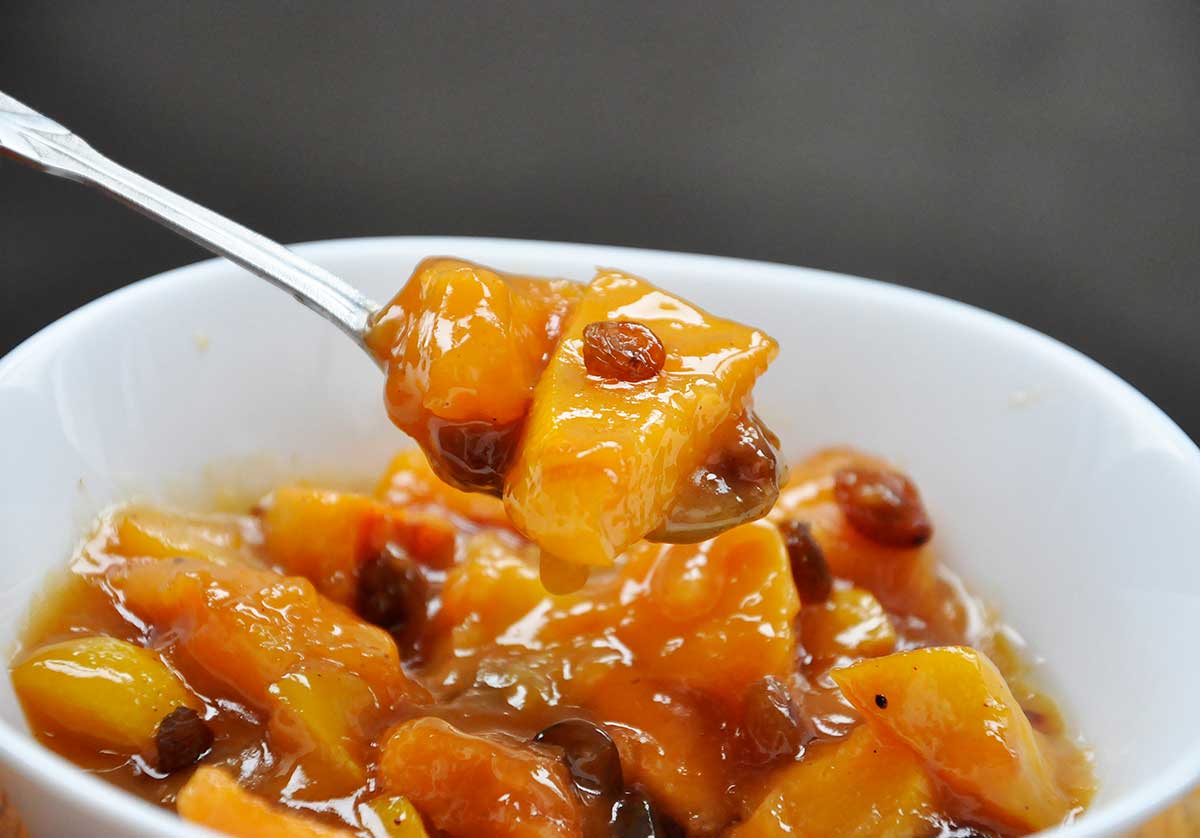
Raisins — These plump up as the quinces cook and absorb the spiced cooking liquid. Golden raisins are slightly less sweet than regular ones and hold their texture better. You can skip raisins entirely if you prefer a cleaner flavor, but they add a traditional character to the Romanian version of this dish.
Cinnamon and vanilla — Both are essential here. A cinnamon stick gives a gentler, more rounded flavor than ground cinnamon and can be fished out before serving. Vanilla extract works well; a split vanilla pod simmered with the quinces adds a more pronounced flavor.
Lemon juice — Added at the start for two reasons: it slows down oxidation and helps the quinces hold their shape during cooking. It also brightens the finished syrup and balances the sweetness.
How to Prepare Quinces
Quinces need a little more work than most fruit. Follow these steps before starting the recipe:
- Scrub — Wash quinces well under cold running water, scrubbing off the fuzzy film with a soft brush or cloth.
- Peel — Use a sharp vegetable peeler or knife. Quince skin is thick and tough; a standard peeler requires a bit more pressure than with apples or pears.
- Halve and core — Cut each quince in half from tip to base. The core is woody and the seeds are hard — remove them with a melon baller or a small sharp knife.
- Dice — Cut into 2 to 3 cm pieces. Work quickly and drop them into a bowl of cold water with lemon juice to prevent browning.
Tips
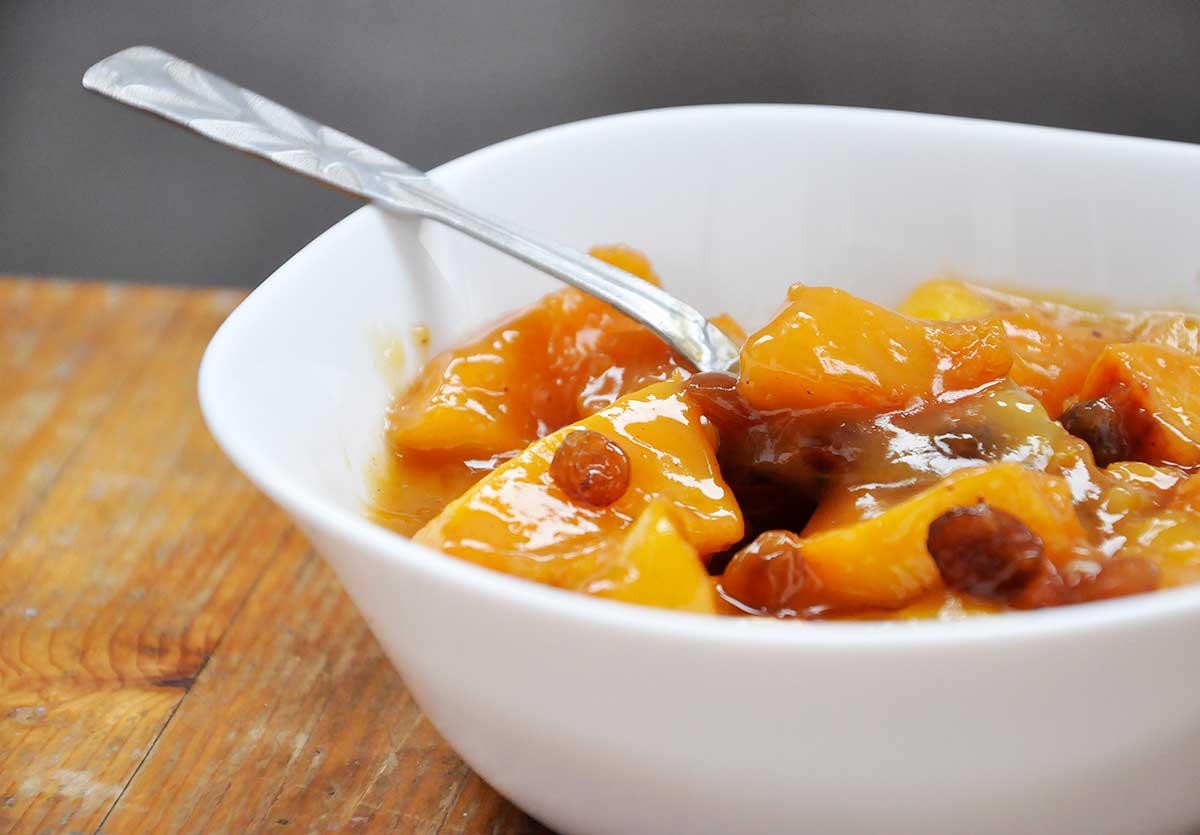
- Keep the heat on medium-low once the liquid is simmering. High heat makes the quinces mushy on the outside before the inside is cooked through. Low and slow gives you pieces that hold their shape with a soft but not collapsed texture.
- The liquid should reduce to a syrup — not too thick, not too watery. If it is still very liquid after the quinces are soft, remove the lid and let it cook uncovered for 5 more minutes.
- The pink color deepens as the dessert cools and sits. If it looks pale yellow in the pot, don’t worry — it will look much richer after a few hours in the fridge.
- Taste the syrup before serving and adjust sweetness. Quinces vary a lot in natural acidity depending on the variety and ripeness.
Substitutions and Variations
Replace raisins with dried cranberries — Slightly more tart than raisins, they add a different kind of sweetness and look striking against the pink quinces.
Add star anise or cloves — One star anise or 2 to 3 whole cloves added at the start give the cooking liquid a deeper, more complex spice character. Remove before serving.
Baked version — Place the peeled, halved quinces cut-side up in a baking dish, fill the centers with sugar and a little butter, add water to the dish, and bake at 180°C for 45 to 60 minutes until completely soft and deep pink. A different texture to the stewed version — more caramelized on top.
Use honey instead of sugar — Stir in honey at the very end, off the heat, so it doesn’t cook and lose its floral notes. Chestnut or acacia honey both work well with quince.
Storage and Make Ahead
Store in an airtight container in the fridge for up to 3 days. The syrup thickens slightly as it cools and the color deepens — day two is genuinely better than day one. Serve cold straight from the fridge or reheat gently in a small saucepan over low heat for 5 minutes. Do not boil when reheating or the quinces will break down.
This dessert can be made up to 2 days ahead — it is actually ideal for entertaining because all the work is done in advance. For more autumn quince recipes, try this Autumn Quince Pudding with Raisins and Walnuts — it uses the same seasonal flavors in a baked format.
Romanian Stewed Quince Dessert
Ingredients
- 3 quinces
- 3 tbsp olive oil or butter
- 1 tbsp rice flour mixed with 2 Tbsps water (you can also use regular flour or cornstarch)
- 50 g brown sugar
- ½ tbsp cinnamon
- 1 tsp ground cloves
- 3 tbsp raisins
- ½ tsp vanilla extract
- 1 tsp rum extract
- 1 pinch salt
- 200 ml water
Instructions
- Put water in a small bowl. Pour sugar and stir until dissolved.
- Chop quinces in bite-size pieces; remove the inner, hard core.
- Add oil in another pan. Pour the sugar sauce. Add chopped quinces.
- Boil for 10 minutes over medium heat. Add more water if needed.
- Add a pinch of sea salt, dissolved flour, cinnamon, ground cloves, raisins, vanilla and rum extracts.
- Boil for another 20 minutes, or until soft. Don't forget to stir continuously to avoid burning the sauce.
- Serve either hot or cold.
Notes
FAQ
Cooked quinces have a floral, slightly honey-like flavor with a subtle tartness. They are often described as a combination of apple, pear, and rose — sweeter and more aromatic than either. The texture after proper cooking is soft but still holds its shape, similar to a well-cooked firm pear. The bitterness and astringency that make raw quinces unpleasant completely disappear during cooking.
Quinces contain tannins and pigment compounds that react with heat to produce pink, orange, and red hues. The longer and slower the cooking, the deeper the color. The presence of acid (lemon juice) and sugar also influences the final shade — more acid tends to produce brighter pink tones. The color change is entirely natural and requires no added ingredients to trigger it.
Technically yes, but most people find raw quinces unpleasant. They are very hard, quite astringent, and low in natural sugar — similar to biting into an underripe apple but more extreme. Some Japanese quince varieties are mild enough to eat raw, but the common European quince (Cydonia oblonga) used in this recipe is almost always cooked before eating.
Yes, this recipe is fully vegan. It contains no animal products — just quinces, sugar, raisins, and spices cooked with water and lemon juice. If you choose to serve it with cream or yogurt, use a vegan alternative such as coconut whipped cream or plant-based yogurt.
Ripe quinces are bright yellow (not green), firm to the touch, and smell strongly floral and fragrant. If a quince has no smell, it is not yet ripe enough to develop good flavor during cooking. Avoid any with green patches, soft spots, or bruising. In Romania, quinces are typically ready from late September through November.



Great recipe! Thank you for sharing!
I can’t wait for quince season to make this recipe again! I made it last autumn and I instantly fell in love with it.
I really love your blog!
Thank you! Glad you liked the recipe! 🙂
Quinces cooked with cinnamon sticks, star anise, vanilla, lemon rind and a lot of sugar, cover with water. Cook for about 4 hours slowly until the turn a beautiful deep red, can also be roasted whole with same as above, cover with foil and bake on low overnight.
It looks really delicious, but I’m not sure about the oil – why do we need it for this recipe? Or, if it’s really needed, isn’t one tablespoon enough?
Thanks Anca! Of course you can use less oil, coconut oil is perfect for this. If you don’t add oil the quinces will be too dry. I’ll redo this recipe and use only one tbsp of oil and see how it turns out 🙂
I think it's easier baked because you don't have to be careful not to burn the sauce. It's a good idea!
my mom usually baked it.