
Bulgur Pilaf
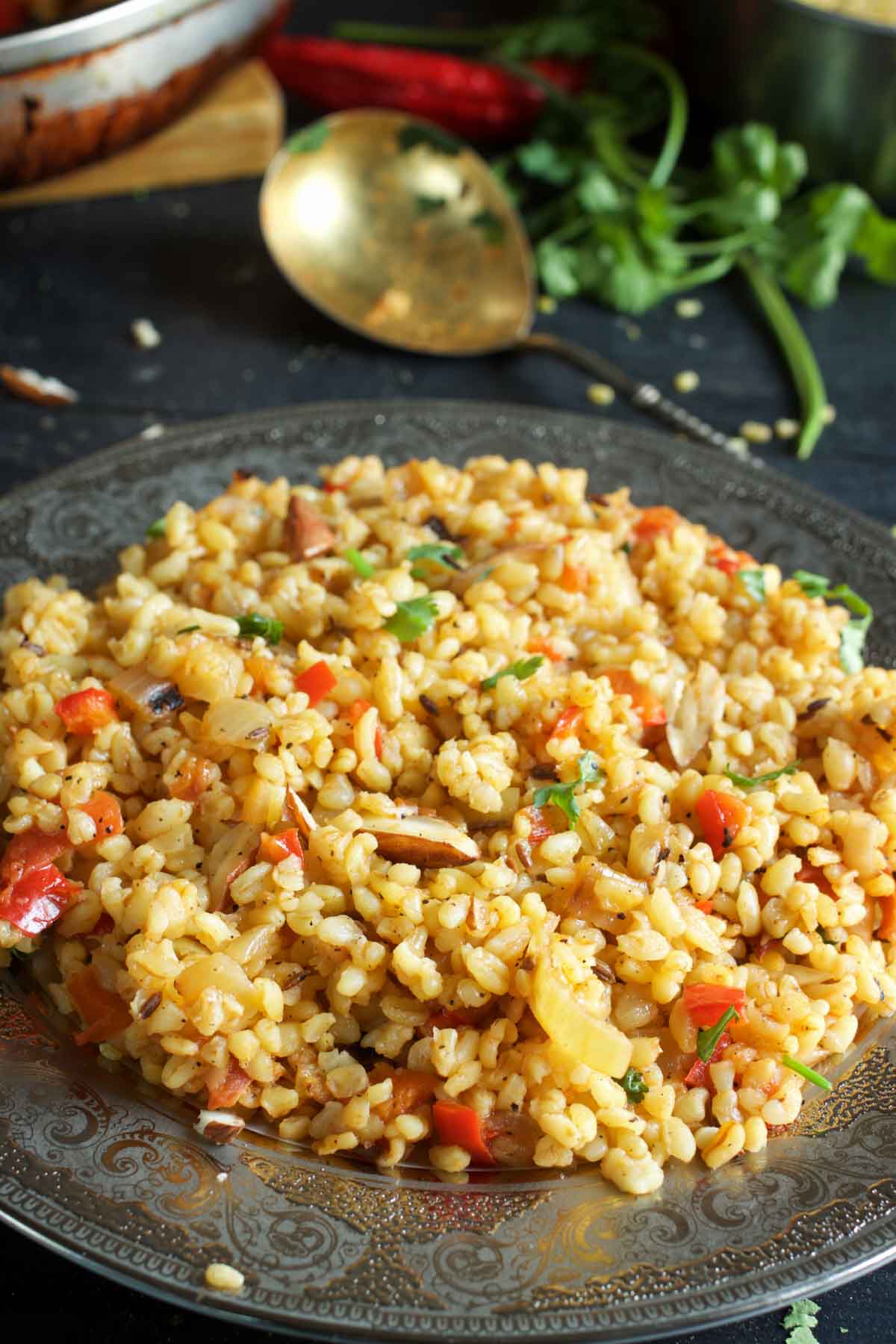
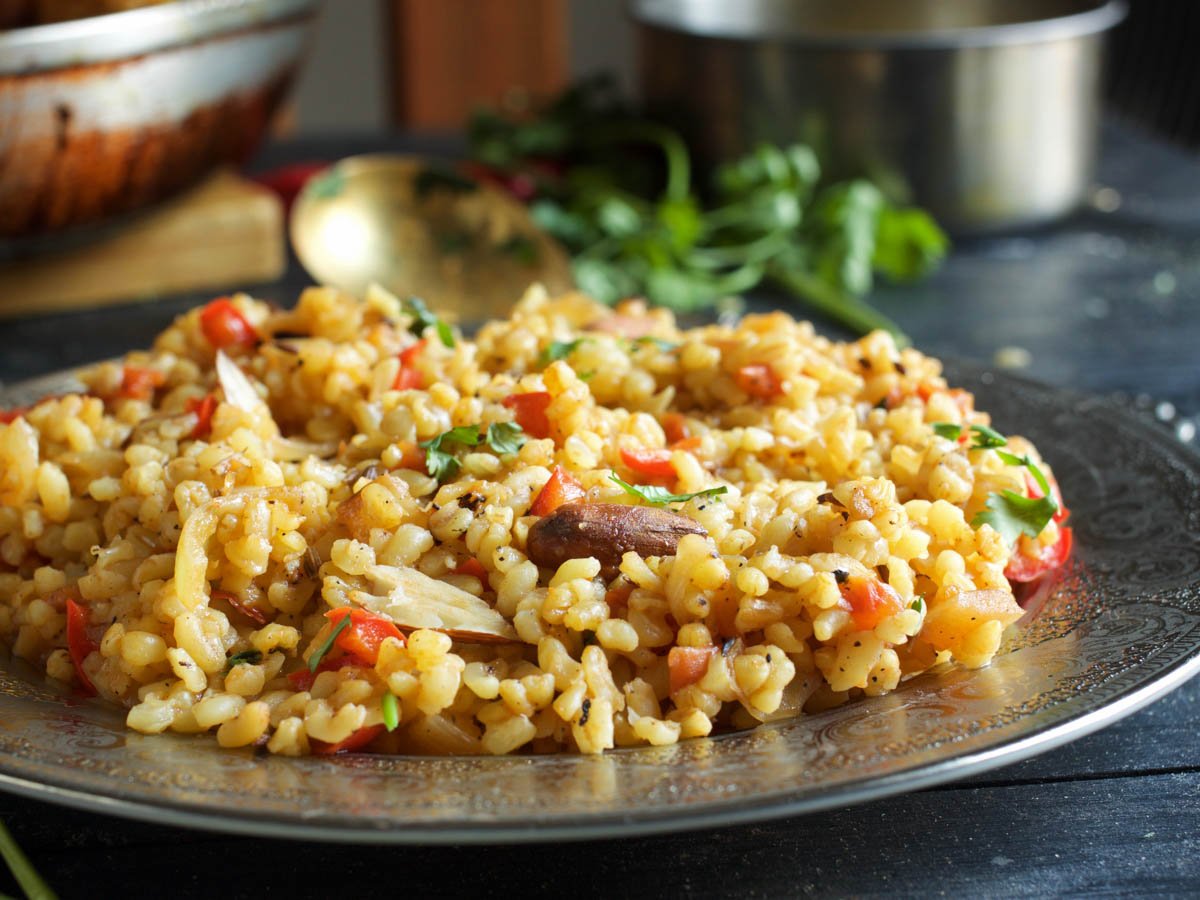
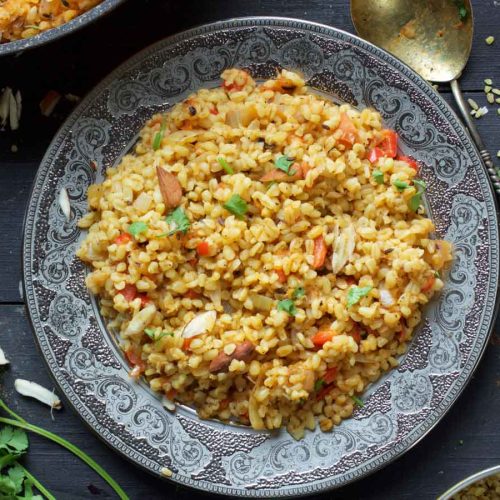
This Turkish-style bulgur pilaf is a hearty, one-pan meal made with bulgur wheat simmered in a seasoned tomato and vegetable broth, finished with cumin, sliced almonds, and fresh herbs. It is naturally vegan, comes together in about half an hour, and works equally well as a main dish or a side. If you want something filling and full of flavor without a long list of steps, this is the kind of pilaf you will keep coming back to.

What Is Bulgur Pilaf?
Bulgur pilaf is a popular dish across the Middle East, the Balkans, and parts of Central and South Asia. At its heart it is bulgur wheat cooked in a well-seasoned broth until every grain is tender and separate. Traditional versions often include meat, but this one leans fully plant-based, letting tomatoes, onion, bell pepper, and warm spices carry the flavor. It is proof that a simple grain, treated well, can be the star of the plate.
The Ingredients You Will Need
Nothing here is exotic, and the short list is part of the appeal. A few notes on the ones that matter most:
- Bulgur wheat is the base. It cooks quickly because it is already parboiled and cracked, so it soaks up the broth in minutes rather than the longer simmer rice needs.
- Tomatoes and tomato paste build the color and the savory backbone. The paste concentrates that tomato depth, while the fresh tomatoes add moisture and a little brightness.
- Onion and red bell pepper are sauteed first to soften and sweeten, which gives the pilaf its base layer of flavor.
- Roasted cumin seeds and chili powder are the spice signature here. Roasting the cumin wakes up its aroma, so do not skip that step if you can help it.
- Sliced almonds stirred in near the end add a gentle crunch and a bit of richness against the soft grains.
- Coconut or olive oil both work. Olive oil keeps it more Mediterranean; coconut oil adds a subtle sweetness.
How to Get Fluffy, Separate Grains
The most common mistake with bulgur pilaf is ending up with a mushy, sticky pot. A few habits keep it light and fluffy every time:
- Toast the bulgur with the tomato paste before adding liquid. Stirring it into the hot pan coats each grain with oil and paste, which helps them stay distinct once the broth goes in.
- Keep the ratio honest. This recipe uses two cups of hot broth to one and a half cups of bulgur. Adding too much liquid is the fastest way to a soggy result.
- Bring to a boil, then drop to low. A hard boil the whole time overcooks the outside of the grains before the center is done.
- Rest with the lid on. After simmering for 10 to 15 minutes, take the pan off the heat and let it sit covered for 5 to 10 minutes. The residual steam finishes the grains gently and lets any remaining moisture absorb, so you get fluffy pilaf instead of a wet one.
Why This Method Works
The order of the steps is doing real work here. Sauteing the aromatics first develops flavor that plain simmering cannot, and stirring the bulgur into that flavored oil before any liquid arrives is what keeps the grains from clumping. The off-heat rest is the quiet hero: bulgur continues to absorb steam after the burner is off, so that final covered pause is what turns a slightly wet pot into a light, separate pilaf. Skip it and you lose the texture that makes this dish worth making.
What to Serve With Bulgur Pilaf
Because it is substantial on its own, this pilaf makes an easy main with just a simple salad or a dollop of plant yogurt alongside. It is also a natural side for stews and roasted vegetables. If you love grain-forward dishes like this, you might enjoy my vegetarian Serbian rice pilaf or this cozy brown rice and mushroom pilaf. And if you want to turn the same flavors into a stuffed dish, take a look at these tomatoes stuffed with bulgur.

Storage and Make-Ahead Tips
Bulgur pilaf keeps beautifully, which makes it a smart meal-prep choice. Let it cool, then store it in an airtight container in the fridge for up to four days. Reheat it gently in a pan with a splash of water or broth to loosen the grains, or warm it in the microwave covered. It also freezes well for up to three months; thaw overnight in the fridge before reheating. If you are making it ahead, hold off on the fresh cilantro or parsley and add it just before serving so it stays vibrant.
If you make this bulgur pilaf, I would love to know how it turned out. Leave a rating and a comment below telling me whether you went with the almonds or swapped in your own favorite topping. And do not forget: if you give my recipes a try, take a photo and tag me on Instagram @gourmandelleblog using the hashtag #gourmandellerecipe so I can feature you on my Facebook page and Instagram Stories!
Bulgur Pilaf
Ingredients
- 1 ½ cup bulgur wheat
- 2 tomatoes medium, chopped
- 1 onion large, chopped
- 1 red bell pepper chopped
- 3 cups vegetable broth or water, hot
- 2 tsp tomato paste
- 1 Tbsp cumin seeds roasted
- 3 Tbsp almonds sliced
- 1 Tbsp cilantro or parsley, chopped
- ⅓ tsp chili powder
- 1 Tbsp coconut oil or olive oil
- 1 pinch salt and pepper to taste
Instructions
- Heat the oil in a large skillet over medium heat.
- Add the onion and bell pepper and sauté for 3 minutes, until the onion starts to soften.
- Add the tomatoes and sauté for 3 more minutes.
- Stir in the tomato paste, then add the bulgur wheat and mix to combine.
- Add the vegetable broth, chili powder, roasted cumin seeds, salt, and pepper.
- Turn the heat to high and bring to a boil, then reduce it back to medium-low.
- Simmer the bulgur for 10 to 15 minutes.
- Add the almonds and stir to combine.
- Remove from the heat, cover with a lid, and let sit for 5 to 10 minutes before serving.
- Top with chopped cilantro or parsley to serve.
Notes
Frequently Asked Questions
This version is fully vegan. It is built on bulgur wheat, tomatoes, onion, bell pepper, spices, almonds, and either coconut or olive oil, with no meat, dairy, or other animal products. Traditional bulgur pilaf often includes meat, but this recipe skips it entirely and lets the vegetables and spices carry the flavor.
This recipe uses 2 cups of hot vegetable broth or water to 1 and a half cups of bulgur wheat. That ratio gives you tender, separate grains without a soggy result. Adding too much liquid is the most common reason bulgur pilaf turns out mushy.
Toast the bulgur with the tomato paste before adding broth, keep the liquid ratio honest, and bring it to a boil only briefly before dropping the heat to low. Most importantly, rest the pan off the heat with the lid on for 5 to 10 minutes after simmering. That covered rest lets residual steam finish the grains and absorb extra moisture, so you get a fluffy pilaf instead of a wet one.
Yes. The recipe works with either. Olive oil keeps the pilaf more Mediterranean in character, while coconut oil adds a subtle sweetness. Use whichever you have on hand or prefer.
Cool it fully, then store it in an airtight container in the fridge for up to four days or freeze it for up to three months. Reheat gently in a pan with a splash of water or broth to loosen the grains, or microwave it covered. Add the fresh herbs just before serving so they stay bright.
Absolutely. It is filling enough to stand on its own as a main, especially with a simple salad or plant yogurt alongside. It also works well as a side for stews and roasted vegetables.




yummy!
First time cooking with bulgur. Great recipe!
Thank you!