
Hungarian Plum Dumplings (Szilvas Gomboc)
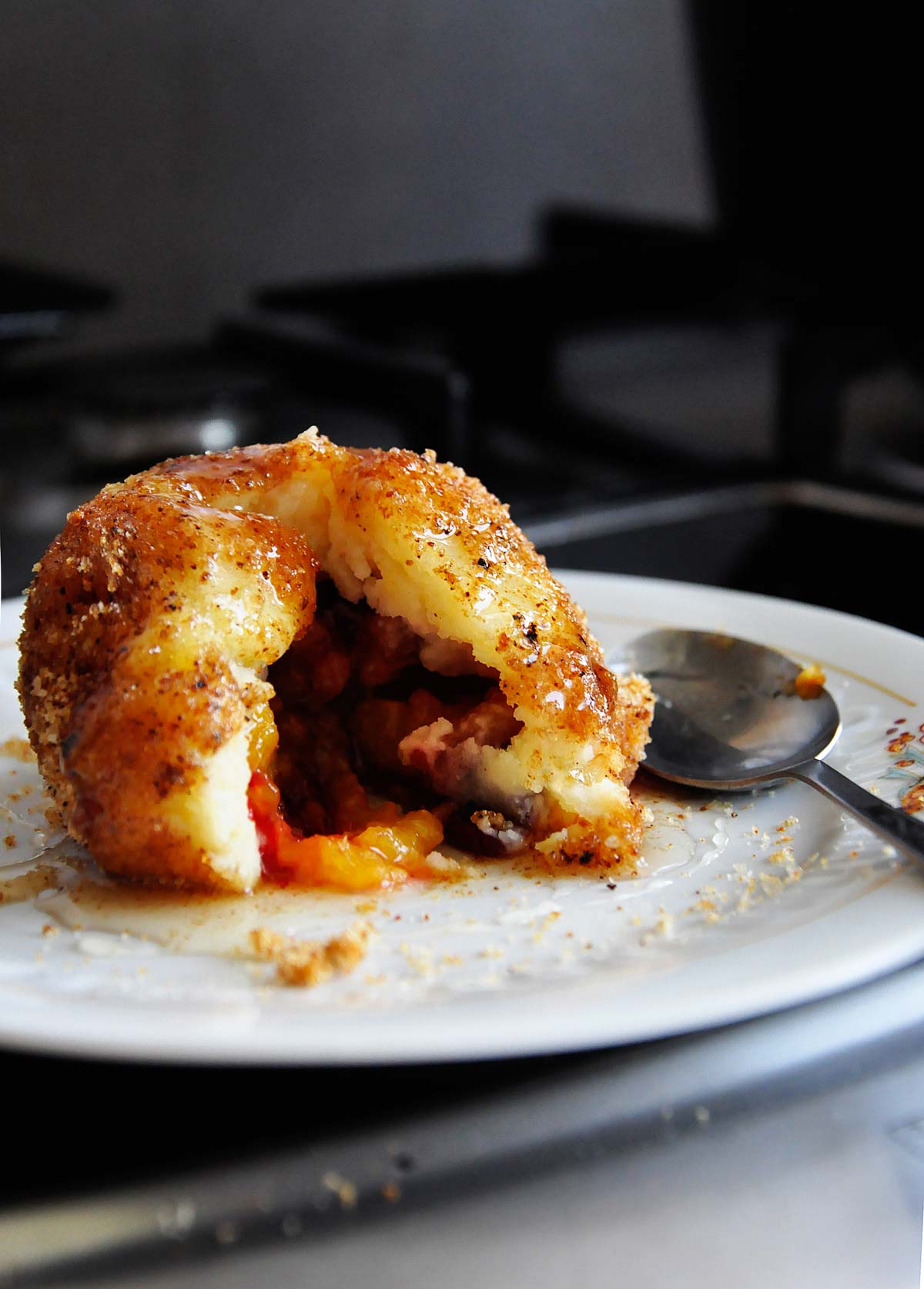
Hungarian plum dumplings (Szilvas Gomboc) are boiled potato-dough dumplings wrapped around whole plums, then rolled in toasted buttered breadcrumbs and dusted with powdered sugar. The dough is made from mashed potato, flour, egg, and a pinch of salt — no yeast, no rising time. Each dumpling takes about 8 minutes to boil. The recipe makes around 25 dumplings and takes close to 2 hours from start to finish, most of which is assembly. This recipe uses honey and date sugar instead of refined sugar, and slightly less oil than the traditional version.
This Recipe Works If You Need
- A traditional Central European autumn dessert made with fresh plums
- A naturally vegetarian dumpling recipe using pantry staples and seasonal fruit
- A make-ahead project dessert for a weekend or special occasion
- A recipe that can be made gluten-free with one simple swap
Why You’ll Love This Recipe
- The contrast of textures — soft potato dough outside, juicy whole plum inside, crispy toasted breadcrumbs on top
- No refined sugar — sweetened with honey and date sugar instead of white sugar
- A genuine autumn classic — Szilvas Gomboc is a beloved fall dessert across Hungary, Romania, Austria, and the Czech Republic, made when plums are in season
- Can be made gluten-free — substitute the plain flour with a gluten-free flour blend at the same quantity
Ingredient Notes
Plums — Use small to medium Italian prune plums (the oval variety, also called Damson or Stanley plums). They hold their shape during boiling better than larger, juicier varieties, which tend to fall apart or make the dough soggy. The plum should fit inside the dumpling with the dough sealed tightly around it — very large plums need to be halved and the stone removed. Remove the stone before wrapping: make a cut along the natural seam of the plum, twist to open, and pull out the stone. Leave the plum as whole as possible.
Mashed potato — The base of the dough. Use floury potatoes (Russet or similar) rather than waxy varieties — floury potatoes mash to a drier consistency that gives a firmer dough. Boil the potatoes, drain thoroughly, and mash while still hot. Leave no lumps. Let the mash cool completely before mixing in the flour and egg — hot mash will cook the egg and make the dough sticky.
Flour — Plain all-purpose flour gives the most neutral, workable dough. Use gluten-free all-purpose blend for a gluten-free version — the dough will be slightly stickier and may need a little extra flour when rolling.
Egg — Binds the dough and helps it hold together during boiling. Use one medium egg at room temperature. For a vegan version, substitute with 1 tablespoon of ground flaxseed mixed with 3 tablespoons of water, rested for 10 minutes until gel-like — the dough will be slightly less elastic but still workable.
Breadcrumbs — Toasted in butter until golden and fragrant. This coating is essential — plain, untoasted breadcrumbs are bland and soft. Toast them in a pan over medium heat with butter, stirring constantly, until they turn an even golden brown and smell nutty. Use plain fine breadcrumbs, not seasoned.
Sweetener — This recipe uses honey stirred into the breadcrumb mixture and date sugar for dusting instead of refined white sugar. The honey caramelizes slightly in the pan with the breadcrumbs, giving a deeper flavor. Coconut sugar or maple sugar can replace date sugar if unavailable.
Tips
- Let the dough rest for 10 minutes after mixing before rolling. This short rest relaxes the gluten slightly and makes the dough easier to flatten without tearing around the plum.
- Keep your hands and the work surface lightly floured while shaping. The dough is soft and will stick if the surface is dry or your hands are warm.
- Seal the dough tightly around each plum with no gaps or thin spots. Any opening will let water in during boiling and the dumpling will fall apart. Press the seam firmly and roll the dumpling between your palms to smooth it.
- Boil in a large pot with plenty of salted water. Do not crowd — cook in batches of 6 to 8 at a time so the dumplings have space to float and cook evenly. They are done when they float to the surface and have been floating for about 2 minutes.
- Roll each boiled dumpling in the toasted breadcrumbs immediately while still hot and wet from the water — the breadcrumbs stick best at this stage.
Substitutions and Variations
Swap plums for apricots or peaches — Small apricots work particularly well as a stone-fruit substitute. Use the same technique: remove the stone, wrap tightly in dough, and boil. Peaches should be used only if very firm — ripe peaches release too much juice and make the dough soggy.
Add a sugar cube inside the plum — The traditional version places a small cube of sugar where the stone was before sealing the dough. It dissolves during boiling and gives a sweet, syrupy interior. Use a small cube of coconut sugar or a pinch of date sugar for a less refined alternative.
Cinnamon breadcrumbs — Add half a teaspoon of ground cinnamon to the breadcrumbs as they toast. It gives a warmer, spiced coating that works well with the plum filling in autumn.
Vegan version — Replace the egg with a flax egg (1 tablespoon ground flaxseed plus 3 tablespoons water, rested 10 minutes). Use vegan butter for toasting the breadcrumbs. The result is slightly denser than the original but fully plant-based.
Storage and Make Ahead
Plum dumplings are best eaten fresh and warm, directly after rolling in the toasted breadcrumbs. They keep in the fridge for up to 2 days, but the breadcrumb coating softens considerably. Reheat in a dry pan over medium heat to restore some crispness to the outside, or in the oven at 180C for 10 minutes. The uncooked, shaped dumplings can be refrigerated on a floured tray for up to 4 hours before boiling — do not freeze raw, as the plum releases liquid when thawed and makes the dough wet.
For more Eastern European desserts, try the Romanian stewed quince dessert or the vegan sugar-free biscuit salami.
Hungarian Plum Dumplings
Ingredients
- 1 kg Russet potatoes
- 250 g whole wheat flour or gluten free flour
- 2 eggs
- 2 Tbsps sunflower oil
- 25 plums pitted
- 1 tsp cinnamon
- 1 tsp vanilla extract
- ½ tsp rum extract
- 6 Tbsps dates sugar or brown sugar
Garnish
- 2 Tbsps sunflower oil
- 150 g breadcrumbs or gluten-free breadcrumbs
- honey or maple syrup
Instructions
- Start by boiling the unpeeled potatoes in a pot of water. After they are boiled, remove them from the water and let them cool for a couple of minutes, then peel them under cold water and mash them.
- Put the mashed potatoes in a large bowl and add the beaten eggs, oil and flour. Mix all ingredients together until you get a sticky and smooth dough.
- Mix the cinnamon, vanilla, rum and dates sugar in a small bowl. Add ½ teaspoon of this mixture into the middle of each plum.
- Heat the oil in a small skillet. Add the breadcrumbs and toast them for 5 minutes. Remove from heat and put them on a large plate.
- Divide the dough in two.
- Roll the dough and cut it into dumpling-size portions. Take each portion and form a small ball. Flatten the ball and place the plum into the center, then remake the ball with the plum inside.
- Tip: You must have flour on your hands all the time, so the dough won’t stick to your fingers.
- Boil some water in a large pot. Add a pinch of sea salt. When the water has reached boiling point, place some dumplings inside. Be careful, if the dumplings stick to the bottom of the pot all you need to do is to shake it a little bit.
- Let them boil for 5 minutes. When ready, they will rise from the bottom of the pot.
- Remove them from the water using a slotted spoon and roll them in the breadcrumbs.
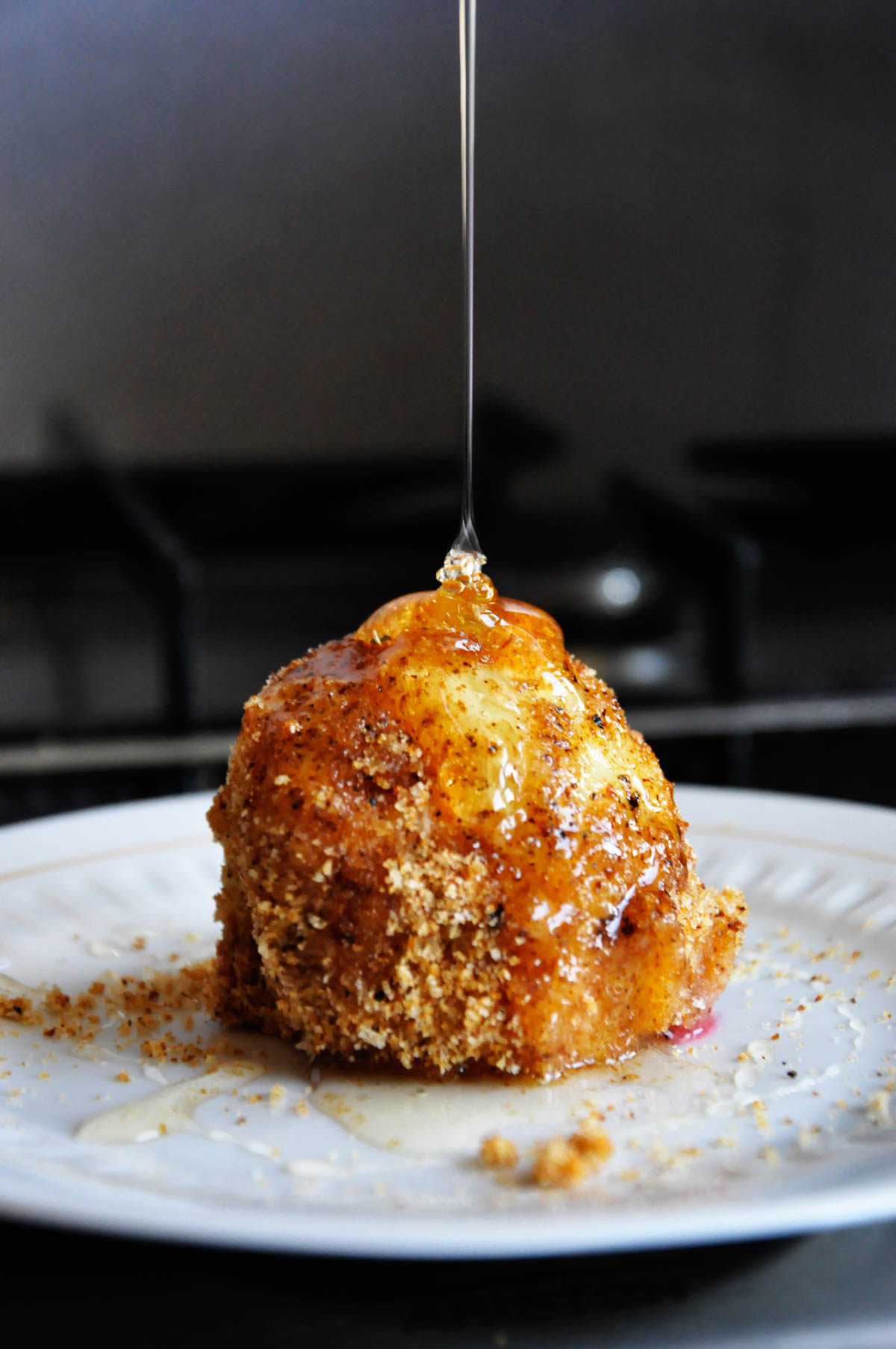
- Serve with honey (or other healthy syrup) on top.
Frequently Asked Questions
In Hungarian, they are called Szilvas Gomboc (szilvas meaning plum, gomboc meaning dumpling). In German-speaking regions they are known as Zwetschgenknodel. In Romanian they are called galusca cu prune. The dish is popular across Hungary, Austria, the Czech Republic, Slovakia, and Romania, particularly in the autumn when Italian prune plums are in season.
Small Italian prune plums (also called Damson, Stanley, or zwetschge plums) are the traditional choice. They are oval, relatively small, and have a firm flesh that holds together well during boiling. Large, very juicy plums tend to make the dough wet and can fall apart. The plum needs to fit inside a palm-sized piece of dough — if your plums are large, halve them and remove the stone rather than trying to wrap a whole plum.
The dumplings are cooked when they float to the surface of the boiling water. Once floating, let them cook for another 2 minutes before removing with a slotted spoon. An uncooked dumpling sinks and stays on the bottom. If a dumpling floats immediately after being dropped in, check that the dough is sealed properly — a leak lets water in and causes premature floating with undercooked dough inside.
Yes. Replace the plain flour with a gluten-free all-purpose flour blend at the same quantity. The dough will be slightly stickier and may need a little extra flour dusted on the work surface and your hands during shaping. The finished dumplings are slightly denser in texture than the wheat version but the flavor is the same. Use gluten-free breadcrumbs for the coating as well.
Cooked dumplings can be frozen before rolling in the breadcrumbs. Place them on a tray lined with parchment, freeze until solid (about 2 hours), then transfer to a freezer bag. Cook from frozen by boiling in salted water for 10 to 12 minutes, then roll in freshly toasted breadcrumbs. Do not freeze raw, uncooked dumplings — the plum releases liquid as it freezes and thaws, making the dough wet and difficult to work with.


Yummy recipe!!! I usually replace the breadcrumb coting with ground walnuts raw or toasted, it takes this recipe to the next level. Either way these dumplings are the bomb!
Great idea, Cuchi! Will give it a try. 🙂
OMG I missed these so much! Just tried the recipe yesterday and they have the exact same taste I remember from my childhood. Thank you for writing this recipe!!
You’re welcome! 😀
My parents are from Hungary and we had these every year in the fall. My mom always added one sugar cube to the prune plum cavity before surrounding the plum with dough. We always ate them as a main course, especially after soup. Mom always served them with powdered sugar sprinkled over the bread crumbs, way less sweet than syrup.
Great idea with the sugar cube inside! Bet they were great! I haven’t tried them this year, but I want to. Too bad they take so long to make. I would eat these every day!
You forgot to mention that the breadcrumbs are browned in the oil (I use coconut oil) and a little bit of cinnamon. Usually cinnmon sugar is passed aroud with the sylvas gomboc. I also freeze some before they are boiled for use later. Just did that on Monday actually, We will use them on Friday as a second course to gulyas leves (goulash soup) This whole Gomboc and soup thing will remind me of my mom. By the way I was born in Budapest.
I usually skip the browning part, but very good tip! Thanks Judit! Cinnamon sounds great! Don’t know why I haven’t thought of this 😀
@Vegan Magic: Thank you! I'm glad you like it! Btw LOVE your recipes;easy, healthy and delicious! 🙂
OH MY! These look soooo delicious! And you've shared the vegan version as well, easy job for me:)) Thanks for this great recipe, bookmarked!
Thank you Christine for this lovely surprise!
Congratulations! Your Hungarian Plum Dumplings made this week's “Top 10 Most Popular as voted by the Knapkins' Community”. Yeah for Hungarian everything… Delicious
Thanks Beth! I spent 2 hours to make them and were eaten in less than 30 minutes! All of them 🙂 But it was worth it.
Wow, these look sooooo good and your photo is just beautiful! I can see why there were none left when you served them!