
Imam Bayildi
Imam Bayildi is a classic Turkish dish of eggplants baked until meltingly soft and filled with a savory mix of onion, garlic, tomatoes and herbs. This is my vegan version, where I swap the traditional meat for textured soy protein to keep all the heartiness without anything animal-based. It is a whole, satisfying meal that works just as well as a main course as it does a generous side.
The dish has deep roots: it is an old Ottoman recipe loved across Turkey, Bulgaria, Macedonia, Israel, Greece, Armenia, Albania and several Arab nations. The name translates loosely to “the imam fainted,” and the most charming legend says the imam swooned at how delicious (or how oil-rich) the dish was. Either way, it has earned its place as one of the most beloved stuffed eggplant recipes in the world.
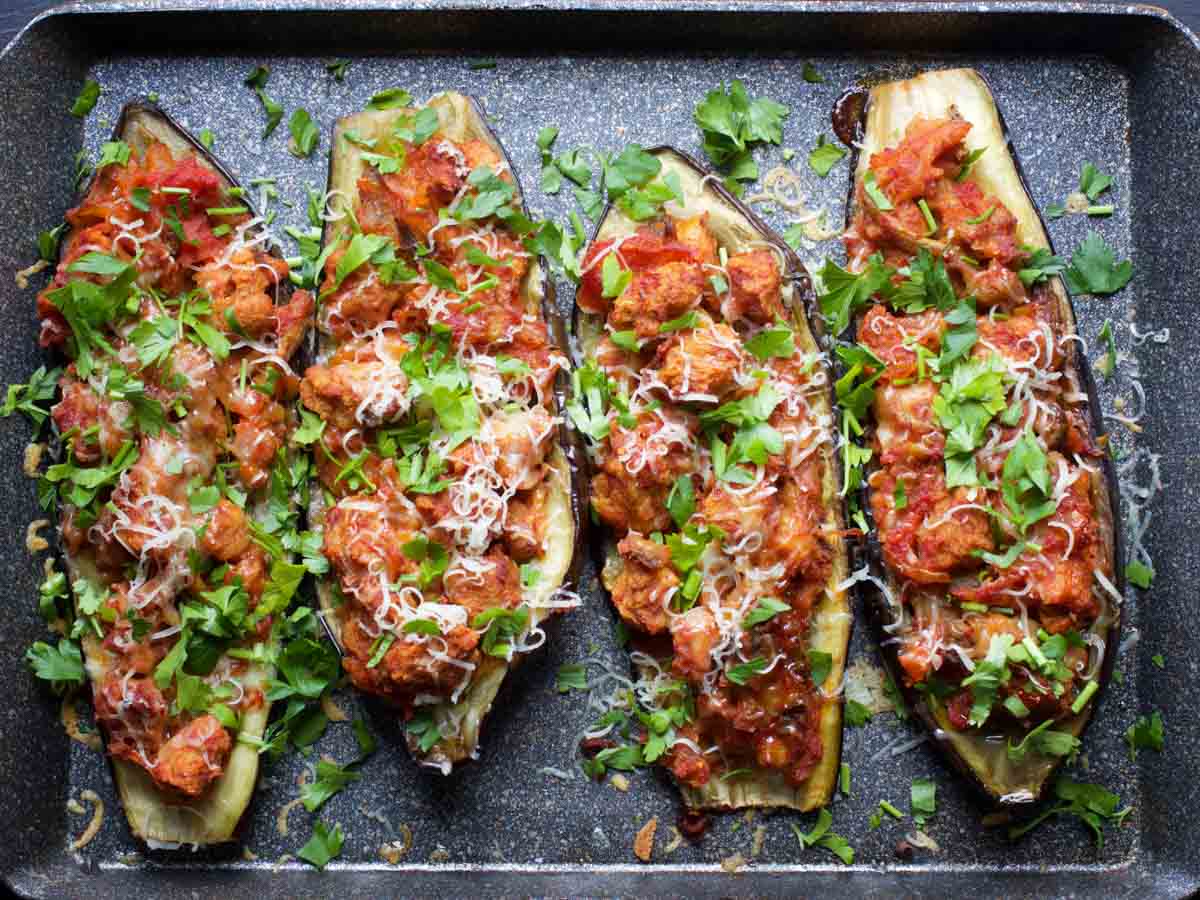
My take on this Ottoman classic
I was inspired by this amazing Middle Eastern recipe and decided to adapt it slightly and make my own version. I wanted to give the filling a meatier texture, so I used some soy cubes in the stuffing. I would actually recommend using soy granules instead, but at the time I didn’t find any at the nearby supermarket, so I worked with what I had. The result was still wonderful.
The other change I made was the oil. The original recipe is famous for swimming in olive oil, but I didn’t add industrial quantities of it. It turned out just as good this way, with less oil and less frying, which makes it feel lighter without losing that rich, simmered-tomato character.
The ingredients that make it work
Everything here builds toward that deep, savory flavor. A few notes on the key players so you can shop and prep with confidence:
- Eggplants — choose firm, glossy ones that feel heavy for their size, with no soft spots. You want two good-sized eggplants, halved lengthwise, with some of the flesh carved out to make room for the filling.
- Textured soy protein — this is what gives the stuffing its meaty bite. Granules work best because they soak up the seasoned liquid quickly and stay tender; chunks work too but benefit from a longer soak. Soy protein is a useful, complete plant protein, which is part of why this dish eats like a full meal. If you want to understand how it fits into a balanced approach, I cover this in my guide to proteins in the vegan diet.
- Tomatoes — peeled and chopped, they cook down into the soft, jammy base that ties the filling together. Ripe, in-season tomatoes give the best flavor.
- Aromatics and spices — onion, garlic, parsley, dry mint, paprika, cumin and garlic powder do the heavy lifting on flavor. The cumin and mint are what give it that distinctly Middle Eastern warmth.
- Lemon juice and optional vegan cheese — a squeeze of lemon brightens everything at the end, and a little grated vegan cheese on top is a nice optional finish.
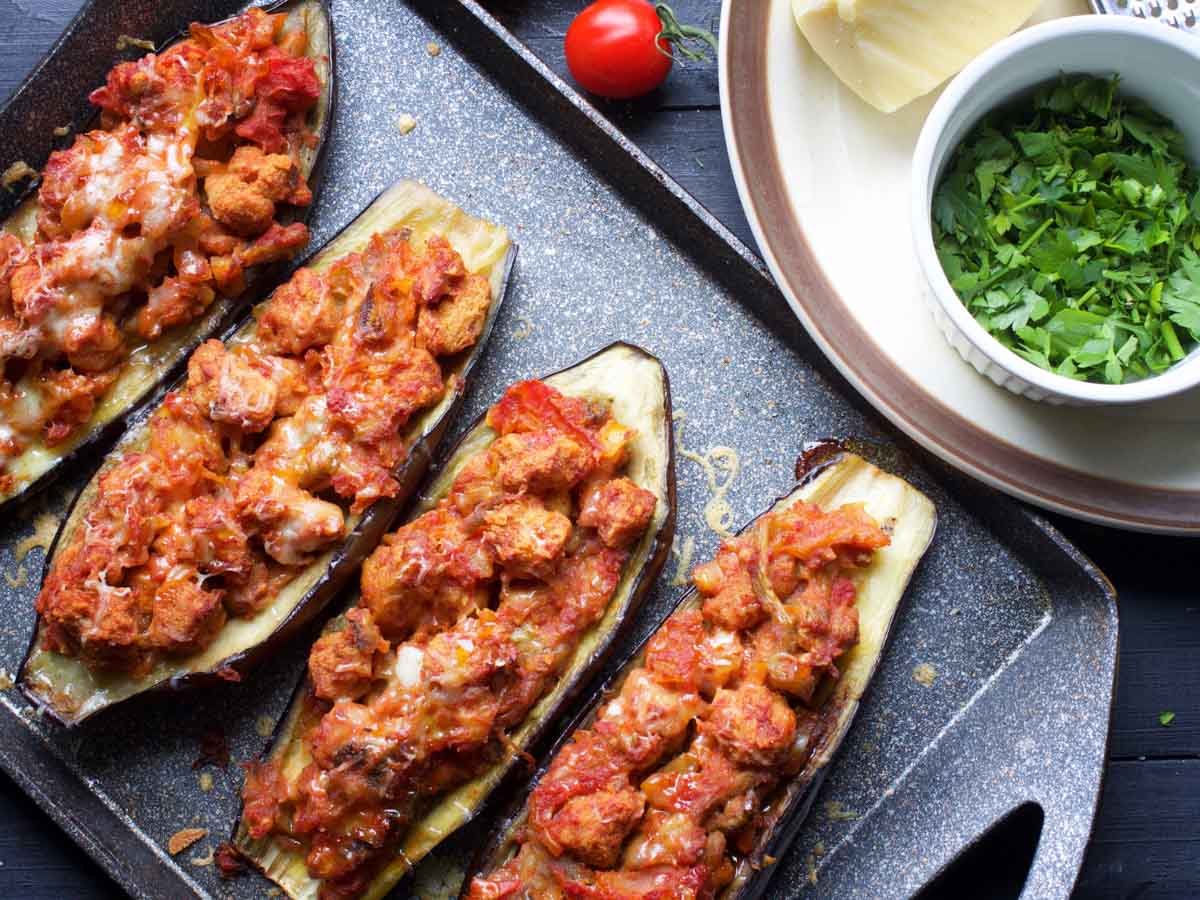
Tips for getting it right
The dish is forgiving, but a few small things make the difference between good and great:
- Soak the soy properly. Let the textured soy protein sit in the hot water for about 10 minutes so it fully rehydrates, then drain it well before adding it to the pan. Granules need less time than chunks; if you use chunks, give them a few extra minutes.
- Carve the eggplants without breaking the shell. Make a hole for the stuffing by scooping out some of the flesh, but leave enough of a wall so the halves hold their shape during baking.
- Let the filling cook down. Sauteing the onions first and then simmering everything for 10 to 15 minutes concentrates the flavor and softens the tomatoes into a proper sauce. Don’t rush this step.
- Watch for tenderness, not just the clock. Bake for about 30 minutes, but the real cue is the eggplant: it should be completely soft when pierced with a fork and lightly caramelized at the edges. If it is still firm, give it a few more minutes.
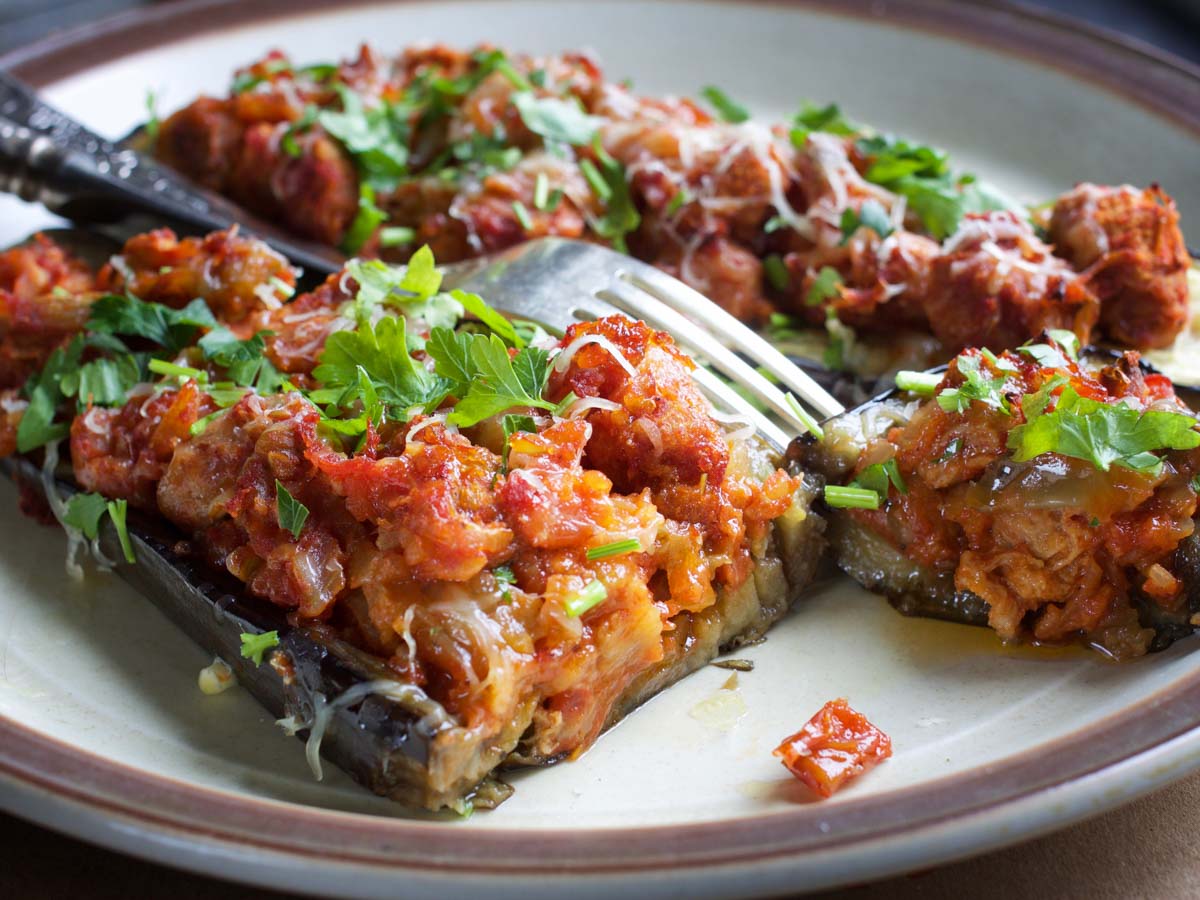
Ways to make it your own
- Skip the vegan cheese entirely if you want to keep it lighter, or pile it on if you like a melty top.
- Adjust the spice by adding more paprika or a pinch of chili if you like a bit of heat.
- Use chunks instead of granules if that is what you have on hand, just as I did — soak them a little longer.
- Add more olive oil if you want a closer-to-traditional, richer result; the original is famously oil-heavy and you can lean into that if you prefer.
Storing and serving
Imam Bayildi keeps beautifully. Store leftovers in an airtight container in the fridge for up to three or four days, and reheat gently in the oven or a covered pan so the eggplant stays soft. Like many simmered tomato dishes, it often tastes even better the next day once the flavors have had time to settle. It is also a great make-ahead option: you can prepare the filling in advance and stuff the eggplants just before baking.
Serve it warm or at room temperature, on its own or with crusty bread or a simple grain on the side. Don’t forget to leave me a comment if you give it a try and tell me how it turned out!

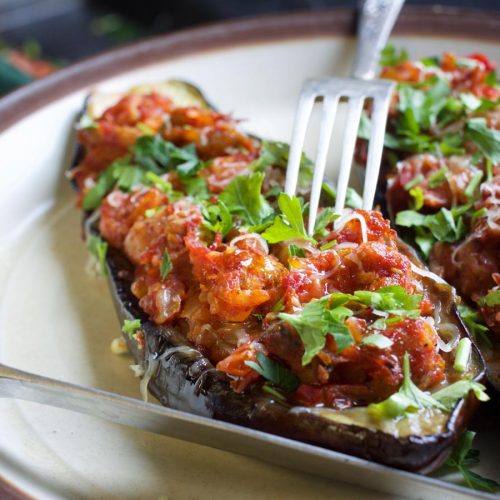
Imam Bayildi
Ingredients
- 2 eggplants
- ½ lemon juiced
- vegan cheese shredded, optional
For soy “meat”:
- ½ cup textured soy protein granules I used chunks, but granules are better
- 2 cups hot water
For the stuffing:
- 2 onions chopped
- 4 Tbsps olive oil
- 2 cloves garlic crushed
- 4 tomatoes peeled and chopped
- 4 Tbsp parsley chopped
- ½ tsp mint dried
- 1 Tbsp paprika
- 1 tsp ground cumin
- 1 tsp garlic powder
- salt and pepper to taste
Instructions
- Preheat the oven to 200C/400F.
- In a bowl, mix all the ingredients for the soy meat and let the soy protein granules soak for about 10 minutes.
- Drain them and set aside.
- In a large frying pan, saute the onions in 3 Tbsps of the olive oil. Add the rest of the stuffing ingredients, plus the soaked soy granules.
- Cook, stirring occasionally, for 10-15 minutes.
- Cut each eggplant in half, lengthwise.
- With a spoon or a knife, scoop out some of the flesh and pulp of each eggplant half, making a hollow for the stuffing.
- Place the eggplant halves on a baking tray lined with parchment paper.
- Spoon the veggie-soy stuffing into each half.
- Drizzle with the remaining olive oil and the lemon juice.
- Bake for 30 minutes, or until tender. Optional – serve with shredded vegan cheese on top.
Notes
Frequently Asked Questions
The name translates loosely from Turkish as “the imam fainted.” The most popular legend says the imam swooned at how delicious the dish was, while another version jokes he fainted at how much expensive olive oil it used. It is a classic Ottoman recipe of stuffed eggplants enjoyed across Turkey, the Balkans and the Middle East.
Yes. This version is fully plant-based. Instead of the meat sometimes used in traditional recipes, it uses textured soy protein for a meaty texture, and the only cheese is optional grated vegan cheese on top. Every other ingredient, from the eggplants to the tomatoes and spices, is plant-based.
Yes. I actually used soy cubes in my version because I couldn’t find granules at the time, and it still turned out great. Granules are my recommendation because they rehydrate faster and stay tender, but chunks work well if you soak them a little longer in the hot water before draining.
Bake for about 30 minutes, but rely on the eggplant itself rather than the timer. The flesh should be completely soft when pierced with a fork and lightly caramelized at the edges. If it still feels firm, give it a few more minutes in the oven.
No. The original Imam Bayildi is famous for being very oil-heavy, but this recipe uses just 4 tablespoons of olive oil total, with some for sauteing and the rest drizzled over the eggplants before baking. I found it turned out just as good with less oil and less frying. You can always add more if you want a richer, more traditional result.
Store it in an airtight container in the fridge for up to three to four days. Reheat gently in the oven or a covered pan so the eggplant stays soft. Like many simmered tomato dishes, it often tastes even better the next day once the flavors have settled, which also makes it a good make-ahead option.





What you got here sounds like the vegetarian equivalent of Karniyarik, more or less. I myself am not particularly fond of soy, but otherwise it sounds like it should be a good dish, like karniyarik itself.
Have never heard of this recipe but I love eggplants so I had to give it a try! Loved it! Will definitely make it again!
Glad you liked it! 😀