
Baba Ganoush
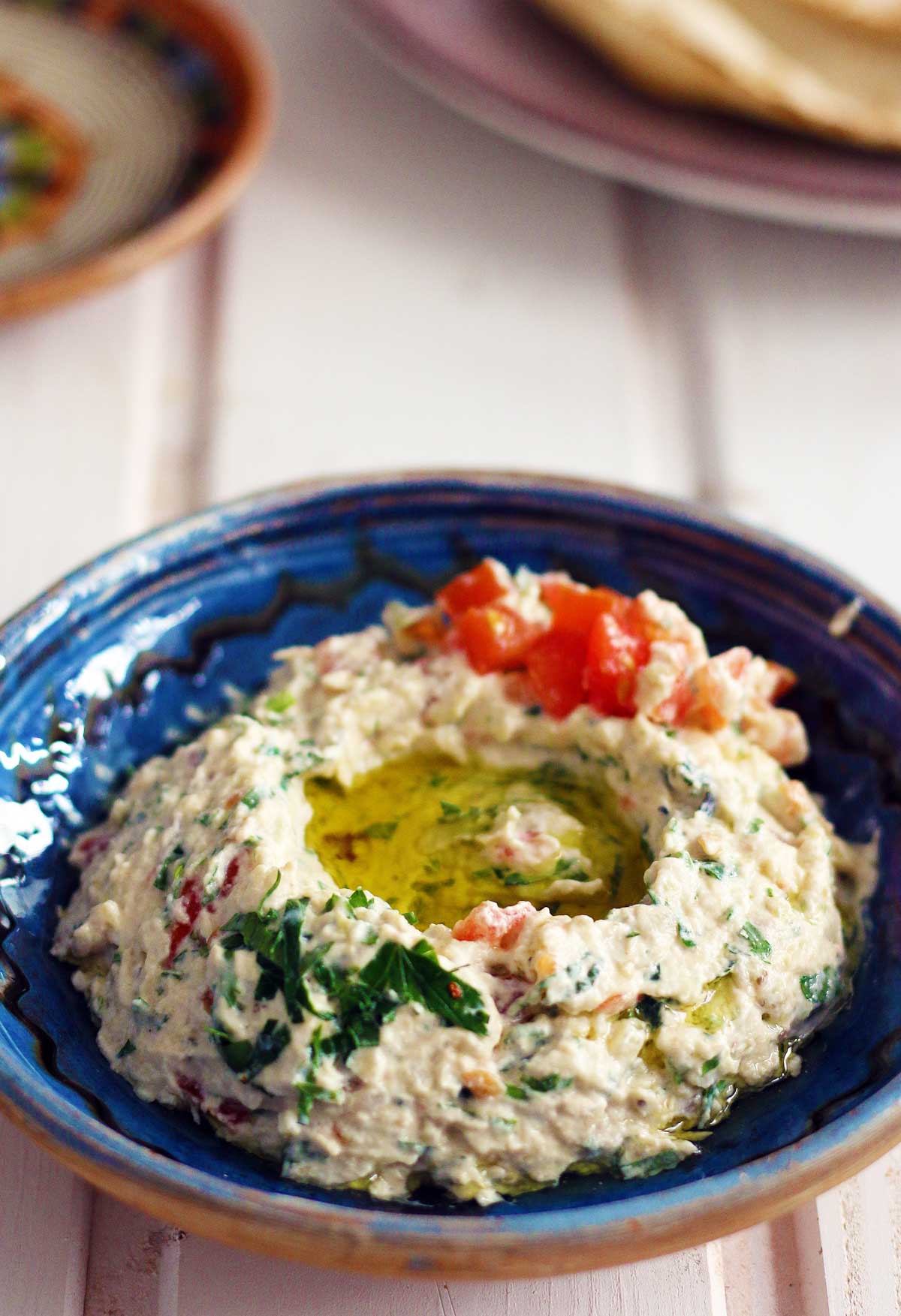
Baba ganoush is a smoky Middle Eastern eggplant dip made from roasted eggplants blended with garlic, lemon, fresh herbs, and a little tomato. It comes together in one bowl and tastes fresh, tangy, and lightly charred. Serve it with warm pita and a drizzle of olive oil for an appetizer that always disappears first.
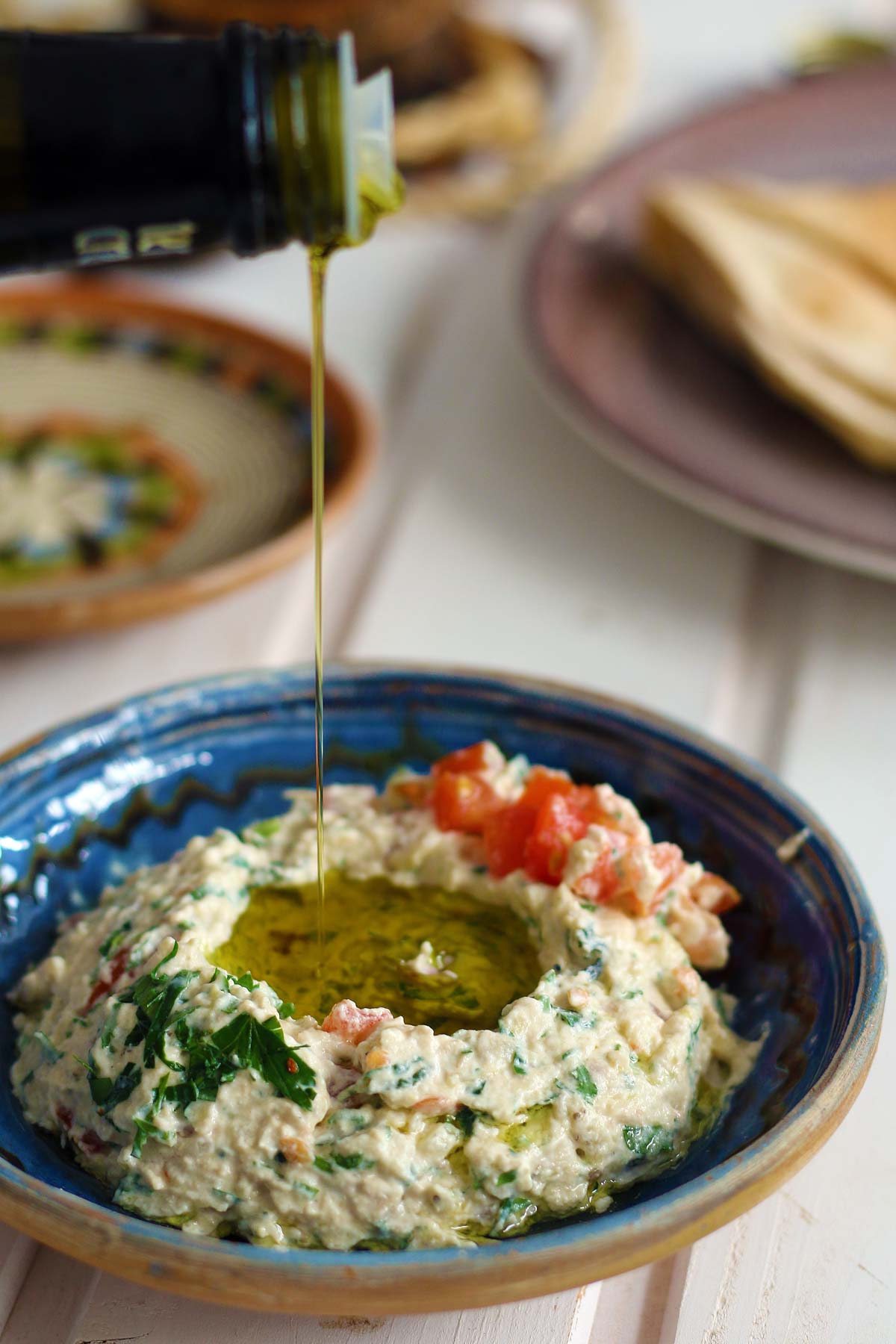
I love everything eggplant, so I couldn’t miss making baba ganoush as part of my Middle Eastern cuisine challenge. 🙂 I made a similar recipe before, mutabal, which is basically baba ganoush without the herbs and tomatoes. I love both of them, but this one tastes fresher, so I can say it’s my favorite between the two. 🙂
Baba ganoush vs. mutabal: what’s the difference?
I saw that many bloggers online confuse baba ganoush with mutabal, but they’re different. Mutabal is the simple version made with tahini, which is usually what you’ll find online labeled as baba ganoush. The authentic baba ganoush is this one, with fresh herbs and tomato, and drizzled sometimes with pomegranate molasses (which I didn’t have on hand). If you want the tahini-forward, creamy version instead, my mutabal recipe is the one to make.
The ingredients you’ll need
This dip is short on ingredients but big on flavor. A few notes on the ones that matter most:
- Eggplants – two medium ones. Look for eggplants that feel heavy for their size with smooth, glossy skin; those are fresher and have fewer seeds.
- Garlic and lemon – four mashed cloves and the juice of half a lemon give the dip its bright, punchy backbone.
- Fresh mint and parsley – these herbs are what set real baba ganoush apart from a plain eggplant spread. Chop them just before mixing so they stay vivid.
- Tomato and onion – a diced tomato and half an onion add freshness and a little bite.
- Olive oil – two tablespoons in the mix, plus more for drizzling on top.
- Pomegranate molasses – optional, for drizzling. It adds a sweet-tart finish if you have it.
How to roast the eggplants for the smokiest flavor
The roasting method is what makes or breaks this dip. I use the flame-roasting method because it makes the eggplants taste better, but if you’d rather keep it simple you can roast them in the oven, which is the easiest way. Roasting the eggplants directly over the flame is what gives baba ganoush that signature smoky depth: the skin chars and blisters, and that char flavor carries straight into the flesh in a way the oven can’t fully match.
If you go the flame route, wash and dry the eggplants, then pierce them a few times with a fork so steam can escape. I have a gas range, so I roast them directly on the flame; lay some aluminum foil on your stove first to catch any charred bits that fall during roasting. Turn the flame to medium and roast for about 20 minutes, turning them every 5 minutes so they cook all over. A large eggplant may need closer to 30 minutes. You’ll know they’re done when the skin is blackened all over and the eggplant collapses and feels completely soft. I added a link in the recipe card to Tori Avey’s blog, where she shows several eggplant roasting methods if you want more options.
Tips for the best baba ganoush
- Use a hand mixer, not a blender. This is the one rule I won’t budge on. A blender turns the dip into a smooth purée, while a hand mixer keeps that lightly textured, rustic body that baba ganoush should have.
- Peel while hot, carefully. Move the roasted eggplants to a cutting board and peel the charred skin off with tongs; they’re still hot, so take your time.
- Let them drain if watery. If your eggplants release a lot of liquid, let them sit in a strainer for a few minutes so the dip isn’t runny.
- Taste and adjust. Add more lemon or garlic at the end depending on how bright or punchy you like it.
- Shortcut: in my case I didn’t even have to roast the eggplants, because I bought them frozen, already roasted. If you can find pre-roasted eggplant, it’s a real time-saver.
How to serve and store it
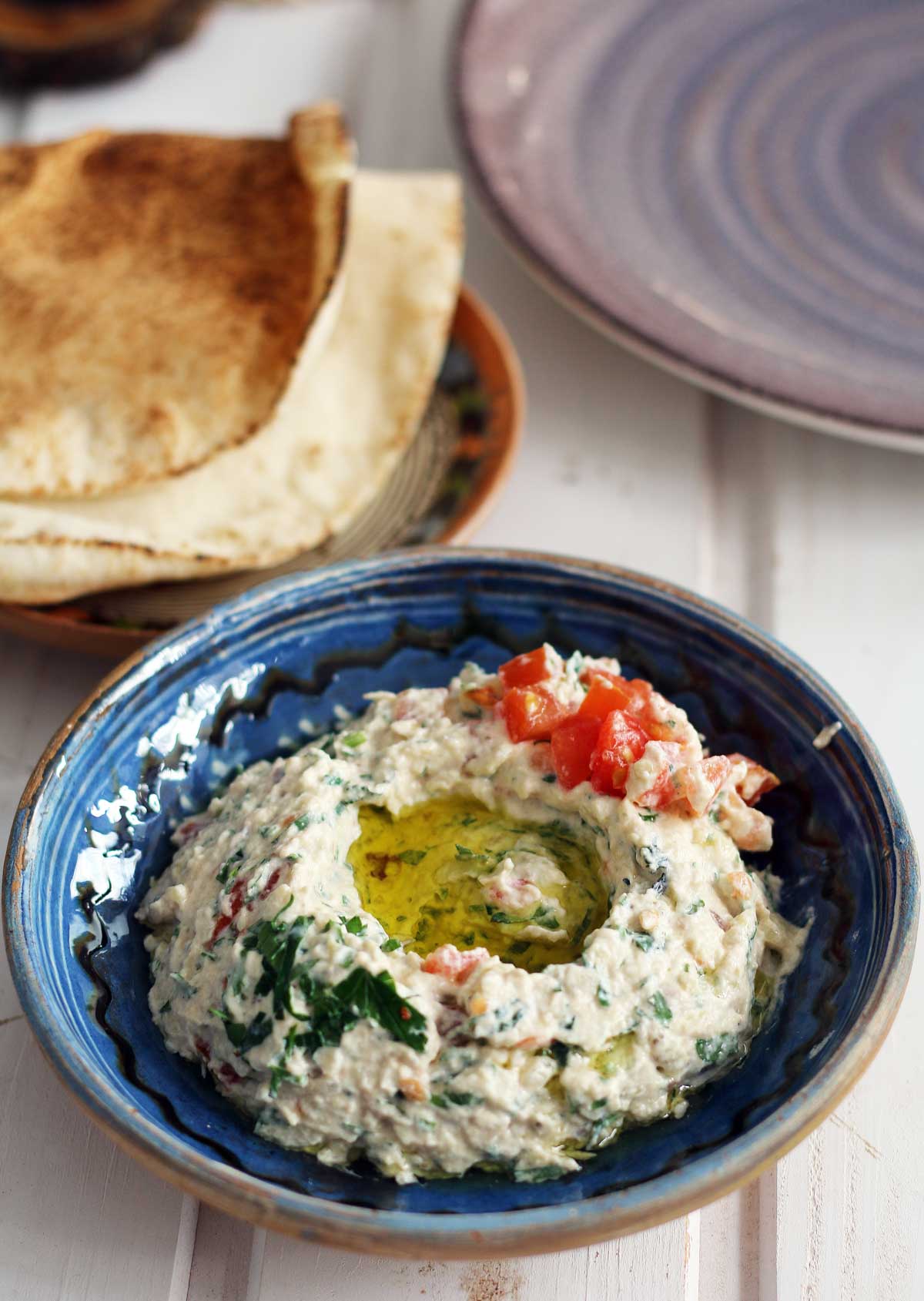
Serve baba ganoush at room temperature with a generous drizzle of olive oil on top and warm pita bread for scooping. It’s also lovely alongside crunchy vegetables, as part of a mezze spread, or spooned onto a grain bowl. For more dishes to build a full Middle Eastern table around it, browse my Middle Eastern cuisine recipes.
Store leftovers in an airtight container in the fridge for up to 3 days. The flavor actually deepens overnight as the garlic and herbs mingle. Give it a quick stir and let it come back toward room temperature before serving, and add a fresh drizzle of olive oil to wake it up again.
If you make this baba ganoush, I’d love to know how the flame-roasting went for you and whether you finished it with pomegranate molasses. Please rate the recipe below and leave a comment with your tweaks. 🙂
Summarise & Save This Recipe
★ Add us as a trusted Google source
Baba Ganoush
Ingredients
- 2 eggplants medium
- ½ onion medium, diced
- 4 Tbsp mint fresh, chopped
- 4 cloves garlic mashed
- ½ lemon juiced
- 1 tomato diced
- 4 Tbsp parsley fresh, chopped
- 2 Tbsp olive oil
- pomegranate molasses optional, for drizzling
Instructions
- Roast the eggplants. I prefer to roast them over an open flame, as they taste better this way than when done in the oven.
- Wash and dry the eggplants, then pierce them a few times with a fork. I have a gas range, so I roast them directly over the flame. Place some aluminum foil on your stovetop before roasting to protect it from any charred bits that may fall during the process.
- Turn the flame to medium. Roast the eggplants for about 20 minutes, turning them onto a new side every 5 minutes so they char all over. Larger eggplants may need more time, around 30 minutes.
- Place the roasted eggplants on a cutting board and carefully start peeling them using a pair of tongs, as they will still be very hot. There are several other detailed methods for roasting eggplants you can try as well.
- Put the peeled eggplants into a bowl and add the rest of the ingredients. Using a hand mixer on medium speed, blend everything together (a hand mixer, not a blender!). Mix well and serve with a drizzle of olive oil on top and some pita bread.
Notes
Frequently Asked Questions
Authentic baba ganoush is made from roasted eggplants blended with garlic, lemon juice, olive oil, and a little diced onion and tomato, plus fresh mint and parsley. It’s often finished with an extra drizzle of olive oil and, when you have it, a little pomegranate molasses. This herb-and-tomato version is the traditional one, which is different from the plain tahini spread many people call baba ganoush.
Mutabal is the simpler version made mainly with roasted eggplant and tahini, and it’s often mislabeled online as baba ganoush. Authentic baba ganoush skips the tahini focus and instead adds fresh herbs, tomato, and onion, which makes it taste brighter and fresher. If you want the creamy tahini version, make mutabal; if you want the fresh, herby one, make this recipe.
For the smokiest flavor, roast the eggplants directly over a gas flame. Pierce them a few times with a fork, lay foil on the stovetop to catch drips, then roast over medium heat for about 20 minutes, turning every 5 minutes until the skin is blackened and the flesh is completely soft. You can also roast them in the oven, which is easier but gives a milder smokiness.
Use a hand mixer, not a blender. A blender purées the eggplant into a smooth paste, while a hand mixer keeps the lightly textured, rustic body that baba ganoush is meant to have. Mix on medium speed just until the ingredients are combined.
Yes, this baba ganoush is fully vegan. Every ingredient is plant-based: eggplant, onion, garlic, lemon, tomato, fresh mint and parsley, and olive oil, with optional pomegranate molasses for drizzling. It contains no dairy, egg, or other animal products.
Stored in an airtight container in the refrigerator, baba ganoush keeps for up to 3 days. The flavor actually improves overnight as the garlic and herbs meld. Stir it and let it come back toward room temperature before serving, then add a fresh drizzle of olive oil.


I would never put the aubergine in flames as iT is very unhealty! I also cover the aubergine with salt to take out Any bitterness. I do grill them in the oven. Success
Of course, you can also grill them in the oven. This is the authentic way of making this recipe, it gives it a smoky flavor, but you can roast the eggplants any way you like.
Oh, thanks. Wasn’t aware of the difference between baba ganoush and mutabal.
Do you have issues with your eggplant being to bitter? It happened to me once. I was advised to salt it up and leave for a while, but I should avoid salt, so this is not an option for me.
I know about the salting method but I never had any issues with bitter eggplants. I always choose them small or medium-sized, with a rather small diameter. This way they have fewer seeds and are not bitter at all. Try choosing younger eggplants and simply roast them without the salting method. I never had any issues with them.
Oh, that makes perfect sense. I’ll just opt for several smaller ones, rather than two big ones. Thanks!