
Middle Eastern Gluten-Free Vegan Pizza
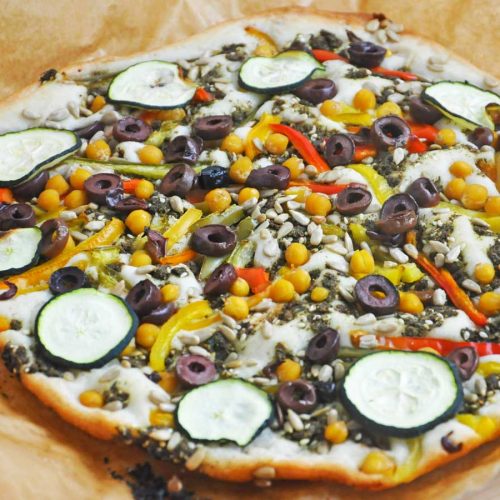
This Middle Eastern gluten-free vegan pizza is a no-knead flatbread loaded with za’atar, roasted vegetables, chickpeas, and a drizzle of tahini. It takes the simple homemade gluten-free crust I make on repeat and gives it warm, savory Mediterranean flavors instead of the usual tomato-and-cheese route. Make it when you want pizza night to feel a little different and the whole thing is dairy-free, egg-free, and naturally vegan.
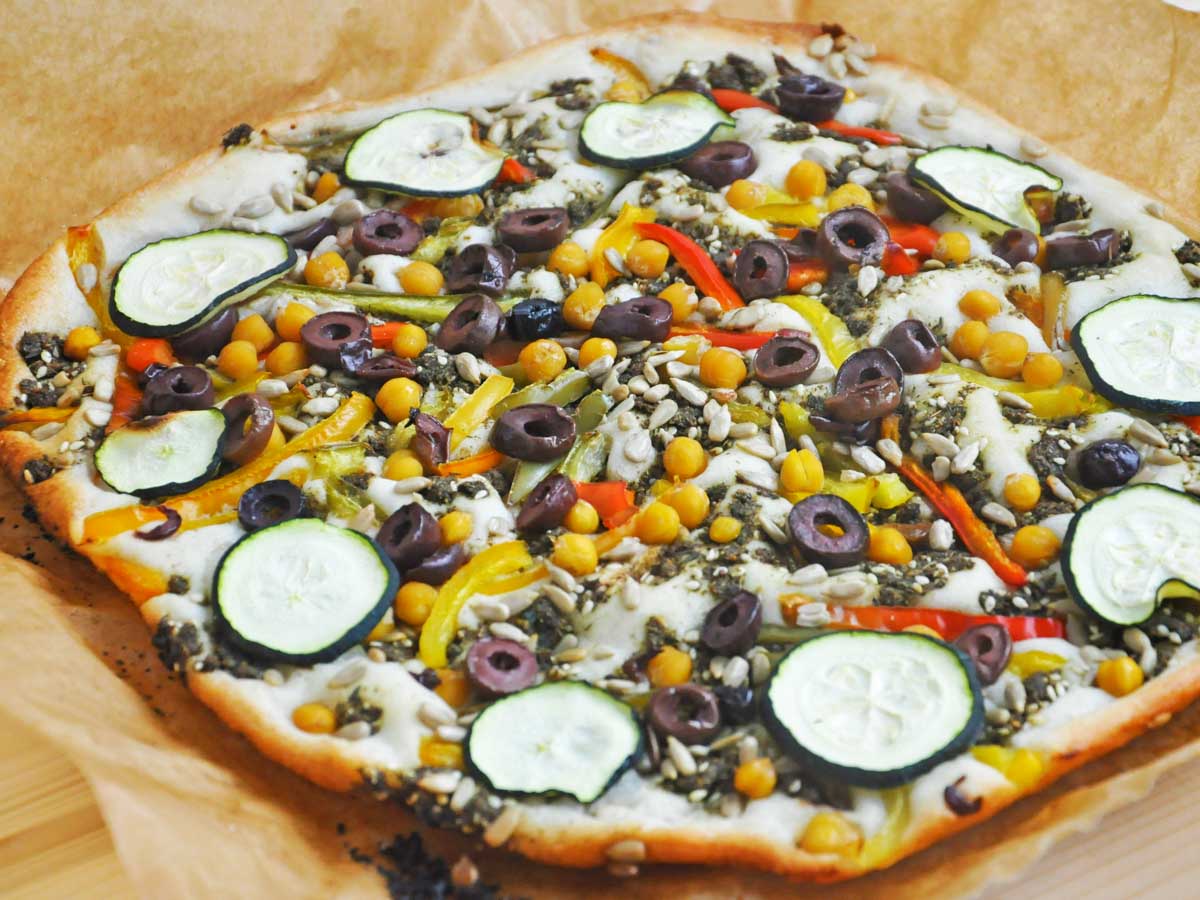
Since I discovered this awesome gluten-free pizza crust recipe, making homemade gluten-free pizza has become so easy and fun. I’ve tried a bunch of gluten-free vegan pizza recipes so far, with lots of interesting ingredient combinations and flavors. This time I wanted something really special, so I decided to go Middle Eastern with it.
There’s a funny story behind the vegetables, too. I wanted to use eggplant for this recipe, so I asked Costin to go buy some because I didn’t have any in the house. I got curious because I knew eggplant wasn’t supposed to cost that much here, and that’s when I saw he’d bought zucchini instead. Of course, I couldn’t stop laughing and made fun of him all day because he didn’t know the difference between zucchini and eggplant. So this pizza ended up with both, and it turned out even better for it. 🙂
A closer look at the ingredients
The crust is built on a blend of gluten-free flour (I use MixIt Universal/Farina or Mix B by Schar), warm water, olive oil, sea salt, and dry yeast. A pre-made gluten-free blend matters here because it already contains the starches and binders that replace gluten’s stretch, so the crust holds together without falling apart.
The flavor base is za’atar mixed with olive oil and mashed garlic, spread over the crust the way you’d spread tomato sauce on a classic pizza. Za’atar is a Middle Eastern blend, typically thyme or oregano, sumac, and sesame, and it’s what gives this pizza its character. On top go sliced zucchini, eggplant, Kalamata olives, sweet corn, boiled chickpeas, and mixed-color bell peppers. A scatter of pine nuts finishes it, and a drizzle of tahini at the end ties everything together. One honest note from my own batch: I couldn’t find pine nuts that day, so I used sunflower seeds instead. They work, but if you can get pine nuts, use those for the best flavor.
How to shape a no-knead gluten-free crust
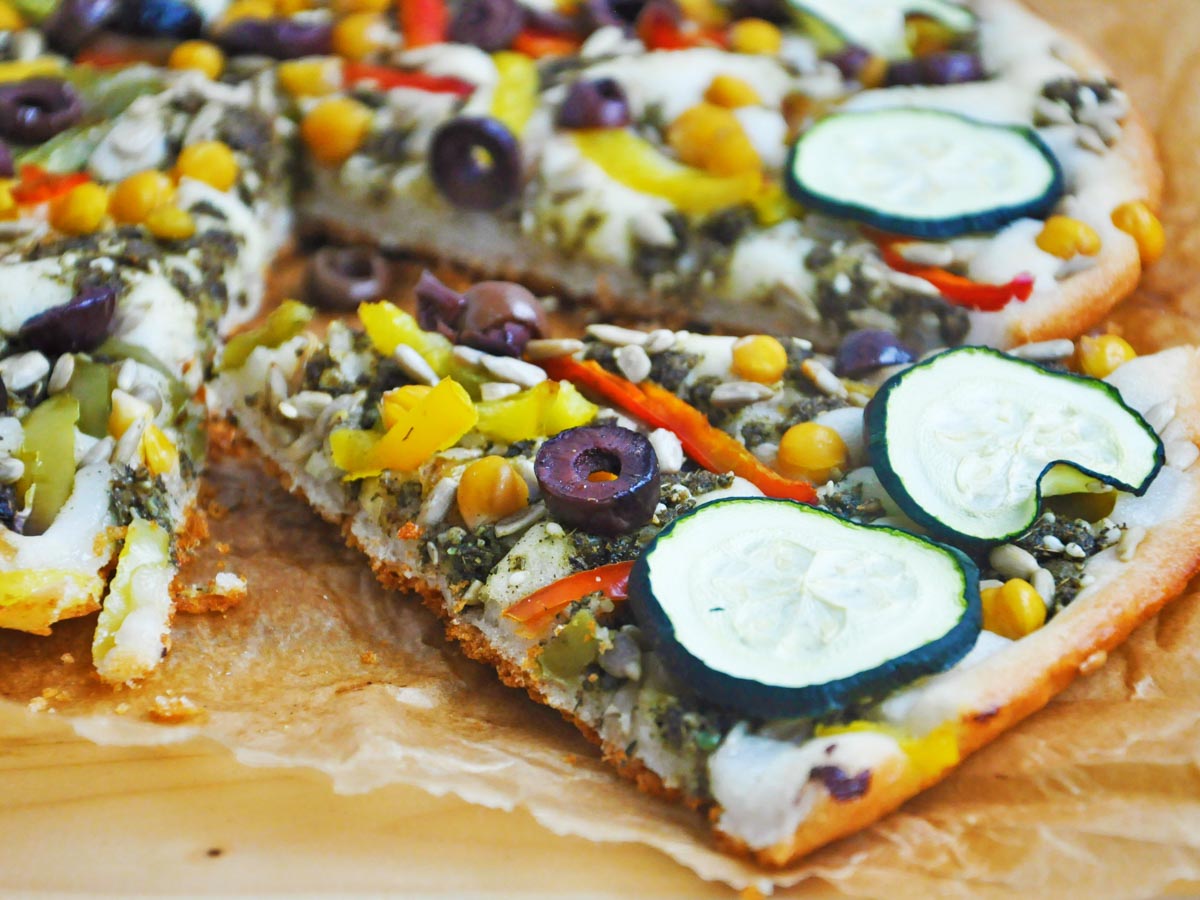
The best part of this crust is that there’s no kneading. You just mix everything in a bowl with a spoon and the dough comes together. It will be extremely sticky and moist, and that’s exactly how it should be, so don’t be tempted to add more flour.
Pour the dough straight into the middle of a greased, parchment-lined tray, then spread it with the back of a tablespoon, using circular motions from the inside out, until it’s roughly round. Once it’s almost round, grease your hands with a little oil and shape the edges to make it rounder and even out the top. If it sticks to your fingers, just add a touch more oil. The oil is the trick: a sticky gluten-free dough won’t tear if your hands and the spoon are lightly oiled, so you can shape it freely.
Tips for the best results
- Slice the zucchini and eggplant thin so they cook through in the same time as the crust.
- Mix the za’atar, olive oil, and garlic into a loose paste before spreading. It goes on more evenly and won’t clump.
- Boil the chickpeas ahead, or use well-drained canned chickpeas to save time.
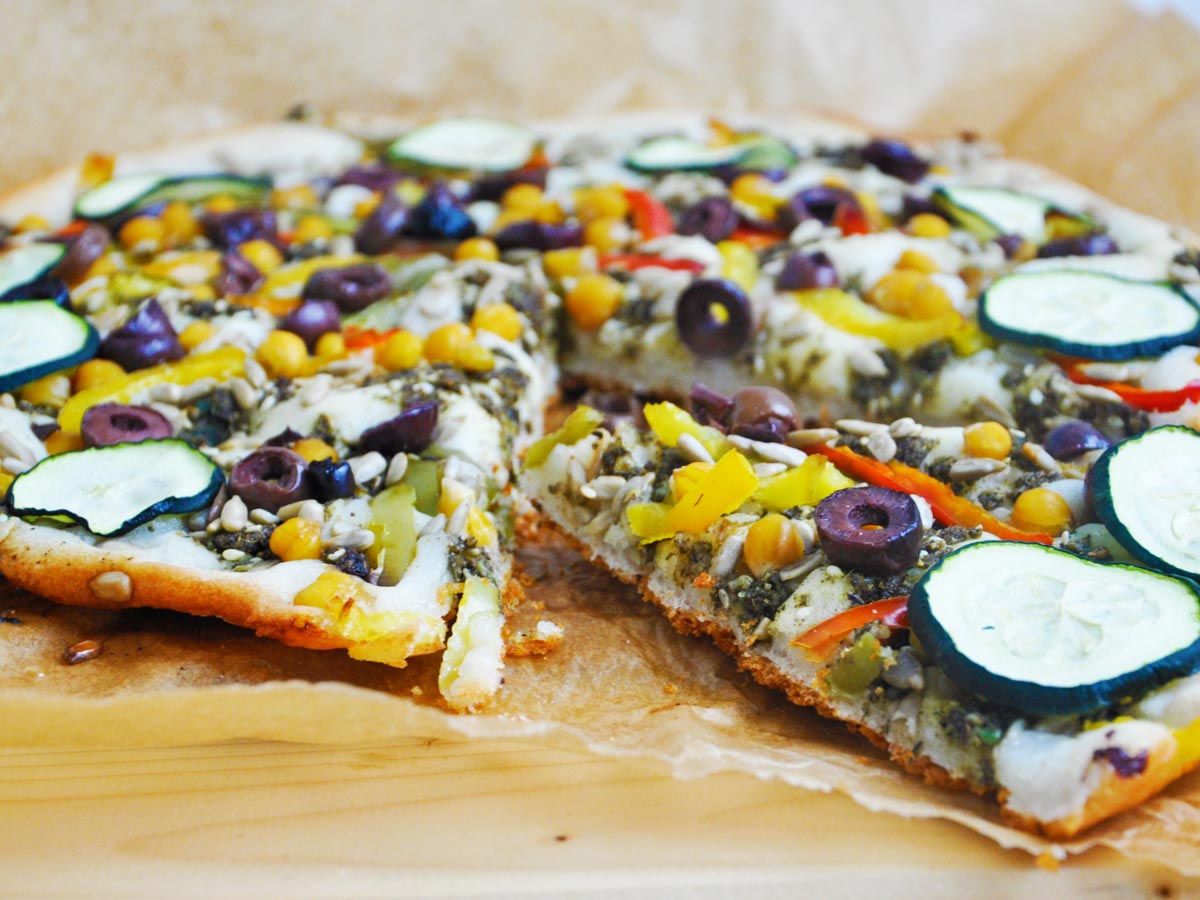
- Bake at 200C for about 30 minutes, and watch the edges. The crust is done when the rim is set and lightly golden and the vegetables have softened.
- Add the tahini drizzle only after baking, off the heat, so it stays creamy instead of drying out in the oven.
Easy swaps and variations
- No pine nuts? Sunflower seeds are a fine stand-in, as I learned firsthand. Toasted walnuts or sliced almonds also work.
- Use only zucchini or only eggplant if that’s what you have. Both are great here, and as my kitchen proved, you can absolutely use both.
- Swap the chickpeas for white beans, or skip them if you prefer fewer toppings.
- If you can’t find za’atar, a mix of dried thyme or oregano with a little sesame and a squeeze of lemon gets you close.
- Want a thinner, faster version? Try the same toppings on a veggie pita pizza for a quick weeknight option.
What to serve it with
This pizza is filling enough to stand on its own, but it loves company from the same Mediterranean and Middle Eastern table. Start with a bowl of vegan red lentil soup for a cozy two-course meal, or set out a plate of healthy vegan falafel alongside it to lean further into the chickpea-and-tahini theme. If you’re feeding a crowd, this slots in nicely next to my other gluten-free vegan pizzas.
Storing and reheating leftovers
Leftover slices keep well in an airtight container in the fridge for up to 3 days. Reheat them in a hot oven or a dry skillet rather than the microwave so the gluten-free crust crisps back up instead of turning soft. Add the tahini fresh after reheating for the best texture. The crust itself can be baked ahead and topped later, which makes this an easy one to prep when you know pizza night is coming. If you’re stocking your gluten-free kitchen, the same no-knead approach works for this gluten-free bread with black cumin.
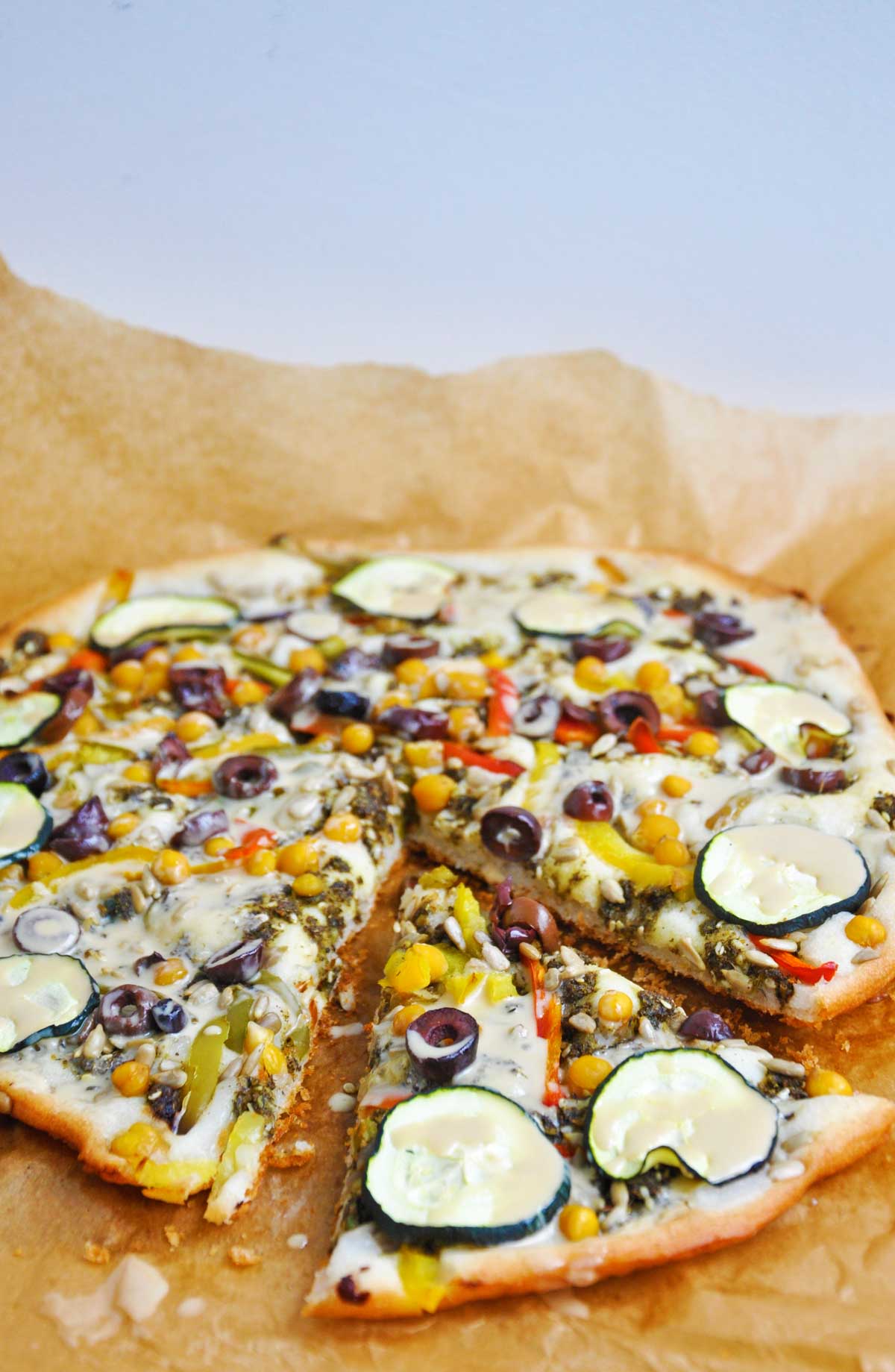
If you give this Middle Eastern twist a try, I’d love to know how it turned out for you. Rate the recipe below and leave a comment telling me whether you went team zucchini, team eggplant, or did both like I accidentally did, and how heavy you went on the tahini drizzle.
Middle Eastern Gluten-Free Vegan Pizza
Ingredients
For gluten-free vegan pizza crust:
- 300 g gluten-free flour MixIt Universal/Farina or Mix B by Schar
- 250 ml warm water
- 2 Tbsp olive oil + 1 Tbsp oil for greasing
- ½ tsp sea salt
- 10 g dry yeast
For toppings
- ½ zucchini sliced
- 4 slices eggplant
- 3 Tbsp Kalamata olives sliced
- 3-4 Tbsp sweet corn
- 4 Tbsp chickpeas boiled
- ½ cup red bell peppers sliced, mixed colors
- 1 ½ Tbsp za’atar
- 1 Tbsp olive oil
- 3 cloves garlic mashed
- 1 Tbsp pine nuts sunflower seeds can be used instead
- tahini to taste
Instructions
- Mix all the pizza crust ingredients in a large bowl using a spoon.
- The dough will be extremely sticky and moist. Don’t worry, this is exactly how it should be.
- Cover an oven tray with parchment paper and lightly grease it.
- Pour the dough right into the middle.
- Start spreading it with the tablespoon, using circular motions from the inside out. You want to give it a somewhat circular shape.
- When the pizza crust has an almost-round shape, grease your hands with a little oil and shape the edges to make it even rounder. You can press it down on top as well. If it gets sticky, just grease your hands again.
- Mix the za’atar with the olive oil and mashed garlic cloves. Spread this all over the pizza crust using a spoon.
- Add the rest of the toppings.
- Bake in the oven at 200C for about 30 minutes.
- Serve with a drizzle of tahini on top.
Notes
Frequently Asked Questions
Yes. Every ingredient is plant-based, with no dairy, egg, or honey anywhere in the recipe. The crust is built on a gluten-free flour blend, and the za’atar base plus vegetable, chickpea, and tahini toppings are all naturally vegan and gluten-free.
Za’atar is a Middle Eastern spice blend, typically dried thyme or oregano, sumac, and toasted sesame seeds. It’s what gives this pizza its signature flavor. If you can’t find it, mix dried thyme or oregano with a little sesame and a squeeze of lemon to get close to that tangy, herby taste.
A very sticky, moist dough is exactly what you want for this no-knead crust, so don’t add extra flour. Gluten-free flour needs more moisture to bind, and the wetness lets you spread it into shape with an oiled spoon. Greasing your hands keeps it from tearing as you shape the edges.
Yes, either one works on its own. The recipe calls for both, but you can use whichever you have on hand. As I found out the hard way after a grocery mix-up, the pizza is just as good with both vegetables layered on together.
Sunflower seeds are a good stand-in, which is what I used when I couldn’t find pine nuts. Toasted walnuts or sliced almonds also work. Pine nuts give the most traditional flavor, so use them if you can find them.
Keep leftover slices in an airtight container in the fridge for up to 3 days. Reheat in a hot oven or a dry skillet rather than the microwave so the gluten-free crust crisps back up instead of going soft. Add the tahini drizzle fresh after reheating.


The tahini sauce really makes a different. I absolutely love this pizza! Thank you for sharing ^_^
You’re welcome! So glad you liked the recipe!