
Vegan Spaghetti alla Puttanesca
Vegan spaghetti alla Puttanesca is a bold, briny tomato pasta that keeps everything authentic about the Italian classic while dropping the anchovies. The salty, savory, slightly-of-the-sea flavor comes from a toasted Nori sheet standing in for the fish, plus kalamata olives and capers doing what they always do in a real Puttanesca. It comes together in about the time it takes to boil the spaghetti, which makes it a fast weeknight dinner with a big personality.
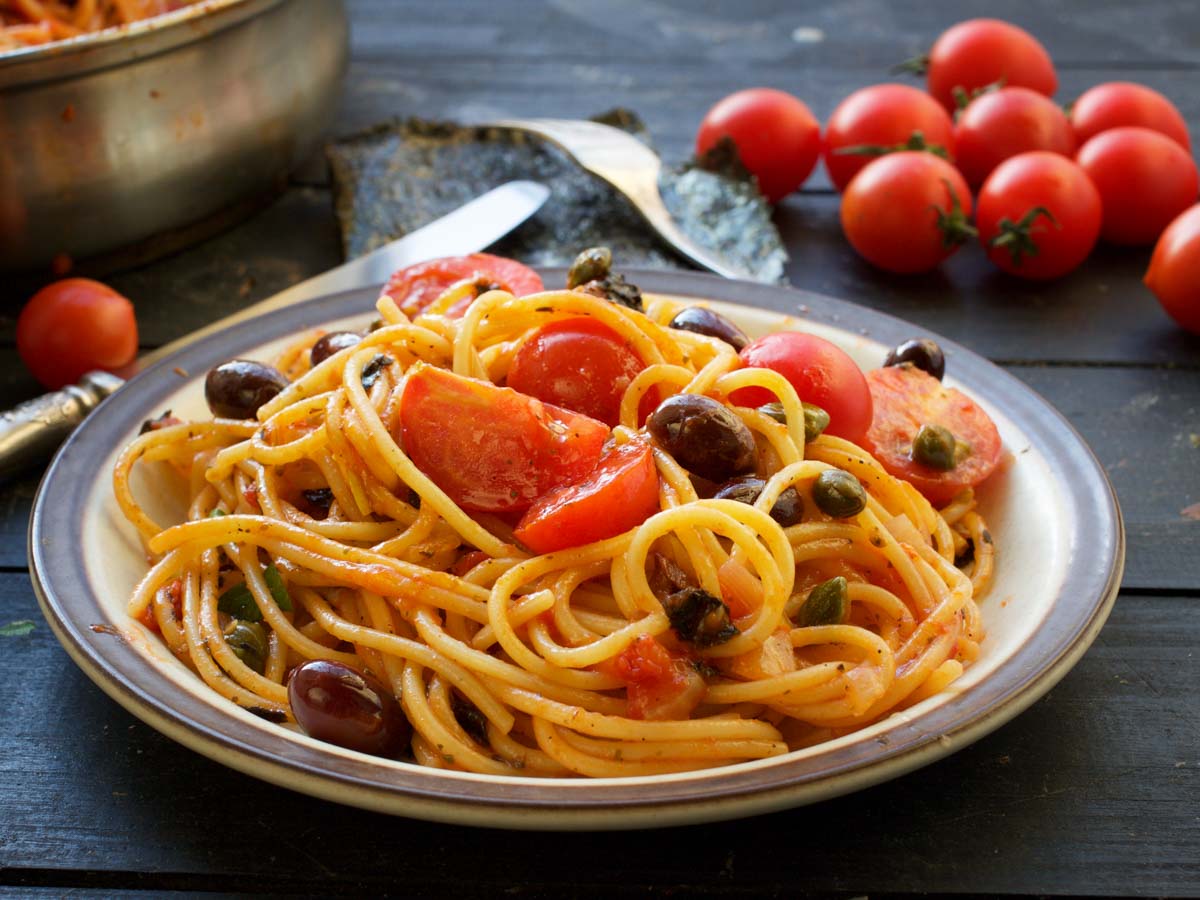
I’m kicking off my veganized Italian recipes challenge right here with this one, and I couldn’t have picked a better dish to start with. After Middle Eastern cuisine, Italian food is by far my favorite. Pasta, pizza, tiramisu… these are the perfect carb-bomb comfort foods, am I right?! The best part is that you can veganize almost any Italian recipe, even the ones built around meat or fish, without losing the taste or texture that makes them special. To mimic the taste of fish here, I used Nori sheets, and it works beautifully.
Why Nori replaces the anchovies
Traditional Puttanesca leans on anchovies for its deep, salty, umami backbone. Nori, the dried seaweed used for sushi, carries that same oceanic, savory quality without any fish. Toasting it dry in a hot skillet until it turns crisp concentrates its flavor and lets you crush it into little flakes that melt into the sauce. Stirred in at the end, it seasons the pasta with a subtle brininess that, alongside the olives and capers, reads as unmistakably Puttanesca.
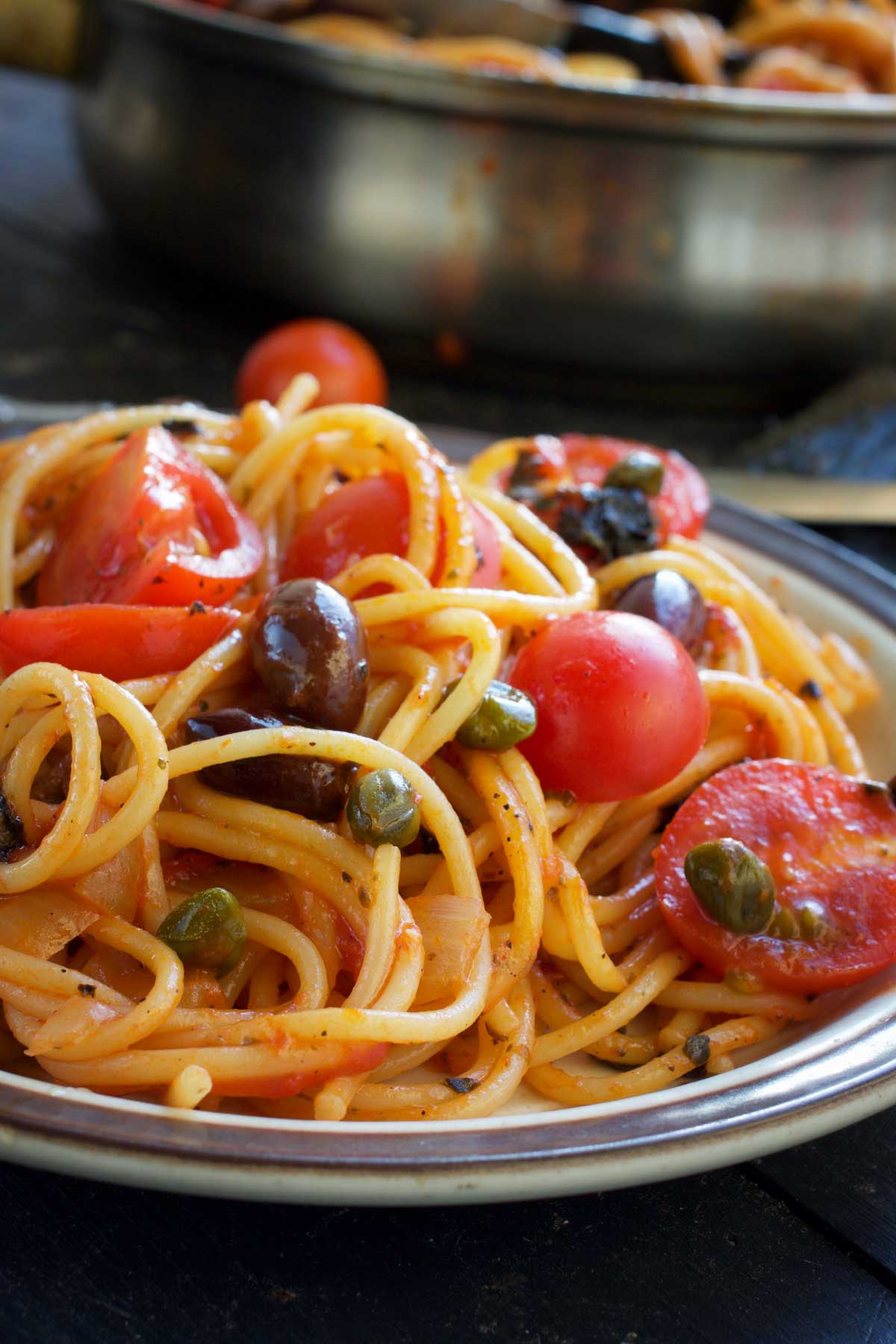
The ingredients that carry the flavor
This sauce is all about salty, punchy accents layered over a good tomato base, so a few notes help you get it right:
- Kalamata olives and capers are the heart of a Puttanesca. Use pitted kalamatas for that fruity, briny depth, and rinse the capers if yours are packed in a very heavy brine so they don’t overpower everything.
- Canned peeled, crushed tomatoes give the sauce its body. Good-quality canned tomatoes are reliable here and often taste more consistent than out-of-season fresh ones.
- Cherry tomatoes go in at the very end, so they stay fresh and slightly juicy rather than melting into the sauce.
- Cayenne pepper brings the gentle heat Puttanesca is known for. Start with the small amount in the recipe and add more only if you like it spicier.
- A teaspoon of maple syrup rounds out the acidity of the tomatoes. It isn’t there to make the sauce sweet, just to balance it.
Tips for the best result
Cook the spaghetti just to al dente, since it will keep softening a little once you fold it into the warm sauce. Saute the onion and garlic gently until translucent, around six minutes, rather than browning them, so the base stays sweet instead of bitter. Because olives, capers, and Nori are all salty, taste the sauce before adding any extra salt at the end. And toast the Nori until it’s properly crisp so it crushes into fine flakes rather than staying chewy.
What to serve with it
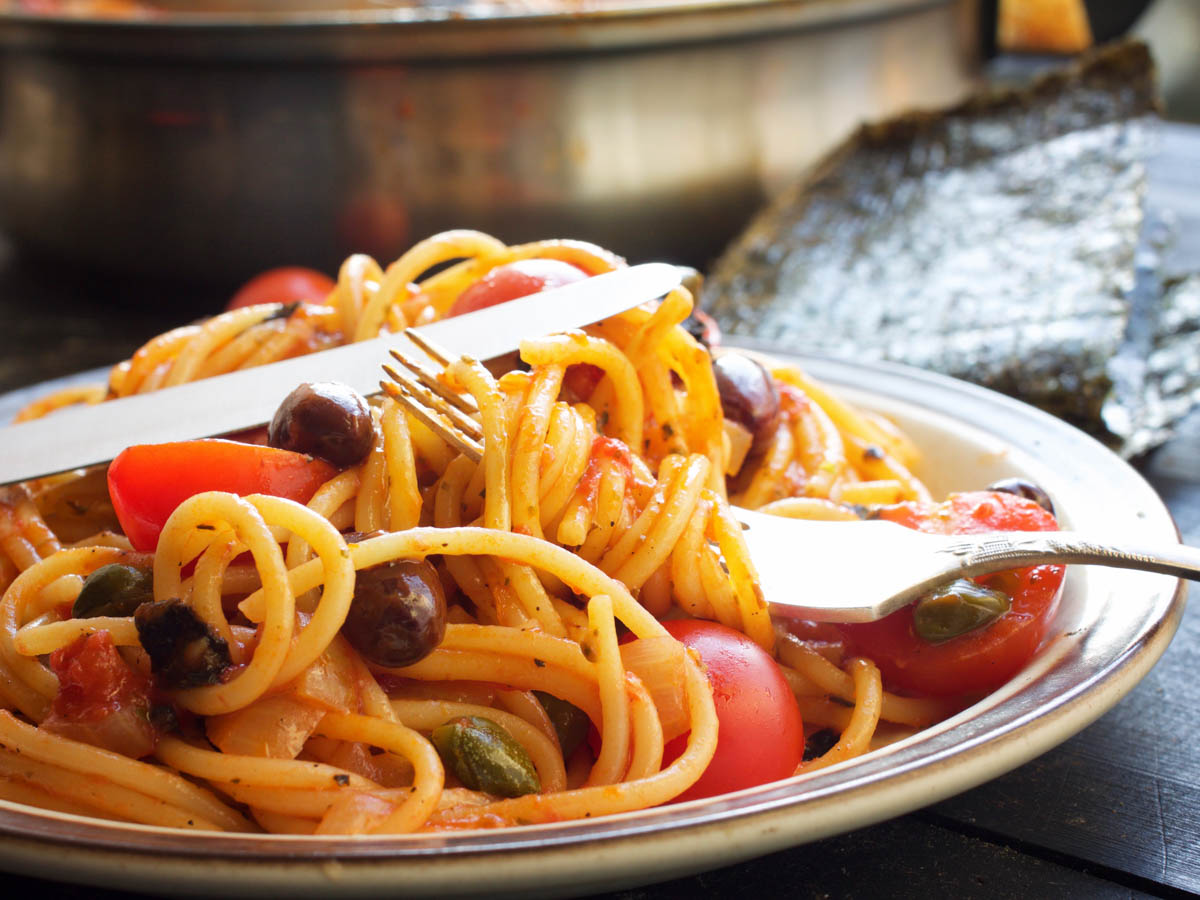
Puttanesca is a full-flavored main that doesn’t need much beside it. A simple green salad and some bread to mop up the sauce are all it really asks for. If you’re building an Italian pasta night, this sits nicely alongside my oyster mushroom spaghetti with tomato and basil sauce or a comforting vegan lasagna with mushrooms for a bigger spread. And if you love a good pasta bowl in general, my cheesy spaghetti with dill and green pepper sauce is a creamier direction to try another night.
Storage, make-ahead and swaps
The sauce keeps well, so this is a good one to prep ahead. Store leftovers in an airtight container in the fridge for up to three days and reheat gently, adding a splash of water if the pasta has absorbed too much of the sauce. If you want to make it ahead, prepare the tomato sauce on its own and toss it with freshly cooked spaghetti when you’re ready to eat, which keeps the pasta from turning mushy. To make it gluten-free, simply swap in your favorite gluten-free spaghetti; my gluten-free diet guide is a handy reference if you’re new to cooking without gluten. And if you want awesome, quick and easy recipes like this every day, check out my weekly vegan meal plan.
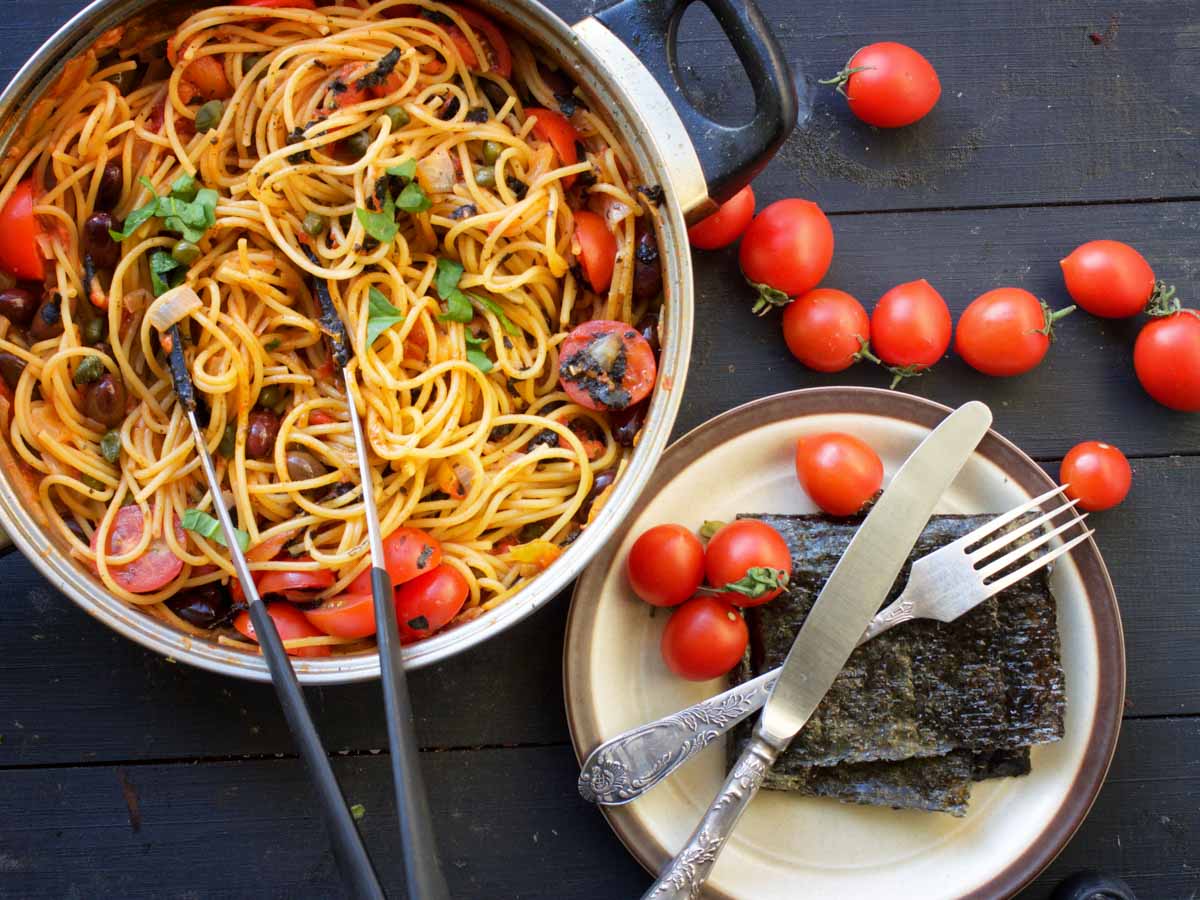
You’ll love this one, I’m sure! If you make this vegan Puttanesca, please rate the recipe and drop a comment below to tell me how the Nori trick worked for you, or whether you turned up the cayenne. I love hearing how it turned out on your table.
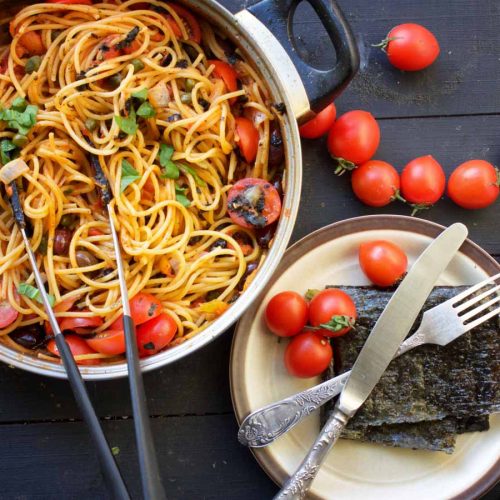
Vegan Spaghetti alla Puttanesca
Ingredients
- 200 g spaghetti
- 4 cloves garlic minced
- 1 onion peeled and chopped
- 2 Tbsp extra-virgin olive oil
- 400 g tomatoes canned, peeled and crushed
- 6 cherry tomatoes halved
- 50 g kalamata olives pitted
- 2 Tbsp capers drained
- 1 sheet nori
- ⅓ tsp cayenne pepper
- 1 tsp black pepper
- 1 tsp basil dried
- 1 tsp maple syrup
- salt and ground pepper to taste
- basil fresh, chopped
Instructions
- Heat a dry skillet over medium heat. Add the nori sheet and toast it until crisp and brittle. Crush the nori into small pieces and set aside.
- Cook the spaghetti al dente, according to the instructions on the package. Drain and set aside.
- Heat the olive oil in a large skillet over medium heat.
- Add the chopped onion and minced garlic. Sauté over medium heat until translucent, about 6 minutes, stirring occasionally.
- Add the canned tomatoes, olives, capers, cayenne pepper, dried basil and maple syrup. Continue cooking for 5 minutes.
- Stir in the cooked pasta and the crushed nori. Season with salt and ground pepper to taste. Stir in the cherry tomatoes and serve with fresh basil on top.
Notes
Frequently Asked Questions
Traditional Puttanesca includes anchovies, but this version leaves them out entirely. The salty, savory, of-the-sea flavor comes from a toasted Nori sheet, along with kalamata olives and capers. Every ingredient in the recipe is plant-based, so it’s fully vegan while still tasting like the classic.
Toasting the Nori dry in a hot skillet until it turns crisp concentrates its flavor and makes it easy to crush into fine flakes. Those flakes dissolve into the sauce and season the pasta with a subtle brininess that stands in for the anchovies. If the Nori stays soft, it can turn chewy instead of melting in, so a proper crisp matters.
Yes. The only ingredient with gluten is the spaghetti, so swap in your favorite gluten-free pasta and cook it to al dente per the package. Everything else in the sauce is naturally gluten-free. Just double-check that your capers and olives have no added gluten in the brine.
It has a gentle warmth from the cayenne pepper, not an aggressive heat. The recipe uses a small amount so the sauce stays balanced. If you like it spicier, add a little more cayenne to taste at the end of cooking.
Yes. Leftovers keep in an airtight container in the fridge for up to three days, and reheat gently with a splash of water if the pasta has soaked up too much sauce. To make it further ahead, prepare the tomato sauce separately and toss it with freshly cooked spaghetti at serving time so the pasta doesn’t turn mushy.
Kalamata olives and capers are the signature briny notes of a Puttanesca, so they’re worth keeping if you can. If needed, other black olives can stand in for the kalamatas. There isn’t a perfect swap for capers, but a few extra chopped olives will keep the sauce salty and savory.


Love your attention to details! I made this today and it really had a subtle “fish” taste, just like the original puttanesca pasta recipe! Thanks!
Thank you, Mihaela! Glad you noticed! I try to make the recipes as close to their authentic versions as possible.