Winter Sangria
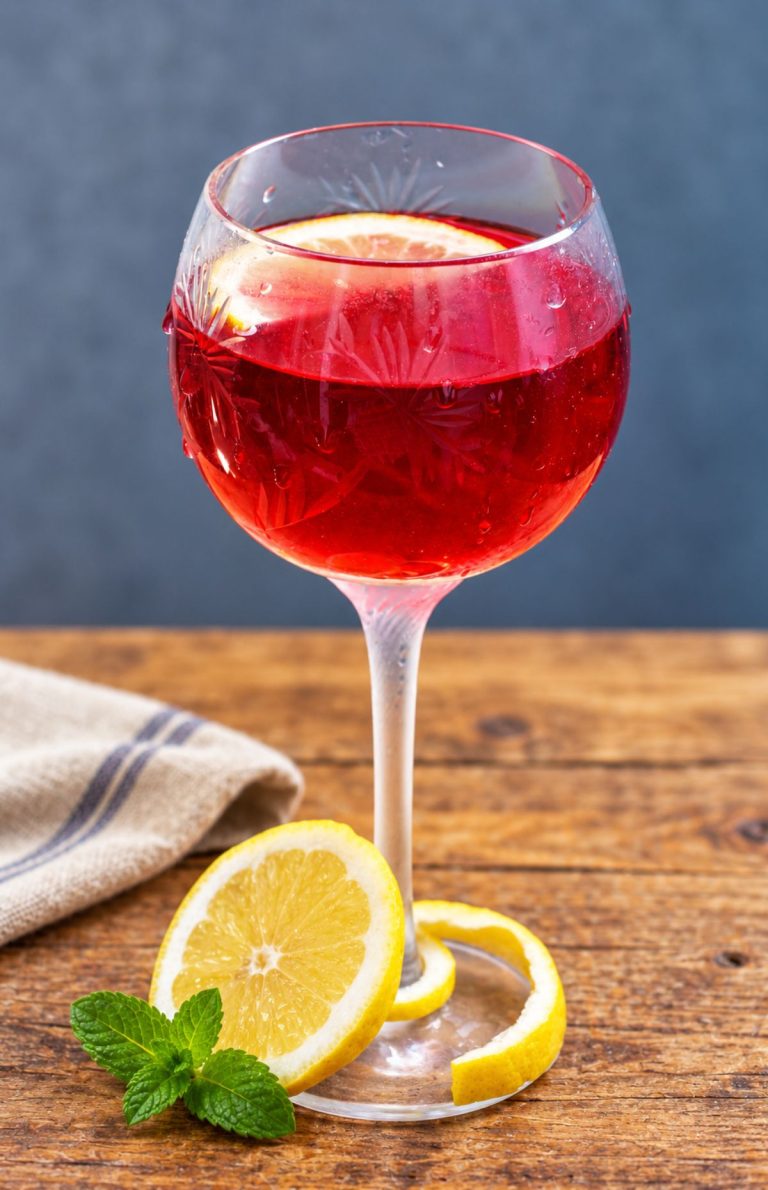
Winter Sangria is a warm-spiced take on the classic Spanish drink, built on a bottle of dry red wine and layered with brandy, orange liqueur, cinnamon sticks, and cold-weather fruit. You stir everything together, let it chill for a few hours so the flavors marry, then finish each pour with a splash of ginger beer for a gentle sparkle. It is served cold over ice, not warmed like mulled wine, which makes it a festive, low-effort choice for Christmas dinners, New Year’s Eve, and quiet chilly evenings alike.
Sangria is an iconic drink with roots in the Iberian Peninsula, and its history reflects Spain’s culinary tradition and culture. The name comes from the Spanish and Portuguese word for blood, “sangre,” a nod to the deep red color of wine-based versions. It is usually a summer pitcher tied to parties and gatherings, but with a couple of small tweaks it turns into a cozy winter drink that suits the holiday season beautifully.
What Goes Into This Winter Sangria
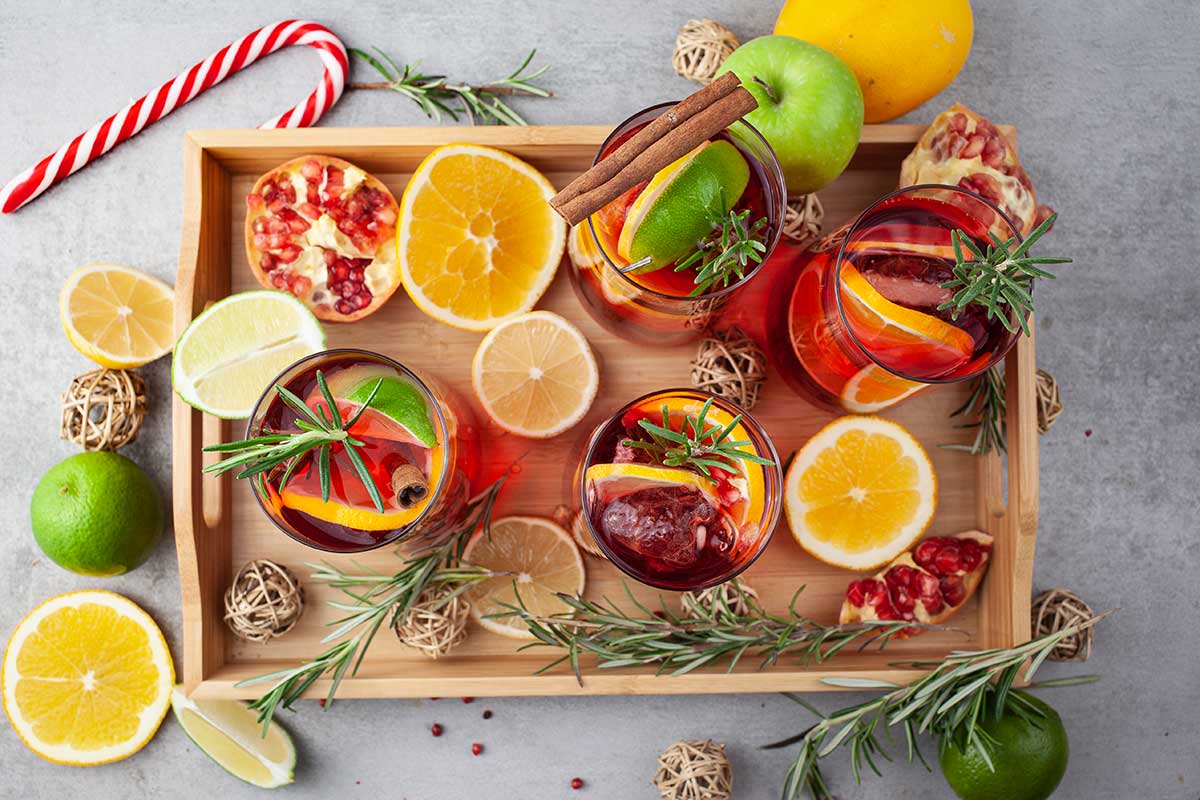
The magic here is in the layering of a few well-chosen ingredients. A full bottle of dry red wine is the base and the backbone. Brandy and Grand Marnier orange liqueur add depth and a rounded, warming edge, while a couple of tablespoons of maple syrup bring just enough sweetness without any refined sugar. Because maple syrup replaces the honey you sometimes see in sangria, this version stays fully plant-based.
For the fruit and spice side, you get orange and lime slices for brightness, apple slices for a crisp bite, jewel-like pomegranate seeds for a pop of tart color, and cinnamon sticks that slowly infuse that unmistakable winter warmth. The final touch is ginger beer, added right before serving, which lifts the whole pitcher with a light fizz and a subtle spicy kick.
Why You’ll Love It
- It is a make-ahead drink, so the base does the work in the fridge while you get on with everything else.
- One pitcher serves a crowd, which makes it ideal for holiday tables and New Year’s Eve.
- The warm spices and winter fruit feel festive without the fuss of mulled, simmered drinks.
- It is naturally vegan, so everyone at the table can enjoy a glass.
Choosing the Right Red Wine
The wine you pick sets the tone for the whole drink, so it is worth a moment of thought. For a winter sangria, reach for a robust, full-bodied dry red that can stand up to the spices and spirits without getting lost. Spanish grapes like Tempranillo and Garnacha are a natural fit given sangria’s origins, and full-bodied reds such as Merlot or Cabernet Sauvignon work well too. Avoid very light, delicate wines here, as the cinnamon, brandy, and liqueur will easily overpower them.
You do not need an expensive bottle. A solid, everyday dry red is exactly what you want, since the fruit and spices are doing plenty of the flavor work. If you keep a strictly vegan kitchen, look for a wine labeled vegan-friendly, as some wines are fined with animal-derived agents.
How to Make Winter Sangria
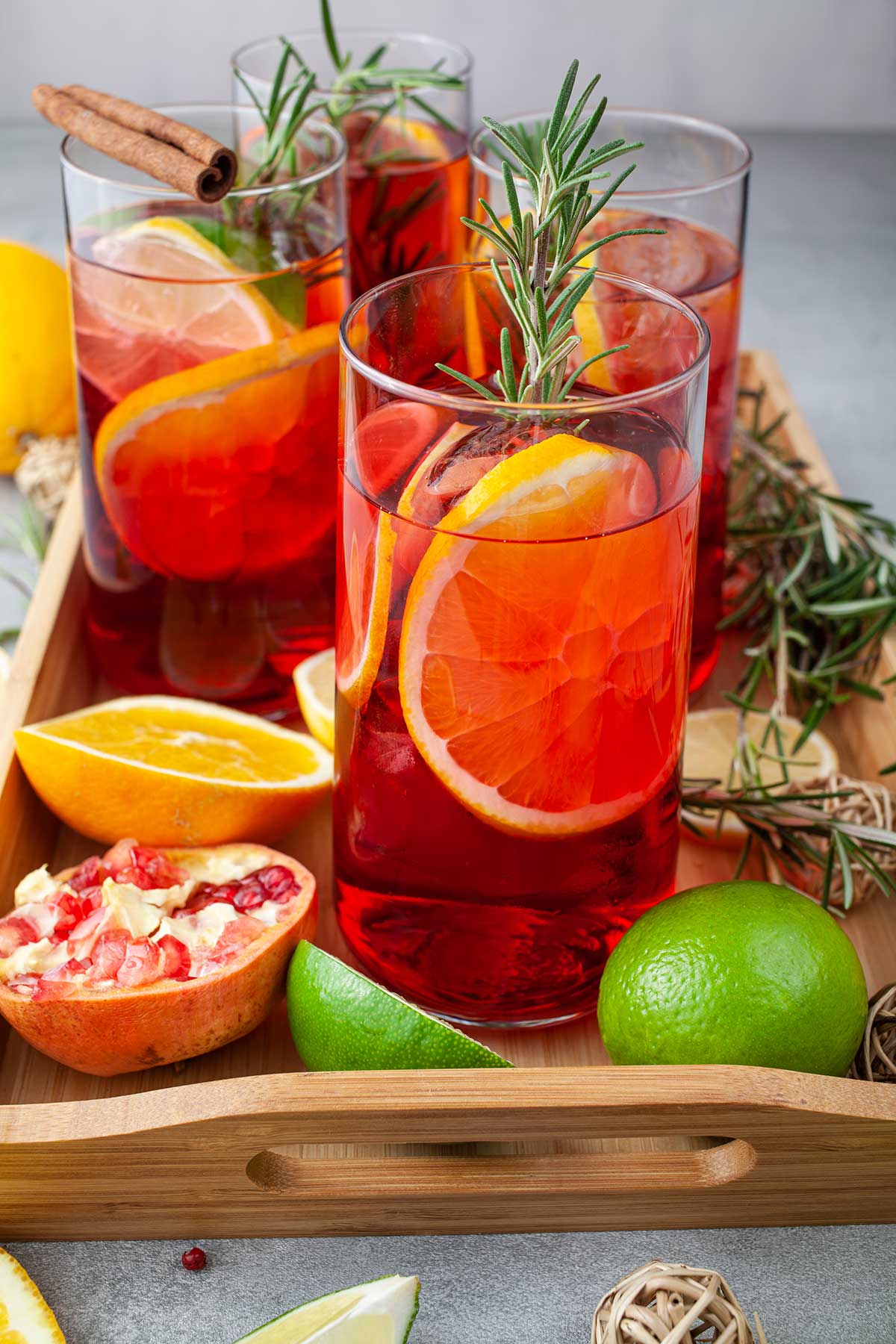
The method could not be easier, and there is no cooking involved. In a large pitcher, combine the maple syrup, Grand Marnier, brandy, orange, lime, and apple slices, pomegranate seeds, and cinnamon sticks, then stir well so the syrup dissolves and the fruit starts to release its juices. Pour in the bottle of red wine, cover the pitcher, and refrigerate for two to three hours so everything can chill and infuse.
Just before serving, stir in the ginger beer so it keeps its fizz. Pour over ice, spoon some of the soaked fruit into each glass, and you are done. That short rest in the fridge is what turns a mix of ingredients into a smooth, cohesive drink, so try not to skip it.
Tips for the Best Winter Sangria
- Add the ginger beer only at the very end so the sparkle does not go flat during chilling.
- Give the sangria the full two to three hours in the fridge, or even a little longer, for the deepest flavor.
- Use fresh, firm fruit and real cinnamon sticks rather than ground cinnamon, which can make the drink cloudy.
- Taste before serving and adjust with an extra drizzle of maple syrup if you like it sweeter.
- Serve it well chilled over plenty of ice, since this is a cold sangria rather than a warm, mulled drink.
Make Ahead, Storage, and What to Serve Alongside
This is a wonderful drink to prep in advance. Build the wine, spirits, fruit, and spice base, cover it, and keep it in the fridge until you are ready to entertain. Hold the ginger beer back and add it per pitcher or per glass right before serving so it stays lively. Leftovers keep well covered in the fridge for two to three days, though the fruit will soften the longer it sits.
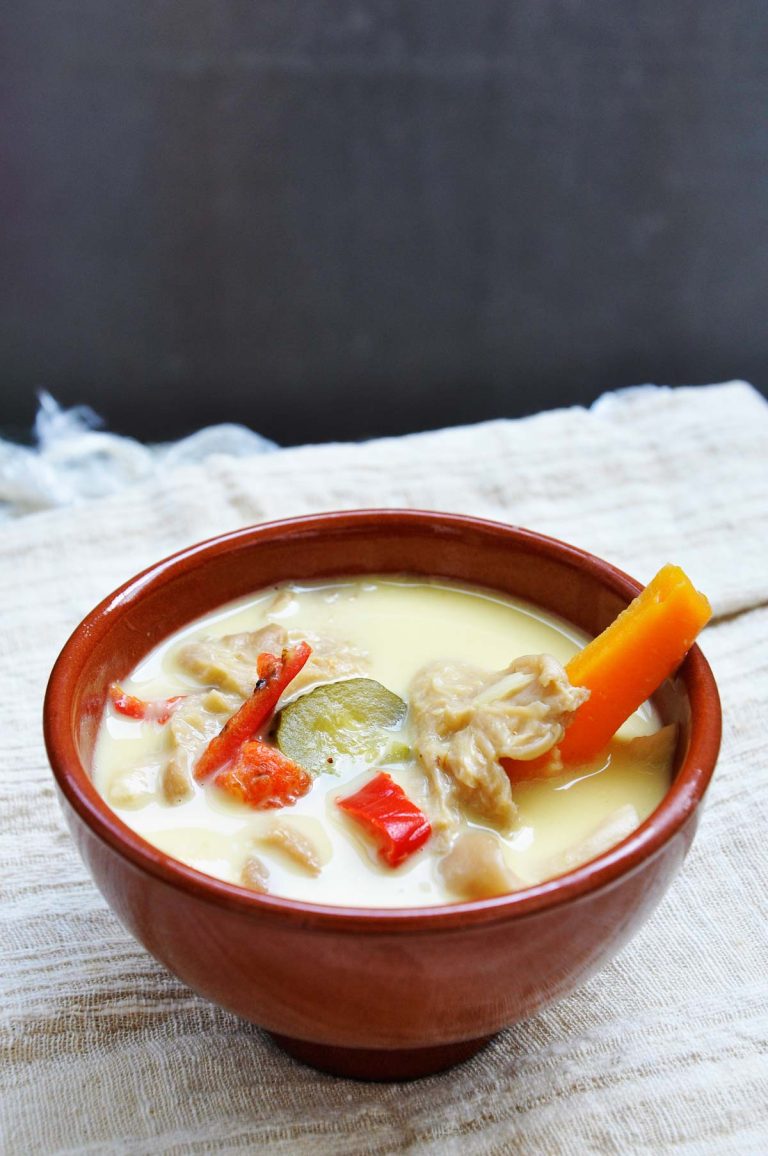
For a full cozy spread, pour it alongside a bowl of hearty veggie soup made for cold winter days. If you are putting together a festive drinks menu, it sits happily next to a warming Christmas punch or a slow-sipping winter spiced herbal bourbon on the rocks, giving your guests a little variety to choose from.
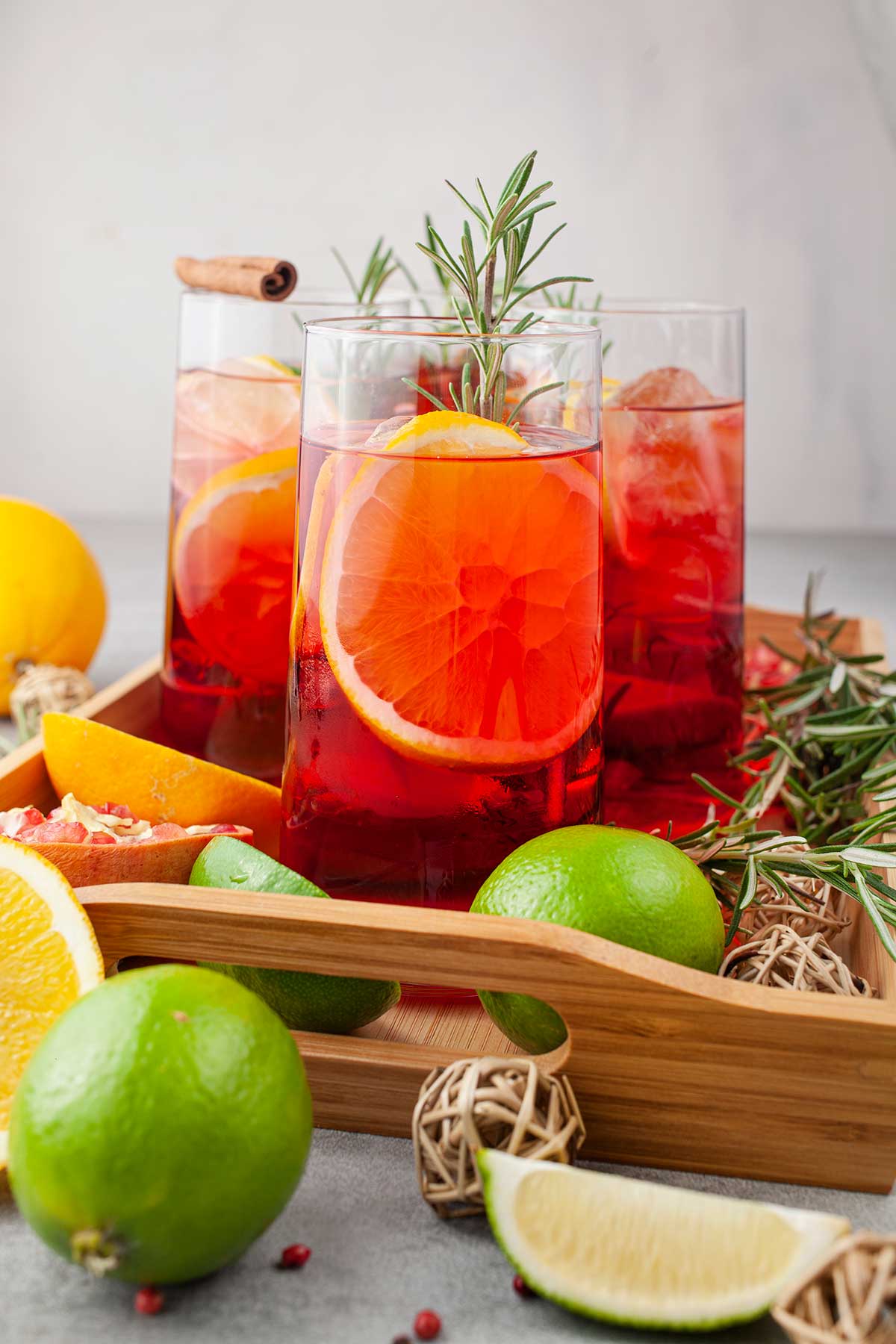
If you make this Winter Sangria for your holiday gatherings, I would love to hear how it went. Leave a star rating and drop a comment below to tell me which red wine you chose and whether you added an extra cinnamon stick or two.
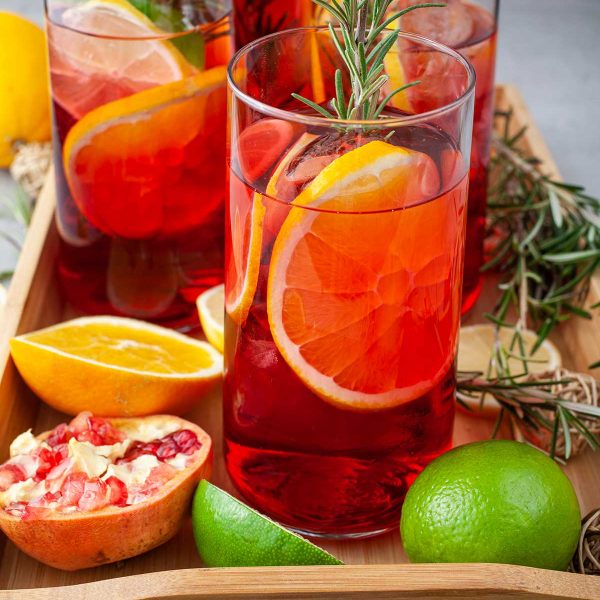
Winter Sangria
Ingredients
- 2 tablespoons maple syrup
- ¼ cup Grand Marnier orange liqueur
- ¼ cup brandy
- 1 orange sliced
- 1 lime sliced
- 1 apple sliced
- ½ cup pomegranate seeds
- 2 cinnamon sticks
- 1 bottle dry red wine
- ¾ cup ginger beer
Instructions
- In a large pitcher, add the maple syrup, orange liqueur, brandy, orange, lime, apple, pomegranate seeds and cinnamon sticks. Stir well.
- Pour in the red wine. Cover with a lid and refrigerate for 2-3 hours.
- Just before serving, add the ginger beer to the sangria mix.
- Serve over ice with the sliced fruit.
Notes
Frequently Asked Questions
It is served cold, not warmed like mulled wine. The base is chilled in the fridge for two to three hours, then poured over ice with a splash of ginger beer added just before serving. Think of it as a festive cold sangria dressed up with winter spices and fruit.
Choose a robust, full-bodied dry red that can hold its own against the cinnamon, brandy, and orange liqueur. Spanish grapes like Tempranillo and Garnacha suit sangria nicely, and reds such as Merlot or Cabernet Sauvignon work well too. There is no need for an expensive bottle, since the fruit and spices carry much of the flavor.
Yes, and it is actually better that way. Combine the wine, brandy, Grand Marnier, maple syrup, fruit, and cinnamon sticks, then cover and refrigerate. Hold the ginger beer back and stir it in per glass or pitcher right before serving so it keeps its fizz.
Yes. It is sweetened with maple syrup instead of honey, and every other ingredient, from the fruit to the ginger beer, is plant-based. If you keep a strict vegan kitchen, choose a wine labeled vegan-friendly, since some wines are fined with animal-derived agents.
This version uses orange and lime slices, apple slices, and a generous scoop of pomegranate seeds, plus cinnamon sticks for warmth. The citrus keeps it bright, the apple adds a crisp bite, and the pomegranate brings a tart, jewel-like finish that feels right for the season.
Kept covered in the refrigerator, the sangria base is best enjoyed within two to three days. The fruit will keep softening the longer it sits, so it is at its freshest early on. Add the ginger beer only to the portion you are serving so the rest does not go flat.