
One-Pot Italian Pasta
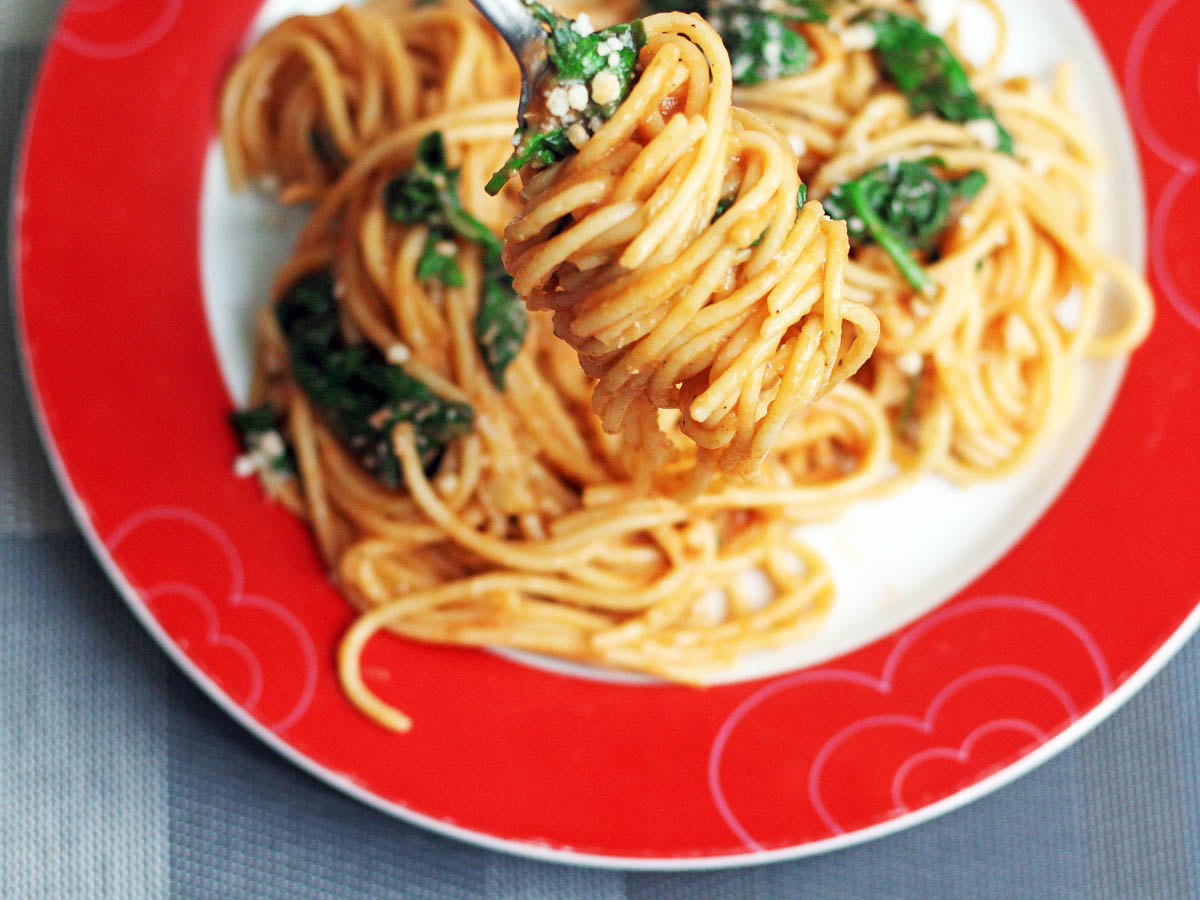
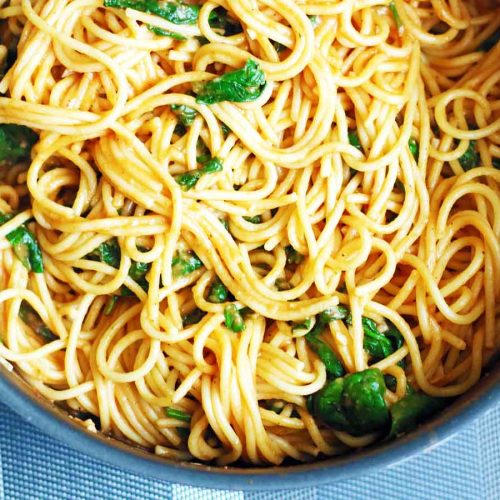
This one-pot Italian pasta is comfort food at its simplest: spaghetti finished right in a garlicky tomato passata with fresh basil and wilted spinach, all in one pot and ready in about 15 minutes. You boil the pasta, drain most of the water, then cook everything together so the noodles soak up the sauce instead of sitting in it. It is quick, budget-friendly, and easy to make vegan by skipping the parmesan.
The Milan story behind this recipe
When in Italy, eat like the Italians! Ever since we moved to Milan, we have been eating pasta like crazy. I am not used to eating this much pasta, but it is quick, easy to make, and there is a huge variety of pasta types in the stores. We were also kind of “forced to,” as fresh produce here is not only quite expensive but also extremely limited. This was pretty shocking for me, coming from Romania where you can find so many types of fruits, vegetables and greens at very low prices.
Back home I used to eat pasta once a month, and now I eat it five times a week! I will have to start jogging soon or that pasta belly will start to grow. The good news is that I was able to find really cheap spinach, valerian, arugula and other greens, so we started eating more salads too. So here is my first one-pot Italian pasta recipe, born straight out of our new Milan routine.
What you need and why it matters
The ingredient list is short, so the quality of each one really shows. Here is what to look for:
- Spaghetti (500 g): any dried spaghetti works. Use gluten-free spaghetti if you need it, and check the package time, since gluten-free varieties can cook faster or slower.
- Tomato passata (500 ml): smooth strained tomatoes, not chunky sauce. This becomes the whole sauce, so pick one with a clean, ripe tomato flavor and no added sugar.
- Garlic (6 cloves, minced): six cloves sounds like a lot, but they mellow as they cook in the sauce. Fresh cloves beat jarred here.
- Fresh basil and spinach: both go in near the end so they stay bright. Fresh basil gives the classic Italian aroma; the spinach wilts down a lot, so the 200 g is not as much as it looks.
- Parmesan (optional): a couple of tablespoons of grated parmesan add savory depth at the end. To keep the dish vegan, skip it or use nutritional yeast (nooch) instead.
- Onion powder, chili flakes, pepper and salt: these season the sauce. Chili flakes are there for a gentle warmth, so adjust to taste.
How the one-pot method works
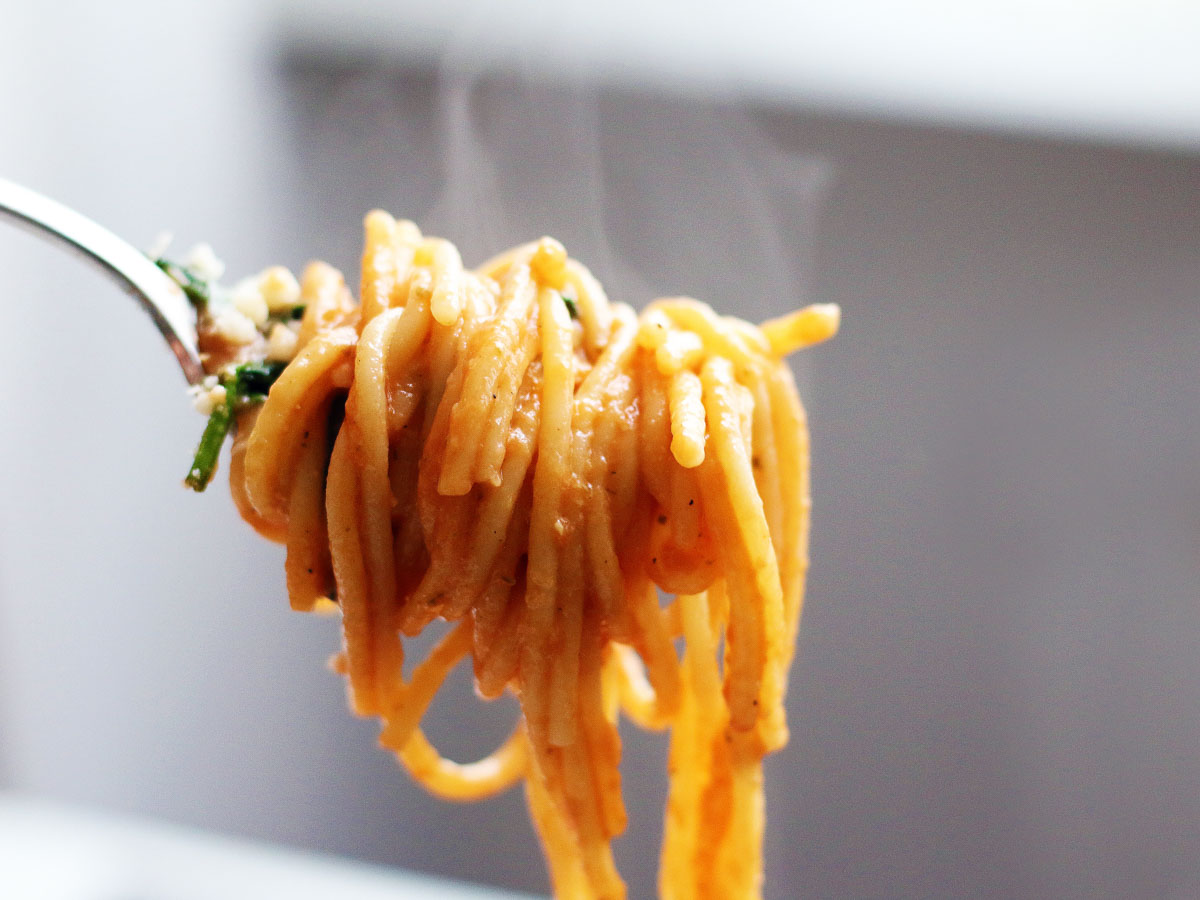
The trick that makes this dish is finishing the pasta in the sauce instead of the water. You boil the spaghetti for about 8 minutes, drain almost all the water but leave roughly half a cup in the bottom, then return the pot to low heat and stir in the passata. That reserved starchy water helps the tomato cling to the noodles and gives you a glossy sauce without any cream. Because the pasta keeps cooking those last few minutes in the passata, it actually absorbs the tomato and garlic flavor rather than just being coated by it.
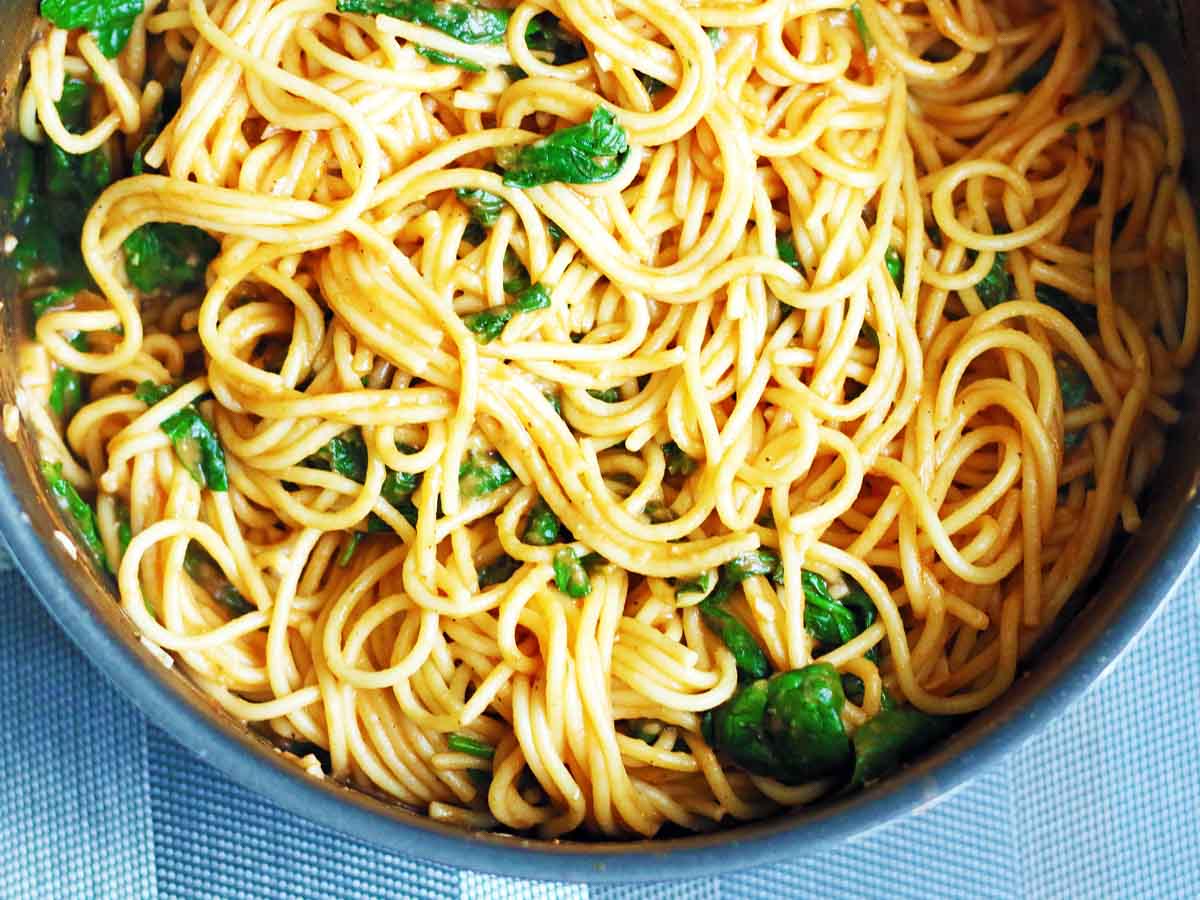
Add the garlic, salt, pepper, onion powder and chili flakes, and let everything simmer for about 3 minutes so the raw garlic edge softens. Then stir in the basil and spinach in handfuls, covering the fresh leaves with the hot pasta so they steam and wilt in seconds. Two more minutes off the aromatics, a final stir of parmesan if you are using it, then cover and rest for a minute before serving.
Tips to get it right
- Do not over-drain. Leaving about half a cup of the cooking water is what keeps the sauce silky. If it looks dry, add a splash more warm water rather than more oil.
- Slightly undercook the boil. Since the pasta finishes in the sauce, pulling it a touch before fully al dente at the 8-minute mark keeps it from turning soft.
- Add greens off high heat. Basil and spinach only need the residual heat. Steaming them under the pasta keeps the color fresh and the flavor bright.
- Taste before serving. Passata brands vary in acidity and salt, so check the seasoning at the end and adjust the salt, pepper or chili to your liking.
What to serve it with
This pasta is a full meal on its own, but it plays nicely with a simple green salad or another Italian-style main from the blog. If you love this kind of quick tomato-and-greens pasta, try the creamy avocado pasta with basil and tomatoes or the fresh pasta with arugula pesto and capers. For more meatless dinner ideas in the same spirit, browse the full collection of vegan pasta recipes.
Storing and making ahead
Leftovers keep well in an airtight container in the fridge for up to 3 days. Pasta absorbs sauce as it sits, so when you reheat it, add a splash of water or a little extra passata and warm it gently on the stove or in the microwave, stirring so it loosens up again. I would not recommend freezing this one, since cooked spaghetti tends to go mushy after thawing. If you are meal-prepping, you can mince the garlic and wash the greens ahead of time so the actual cooking stays a 15-minute job. Craving more? Dive into more Italian recipes from the blog.
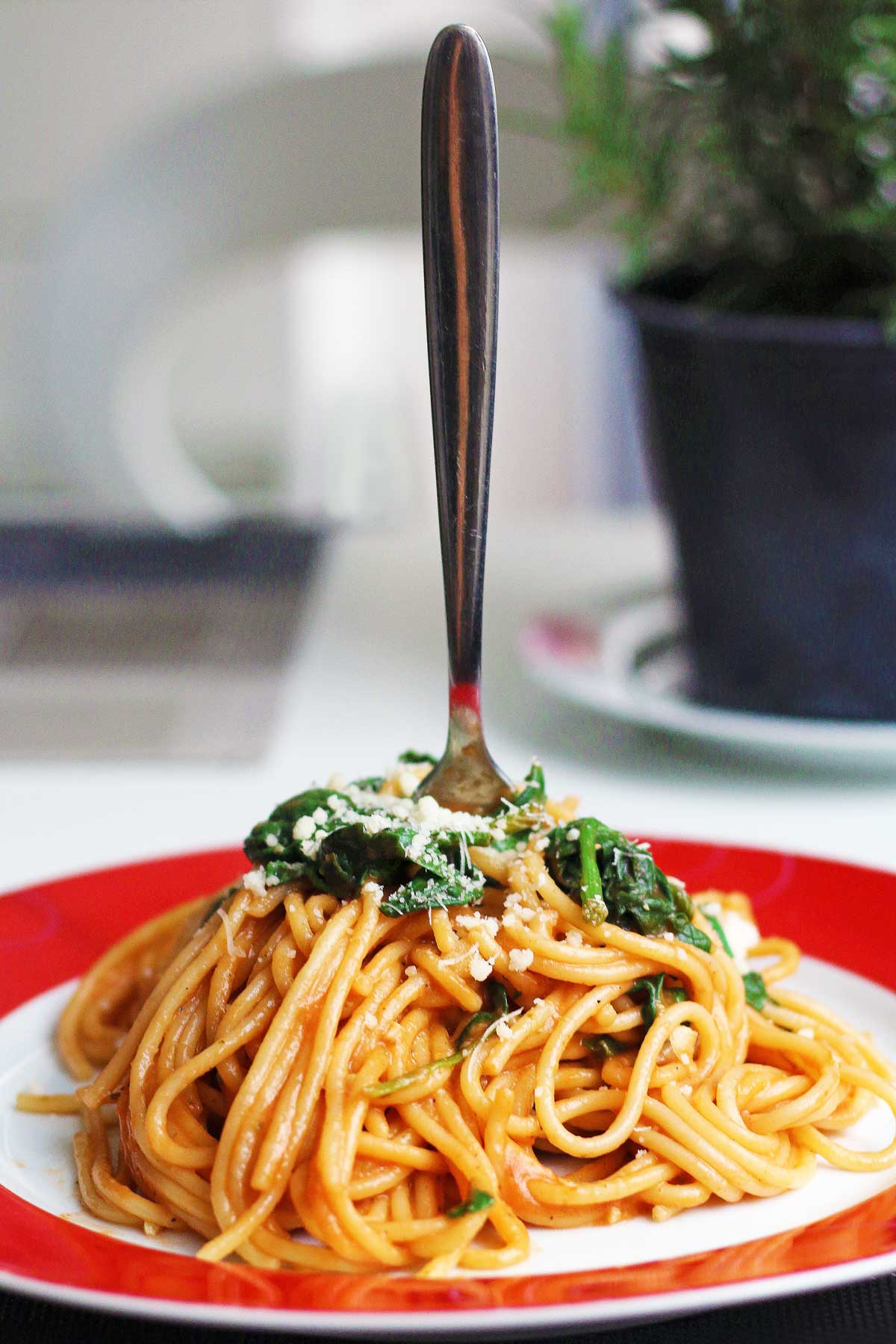
If you make this one-pot spaghetti with tomatoes and spinach, I would love to hear how it went. Give it a star rating below and drop a comment telling me whether you kept the parmesan or went the nooch route, and how spicy you made it. Let me know how it turned out!
One-Pot Italian Pasta
Ingredients
- 500 g spaghetti you can use gluten-free spaghetti, if needed
- 500 ml tomato juice passata
- 6 cloves garlic minced
- 2 tbsp fresh basil chopped
- 200 g fresh spinach
- 2 tbsp parmesan grated, optional – vegans can skip this or replace it with nutritional yeast flakes (nooch)
- 1 tsp onion powder
- 1-2 pinches chili flakes
- ½ tsp ground pepper
- salt to taste
Instructions
- Add water to a large pot and bring it to a boil. Add ½ tsp of salt.
- Once boiling, add the spaghetti.
- Cook the spaghetti for 8 minutes.
- Drain almost all the water, leaving just a little on the bottom (about ½ cup).
- Put the pot back on the stove over low heat.
- Add the tomato juice and stir.
- Add the garlic, salt, pepper, onion powder, and chili flakes.
- Cook for 3 more minutes, stirring occasionally.
- Add the basil and 1-2 handfuls of spinach. Stir and cover the fresh leaves with the hot pasta so they steam in a couple of seconds.
- Add the rest of the spinach and stir. Let it steam in the hot pasta.
- Cook for 2 more minutes, then remove from heat.
- Add the grated parmesan (optional), stir, and cover with a lid.
- Let it rest for about a minute, then serve.
Notes
Frequently Asked Questions
As written it is vegetarian, because the recipe includes grated parmesan. The parmesan is optional, though, so you can make it fully vegan by leaving it out or replacing it with a couple of tablespoons of nutritional yeast (nooch) for a similar savory, cheesy note.
Yes. Simply swap the regular spaghetti for gluten-free spaghetti. Keep an eye on the cooking time, since gluten-free pasta can cook faster or slower than wheat pasta, and it can turn soft quickly once it finishes in the sauce.
You drain almost all the water but keep about half a cup on the bottom. That starchy cooking water helps the tomato passata cling to the noodles and creates a glossy sauce without any cream. It also lets the pasta finish cooking in the passata so it absorbs the tomato and garlic flavor.
Passata is smooth, strained, uncooked tomatoes with nothing chunky in it. It becomes the entire sauce here, so it is worth using. If you only have crushed or chopped tomatoes you can blend them until smooth, and avoid a heavily seasoned jarred pasta sauce, since this recipe already seasons the tomato with garlic, onion powder, basil and chili.
About 15 minutes from start to finish. The spaghetti boils for roughly 8 minutes, then everything simmers together in the passata for another 5 minutes or so before you fold in the basil and spinach and let it rest for a minute.
Keep leftovers in an airtight container in the fridge for up to 3 days. The pasta soaks up sauce as it sits, so when reheating, add a splash of water or a little extra passata and warm it gently on the stove or in the microwave, stirring until it loosens. Freezing is not recommended, as cooked spaghetti tends to go mushy after thawing.


So easy and delicious! Perfect recipe for my taste 🙂
Glad you liked it! 😀