Is Erythritol Bad for You? What the Heart Studies Really Show
Is erythritol bad for you? In normal amounts, there’s no proof that it is. The scary headlines come from a 2023 study that found more heart attacks and strokes in people with high erythritol levels in their blood, but that study showed an association, not cause and effect, and your body makes erythritol on its own. The side effect that is proven is digestive: large amounts can cause bloating and diarrhea. Below I go through every study behind the headlines, what they can and can’t tell us, how much erythritol is too much, and who should be more careful.
I’ve baked with an erythritol-stevia blend since 2015, so when the headlines about heart attacks came out, I read the studies myself instead of the news stories. If you’re new to this sweetener, my guide to what erythritol is and how to bake with it covers the basics; this article is only about safety.
The short answer
- Heart: studies found an association between erythritol in the blood and heart problems, not proof that the sweetener causes them. The FDA and EFSA both say a causal link has not been shown.
- Blood clots: one small study saw stickier platelets after a large 30 g dose; a newer randomized study with 50 g did not.
- Side effects: above about 0.5 g per kg of body weight a day, it can cause diarrhea; kids reach that limit fast.
- Cancer: I found no study linking erythritol to cancer.
- My take: use it in moderation, like sugar, and ask your doctor if you have heart disease.
Table of Contents
- Where the “Erythritol Dangers” Headlines Came From
- Why That Study Doesn’t Prove Erythritol Is Dangerous
- Does Erythritol Cause Blood Clots? The Newer Studies
- What the FDA and EFSA Say About Erythritol Safety
- Erythritol Side Effects That Are Proven
- Does Erythritol Cause Cancer?
- Is Erythritol Safer Than Sugar or Other Sweeteners?
- Who Should Be More Careful With Erythritol
- How I Use Erythritol Now
- Frequently Asked Questions
- Sources
Where the “Erythritol Dangers” Headlines Came From
In February 2023, researchers at the Cleveland Clinic published a study in Nature Medicine that made front pages everywhere. They measured erythritol in the blood of people who came in for a heart checkup and followed them for three years. People in the top quarter for erythritol levels had about 1.8 to 2.2 times the risk of a heart attack, stroke or death compared with those in the bottom quarter.
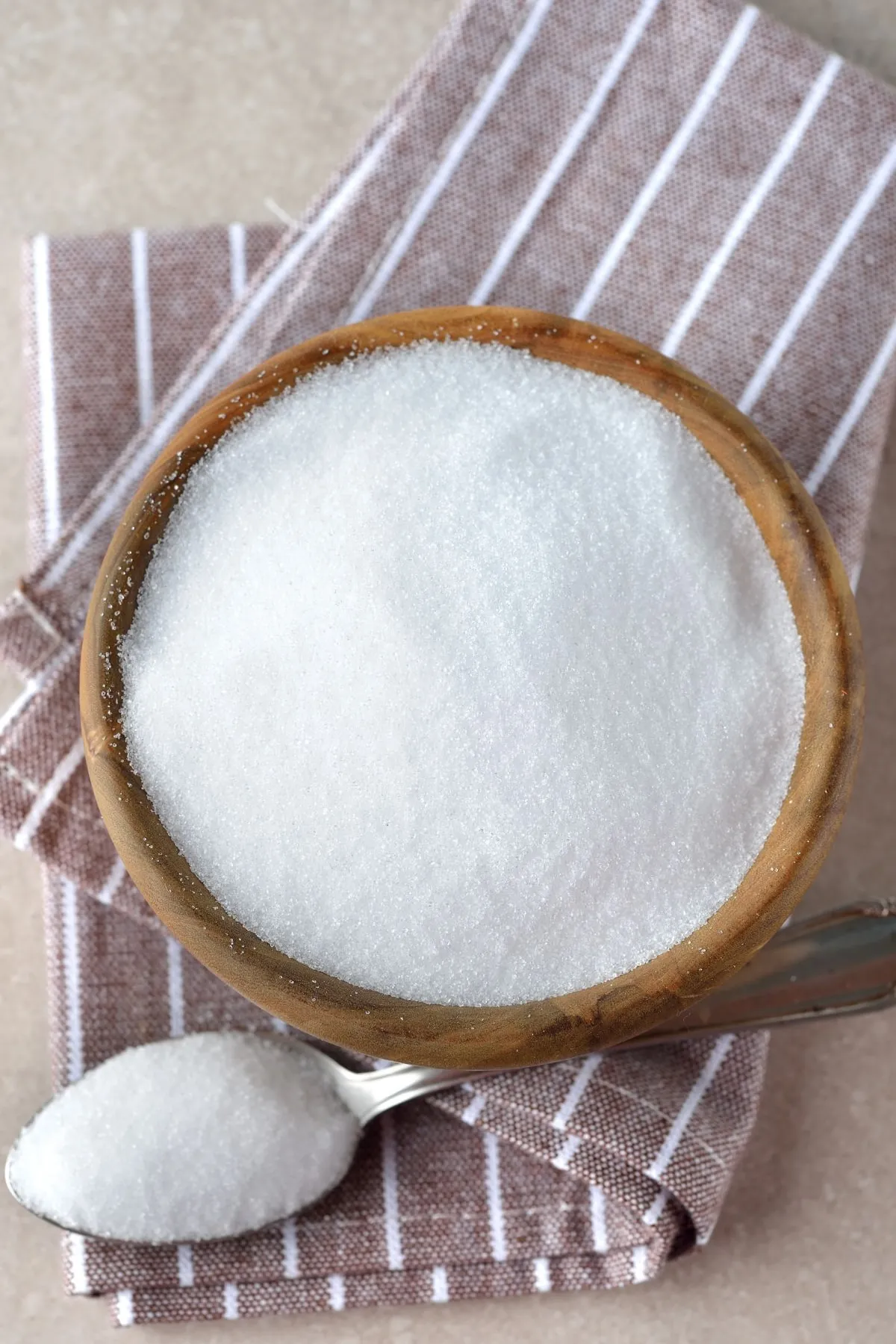
The same team then added erythritol to blood in the lab and saw platelets, the cells that form clots, react more strongly. Finally, 8 healthy volunteers drank 30 g of erythritol, and their blood levels rose about 1,000 times and stayed high for more than two days.
Put together, that sounded alarming: a common sweetener linked to clots, heart attacks and strokes. But each piece has limits, and they matter.
Why That Study Doesn’t Prove Erythritol Is Dangerous
The patients didn’t report what they ate
The study measured erythritol in the blood, not erythritol in the diet. There were no food records. A group of researchers who reviewed the study in 2023 pointed out that people in the high-erythritol group were also 10 to 14 years older and had more diabetes, and that one of the cohorts was sampled in 2007-2009, when hardly anyone used erythritol as a sweetener.
Your body makes erythritol
This is the part most news stories left out. Your body produces erythritol from glucose, through a normal metabolic pathway. A 2017 study in PNAS found that college students with more erythritol in their blood went on to gain more belly fat, long before anyone could blame a sweetener. Other researchers have since argued that high blood erythritol may be a marker of metabolic stress (obesity, insulin resistance, diabetes) rather than a sign of what someone ate.
A 2025 genetic study of about 400,000 people found that genes linked to higher erythritol levels were also linked to slightly more heart disease and stroke. That sounds like confirmation, but the authors themselves note that those genes reflect the erythritol your body makes over a lifetime, not the erythritol you eat.
30 g in two minutes isn’t how anyone eats it
The volunteers drank 30 g of erythritol in one go, on an empty stomach. For comparison, a teaspoon is about 4 g, and in the EU a 300 ml flavored drink can contain at most about 4.8 g. A slice of homemade cake sweetened with erythritol has around 11 g.
| Amount of erythritol | About |
|---|---|
| 1 teaspoon | 4 g |
| 1 slice of cake (130 g erythritol in the whole cake, 12 slices) | 11 g |
| Dose in the 2023 and 2024 platelet studies | 30 g |
| EFSA daily limit for a 150-pound adult | 34 g |
| Dose in the 2026 randomized study | 50 g |
Does Erythritol Cause Blood Clots? The Newer Studies
Since 2023, a few studies have tested the clotting question directly. They don’t agree.
| Study | What they did | What they found | How strong |
|---|---|---|---|
| Cleveland Clinic, 2024 | 10 healthy people drank 30 g of erythritol, 10 drank 30 g of glucose | Platelets reacted more strongly 30 minutes after erythritol, not after glucose | Small, not randomized |
| Basel and Bern, 2026 | 14 healthy people each tried 50 g of erythritol, xylitol and water, in random order | No change in platelets or in clotting markers | Randomized, but small and not yet peer-reviewed |
| University of Colorado, 2025 | Human blood vessel cells in a dish, exposed to erythritol for 3 hours | More oxidative stress, less nitric oxide, weaker clot breakdown | Cells in a lab, not people |
So the honest answer to “does erythritol cause blood clots?” is: we don’t know yet. One small study says platelets get stickier after a big dose, a slightly better designed one says they don’t, and nobody has tested what years of everyday use do. A trial comparing two weeks of daily erythritol with two weeks of aspartame in people with overweight has been registered, but I haven’t found results yet.
What the FDA and EFSA Say About Erythritol Safety
- FDA: erythritol has been accepted as safe (GRAS) since 2001, with the most recent notice in 2026. After the 2023 study, the FDA said the observational studies “did not establish a causal link” between erythritol and the observed effects, and that it will keep monitoring.
- EFSA (European Food Safety Authority): in its December 2023 re-evaluation, EFSA concluded that the evidence does not show a causal relationship between erythritol and heart disease. It set an acceptable daily intake of 0.5 g per kg of body weight, based on digestive tolerance, and found that erythritol does not raise concerns about genotoxicity.
Neither agency has pulled erythritol from the market or added a heart warning. That’s not a guarantee, but it means the people who review all the data, not only the headlines, haven’t found proof of harm.
Erythritol Side Effects That Are Proven
Bloating and diarrhea
This one is real, and it’s the reason for the official limit. Most erythritol is absorbed and leaves the body unchanged in urine, so it’s much gentler than other sugar alcohols: in one trial, 20 g and 35 g of erythritol in a drink caused no symptoms, while 35 g of xylitol caused watery stools. But past a certain point, what isn’t absorbed pulls water into the gut.
- The limit: about 0.5 g per kg of body weight a day, or roughly 34 g for a 150-pound adult.
- Where it adds up: “sugar-free” drinks, protein bars, chocolate and keto baked goods often use erythritol, so a day of them can pass the limit without a single spoonful from your own jar.
Kids reach the limit fast
For a 44-pound child, the limit is about 10 g a day, so a single slice of cake sweetened with erythritol (about 11 g) already goes over it. When you bake for kids, use less erythritol and let ripe fruit do part of the sweetening.
IBS
Erythritol is a polyol, and Monash University, the team behind the low-FODMAP diet, lists it among the FODMAP sugar alcohols without a tested safe serving. If you have IBS, I’d skip it, especially during the elimination phase of the low-FODMAP diet.
Does Erythritol Cause Cancer?
I found no study linking erythritol to cancer, in people or in animals. EFSA concluded in 2023 that erythritol doesn’t raise concerns about genotoxicity (damage to DNA, the usual first step toward cancer), and noted no other effects in animals at much higher long-term doses than people eat. The cancer worries around sweeteners mostly concern aspartame, which is a different substance.
Is Erythritol Safer Than Sugar or Other Sweeteners?
It depends on what you compare it with.
- Compared with sugar: erythritol doesn’t raise blood sugar (doses of 20 to 75 g didn’t in studies), and in a three-year trial with 485 schoolchildren in Estonia, kids given erythritol candies had fewer cavities than those given xylitol or sorbitol. Sugar, on the other hand, has a long and well-proven list of downsides when you eat too much of it.
- Compared with xylitol: erythritol is easier on the stomach and, unlike xylitol, isn’t dangerous for dogs. The same Cleveland Clinic team found a similar heart signal for xylitol in 2024, so neither is “the safe one” on that front.
- For weight loss: the World Health Organization advises against relying on non-sugar sweeteners to lose weight, and there’s no good evidence that erythritol helps.
For the full comparison with honey, maple syrup, dates, coconut sugar and stevia, see my guide to healthy sugar alternatives.
Who Should Be More Careful With Erythritol
- People with heart disease or a high risk of it: the open questions are about exactly this group, so talk to your doctor before using a lot of it.
- Kids: their daily limit is small (see above).
- People with IBS or a sensitive stomach.
- Pregnant and breastfeeding women: there are no studies specifically on pregnancy; the general limit applies, and it’s worth asking your doctor or midwife.
- Anyone eating a lot of “sugar-free” products every day, because the amounts add up.
How I Use Erythritol Now
I still use it, in puddings, creams and the occasional sugar-free cake, but I treat it like sugar: something to use in moderation, not a free pass to sweeten everything. A normal slice of cake sweetened with erythritol is far below the daily limit; a whole day of “sugar-free” snacks may not be. If you have heart disease or a high risk of it, ask your doctor before making it a daily habit. For recipe ideas, see my keto desserts and sugar-free desserts.
Frequently Asked Questions
There’s no proof that erythritol is bad for you in normal amounts. A 2023 study linked high blood levels to heart problems, but it showed an association, not cause, and your body also makes erythritol. The proven side effect is digestive upset in large amounts.
The FDA has accepted erythritol as safe since 2001, and EFSA set a daily limit of 0.5 g per kg of body weight in 2023. Both say a link to heart disease hasn’t been shown. Use it in moderation and ask your doctor if you have heart disease.
It isn’t known. A small 2024 study saw stickier platelets after 30 g of erythritol, while a randomized 2026 study with 50 g found no effect. Neither tested long-term everyday use.
The main side effects are bloating, gas and diarrhea, usually above about 0.5 g per kg of body weight a day. Some people also notice a cooling feeling in the mouth.
EFSA’s acceptable daily intake is 0.5 g per kg of body weight, about 34 g for a 150-pound adult and about 10 g for a 44-pound child.
No study has linked erythritol to cancer. EFSA found in 2023 that it does not raise concerns about damage to DNA.
It doesn’t raise blood sugar the way sugar does, but it isn’t a health food. It’s best used in moderation, like sugar, rather than as a way to eat more sweets.
Sources
- Witkowski M. et al., 2023, Nature Medicine (erythritol in blood and cardiovascular events): doi.org/10.1038/s41591-023-02223-9
- Witkowski M. et al., 2024, Arterioscler Thromb Vasc Biol (platelets after 30 g): doi.org/10.1161/ATVBAHA.124.321019
- Wölnerhanssen B.K. et al., 2026, medRxiv preprint, not peer-reviewed (randomized trial, platelets): doi.org/10.64898/2026.09.25.26364060
- Berry et al., 2025, J Appl Physiol (blood vessel cells in the lab): PubMed 40459966
- Sun et al., 2025, Medicine (Mendelian randomization): PubMed 41137360
- Cramer H. et al., 2023, Frontiers in Nutrition (critique of the 2023 study): PubMed 37287998
- Hootman K.C. et al., 2017, PNAS (erythritol made by the body): doi.org/10.1073/pnas.1620079114
- EFSA, re-evaluation of erythritol (E 968) as a food additive, 2023: doi.org/10.2903/j.efsa.2023.8430
- FDA, Aspartame and Other Sweeteners in Food (statement on erythritol): fda.gov
- FDA, GRAS Notice Inventory (GRN 76, 208, 382, 789, 1296): fda.gov
- Storey D. et al., 2007, Eur J Clin Nutr (digestive tolerance, erythritol vs xylitol): PubMed 16988647
- Witkowski M. et al., 2024, European Heart Journal (xylitol and cardiovascular events): PubMed 38842092
- WHO, Use of non-sugar sweeteners: WHO guideline, 2023: who.int
- Monash University FODMAP (sugar polyols): monashfodmap.com