
Easy Pasteis de Nata (Portuguese Custard Tarts)
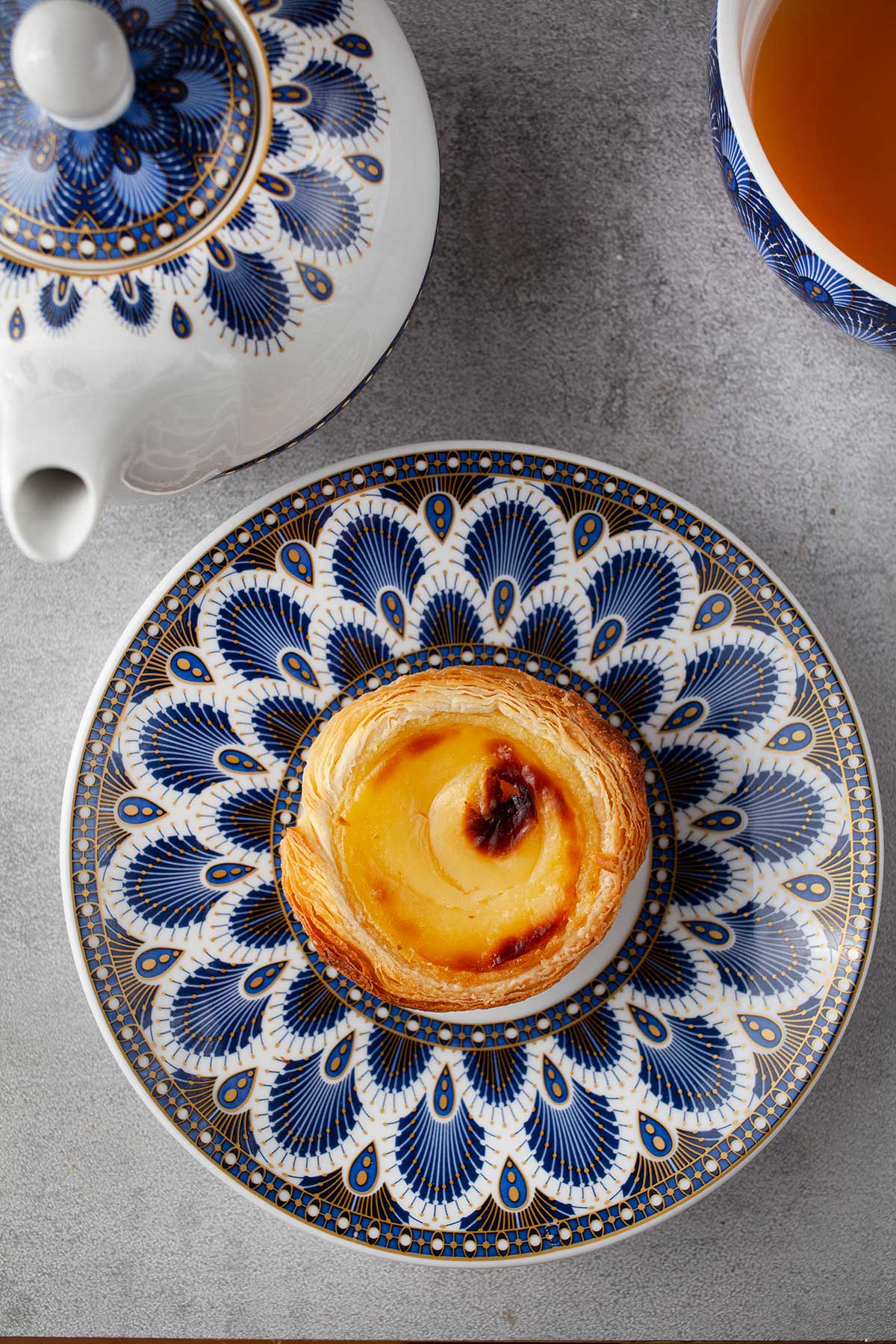
These easy pasteis de nata have a shatteringly crisp puff pastry shell and a silky, barely-set custard filling dusted with cinnamon. They take about 40 minutes and taste like the real thing.
The first time I made pasteis de nata at home, I was convinced they would be complicated. They’re not. The filling is essentially a stirred custard, and the pastry shells are made from store-bought puff pastry pressed into a muffin tin. The tricky part is the oven temperature: it needs to be very high so the custard blisters and the pastry crisps up in the same short window. Get that right and everything else follows.
Pasteis de nata were created in the 18th century by monks at the Jeronimos Monastery in Lisbon, who used surplus egg yolks to make a recipe that would go on to become one of the most beloved pastries in the world. The original recipe is still a closely guarded secret, but the home version we’re making here gets you remarkably close.
Looking for more special, traditional desserts made easy? Check out my Vegan Apple Strudel, Apple Streusel Cake, Limoncello Tiramisu and Baklava!

Why You’ll Love This Recipe
- Store-bought puff pastry works perfectly — no need to make laminated dough from scratch. The result is genuinely crispy and flaky.
- The custard is simple — eggs, sugar, milk, a little flour, and cinnamon. No tempering, no complicated technique. You stir it on the stove and pour it in.
- They’re at their best warm — which means fresh from your oven, in your kitchen, on a random Tuesday, which is something you cannot get at a bakery.
- Naturally vegetarian — and easy to adapt. See the variations section for a vegan version.

Ingredient Notes
Puff pastry: Use a good quality all-butter puff pastry if you can find it. The butter content is what gives you those distinct flaky layers and the rich flavour in the shell. Thaw it fully before working with it so it rolls and cuts cleanly without tearing.
Eggs: The yolks are what give the custard its colour and its richness. Room temperature eggs blend more smoothly into the mixture and reduce the chance of the custard splitting.
Cinnamon: Used both in the custard and for dusting on top after baking. Portuguese cinnamon is traditionally Ceylon (soft) cinnamon rather than Cassia cinnamon. Ceylon has a more delicate, slightly sweet flavour that doesn’t overwhelm the custard. Either works here, but Ceylon is worth seeking out if you want to get close to the original.
Milk vs cream: Traditional pasteis de nata use whole milk. Cream makes the custard richer but also heavier. Start with milk for the authentic texture and switch to a half-and-half mix if you want something more indulgent.

Tips for the Best Pasteis de Nata
- High heat is essential. Bake at 220-230°C (425-450°F). The high temperature is what creates the characteristic dark blisters on the custard surface and crisps the pastry quickly before the filling overcooks. A lower oven produces a pale, rubbery custard with a soggy base.
- Press the pastry thin. When lining the muffin tin, press the pastry firmly up the sides so it’s as thin as possible. Thick pastry takes longer to cook and can stay raw in the middle.
- Don’t overfill. Fill each shell only about three quarters full. The custard puffs and bubbles in the oven, and overfilled tarts will spill over the edges and make a mess.
- Mix the filling well. Whisk the eggs, sugar, and cinnamon until fully combined before adding the milk gradually. A lumpy custard bakes unevenly and the texture suffers.
- Let them cool slightly before removing. Give the tarts 5 minutes in the tin after coming out of the oven. The custard firms up as it cools and the shells release more cleanly.
Variations Worth Trying
Once you have the base recipe down, the filling is easy to adapt. Here are some combinations that work well:
- Lemon pasteis de nata: Add the zest of one lemon to the custard mixture. The brightness of the lemon cuts through the richness nicely and gives the tarts a more summery flavour.
- Pasteis de nata with berries: Press a few fresh raspberries or blueberries into the custard just before baking. They sink slightly and create small pockets of fruit throughout the filling.
- Caramel pasteis de nata: Spoon a small amount of caramel sauce into the base of each shell before adding the custard. It creates a sticky, sweet layer beneath the cream that caramelises further during baking.
- Chocolate custard tarts: Stir a tablespoon of cocoa powder into the custard mixture for a darker, more intense version. Works best with a pinch of extra cinnamon to complement the cocoa.
- Vegan pasteis de nata: Replace the eggs and cow’s milk with plant-based alternatives. Oat milk and a cornstarch-based custard work well. Use vegan puff pastry and check that it’s dairy-free, as many commercial brands contain butter.


Easy Pasteis de Nata (Portuguese Custard Tarts)
Ingredients
- 2 eggs whole, large
- 3 egg yolks
- ½ cup sugar
- 1 teaspoon pure vanilla extract
- ⅓ cup whole milk
- ⅔ cup liquid cream
- 1 sheet puff pastry
- 2 tablespoons flour
- 1 tablespoon butter
Instructions
- In a bowl, beat eggs and yolks until you get a foamy and homogeneous composition.
- Add sugar, vanilla, milk and liquid cream. Mix until homogeneous.
- Cover the bowl with a plastic wrap and put it in the refrigerator for an hour.
- Heat the oven to 250 C (482F).
- Sprinkle the work table with flour and roll out the puff pastry.
- Then roll it and cut it into slices of about 1 cm.
- Butter the cupcake pan. Take a slice of the cut dough and flatten it in the palm of your hand, giving it the shape of a disk or spread it with the rolling pin, then arrange it in the form of cupcakes (this will serve as the base for the cake).
- Cover the tart forms with foil and put them in the fridge for 10-15 minutes.
- Then, pour the cream filling from the refrigerator into each tart (fill each tart about 70 percent) and bake for 15-25 minutes or until the dough is cooked and turns golden on the edges, and the cream is hardened and has caramelized spots on the surface.
- After removing the tray from the oven, leave the tarts for at least 5 minutes to cool in the form, then remove them from the baking form and let them cool on a grill.
Notes
Frequently Asked Questions
Pastel de Belem is the name used specifically for the tarts made at the original Pasteis de Belem bakery in Lisbon, which has been operating since 1837 using the original monastery recipe. Pastel de nata is the generic term used for all other versions of the Portuguese custard tart. The two are very similar but the Belem recipe is a closely guarded secret, so there are subtle differences in texture and flavour that nobody outside the bakery can replicate exactly.
You can, but they are genuinely best eaten within a couple of hours of baking when the pastry is still crisp. If you need to make them in advance, store them at room temperature (not the fridge, which softens the pastry) and reheat for 5 minutes at 180°C before serving. The custard firms up as it cools, so a short blast of heat helps restore some of the original texture.
Most likely the oven temperature was too low or the tarts were underbaked. The custard should have visible dark blisters on the surface and a slight wobble in the very centre when you take them out. If it is still liquid in the middle, give them another 2-3 minutes. Also make sure your oven is fully preheated before the tarts go in, as putting them into a cool oven leads to uneven cooking.
Yes. Cool them completely, then freeze in a single layer before transferring to a freezer bag. Reheat from frozen at 190°C for about 10-12 minutes. The pastry loses a little of its crispness compared to fresh but is still very good. The custard texture holds well through freezing and reheating.
If you make this, please leave a review and rating if you liked this recipe! ★★★★★


I love pasteis!