
Potato Curry
This vegan potato curry is a warming, one-pan Indian-style dish of cubed potatoes and chickpeas simmered in a spiced coconut-tomato sauce. It comes together with pantry spices and a handful of fresh aromatics, so it works just as well for a weeknight dinner as it does for a slow weekend lunch. If you love potatoes as much as I do and you have an affinity for Indian cuisine, then you’ll love this awesome recipe, I assure you.
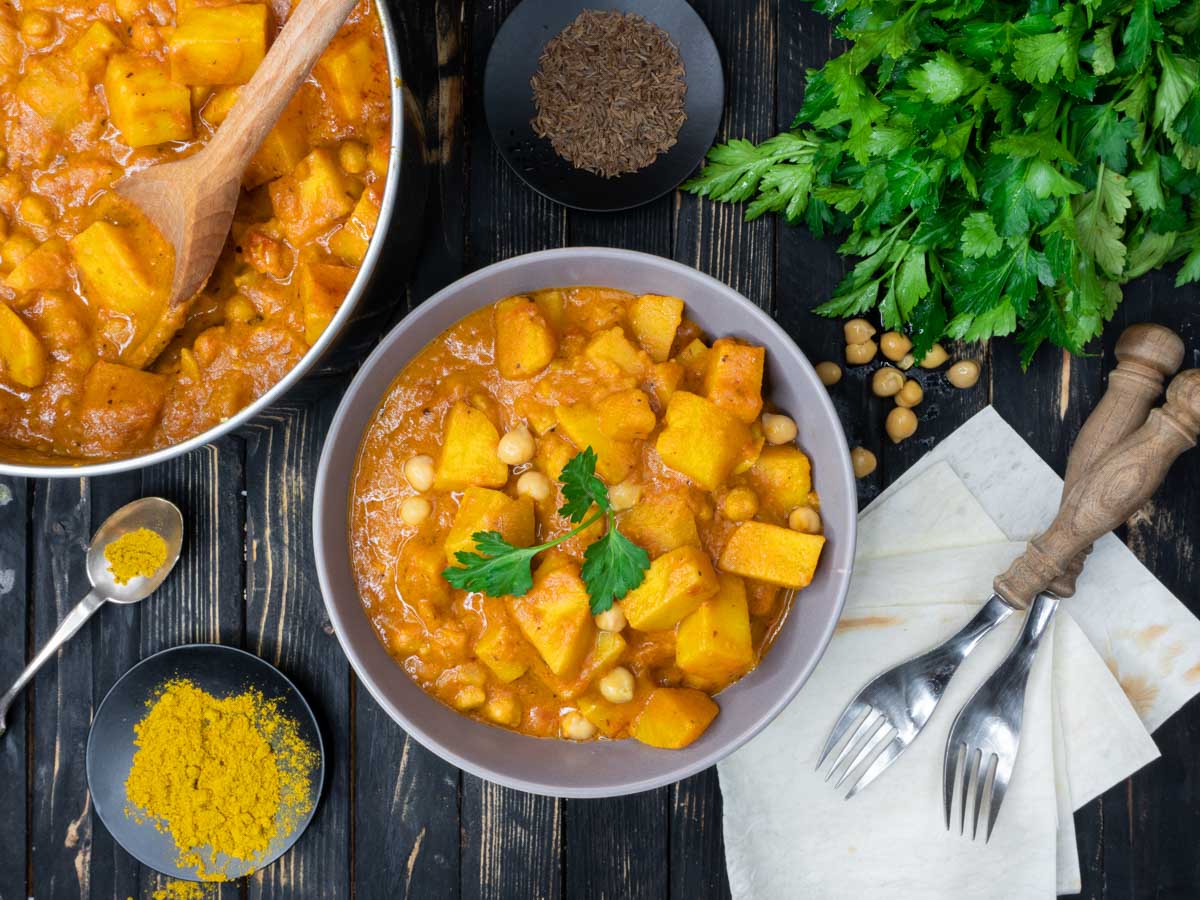
Please don’t be intimidated by this recipe. I assure you it is one of the easiest there is, and most of the work happens on its own while the curry simmers. I want to start by saying that this recipe’s base is one of the most versatile vegetables in the world. If you’re missing the natural, flavor-rich Oriental cuisine, this is a great place to begin, because everything you need is probably already in your kitchen.
What goes into this potato curry
In our comforting potato curry, I add chickpeas, onion, garlic, ginger, diced tomatoes, coconut milk, curry powder, paprika, cayenne pepper, cumin, veggie broth, and some lemon juice. A few notes on the key players so you can shop and swap with confidence:
- Potatoes: the recipe uses eight, peeled and cubed. Cut them into even pieces so they cook at the same rate. Starchy or all-purpose potatoes work well because they hold their shape through a 20-minute simmer while soaking up the sauce.
- Chickpeas: canned chickpeas keep this quick. Drain and rinse them first. If you want more ideas for using up a can, I have a whole roundup of recipes with chickpeas.
- Coconut milk: this is what makes the sauce creamy and rounds out the heat from the cayenne. Use full-fat canned coconut milk for the richest result. For more ways to cook with it, see these vegan recipes with coconut milk.
- The spice base: curry powder, paprika, cayenne, cumin, and a little allspice, plus fresh garlic and ginger. This is where the depth comes from, so use spices that still smell fragrant.
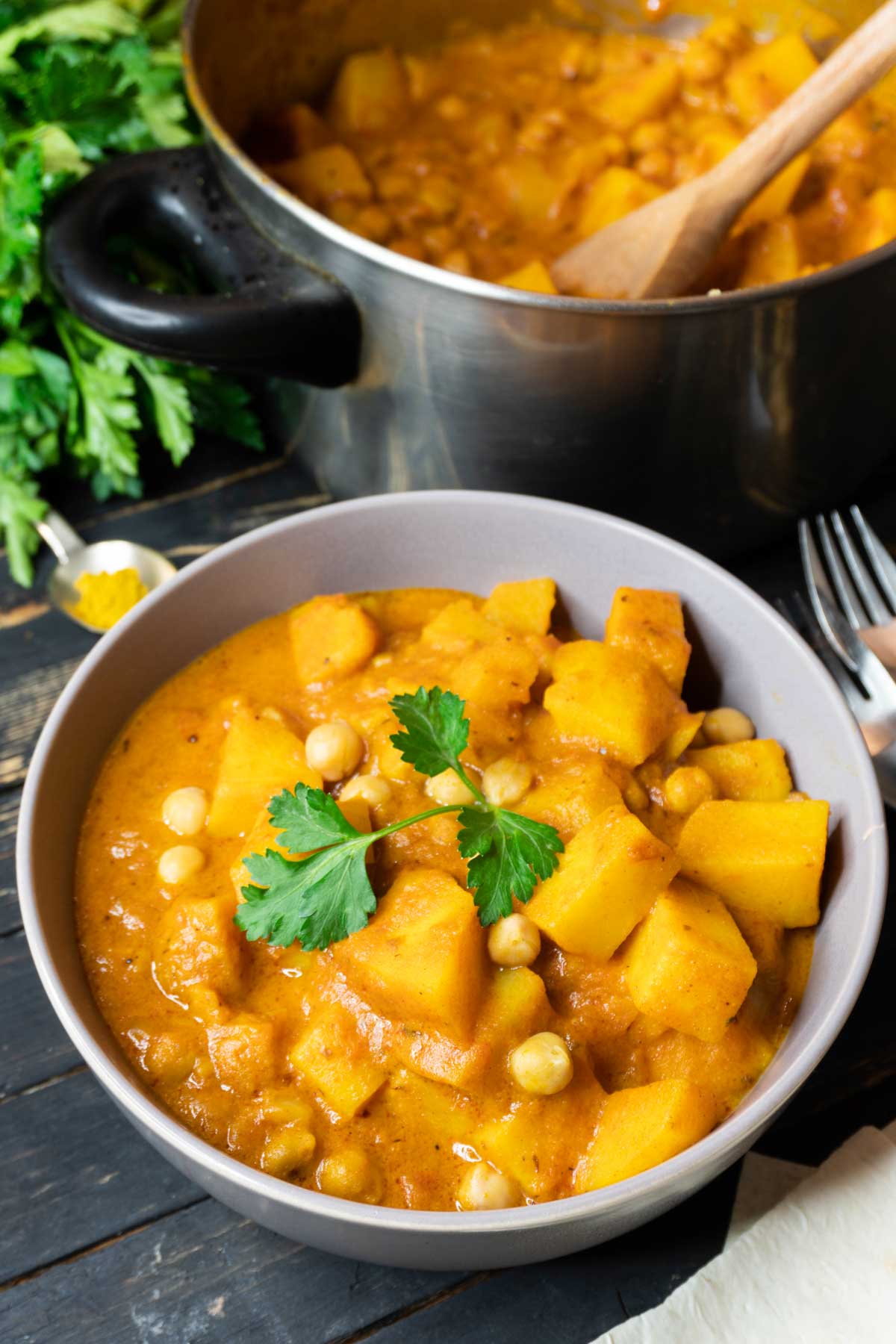
Why blooming the spices matters
The single step that makes the biggest difference here is stirring the dry spices into the hot oil with the onion and garlic for a couple of minutes before anything wet goes in. Warming ground spices in fat, a technique often called blooming, releases their fat-soluble aromatic compounds and takes the raw, dusty edge off the curry powder and cumin. That is why the instructions have you toast the spices first, then coat the potatoes in them, and only then add the tomatoes, broth, and coconut milk. Skip that step and the curry tastes flat no matter how much powder you add.
Tips for getting it right
- Cut the potatoes evenly. Uniform cubes cook through at the same time, so you avoid a mix of mushy and still-firm pieces.
- Coat before you drown. Toss the cubed potatoes in the bloomed spices before adding any liquid, so every piece carries flavor from the inside out.
- Simmer, don’t boil hard. Once it comes to a boil, drop the heat and let it cook gently for about 20 minutes. A rolling boil breaks the potatoes apart and can split the coconut milk.
- Check doneness with a fork. The curry is ready when a fork slides into a potato cube with no resistance and the sauce has thickened.
- Adjust the heat to taste. The cayenne makes this a warming dish. Start with less if you are cooking for anyone sensitive to spice, and add the lemon juice at the end to brighten everything up.
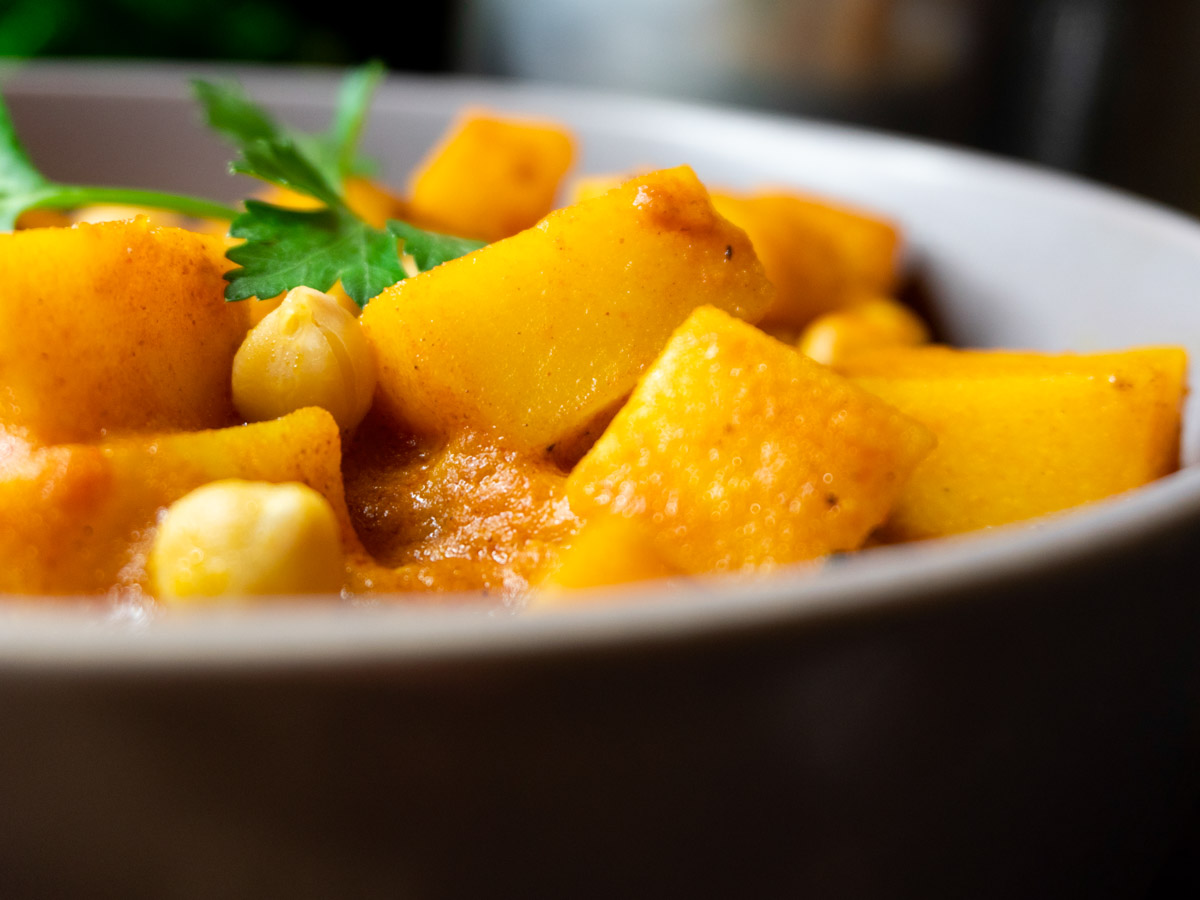
What to serve with potato curry
This curry is hearty on its own, but it really shines spooned over rice that can soak up the sauce. A pot of curry coconut Thai rice keeps the whole meal in the same flavor family. If you are building an Indian-inspired spread, serve it alongside dal kofta lentil balls in curry sauce for a second protein. And if you find yourself hooked on this style of cooking, my vegan green curry is a natural next recipe to try.
Storage and make-ahead
Like most curries, this one tastes even better the next day, once the spices have had time to settle into the potatoes. Let it cool, then store it in an airtight container in the fridge for up to four days. It reheats gently on the stovetop or in the microwave. Add a splash of water or broth if the sauce has thickened too much in the fridge. This also makes it a strong candidate for lunch meal prep, since a single batch carries you through several midday meals. You can freeze it too, though the potatoes soften a little on thawing, so I prefer it fresh or refrigerated.
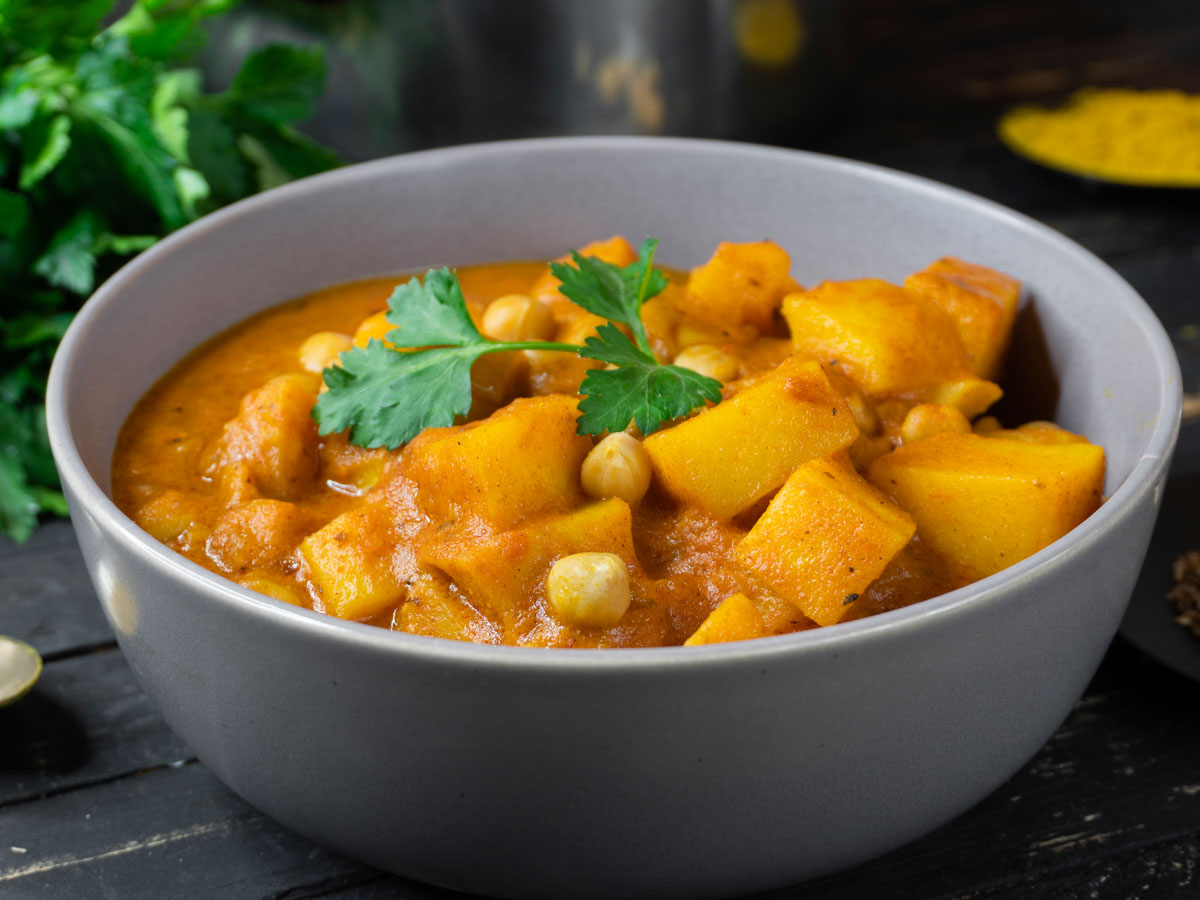
I guess you’re already eager to try this amazing recipe, right? Once you have made it, please rate the recipe below and drop a comment telling me how your curry turned out, whether you dialed the cayenne up or down, and what you served it over. I love reading how you make it your own.
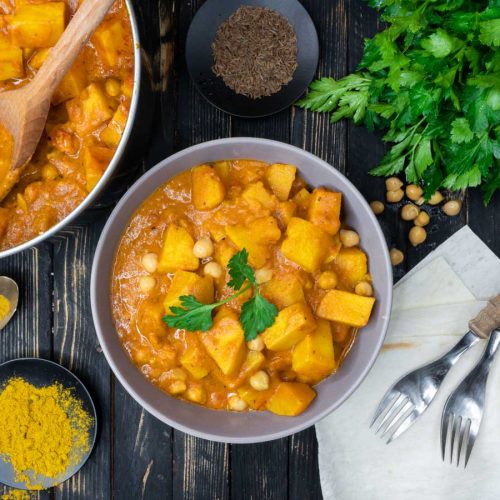
Potato Curry
Ingredients
- 8 potatoes peeled and cubed
- 1 ⅓ cup chickpeas canned
- 1 onion
- 4 cloves garlic
- 2 tsp fresh ginger
- 2 cups tomatoes diced
- 1 ½ cup coconut milk
- 4-5 tsp curry powder
- 1 ½ tsp paprika
- 1 tsp cayenne pepper
- 2 tsp cumin powder
- ½ tsp allspice
- 1 cup vegetable broth
- 1 ½ Tbsp lemon juice
- 3 Tbsp vegetable oil
- salt to taste
Instructions
- Heat the oil in a pan. Add the finely chopped garlic and cubed onion.
- Cook for 3-4 minutes, or until the onion is translucent.
- Add the curry powder, paprika, cayenne, cumin, allspice, ginger, salt, and pepper, and stir for about 2-3 minutes.
- Add the peeled and cubed potatoes to the pan. Mix well until they are coated in the spices, then add the chickpeas and incorporate well.
- Add the diced tomatoes and lemon juice. Stir for 30 seconds, then add the vegetable broth and coconut milk.
- Increase the heat and bring to a simmer. Once it starts boiling, reduce the heat and cook for about 20 minutes, until the potatoes are tender.
Notes
Frequently Asked Questions
Yes, this potato curry is fully vegan. The creaminess comes from coconut milk rather than dairy, and it uses vegetable broth and vegetable oil, so there are no animal products anywhere in the recipe. The chickpeas add plant-based protein.
All-purpose or starchy potatoes both work well here. Peel and cube them into even pieces so they cook at the same rate during the 20-minute simmer. Cutting them uniformly is the easiest way to avoid a mix of mushy and undercooked bites.
It is warming rather than fiery, but the cayenne pepper and curry powder do give it noticeable heat. If you are cooking for anyone sensitive to spice, start with less cayenne and add more at the end to taste. The coconut milk also softens the heat considerably.
Absolutely, and it actually tastes better the next day once the spices settle into the potatoes. Store it in an airtight container in the fridge for up to four days and reheat gently on the stovetop or in the microwave. Add a splash of water or broth if the sauce has thickened.
Yes. The recipe calls for canned chickpeas to keep it quick, but you can use dried chickpeas that have been soaked and cooked until tender first. Measure out about 1 and 1/3 cups of cooked chickpeas to match the canned amount before adding them to the pan.
Rice is the classic pairing because it soaks up the spiced coconut-tomato sauce. Coconut Thai rice keeps it in the same flavor family, and you can round out an Indian-inspired meal with dal kofta lentil balls for a second protein. It also stands on its own as a filling one-pan dinner.





Really enjoyed this recipe, it turned out delicious!