
Vegan Lemon Bars
These vegan lemon bars give you a buttery shortbread base and a bright, silky lemon layer with zero eggs, butter, or dairy. The base is built from almond and oat flour, and the “curd” is a set coconut cream layer sharpened with fresh lemon juice, so you get that classic sweet-and-sour bite without anything from an animal. If you want a refreshing, make-ahead dessert that tastes far fancier than the effort it asks for, this is the one to bookmark.
When I think of lemon bars, a few specific things pop into my mind: breezy summer afternoons, tea parties, fancy sandwich and cookie platters, the sound of birds chirping. They go hand in hand with sweet memories and have a kind of melancholic, sweet-and-sour vibe, just like their amazing taste. Vegan lemon bars are, to me, a classic and sophisticated dessert. Their flavor is present and unmistakable, yet subtle and fresh, so if you only reach for extremely sweet, in-your-face desserts, these are meant to be savored slowly instead.
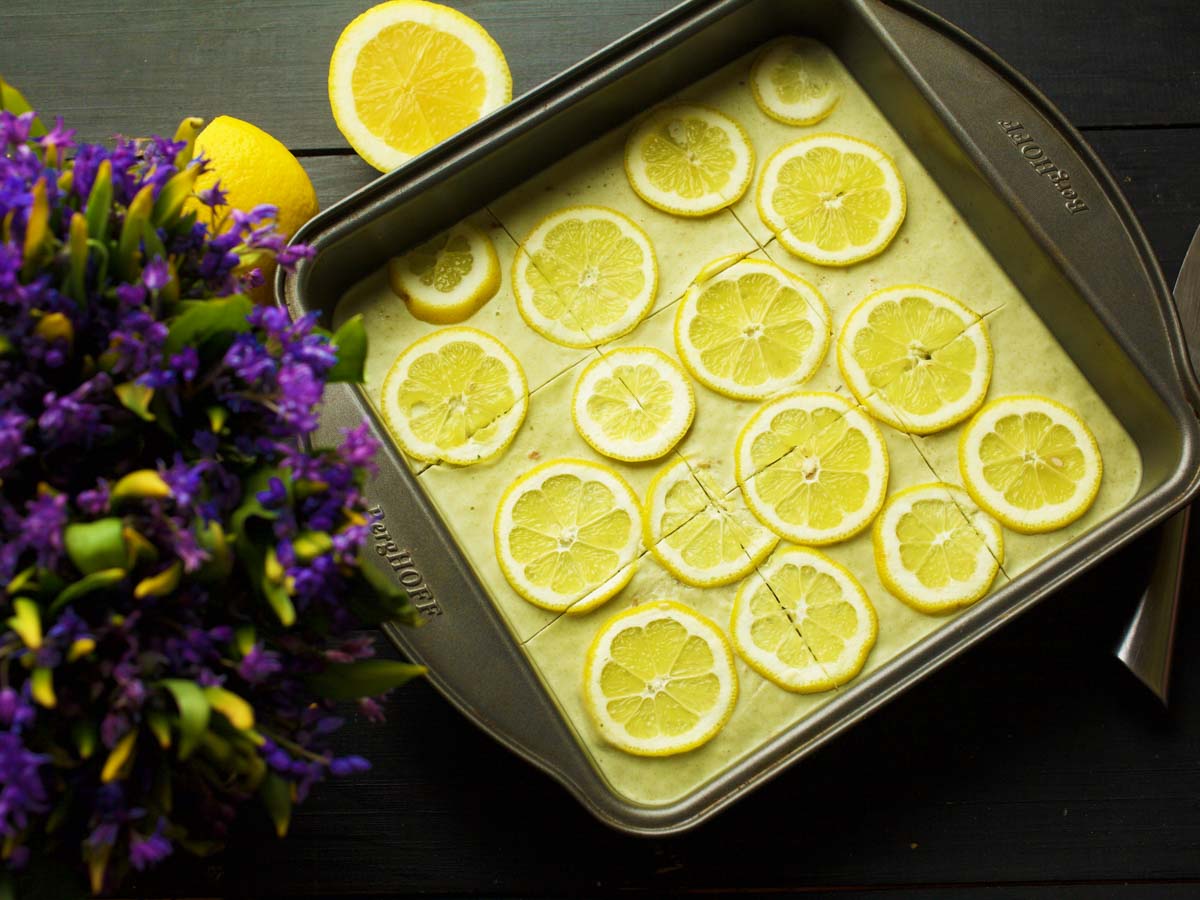
What makes these lemon bars vegan
Traditional lemon bars rely on two things I wanted to rebuild without dairy or eggs: a shortbread crust and a lemon curd. Not much is known about the history of the lemon bar, but my assumption is that they have been around for a while, since both of those components have been popular for centuries. Here, the shortbread is bound with melted coconut oil instead of butter, and the curd becomes a coconut-cream layer that sets as it bakes and chills. The result reads as the real deal, in a way where you would not guess they are not.
Ingredient notes before you start
- Almond flour and oat flour make up the base together. Blanched almond flour keeps the crust tender and pale, while oat flour adds structure so it holds when you slice.
- Psyllium husks appear in both layers. They absorb moisture and gel, which is what lets an egg-free base and a dairy-free filling firm up instead of staying loose.
- Coconut cream is the backbone of the lemon layer. Use thick coconut cream, not thin coconut milk, so the filling sets properly.
- Coconut oil is used melted in both the base and the cream. It helps the crust bind and gives the filling body once chilled.
- Cornstarch thickens the lemon cream on the stovetop so it goes into the oven already on its way to setting.
- Fresh lemon juice is where the flavor lives. Juice from real lemons, plus the sliced lemon on top, gives that unmistakable tang. There is a second half-cup of sugar in the filling to balance it.
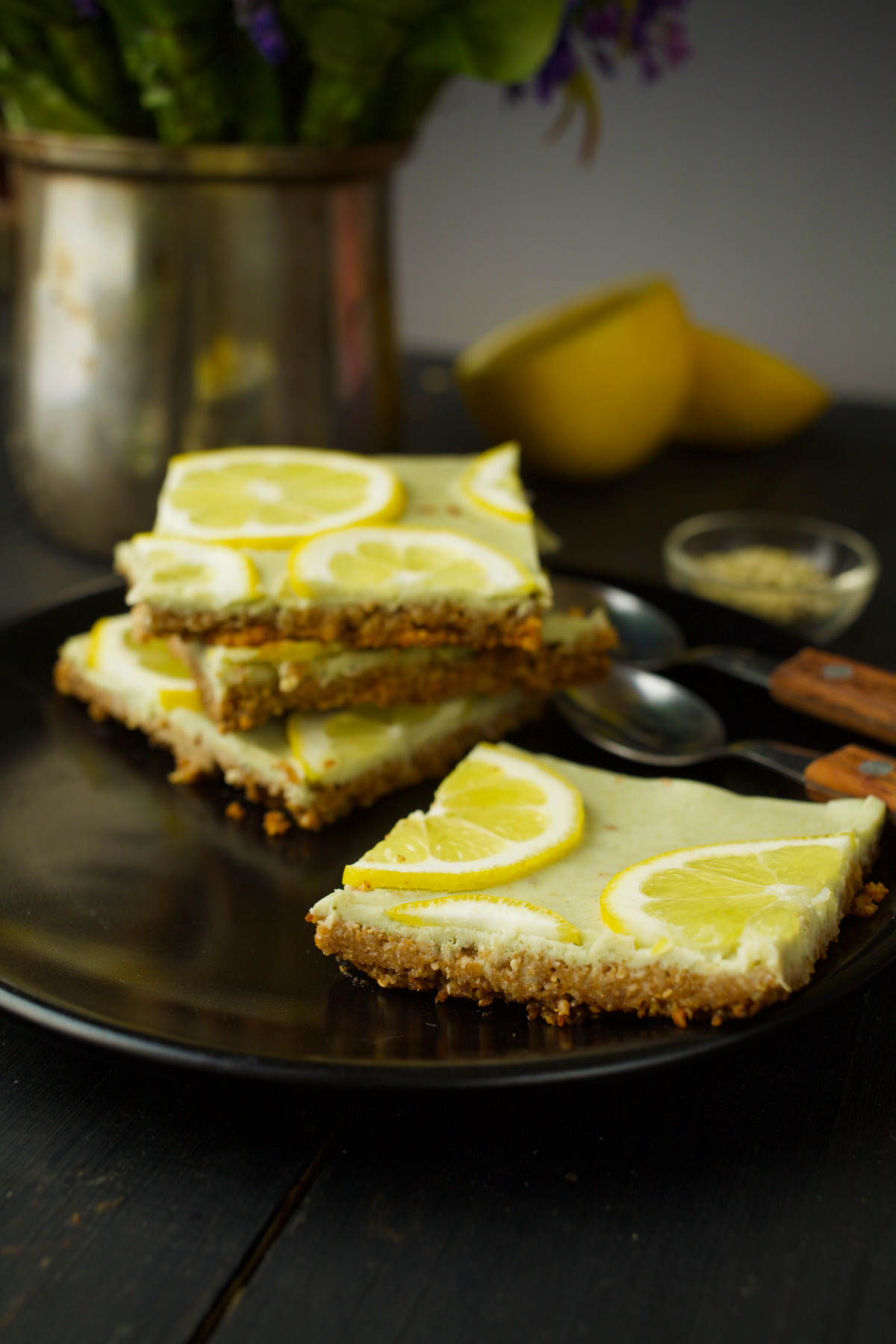
Why the two-bake method works
You bake the base first on its own at a higher temperature, just until the top is lightly browned, so it sets into a firm shortbread that will not go soggy under the wet filling. Then you drop the oven temperature and bake the poured cream more gently. That lower heat matters: the coconut-cream filling needs to thicken and set without splitting or browning too fast, and simmering it briefly on the stove first (until the sugar dissolves and it starts to thicken) means it goes into the oven already stable. Pre-baking the crust and pre-thickening the filling are the two moves that keep the layers distinct instead of blending into one soft mass.
Tips for getting them right
- Press the base firmly and evenly into the pan. A loose, uneven crust bakes unevenly and crumbles when you cut.
- Line the pan with parchment paper as the recipe says, leaving a little overhang, so you can lift the whole slab out before slicing.
- Blend the cream ingredients until fully smooth before they hit the saucepan, so no lumps of coconut cream remain.
- Watch for the edges to turn lightly browned as your doneness cue for the second bake, rather than fixating on the clock.
- Do not skip the chill. I know, I know, this seems like torture, but trust me, it is the only way to enjoy them properly. The layer needs at least an hour, and ideally overnight, to set into clean squares.
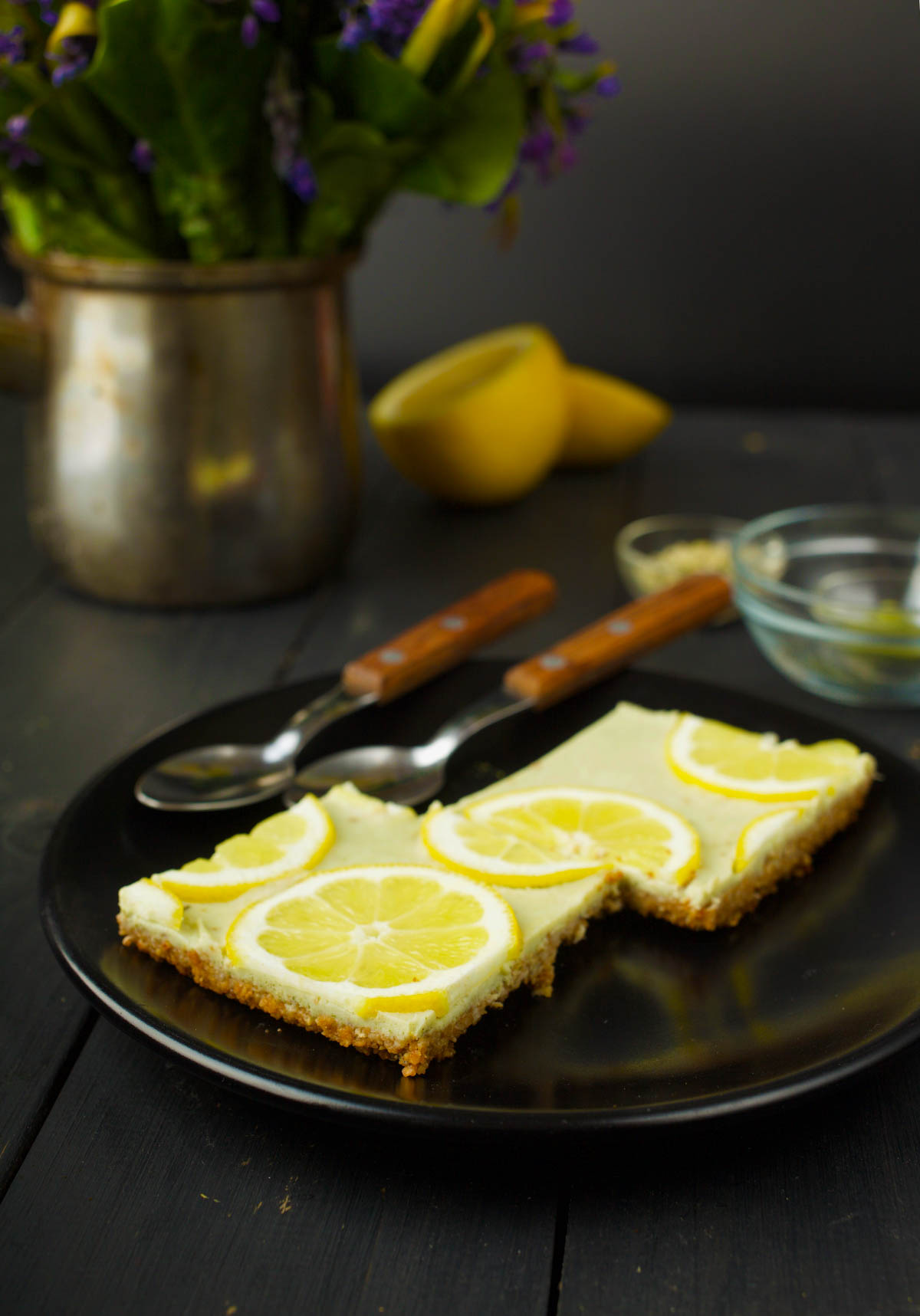
Storing and making ahead
These are a make-ahead dream. Because the filling needs to chill anyway, baking them the day before a gathering is the smart move: let them set overnight in the fridge, then top with lemon slices, cut, and serve straight from cold. Keep leftovers covered in the fridge for a few days, and slice only what you need so the cut edges stay neat. They are incredibly tasty at any time of year, but definitely better on a hot summer day when you want an energy boost. If you like building a small dessert spread, they sit beautifully next to my vegan whole grain cookies or a richer centerpiece like this raw vegan chocolate and raspberry cake, and they slot right into a batch of spring recipes when citrus is at its best.
What to serve them with
Lemon bars want something cold, bright, and not too sweet alongside them. A tall glass of pink ginger beet lemonade plays right into the citrus theme and keeps the whole plate refreshing, which is exactly the summer-afternoon energy these bars are made for. A pot of light tea works just as well if you are leaning into that tea-party feeling.
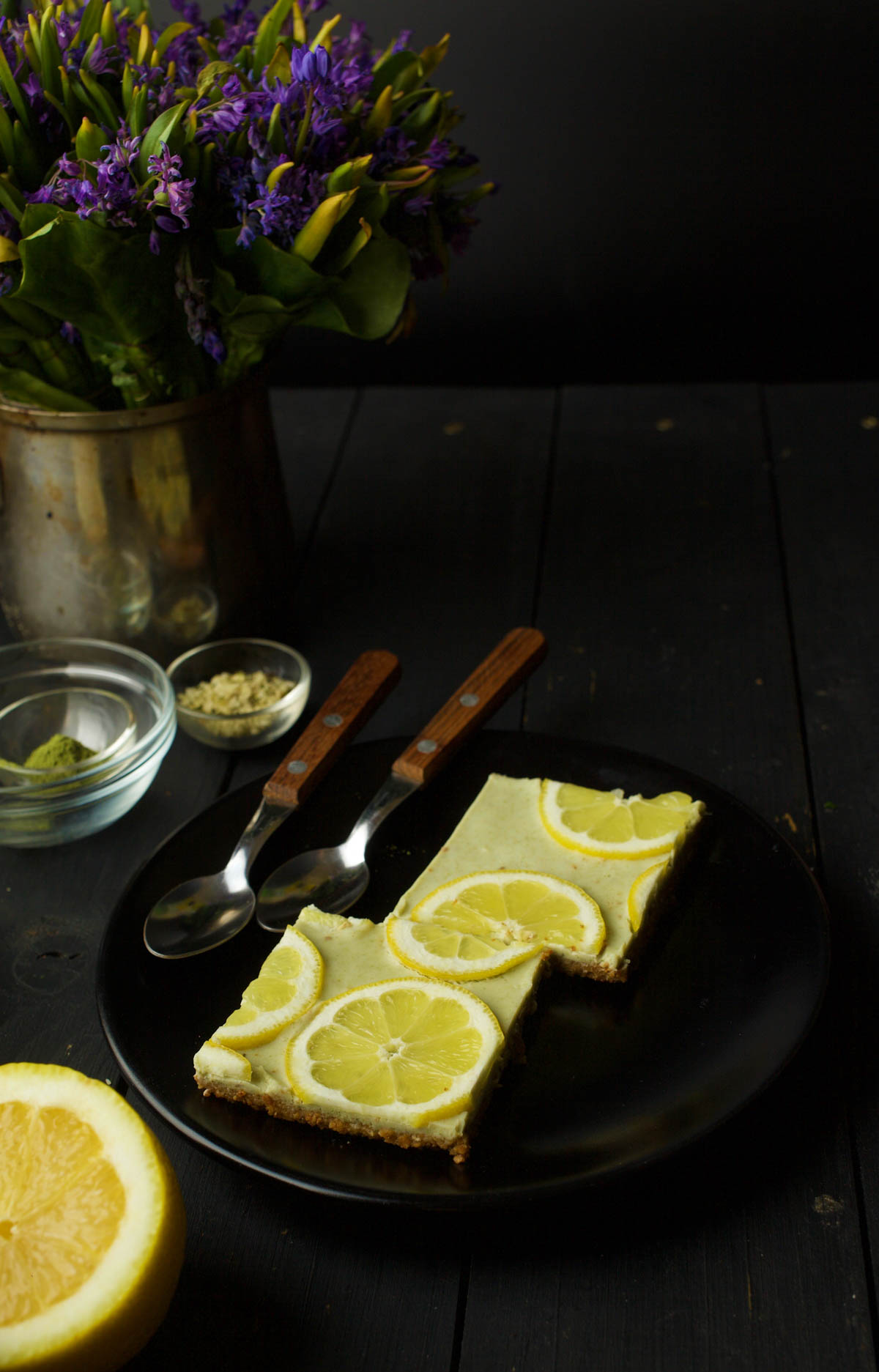
When life gives you lemons, I am pretty sure you will know what to do. If you make these bars, come back and give the recipe a star rating, and tell me in the comments how your lemon layer set and whether you managed to wait the whole overnight chill before cutting in.
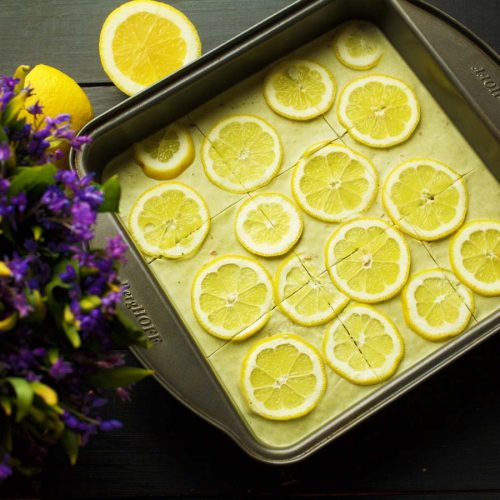
Vegan Lemon Bars
Ingredients
For the base:
- 1 ¼ cups almond flour blanched
- 1 ⅓ cups oat flour
- 1 Tbsp psyllium husks
- ¼ cup sugar or coconut sugar
- ⅓ cup coconut oil melted
- 1 tsp vanilla extract
- ¼ tsp salt finely ground
For the lemon cream layer:
- ½ cup sugar
- ¼ cup lemon juice
- 2 cups coconut cream
- ¼ cup coconut oil melted
- 4 Tbsp cornstarch
- 4 Tbsp psyllium husks
- ½ cup coconut shredded
- 1 tsp vanilla extract
For the topping:
- 1 lemon sliced
Instructions
- Preheat the oven to 180°C (350°F) and line a square baking pan with parchment paper.
- Add all the base ingredients to a large mixing bowl and mix until evenly combined.
- Press the mixture into the bottom of the prepared pan and bake for 10 minutes, until the top is just lightly browned.
- Remove the base from the oven and lower the oven temperature to 150°C (300°F).
Meanwhile, make the lemon layer:
- Add all the lemon cream ingredients to a blender and blend until smooth.
- Pour the mixture into a saucepan and bring to a boil. Simmer, stirring often, until the sugar dissolves completely and the cream starts to thicken, then turn off the heat.
- Pour the hot lemon cream over the baked base and spread it into an even layer.
- Return the pan to the oven and bake for 30 minutes, or until the edges are lightly browned.
- Let cool for about 1 hour, or chill overnight in the fridge.
- Top with the lemon slices, cut into 9 squares and serve.
Notes
Frequently Asked Questions
Yes, completely. The base uses almond flour, oat flour, and melted coconut oil instead of butter, and the lemon layer is built on coconut cream instead of eggs and dairy. Every ingredient in the recipe is plant-based, so there is no butter, milk, cream, or egg anywhere.
Coconut cream is the backbone of the filling and is what lets it set, so it is not an ingredient I would swap out here. Make sure you use thick coconut cream rather than thin coconut milk, because the higher fat content is what allows the lemon layer to firm up as it bakes and chills.
A runny filling almost always comes down to not enough setting time or using coconut milk instead of coconut cream. The cornstarch and psyllium need the stovetop simmer to start thickening, then the oven and a full chill to finish. Let the bars cool for at least an hour, and ideally overnight in the fridge, before you slice them.
Yes, the chill is not optional. The coconut-cream layer sets as it cools, so cutting warm bars gives you a soft, messy result. Give them at least an hour in the fridge, or overnight, and you will get clean squares.
They are ideal for making ahead. Since the filling needs to chill anyway, baking them the day before a gathering works perfectly. Let them set overnight in the fridge, then top with lemon slices, cut, and serve straight from cold.
The base is made from almond flour and oat flour rather than wheat flour, which keeps it naturally wheat-free. If you need them strictly gluten-free, use certified gluten-free oat flour, since oats are sometimes processed alongside gluten-containing grains.


My husband loves lemon so I wanted to surprise him with these lemon bars. He absolutely adored them and he couldn’t believe they’re vegan haha! 🙂 Keep up the good work!
So happy you and your husband liked them! 😀