
Vegan Green Curry
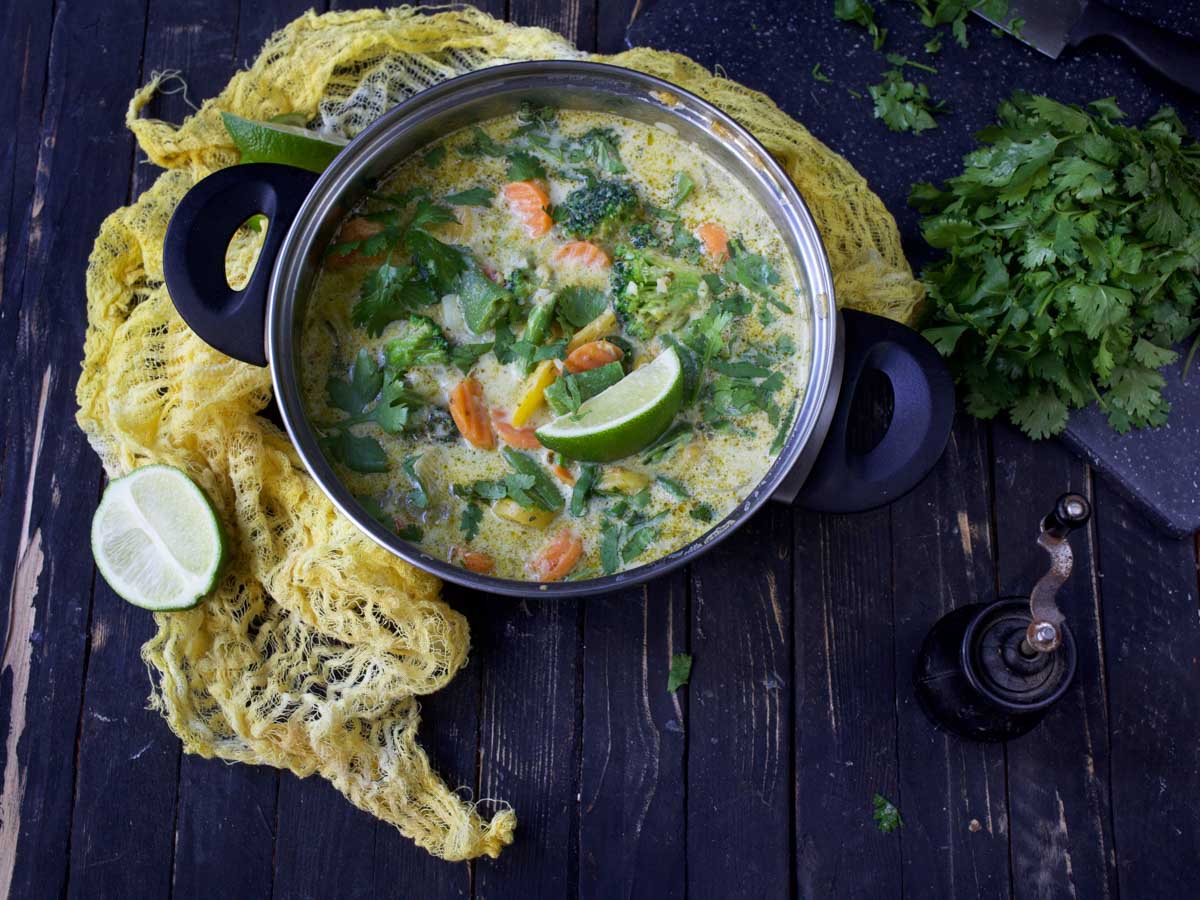
This vegan green curry is a fragrant, coconut-based Thai-style curry built on a fresh homemade green paste and a generous mix of vegetables served over cauliflower rice. It is comforting and creamy but also bright and exotic, and it comes together in one skillet. Here is how I make the most flavorful and delicious vegan green curry, and this is why I love it so much.
Why I keep coming back to this curry
What I love about a green curry is how much depth you get from such simple, fresh ingredients. The paste does almost all the work, and once you have it blended, the rest is a quick sauté. I recommend trying this recipe next time you feel like getting the taste of a different cuisine at home. It is worth the little bit of effort, and I am pretty sure you are going to be impressed with the results.
The word curry comes from the Tamil kari, which broadly means a sauce served with rice, so a good curry is really about building a well-balanced sauce. If you enjoy exploring these flavors, my Asian cuisine guide is a good place to get your bearings.
The green curry paste, ingredient by ingredient
The paste is where the character of this dish lives. Everything goes into a blender and gets pulsed smooth, so there is no fussy technique, but a few notes help you get it right:
- Lemongrass gives that unmistakable citrusy, floral backbone. Use the tender lower third of the stalk and trim off the dry, woody top so it blends smoothly.
- Green chili, ginger, and garlic bring the heat and pungency. Adjust the chili up or down depending on how spicy you like it, and remember the seeds carry most of the fire.
- Cilantro and fresh basil are what make the paste green and aromatic. Fresh herbs matter here, since dried ones will not give you the same lift.
- Cumin, coriander, and white pepper round out the base with warmth. White pepper keeps the paste looking clean and green rather than speckled.
- Soy sauce, lime juice, brown sugar, and a little coconut milk balance salty, sour, sweet, and rich so the paste tastes complete before it ever hits the pan.
The vegetables and coconut base
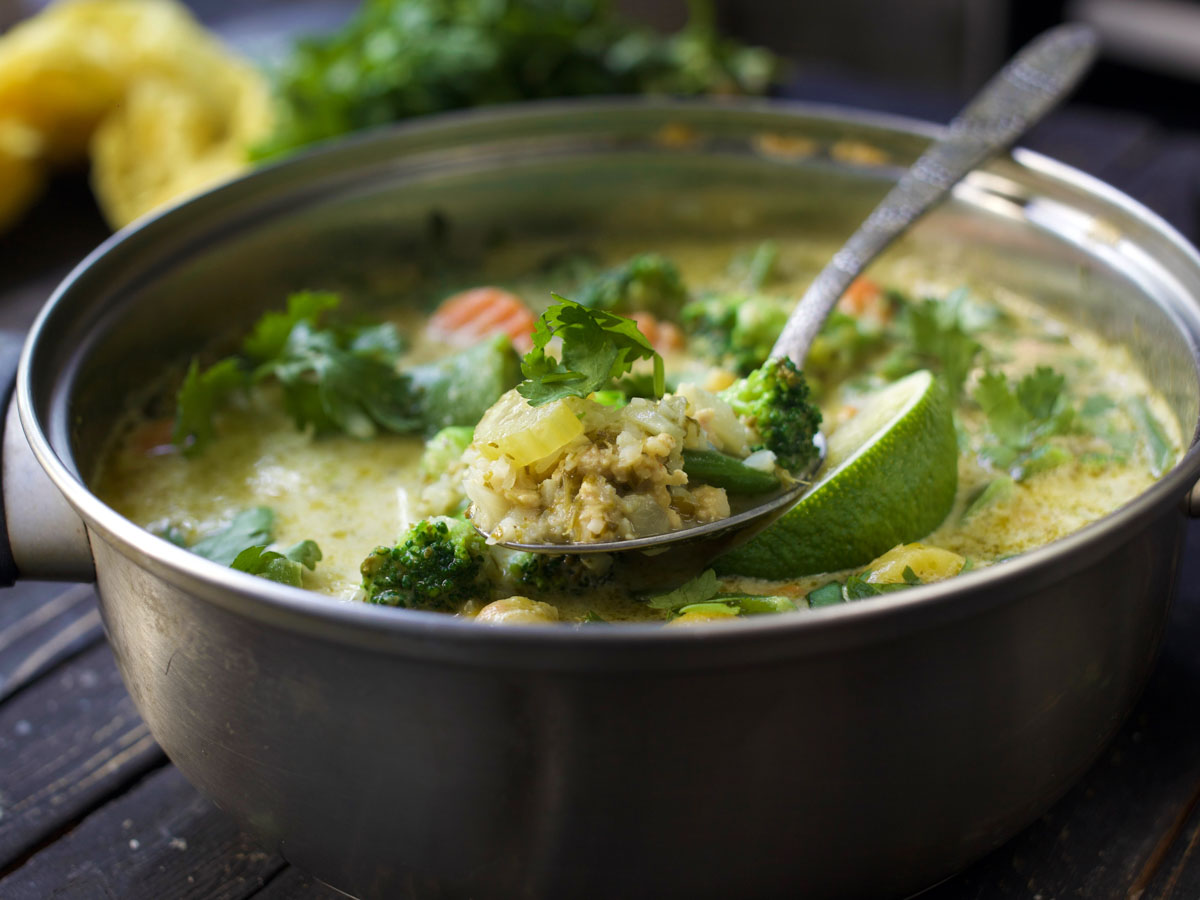
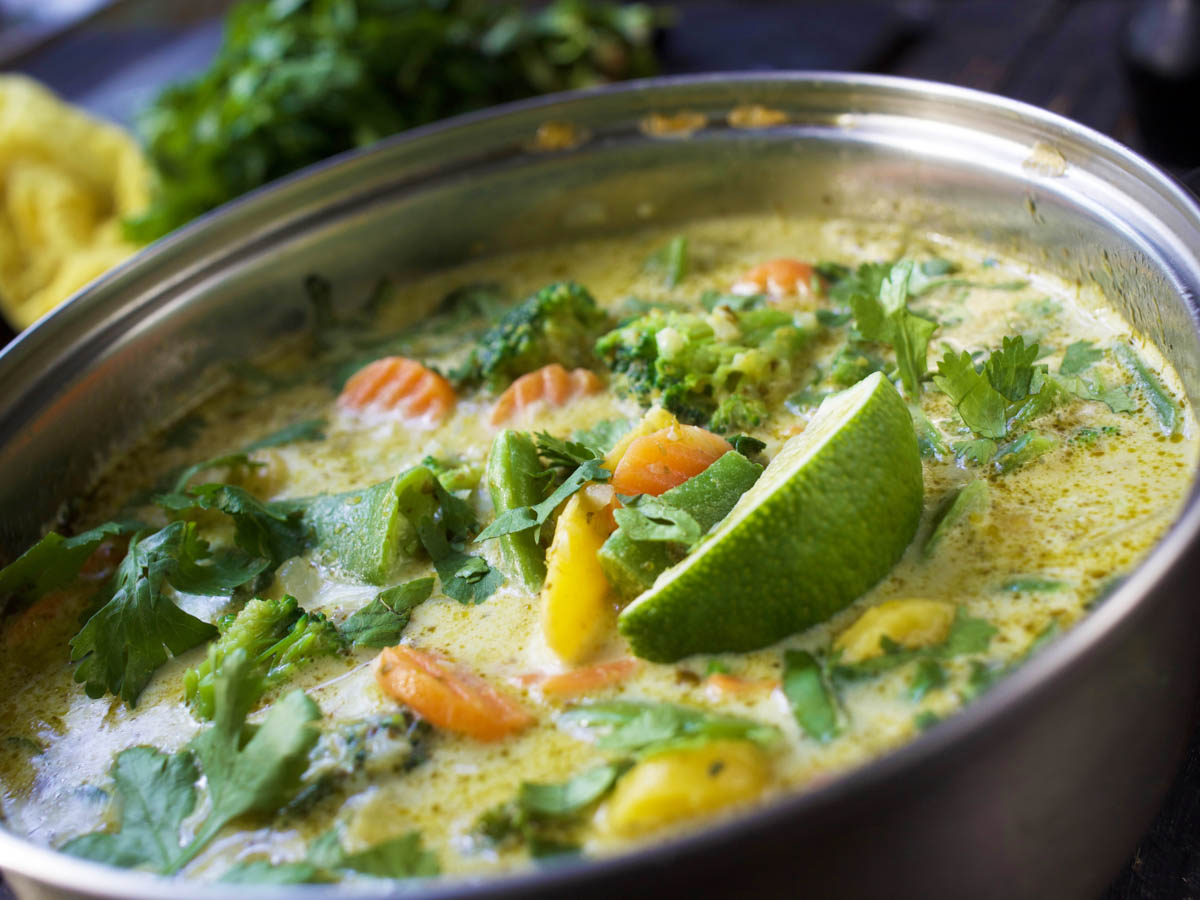
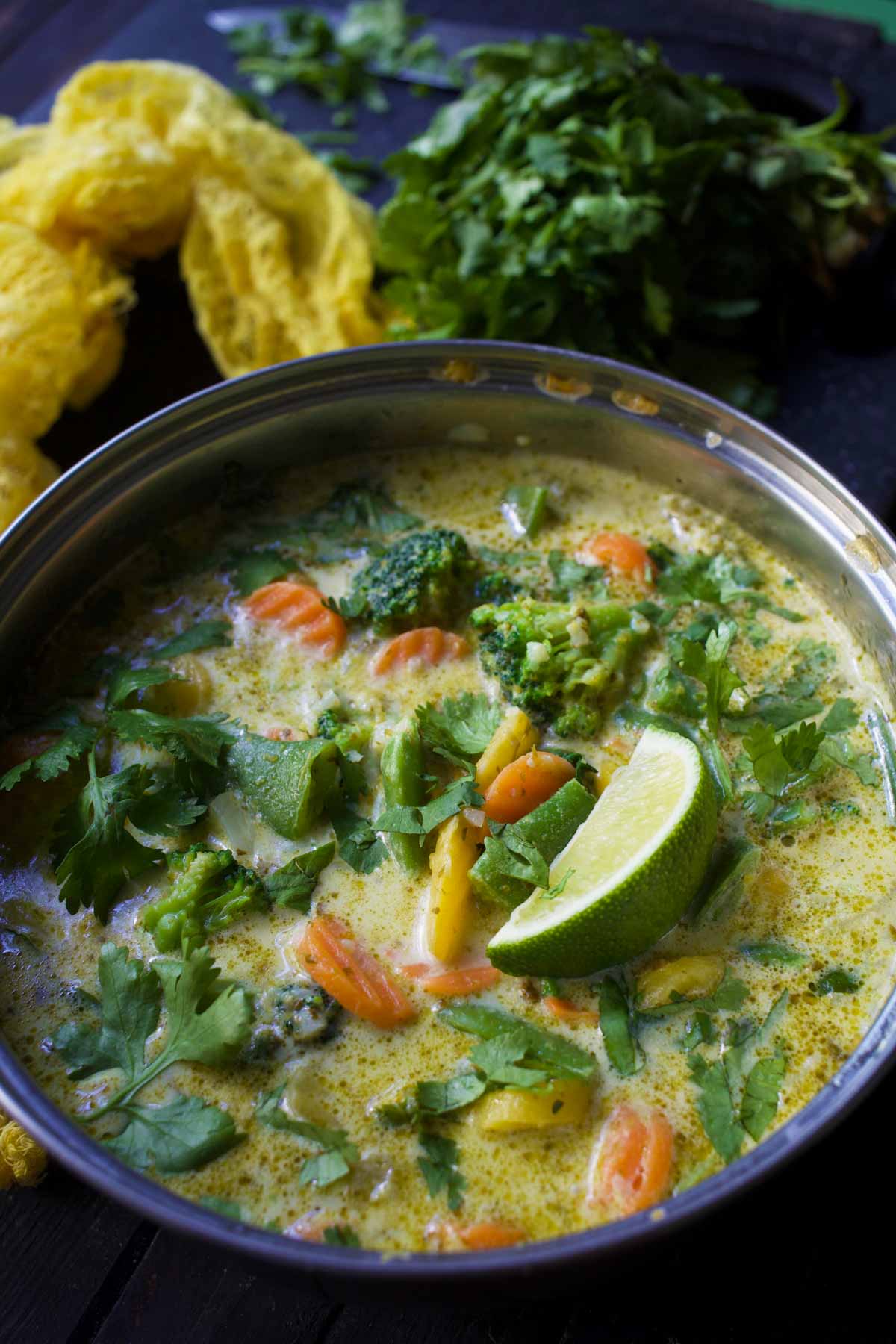
Once the paste is ready, the dish is a colorful vegetable medley: broccoli, cauliflower, green beans, carrots, and zucchini, cooked with red onion and garlic, then simmered in canned coconut milk. Grated cauliflower stands in as a light, grain-free rice underneath. A pinch of coconut sugar and a squeeze of fresh lime at the end keep everything in balance, and a scatter of chopped cilantro finishes it. This is a great way to work more vegetables into your week, much like my other family-friendly vegan recipes.
Why frying the paste first matters
The single step that makes the biggest difference is frying the curry paste in hot oil for about a minute before anything else goes in. This blooms the spices and aromatics, driving off raw notes and releasing their fat-soluble flavors into the oil so they coat every vegetable. Adding the coconut milk only at the end, then simmering just long enough to bring it together, keeps the sauce creamy without splitting or turning greasy. And cooking the vegetables only until the carrots are tender-crisp preserves their color and bite instead of leaving them mushy.
Tips for the best results
- Taste and adjust the paste before cooking. It should be a little intense on its own, since it will be diluted by the vegetables and coconut milk.
- Do not rush the simmer. Give the coconut milk five minutes to marry with the paste so the sauce tastes rounded, not raw.
- Cut vegetables to similar sizes so they finish cooking at the same time. Denser pieces like carrots go in and cook a touch longer; zucchini softens fastest.
- Use full-fat canned coconut milk for the richest, silkiest sauce. Light versions work but give a thinner result.
- Add the lime off the heat. Squeezing it in at the very end keeps the fresh, bright acidity that a long simmer would dull.
What to serve with vegan green curry
As written, this curry already sits on a bed of cauliflower rice, so it is a full meal on its own. If you want to stretch it for guests or lighter appetites, start with a bowl of soup, such as my vegan red lentil soup or a light creamy peas soup. For a heartier table, a plate of healthy vegan falafel on the side rounds things out nicely and keeps the whole spread plant-based.
Make-ahead and storage
The green curry paste is the perfect thing to make ahead. It keeps in an airtight jar in the fridge for up to a week, or freeze it in an ice cube tray so you can pop out a portion whenever a curry craving hits. The finished curry stores well too: keep leftovers in an airtight container in the fridge for three to four days and reheat gently on the stovetop, adding a splash of water or coconut milk to loosen the sauce. It does not freeze quite as beautifully once the vegetables are cooked, since zucchini and broccoli soften further, so I prefer to freeze the paste and cook the vegetables fresh. If you like keeping components like this on hand, you might also enjoy my collection of vegan sauces.
If you make this vegan green curry, I would love to know how it turned out for you. Give it a star rating and leave a comment below telling me how spicy you took the paste, or which vegetables you swapped in, so we can compare notes. As always, make sure to tell me what you thought of it!
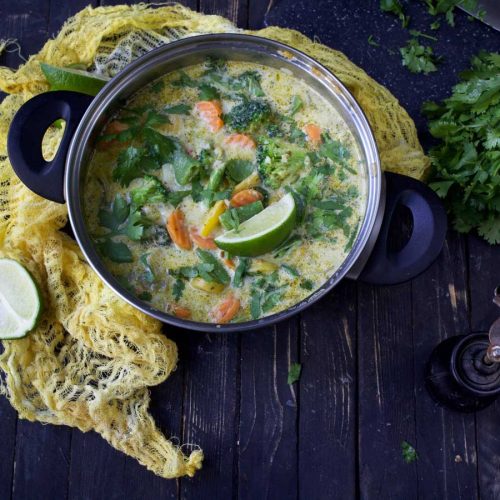
Vegan Green Curry
Ingredients
For the curry paste:
- 1 stalk lemongrass
- 1 green chili chopped
- 1 onion chopped
- 4 cloves garlic
- 1 Tbsp ginger chopped
- ½ cup cilantro chopped
- ½ cup fresh basil
- ½ tsp ground cumin
- ½ tsp ground white pepper
- ½ tsp ground coriander
- 3 tsp soy sauce
- 2 Tbsp lime juice
- 1 tsp brown sugar
- 4 Tbsp coconut milk
- 1 tsp salt
For the curry:
- 4 cups cauliflower grated, rice size
- 1 red onion chopped
- 4 cloves garlic minced
- 1 head broccoli chopped
- 2 carrots sliced
- 1 zucchini chopped
- 2 cups green beans chopped
- salt to taste
- ground black pepper to taste
- 1 Tbsp coconut sugar or regular sugar
- 2 cups coconut milk canned
- 3 Tbsp cilantro chopped
- ½ lime
- 1 Tbsp coconut oil
Instructions
- To make the curry paste, add all the paste ingredients to a blender and pulse until you have a smooth paste.
- Add the coconut oil to a skillet over medium heat.
- Add about 2 Tbsp of the curry paste and fry it, stirring it into the coconut oil for about 1 minute.
- Add the chopped onion and cook until translucent.
- Add the garlic and continue cooking.
- Add the broccoli, cauliflower, green beans, carrots, and zucchini.
- Add the salt, black pepper, and coconut sugar, and stir everything together. Reduce the heat to medium and cook, stirring, until the carrots are tender-crisp, about 15 minutes.
- Add the coconut milk, stir, then let it simmer for about 5 minutes. Squeeze the lime over the top, stir, and remove from heat.
- Top with chopped cilantro and enjoy.
Notes
Frequently Asked Questions
Yes. Every ingredient is plant-based, including the coconut milk and coconut oil that replace the fish sauce and shrimp paste found in traditional Thai green curry. Soy sauce provides the savory, salty depth, so there are no animal products anywhere in the recipe.
Add all the paste ingredients (lemongrass, green chili, onion, garlic, ginger, cilantro, basil, cumin, white pepper, coriander, soy sauce, lime juice, brown sugar, and coconut milk) to a blender and pulse until smooth. Taste it before cooking; it should be a little intense on its own since it gets diluted by the vegetables and coconut milk in the pan.
Yes, and I recommend it. The paste keeps in an airtight jar in the fridge for up to a week, or you can freeze it in an ice cube tray and pop out a portion whenever you want curry. Making it ahead means dinner comes together in just a quick saute.
The heat comes from the green chili, so adjust it up or down to taste. For a milder curry, remove the chili seeds or use less chili, since the seeds carry most of the fire. For more heat, add extra chili or a pinch of white pepper.
This version uses broccoli, cauliflower, green beans, carrots, and zucchini over grated cauliflower rice. You can swap in similar vegetables like bell peppers, snow peas, or baby corn. Just cut everything to a similar size and add denser vegetables first so they all finish cooking at the same time.
Keep leftovers in an airtight container in the fridge for three to four days. Reheat gently on the stovetop, adding a splash of water or coconut milk to loosen the sauce. The cooked curry does not freeze as well as the paste, since the zucchini and broccoli soften further, so freeze the paste instead and cook the vegetables fresh.



Wow, so much flavor, I wouldn’t even believe it’s vegan if I didn’t know better. Amazing recipe!
Thank you! Happy to hear you liked the recipe!