Muhammara | Roasted Red Pepper and Walnut Spread
Muhammara is a traditional Syrian spread made from roasted red bell peppers and walnuts, blended with olive oil, lemon juice, cumin and garlic into a smoky, sweet-and-tangy dip. It is bright red, rich and nutty, and it comes together in one food processor once your peppers are roasted. Serve it as an appetizer with warm pita, and you have a crowd-pleaser that always disappears first off the table.
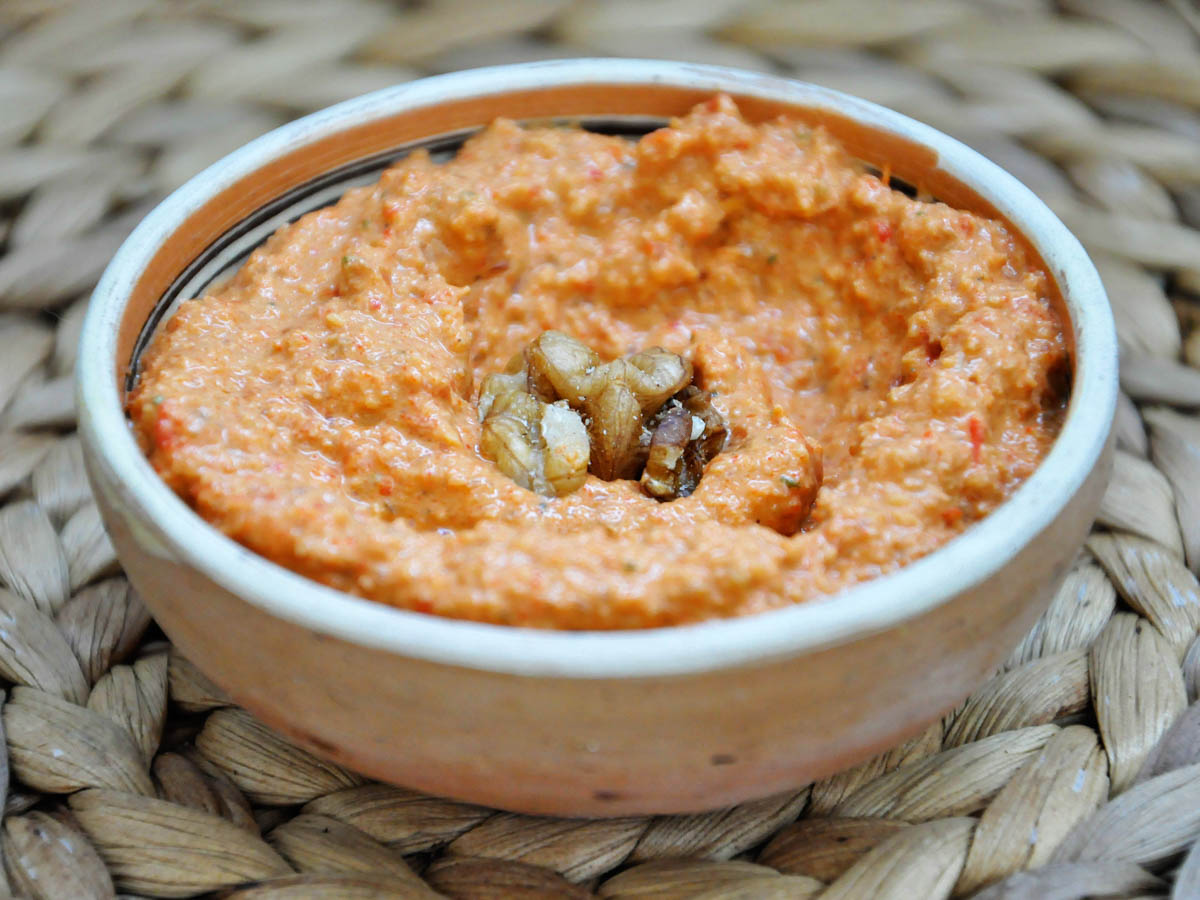
I found out about this muhammara dip while searching the web for some oriental appetizer recipes, similar to hummus and baba ganoush. I tried it at a local Lebanese restaurant, but I think that my version is by far the best muhammara recipe I’ve tasted so far. It is so much different than the spreads I’m used to, and after the first batch I knew I would definitely make this again.
What goes into this muhammara
The whole character of this spread rests on just a handful of ingredients, so the quality of each one matters. Roasted red bell peppers bring the smoky sweetness and that signature deep-red color. Lightly toasted walnuts give body and a warm, slightly bitter depth that balances the sweetness of the peppers. Extra-virgin olive oil and fresh lemon juice carry the flavor, while ground cumin and mashed garlic add the savory, earthy backbone.
One ingredient I’ll insist on is white pepper rather than black. It has a cleaner, more floral warmth that suits this dip beautifully. Use less if you only have black pepper on hand, but if you can get white, it really is worth it. I didn’t use all the ingredients in the authentic muhammara recipe because some are pretty impossible to find here, and I didn’t add any breadcrumbs either. I tasted it and loved it just the way it was.
Roasting the peppers right
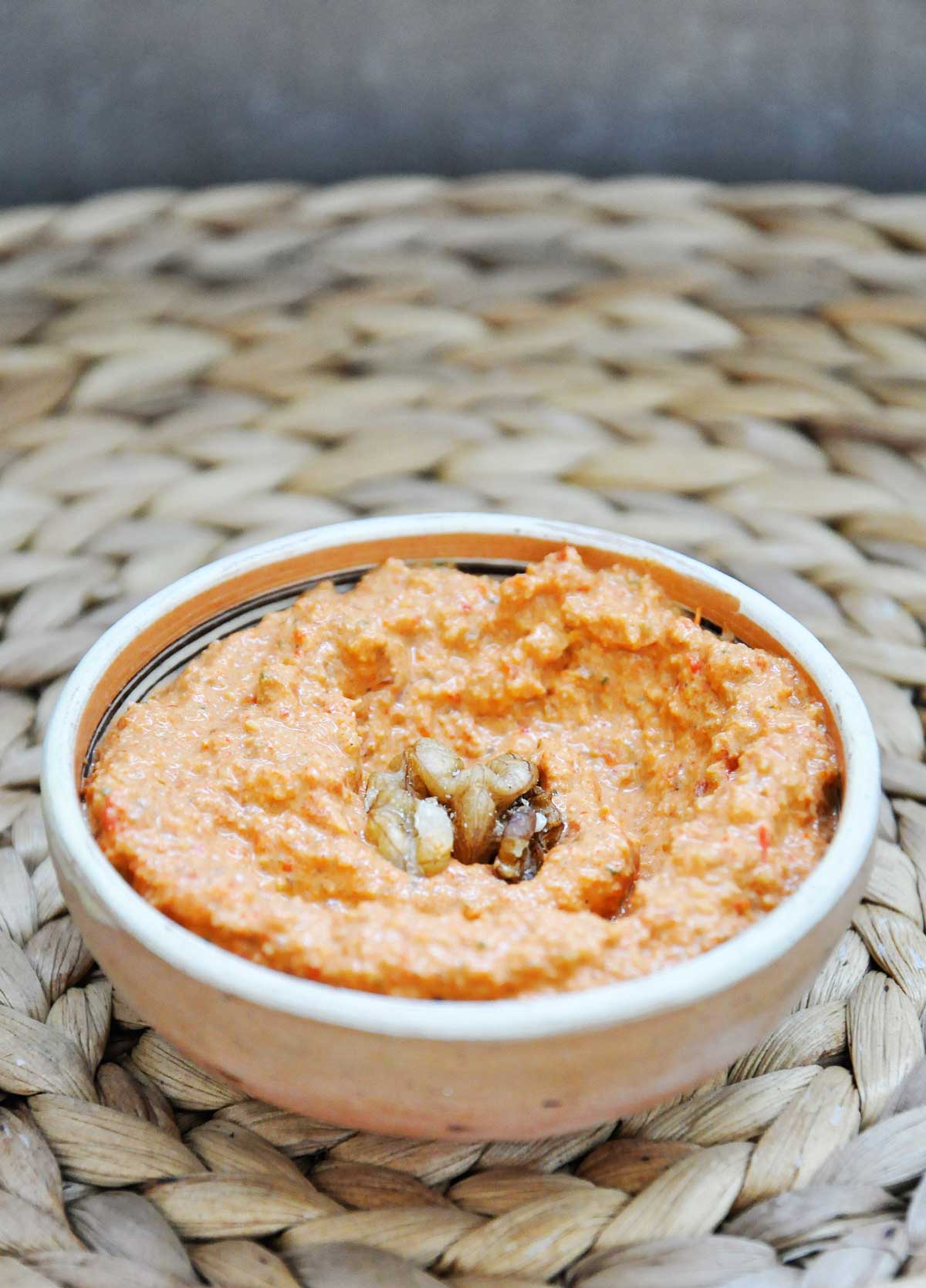
Roasting is the single step that makes or breaks this spread, so don’t rush it. You want the skins fully charred and blistered, dark and papery all over, whether you roast the peppers in the oven or directly over a flame. That char is what concentrates the sugars and gives muhammara its smoky depth, so a pale, lightly cooked pepper simply won’t deliver the same flavor.
Once the peppers are roasted, let them cool a bit before you handle them. The trapped steam loosens the skins as they sit, which makes peeling off the charred black skins far easier. Take your time getting the blackened bits off so the final dip stays clean and vivid red rather than gritty. Toasting the walnuts is the small second step that pays off too, since a quick toast draws out their oils and deepens that nutty note before everything goes into the processor.
Blending it smooth
Once your peppers are peeled and cooled, the rest is easy. Add everything to the food processor at once, peppers, walnuts, olive oil, lemon juice, cumin, white pepper, mashed garlic and a little sea salt, and blend until smooth. Stop to scrape down the sides if you need to, and let it run until the walnuts break down and the texture turns creamy rather than chunky.
This is the moment to taste and adjust. Salt brings everything into focus, lemon sharpens it, and a touch more cumin pushes the warmth if you like it bolder. If you want a little heat, a pinch of chili works well here, and you can read more about the health benefits of eating chili if you’re curious. Serve it with pita bread and you’re done.
What to serve it with
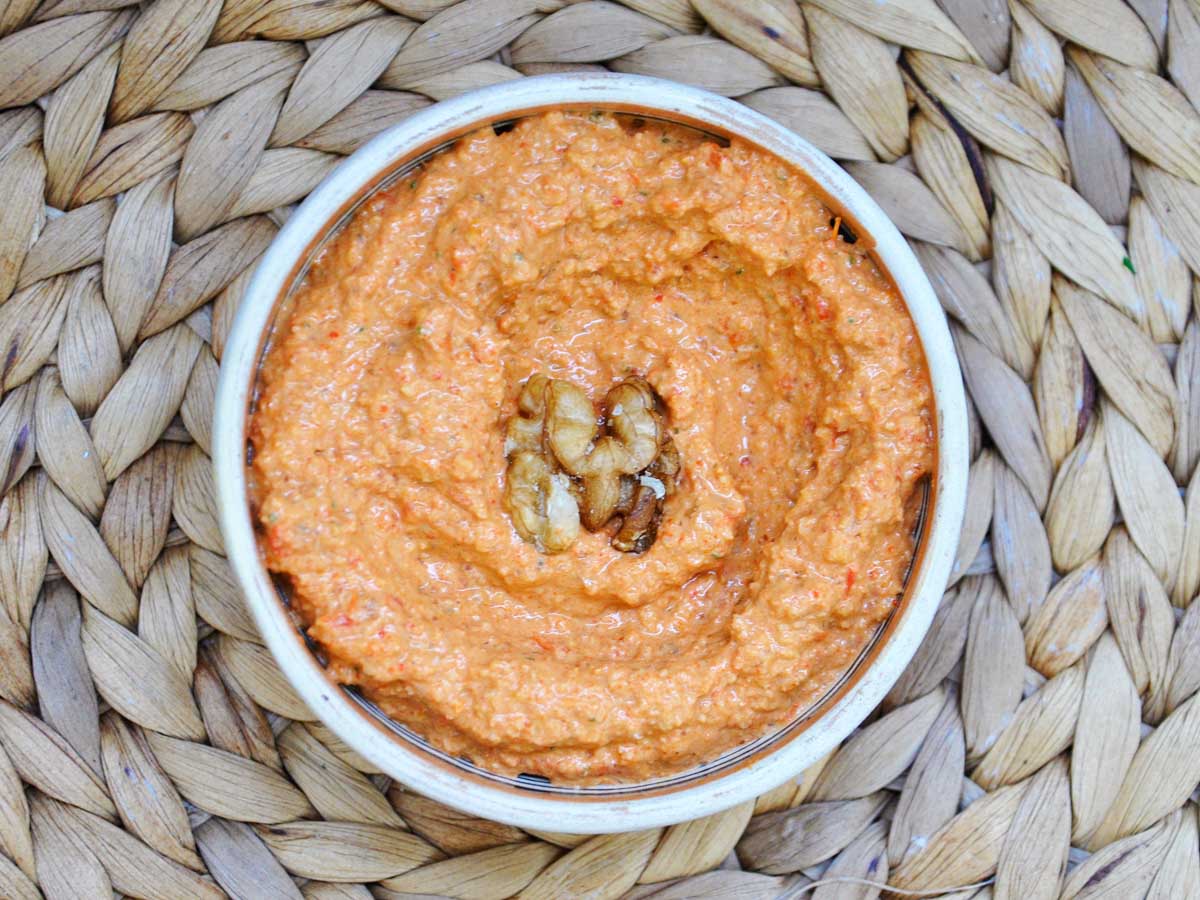
Muhammara shines as part of a mezze spread, so set it out alongside other dips and let everyone build their own plate. It sits beautifully next to my roasted red bell pepper hummus and a smoky mutabal tahini eggplant spread, with warm pita for scooping. For a bigger board, add a kalamata white bean spread and some batata harra spicy roasted potatoes on the side. It’s also lovely simply slathered on toast or used as a sandwich spread.
Make-ahead and storage
Muhammara is a great make-ahead dip, and many people think it tastes even better the next day once the flavors have had time to settle together. Store it in an airtight container in the fridge, where it will keep well for several days. Give it a quick stir before serving, since a little olive oil may separate to the top, and drizzle a touch more oil over it for shine if you like. If you enjoy a smooth, scoopable spread like this, you might also love my roasted eggplant mousse.
If you make this muhammara, I’d love to know how your peppers turned out and whether you went with white pepper like I suggested. Leave a star rating and a comment below to tell me how it went, and share any little tweak you made to make it your own.
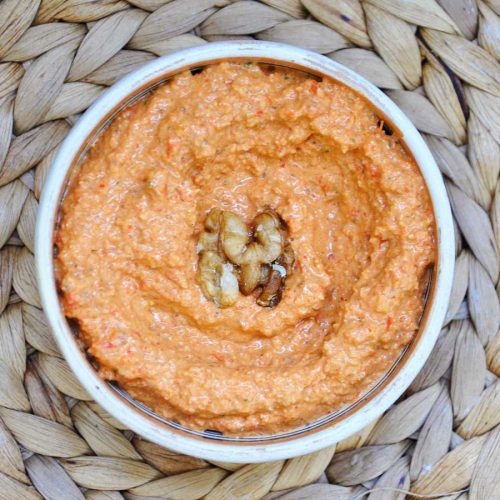
Muhammara | Roasted Red Pepper and Walnut Spread
Ingredients
- 4 red bell peppers
- 1 ½ cup walnuts lightly toasted
- 2 tbsp extra-virgin olive oil
- 2 tbsp lemon juice
- 1 tsp ground cumin
- ½ tsp ground white pepper use less if you only have black pepper, but white is strongly recommended for its pleasant flavor
- 2 garlic cloves mashed
- sea salt to taste
Instructions
- Roast the red bell peppers. You can roast them either inside your oven or directly over the flame on top of the stove, until the skins are charred and blistered all over.
- Once roasted, let the peppers cool a bit, then peel off the charred black skins and remove the seeds.
- Add all the ingredients, roasted red bell peppers included, to a food processor. Blend until smooth.
- Serve with pita bread and enjoy!
Notes
Frequently Asked Questions
Muhammara is a traditional Syrian spread made from roasted red bell peppers and walnuts. It is blended with extra-virgin olive oil, lemon juice, ground cumin, white pepper, garlic and sea salt. This version skips the breadcrumbs found in some authentic recipes and keeps the dip naturally rich from the walnuts.
Yes, this muhammara is fully vegan. Every ingredient is plant-based: roasted red peppers, walnuts, olive oil, lemon juice, cumin, white pepper, garlic and sea salt. It contains no dairy, eggs or honey, so it works for vegan, vegetarian and dairy-free diets alike.
Roast the bell peppers in the oven or directly over a flame until the skins are fully charred and blistered all over. Let them cool a bit so the steam loosens the skins, then peel off the blackened black skins. That deep char is what gives muhammara its signature smoky sweetness.
White pepper has a cleaner, more floral warmth that suits this dip better than the sharper bite of black pepper. If you only have black pepper, use a little less so it doesn’t overpower the peppers and walnuts. If you can get white pepper, it really is worth it for this recipe.
Stored in an airtight container in the fridge, muhammara keeps well for several days. The flavors often deepen by the next day, so it is a great make-ahead appetizer. Give it a quick stir before serving, as a little olive oil may rise to the top.
Muhammara is classically served with warm pita bread for scooping. It also shines on a mezze board next to other dips like hummus, mutabal or a white bean spread. Beyond dipping, it works wonderfully spread on toast or as a flavorful sandwich filling.


Thank you for your rant and for the recipe. I am vegan, and wasn’t for a long time because the word “vegan” conjured up anger and self-rightousness. Showing kindness and compassion towards animals, but not humans speaks mostly to some “issues” that some people may have from their past. People become vegan when they are ready to do so. “When you express your anger, either verbally or with physical violence, you are feeding the seed of anger, and it becomes stronger in you.” Only understanding and compassion can neutralize anger.
Exactly! Anger and hatred will NEVER bring anything good. I hope more people would understand this…
You have a lovely blog and this is my first visit. I wholeheartedly agree with your staying positive over the negative. I would like to go a step further and say after 60 years of learning and growing, that everything is alive. We may believe that because we are vegan, or vegetarian, that we can exempt ourselves, but the truth is, everything is alive…the salad you eat…the grains…the fruit…until it is picked or plucked from the ground… If, when we sit down before our meal, we are not aware of this fact, we do not honor that life; animal or plant based, etc. Take good care everyone. Namaste. Teresa
Thank you, Teresa! 🙂
Such lovely and truthful words you said! Thank you for your message! 😀
Not only I love your recipes, I also like your attitude! I have been thinking together with my husband to become vegetarian, and, if possible vegan. I’ve found is not an easy thing to change eating habits when we are not educated about our choices and what is healthy for each one of us. Finding your website has been such a relief, since is not easy to find both delicious and healthy recipes. I want to thank you so much for investing your time and energy into this blog. Thanks, thanks, thanks!
Thank you, Alejandra! Your comment made my day. 😀 It makes me so happy to hear that my work is appreciated and that my recipes help other people too. THANK YOU! 😀
This recipe looks amazing. I love that there are plenty of vegan Middle Eastern recipes. I agree with your approach to veganism. I try to show my friends and family how good vegan food is. I hope to inspire them to at least not eat as much meat. It isn’t likely I will change their minds completely but I am grateful how they are very supportive of my beliefs,
Thanks Jessie! Exactly! This is the best way to do it. We must encourage people to do their own research and make the change because they feel that’s the right thing to do.