Easter Pie (Torta Pasqualina)
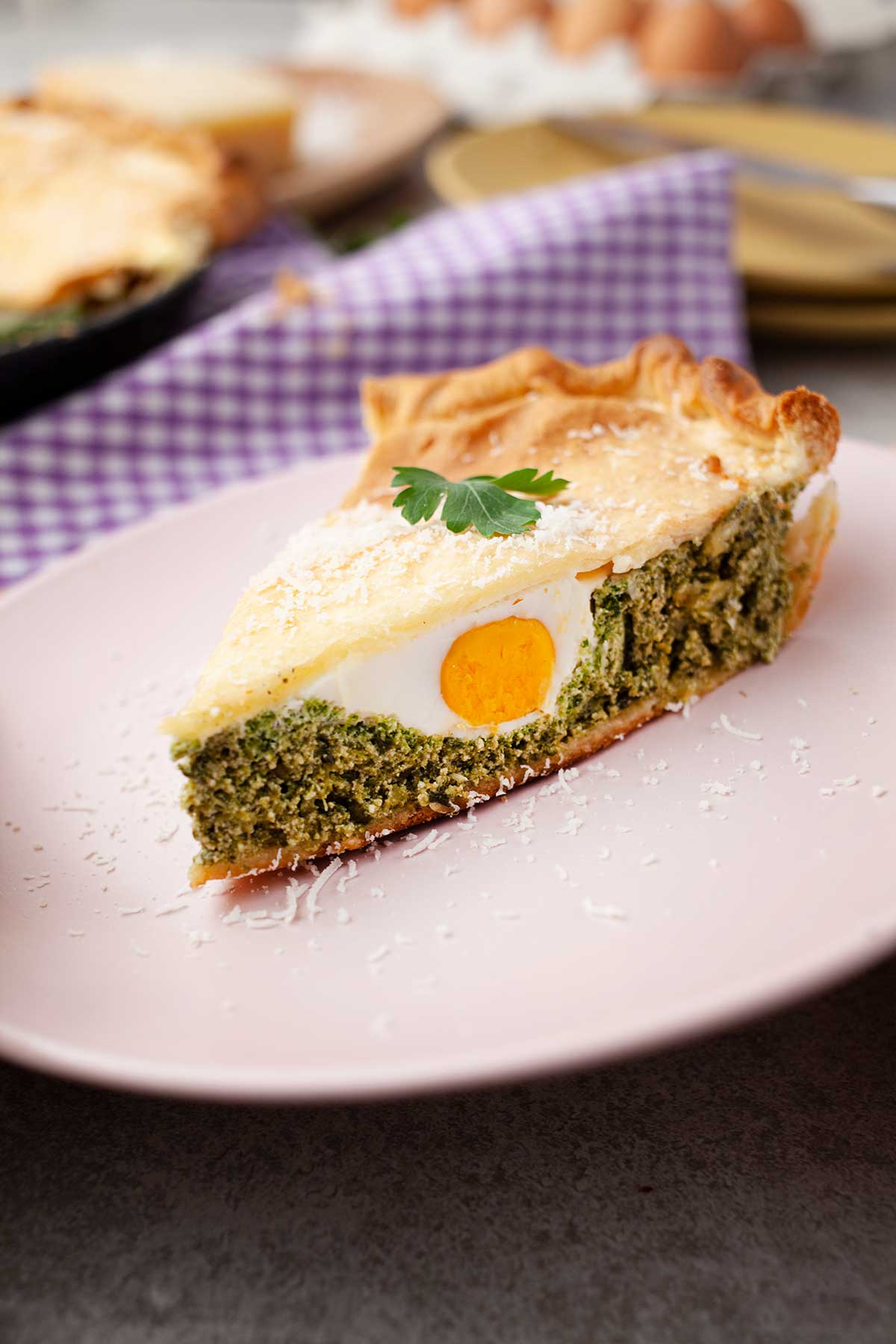
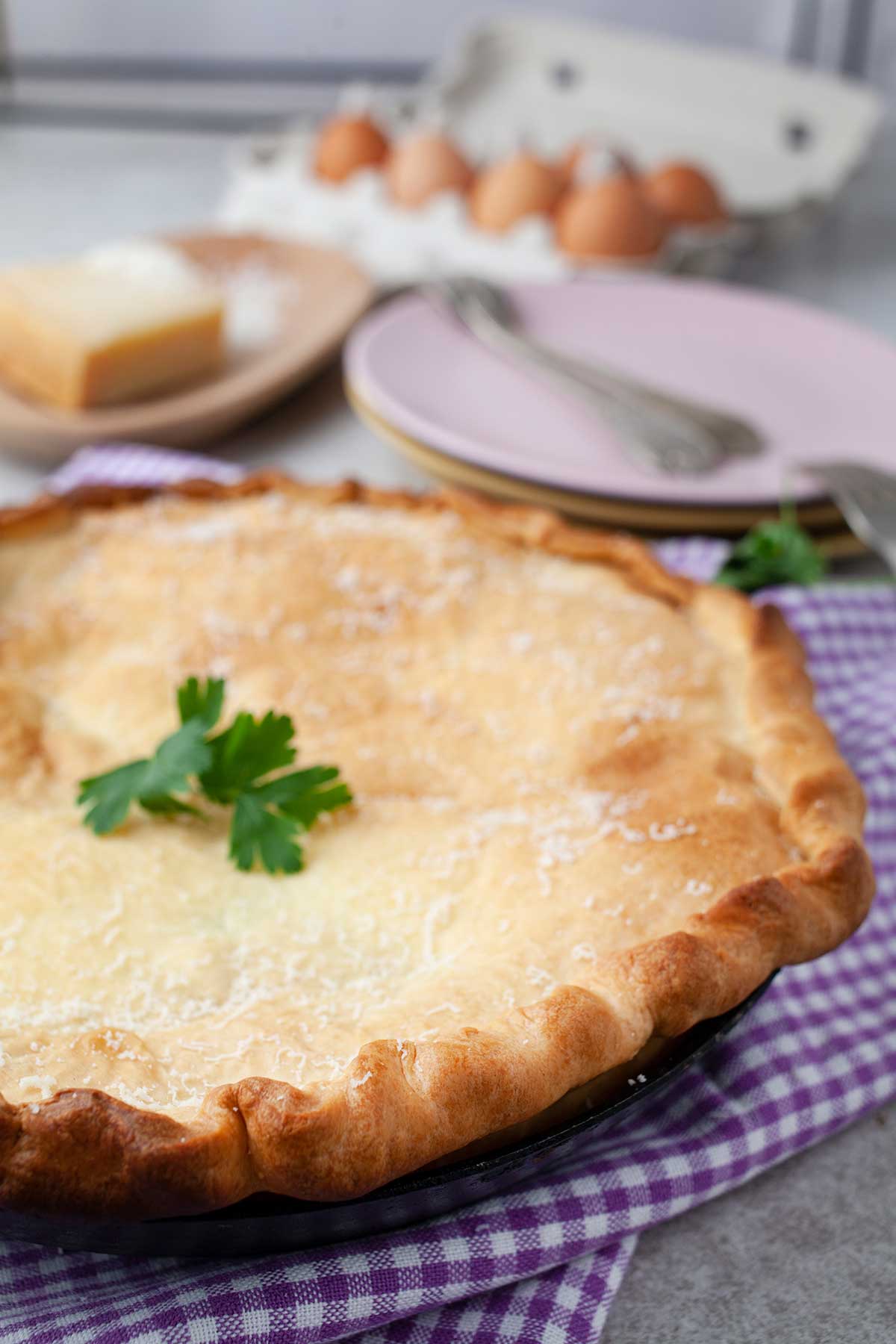
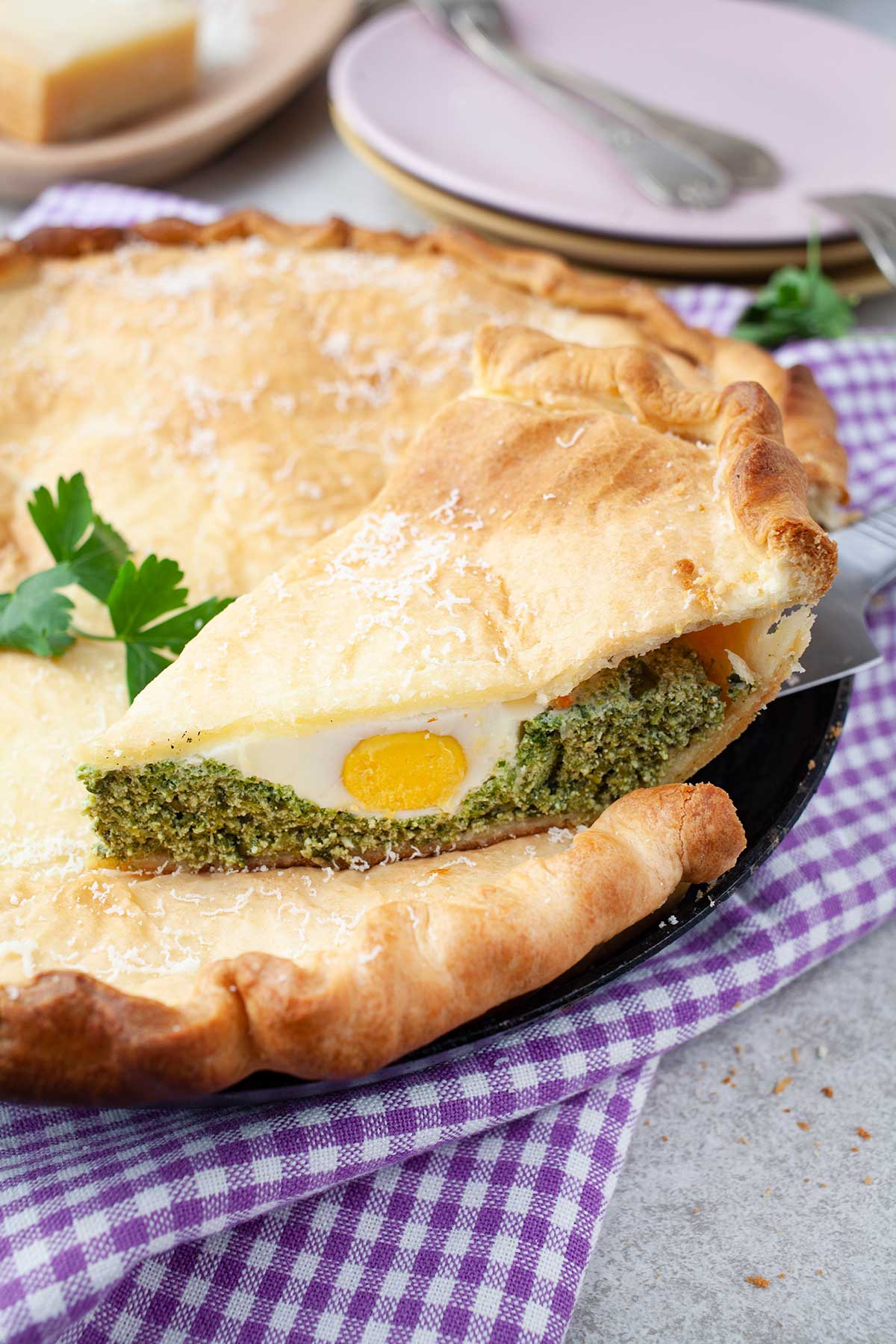
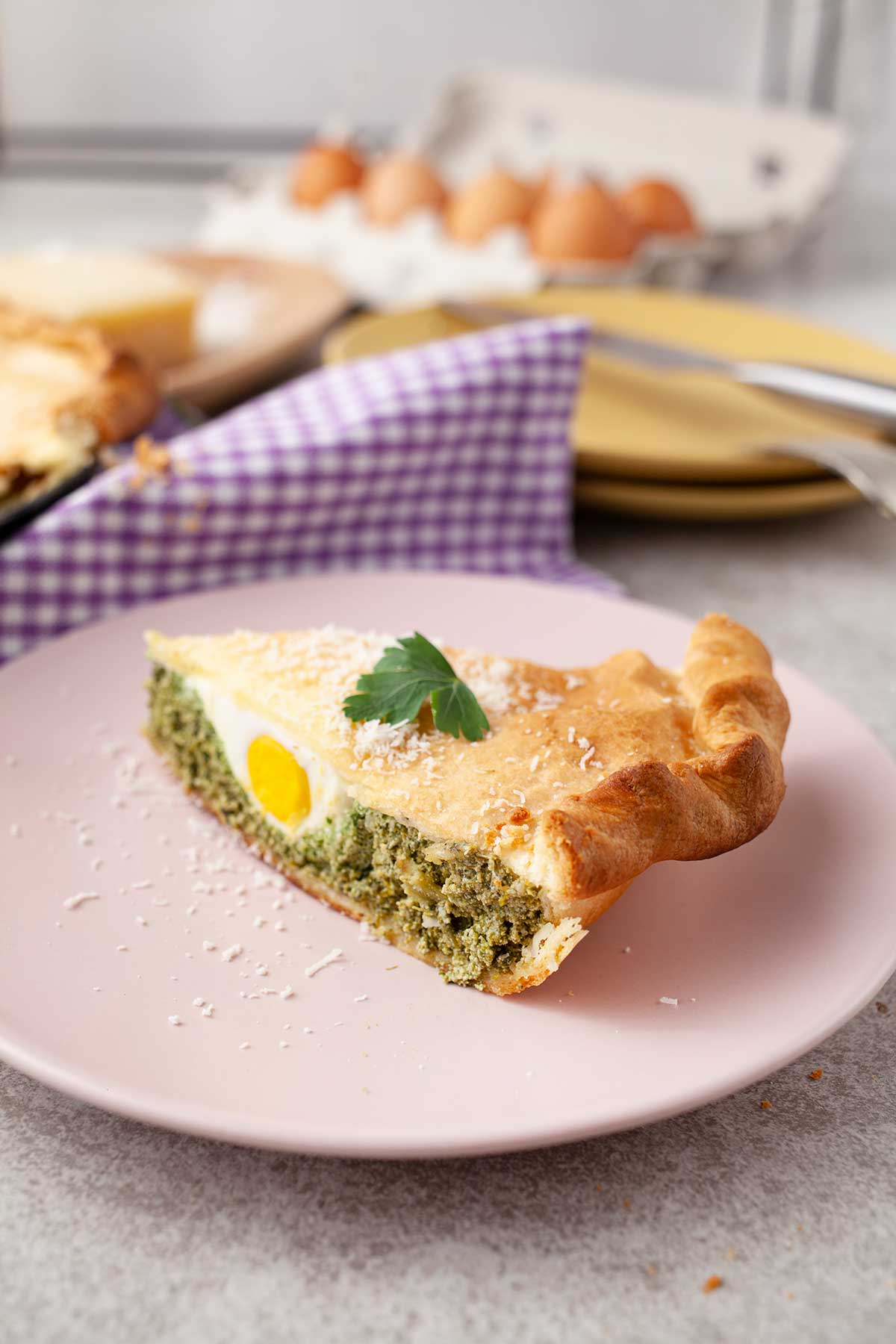
Torta Pasqualina is a savory Italian Easter pie from Liguria: thin, flaky pastry encasing a filling of wilted spinach, ricotta, Parmesan, and whole eggs cracked directly into the filling before the lid goes on. When you slice it, each portion reveals a cross-section of egg yolk set in the green filling, which is the visual signature of this dish. It takes about 40 minutes of active work plus 1 hour of baking, requires no special equipment, and is served at room temperature, which makes it ideal for a buffet or an Easter table where you want dishes ready in advance. The pie is vegetarian as written. It keeps well refrigerated for 3 days and is arguably better the day after baking once the filling has had time to settle.
The name comes from Pasqua, the Italian word for Easter, and the pie has been made in Liguria since at least the 18th century. The number of pastry layers was traditionally 33, one for each year of Christ’s life, though most modern versions use a more practical two or three layers. What has not changed is the filling: spinach and ricotta remain the constants, and whole eggs cracked into wells in the filling are non-negotiable.
This Recipe Works If You Need
- Make ahead? Yes. Bake the day before, cool completely, refrigerate. Bring to room temperature before serving. The flavour is better on day two.
- Vegetarian main course? Yes. Substantial enough to be the centrepiece of an Easter table, not just a side dish.
- No special equipment? A standard 24-26cm round cake tin or pie dish is all you need.
- Served at room temperature? Yes, which is ideal for gatherings where you want to prepare in advance.
- Short on time? Use store-bought shortcrust or puff pastry. The filling is the heart of this recipe; the pastry is flexible.
Why You’ll Love This Recipe
- The sliced cross-section is striking. Whole egg yolks set in the green filling make every slice look composed and intentional. It is one of those dishes that looks much harder than it is.
- It travels and holds well. Served at room temperature, firm enough to slice cleanly, and keeps in the fridge for three days. Ideal for Easter gatherings where you cannot be in the kitchen all day.
- The filling is deeply savoury. Spinach, ricotta, Parmesan, and nutmeg together produce a filling that is rich without being heavy, and far more interesting than most savory pies.
- Flexible with the pastry. Homemade olive oil pastry is traditional and worth making, but store-bought shortcrust or even puff pastry produces a very good result with a fraction of the effort.
Ingredient Notes
Spinach: Fresh spinach gives a better result than frozen. Wilt it in a dry pan, then squeeze out as much water as possible, as excess moisture makes the filling wet and the pastry soggy. A 400g bag of fresh spinach reduces to about 150g once wilted and squeezed. Frozen spinach works if you thaw it fully and squeeze very thoroughly.
Ricotta: Use full-fat ricotta for a creamier, richer filling. Low-fat ricotta tends to be wetter and can make the filling loose. If your ricotta looks very wet, drain it briefly in a fine mesh sieve before using.
Parmesan: Adds saltiness and depth. Freshly grated melts more evenly than pre-grated. Pecorino Romano is a good substitute and gives a slightly sharper flavour that works well here.
Whole eggs (in the filling): Cracked raw into wells made in the filling before the pastry lid goes on. They set during baking to a just-firm yolk if you get the timing right, or to fully hard-boiled if left longer. Aim for the former.
Nutmeg: A classic pairing with spinach and ricotta. Use freshly grated if possible. It should be subtle, not dominant; a small pinch is enough.
Pastry: The traditional version uses a very thin olive oil pastry that is almost filo-like. For a more practical approach, good-quality store-bought shortcrust pastry or puff pastry both work well. Puff pastry gives a more dramatic, layered crust; shortcrust gives a sturdier, more structured slice.
Tips for the Best Torta Pasqualina
- Squeeze the spinach very dry. This is the single most important step. Too much moisture in the filling makes the bottom pastry soggy and the filling loose when sliced. Use your hands or a clean tea towel to wring out as much liquid as possible after wilting.
- Make shallow wells for the eggs. Use the back of a spoon to press gentle indentations into the levelled filling before cracking in the eggs. This keeps the yolks centred and prevents them rolling to the edges.
- Seal the pastry edges firmly. Press the top and bottom pastry layers together and crimp well so the filling does not bubble out during baking.
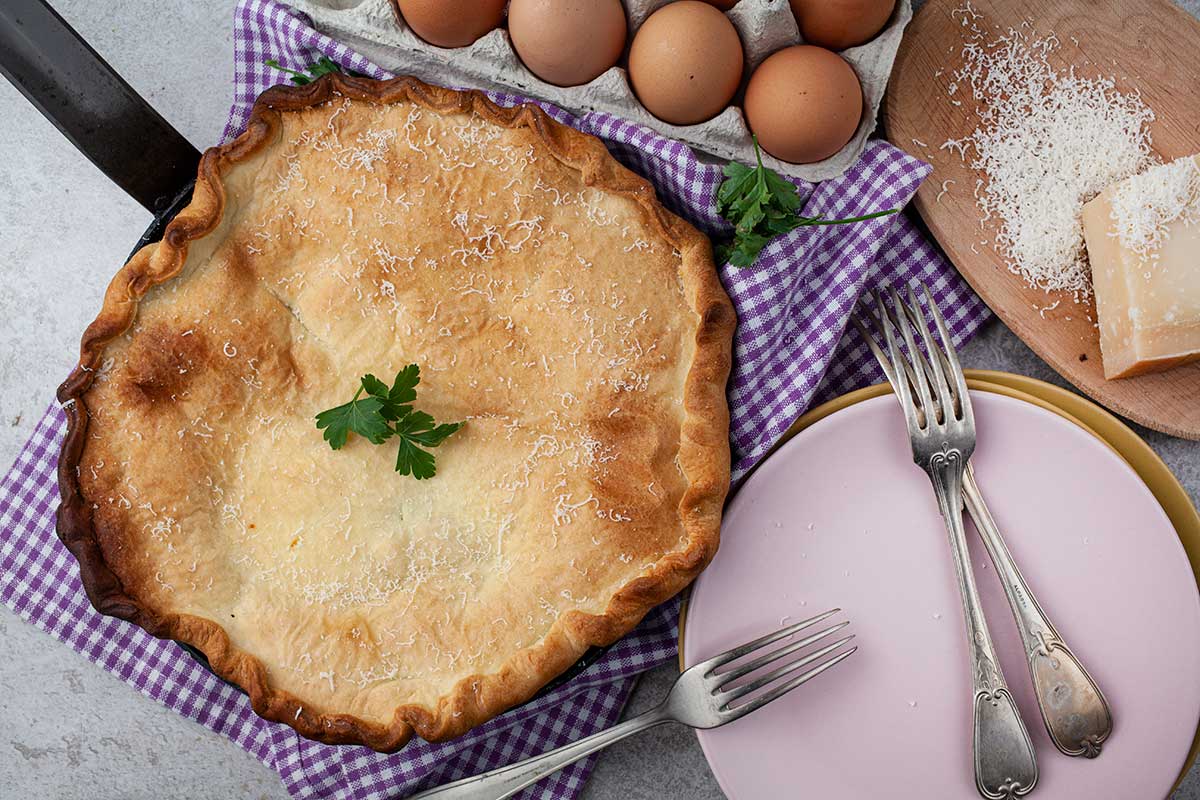
- Brush the top generously with egg wash. This gives the crust a deep golden colour. Score a few small slits in the pastry lid to let steam escape and prevent the top from puffing unevenly.
- Rest before slicing. Let the pie cool to room temperature or near it before cutting. A hot pie will not hold its shape when sliced and the egg yolks will still be liquid in the centre.
Substitutions
Spinach alternatives: Swiss chard is the most traditional substitute and works beautifully, giving a slightly earthier flavour. Wild garlic leaves (in season at Easter) are excellent. Cavolo nero or kale can be used but need longer wilting and more thorough squeezing.
Ricotta alternatives: Cottage cheese blended until smooth works reasonably well and is lower in fat. Cream cheese thinned with a little milk produces a richer, denser filling. Soft goat’s cheese gives a tangier result that pairs well with the spinach.
Dairy-free: Use a firm tofu blended with nutritional yeast and lemon juice in place of the ricotta. Replace the Parmesan with extra nutritional yeast. The flavour will be different but the texture holds well.
Egg-free filling: Omit the whole eggs cracked into the filling. Instead, fold 2-3 lightly beaten eggs into the ricotta mixture itself for a more uniform filling. For a fully egg-free version, use a cornstarch-thickened filling, though this is a significant departure from the original.
Troubleshooting
Soggy bottom pastry: Almost always caused by wet spinach. Squeeze more thoroughly next time. You can also blind-bake the pastry base for 10 minutes before adding the filling, which helps set the base before the moisture from the filling reaches it.
Filling too loose to slice cleanly: The eggs in the filling may have been underbaked, or there was too much liquid in the ricotta or spinach. Make sure the pie reaches an internal temperature of around 70-75°C and the filling feels firm when you press the top crust. If using store-bought ricotta, drain it for 30 minutes before using.
Egg yolks fully cooked when you wanted them jammy: The whole eggs set faster than the surrounding filling. To keep yolks softer, crack them in during the last 20-25 minutes of baking by lifting the pastry lid slightly, adding them, and continuing. This is fiddly but effective.
Variations
- With artichokes: Replace half the spinach with cooked, chopped artichoke hearts. This is a classic Ligurian variation and gives the filling a slightly meatier texture.
- With herbs: Add a generous handful of fresh basil, parsley, or tarragon to the spinach-ricotta mixture. Herbs brighten the flavour considerably and complement the egg.
- With leeks or spring onions: Soften sliced leeks or spring onions in olive oil before mixing into the filling. They add sweetness and a mild allium depth.
- Mini individual pies: Use a muffin tin to make individual portions. Reduce baking time to about 20-25 minutes. These are good for buffets and easier to serve than slicing a large pie.
Storage and Make Ahead
Torta Pasqualina is best made the day before serving. Cool completely, cover, and refrigerate. The filling firms up overnight and the flavours develop. Remove from the fridge 30-45 minutes before serving to bring it closer to room temperature.
It keeps refrigerated for up to 3 days. Cover tightly to prevent the pastry from absorbing other smells from the fridge. The pie can be frozen once baked and fully cooled: wrap individual slices or the whole pie tightly and freeze for up to 2 months. Thaw overnight in the fridge and bring to room temperature before serving. Do not reheat in the microwave as this makes the pastry soft; a short warm in a low oven (160°C for 10 minutes) is better.
Looking for more Italian Easter recipes? Try the Italian Easter Bread (Pane di Pasqua), or browse all Easter recipes.
Summarise & Save This Recipe
★ Add us as a trusted Google source
Easter Pie (Torta Pasqualina)
Ingredients
For the crust:
- 250 g flour
- 100 g cold butter
- 90 ml cold water
- pinch salt
For the filling:
- 500 g spinach (fresh then boiled in salted water)
- 250 g ricotta
- 4 eggs lightly beaten
- 50 g Parmesan grated
- 4 eggs for decorating the filling
Instructions
- Add all the ingredients for the dough in a food processor and mix until a rough and crumbly dough is formed.
- Transfer the mixture to a clean surface and gather it into a sphere, to form a firm dough.
- Wrap the obtained dough in a plastic wrap and put it in the refrigerator.
- Drain the spinach of excess water and chop it.
- Heat a pan on medium heat with a little bit of oil, add the chopped spinach and ricotta. Cook, stirring on medium heat, until the excess liquid evaporates and the mixture becomes creamier. Add salt, mix and remove from heat.
- Add the Parmesan cheese and let the mixture cool to room temperature, then add the beaten eggs and mix.
- Leave the filling aside and roll out the dough.
- Heat the oven to 180C (360 ºF).
- Divide the dough in two and spread it with a rolling pin until you get two round disks. Transfer one onto the pie form, add the filling.
- With the help of a spoon, make indentations in the filling and crack an egg into each of the indentations.
- Cover with the remaining top, catch the edges of the pie and with a knife, cut a few lines in the top layer, so that the dough does not swell when baked.
- Put the pie in the oven and leave it to bake for 35 minutes, or until it turns brown.
Notes
Frequently Asked Questions
The key difference is the eggs. In a quiche, eggs are beaten into the filling mixture to form a custard that sets uniformly. In torta Pasqualina, whole eggs are cracked directly into the filling so they cook as distinct units, with visible yolk and white when sliced. The pastry is also different: quiche uses a blind-baked shortcrust shell with an open top; Pasqualina is fully enclosed in pastry, top and bottom. The textures and the visual result are completely different.
Yes, with one important condition: it must be thawed completely and squeezed extremely dry. Frozen spinach holds much more water than wilted fresh spinach, and any excess moisture will make the filling wet and the pastry soggy. Thaw it in a colander, then press it hard between your palms, twist it in a tea towel, and press again. If it still feels damp, keep going. The squeezed weight should be about the same as you would get from wilting fresh.
The traditional number is 1 egg per person, so a pie serving six would have six whole eggs cracked into the filling. In practice, the number depends on the size of your tin and how evenly the eggs can be spaced. For a 24cm round pie, four to six eggs is typical. Space them evenly across the filling so every slice gets one egg yolk, which is the whole point of the dish.
Yes. Cottage cheese blended until smooth is the closest substitute in texture. Soft goat’s cheese gives a tangier flavour. Cream cheese thinned with a little milk makes a richer, denser filling. All of these work, though the flavour will differ from the traditional version. Avoid hard cheeses or melting cheeses as the base of the filling, as the texture will be wrong.