A high-protein salad starts with a base that carries protein on its own, which means legumes, grains like quinoa, tofu, or a firm cheese rather than a pile of leaves. That single swap is the difference between a salad that disappears in an hour and one that works as a real meal. Below are 21 recipes built that way, from crispy chickpea croutons and grilled halloumi to quinoa bowls and marinated three-bean salads. Some are ours, some come from food bloggers whose work is worth your time.
How to Choose the Right High-Protein Salad
Choose a high-protein salad by starting with the protein source and building the vegetables around it, not the other way round. Legumes such as chickpeas, lentils and beans are the most reliable base and the cheapest. Tofu, tempeh and halloumi work when you want texture and something grilled. Quinoa suits meal-prep because it holds dressing for days without collapsing. Then check the dressing: tahini, peanut butter, nuts and seeds quietly add protein, while a plain vinaigrette adds none. If the salad has to survive a fridge and a commute, favor sturdy bases and pack the dressing separately.
Jump to a category
Chickpea and Bean Salads
Legumes are the most reliable protein base for a salad, and these bowls lean on chickpeas, beans and peas to do the heavy lifting.
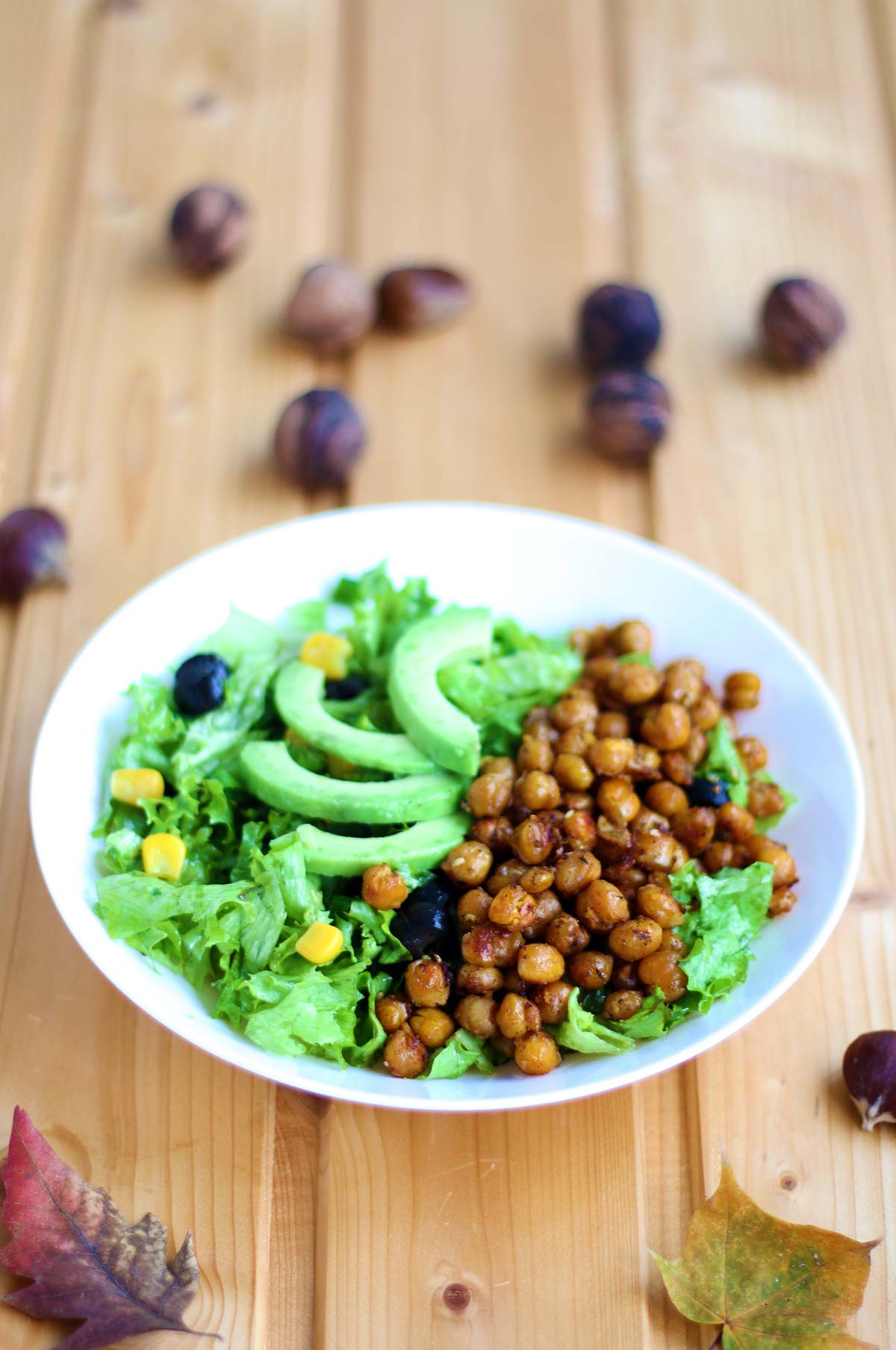
Crispy Chickpea Salad
Roasted chickpeas crisp up hard enough to stand in for bread croutons, and they carry far more protein into the bowl. Tossed with crunchy vegetables and a bright dressing, this one eats like a real meal rather than a side. Tip: add the chickpeas at the very last second, because dressing softens their crust within minutes.
Get the recipe
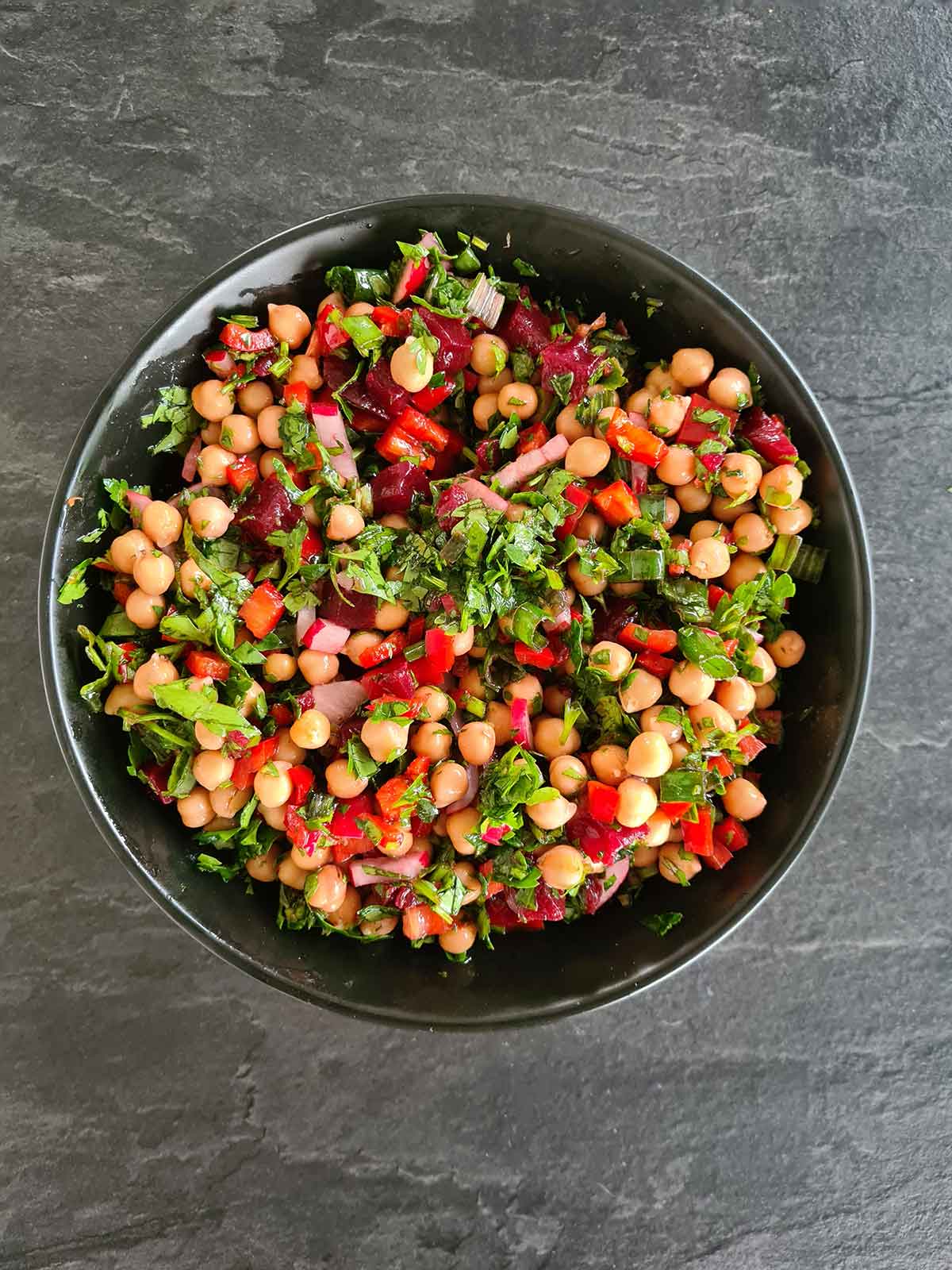
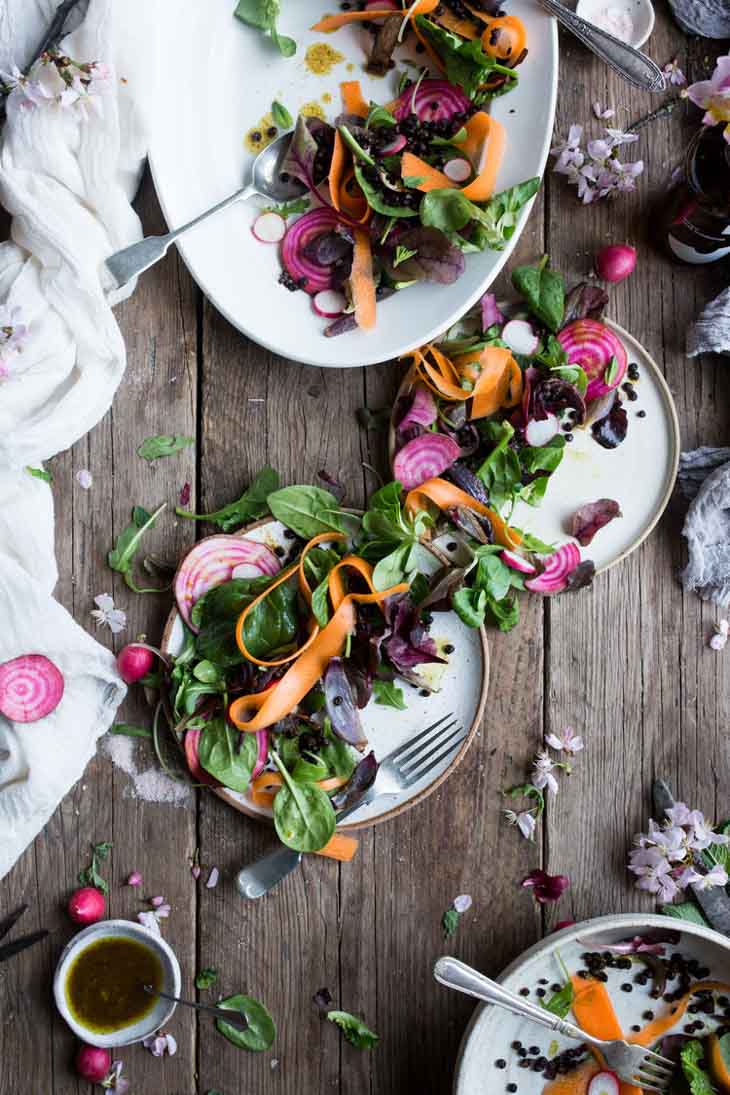
Quick Chickpeas and Roasted Beetroot Salad
Sweet roasted beetroot and creamy chickpeas make an unexpectedly good pair, with the earthy edge of the beets cutting through the starchy legumes. It comes together in minutes once the beets are done, and the color alone makes it worth putting on the table. Tip: roast a full tray of beets in advance and keep them peeled in the fridge for fast weekday assembly.
Get the recipe
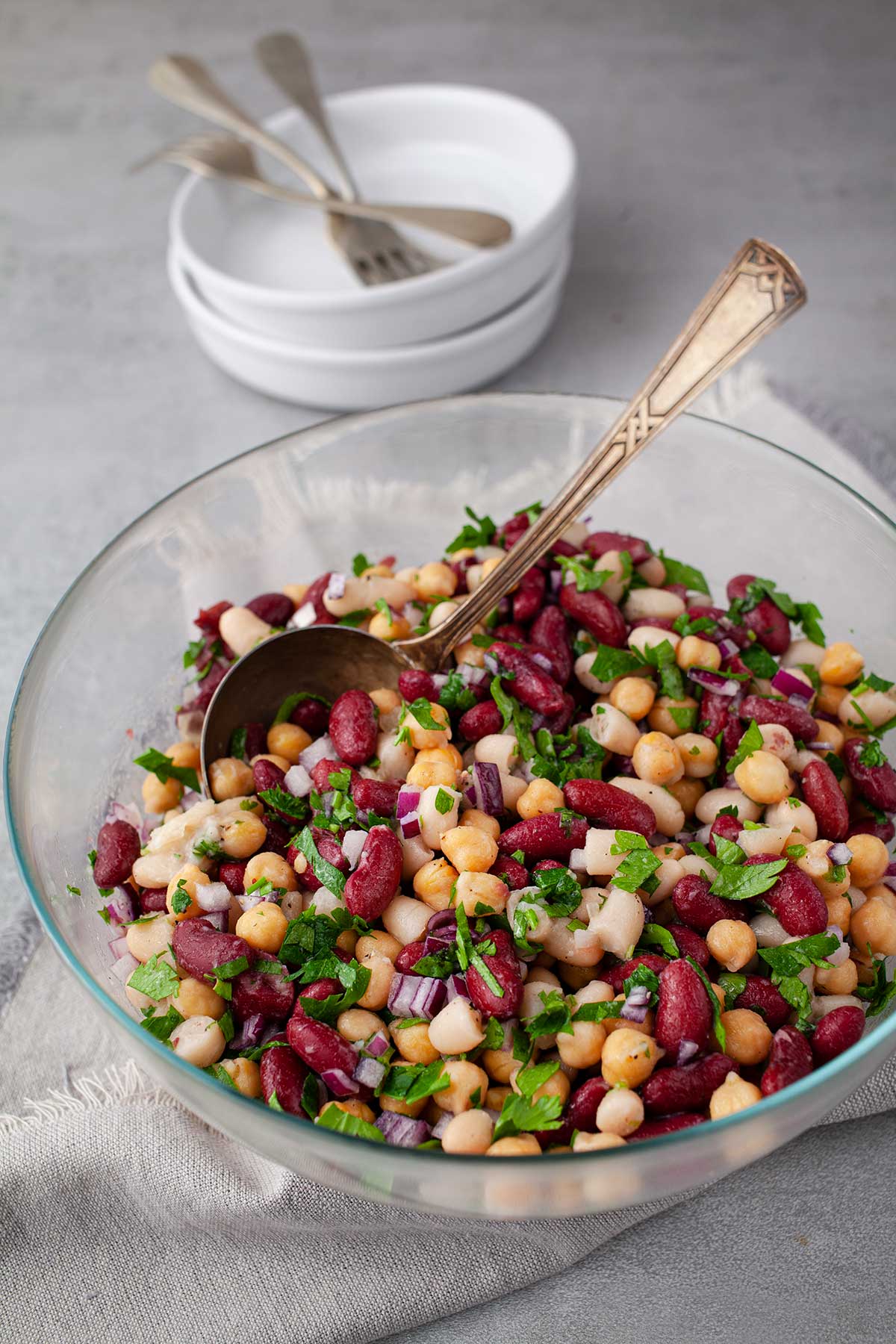
Three Bean Salad
Three kinds of beans in one bowl means three textures and a genuinely filling protein hit. The marinade does most of the work here, softening the sharpness of the raw onion and pulling everything into a party salad that only improves as it sits. Tip: make this a day early, since the beans need several hours in the dressing to absorb any flavor at all.
Get the recipe
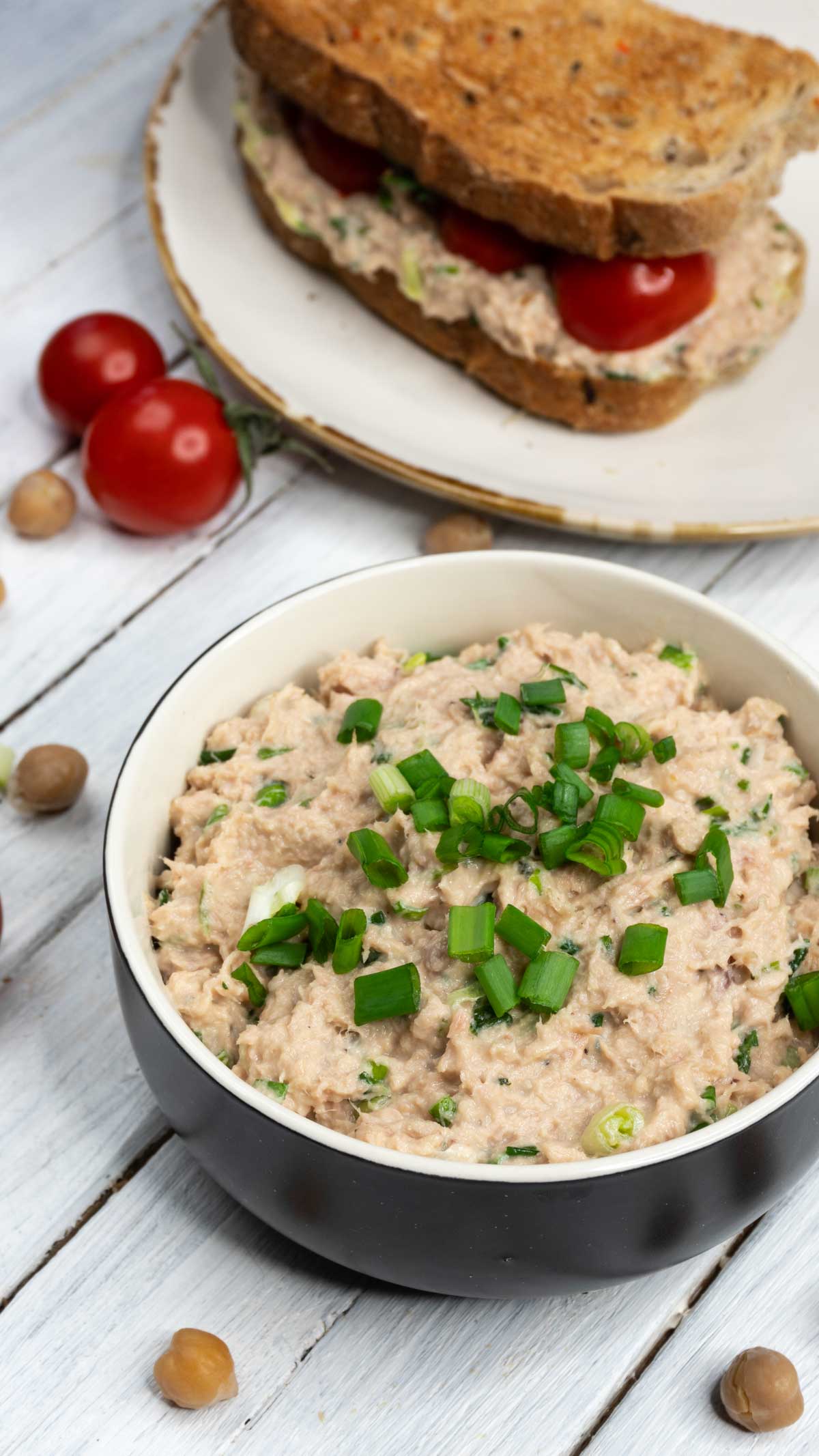
Faux Tuna Salad
Mashed chickpeas, a little seaweed and a creamy dressing get remarkably close to classic tuna salad, minus the fish. Pile it onto greens or between two slices of bread and lunch is sorted in ten minutes. Tip: mash only about two thirds of the chickpeas and leave the rest whole, so the texture stays flaky instead of turning to paste.
Get the recipe
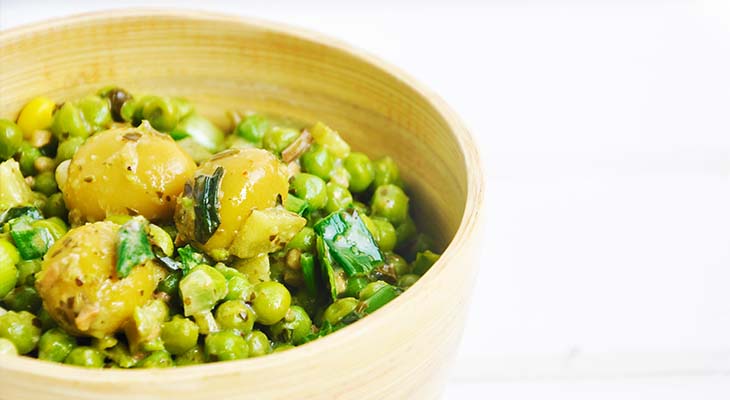
Green Pea and Olives Salad with Pesto
Green peas bring quiet protein, briny olives bring the punch, and pesto ties the whole green bowl together with basil and garlic. It reads Mediterranean without much effort and works as a side or a light main. Tip: if you use frozen peas, thaw them in cold water rather than boiling them, so they keep their bite and their bright color.
Get the recipe
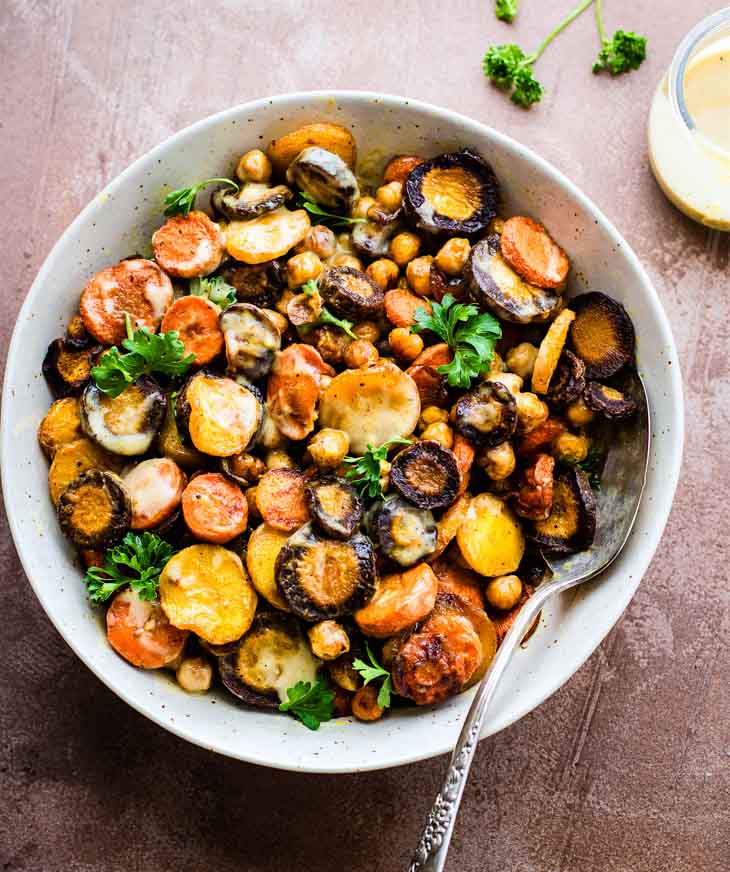
Turmeric Roasted Chickpea Carrot Salad
Turmeric-roasted chickpeas and sweet carrots make a warm, golden salad that tastes like early autumn. A cider tahini dressing pulls it together, adding creaminess and another layer of protein on top of the legumes. Tip: toss the chickpeas in oil before the spices go on, so the turmeric actually sticks instead of scorching on the tray.
Get the recipe
Quinoa and Grain Salads
Quinoa carries a complete protein and holds dressing for days, which makes grain salads the best of the meal-prep bunch.
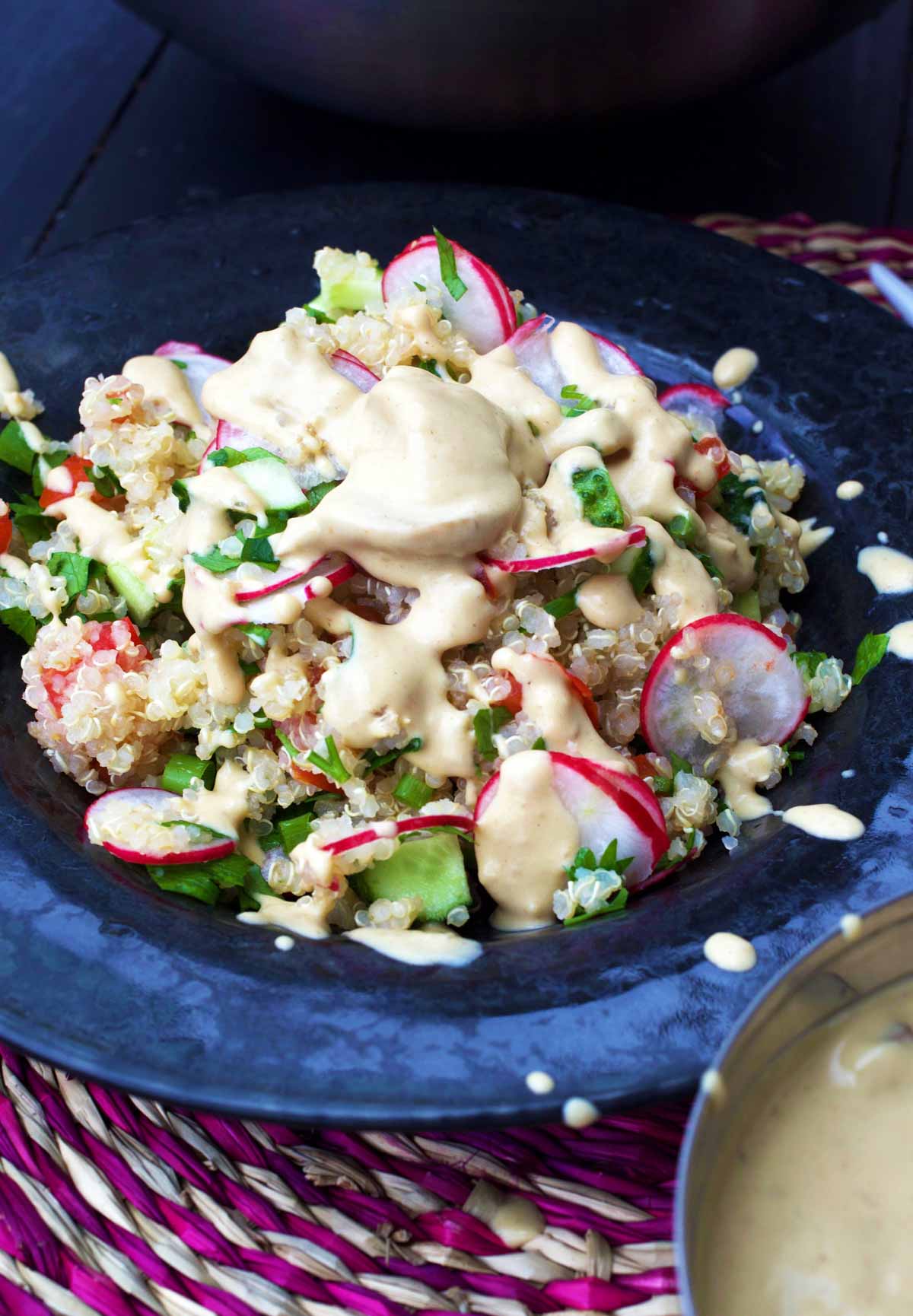
Vegan Quinoa Salad
Quinoa gives you a complete protein base, and here it soaks up dressing while staying light and fluffy. Fresh vegetables and herbs keep it from feeling heavy, which is exactly what you want from a grain salad in warm weather. Tip: spread the cooked quinoa on a tray to cool before dressing it, or the trapped steam will turn it gummy.
Get the recipe
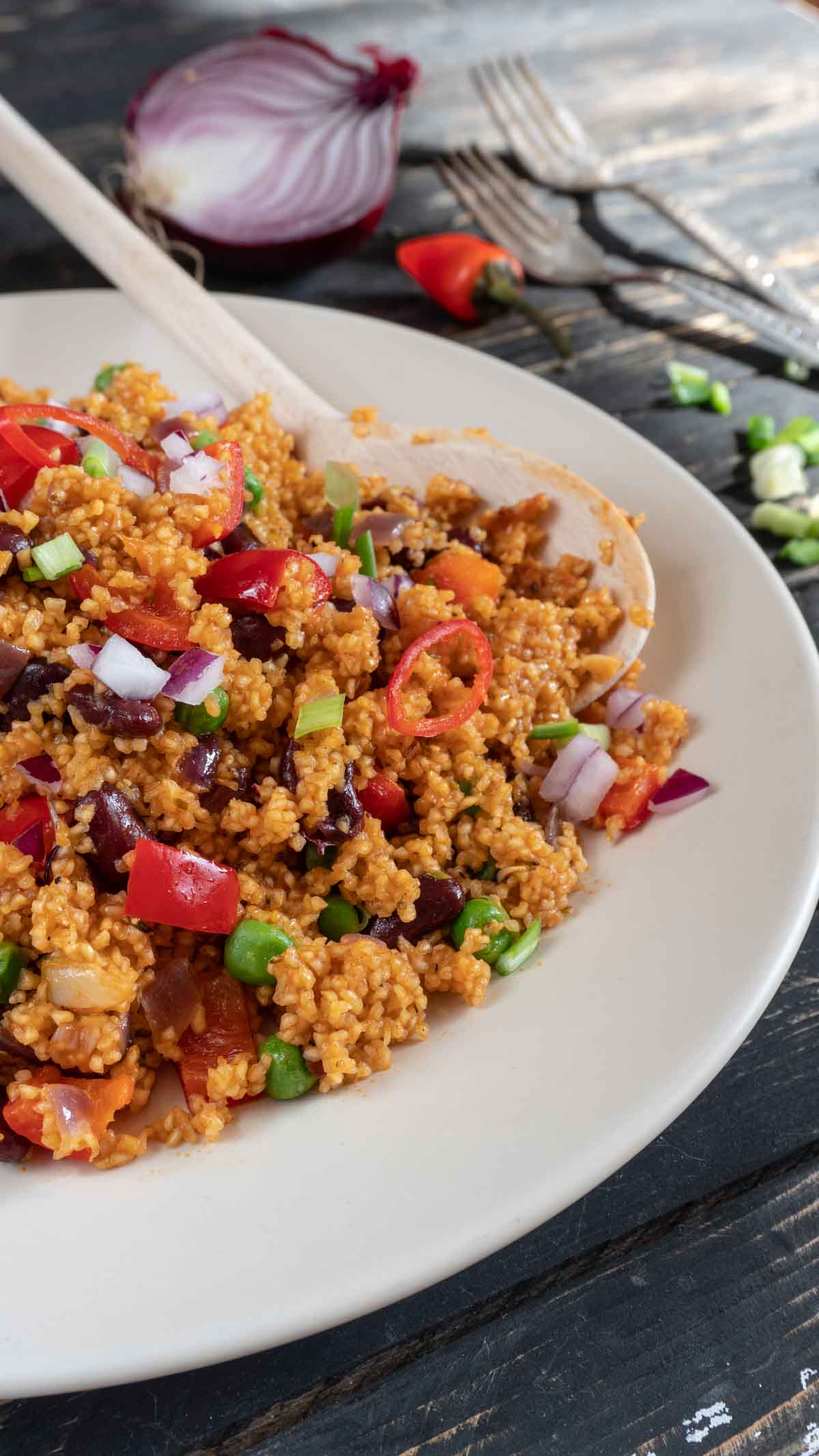
Mexican Quinoa
Black beans, corn, peppers and quinoa give you a Mexican-inspired bowl with protein arriving from two directions at once. Lime and cumin do the heavy lifting on flavor, and it tastes good warm or straight from the fridge. Tip: cook the quinoa in vegetable stock instead of water, since plain quinoa struggles to hold its own next to bold spices.
Get the recipe
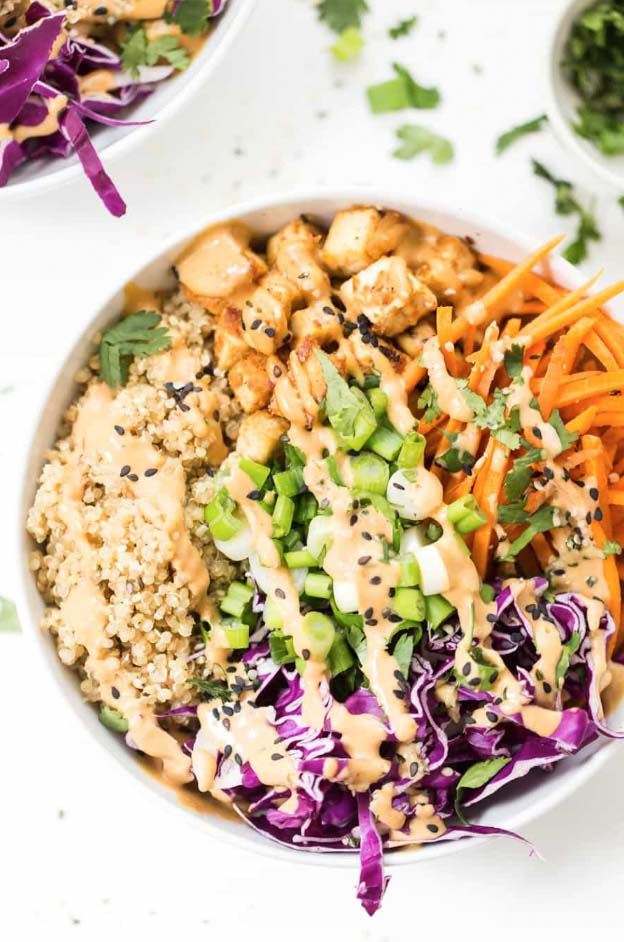
Asian Quinoa Bowls with Peanut Baked Tofu
Baked tofu in a peanut glaze sits on a bed of quinoa with whatever vegetables need using up. It is the kind of bowl that turns a week of leftovers into something you would actually choose to eat. Tip: press the tofu for at least twenty minutes before baking, because wet tofu never develops that chewy, glazed edge.
Get the recipe
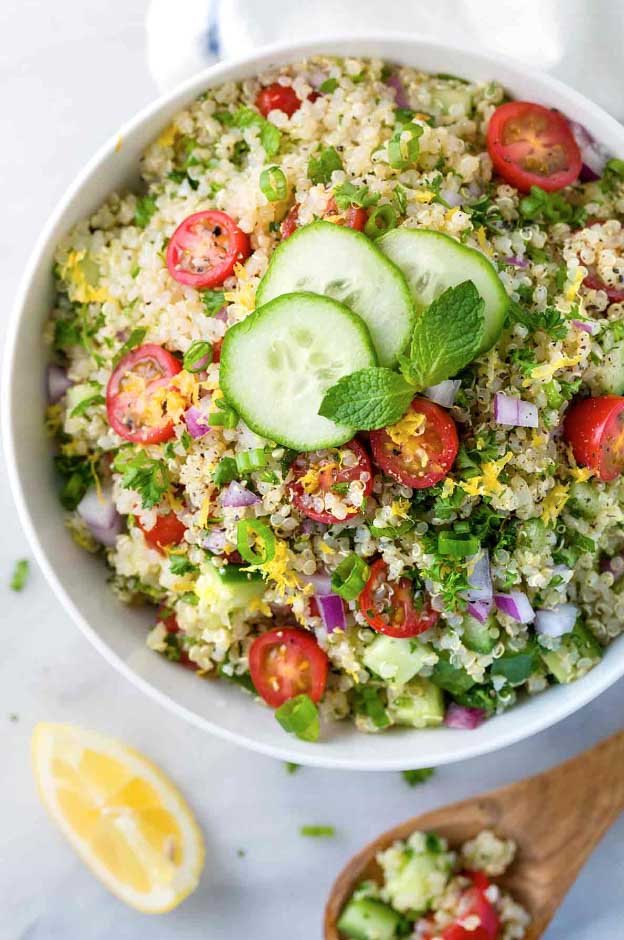
Quinoa Tabbouleh With Lemon Garlic Dressing
Swapping bulgur for quinoa turns a Middle Eastern classic into a higher-protein salad without losing its parsley-forward character. The lemon garlic dressing is sharp and simple enough to keep in a jar for other salads through the week. Tip: chop the parsley only when it is completely dry, since damp leaves bruise and turn the whole bowl dark.
Get the recipe
Tofu, Cheese and Creamy Protein Salads
When you want texture rather than another bean, tofu and firm cheeses give a salad something to bite into.
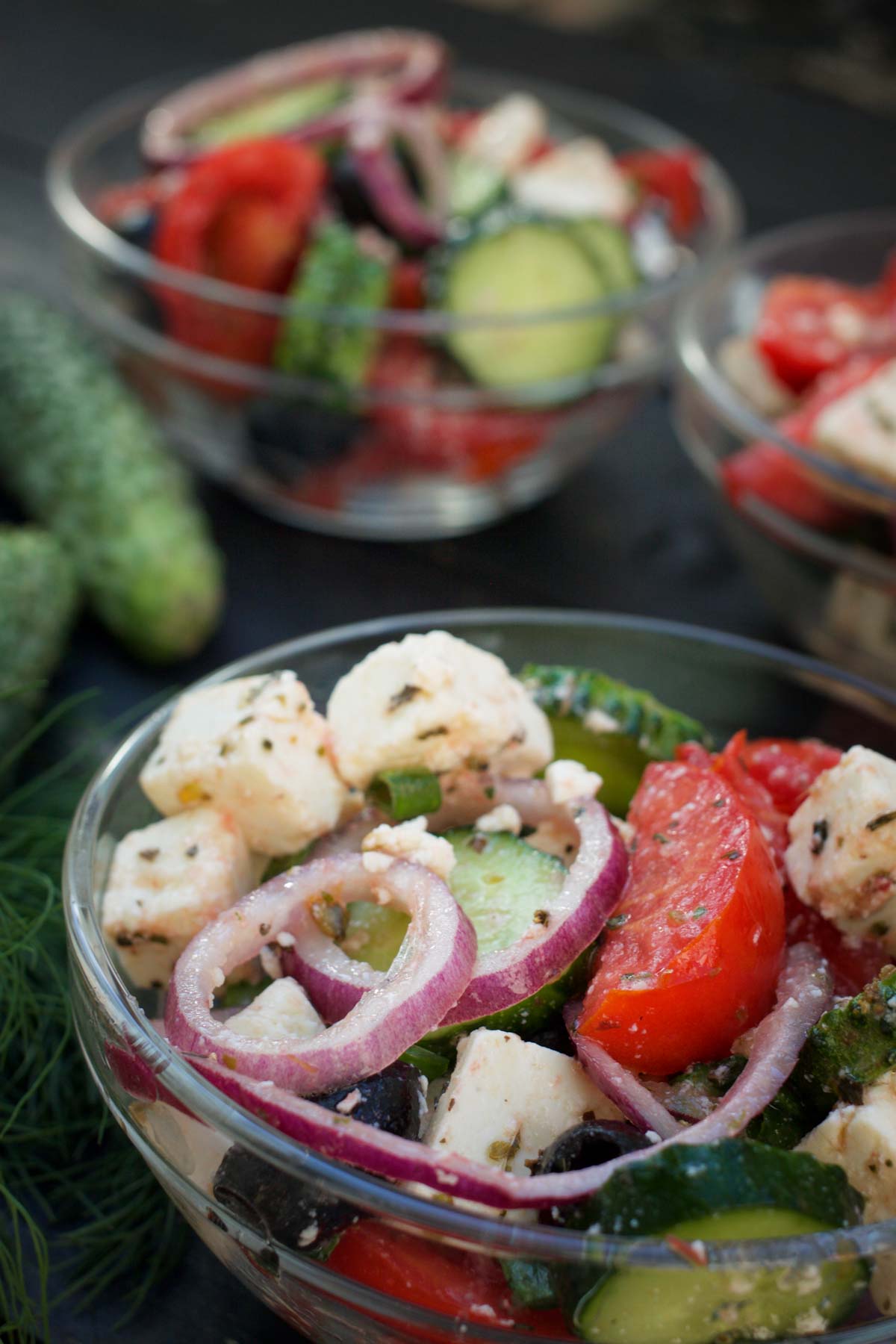
Vegan Greek Salad
All the tomato, cucumber and olive familiarity of a Greek salad, with a homemade vegan feta doing the salty, protein-bearing work. It holds up as a light main course or alongside something off the grill. Tip: salt the tomatoes and let them sit for ten minutes before assembling, then use the juice they release as part of the dressing.
Get the recipe
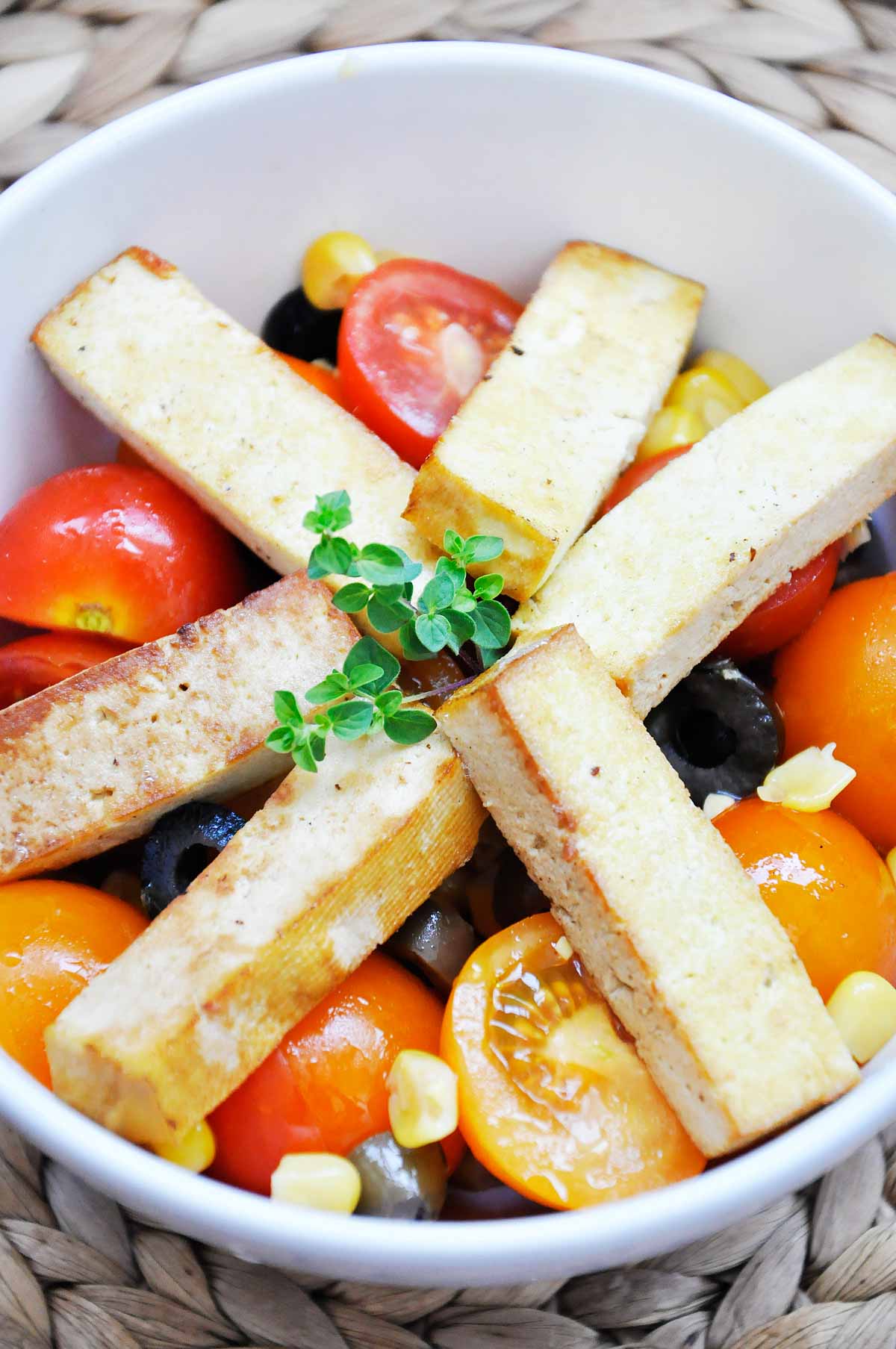
Grilled Smoked Tofu Tomato Salad
Smoked tofu on the grill picks up char and firms into something meaty against soft summer tomatoes. Very few ingredients, very little effort, and a solid protein count from the tofu alone. Tip: brush the grill grates with oil rather than the tofu itself, which keeps the cubes from sticking and tearing when you turn them.
Get the recipe
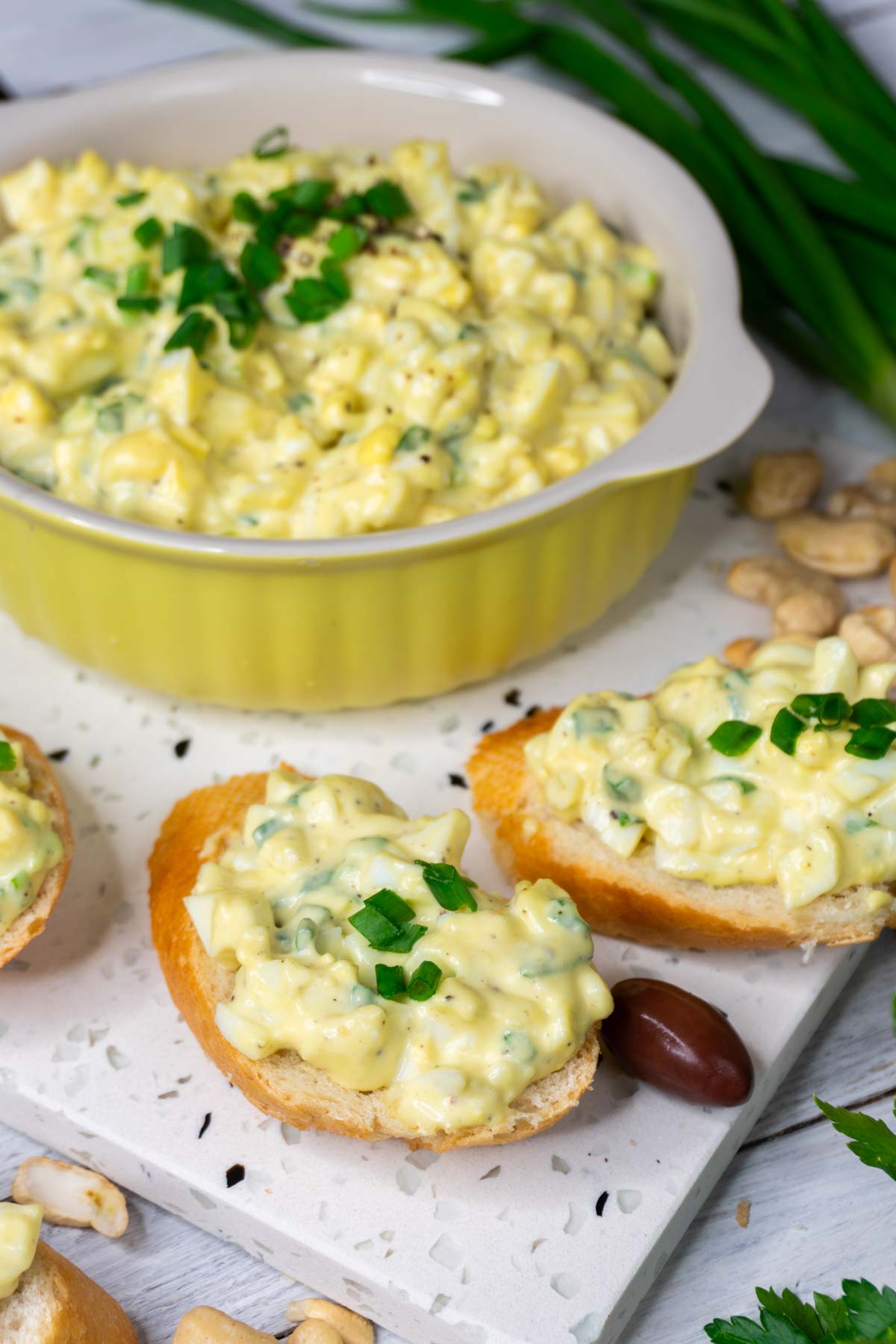
Vegan Egg Salad
Crumbled tofu, a touch of black salt and a creamy dressing get you a convincing egg salad in about ten minutes. It spreads on toast, fills a sandwich, or sits on greens with equal success. Tip: use firm tofu and crumble it by hand into uneven pieces, because a fork or a food processor makes it too uniform to convince anyone.
Get the recipe
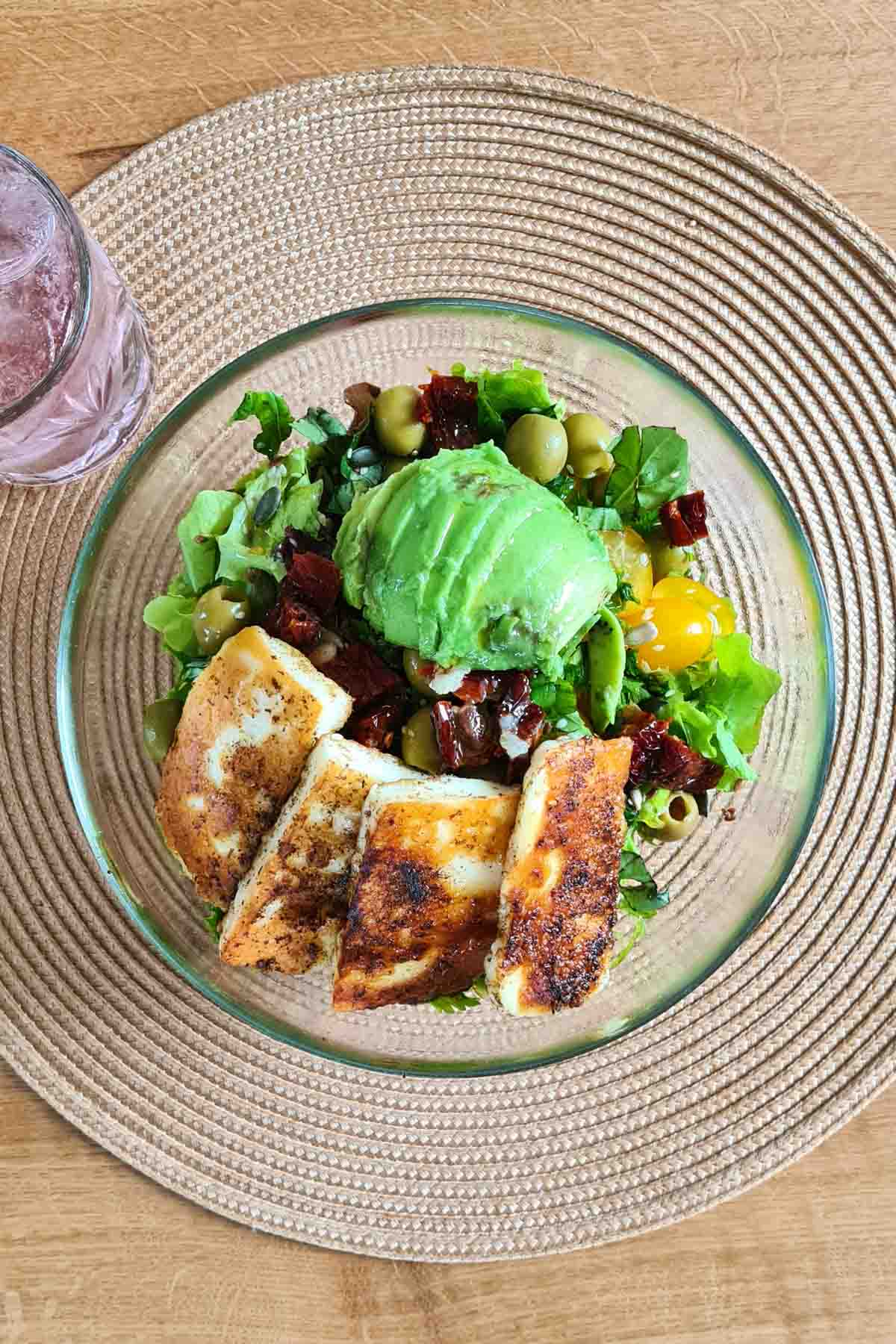
Best Grilled Halloumi Salad
Halloumi is one of the few cheeses that grills without collapsing, and it delivers serious protein per slice. Against fresh vegetables and a sharp dressing, those salty, squeaky, golden-edged pieces are the whole point of the bowl. Tip: get the pan properly hot and leave the halloumi alone for two minutes per side, since moving it early prevents any crust from forming.
Get the recipe
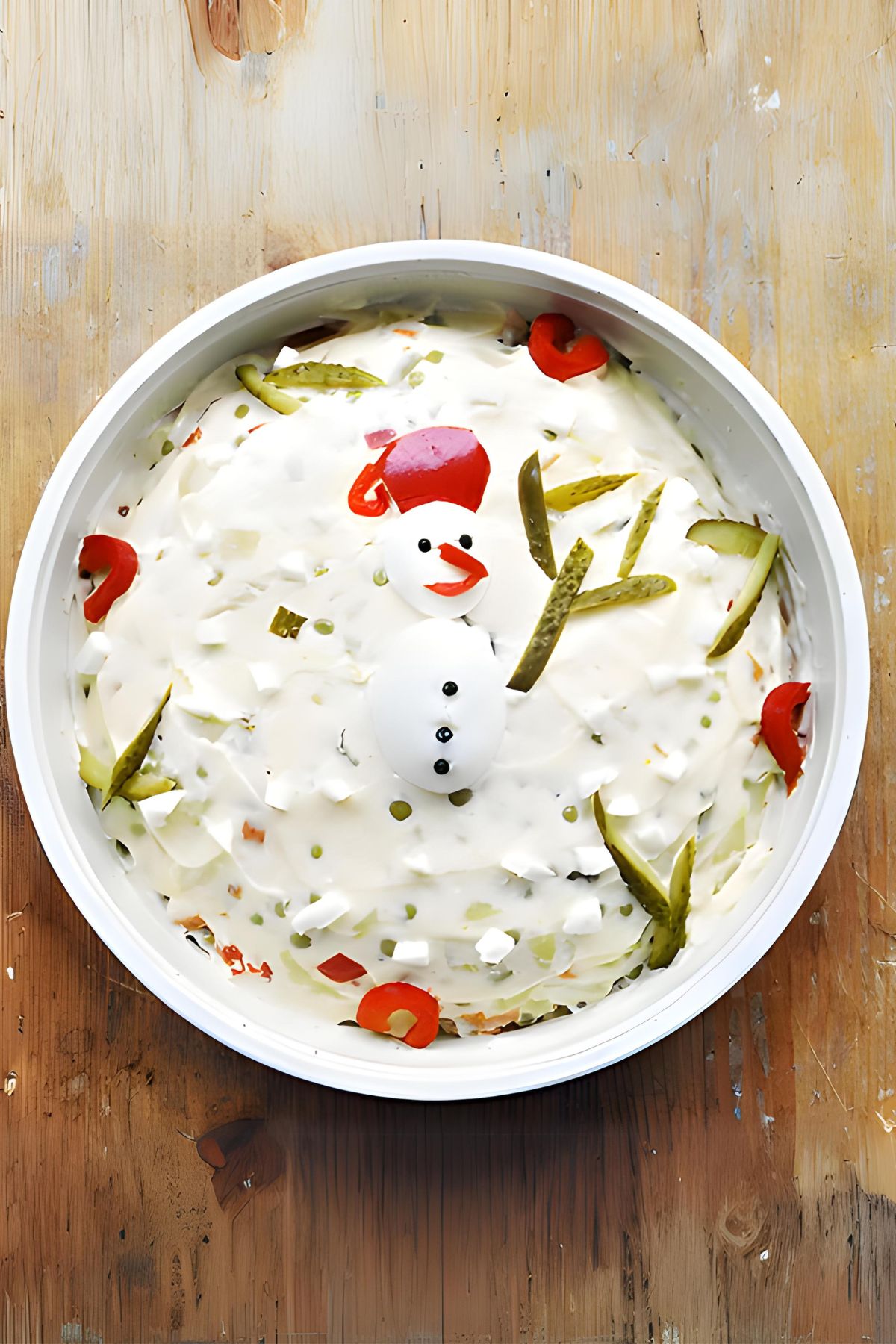
Vegan A La Russe Salad (Olivier Salad)
The Eastern European party classic, rebuilt without eggs or meat but still creamy and generous with the peas. Vegan mayo binds the diced vegetables into the same comforting bowl that shows up on every holiday table. Tip: cut all the vegetables to roughly the same small dice, because uneven pieces are what make this salad look careless rather than homemade.
Get the recipe
Lentil and Mushroom Salads
Lentils and mushrooms build the deepest, most savory salads here, and both reward a little time at the stove.
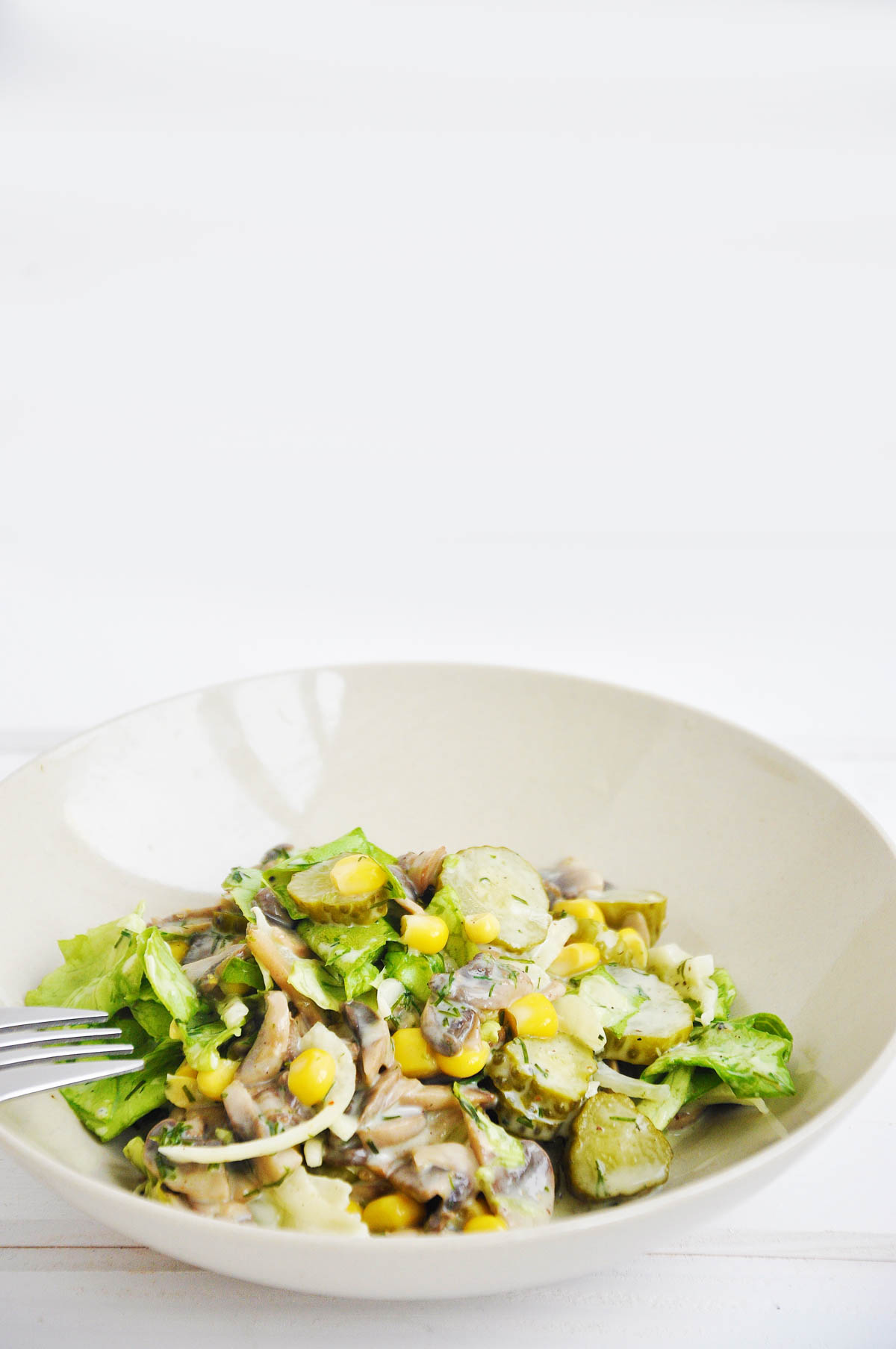
Best Mushroom Salad Recipe You Will Ever Make
Mushrooms carry a surprising amount of protein for a vegetable, and here they are the star rather than an afterthought. Bound with vegan mayo, the salad lands in that sweet and tangy territory that makes people ask what is in it. Tip: cook the mushrooms in a dry pan first to drive off their water, then add the fat, or the salad turns watery in the fridge.
Get the recipe
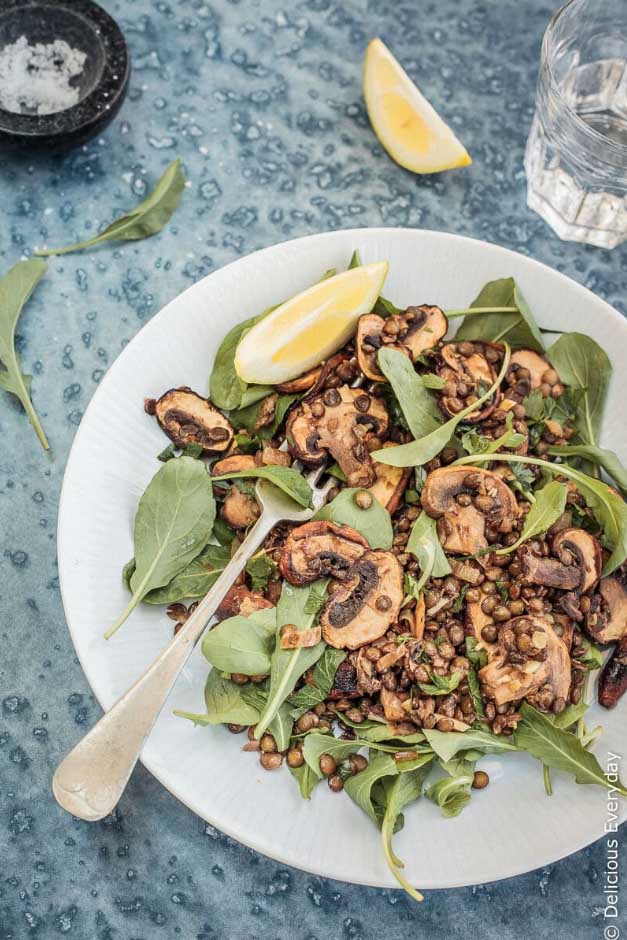
Mushroom and Lentil Salad
Caramelized button mushrooms and tender lentils make a salad with real depth, closer to a warm dish than a raw bowl. This one asks for more stove time than the rest of the list, and it repays it. Tip: cook the lentils in vegetable stock and stop while they still have bite, since mushy lentils lose all definition against the mushrooms.
Get the recipe
Vegan Protein Lentil Salad
A straightforward lentil salad you can put together with whatever vegetables are in the drawer, raw or roasted. The lentils anchor everything and push the protein well past what a leafy salad manages. Tip: dress the lentils while they are still warm, because they absorb a vinaigrette far better then than they do straight from the fridge.
Get the recipe
Leafy Greens with a Protein Boost
These start from actual greens, then earn their place on the list through what goes on top.
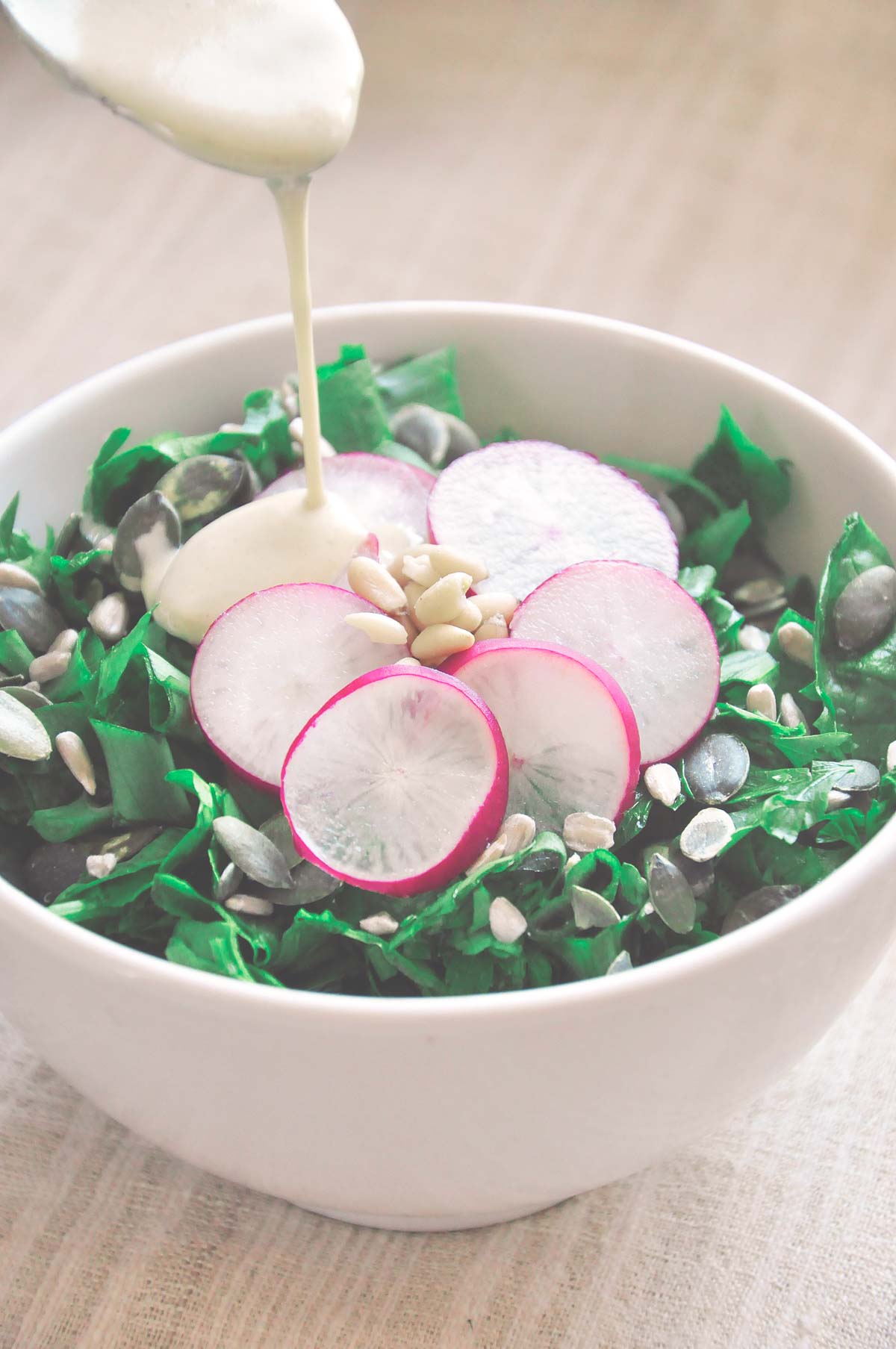
Spinach Salad with Tahini Dressing
Baby spinach with a tahini dressing gives you protein from two directions, one green and one sesame. The dressing is thick, nutty and garlicky enough to make plain leaves worth eating on their own. Tip: whisk the tahini with cold water a spoonful at a time; it will seize and look ruined right before it suddenly turns smooth.
Get the recipe
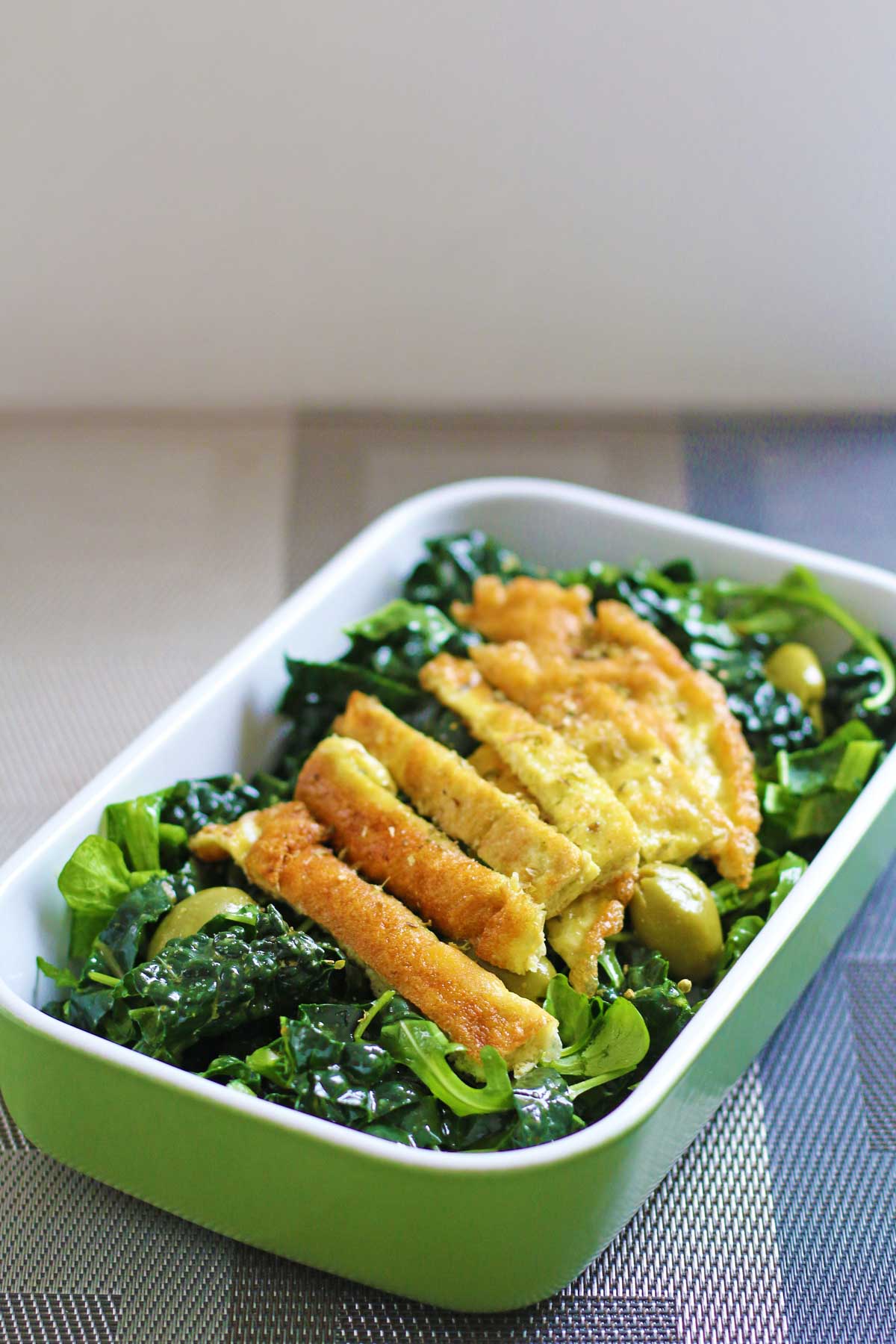
Breakfast Kale Salad
Kale for breakfast sounds like a stretch until you set a soft omelette on top and let the yolk act as the dressing. It is a savory, protein-heavy start that holds you until lunch without much cooking. Tip: massage the kale with a little oil and salt for a minute before serving, which breaks down the toughness raw kale is notorious for.
Get the recipe
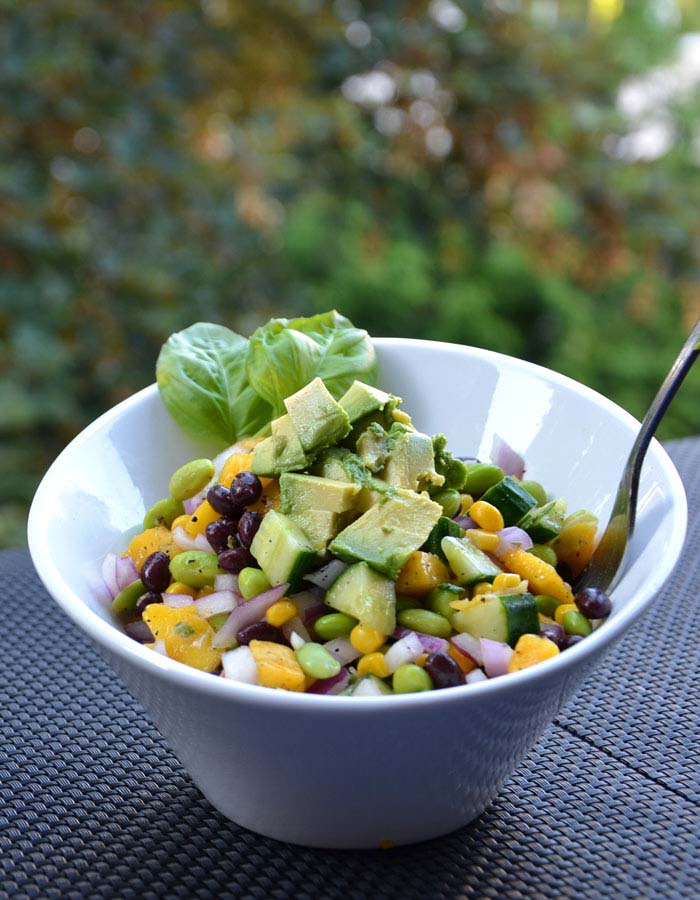
High-Protein Edamame Mango Salad
Edamame is underused in salads, and this one shows why it deserves better, playing the beans off sweet mango and creamy avocado. Protein, good fats and bright carbs all land in one cool bowl for a warm evening. Tip: buy shelled frozen edamame and thaw it under running water, since podding them yourself takes longer than making the rest of the salad.
Get the recipe
Frequently Asked Questions
What is the highest-protein salad you can make? Salads built on lentils, beans or chickpeas carry the most protein per serving, especially with a tahini or peanut dressing on top. A three bean salad or a lentil salad will beat a leafy salad with a few seeds sprinkled over it by a wide margin. Tofu and halloumi salads come close and add more texture.
How do I add protein to a salad without meat? Add a legume, a grain, or a firm protein you can grill. Chickpeas, lentils, black beans, edamame and green peas are the easiest. Quinoa gives you a complete protein grain base. Smoked tofu, tempeh and halloumi bring texture. Hemp seeds, pumpkin seeds and a tahini or peanut dressing then top it up without changing the character of the salad.
How much protein should a salad have to be a meal? There is no fixed rule, but a salad that works as a main course needs a real protein base rather than a garnish. If the only protein is a spoon of seeds over leaves, treat it as a side and eat something else alongside it. A cup of cooked lentils, beans or quinoa, or a serving of tofu, is what usually moves a salad into main-course territory.
Which salad dressing has the most protein? Tahini and peanut butter dressings are the highest, since both are made from ground seeds or nuts. A cashew cream or a silken tofu dressing does the same job. Vinaigrettes made from oil and vinegar add flavor and fat but essentially no protein, so save them for salads that already have a legume or grain base.
Can you make high-protein salads ahead of time? Yes, and most of them improve. Bean, lentil and quinoa salads keep for three to four days in the fridge and taste better after a night in the dressing. Leafy salads do not, so store the greens separately and combine at the last minute. Anything crispy, like roasted chickpea croutons, must be added just before serving.
Do high-protein salads actually keep you full? Protein and fiber both slow a meal down, and legume-based salads are rich in both, which is why a chickpea or lentil salad tends to sit better than a bowl of leaves. If you finish a salad and feel hungry twenty minutes later, the usual cause is that the base was mostly water and leaves. Rebuild it around a legume, grain or tofu.