Homemade Peanut Butter Eggs (No Cream Cheese)
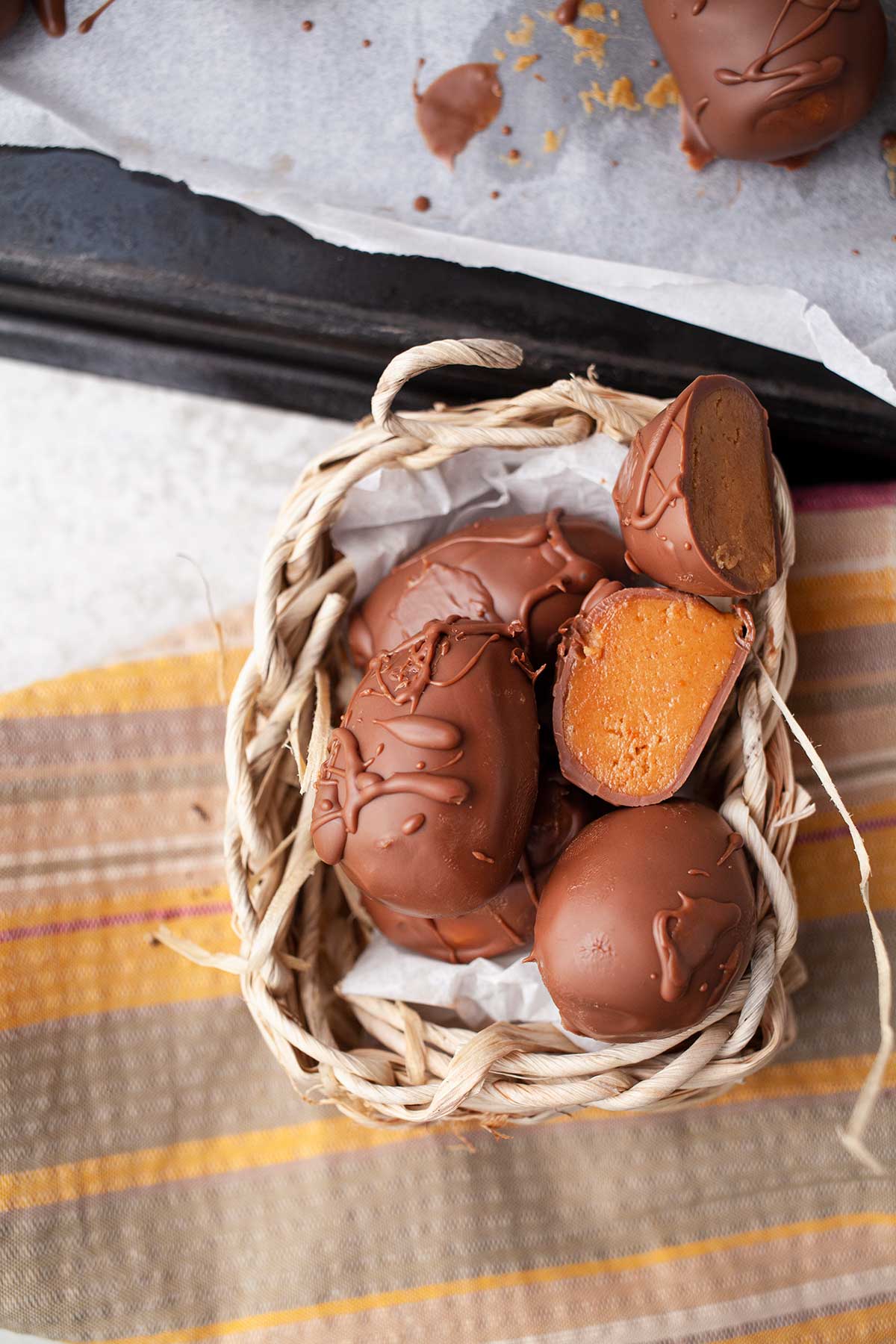
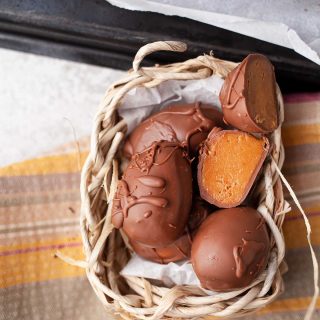
These homemade peanut butter eggs have a creamy, melt-in-your-mouth peanut butter centre coated in dark chocolate. No cream cheese, no shortening, just a handful of pantry ingredients and about 30 minutes of hands-on time.
Peanut butter eggs are one of those Easter treats that disappear faster than you expect. The filling is dense and sweet but not cloying, and the chocolate shell gives a satisfying snap before giving way to the soft centre. This version skips the cream cheese and shortening that many recipes call for, which keeps the ingredient list short and the result a little lighter.
They are also naturally vegan if you use dairy-free chocolate, which makes them easy to bring to gatherings where people have different dietary preferences. Make them the day before Easter and keep them in the fridge. They are better cold.
Why You’ll Love This Recipe
- No special equipment needed. Just a bowl, a fork, and a baking tray lined with parchment. No moulds, no candy thermometer, no tempering.
- Ready in under an hour. The filling takes 10 minutes to mix, the shaping takes another 15, and then it is mostly just waiting for the chocolate to set.
- Easily vegan. Use dairy-free dark chocolate and the whole recipe is plant-based with no substitutions needed anywhere else.
- Keeps well. Stored in the fridge in an airtight container, these last up to a week. They can also be frozen for up to 2 months.
Ingredient Notes
Peanut butter: Use smooth, natural peanut butter with no added sugar or palm oil if possible. The filling is already sweetened with powdered sugar, so a sweetened peanut butter can make the result too cloying. Natural peanut butter also gives a more pronounced, toasty peanut flavour. If your natural peanut butter has separated, stir it well before using.
Powdered sugar: This is what binds the filling and gives it its smooth, fudgy texture. Sift it before adding to avoid lumps in the centre. Start with the amount in the recipe and adjust to taste. More sugar gives a firmer, sweeter filling; less gives something softer and more intensely peanut-flavoured.
Chocolate: Dark chocolate with 60-70% cocoa works best. It balances the sweetness of the filling without being too bitter. Milk chocolate works but produces a much sweeter overall result. For a fully vegan version, check the label and choose a dairy-free bar.
Coconut oil: Adding a teaspoon of coconut oil to the melted chocolate thins it slightly and gives the finished shell a glossy finish. It also helps the chocolate set more cleanly when chilled. This is optional but recommended.

Tips for the Best Results
- Chill the filling before shaping. After mixing, refrigerate the peanut butter mixture for 20-30 minutes. Cold filling holds its egg shape much better and does not stick to your hands as you work.
- Work quickly when dipping. The filling warms up fast from the heat of your hands. If it starts to lose shape in the chocolate, pop the tray back in the fridge for 10 minutes and continue.
- Double dip for a thicker shell. After the first coat of chocolate sets, dip each egg a second time for a more substantial coating that is less likely to crack when you bite in.
- Decorate before the chocolate sets. If you want to add toppings like flaky salt, crushed nuts, or sprinkles, do it right after dipping while the chocolate is still wet.
Variations
The base formula works well with other nut and seed butters if peanut is not your preference:
- Almond butter eggs: Slightly less sweet than peanut butter with a more delicate flavour. Pairs especially well with dark chocolate.
- Sunflower seed butter eggs: A good nut-free option for those with allergies. The flavour is milder but still works well with the chocolate coating.
- Tahini chocolate eggs: Slightly bitter and more savoury than nut butter versions. Add a pinch of sea salt and a drizzle of honey to the filling to balance the bitterness.
- Topped with flaky salt: A pinch of flaky sea salt on the still-wet chocolate coating is one of the simplest upgrades. It cuts through the sweetness and makes the chocolate flavour more pronounced.
Storage and Make Ahead
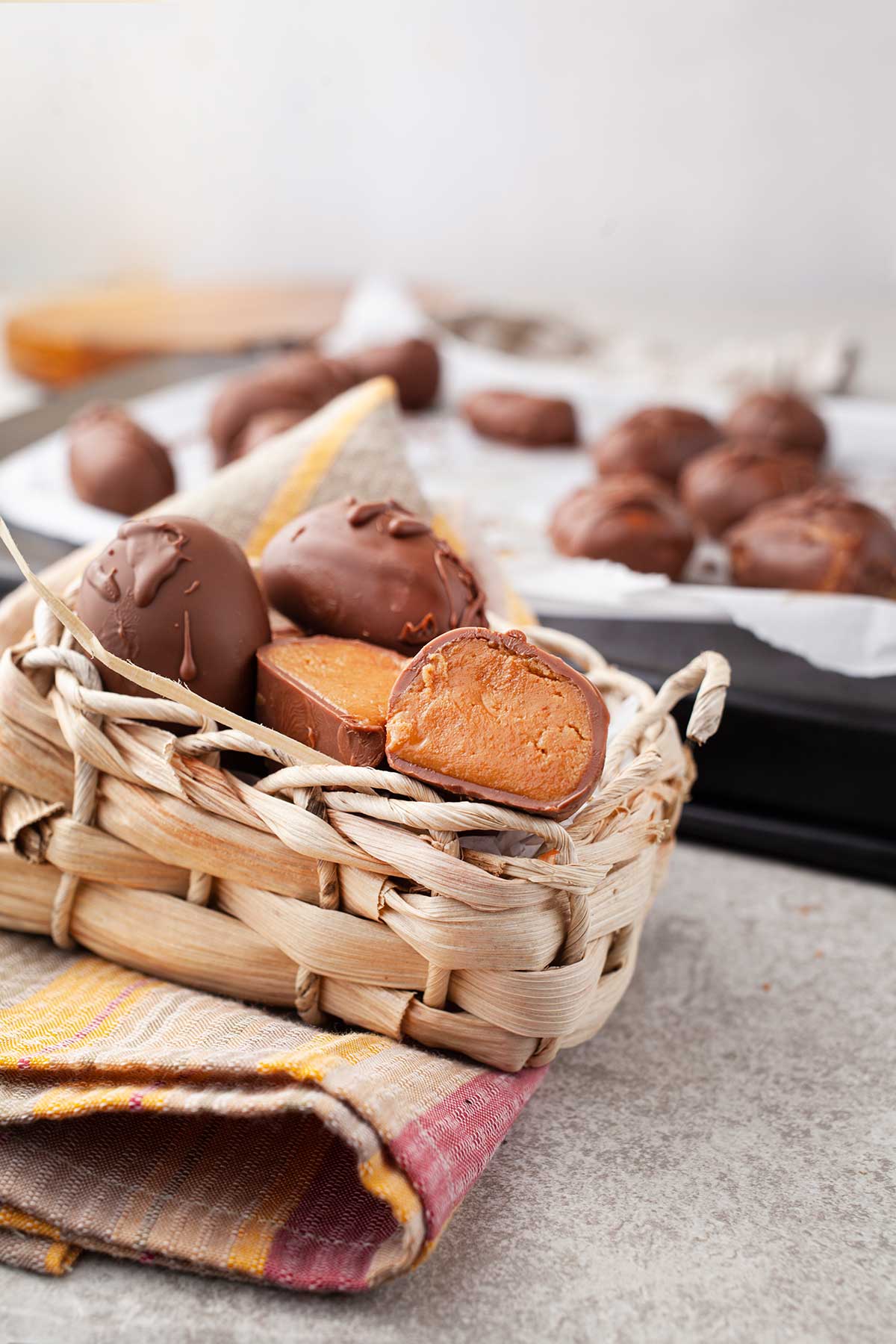
Store the finished eggs in an airtight container in the fridge for up to 7 days. They are best eaten cold, straight from the fridge, when the chocolate is firm and the filling has a dense, almost fudge-like texture.
To freeze, place in a single layer on a lined tray until solid, then transfer to a freezer bag or container. They keep well for up to 2 months. Thaw in the fridge overnight before serving.
These make a great edible Easter gift. Stack them in a small box or wrap in parchment tied with twine. If you are giving them as a gift, keep them chilled until the last possible moment, especially in warmer weather.
Looking for more Easter treat ideas? Try these Koulourakia Greek Easter Cookies, the Easter Trifle, or browse all Easter desserts.
Homemade Peanut Butter Eggs (No Cream Cheese)
Ingredients
- 1 cup peanut butter
- ¼ cup vegan butter softened, at room temperature (or regular butter for non-veg version)
- ¼ cup brown sugar
- ½ teaspoon natural vanilla extract
- ¼ teaspoon salt
- 1 ¼ cup powdered sugar
- 1 teaspoon of coconut oil
- 1 ½ cups chocolate chips
Instructions
- Cover a large tray with baking paper.
- In a small saucepan, add peanut butter, vegan butter, brown sugar, vanilla and salt.
- Mix the ingredients.
- Put the saucepan on low-medium heat for 5-6 minutes, until the ingredients melt and turn into cream. Mix the composition to incorporate completely.
- Remove the mixture from the heat, let it cool for a few minutes and start adding the powdered sugar.
- Add the powdered sugar gradually, and mix continuously for a desired result and creamy composition.
- Let the composition return to room temperature, around 20 minutes.
- Use a large spoon to measure the size of each egg.
- Take the composition and form an "egg" with the help of your palms.
- Place the egg on the lined tray prepared in advance and continue until the dough is finished.
- Put the tray with peanut eggs in the freezer until they harden. It can take from 15 to 25 minutes.
- In the meantime, prepare the chocolate glaze.
- Put the chocolate and coconut oil in a bowl and put the bowl in the microwave or use the bain-marie method to melt the ingredients. Mix well so that the chocolate and oil are incorporated.
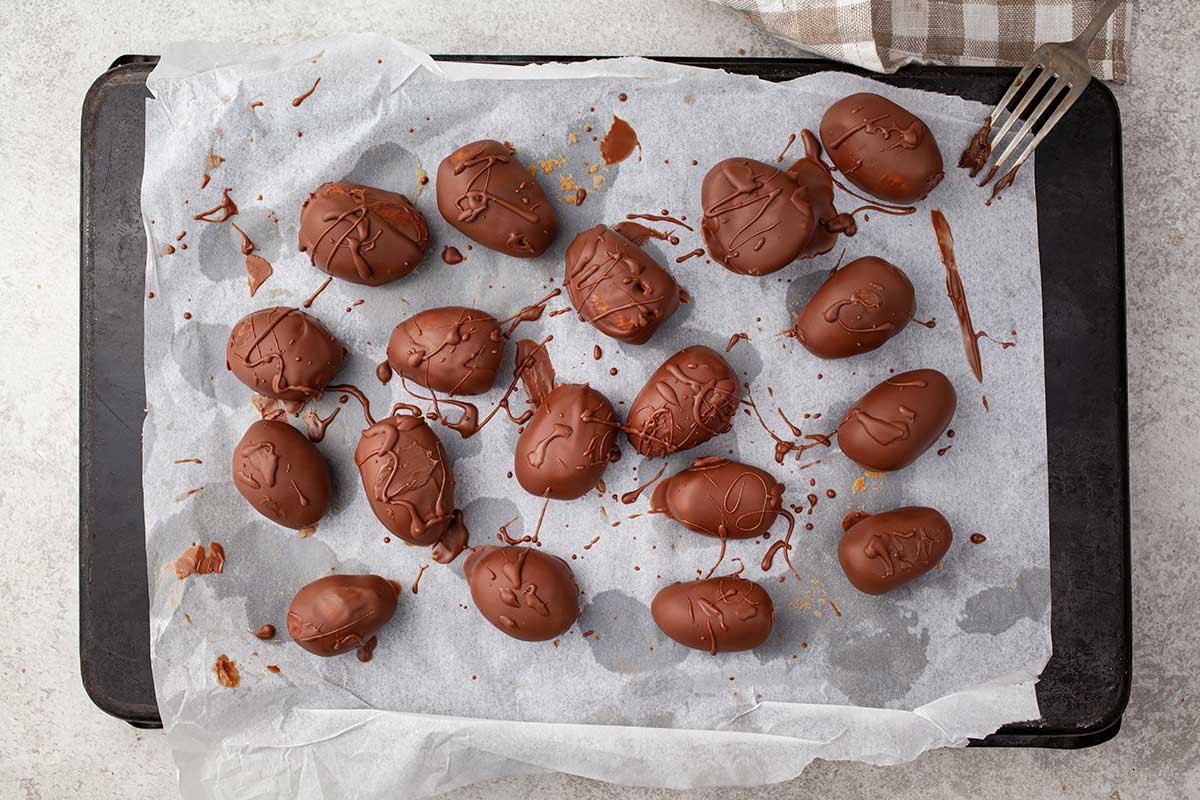
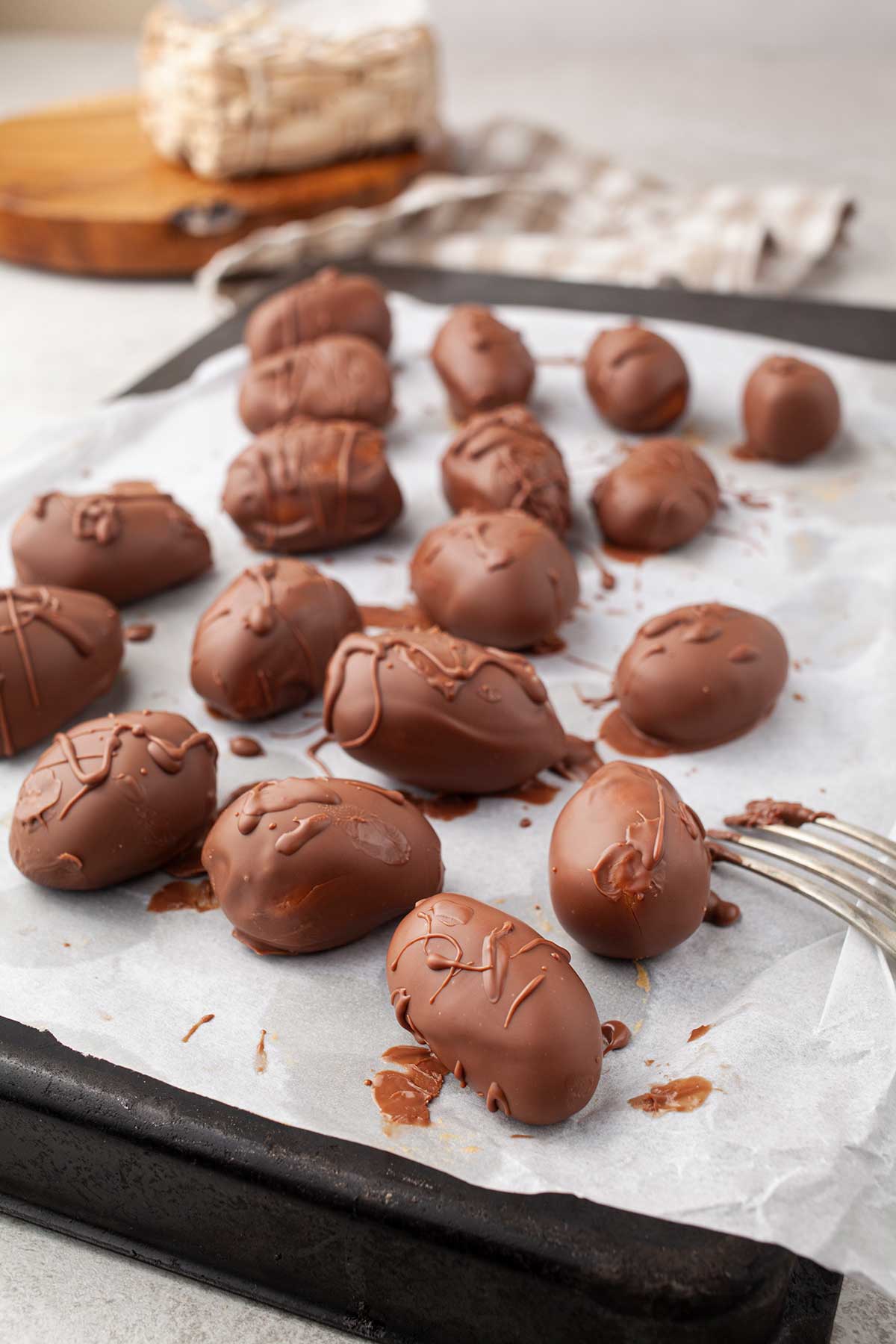
- Dip the frozen eggs, one by one, into the chocolate mixture using a fork. Allow the excess chocolate to drain and place the egg back on the tray.
- After all the eggs are glazed, put the tray in the fridge for at least 30 minutes.
Notes
Frequently Asked Questions
The filling needs time in the fridge before shaping. Mix it, cover the bowl, and refrigerate for at least 20-30 minutes until it firms up. If it is still too soft after chilling, add a tablespoon of extra powdered sugar and mix well, then chill again. Natural peanut butters with a higher oil content sometimes need a little more sugar to reach the right consistency.
Yes. Milk chocolate works fine but produces a noticeably sweeter result since the filling is already quite sweet. If you go with milk chocolate, consider reducing the powdered sugar in the filling slightly to keep things balanced. White chocolate also works for a different look, though it melts at a lower temperature and needs to be handled more carefully.
Melt the chocolate slowly over a double boiler or in the microwave in short 20-second bursts, stirring between each. Overheated chocolate turns grainy and dull. Adding a teaspoon of coconut oil to the melted chocolate helps it flow more evenly around the filling and gives a smoother, glossier finish once set. Use a fork to dip and tap off the excess before placing on parchment.
This varies depending on the size of the egg and the exact ingredients used, but a homemade peanut butter egg made with natural peanut butter typically contains around 4-5g of protein per piece. Peanut butter is a good source of plant-based protein, so these are a slightly more nutritious Easter treat than most pure sugar confections.