
Vegan Gingerbread Cookies
These vegan gingerbread cookies are warmly spiced, easy to roll and cut, and they turn out perfect every single time. No eggs, no dairy, no honey — just molasses, coconut sugar, and a big pile of ginger, cinnamon, and holiday spices. Chill the dough, cut your shapes, bake for about 10 minutes, then glaze and decorate however you like. They fill the whole house with that unmistakable Christmas smell.

Gingerbread cookies are one of my favorite winter desserts. They make the whole house smell like Christmas, and there is no better scent than ginger and cinnamon treats baking in the oven, especially when it is snowing outside. 🙂 I have tried many variations of this holiday treat over the years, and this is the best one. It is fully vegan, and you can make it gluten-free by swapping in a gluten-free flour mix, like the ones from Schar.
What Makes These Cookies Vegan
The traditional gingerbread cookie recipe leans on honey, but I prefer molasses and coconut sugar. That combination keeps everything plant-based and gives the cookies a deeper, more caramel-like sweetness that honey simply cannot match here. In place of an egg, I use a flax egg — one tablespoon of flax meal stirred into three tablespoons of hot water. Let it sit for a minute or two until it thickens into a gel, and it binds the dough just the way an egg would. For fat, I reach for vegan butter or coconut oil at room temperature. Both cream beautifully with the sugar and keep the cookies tender.
The Flour Blend and Why It Matters
For these vegan gingerbread cookies I use half whole wheat and half all-purpose flour. I don’t think you can make them 100% whole grain, because the dough needs to be a little bit fluffy, and that lightness comes from the white flour. The whole wheat brings a nutty depth and a bit of structure, while the all-purpose keeps the crumb soft enough to roll and cut cleanly. If you want them gluten-free, a good gluten-free flour mix stands in for both — that is the only gluten-free route I have tested these with, so I would stick to a reliable all-purpose blend rather than a single flour.
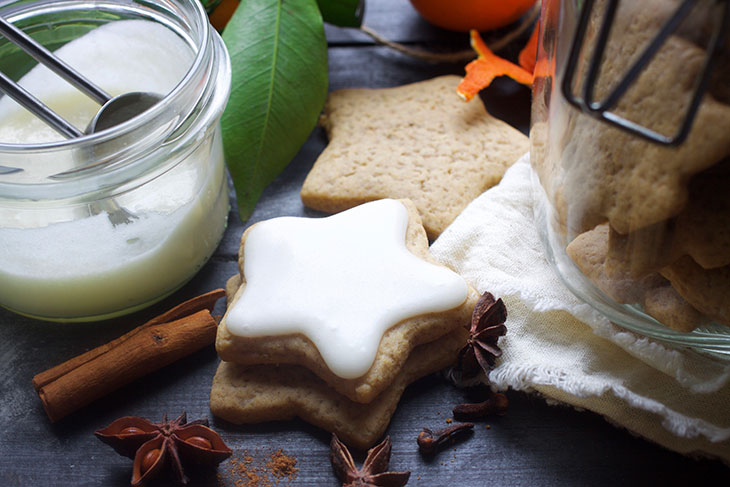
The Spice Mix That Does the Work
Gingerbread lives or dies by its spice, and this dough carries a full holiday lineup: ground ginger and cinnamon lead, backed by clove, anise, nutmeg, and cardamom powder. A pinch of sea salt sharpens all of it. Ground spices lose their punch over time, so if your jars have been sitting in the cupboard since last winter, give them a sniff first. Warm, fragrant spices make warm, fragrant cookies — tired ones make flat cookies. Measure the ginger and cinnamon generously and treat the rest as the supporting cast that rounds out the flavor.
How to Make Them Step by Step
Start with your flax egg so it has time to set. Whisk the dry ingredients — both flours, baking soda, baking powder, all the spices, and the salt — in one bowl. In a larger bowl, cream the vegan butter with the coconut sugar for a minute or two using a hand mixer, until the mixture looks light. Add the molasses, flax egg, and vanilla, and mix for another minute to bring the wet ingredients together. Then add the dry mix gradually, stirring as you go, until you have a soft dough.
Here is the step you cannot skip: refrigerate the dough for at least two hours, or overnight if you can. Chilling firms up the fat and lets the flour hydrate, which is exactly what makes the dough easy to roll and cut into clean shapes instead of sticking and tearing. When you are ready, heat the oven to 375 F, roll the dough out on a floured surface, cut your shapes, and bake for about 10 minutes.
Thick and Spongy or Thin and Crunchy
The thickness you roll the dough decides the whole texture of the cookie. I like mine a bit more spongy, so I roll them a little thicker. Still, I keep about one-third of the batch slim for the crunchy-version fans in my family. Roll thin and bake toward the full 10 minutes for a snappy cookie; roll thicker and pull them the moment the edges set for a softer, more cake-like bite. Watch them closely near the end — gingerbread goes from perfect to over-baked quickly because the dark molasses hides the browning.

Decorating and Getting Creative
I wanted to do something different, so I shaped these into hearts, stars, Christmas trees, and circles. Make sure the cookies are completely cooled before you decorate, or the glaze will slide right off. The frosting here is a simple mix of powdered sugar, a tablespoon of coconut milk (or any milk of your choice), and vanilla extract, stirred together until smooth. If you don’t feel like decorating, you can just leave them the way they are, but I like to glaze them and get creative. I put on a thick layer of paste because it looks so much like fresh snow, and on top of that sweet canvas you can start adding color. I prefer to use natural dyes.
Storing and Gifting
I like making vegan gingerbread cookies in larger batches and giving them as gifts to my dear ones. Once they are fully cooled and the glaze has set, store them in an airtight container at room temperature, where they keep well for the better part of a week — the flavor actually deepens after a day. The undecorated dough freezes beautifully too, so you can chill a batch ahead of the holidays and bake fresh when you need them. If you love baking through the season, these sit right alongside my gingerbread pancakes and my vegan whole grain cookies, and for a showstopping centerpiece there is always my vegan Christmas pound cake.

If you bake a batch of these, I would love to know how they turned out — did you go thick and spongy or thin and crunchy, and what shapes did you cut? Please rate the recipe below and leave a comment with your favorite decorating ideas so other bakers can steal them too. 🙂
Summarise & Save This Recipe
★ Add us as a trusted Google source
Vegan Gingerbread Cookies
Ingredients
Dry ingredients:
- 1 cup all-purpose flour
- 1 cup whole wheat flour
- ½ tsp baking soda
- ½ tsp baking powder
- 2 tsp ground ginger
- 1 tsp ground cinnamon
- ¼ tsp ground cloves
- ⅓ tsp ground anise
- ½ tsp nutmeg
- ½ tsp ground cardamom
- ¼ tsp sea salt
Wet ingredients:
- ¼ cup vegan butter or coconut oil, at room temperature
- ½ cup coconut sugar
- ⅓ cup molasses
- 1 flax egg 1 Tbsp flax meal + 3 Tbsp hot water
- ½ tsp vanilla extract
For the frosting:
- 1 cup powdered sugar
- 1 tbsp coconut milk or another milk of your choice
- 1 tsp natural vanilla extract
Instructions
- Prepare your flax egg by mixing 1 Tbsp flax seed meal with 3 Tbsp hot water and letting it sit for a minute or two.
- In a medium mixing bowl, add the dry ingredients and stir well to combine.
- In a large mixing bowl, cream together the butter and the sugar. Mix for 1-2 minutes using a hand mixer until the mixture is nice and light.
- Add the rest of the wet ingredients and mix for one more minute to incorporate.
- Gradually add the dry ingredients to the wet ingredients, mixing continuously to combine.
- Refrigerate the gingerbread dough for at least two hours, or overnight if possible. This helps the dough become firmer and easier to cut into shapes.
- Preheat the oven to 375°F (190°C).
- Roll out the dough on a floured surface and cut shapes using cookie cutters.
- Place on cookie sheets and bake for 10 minutes, or until done.
- In a small bowl, whisk together the frosting ingredients until smooth, then decorate the cookies once they are completely cooled.
Notes
Frequently Asked Questions
Yes, every ingredient is plant-based. Instead of the honey found in traditional gingerbread, this recipe uses molasses and coconut sugar, a flax egg replaces the egg, and vegan butter or coconut oil replaces dairy butter. The glaze uses coconut milk or another plant milk, so nothing here comes from an animal.
Swap the whole wheat and all-purpose flours for a good gluten-free all-purpose flour mix, like the ones from Schar. Use a blended mix rather than a single gluten-free flour so the dough still holds together and rolls cleanly. This is the only gluten-free route the recipe has been tested with.
Refrigerating the dough for at least two hours, or overnight, firms up the fat and lets the flour hydrate. This makes the dough much easier to roll out and cut into clean shapes instead of sticking and tearing. Skipping the chill usually leads to sticky, hard-to-handle dough.
A flax egg is a vegan egg substitute made by mixing 1 tablespoon of flax meal with 3 tablespoons of hot water. Let it sit for a minute or two until it thickens into a gel, then add it with the other wet ingredients. It binds the dough much like a regular egg would.
The thickness you roll the dough controls the texture. Roll the dough thicker and pull the cookies as soon as the edges set for a soft, spongy bite, or roll it thin and bake closer to the full 10 minutes for a crunchy cookie. You can even do a mix within the same batch to please everyone.
Once fully cooled and the glaze has set, store them in an airtight container at room temperature, where they keep well for the better part of a week and the flavor deepens after a day. The undecorated dough also freezes well, so you can chill a batch ahead and bake fresh when you need them.






Just made these for my daughter who recently switched to a vegan diet and she loves gingerbread. She was amazed!
Awesome! 😀