Coconut Curry Pasta with Green Curry (20 Minutes)
This coconut curry pasta is my 20-minute weeknight shortcut: linguine tossed in a silky sauce made with Thai green curry paste, a can of coconut milk, garlic and a handful of spinach. The sauce simmers in the time it takes the pasta to cook, it is naturally vegan, and it tastes like a bowl of green curry, only twirled around a fork.
I first made it years ago with a jar of ready-made coconut curry sauce, but these days I keep it even simpler: a spoonful of green curry paste from the Asian shop and a can of coconut milk. The one I buy, Cock Brand, is milder than its red curry, so the sauce comes out fragrant and lemongrassy rather than fiery, which is exactly how I like it with pasta. The one step I never skip is frying the paste in oil for a minute before the coconut milk goes in.
The Green Curry Paste I Use (and What to Look For)
Store-bought green curry paste does most of the work here, so it is worth picking a good one. I use Cock Brand green curry paste (the jar says pâte de curry vert), which I buy from Asian grocery stores. The jar sold in Europe lists green chili, lemongrass, garlic, shallot, salt, galangal, cumin and coriander seed, and nothing else, so it is vegan.
Check the label on other brands. Many Thai curry pastes, Mae Ploy included, contain shrimp paste, and some add fish sauce. If the label is not clear, look for one marked vegan.
Heat and salt vary a lot from jar to jar. That is why the recipe starts with 2 tablespoons: taste the sauce once the coconut milk is in and add more paste if you want it hotter. Curry pastes are also quite salty, so I season with soy sauce only at the end. If you want to cook more with the rest of the jar, I put together a guide to cooking with curry paste.
Green Curry vs Red Curry: Which One for Pasta?
Green curry paste is made from fresh green chilies and herbs like lemongrass, galangal and coriander, so it tastes bright, herbal and a little citrusy. Red curry paste is made from dried red chilies, which give it a deeper, rounder, slightly smoky flavor and a rusty color.
Is green curry spicier? In Thai cooking, green curry is often the hottest of the classic curries, but with jarred paste it depends entirely on the brand. In my Cock Brand jars the green is milder than the red, which surprises people. Yellow curry is usually the gentlest of the three.
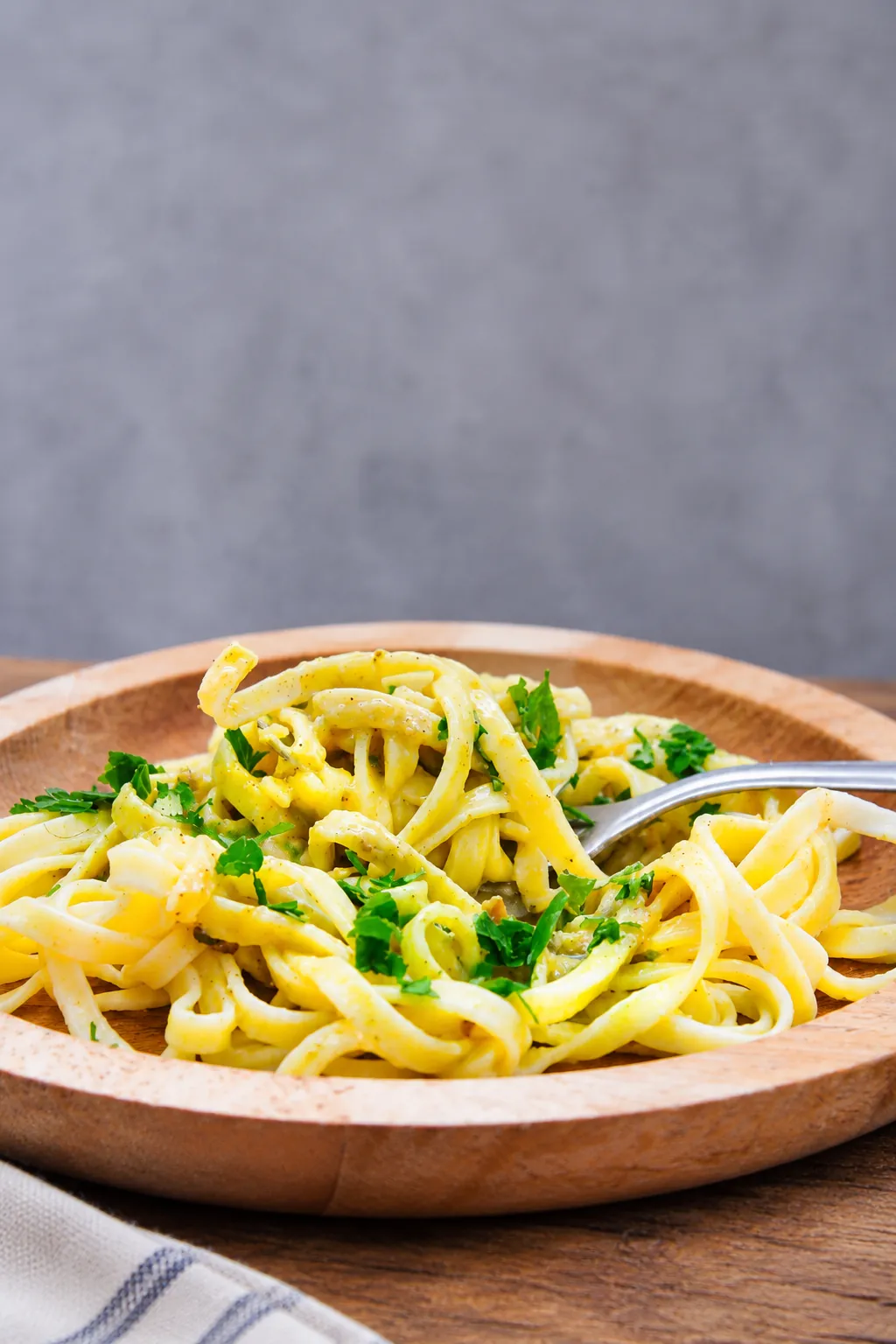
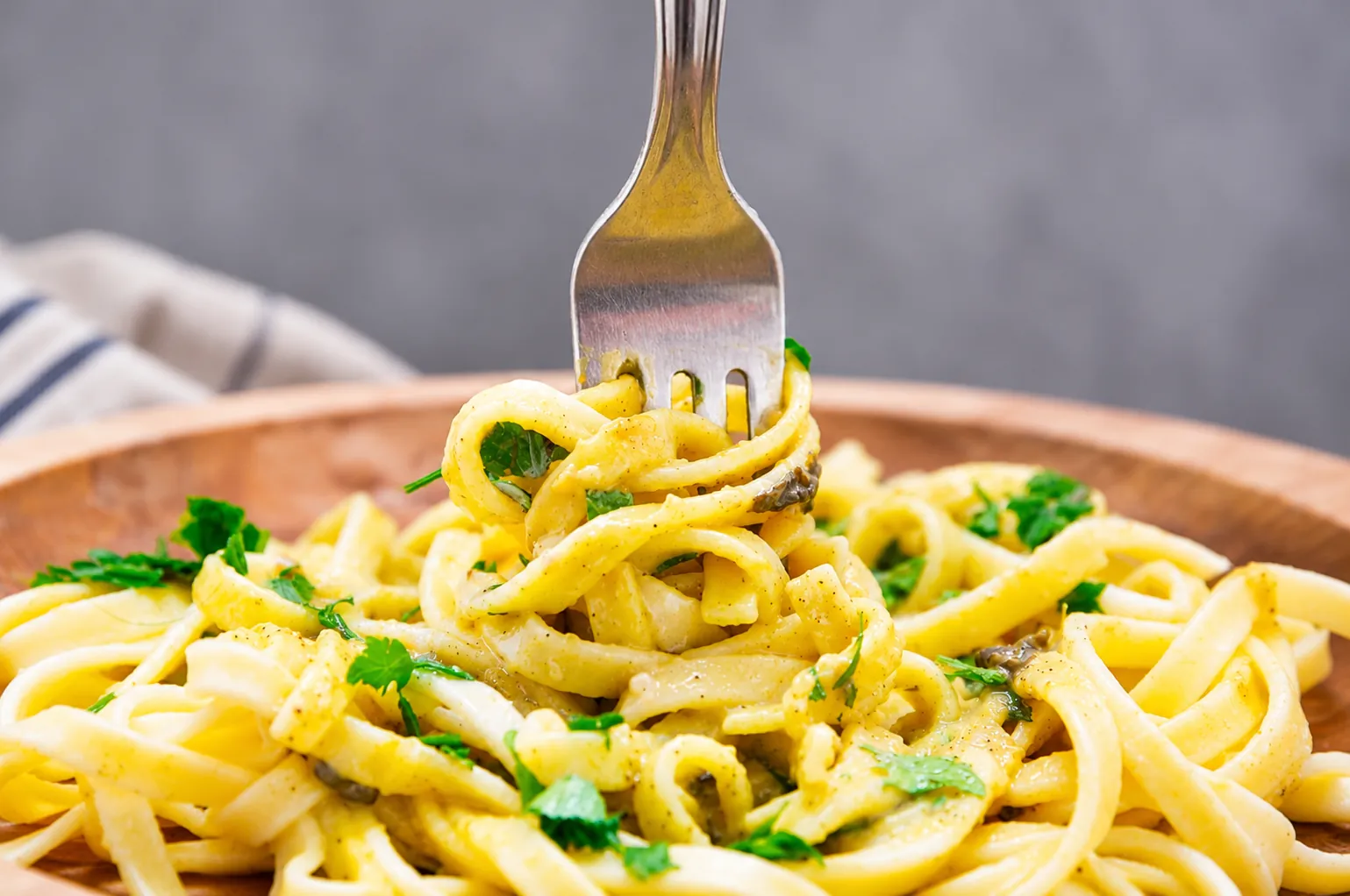
For pasta I prefer green. Its fresh, herby taste stays light next to the creamy coconut milk, and the sauce keeps that pale golden color you see in the photos. Red curry works too, it just makes a heavier, more savory sauce. If you love green curry, try my vegan green curry with vegetables too.
How to Make a Coconut Milk Pasta Sauce That Does Not Split
- Use canned, full-fat coconut milk. Shake the can before opening it. Light coconut milk works, but the sauce is thinner, and the coconut drink from a carton is too watery for this.
- Fry the paste first. One or two minutes in hot oil, stirring, wakes up the lemongrass and garlic in the paste. Skip this and the sauce tastes flat and raw.
- Simmer, do not boil. A hard boil can make coconut milk separate and turn oily. Keep it at a gentle bubble for about 5 minutes, until it coats a spoon.
- Finish with pasta water. The starch in the water binds the sauce and makes it cling to the linguine. Add it a splash at a time while you toss everything together over low heat. More on timing in my guide to cooking pasta al dente.
- Add the lime at the very end, off the heat. A little acidity is what makes the sauce taste like curry instead of just creamy.
Make It Your Own: Protein, Vegetables and Heat
- Protein: stir in crispy pan-fried tofu, chickpeas or edamame for a more filling dinner.
- Vegetables: peas, broccoli florets, zucchini or snap peas can simmer right in the sauce for the last 3 or 4 minutes.
- Heat: add an extra spoon of paste, a pinch of chili flakes or a few slices of fresh red chili.
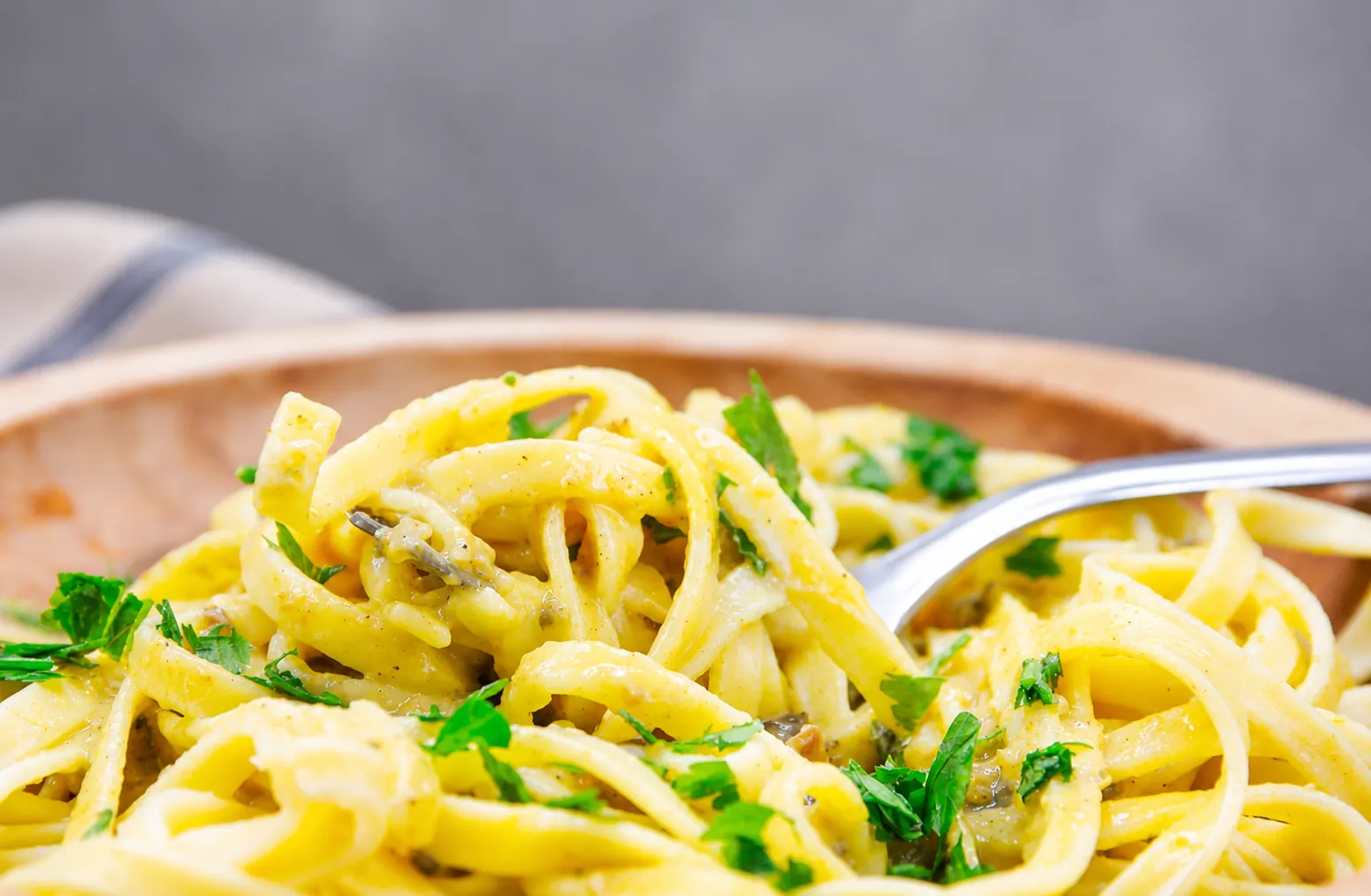
- Herbs and crunch: parsley is what I had for the photos; cilantro or Thai basil make it taste more Thai. Chopped roasted peanuts or cashews on top are great.
- Noodles instead of pasta: the same sauce makes quick green curry noodles with rice noodles, which also keeps the dish gluten-free.
Leftovers and Reheating
Coconut curry pasta keeps in an airtight container in the fridge for up to 3 days. The pasta soaks up the sauce as it sits, so reheat it in a pan over low heat with a splash of water or coconut milk, stirring until it is creamy again. If you want to cook ahead, make just the sauce: it keeps in the fridge for 3 days, and you only need to boil the pasta on the night.
Have half a can of coconut milk left? Here are 22 vegan recipes with coconut milk. For another quick pasta with an Asian twist, try my miso pasta, and for more curry nights, my favorite vegan curry recipes.
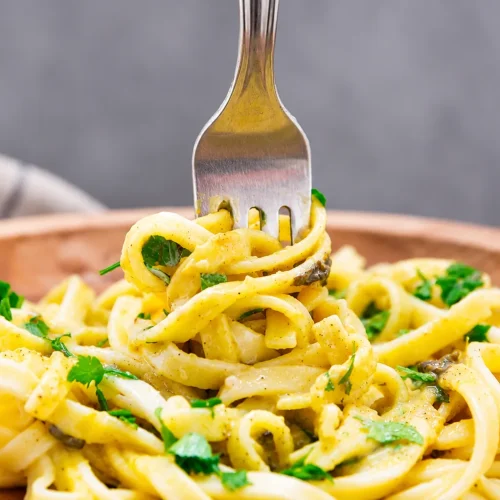
Coconut Curry Pasta with Green Curry Paste
Equipment
- Large pot
- Large skillet
- Wooden spoon
Ingredients
- 12 oz linguine or fettuccine, egg-free for a vegan dish
- 1 tbsp grapeseed oil or any neutral oil
- 1 shallot finely chopped
- 2 cloves garlic minced
- 2 tbsp green curry paste plus more to taste
- 13.5 oz coconut milk full-fat, 1 can
- 1 tsp soy sauce or tamari, plus more to taste
- 2 cups baby spinach roughly chopped
- 1 tbsp lime juice or lemon juice
- ½ cup pasta water reserved
- black pepper freshly ground, to taste
- 2 tbsp parsley fresh, chopped, or cilantro, to serve
Instructions
- Bring a large pot of salted water to a boil and cook the linguine until al dente, according to the package. Before draining, scoop out 1/2 cup of the pasta water.
- Meanwhile, heat the oil in a large skillet over medium heat. Cook the shallot for 2 to 3 minutes, until soft. Add the garlic and the green curry paste and fry for 1 to 2 minutes, stirring constantly, until very fragrant.
- Pour in the coconut milk, stir until smooth, and add the soy sauce. Simmer gently for about 5 minutes, without letting it boil hard, until the sauce lightly coats a spoon.
- Stir in the spinach and cook for about 1 minute, until wilted. Taste and add more curry paste if you want it hotter.
- Add the drained pasta and a splash of pasta water and toss over low heat for 1 to 2 minutes, until the sauce is glossy and clings to the pasta. Add more pasta water if it looks dry.
- Take the pan off the heat, stir in the lime juice and season with black pepper and more soy sauce, if needed. Serve right away, topped with parsley.
Notes
Coconut Curry Pasta Questions
Often, but not always. Traditional Thai green curry is made with fresh green chilies and is usually considered the hottest of the classic curries, while jarred pastes vary by brand. The Cock Brand green curry paste I use is milder than its red version. Start with 2 tablespoons and add more after tasting.
Not always. Many Thai brands add shrimp paste or fish sauce, so read the label. The Cock Brand green curry paste sold in Europe lists only green chili, lemongrass, garlic, shallot, salt, galangal, cumin and coriander seed, which makes it vegan.
Always fry it in a little oil first, then use it in soups, noodle stir-fries, fried rice, coconut rice, curried lentils or roasted vegetables. A teaspoon whisked with lime juice and a little coconut milk also makes a quick dressing.
Yes, but the sauce will be thinner and less creamy. Simmer it a few minutes longer and add the pasta water sparingly. Avoid the coconut drink sold in cartons, which is too watery to make a sauce.
Yes. Use gluten-free pasta or rice noodles and tamari instead of soy sauce, and check that your curry paste is gluten-free. The rest of the sauce, coconut milk, garlic, spinach and lime, is naturally gluten-free.
Up to 3 days in the fridge, in an airtight container. Reheat it in a pan over low heat with a splash of water or coconut milk, because the pasta absorbs the sauce as it sits.