Miso Pasta
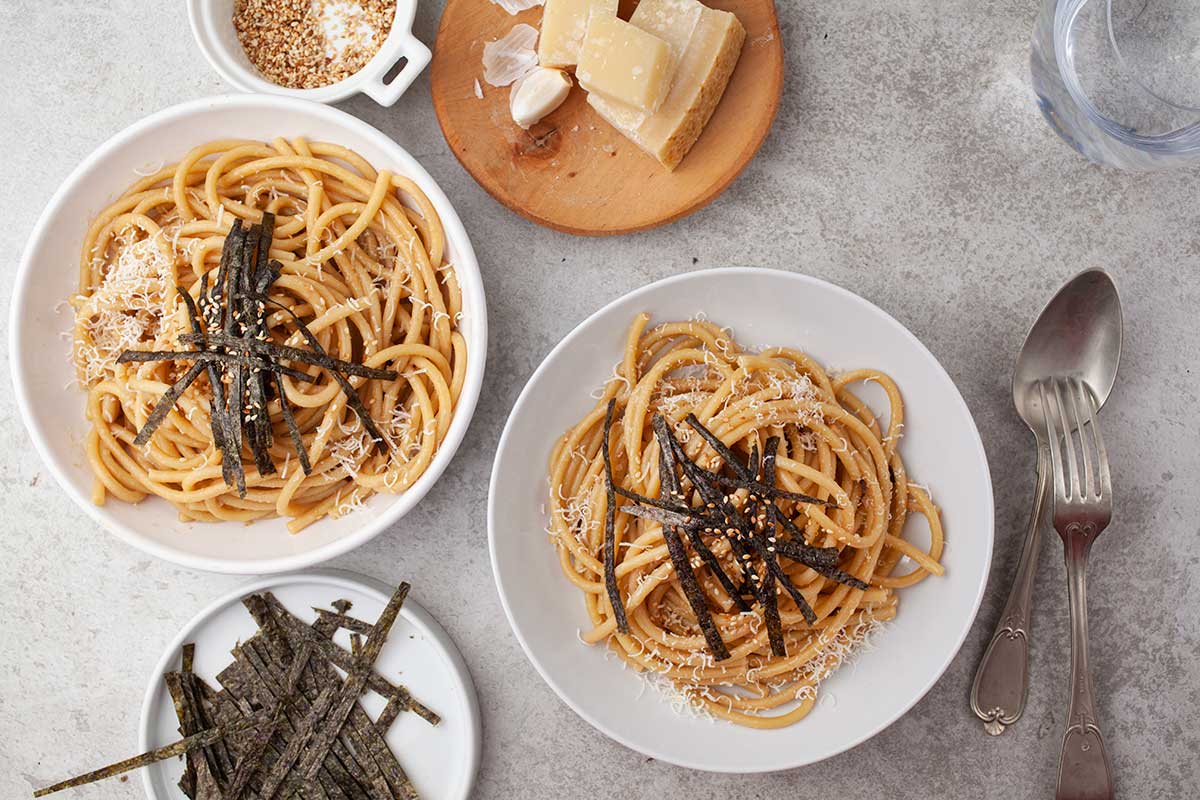
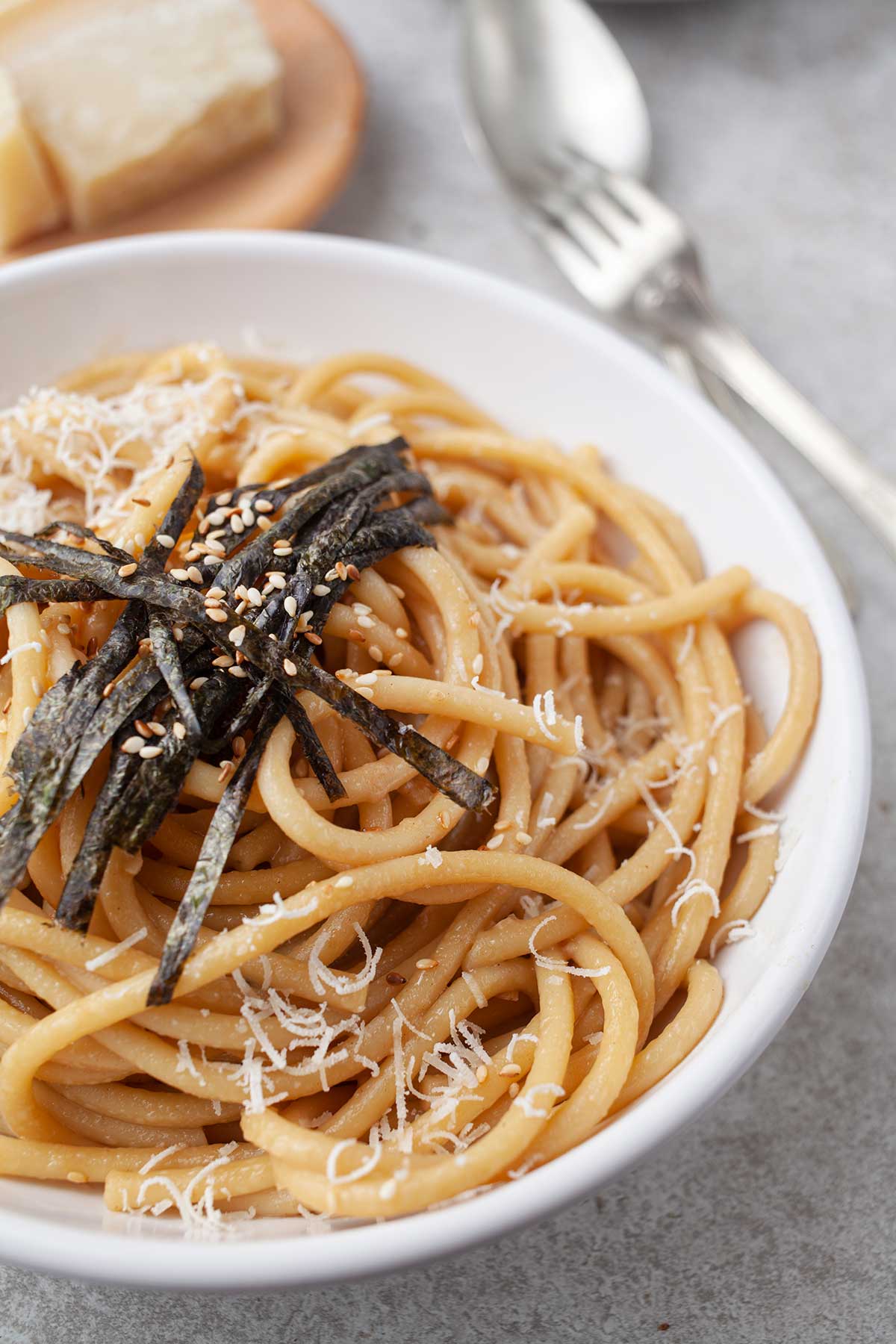
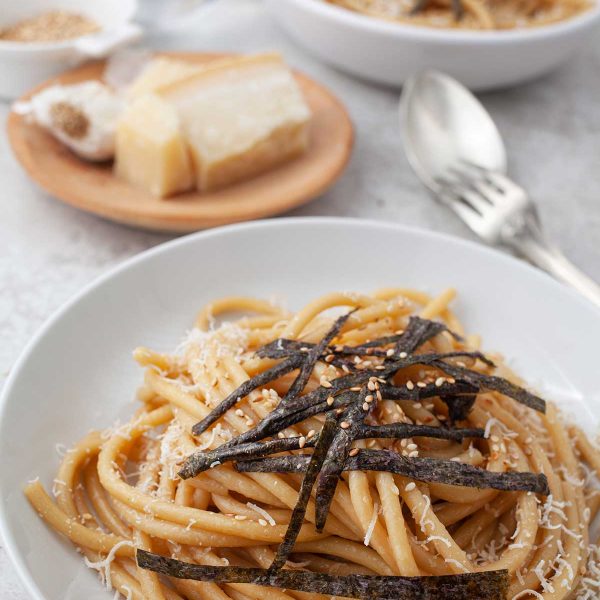
Miso pasta is a fusion dish that coats long, hollow bucatini in a creamy, savory sauce built on Japanese miso paste, then finishes it with crispy fried sesame and fried nori for texture. The miso gives the sauce a deep umami backbone that tastes rich and almost cheesy, which is why the recipe works beautifully with or without parmesan. It comes together in roughly the time it takes to boil the pasta, so it is an easy weeknight dinner with a restaurant feel.
Miso paste has been a staple ingredient in my fridge ever since I discovered it a few years ago. It has an unmistakable taste, and inspired by its umami depth, I decided to use it as the base for a pasta sauce as well, which is how this recipe came to be. I used parmesan when I made it, but it is entirely optional, so think of this as a vegan miso pasta recipe the moment you skip the cheese.
What miso paste brings to the pasta sauce
Miso is a traditional Japanese paste made by fermenting soybeans with a koji culture (Aspergillus oryzae), salt, and sometimes rice or barley. That slow fermentation is what gives it a complex, salty, deeply umami flavor. There are several varieties, from strong and dark to mild and sweet, so you can choose the intensity that suits the sauce you want.
In a pasta sauce, that fermented savoriness does the same job a good aged cheese would, which is why a spoonful of miso makes the whole bowl taste fuller. If you want to go deeper on the ingredient, I have a full guide on how to cook with miso paste, with the methods and recipes I reach for most often.
The key ingredients
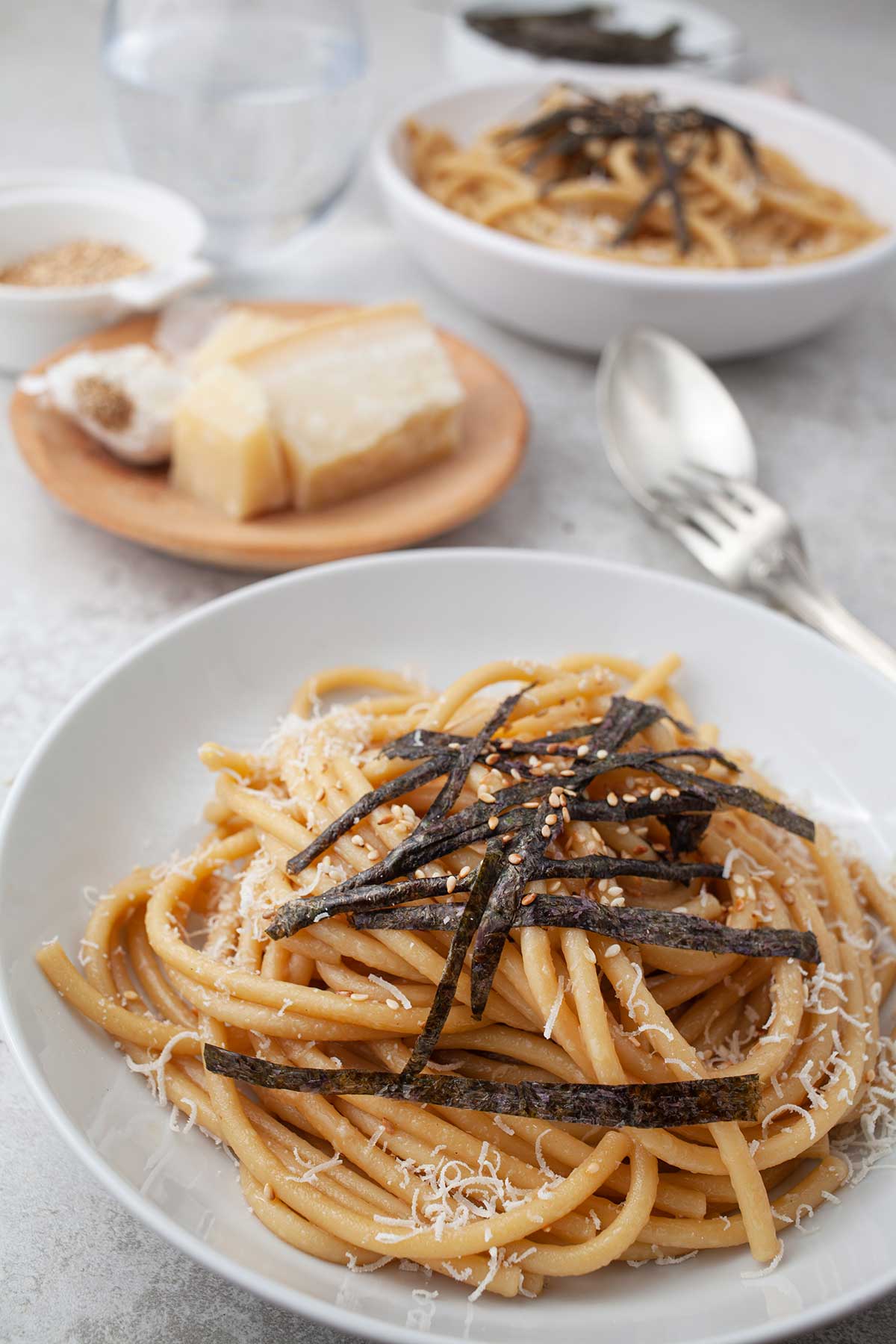
The full measurements are in the recipe card below, but here is what each star ingredient is doing in the dish:
- Miso paste is the heart of the sauce. White or yellow miso keeps things mellow and slightly sweet, while red or darker miso pushes the sauce saltier and more intense. Dissolve it in a little warm liquid first so it blends smoothly instead of clumping.
- Bucatini is the pasta I used. Its hollow center and sturdy bite hold the creamy sauce well, but any long pasta such as spaghetti or linguine works if you cannot find it.
- Butter, sour cream, and nutritional yeast build the creamy, savory body of the sauce. To keep the dish fully plant-based, use vegan butter and swap the sour cream for unsweetened soy yogurt. The nutritional yeast is already vegan and adds a cheesy depth all on its own.
- Parmesan is optional. It adds a salty, nutty finish, so leave it out or use a vegan hard cheese to keep the dish fully plant-based.
- Fried sesame (goma) and fried nori are the crunchy, toasty toppings that turn a simple bowl of pasta into something special.
How to get the miso sauce silky
Miso is easy to work with once you know its two quirks: it is salty, and it does not love a hard boil. Keep these tips in mind and the sauce comes out glossy every time.
- Go easy on the salt. Miso is already salty, so salt the pasta water lightly and taste the sauce before adding any more.
- Add the miso off high heat. Stir it in once the pan is off the burner or on low, since a rolling boil dulls its fermented flavor.
- Use the starchy pasta water. A few spoonfuls loosen the sauce and help it cling to the pasta for that creamy, glossy finish.
- Add the toppings last. Scatter the fried sesame and nori right before serving so they stay crisp.
The crispy Japanese toppings that make it
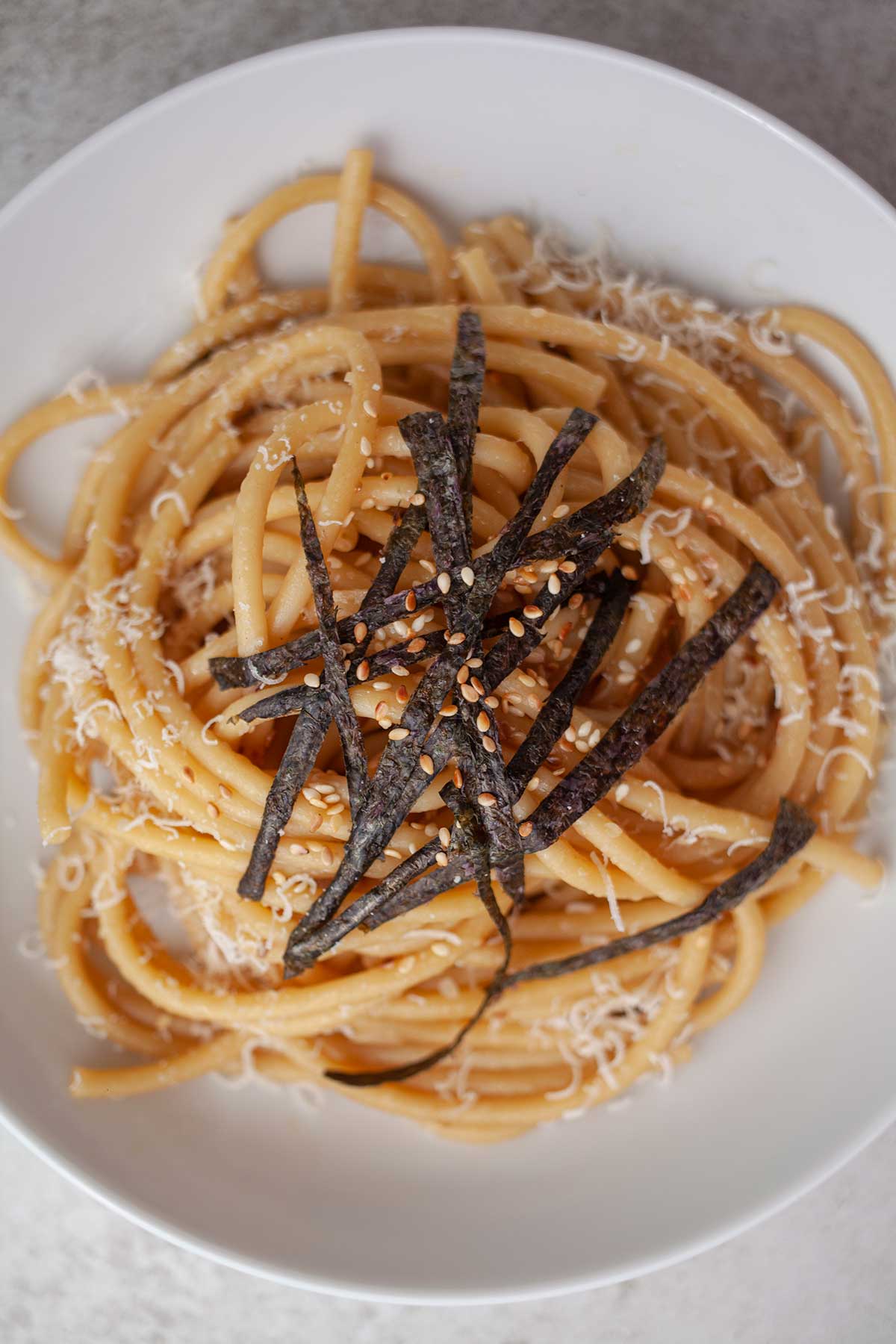
Being a fan of Asian cuisine, traditional Japanese ingredients are among my favorites because they always bring a touch of magic and flavor to the kitchen. My favorites are fried sesame (goma), fried nori and other edible seaweeds, as well as pickled ginger, and the first two are exactly what crown this pasta.
Fried sesame, also known as goma, adds a rich, nutty flavor and a crunchy texture that plays off the creamy sauce. If you want to make your own toasted sesame topping, here is my short guide on how to prepare gomasio at home, a seasoning used often in the macrobiotic diet.
Fried nori is the other topping that gives the bowl its distinctive touch. These thin, crispy sheets of nori seaweed are often used to wrap sushi, but here you simply break them into small pieces and scatter them over the pasta with the sesame for a salty, savory crunch.
What to serve with miso pasta
This bowl is filling on its own, but it loves company. A small bowl of classic miso soup on the side leans into the umami theme, while a crisp cucumber salad or some quick stir-fried greens keep things fresh and light. If you get hooked on cooking with miso, the same savory logic carries over to other sauces, and you can browse more ideas in my roundup of pasta sauces and pasta dishes.
Storing and reheating leftovers
Miso pasta is at its best fresh, when the toppings are still crunchy, but leftovers keep well. Let the pasta cool, then store it in an airtight container in the fridge for 2 to 3 days. Reheat it gently in a pan with a splash of water or plant milk to bring the sauce back to a creamy consistency, and add fresh fried sesame and nori just before serving so they stay crisp rather than soggy.
If this miso pasta earns a spot in your dinner rotation, I would love to know how it went. Leave a star rating and drop a comment below telling me whether you kept the parmesan or went the fully vegan route, since your notes help me and everyone else who scrolls down here.
Miso Pasta
Ingredients
- 180 g bucatini pasta
- 2 tablespoons butter use vegan butter for vegan version
- 1 clove garlic
- 2 tablespoons miso paste white for milder flavor, red for stronger
- 4 tablespoons sour cream use vegan soy yogurt for vegan version
- 1 teaspoon nutritional yeast
- ½ teaspoon salt
- ½ teaspoon pepper
- 1 tablespoon sesame seeds lightly toasted
- ½ sheet nori cut into thin slices
- 1 tablespoon parmesan grated; use vegan parmesan for vegan version
Instructions
- Cook the pasta according to the instructions on the package.
- Once al dente, transfer it to a bowl and cover with a lid.
- Save the pasta water.
- In a pan over medium heat, add the butter. When the butter is melted, add the garlic and fry it for a few seconds. Add the miso paste and ½ cup of the reserved pasta water.
- Mix well, then add the sour cream (or yogurt) and nutritional yeast. Mix until you get a homogeneous and creamy texture.
- Add the cooked pasta and continue to cook, mixing the pasta into the sauce so that it absorbs as much of it as possible, for around 3 minutes.
- Serve the pasta warm, sprinkle with nori strips and toasted sesame, and top with grated parmesan.
Notes
Frequently Asked Questions
As written, this recipe is vegetarian, since it uses butter, sour cream, and an optional grating of parmesan. It becomes fully vegan with a few easy swaps: vegan butter, unsweetened soy yogurt in place of the sour cream, and either vegan parmesan or no cheese at all. The nutritional yeast is already plant-based and adds a cheesy depth on its own.
A milder white or yellow miso gives a mellow, slightly sweet sauce, while a darker red miso makes it saltier and more intense. Either works well, so choose based on how bold you want the flavor. Because miso is naturally salty, start with a smaller amount and taste before adding more.
Yes. Bucatini has hollow, sturdy strands that hold the creamy sauce nicely, but spaghetti, linguine, or any long pasta works just as well. Whatever you use, save some of the starchy cooking water to loosen the sauce at the end.
The starchy pasta water dissolves the miso smoothly and helps the sauce turn creamy and cling to the noodles. About half a cup stirred into the pan is enough, and a splash more brings the sauce back if it tightens up while you toss the pasta.
Not automatically. You would need to use a gluten-free pasta, and you should check the miso label, since some varieties (mugi miso) are made with barley while others use only rice. Choose a certified gluten-free miso and pasta to keep the dish safe for a gluten-free diet.
Let the pasta cool, then keep it in an airtight container in the fridge for 2 to 3 days. Reheat it gently in a pan with a splash of water or plant milk to loosen the sauce, and add fresh toasted sesame and nori just before serving so they stay crisp instead of soggy.