Cinnamon Roll Casserole
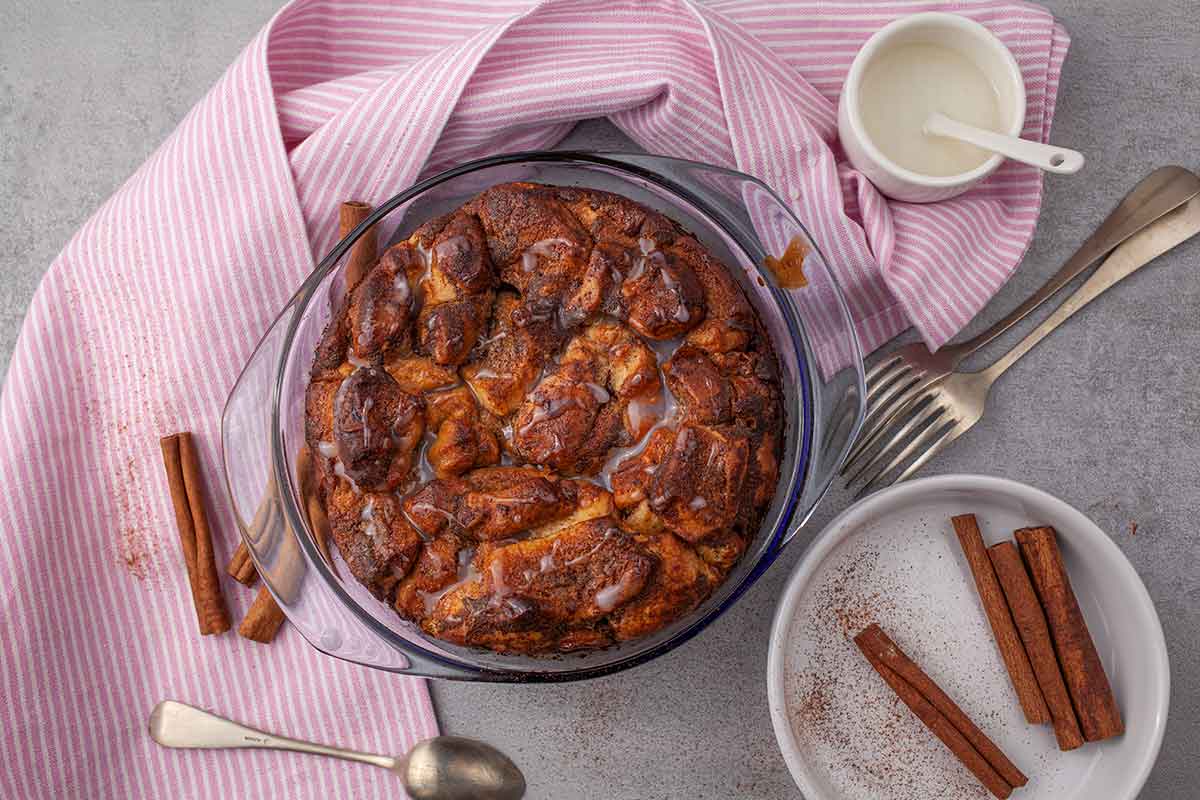
This cinnamon roll casserole is the ideal indulgence for lazy mornings and family brunches, pairing the soft, pillowy texture of the rolls with the warm, sweet aroma of cinnamon.
A cinnamon roll casserole is a pull-apart breakfast bake made by arranging cinnamon rolls in a baking pan, soaking them in a sweet vanilla-and-cinnamon custard, and baking everything together until the top is golden and the centre stays soft and custardy. Once it comes out of the oven, you drizzle it with a quick powdered-sugar glaze and serve it warm. It gives you all the cosy flavour of homemade cinnamon buns with a fraction of the fuss, which is exactly why it has become one of my favourite things to make when I want brunch to feel special without spending the whole morning in the kitchen.
I hope the notes below inspire you as much as the recipe itself, because most of what makes cinnamon rolls really tasty comes down to a few small tricks rather than any complicated technique. Cinnamon rolls are loved all over the world, but their spiral form traces back to Sweden, where they are known as “kanelbullar.” If you enjoy that kind of cosy baking, you will find plenty more in my Swedish-inspired recipes.
So, What Exactly Goes Into It?
The recipe works in a few simple layers, and you can decide how much you want to make from scratch. You can bake your own cinnamon rolls from a soft yeast dough (flour, sugar, milk, butter, instant yeast, an egg and a couple of pinches of salt), or you can save time and start with eight store-bought refrigerated cinnamon rolls, defrosted or from the tube. Either way, the rolls get a filling of softened butter, brown sugar and ground Ceylon cinnamon rolled inside.
What turns the rolls into a proper casserole is the custard poured over the top: two large eggs whisked with milk, vanilla and cinnamon, finished with a little maple syrup for extra warmth and colour. The final touch is a quick glaze of powdered sugar, a splash of milk and a drop of vanilla. If you want to lean into the aroma, reach for a good Ceylon cinnamon, and my guide on how to cook with cinnamon is worth a look for getting the most out of the spice.
How to Get Soft, Custardy Results
If you are making the rolls from scratch, the temperature of the milk-and-butter mixture matters more than anything else. Warm it only until the butter melts and it feels warm but not hot, around 104°F (40°C), before stirring in the yeast. Milk that is too hot will kill the yeast and leave you with dense rolls, so it should feel like comfortably warm bathwater on your wrist.
- Knead the dough for about five minutes until it forms a smooth ball, adding a little flour only if it feels overly sticky.
- Give the shaped rolls a proper rise, roughly 60 minutes in a warm spot, until they have doubled in size. This is what keeps the finished bake fluffy rather than tight.
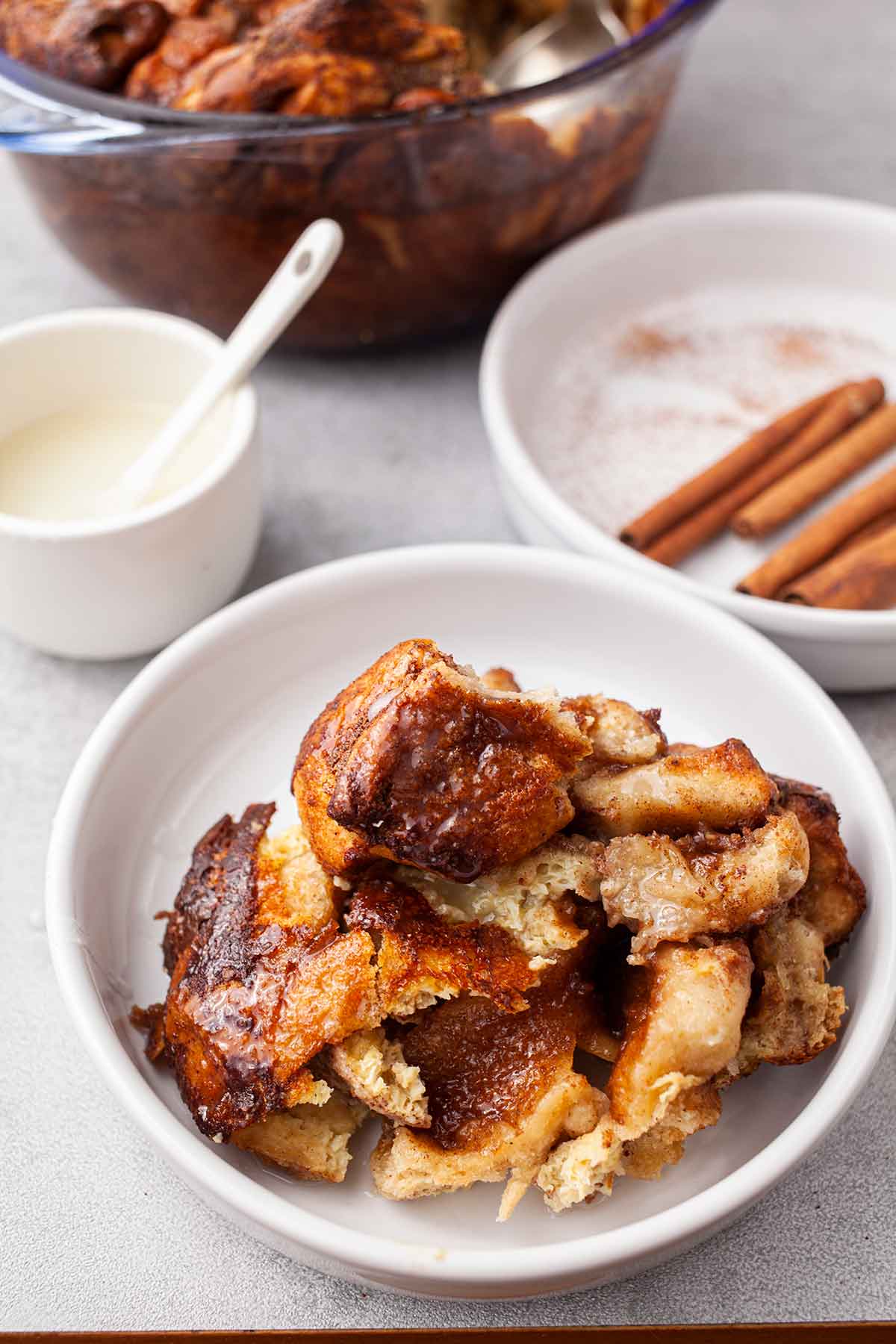
- Pour the egg custard evenly over the rolls so every one gets soaked, then drizzle the maple syrup on top.
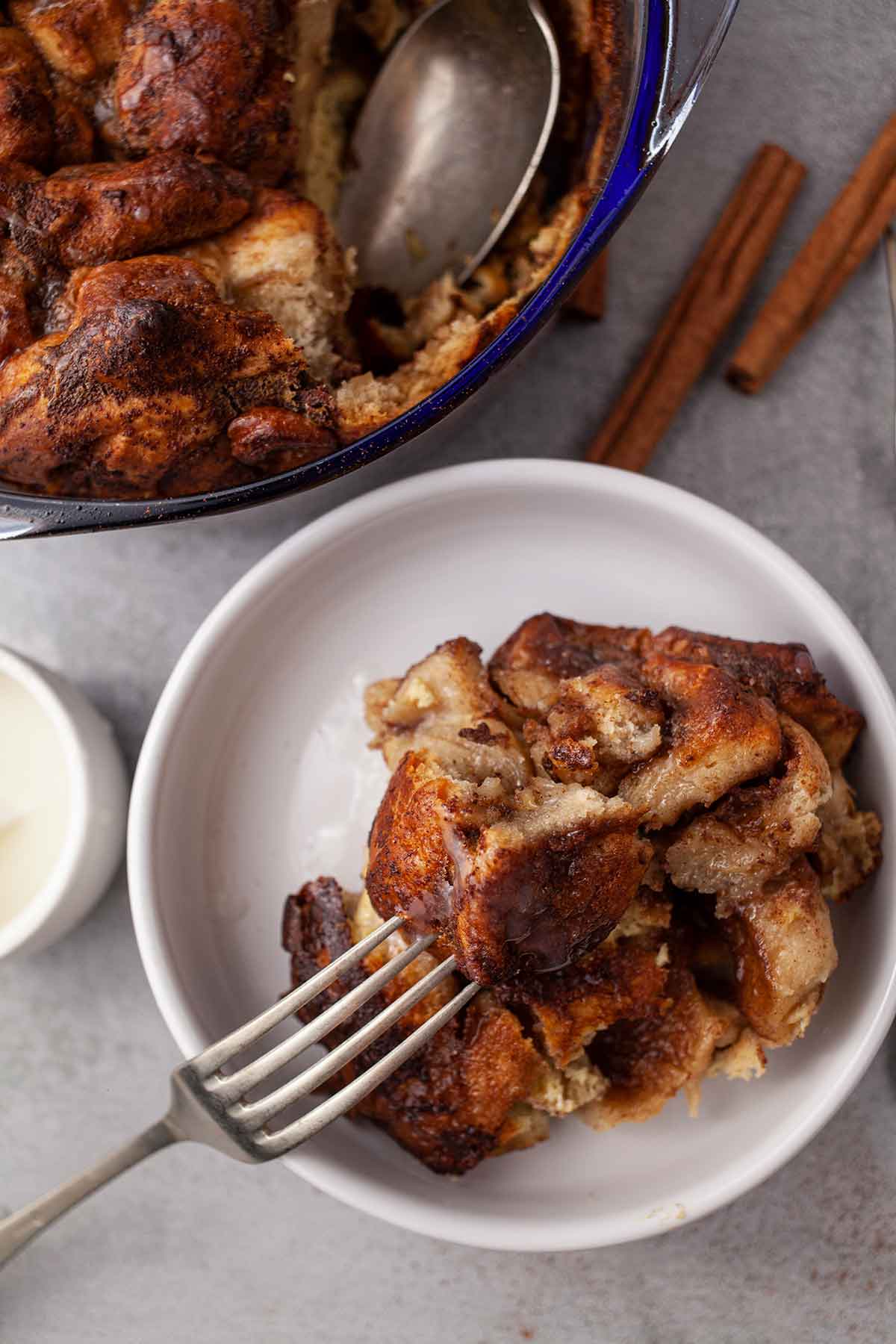
- Bake at 180°C (356°F) for about 30 minutes, until the surface is well browned. The centre should stay soft and just set, not dry.
Add the glaze only once the casserole has cooled slightly. On a piping-hot bake it simply melts and disappears, but on a warm one it sets into those pretty white ribbons you want on top.
Filling Ideas and Frostings to Play With
I chose to prepare the classic, simple version, but once you are comfortable with the basic cinnamon rolls recipe, you can experiment with other fillings. A handful of chopped nuts, a scatter of raisins, a spoon of apple butter or a little cocoa in the cinnamon-sugar mix all work beautifully rolled inside.
I went with the lighter glazed finish here, but if you are chasing a more decadent dessert, a cream cheese frosting is the classic move: a creamy combination of soft cheese, butter, powdered sugar and vanilla extract, beaten until smooth and spread over the warm casserole. For more cosy, cinnamon-forward inspiration, take a look at my mini apple and cinnamon rolls.
Gluten-Free, Vegan and Dairy-Free Swaps
This casserole as written is vegetarian, since it relies on eggs and dairy, but it adapts well. Because I now have access to a cruelty-free organic source of eggs and dairy, I started experimenting more with classic dessert recipes that use these ingredients, and that same flexibility means you can steer the recipe to fit your needs.
- Gluten-free: swap the flour for a good pastry blend. I recommend the Mix C Patisserie from Schar for cinnamon rolls.
- Dairy-free: use a plant milk in place of whole milk. My homemade rice milk works nicely for the custard and glaze.
- Butter: you can also use my vegan butter recipe from the blog for both the dough and the filling.
For a fully egg-free version you would need to replace the custard, so treat these swaps as a starting point and adjust to what your kitchen and diet call for.
Make-Ahead, Storage and Serving
This is a friendly recipe to prep in advance. You can assemble the rolls in the pan, pour over the custard, cover it and keep it in the fridge overnight, then bake it fresh in the morning so brunch feels effortless. Leftovers keep in an airtight container in the fridge for two to three days, and a short warm-up in the oven or microwave brings back the soft texture.
Serve it warm, drizzled with glaze, alongside coffee or tea. It sits happily on a brunch table next to something fruity like my upside-down apple pie, and if you love this kind of comforting baked dish you will find plenty more in my collection of casserole recipes.
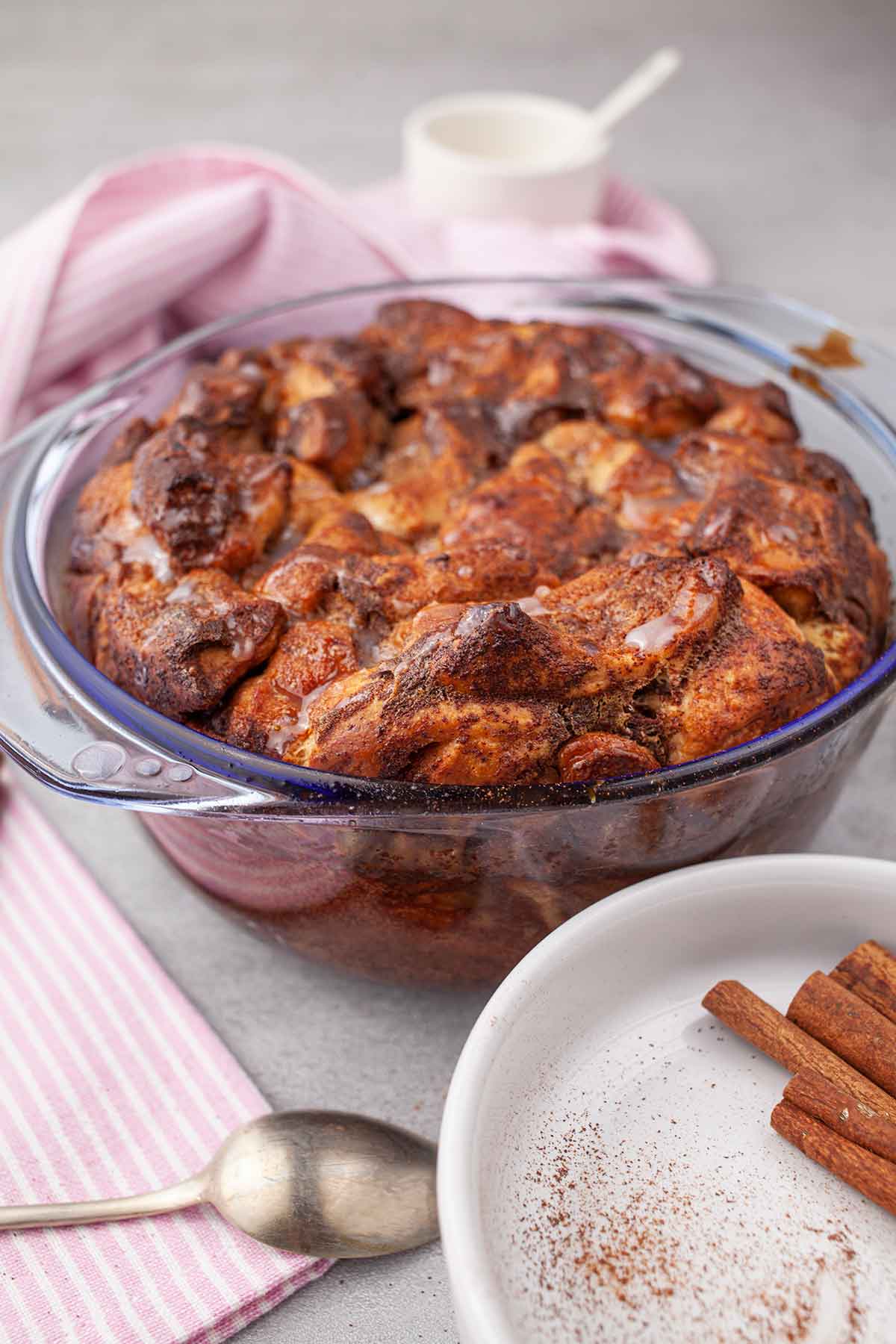
If you make this cinnamon roll casserole, I would love to hear how you played with it, whether you kept it classic or went wild with the filling. Leave a star rating and drop a comment below with your own twist. I can’t wait to read your stories and culinary experiments!
Summarise & Save This Recipe
★ Add us as a trusted Google source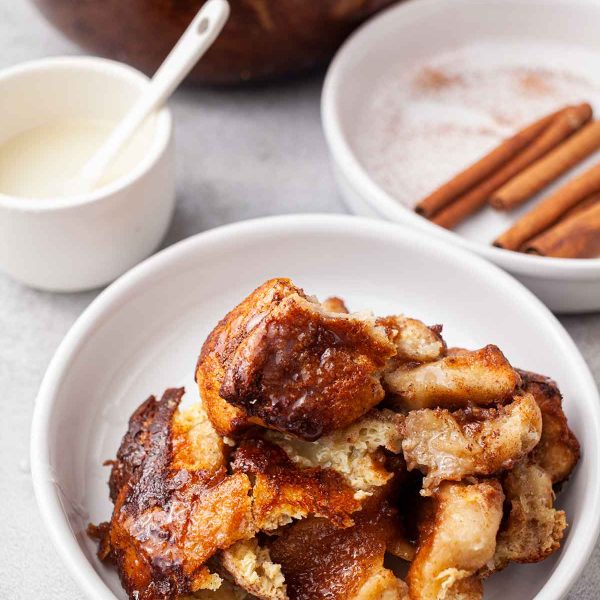
Cinnamon Roll Casserole
Ingredients
Quick version:
- 8 refrigerated cinnamon rolls store-bought, defrosted
Cinnamon rolls from scratch version (dough):
- 2 cups all-purpose flour 250g
- ¼ cup sugar 50g
- ½ cup whole milk 130ml
- 2 Tablespoons unsalted butter 30g
- 2 tsp instant yeast
- 1 egg
- 2 pinches salt
Cinnamon rolls from scratch version (filling):
- 2 Tablespoons unsalted butter 30g, softened
- ¼ cup brown sugar 50g
- 1 tablespoon Ceylon cinnamon ground
For the cinnamon roll casserole custard:
- 2 large eggs
- ¼ cup milk
- 1 teaspoon vanilla
- 1 teaspoon cinnamon
- 2 tablespoons maple syrup
For the cinnamon roll casserole glaze:
- ½ cup powdered sugar
- ½ tablespoon milk
- ¼ teaspoon vanilla
Instructions
- Make the cinnamon rolls (skip steps 1-7 if you use store-bought rolls).
- Prepare the dough by whisking the flour, sugar, and salt in a large mixing bowl, then set it aside.
- In a deep pan, combine the milk and butter and heat on the stove until the butter melts and the mixture is warm but not hot (104°F/40°C). Stir in the yeast until it fully dissolves.
- Add this liquid mixture to the set-aside dry ingredients along with the egg. Combine with a spatula, or a stand mixer fitted with a paddle attachment on medium speed, until a soft, pliable dough forms.
- Turn the dough onto a floured surface and knead with floured hands for about 5 minutes, until it forms a smooth ball. Add a little more flour if the dough feels overly sticky or soft.
- Place the dough in a lightly greased bowl and cover it loosely. Let it rest for about 10 minutes while you prepare the filling.
- For the filling, roll the rested dough into a rectangle measuring roughly 12 x 8 inches (30 x 20 cm). Spread the softened butter over the surface, then sprinkle the cinnamon and brown sugar evenly on top.
- Carefully roll the dough into a log and slice it into 8 equal portions. Arrange the rolls in a greased round baking pan.
- Let the rolls rise by covering the pan with a clean towel and placing it in a warm spot for 60 minutes, until they have doubled in size.
- Heat the oven to 180°C (356°F).
- In a bowl, whisk the eggs, milk, vanilla, and cinnamon until well combined.
- Pour the egg mixture evenly over the rolls, then drizzle with the maple syrup.
- Bake the cinnamon roll casserole in the hot oven for 30 minutes, or until well browned on the surface.
- Mix the glaze ingredients in a bowl.
- Serve the cinnamon roll casserole hot, drizzled with the glaze.
Notes
Frequently Asked Questions
It is a pull-apart breakfast bake where cinnamon rolls are arranged in a baking pan, soaked in a sweet custard of eggs, milk, vanilla and cinnamon, and baked until golden and soft in the middle. It is then finished with a quick powdered-sugar glaze and served warm. It delivers the flavour of homemade cinnamon buns with far less shaping and fuss.
Yes. The recipe is written so you can start with eight store-bought refrigerated cinnamon rolls, defrosted or from the tube, and skip the dough-making steps entirely. You still pour the egg custard over them and bake, so you get the custardy casserole texture with much less effort. Making the rolls from scratch is an option if you prefer full control over the dough.
Bake the assembled casserole at 180°C (356°F) for about 30 minutes, until the surface is well browned. The centre should stay soft and just set rather than dry. If you make the rolls from scratch, first let the shaped rolls rise for about 60 minutes until doubled.
No, as written it is vegetarian because it uses eggs, milk and butter in the rolls, custard and glaze. You can make it dairy-free by using a plant milk such as homemade rice milk and a vegan butter, and gluten-free with a good pastry flour blend. A fully egg-free version would need the custard reworked, so treat the swaps as a starting point.
Yes, and it is one of the best things about the recipe. Assemble the rolls in the pan, pour over the custard, cover, and refrigerate overnight, then bake it fresh in the morning. This makes it ideal for stress-free brunches and holidays.
Keep leftovers in an airtight container in the fridge for two to three days. Warm individual portions in the oven or microwave to bring back the soft, custardy texture before serving. Add or refresh the glaze after reheating so it sets nicely rather than melting away.