
Gluten-Free Bread | Gluten-Free Toast Loaf
This gluten-free bread with black cumin is one of the best bread recipes I’ve tried so far. It bakes up into a fluffy, sliceable loaf with a fragrant, slightly crunchy crust, thanks to a coating of gluten-free breadcrumbs and a final brush of turmeric-tinted olive oil. If you’ve been missing a real, toast-worthy loaf since going gluten-free, this is the one to make.
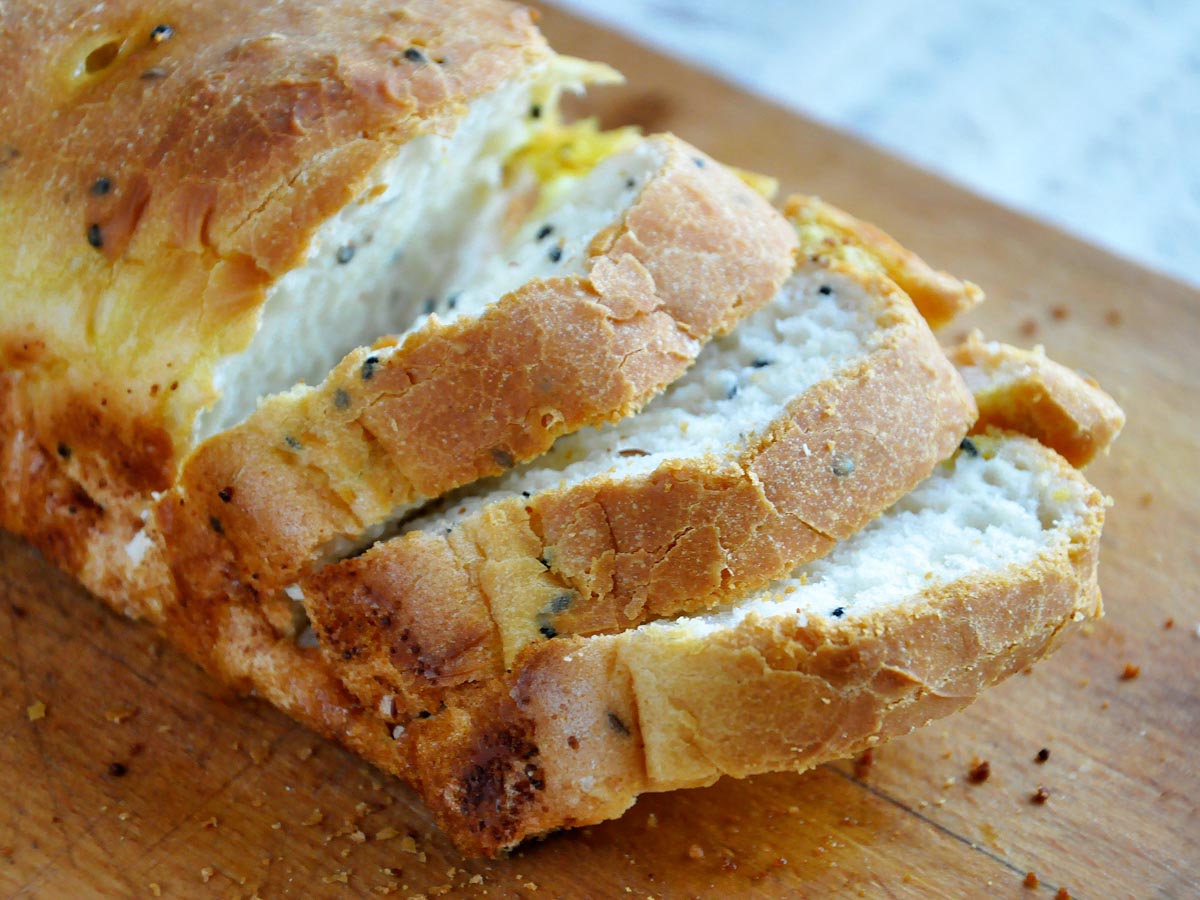
Why I started baking gluten-free bread
As you probably know, I recently eliminated gluten from my diet. I discovered that my mom was gluten intolerant and I also had some symptoms, so I decided to completely give up gluten products. It wasn’t as hard as you may think — I wasn’t a huge fan of bread anyway. The trickier part is that I’ll just have to be more careful with processed foods, like store-bought veg spreads and similar things, since they so often contain hidden gluten.
Full disclosure: I don’t like baking, so my dad is in charge of making our gluten-free bread. Watching him work through these recipes, I was amazed by how delicious gluten-free bread can actually be. I was so won over that I even made a Gluten-Free Baking board on Pinterest to keep track of every recipe worth repeating, and this loaf earned its spot.
The ingredients that make this loaf work
This recipe is built around a Schar Mix B gluten-free flour, a bread-specific blend, so the dough behaves more like a batter than a kneadable dough. That’s normal for gluten-free baking and it’s exactly why this loaf turns out tender rather than crumbly.
- Schar Mix B gluten-free flour: a bread flour blend. If you swap in another gluten-free mix, look for one labelled for bread, since all-purpose gluten-free blends won’t rise the same way.
- Dry yeast + sugar + warm water: the sugar feeds the yeast and the warm (not hot) water wakes it up. Water that’s too hot will kill the yeast and your loaf won’t rise.
- Fructose gelling agent (Dr. Oetker): optional, but highly recommended. It improves the crumb and helps the loaf hold together, which gluten-free breads often struggle with.
- Black cumin (negrilica): the signature here. These tiny black seeds add a warm, nutty, slightly peppery flavor and a lovely speckled look throughout the crumb.
- Gluten-free breadcrumbs + turmeric-olive oil coating: the breadcrumbs line the pan for a crisp crust, and the turmeric oil brushed on partway through baking gives that golden, glowing color.
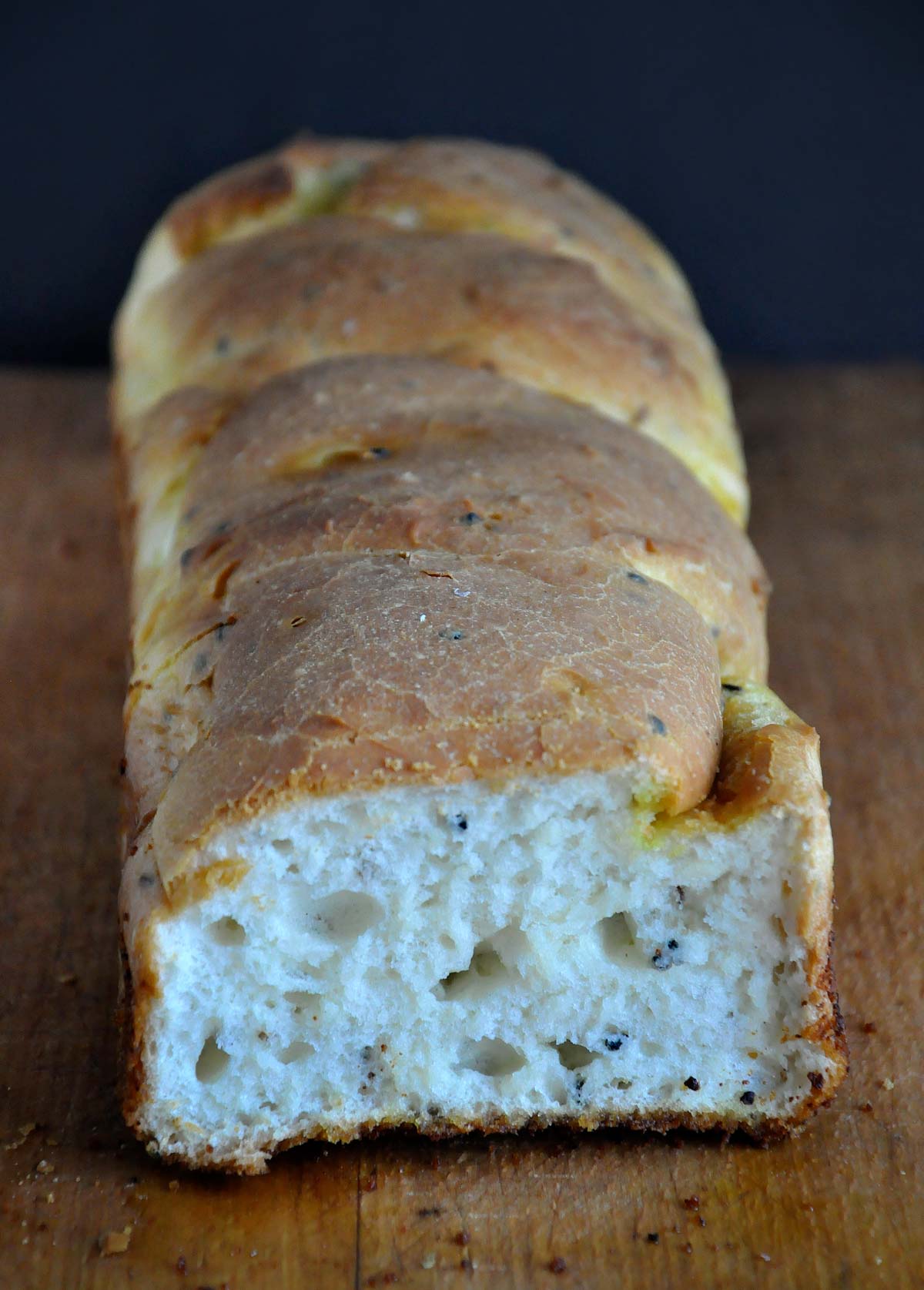
Why the steam and the two-stage bake matter
The single most important tip: add a small dish of water to the oven while the bread bakes. The humidity keeps the surface from setting too early, so the loaf can expand fully and the crust stays from going hard and dry. This matters even more for gluten-free bread, which has no gluten network to trap steam on its own.
The bake happens in two stages on purpose. The loaf bakes uncovered for the first 30 minutes to set the structure, then you pull it out, brush on the turmeric-olive oil mix, and return it for another 10 to 15 minutes. Brushing the oil on later, rather than at the start, keeps the color vivid and stops the surface from over-darkening before the inside is done.
Tips for the best gluten-free toast loaf
- Use warm water, not hot, when you bloom the yeast. Lukewarm to the touch is right.
- Give the dough a real rise in a warm, draft-free spot for 30 to 40 minutes. Gluten-free doughs are slower and a cold kitchen will stall them.
- Grease the pan well and dust it with gluten-free breadcrumbs before pouring in the dough. This is what gives you that crisp, easy-release crust.
- Don’t skip the dish of water in the oven. The extra humidity is the difference between a fluffy loaf and a dense one.
- Let the bread cool fully before slicing. Cutting a hot gluten-free loaf makes it gummy, while a cooled one slices clean and toasts beautifully.
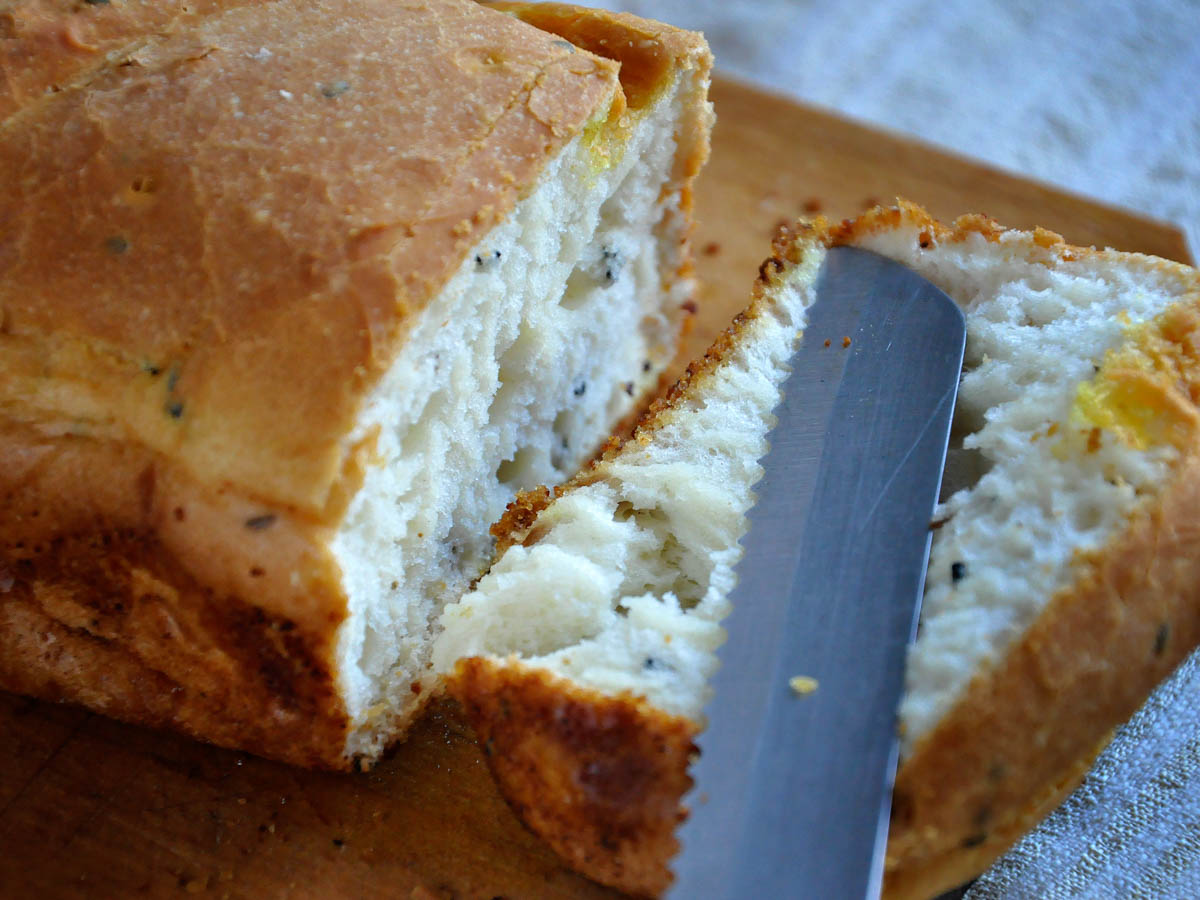
How to store it and what to serve it with
Once fully cooled, keep this loaf in an airtight container or a sealed bag at room temperature for two to three days. Gluten-free bread dries out faster than wheat bread, so if you won’t finish it quickly, slice it first and freeze the slices. You can drop them straight into the toaster from frozen, which is when this bread shines most.
This is a sturdy, savory loaf that works for everything from morning toast to a dinner side. Toast a slice and top it with a spread, or serve it alongside a warm bowl of leek and black olives stew to mop up every last bit. If you’d rather lean into the black cumin and turmeric theme, this loaf is also lovely with anything that uses warm spices, and you’ll find more ideas in my recipes with turmeric. And if you catch the gluten-free baking bug like I did, try a softer companion bake next, like my gluten-free bread with olives and pesto.
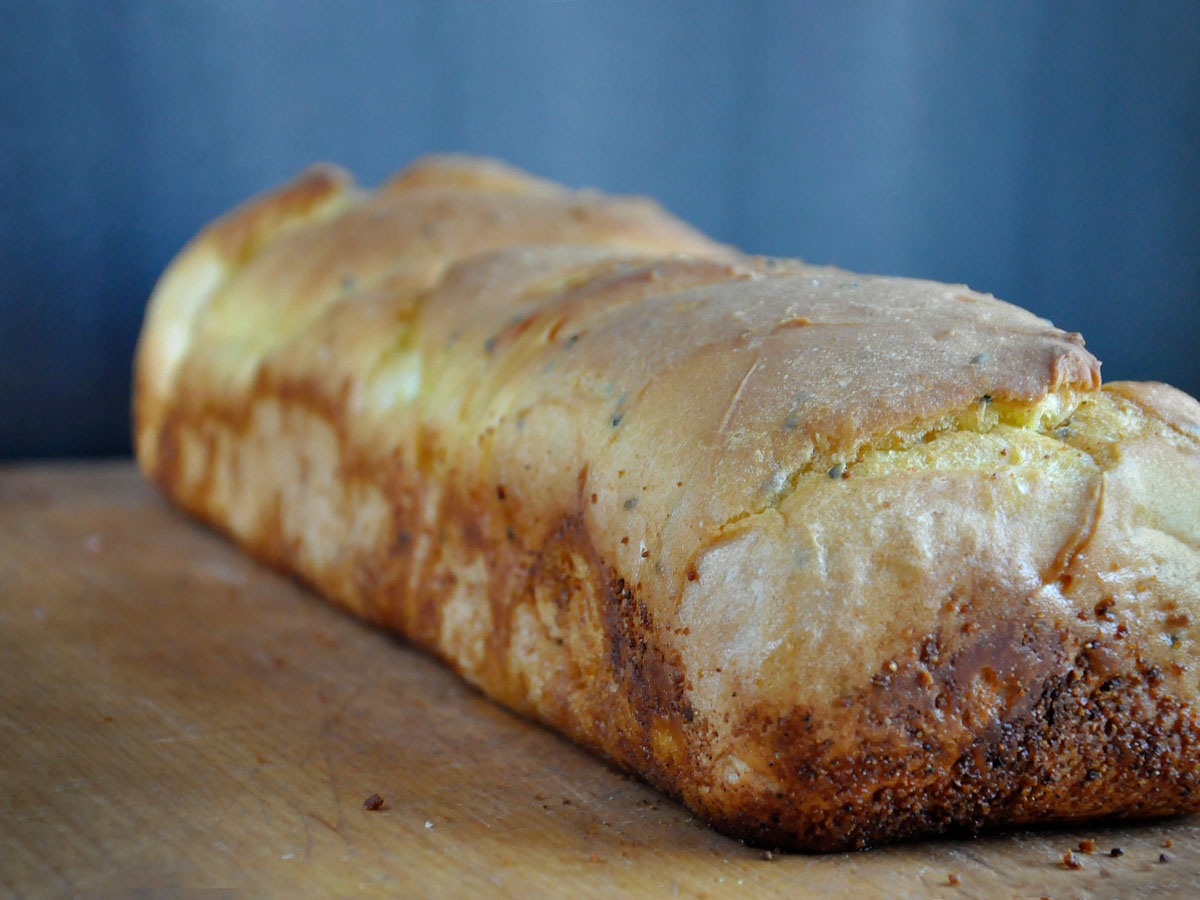
If you bake this gluten-free black cumin bread, I’d love to know how your loaf turned out — did you add the dish of water and get that fluffy crumb? Please rate the recipe below and leave a comment with any tweaks you made, especially if you tried a different flour mix.
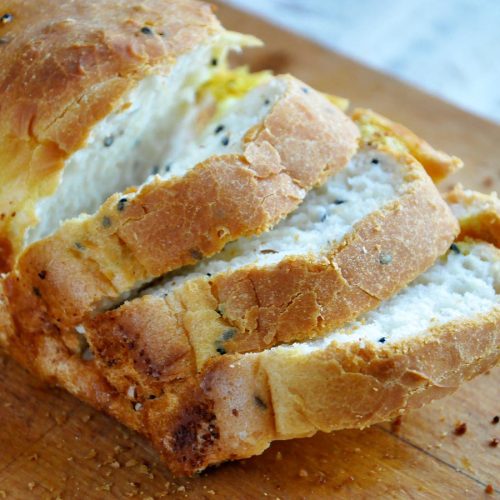
Gluten-Free Bread with Black Cumin
Ingredients
- 350 g Schar Mix B gluten-free flour
- 350 ml warm water
- 1 Tbsp olive oil for the dough, plus 3 Tbsps olive oil for coating
- 1 Tbsp sugar
- 1 tsp sea salt
- 1 Tbsp fructose gelling agent – Dr. Oetker optional, but highly recommended; it makes it even better
- 7 g dry yeast
- 2 Tbsps gluten-free breadcrumbs
- 2 Tbsps black cumin
- 1 pinch turmeric
Instructions
- Add sugar and dry yeast to a small bowl, along with the warm water. Mix well.
- Add the gluten-free flour mix and fructose gelling agent to your food processor. Pulse once or twice. Add the warm water from the bowl. Blend for 1 minute. Add the sea salt and 1 Tbsp of olive oil. Mix for 3-4 more minutes. Add the black cumin and mix by hand.
- Grease the baking form with olive oil and sprinkle with gluten-free breadcrumbs.
- Pour the dough into the baking form. Cover with a wet, clean cloth and let it rise in a warm place for 30-40 minutes.
- When ready, put it in the pre-heated oven at 200C and bake for 30 minutes.
- Place a small dish of water in the oven while baking so the humidity stays high.
- Add 3 Tbsps of olive oil to a small cup. Add a pinch of turmeric powder. Mix well.
- After 30 minutes of baking, take the bread out of the oven and coat it with the turmeric-oil mix above.
- Put it back in the oven for another 10-15 minutes.
- Remove from the baking form and let it cool before slicing.
Notes
Frequently Asked Questions
Yes. Every ingredient in this loaf is plant-based — gluten-free flour mix, water, olive oil, sugar, salt, dry yeast, breadcrumbs, black cumin, and turmeric. There are no eggs, dairy, or honey, so it suits both gluten-free and vegan diets.
Black cumin, known in Romanian as negrilica, refers to small black seeds with a warm, nutty, slightly peppery flavor that also speckle the crumb beautifully. They are the signature flavor of this loaf, so it’s best not to skip them, but if you can’t find them you could use a smaller amount of another seed you enjoy, knowing the taste will change.
Schar Mix B is a bread-specific blend, which is why the loaf rises and holds together well. You can use another gluten-free flour mix, but choose one labelled for bread rather than an all-purpose blend, since the latter won’t give the same rise. Results may vary slightly with a different brand.
The dish of water raises the humidity in the oven, which keeps the crust from setting too early and lets the loaf expand fully into a fluffy crumb. This step matters more for gluten-free bread because it has no gluten network to trap steam on its own. It is the most important tip in this recipe.
It is optional, but highly recommended. The fructose gelling agent improves the crumb and helps the loaf hold together, which is something gluten-free breads often struggle with. You can make the bread without it, but it turns out even better when you include it.
Let the loaf cool completely, then keep it in an airtight container or sealed bag at room temperature for two to three days. Gluten-free bread dries out faster than wheat bread, so for longer storage, slice it and freeze the slices. You can toast them straight from frozen.



I was always afraid of making bread at home, but your recipe conviced me. It was actually so easy and it opened a whole new world to me! I want to make an olive bread next, I’m so excited!
Glad you liked the recipe, Mike!
Hi Ruxandra,
Going through your blog and enjoying it! As a 20 + yr veteran to the GF life (I have celiac disease), I’ve managed to come up with a whole world of things that the non GF can’t complain about! I’ve also recently started flirting with full on veganism (I’m pescetarian with a dairy intolerance) so tons of research and experimentation going on.
One thing I have found is that when baking a GF bread, if you use about 1/8 tsp of fresh ground ginger (you can use powder also if fresh ginger is not available), it doesn’t alter the taste but acts as a leavening agent so loaves come out higher and lighter to be much more like standard wheat bread in resemblance. I also have a beautiful 5 ingredient blend that I make myself so I’m not expensing out huge amounts of cash on commercial blends of flour.
Take care and all the best in your journeys
Hi Tamara! Thank you! Congrats on your lifestyle change! I can assure you that going vegetarian/vegan will help tremendously! My mom is also a celiac and since she adopted a vegetarian lifestyle, her health improved a lot!
This is such a great idea! I will try this trick soon. Thank you very much!
I’ve never heard of black cumin. Do you think the taste very different from regular cumin?
Regular cumin is not that popular here so I haven’t tried it. I tried caraway seeds though, which are “part of the family”. Black cumin is A LOT different from caraway seeds. It doesn’t have a very strong taste. I use it a lot in my recipes recently. It has amazing health benefits, such as anti-cancer properties, lowers glucose levels and more.
You can try the bread without it of course. Maybe you can add some other seeds for some extra-flavor and texture.
Oh also! What flour mix are you using? I don’t think you stated.
I was wondering if you could point me in the right direction on Amazon to which Dr.Oetker fructose gelling agent I need. This bread looks delicious, but I’m in the states and have never seen this product. I also haven’t seen black cumin, but that looks like it’s more of a strait forward purchase. Thanks!
Hi Michelle!
I just updated the recipe. Thanks for your comment!
I used Dr. Schar GF flour mix. I also added an Amazon link for the black cumin seeds. I usually buy them online here too. Besides being delicious in breads, they’re also really healthy.
I used the fructose jellyfying agent from Dr. Oetker – the diet, sugar-free version. I looked for it on Amazon but couldn’t find it. This ingredient is optional, but recommended. I also tried this bread recipe without it and it turned out fine. The fructose just makes it more chewy and has a texture similar to toast bread. If you want, you can try the Gelfix product from Dr. Oetker (here’s an example: http://www.amazon.com/Dr-Oetker-Gelfix-Classic-20g/dp/B00BLWQP32). Unfortunately, this contains fruit pectin and not fructose, but it should be ok. Any other fructose based jellyfying agent will work too.
Hope this helps 🙂
Not sure we have an American equivalent to this. I could get it on amazon but not sure I’m willing to pay that much and then dislike it.
Michelle, try the recipe without it. I did and it’s still really good 🙂 That’s just an extra ingredient for an even better texture 🙂