
Lemon Olive Oil Cake
This vegan lemon olive oil cake is a soft, moist, Italian-inspired dessert made with fruity olive oil, fresh lemon zest, and a fluffy whipped coconut cream frosting. It is easy to mix in one bowl, needs no eggs or dairy, and turns out fresh and citrusy enough to serve at a birthday or any special occasion. If you have never baked with olive oil before, this is the recipe that will convince you.

This was the first time I used olive oil in a cake and the result was just incredible. The recipe was inspired by the Ligurian olive oil cake, a traditional Italian recipe I found during my search for the best recipes of the Italian cuisine. The authentic version is simple, usually with no frosting and just a dusting of sugar on top, and it is made with butter, whole milk, and eggs. I wanted to try the vegan version taken to the next level, so I transformed this simple, easy recipe into a delicious layered cake that can even be served for birthday parties or other special occasions.
Why olive oil makes such a good cake
Olive oil makes exceptional cakes. Because it stays liquid at room temperature, it coats the flour differently than solid fat and keeps the crumb tender and moist for days rather than drying out overnight the way a butter cake can. It also carries flavor beautifully, which is exactly why it pairs so well with bright lemon zest. Use a good extra-virgin olive oil with a fruity, mild taste here; a very peppery or bitter oil can overpower the citrus, so save the intense bottles for savory cooking and reach for something rounder for baking.
The ingredients you will need
The cake itself comes together from pantry staples. Self-raising flour and a little extra baking powder give it lift, light brown sugar adds a soft caramel note, and the olive oil brings moisture and richness. The flavor comes from one lemon, both the zest and half the juice, so choose an unwaxed lemon if you can and zest only the yellow part, avoiding the bitter white pith underneath. Cold water loosens the batter to a pourable consistency.
The frosting is where the magic happens. I discovered the wonders of whisked coconut milk, the full-fat kind, when creating my vegan chocolate cheesecake and vegan French silk pie recipes. You need canned full-fat coconut milk chilled overnight so the thick cream separates and rises to the top, plus a little coconut yogurt, melted coconut oil, sugar, vanilla, and lemon zest to whip into a silky, dairy-free cream. It is so versatile that you can even use it in savory dishes; I always add it to polenta to make it extra creamy.
How to make the lemon olive oil cake
Start by preheating your oven to 200C and greasing and lining a springform tin with parchment paper. In a large bowl, combine all the dry ingredients, then add the wet ones and mix until smooth. Pour the batter into the tin and bake for about 20 to 30 minutes, until a skewer inserted in the middle comes out clean. Let the cake cool completely on a rack before you even think about frosting it, because warm cake will melt the coconut cream.
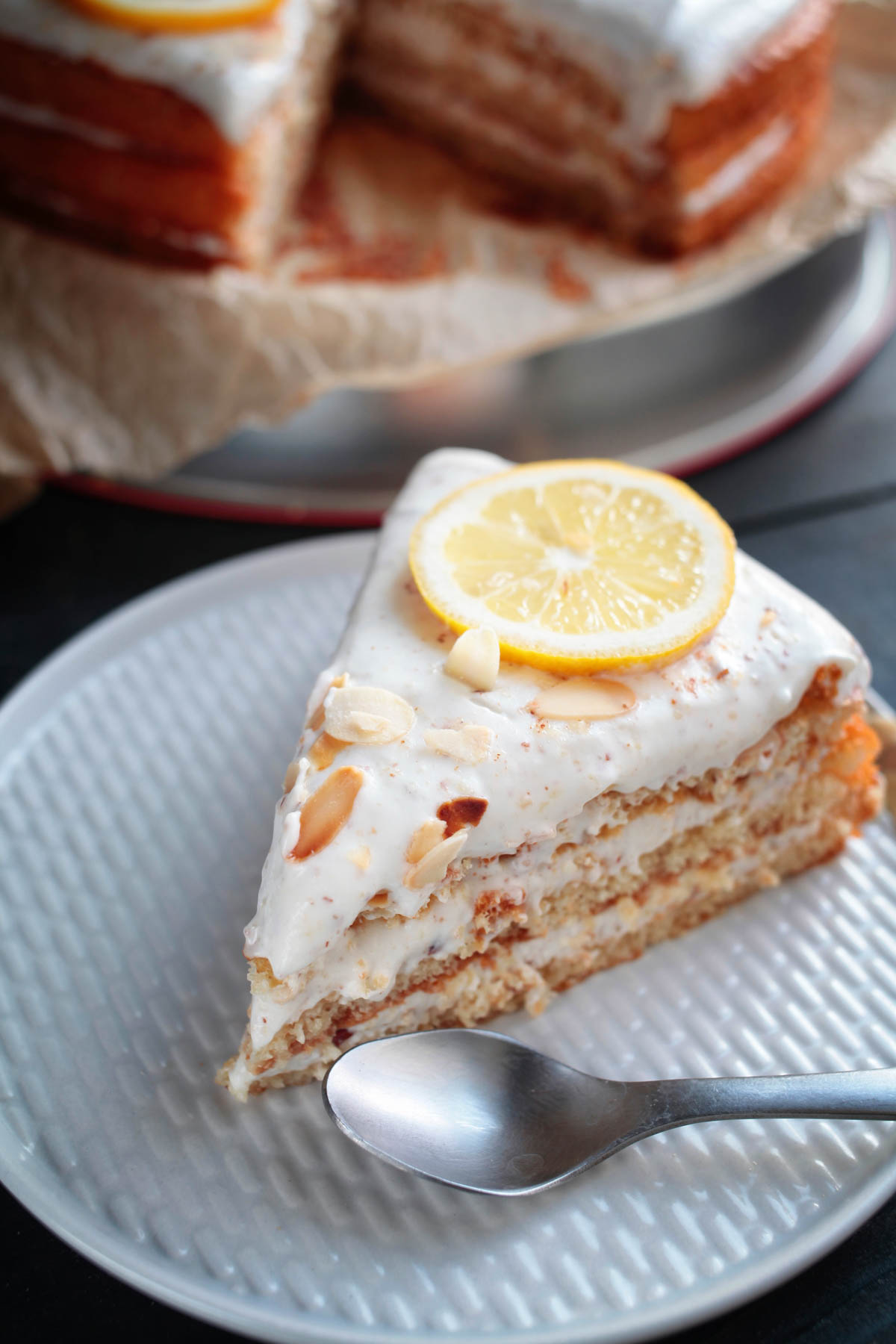
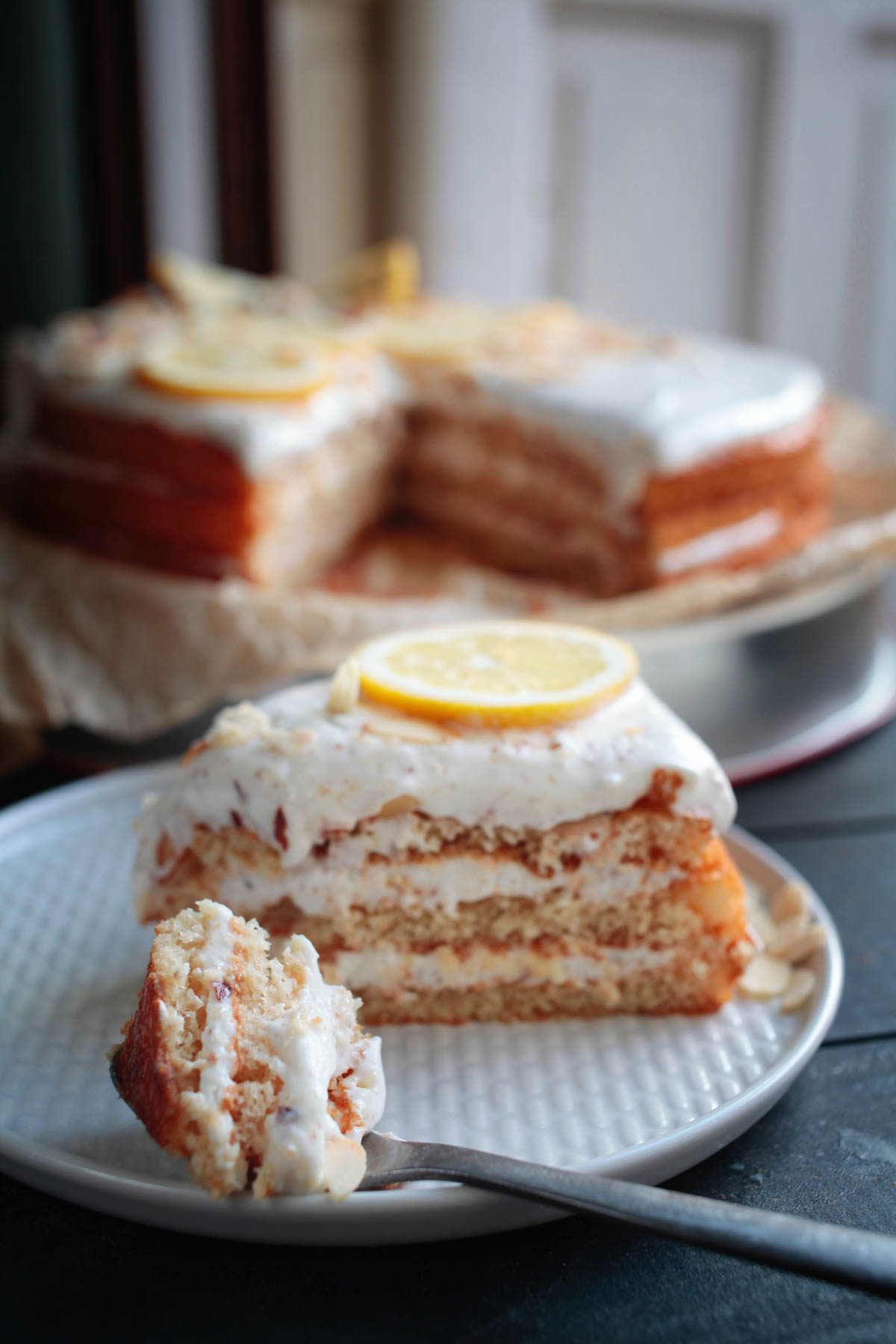
While it cools, make the frosting. Scoop out only the firm creamy part of the chilled coconut milk, leaving the watery liquid behind, and whisk it with a mixer until fluffy and soft peaks form. Add the remaining frosting ingredients and keep mixing until silky, then chill it in the fridge for about 20 minutes to firm up. Once the cake is cold, slice it into two or three even layers, spread frosting between each one, and finish the top.
Tips for the best results
- Chill the coconut milk overnight, standing upright and undisturbed, so the cream sets firmly at the top. A quick two-hour chill rarely separates properly.
- Scoop only the thick white cream for the frosting and save the leftover coconut water for smoothies. Any water carried into the bowl will keep the cream from whipping.
- Cool the cake completely before frosting. Even slightly warm layers will turn the whipped coconut cream soupy.
- Do not overmix the batter once the wet and dry ingredients meet. Mix just until smooth to keep the crumb light.
- Check for doneness with a skewer rather than the clock; ovens vary, and this cake is best pulled the moment it tests clean.
Topping and decorating ideas
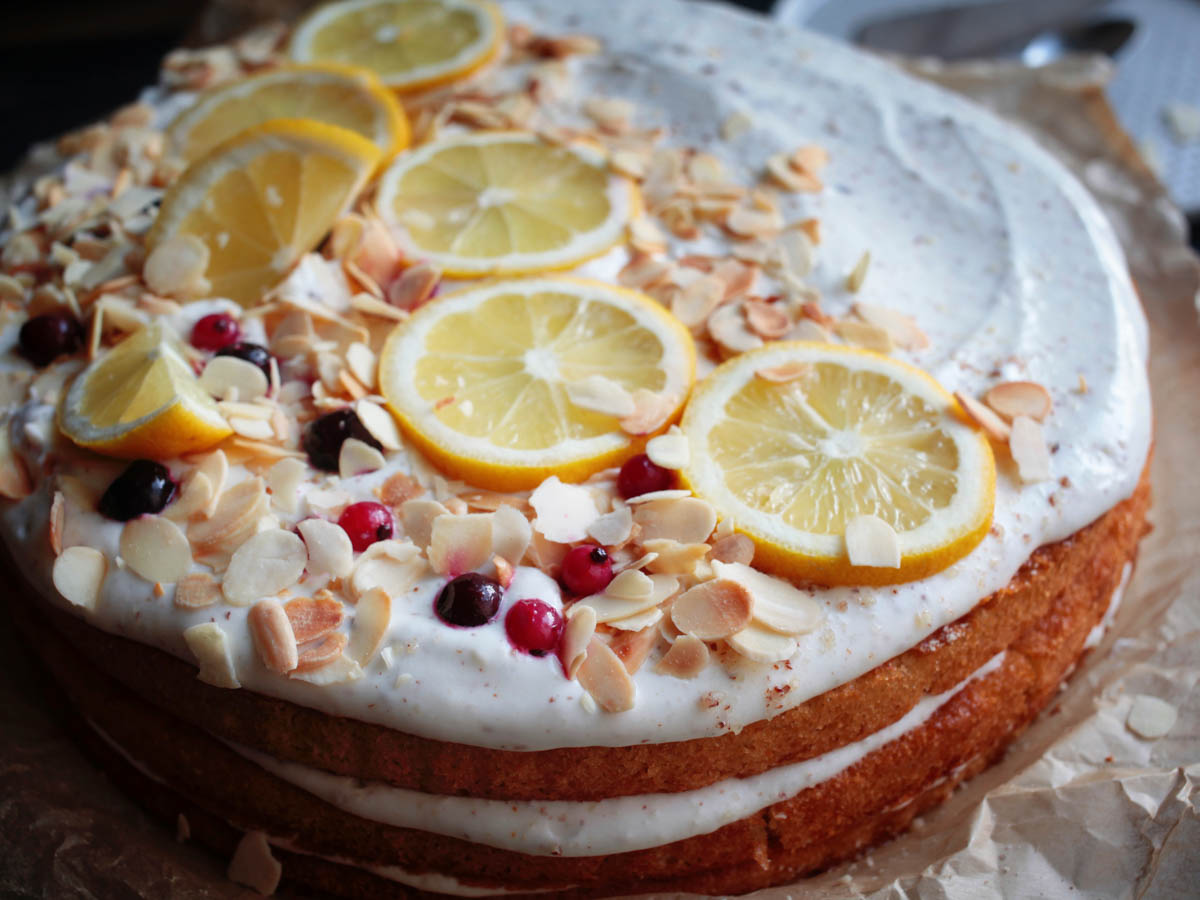
The topping for this olive oil cake was made to match the ingredients inside the frosting and batter, so I used lightly toasted almonds, fresh lemon slices, and a few frozen berries for just a touch of color. Toasting the sliced almonds brings out their nuttiness and adds crunch against the soft cream, the lemon slices echo the citrus in the batter, and the berries add a pop of color and a little tartness. Feel free to lean into whatever looks prettiest; this cake is forgiving and looks impressive with very little effort.
Storing and making ahead
Because it is frosted with coconut cream, this cake needs to live in the fridge. Keep it in an airtight container and it will stay lovely for about three to four days; the olive oil crumb actually holds its moisture better than a butter cake, so it will not dry out on you. If you want to get ahead, bake the cake layers a day in advance, wrap them well once cool, and whip the frosting fresh the day you plan to assemble. Add the fresh lemon slices and berries just before serving so they stay bright.
If you love this kind of celebration-worthy vegan bake, you might also enjoy my raw vegan chocolate and raspberry birthday cake or the cozy fresh apple cake for something a little more everyday.
If you give this lemon olive oil cake a try, I would love to know how it turned out. Rate the recipe below and leave a comment telling me whether you went with two layers or three, and which olive oil you used; it really does change the flavor.
Summarise & Save This Recipe
★ Add us as a trusted Google source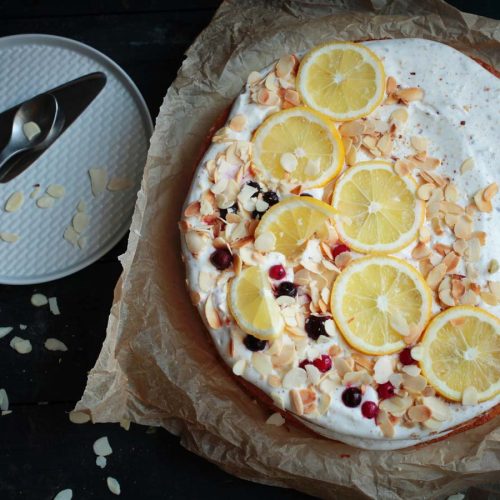
Lemon Olive Oil Cake
Ingredients
For the cake:
Dry ingredients:
- 3 cups self-raising flour
- 1 cup light brown sugar
- 1 tsp baking powder
Wet ingredients:
- ¾ cup olive oil plus extra for greasing the tin
- 1 lemon zested, ½ juiced
- ⅔ cup water cold
For the “mascarpone” frosting:
- 2 cups full-fat coconut milk canned, chilled overnight
- ¼ cup coconut yogurt
- ¼ cup coconut oil melted
- ½ tsp vanilla extract
- ¾ cup almonds finely shredded
- ½ cup sugar
- 1 tsp lemon zest
For topping:
- lemon fresh, sliced
- almonds sliced, lightly toasted
- berries frozen
Instructions
- Preheat the oven to 200C.
- For the cake:
- Grease a springform cake tin and line it with parchment paper.
- In a large bowl, whisk together the dry ingredients (self-raising flour, light brown sugar, and baking powder), then add the wet ingredients (olive oil, lemon zest and juice, and cold water). Mix until smooth.
- Pour the batter into the prepared cake tin and place it in the oven.
- Bake for about 20-30 minutes, or until a skewer inserted in the middle comes out clean.
- Let the cake cool completely on a wire rack before slicing.
- Meanwhile, make the frosting:
- Scoop the firm coconut cream out of the chilled can, leaving the watery liquid behind.
- Using a mixer, whisk the coconut cream until fluffy and soft peaks form. Add the coconut yogurt, melted coconut oil, vanilla extract, shredded almonds, sugar, and lemon zest, then continue mixing until you get a nice silky texture. Chill in the refrigerator for about 20 minutes.
- Take the cake out of the tin and slice it horizontally into 2-3 layers, depending on how many layers you want. Check out this tutorial to learn how to slice cake layers easily.
- Using a knife or a spatula, spread the frosting over each cake layer and stack them. Top with fresh lemon slices, berries, and sliced almonds.
Notes
Frequently Asked Questions
Yes, it is fully vegan. There are no eggs, butter, milk, or other animal products; the richness comes from olive oil and the frosting is made from whipped full-fat coconut milk. The traditional Italian olive oil cake uses butter, whole milk, and eggs, but this version replaces all of them with plant-based ingredients.
Use a good extra-virgin olive oil with a fruity, mild flavor. A very peppery or bitter oil can overpower the lemon, so save the intense bottles for savory cooking. A rounder, softer oil lets the citrus shine while still keeping the crumb moist and tender.
Chilling canned full-fat coconut milk overnight lets the thick cream separate and rise to the top, while the watery liquid sinks. You scoop out only that firm cream to whip into the frosting. A quick chill rarely separates properly, and any water carried into the bowl will stop the cream from whipping to soft peaks.
Absolutely. The authentic Italian olive oil cake is often served plain with just a dusting of sugar on top, so the lemon olive oil base works beautifully on its own. Simply bake it, cool it, and dust with sugar or a little icing sugar for a simpler everyday dessert.
Because it is frosted with coconut cream, keep the cake in an airtight container in the fridge. It stays fresh for about three to four days, and the olive oil crumb holds its moisture well so it will not dry out quickly. Add the fresh lemon slices and berries just before serving so they stay bright.
This recipe is written with self-raising flour, so it is not gluten-free as it stands. You would need a suitable gluten-free self-raising blend plus a check on the leavening, which changes the texture. If you want a reliably gluten-free result, it is best to start from a recipe developed for it rather than swapping flours here.



Wow! This looks amazing! My birthday is this month and I will definitely bake this! Thank you!
Let me know how it turns out! 😀