Caramelized Onion Pasta with Parmesan (No Cream)
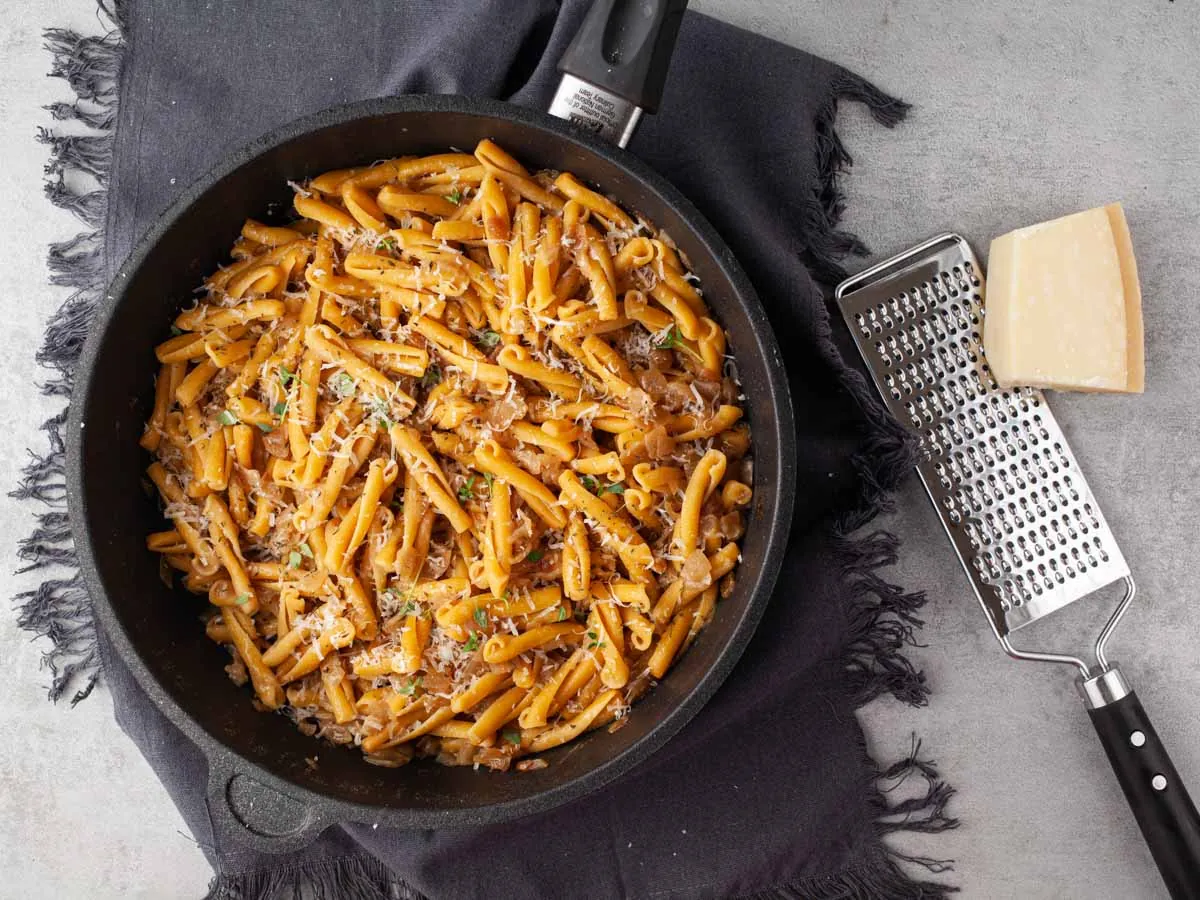
This caramelized onion pasta is what I cook when the fridge is almost empty: four big onions cooked slowly in butter and olive oil until jammy and amber, tossed with casarecce, a splash of starchy pasta water and plenty of parmesan. There is no cream in it, and it is ready in about 55 minutes, most of them hands-off while the onions do their thing.
I used to take the onions off the heat after 15 minutes, when they were soft but still pale, and then wonder why the pasta tasted flat. The real flavor shows up in the last ten minutes, when they go from blond to deep amber and start catching on the pan. These days I keep the heat at medium-low, put on a podcast and stir every few minutes, and that patience is honestly the whole recipe.
Creamy Without Cream: How This Onion Pasta Works
The sauce here is the onions themselves. After 35 to 40 minutes in the pan they collapse into something close to onion jam, sweet and savory at the same time, and they cling to every piece of pasta. The creaminess comes from two things you already have: a splash of starchy pasta water and a handful of grated parmesan, tossed hard off the heat until everything turns glossy.
So there is nothing to blend and no cream to reduce. It stays a simple weeknight pasta with caramelized onions, but it tastes like something that simmered all afternoon.
How to Caramelize Onions for Pasta (and How Long It Really Takes)
Plan on 35 to 40 minutes. Recipes that promise caramelized onions in 10 minutes give you browned onions, which taste sharper and a little bitter. This is how I do it:
- Start at medium heat. Butter and olive oil together, then the onions with a pinch of salt, which draws out moisture so they soften faster. Give them 10 to 15 minutes, until translucent.
- Add the sugar, then turn it down. Once the onions are soft, stir in the brown sugar and drop to medium-low. This is when they turn golden, then amber, over 20 to 25 minutes.
- Deglaze when the pan browns. When a brown film forms on the bottom or the onions start sticking, add a tablespoon or two of water and scrape with a wooden spoon. Those browned bits are flavor, so they go back into the onions instead of burning.
- Use a wide pan. Four large onions look like a mountain at first. In a wide skillet they cook down evenly; in a small, crowded pan they steam instead of caramelizing.
If you end up with extra onions, they are great in my French onion dip, and the same slow technique is the base of this vegan French onion soup.
Casarecce, Butter and Parmesan: What You Need
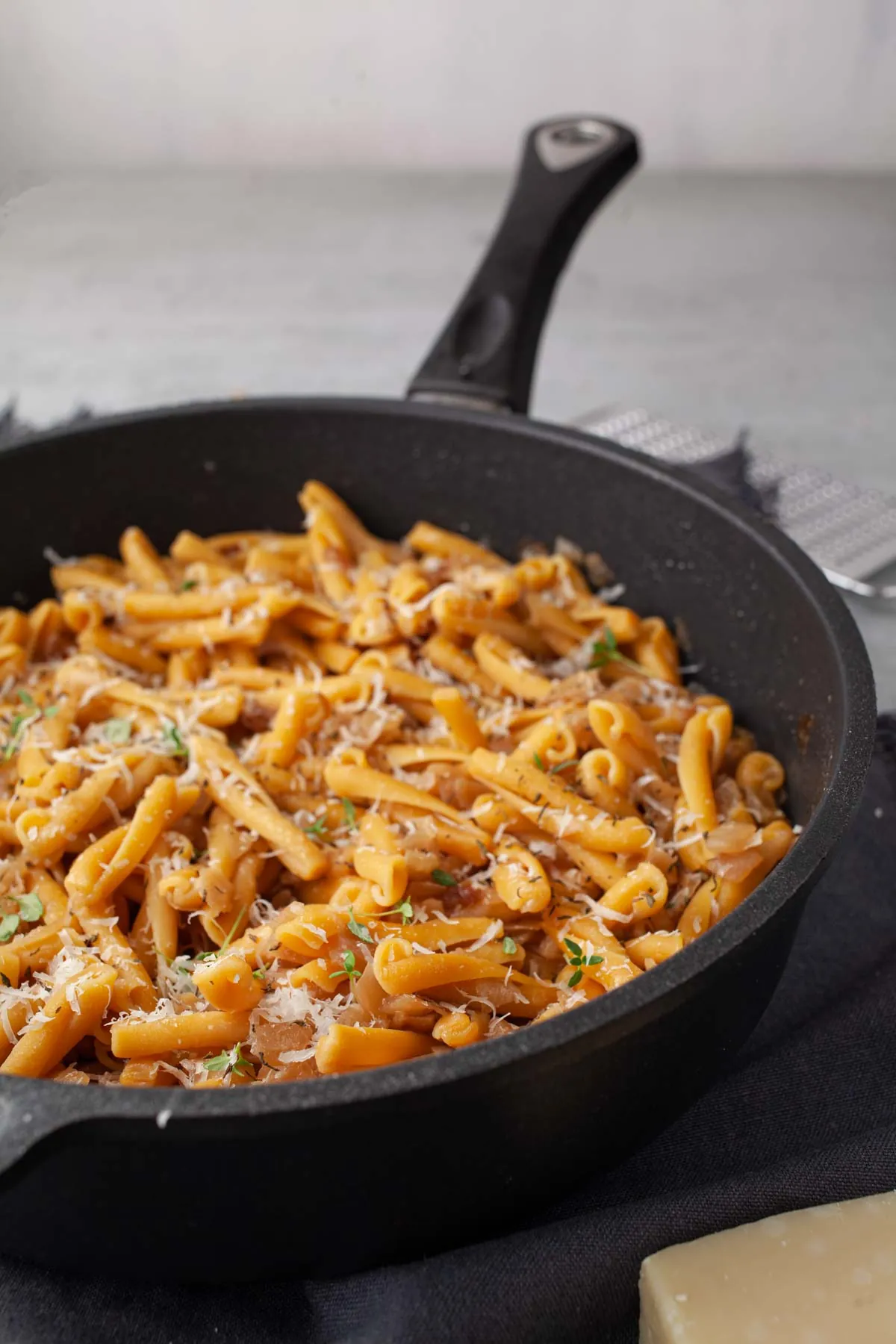
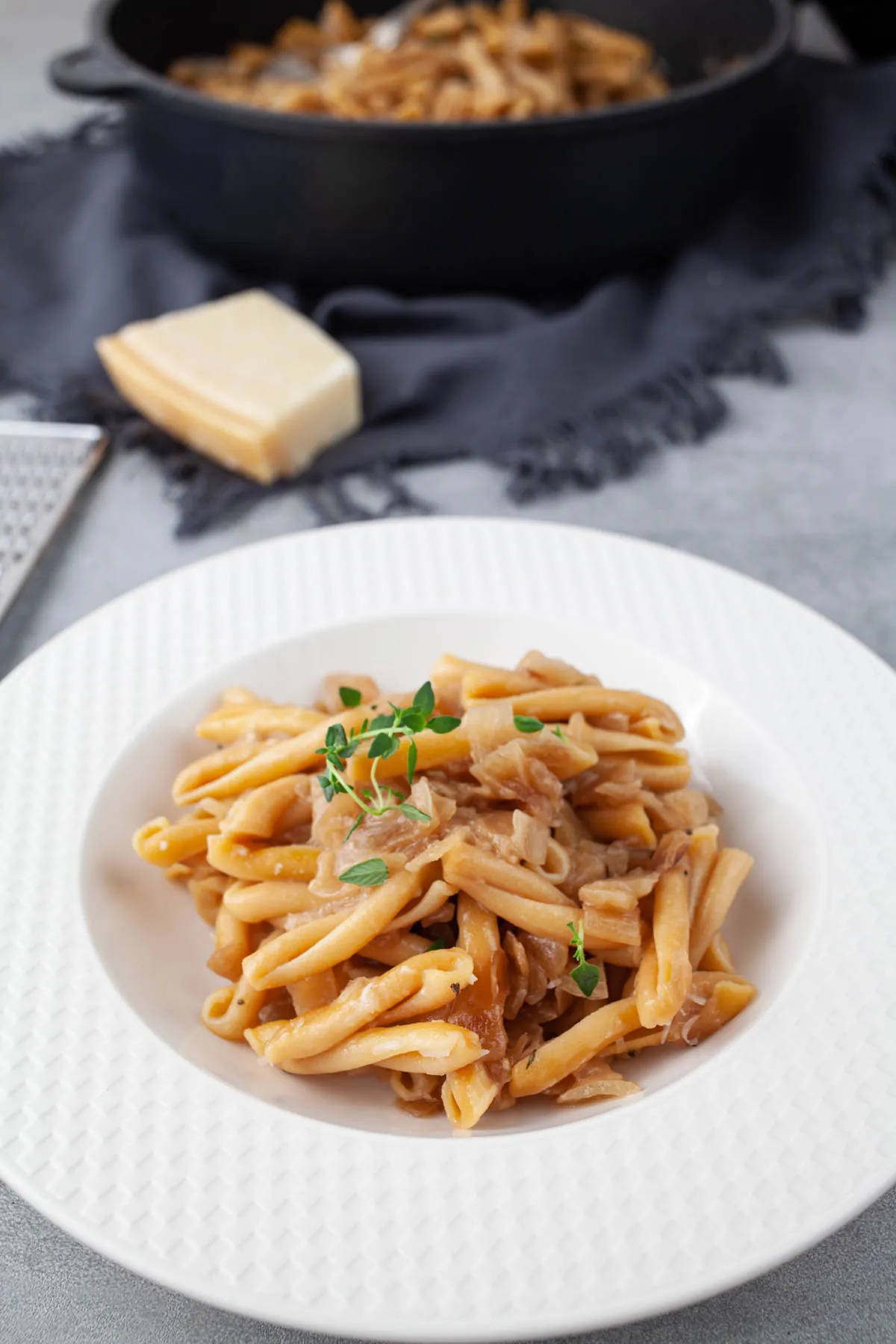
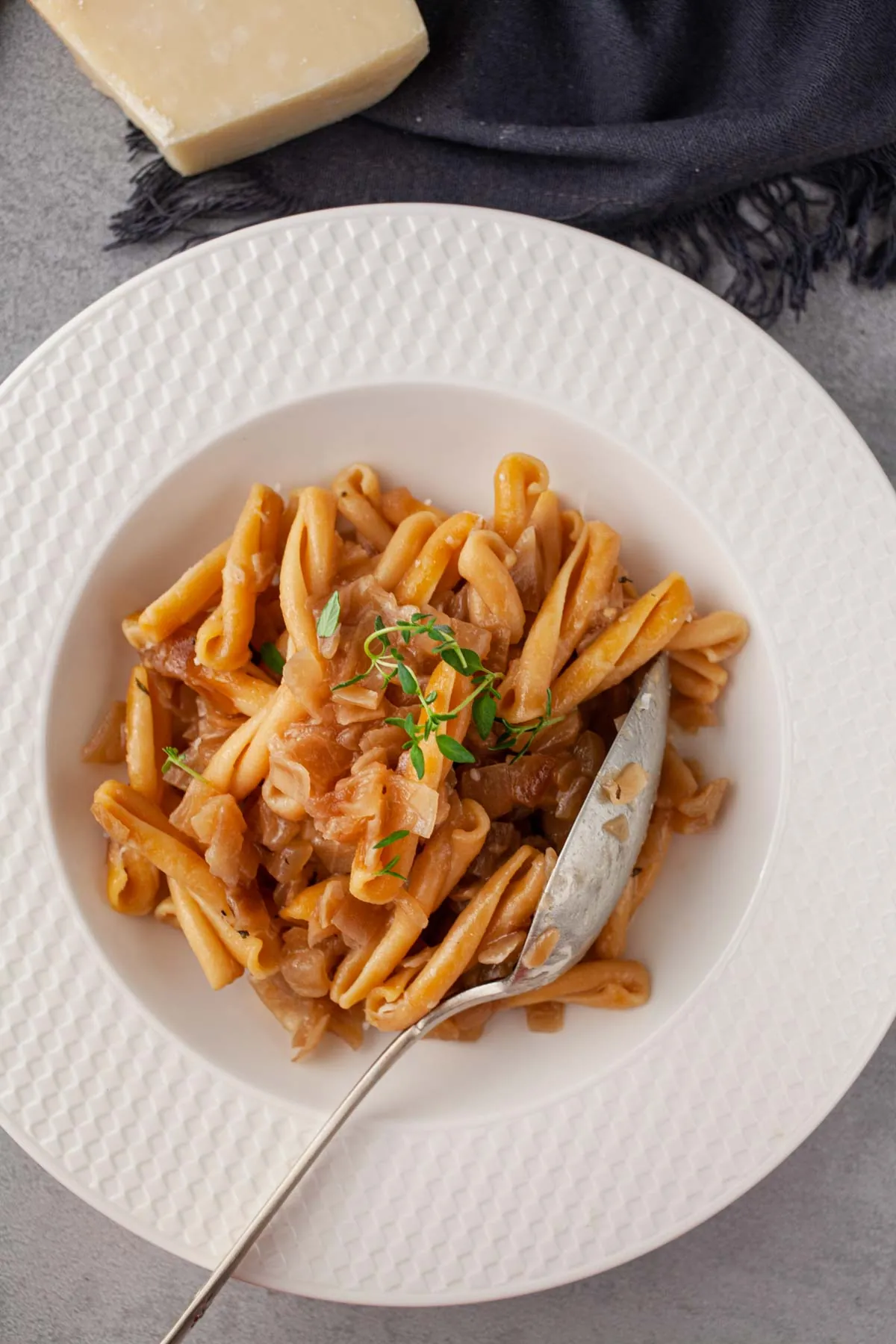
Onions. Four large yellow onions, about 1 kg (2 lb). Chop them into bite-size pieces, like I did for the photos, or slice them into thin strips, whichever you prefer: chopped onion spreads through the pasta so every forkful gets some, while thin strips melt into long, silky ribbons. Sweet onions work too and caramelize a little faster.
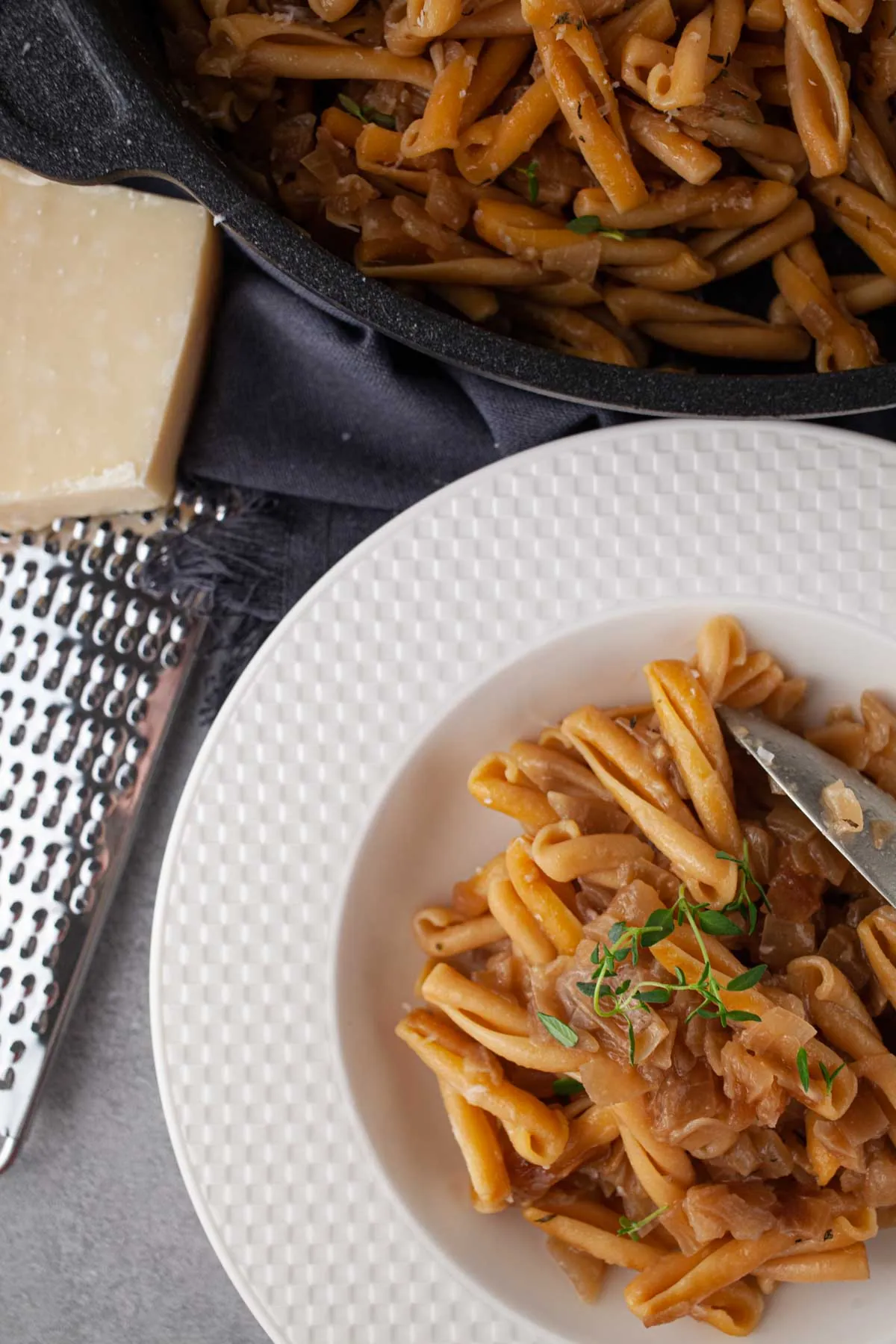
Pasta. I use casarecce, the short rolled shape in the photos, because the onion pieces get caught in its curled edges. If you were looking for a good casarecce pasta recipe, this is a lovely one to start with; penne or fusilli work the same way.
Butter and olive oil. The butter brings the rich, rounded taste, and the oil keeps it from burning during the long cooking.
Brown sugar. Just a teaspoon. It helps the onions color evenly and rounds out the sweet-savory flavor without making the pasta sweet. You can also skip it; the onions will still caramelize, just a bit slower.
Parmesan. Grated into the pasta at the end and over the top when serving. Traditional Parmigiano Reggiano is made with animal rennet, so if you eat strictly vegetarian, look for a vegetarian hard cheese.
Easy Swaps: Vegan, Greener or a Little Spicy
- Vegan. Use vegan butter or simply more olive oil, and finish with 2 to 3 tablespoons of nutritional yeast instead of parmesan. Most dried pasta is egg-free, but check the label.
- With chili oil. A spoonful of chili oil over each bowl is a popular twist, and the heat works really well against the sweet onions.
- More French onion. Deglaze with a splash of dry white wine and add a few thyme sprigs to the onions in the last 10 minutes.
- Greens. Stir a couple of handfuls of baby spinach or arugula into the hot pasta right before serving.
Leftovers and Making the Onions Ahead
Leftover pasta keeps in an airtight container in the fridge for up to 3 days. Warm it in a pan with a splash of water so the sauce turns creamy again; the microwave works too, but the pasta dries out a little.
The onions are the part worth making ahead. Caramelize a double batch, keep it in the fridge for up to 4 days or freeze it in portions for up to 3 months, and dinner on a busy night is just a pot of boiling pasta. For more simple pasta ideas, try my garlic pasta (pasta all’aglio) or read the guide to cooking pasta al dente.
Caramelized Onion Pasta
Equipment
- Large pot
- Large skillet
- Wooden spoon
- Grater
Ingredients
- 14 oz casarecce pasta or penne, fusilli
- 4 yellow onions large, chopped or thinly sliced, about 2 lb / 1 kg
- 3 tbsp butter
- 2 tbsp olive oil
- 1 tsp brown sugar
- 2 cloves garlic minced
- Salt to taste
- Black pepper freshly ground
- ½ cup parmesan grated, plus more to serve
- Thyme leaves fresh, to garnish
Instructions
- Heat the butter and olive oil in a large, wide skillet over medium heat. Add the onions and a pinch of salt and cook for 10 to 15 minutes, stirring now and then, until soft and translucent.
- Stir in the brown sugar and lower the heat to medium-low. Cook for 20 to 25 minutes more, stirring every few minutes, until the onions are deep amber and jammy. Whenever the bottom of the pan browns or the onions stick, add 1 to 2 tablespoons of water and scrape up the browned bits with a wooden spoon.
- Meanwhile, bring a large pot of salted water to a boil and cook the pasta until al dente, following the package directions. Before draining, reserve 1 cup (240 ml) of the cooking water.
- Add the garlic to the onions and cook for 1 to 2 minutes, until fragrant. Season with salt and black pepper.
- Add the drained pasta and about half of the reserved water to the skillet and toss over low heat for 1 to 2 minutes. Take the pan off the heat, add the parmesan and toss vigorously, adding more pasta water a splash at a time, until the sauce is glossy and creamy.
- Serve right away, topped with more parmesan and fresh thyme leaves.
Notes
Caramelized Onion Pasta Questions
About 35 to 40 minutes in total: 10 to 15 minutes over medium heat until soft and translucent, then 20 to 25 minutes over medium-low until deep amber and jammy. Higher heat browns them faster, but they turn bitter instead of sweet.
Not quite. French onion pasta is built like the soup, usually with broth, wine, thyme and Gruyère. This version keeps only the onions, butter, parmesan and pasta water. For a French onion feel, deglaze the onions with white wine and add thyme.
Save a cup of the pasta cooking water before draining. Toss the pasta with the onions, a splash of that water and the grated parmesan off the heat, stirring hard; the starch and cheese turn into a glossy sauce. Add more water a little at a time if it looks dry.
Yes. Cook the onions in vegan butter or extra olive oil, and finish with nutritional yeast or a vegan parmesan instead of cheese. The onions, sugar and most dried pasta are already plant-based, so those two swaps are enough.
No, it is optional. Onions caramelize on their own thanks to their natural sugars; the brown sugar just helps them color more evenly and adds a little depth. A teaspoon is enough; more than that makes the sauce noticeably sweet.
Yes. They keep in the fridge for up to 4 days and in the freezer for up to 3 months. Reheat them in the skillet with a splash of water, then toss with freshly cooked pasta and parmesan.