
Garlic Pasta | Pasta all’aglio
This garlic pasta recipe is inspired by the traditional Italian pasta all’aglio and given a personal twist with sage, crispy toast crumbs, and nutritional yeast. Give it a try!
Garlic pasta is a fast, pantry-friendly dish made by gently cooking sliced garlic in good olive oil, then tossing it with cooked pasta. This version takes the classic pasta all’aglio and adds fresh sage, a scatter of crunchy toast crumbs, and nutritional yeast for a savory, cheesy finish. It comes together in the time it takes your pasta to boil, and it is naturally plant-based, so it works for a quick weeknight dinner when you want something simple but full of flavor.
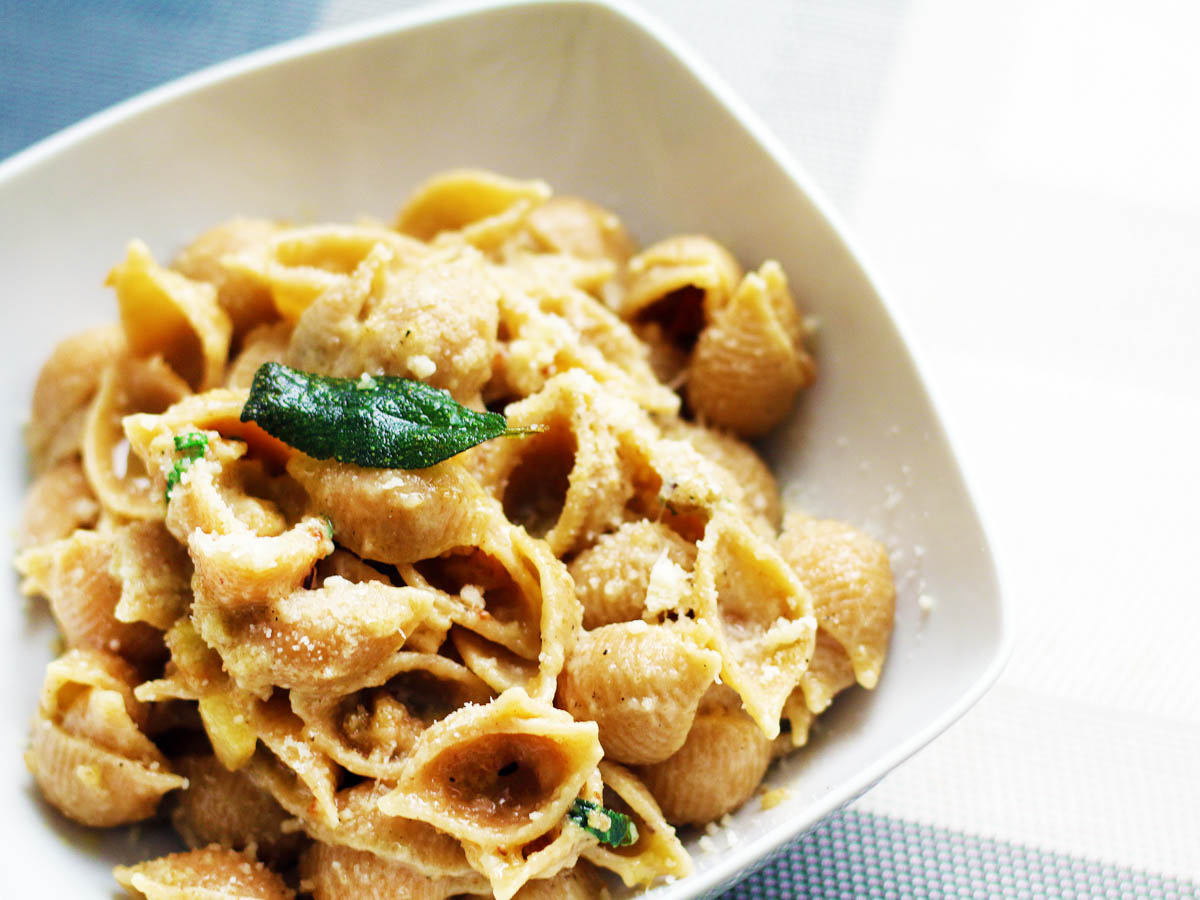
What I love most since moving to Milan is the variety of pasta shapes available in almost any supermarket, and I’ve been on a quest of trying them all. I used to love eating pasta shells or cute farfalle when I was little, and now I lean on simpler shapes like spaghetti, tagliatelle, fusilli, and penne for easy pasta recipes. This is the second pasta recipe I made since moving here (the first was my one-pot tomato and spinach pasta, which I hope you tried and enjoyed), and it got prioritized for one reason: it has become my all-time favorite pasta recipe. If you love garlic as much as I do, this one will become your favorite too. I added a personal touch, and I believe it is even better than the traditional Italian recipe. You’ll see what I’m talking about!
What you’ll need
The ingredient list is short, so quality matters. Here is what each one brings to the plate:
- Pasta — 250 g of your favorite shape. I used whole grain pasta shells, but any pasta works. Shapes with nooks and ridges catch the garlic oil and toast crumbs beautifully.
- Garlic — a whole head, peeled and sliced. This is the star, so use fresh, firm cloves with no green sprout in the center.
- Extra-virgin olive oil — 6 tablespoons. It is both the cooking fat and the sauce here, so a good, fruity olive oil makes a real difference.
- Toast — 3 slices, extra-crispy and crushed by hand into tiny bits. These crumbs add crunch and soak up the flavored oil.
- Fresh sage — 10 leaves. Cooked in the oil with the garlic, sage turns aromatic and slightly nutty.
- Nutritional yeast flakes — 6 tablespoons, or grated vegan cheese. This gives a savory, cheesy note without any dairy. Grated parmesan is a non-vegan alternative if you prefer.
- Peperoncino — 1 to 2 pinches, for a gentle warmth.
- Salt and ground pepper — to taste.
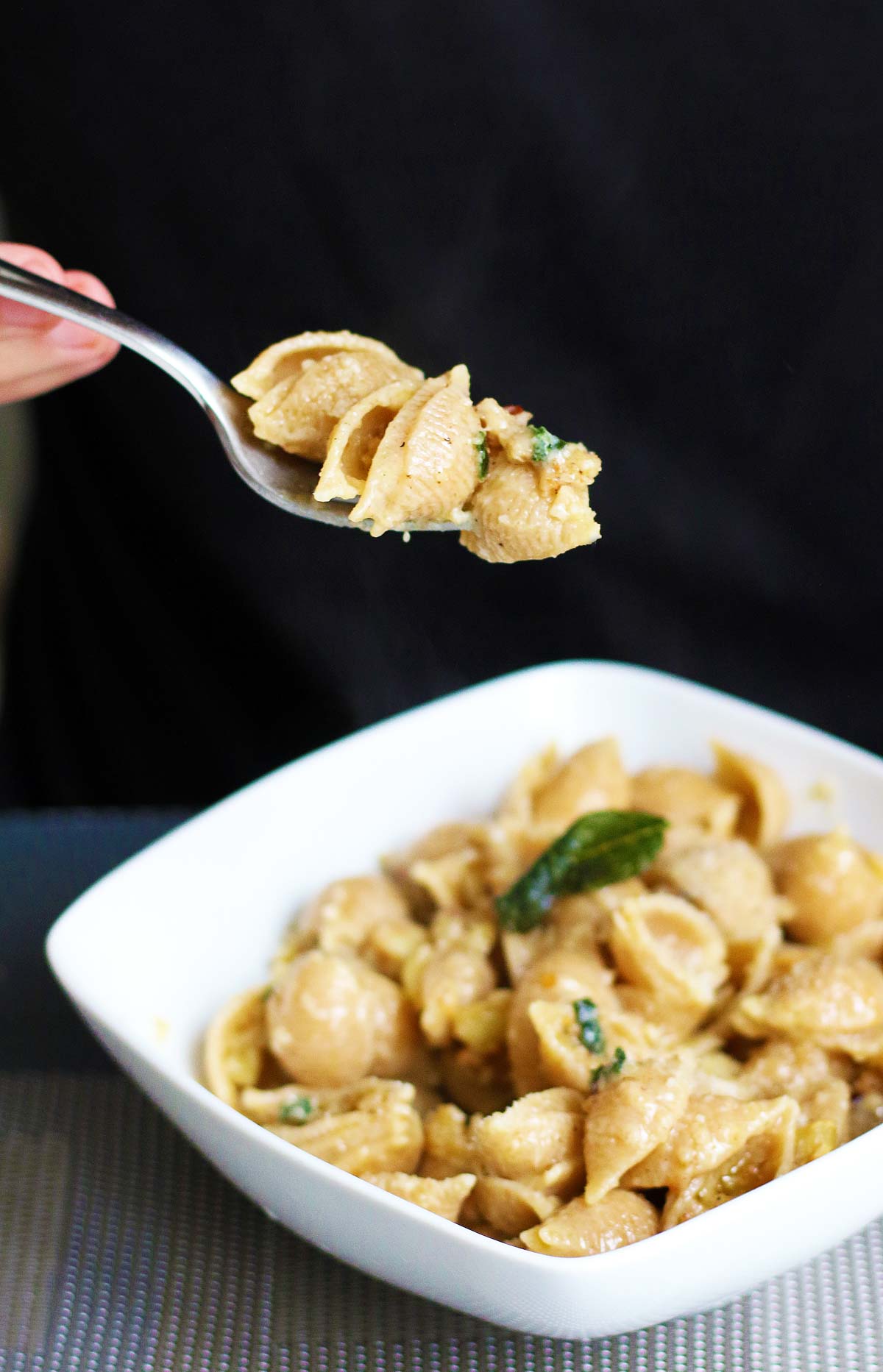
The one rule: don’t burn the garlic
This dish lives or dies by how you cook the garlic. Add the sliced garlic, chopped sage, and olive oil to a cold or barely warm pan, then bring it up over medium heat. You want the garlic to turn a soft, pale gold and become fragrant, nothing darker. The moment it browns it turns bitter, and that bitterness carries through the whole plate. As soon as the slices are golden, pull the pan off the heat. Starting the garlic in cool oil and using medium heat gives it time to infuse the oil evenly instead of scorching on the edges, which is exactly why the flavor stays sweet and mellow.
How to make garlic pasta
- Peel the garlic cloves and slice them thinly.
- Boil the pasta in well-salted water, then drain it.
- In a large frying pan, add the olive oil, chopped sage, and sliced garlic. Cook over medium heat until the garlic is slightly golden. Do not let it turn brown or burn.
- Once golden, remove the pan from the heat.
- Add the drained pasta to the pan along with salt, pepper, peperoncino, the crushed toast, and the nutritional yeast (or grated vegan cheese, or parmesan if you are not keeping it vegan).
- Toss everything together and serve right away.
Serve it the second it is tossed. Garlic pasta is at its best hot, when the oil is still glossy and the toast crumbs are crisp.
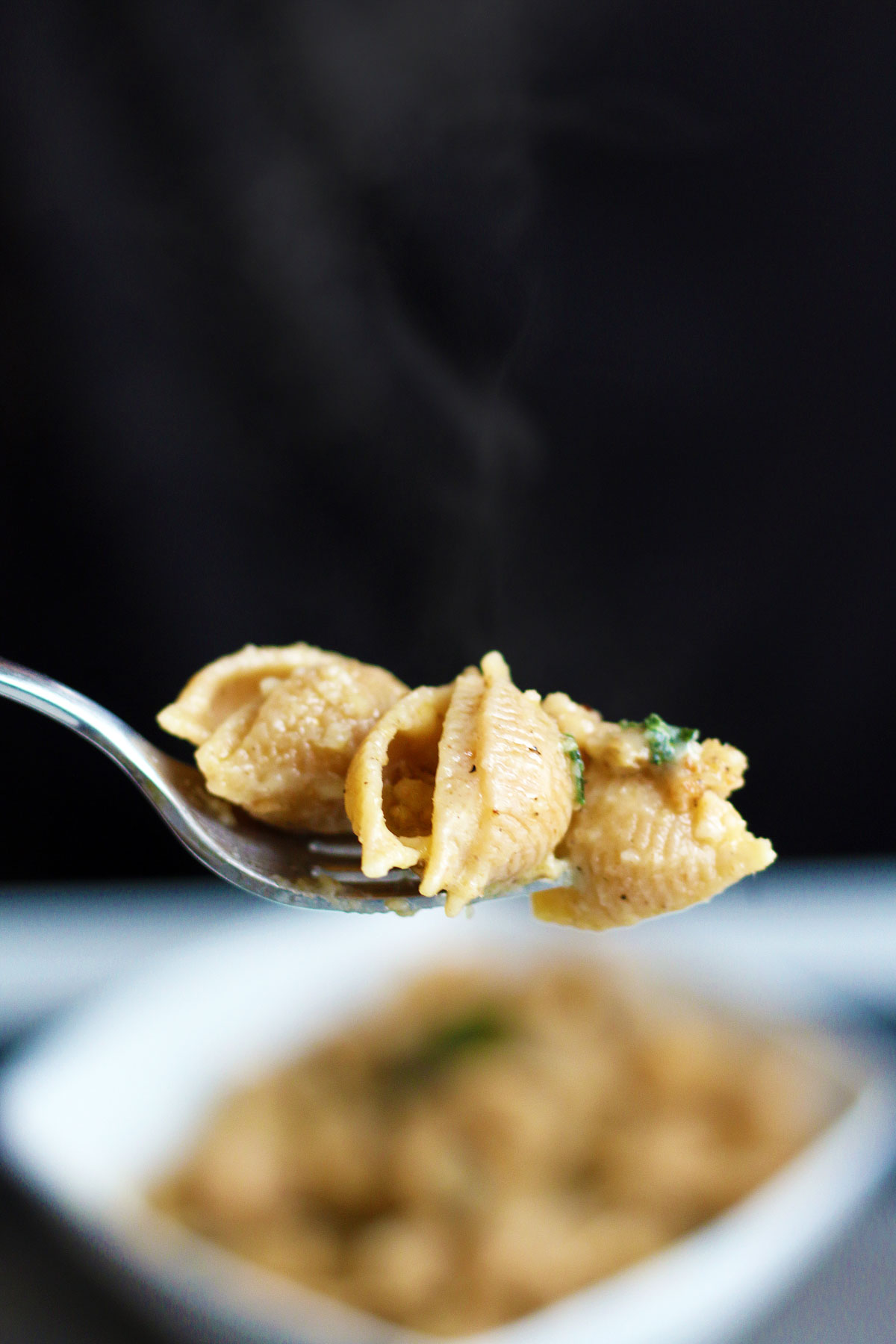
Tips, swaps, and what to serve alongside
A few small choices make this simple plate really shine. Reserve a splash of the starchy pasta water before draining; if the pasta looks dry once tossed, a tablespoon or two loosens the oil into more of a sauce. Slice the garlic evenly so every piece cooks at the same rate. If you like more heat, lean into the peperoncino, and if you want it milder, keep it to a single pinch. For a nuttier crumb, use a whole grain or seeded toast.
Because it is so garlic-forward, this pasta pairs well with fresh, bright sides. A crisp green salad or a plate of roasted vegetables balances the richness of the oil. If you are a fellow garlic lover, keep the theme going with my stuffed aubergines with garlic sauce or a batch of roasted garlic mushrooms on the side. And if you want to explore more, I have a whole collection of vegan pasta recipes to work through, plus a milder, mellow-sweet cousin to this dish, my roasted garlic pasta.
Storing and making ahead
Garlic pasta is really meant to be eaten fresh, but leftovers keep in an airtight container in the fridge for up to 2 days. Reheat gently in a pan with a small drizzle of olive oil rather than the microwave, which helps the pasta come back to life without going gummy. Add the toast crumbs only when reheating, since they lose their crunch once stored. I would not freeze this one; the texture of the pasta and the crisp crumbs does not hold up. If you like to prep ahead, you can slice the garlic and crush the toast in advance, then the whole dish comes together in minutes whenever you are ready to eat.
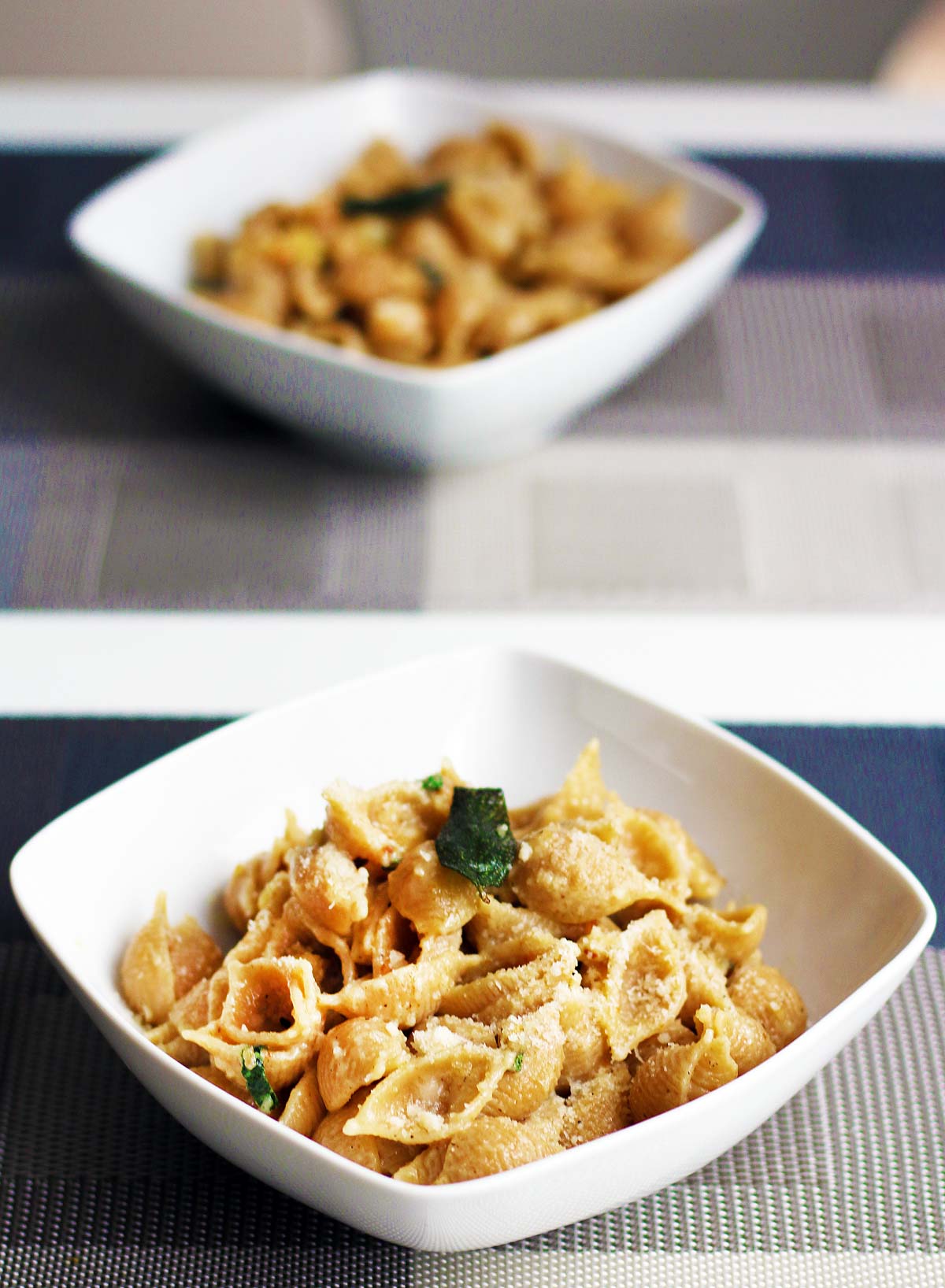
If you make this garlic pasta, I would love to know how the sage and toast crumbs worked out for you, so please rate the recipe below and leave a comment with any tweaks you tried. Tell me: did you go full vegan with the nutritional yeast, or reach for the parmesan?
Summarise & Save This Recipe
★ Add us as a trusted Google source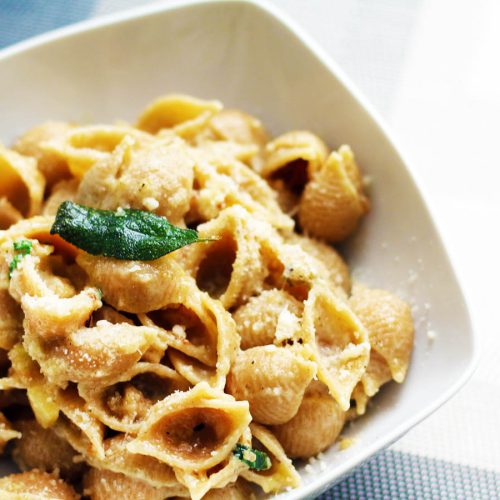
Garlic Pasta | Pasta all’aglio
Ingredients
- 250 g pasta of choice I used whole grain pasta shells, but you can use any kind of pasta you want
- 1 head garlic
- 6 Tbsps extra-virgin olive oil
- 3 slices toast extra-crispy, crushed by hand into tiny bits
- 10 fresh sage leaves
- 6 Tbsps nutritional yeast flakes / grated vegan cheese or grated parmesan optional, but recommended
- 1-2 pinches peperoncino
- salt and ground pepper to taste
Instructions
- Peel the garlic cloves and slice them thinly.
- Boil the pasta in salted water until al dente.
- Meanwhile, in a large frying pan, add the olive oil, chopped sage and sliced garlic. Cook over medium heat until slightly golden.
- DO NOT let it turn brown! The garlic must not burn or it will taste bitter.
- Once golden, remove the pan from the heat.
- Before draining, reserve a splash of the pasta water, then drain the pasta.
- Add the pasta to the pan along with the salt, pepper, peperoncino, crushed toast and, optionally, grated parmesan or, for a vegan version, grated vegan cheese / nutritional yeast flakes.
- Toss well, loosening with a little reserved pasta water if needed, and serve right away.
Notes
Frequently Asked Questions
Yes, as written it is fully vegan. It uses nutritional yeast flakes (or grated vegan cheese) for the savory, cheesy note, and everything else — pasta, garlic, olive oil, toast, sage, and peperoncino — is plant-based. Grated parmesan is listed only as an optional non-vegan alternative, so simply skip it to keep the dish vegan.
Cook the sliced garlic gently in olive oil over medium heat and take it only to a soft, pale gold. The moment garlic browns it turns bitter, and that carries through the whole dish. Starting the garlic in cool or barely warm oil and pulling the pan off the heat as soon as it is golden keeps the flavor sweet and mellow.
Any shape works, but shapes with nooks and ridges hold the garlic oil and toast crumbs best. I used whole grain pasta shells here. Fusilli, penne, or spaghetti are all good choices too, so use whatever you have on hand.
It is best eaten fresh, but you can prep ahead by slicing the garlic and crushing the toast in advance so the dish comes together in minutes. Leftovers keep in an airtight container in the fridge for up to 2 days and reheat best in a pan with a little olive oil. Add the toast crumbs only when reheating so they stay crunchy.
Grated vegan cheese is a direct plant-based swap, and grated parmesan works if you are not keeping the dish vegan. All three add the savory, cheesy finish, so choose based on your diet and what you have. You can also leave it out entirely, though the pasta will taste a bit lighter and less rich.
Because it is rich and garlic-forward, it pairs well with fresh, bright sides like a crisp green salad or roasted vegetables. To lean into the garlic theme, serve it alongside roasted garlic mushrooms or stuffed aubergines with garlic sauce. Keep sides simple so the pasta stays the star.


A classic! Made it with nutritional yeast and it ended up super cheesy and good
Thanks for sharing!!
You’re welcome! 🙂