
Gluten-Free Flatbreads Recipe | Just 5 ingredients!
These gluten-free flatbreads with sesame are soft, lightly crisp at the edges, and ready in minutes. Made from just a gluten-free flour mix, water, salt, sesame seeds, and a little oil, they cook on a skillet until golden and puffed. They are also known as vegan parathas, an Indian-style flatbread that works for wrapping, scooping up dips, or eating warm on their own.
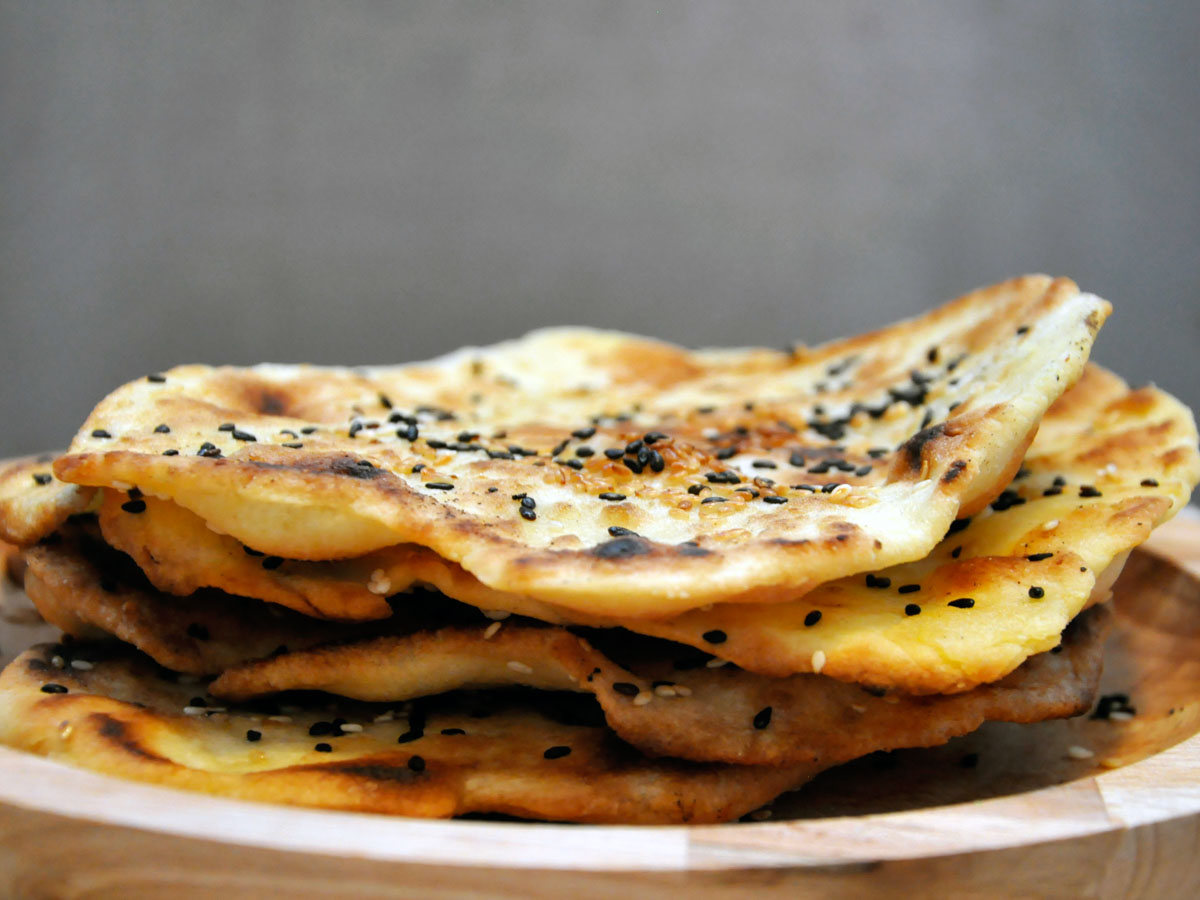
I just fell in love with baking and cooking with gluten-free flour! I never thought I would ever say this, but ever since going gluten-free, baking has become such a joy, and I just can’t wait for the weekend to come so I can have enough time to try new recipes. Yesterday, I had some extra free time and decided to make these flatbreads. I didn’t have anything to serve them with, but I wanted to make them anyway. I saw Meg’s recipe a few weeks ago and saved it on Pinterest. However, I modified the recipe a bit: I used less water and less flour, added black and white sesame seeds, and skipped the cumin. I think this version is more similar to the Indian parathas than to naans, so I changed its name too. The taste, the crunchy texture, everything was just like I wanted.
What you need (and why each one matters)
The ingredient list is short, which means the few things you do use carry the recipe. Here is what each one does:
- Gluten-free flour mix (250 g): use an all-purpose blend that already contains a binder such as xanthan or guar gum. I used Dr. Schar Mix B. A good mix is what keeps the dough from cracking when you roll it, since there is no gluten to hold it together.
- Water (100 ml, more if needed): added one tablespoon at a time so you can stop at the exact moment the dough comes together. Gluten-free flours absorb liquid differently from brand to brand, so the amount is a guide, not a hard rule.
- Salt (½ tsp): a small amount that lifts the flavor of an otherwise plain dough.
- Black and white sesame seeds: pressed onto the surface for nutty flavor and a bit of crunch. The two colors are mostly for looks, so use whatever you have.
- Olive oil (1 Tbsp) plus a little more for cooking: brushed on before the seeds so they stick, and used to lightly grease the skillet.
Getting the dough right
The whole recipe hinges on the dough, and the texture you are after is elastic but not sticky. Add the water slowly while stirring, and watch how the flour responds. If it turns wet and tacky, work in a little more flour, one tablespoon at a time; if it stays dry and crumbly, add a touch more water the same way. Once it holds together cleanly, knead it briefly with your hands until smooth.
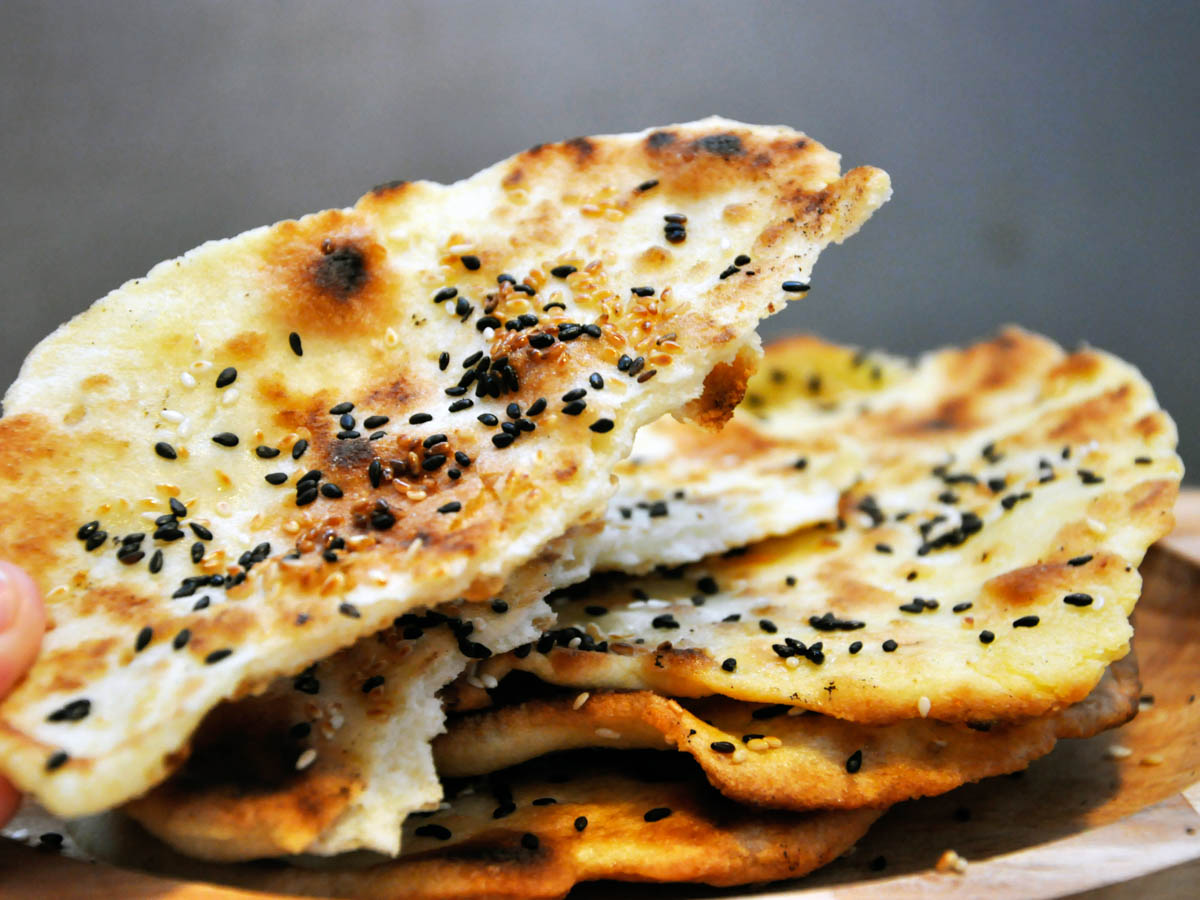
Divide the dough into six balls and roll each one out on a floured surface to about 3-4 mm thick. Aim for an even thickness rather than a perfect circle, because thin spots cook faster and can scorch while thick spots stay doughy. Brush each round with a little olive oil and press the sesame seeds gently into the surface so they hold during cooking.
Cooking them on the skillet
Lightly grease a large non-stick skillet and heat it over low-medium heat. Resist the urge to crank it up: too hot and the outside browns before the inside is cooked through. Cook each flatbread for 1-2 minutes per side, until it turns a nice golden-brown and the surface looks dry rather than wet. You will see small toasted spots appear, which is your cue that it is ready to flip. Serve them warm, when the texture is at its best.
What to serve them with, plus storage
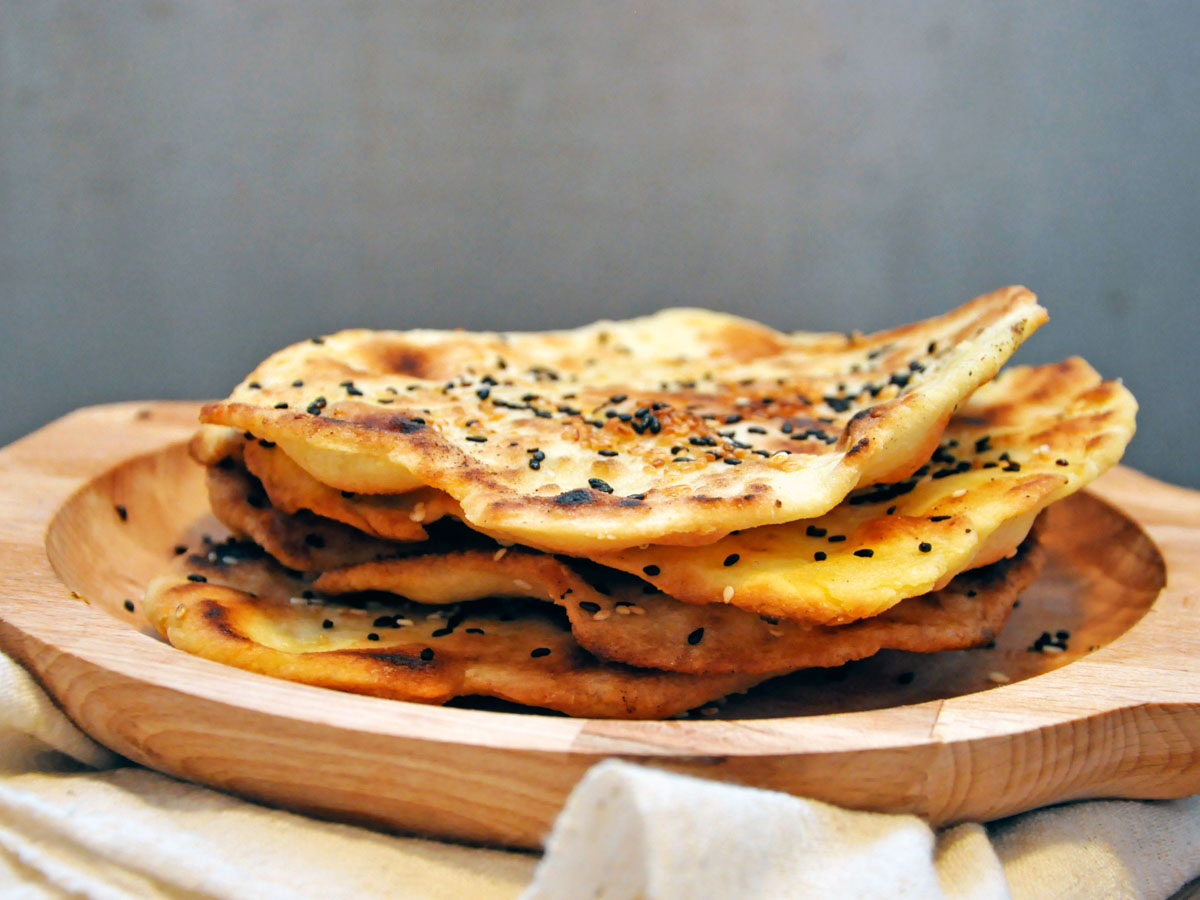
These flatbreads are happiest next to something to dip or scoop. I love them with a bowl of light, lemony hummus, but they are just as good torn and dunked into a warming vegan red lentil soup or a creamy potato and carrot soup. You can also use them as a wrap for a quick lunch or fold one around a hearty potato and carrot stew.
For storage, let them cool fully and keep them in an airtight container for two to three days. They are best fresh, so reheat them for a few seconds in a dry skillet to bring back the soft-with-crisp-edges texture. They also freeze well: stack with a piece of parchment between each one, then warm straight from frozen on the skillet. Next time I make them, I will try baking them instead of cooking them in a skillet, so I won’t have to stay in the kitchen until they’re ready.
If you make these flatbreads, I would love to know how they turned out. Did you go all black sesame, mix in some cumin, or find a flour blend that rolled out perfectly? Leave a rating and a comment below and tell me about your batch.
Summarise & Save This Recipe
★ Add us as a trusted Google source
Gluten-Free Flatbreads with Sesame | Vegan Parathas
Ingredients
- 250 g gluten-free flour mix I used Dr. Schar Mix B flour
- 100 ml water more if needed, see instructions below
- ½ tsp salt
- black and white sesame seeds
- 1 Tbsp olive oil plus some more cooking oil for lightly frying the flatbreads
Instructions
- Put the gluten-free flour and salt in a medium bowl.
- Start adding the water, one tablespoon at a time, while stirring continuously with a spoon.
- The dough should be elastic and not sticky at all. If it’s too wet and sticky, add a little more flour (1 Tbsp at a time). If it’s too dry and crumbly, add a little more water (again, one Tbsp at a time).
- Once the dough has the right consistency, start kneading it with your hands.
- Divide the dough into 6 small balls. Each ball will become a flatbread.
- Dust your work surface with some flour.
- Take one dough ball and, using a rolling pin, roll it out into a round shape. The dough should be around 3-4 mm thick.
- Set aside and roll out the other dough balls too.
- When finished, lightly brush each flatbread with olive oil and sprinkle some sesame seeds on top.
- Spray some oil on a large, non-stick skillet and let it heat over low-medium heat.
- Cook each flatbread for 1-2 minutes on each side, or until it turns a nice golden-brown color.
- Serve warm and enjoy!
Notes
Frequently Asked Questions
Use an all-purpose gluten-free flour mix that already includes a binder like xanthan or guar gum, which holds the dough together in place of gluten. I used Dr. Schar Mix B with good results. Single flours like rice or buckwheat alone tend to crack when rolled, so a balanced blend works best.
Yes. They are made only from gluten-free flour, water, salt, sesame seeds, and olive oil, so there are no eggs, dairy, or other animal products. They are naturally vegan and also dairy-free.
A crumbly dough usually means it needs a little more water, so add it one tablespoon at a time until it becomes elastic but not sticky. Cracking at the edges while rolling can also happen if your flour blend has no binder, so check that it contains xanthan or guar gum. Aim for a smooth dough that holds together cleanly before you start rolling.
Naan is typically a leavened bread made with yogurt and yeast and baked in a tandoor, while parathas are an unleavened flatbread cooked on a skillet or griddle. This recipe is unleavened and pan-cooked, which is why it is closer to a paratha than a naan. It is also egg-free and dairy-free, unlike many traditional naan recipes.
The recipe as written cooks them in a lightly greased non-stick skillet over low-medium heat for 1-2 minutes per side. Baking is something I plan to try next time to save active time in the kitchen, though the skillet method is what gives the reliable golden, lightly crisp result here. If you bake them, watch closely so the thin rounds do not dry out.
Let them cool completely, then keep them in an airtight container for two to three days. To freeze, stack them with parchment between each one. Reheat in a dry skillet for a few seconds to bring back the soft center and crisp edges, since they are at their best warm rather than cold.


Can you make this ahead and let it sit over night covered on the counter or in the fridge?
Hi Jess. Unfortunately, they will harden overnight. But a trick is to quickly dip them in water the next day and put them in the oven again for 5 minutes or so. They will be fresh again. 😉
Hi, would this work with any gluten free flour blend ?
Hi! Haven’t tried it with another brand, but you can give it a try as long as its a mix, not a single type of GF flour.
So much better than regular bread. My son loves eating this with hummus in the morning, which has made mornings much easier for me. I love your blog and I want to try more recipes, your Baba Ganoush sounds extraordinary
Thank you! Glad you liked the recipe! 🙂
So awesome, easy and fast! Just made these in the oven at the highest temp and they turned out great 🙂
Glad you liked them! 😀
Excited to try this!!
I don’t believe ore oil works but more for frying might 😀💖 much love thanks for great recipes!!
You’re welcome!