
Mutabal | Tahini Eggplant Spread
Mutabal is a smoky Middle Eastern eggplant spread made with charred eggplant, tahini, lemon, and garlic. You grill the eggplants until the skin blackens, scoop out the soft flesh, and whip it with the rest of the ingredients into a creamy, savory dip you can serve at brunches, parties, or as a simple appetizer. It comes together with seven everyday ingredients, and the smoky flavor is what makes it so good.

I am crazy about eggplants. I eat them grilled, baked, with sauces or just as they are, stuffed, in dips, spreads, and so on. I think they’re my favorite veggie. So a recipe like this one was always going to win me over. Mutabal is one of my favorite vegetarian spread recipes and definitely among my top 3 favorite Middle Eastern recipes. The traditional version uses yogurt, but I made it vegan and skipped the yogurt, and it turned out just as good. You’ll love it, I’m sure.
What goes into this eggplant spread
The ingredient list is short, so each one matters. Here is what you’ll need and why.
- Eggplants — you’ll need 3 medium-sized ones. Choose the thin or small-medium eggplants because they have fewer seeds and a sweeter taste, which makes a real difference in the final dip.
- Tahini — 5 to 6 tablespoons of sesame paste give the spread its richness and that nutty backbone. If you want to learn more about working with it, take a look at this guide on how to use tahini in recipes.
- Lemon juice — 3 tablespoons of fresh lemon juice cut through the richness and keep the dip bright.
- Garlic — 3 cloves, peeled and smashed, for that punchy, savory edge.
- Olive oil — 1 tablespoon to blend in, plus more for drizzling on top.
- Fresh parsley and sea salt — chopped parsley to finish, and salt to taste.
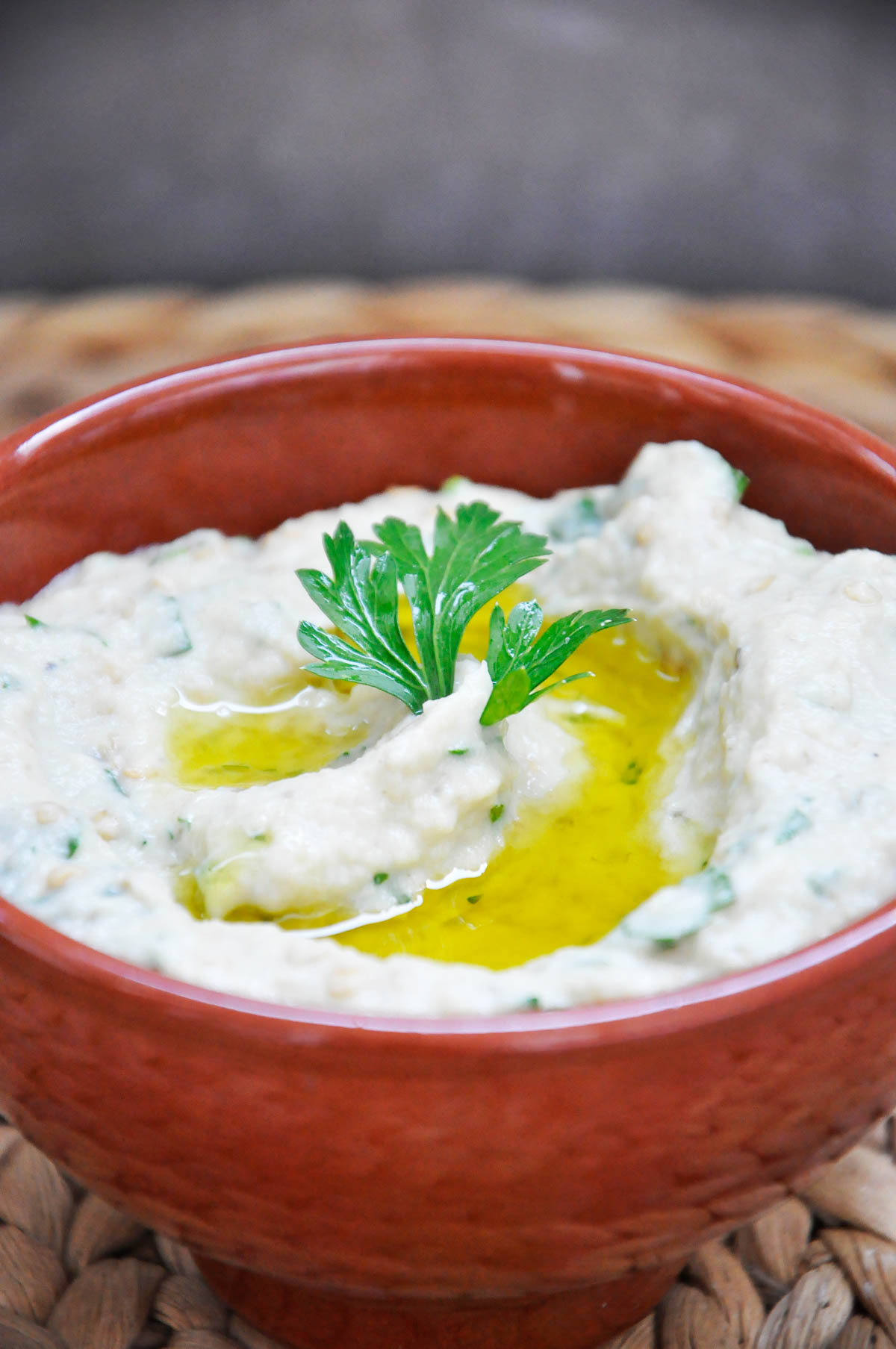
How to get that smoky flavor right
The whole character of mutabal comes from how you cook the eggplants. Grill them on a hot grill pan, turning every 10 minutes or so, until the skin is covered in a black, charred crust. That char is where the smoky flavor comes from, so don’t pull them off too early. Once they’re soft and blackened, peel away the burnt skin and put the flesh on a wooden platter to drain.
The draining step is the one most people skip, and it matters. Let the eggplants drain for at least half an hour. The liquid that runs off is bitter, and the longer you drain them, the sweeter the final spread will be. One more thing worth knowing: mix the eggplants with a hand mixer, not a blender or food processor. A blender makes the spread too smooth and pasty, while a hand mixer keeps that lovely texture you want in a good mutabal.

What to serve with mutabal
Mutabal shines as part of a mezze spread, so I love putting it next to other dips and small plates. Serve it with warm pita or flatbread for scooping, and pair it with a bowl of light, lemony hummus and a smoky muhammara roasted red pepper and walnut spread for a colorful appetizer table. A simple fresh spinach salad on the side rounds the whole thing out into a light meal.
Storing your spread and a few tips
This recipe is similar to my eggplant caviar recipe, which is a staple dish here in Romania, so if you love this one, there is a whole world of eggplant recipes waiting for you. Keep your mutabal in the fridge in an airtight container, and it will hold for a few days. One important note: don’t store it in metal containers, because it will turn black and change its taste. Glass or ceramic is the way to go.
If you want to keep the Middle Eastern dip theme going, the same tahini-and-lemon base shows up beautifully in these green chickpea patties with tahini. And if you have leftover eggplants on your hands, my roasted eggplant mousse is another silky dip worth making.

If you make this mutabal, I’d love to know how the draining trick worked out for you and whether you went smoky enough on the char. Please rate the recipe and leave a comment below with your tweaks. It always makes my day to hear how it turned out on your table.
Summarise & Save This Recipe
★ Add us as a trusted Google source
Mutabal | Tahini Eggplant Spread
Ingredients
- 3 medium-sized eggplants
- 5-6 Tbsps tahini sesame paste
- 3 Tbsps lemon juice
- 3 cloves garlic peeled and smashed
- 1 Tbsp olive oil + another one for drizzling
- freshly chopped parsley leaves
- sea salt to taste
Instructions
- Rinse the eggplants and heat the grill pan.
- Grill the eggplants on each side; don’t forget to turn them over every 10 minutes or so. Grill them until they are covered with a black crust.
- Peel the eggplants, cleaning off the black crust. Put them on a wooden platter and let them drain for at least half an hour. The liquid is bitter. The longer you drain them, the sweeter they’ll be.
- Mix eggplants using a hand mixer (not a blender or a food processor!). Add the rest of the ingredients and mix until smooth.
- Serve with fresh chopped parsley on top.
Notes
– Don’t store Baba Ganoush in metal containers. It will turn black and change its taste.
Frequently Asked Questions
Mutabal is a Middle Eastern eggplant spread made from grilled eggplant blended with tahini, lemon juice, garlic, and olive oil. It is smoky, creamy, and savory, and it is served as an appetizer with pita or flatbread at brunches and parties. The traditional version often includes yogurt, but this one is made without it.
Both are smoky grilled-eggplant dips, and the names are often used interchangeably. The main distinction is that mutabal typically includes a generous amount of tahini and sometimes yogurt for extra creaminess, while baba ganoush leans more on the eggplant and lemon. This recipe uses 5 to 6 tablespoons of tahini, which puts it firmly in mutabal territory.
Yes. The traditional version uses yogurt, but this recipe skips it and relies on tahini and olive oil for richness instead. Every ingredient is plant-based, so the spread is fully vegan and it tastes just as good as the dairy version.
A blender or food processor makes the spread too smooth and pasty, which takes away the texture you want in a good mutabal. A hand mixer blends everything until creamy while keeping a little body. It also gives you more control over how rustic or smooth you want the final dip.
Grilled eggplant releases a liquid that is naturally bitter. Letting the flesh drain on a platter for at least half an hour removes that bitterness, and the longer you drain it, the sweeter the spread will be. Skipping this step is the most common reason a homemade eggplant dip tastes bitter.
Keep mutabal in the fridge in an airtight container and it will last a few days. Do not store it in metal containers, because the spread will turn black and its taste will change. Glass or ceramic containers are the best choice.



Whoa! Loved it! The texture was just perfect. I used medium sized eggplants like you suggested and they weren’t bitter at all!
So happy to hear this!
Were is the tahini sauce recipe? ???
You can buy it. It’s easier this way. Alternatively, simply blend some roasted sesame seeds until a paste is formed.