
Slow Cooker Rose Jelly (Easy Edible Rose Petal Recipe)
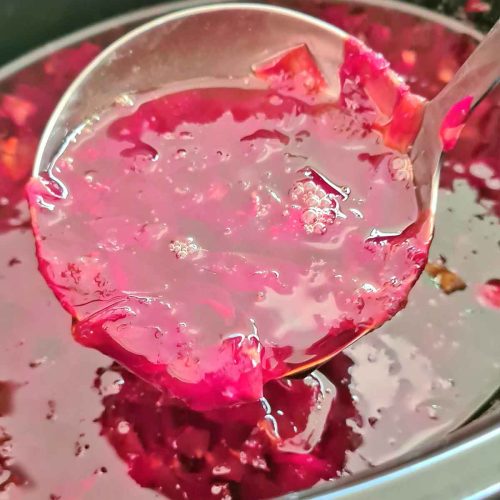
Slow cooker rose jelly is a clear, ruby-red preserve made by steeping fragrant edible rose petals in the slow cooker, then setting the infusion with sugar, lemon juice, and pectin. The low, gentle heat draws the color and scent out of the petals without any babysitting, and the lemon juice is what swings a dull grey-pink infusion to a bright, true pink.
I will be honest: the first time I made rose jelly it felt slightly absurd, like cooking with potpourri. Then I tasted it and understood completely. Low and slow coaxes the colour and perfume out of the petals with no guesswork, and you are not stuck stirring a pot. Spread it on toast and it tastes like a garden in June, which is a ridiculous and wonderful thing to have on hand in winter. It is naturally vegan and gluten free, and a jar tied with a ribbon is one of the nicest things you can hand someone from your kitchen.
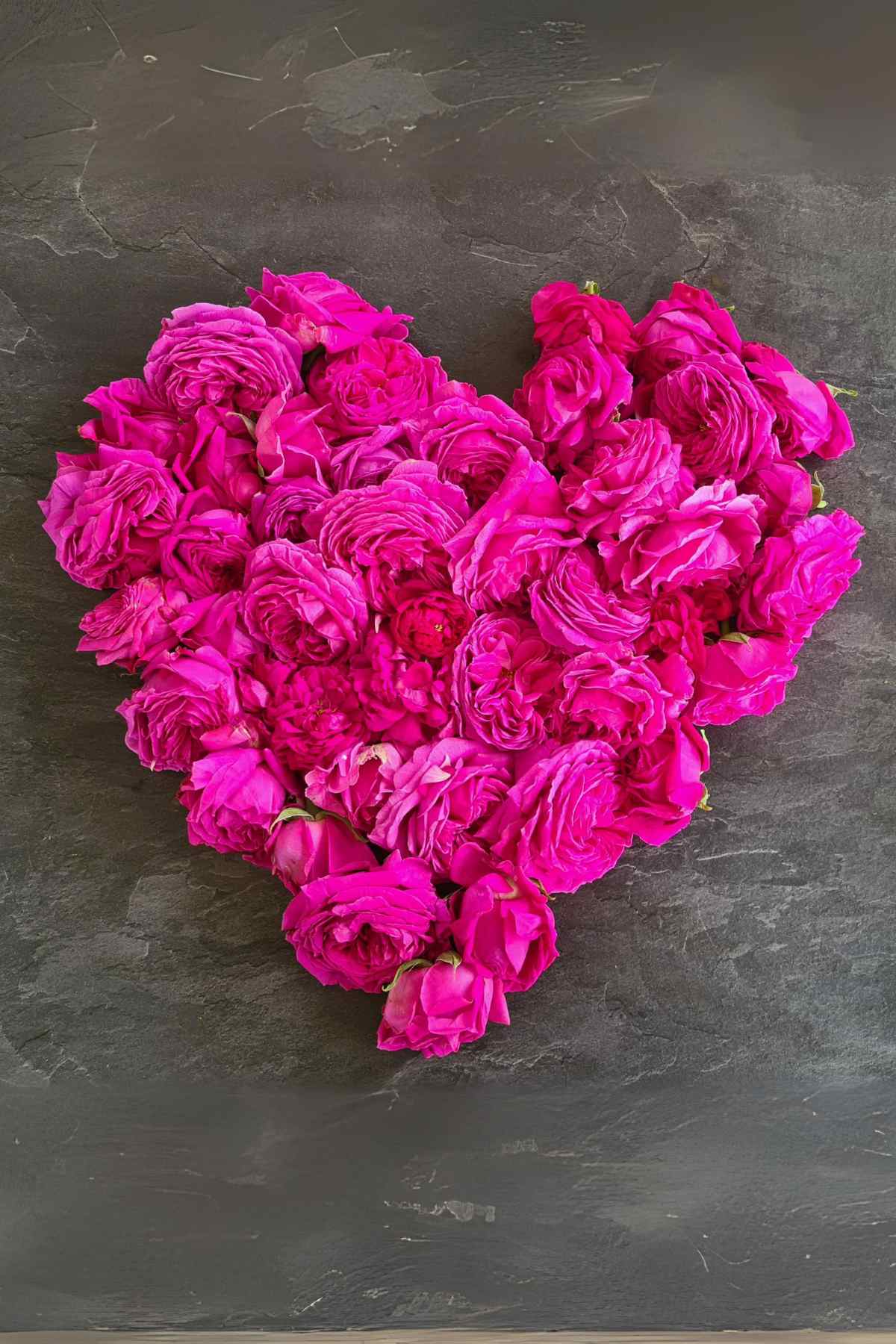
Which roses to use, and why the lemon matters
Rose petals: use only fragrant, pesticide-free roses. Damask roses (Rosa damascena) are the classic pick because their scent is the strongest, but any heavily perfumed garden rose works. If the flower barely smells, the jelly will barely taste of rose. Pinch off the bitter pale heel at the base of each petal before steeping.
Lemon juice does two jobs at once. It drops the pH so the pink pigment in the petals turns vivid instead of murky grey, and it supplies the acidity pectin needs to set. Do not skip it.
Pectin gives the clear, wobbly set. The right amount differs by brand and by how much liquid you end up with, so follow your package rather than a fixed spoon count.
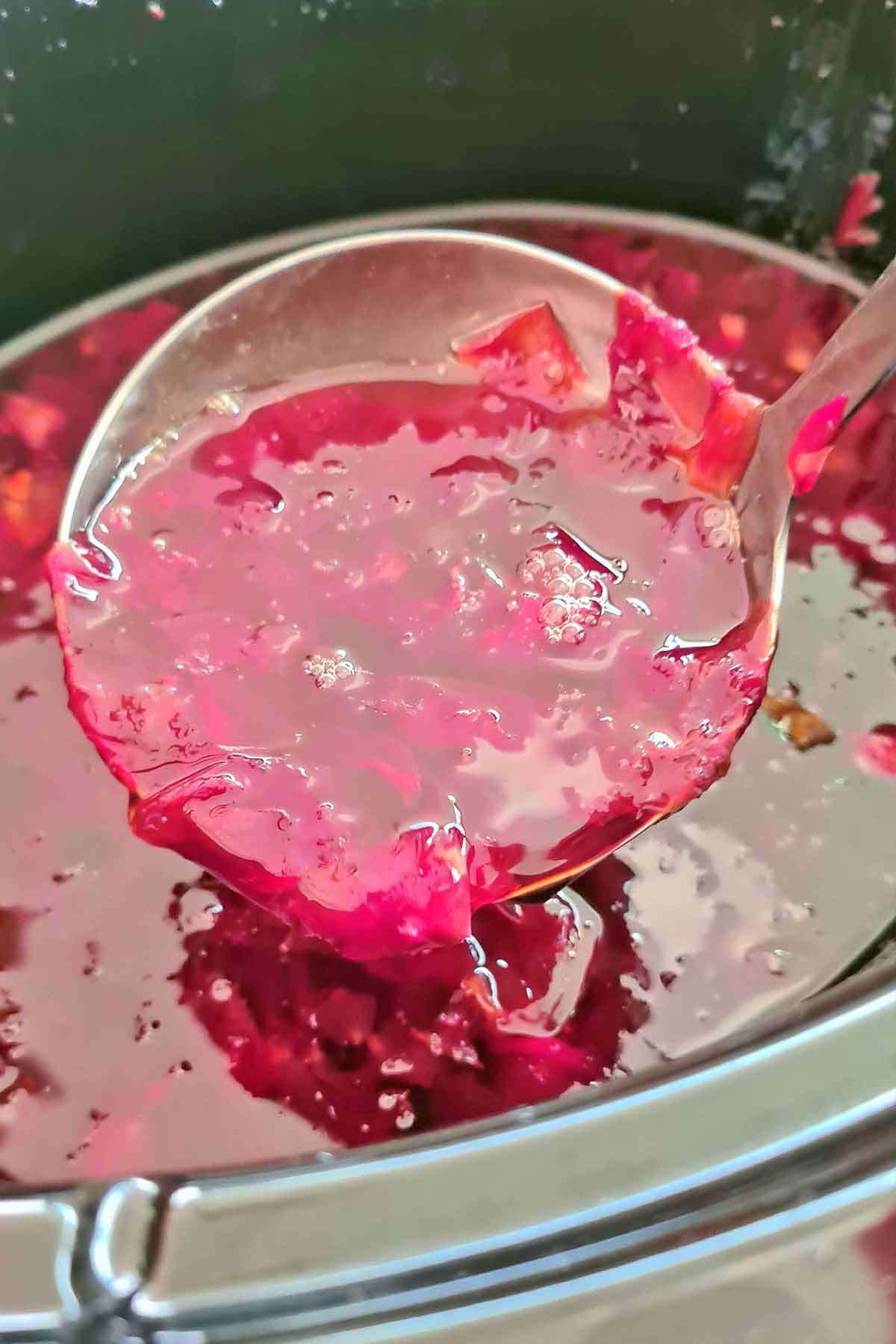
Keeping the color bright and getting a clean set
- Keep the slow cooker on low. A hard boil dulls both the color and the perfume, so resist turning up the heat to rush the steep.
- Steep until you can smell it. Give the petals a few hours on low, until the liquid carries a clear rose scent, before you strain them out.
- Test the set on a cold plate. Chill a saucer in the freezer, drop on a little jelly, wait a moment, then push it with a finger. If it wrinkles and holds instead of running, it is ready to jar.
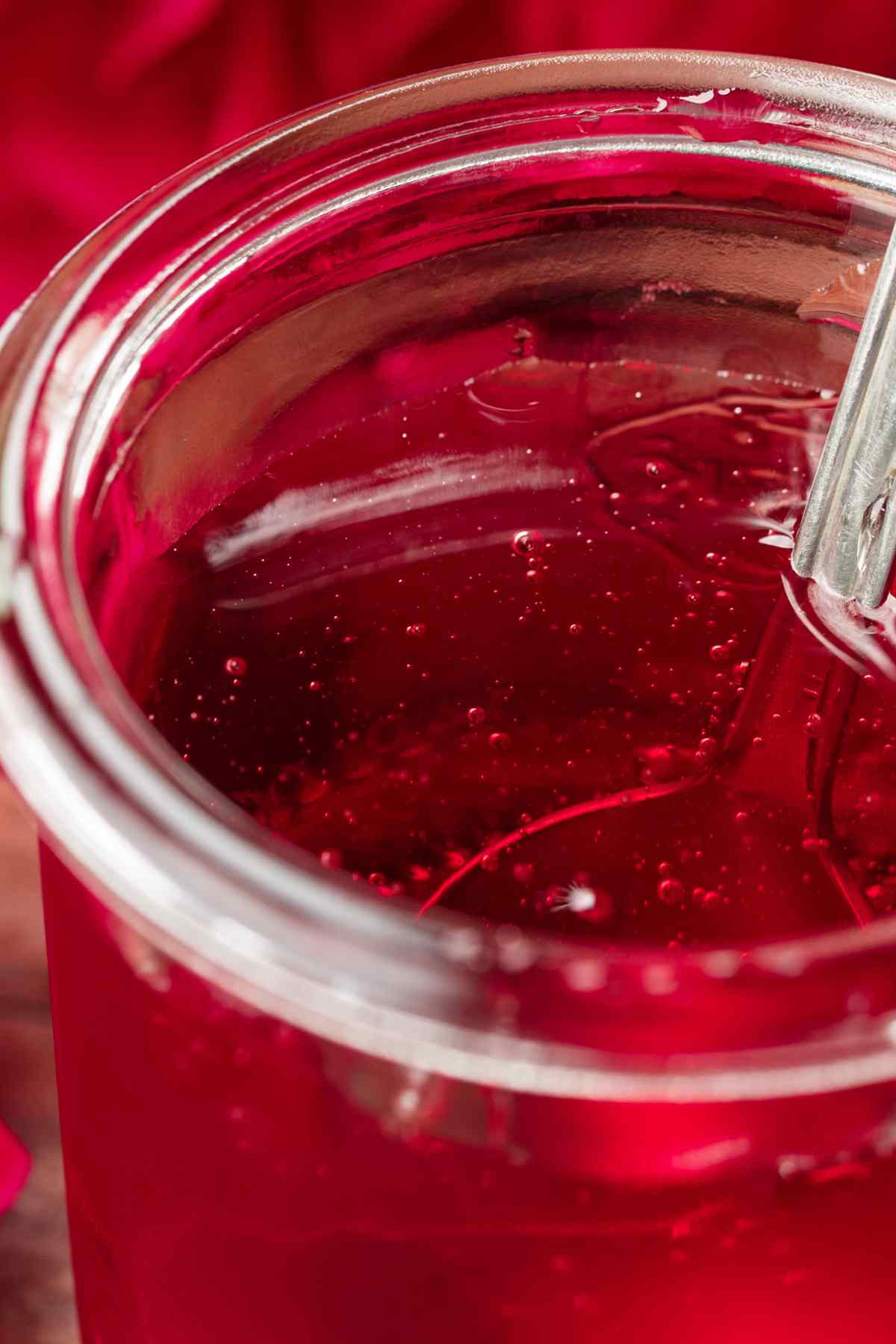
What to spread it on
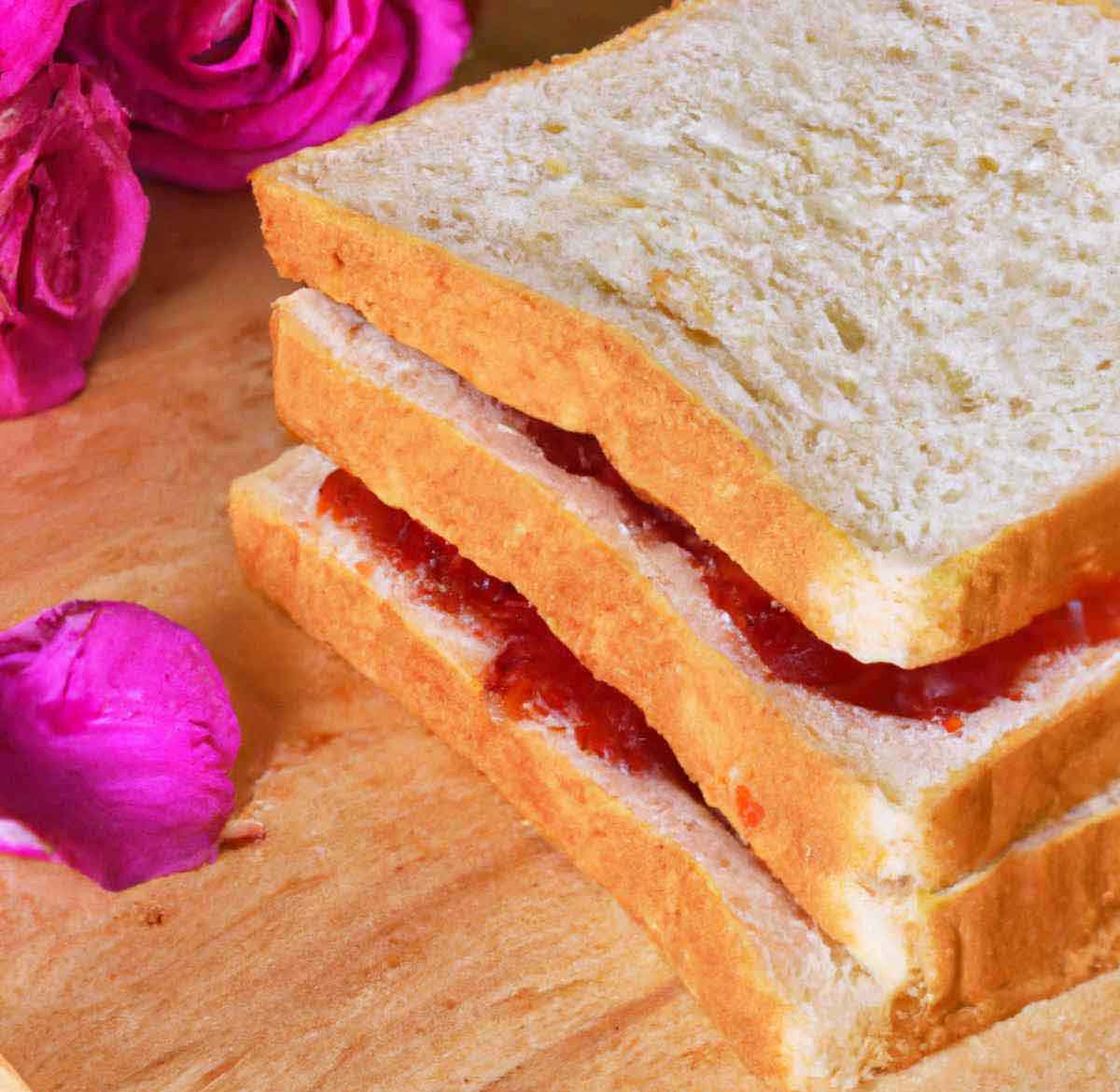
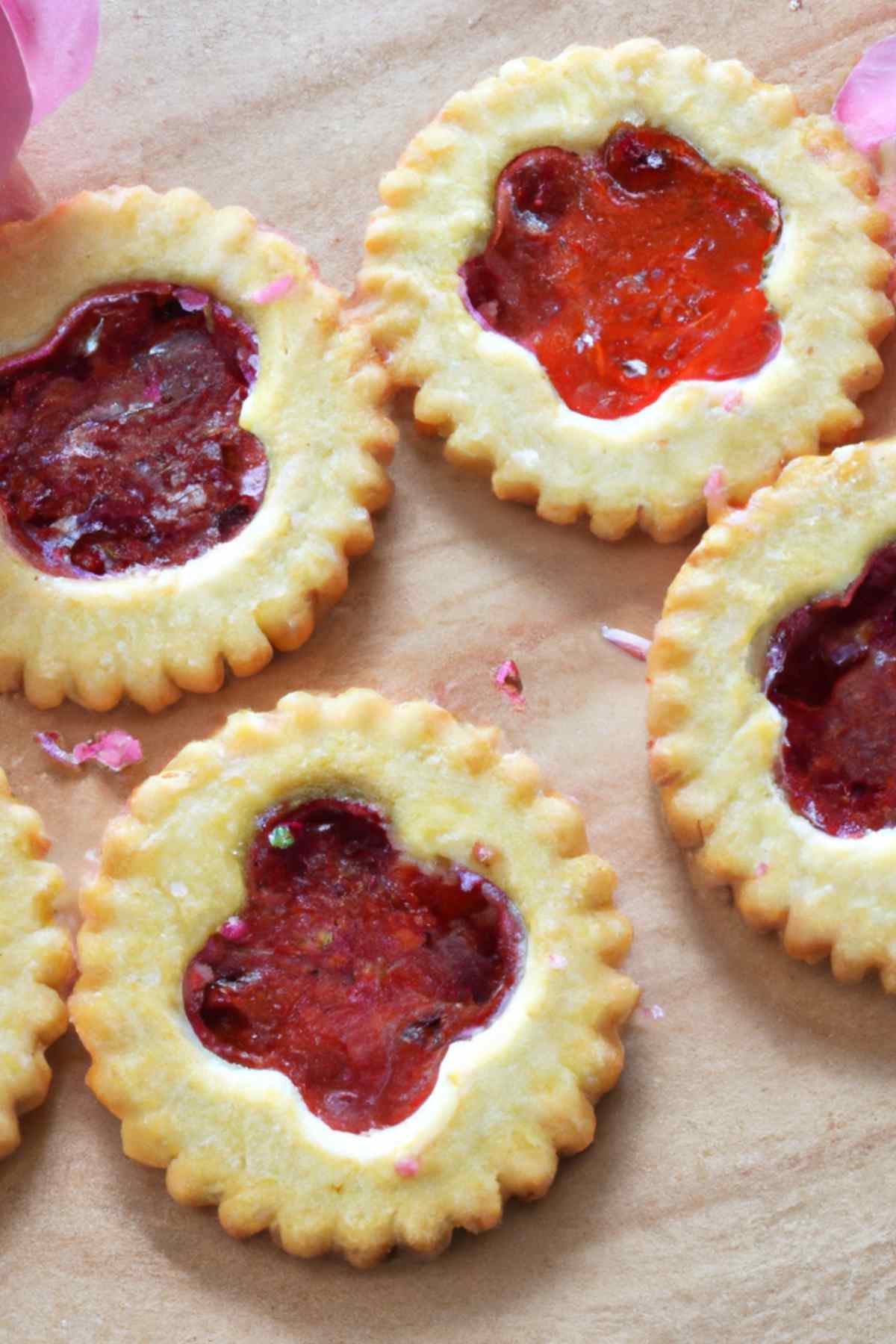
Rose jelly is at its best on warm toast or a buttered biscuit, but it also swirls beautifully into yogurt or porridge, spoons over cheesecake, and fills cakes and sandwich cookies. Warmed slightly, it brushes on as a fragrant glaze for a fruit tart.
How long rose jelly keeps
- Sealed in sterilized jars, it holds for up to 12 months in a cool, dark cupboard.
- Once opened, keep it in the fridge and use it within 3 to 4 weeks.
- Sterilize the jars first, a few minutes in boiling water or a hot oven. This step is what earns you the long shelf life.
Love cooking with roses? Try our rose petal jam, browse more rose desserts, or learn how to grow edible roses.
Slow Cooker Rose Jelly
Equipment
- Slow cooker
- Fine-mesh sieve or cheesecloth
- Saucepan
- Sterilized glass jars with lids
Ingredients
- 12+ pieces fragrant edible roses petals only, white bases trimmed
- 4 cups water
- 4 cups jelly sugar
- ¼ cup lemon juice
- 1 packet fruit pectin 1.75 oz, or as directed on the package
Instructions
- Rinse the rose petals gently and trim off the bitter white bases.
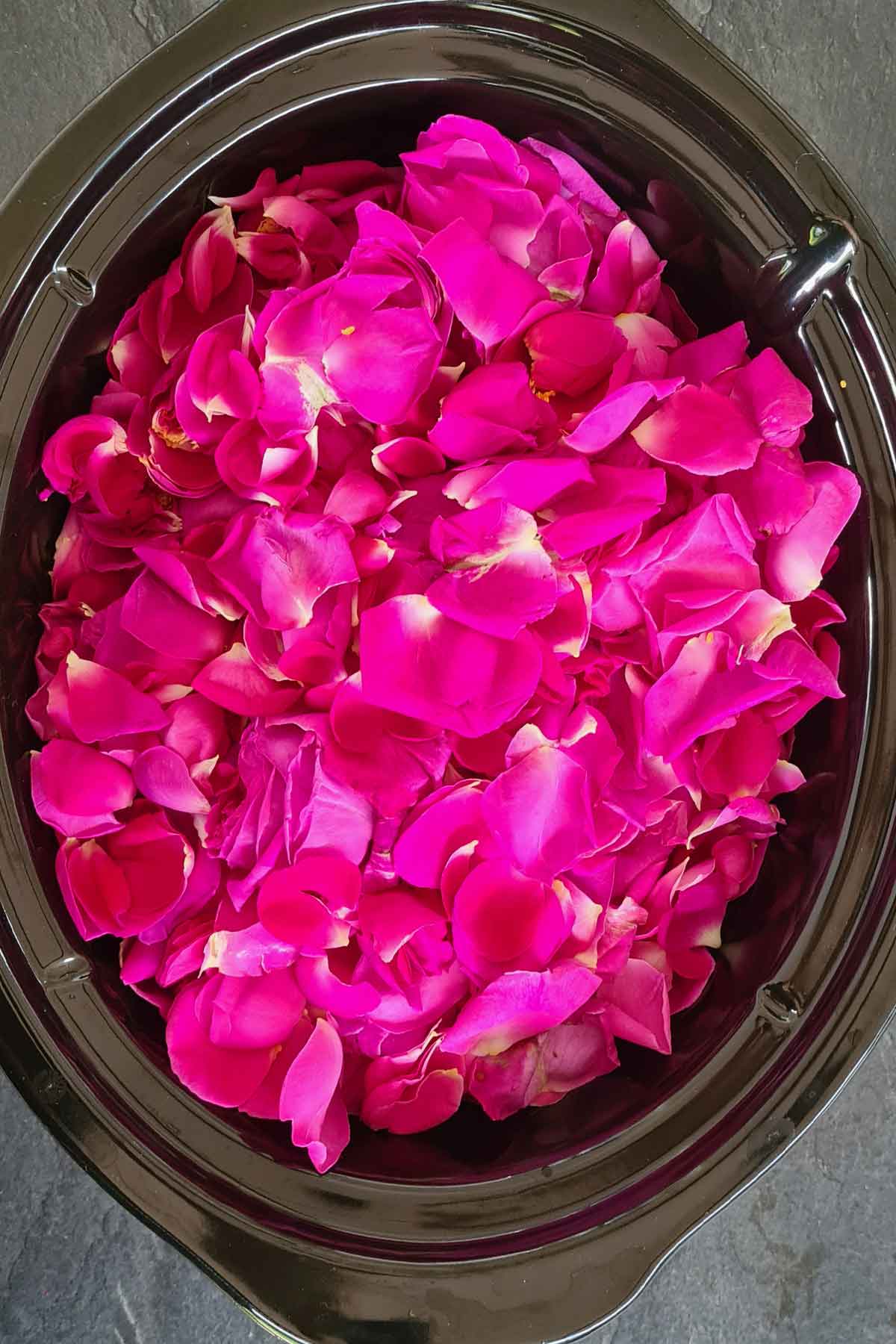
- Place the petals and water in the slow cooker. Cover and cook on low for 2 to 3 hours until the water is fragrant and lightly colored.
- Strain the infusion through a fine sieve or cheesecloth, pressing the petals to extract all the liquid. Discard the petals.
- Pour the rose infusion into a saucepan and stir in the lemon juice; the color will brighten to pink. Stir in the pectin and bring to a rolling boil.
- Add the sugar all at once, return to a hard boil, and boil for 1 minute, stirring constantly.
- Test the set on a cold plate, then ladle the hot jelly into sterilized jars, seal, and cool.
Notes
Frequently Asked Questions
Use only fragrant, edible roses that have not been sprayed with pesticides, such as Damask roses (Rosa damascena) or strongly scented garden roses. The more fragrant the petals, the more flavor your jelly will have.
A soft set usually means it needs more pectin, more acidity from lemon juice, or a longer hard boil once the sugar is added. Test a spoonful on a cold plate, and if it stays runny, boil for another minute or add a little more pectin.
The pink color comes from adding lemon juice to the rose infusion. The acidity shifts the color from a dull grey-pink to a bright ruby red, with no artificial dye needed.
Sealed in sterilized jars and stored in a cool, dark place, rose jelly keeps for up to 12 months. Once opened, keep it in the fridge and use within 3 to 4 weeks.
Yes. Steep the petals in just-boiled water in a covered pot off the heat for a few hours or overnight, then strain and continue with the lemon, pectin, and sugar on the stovetop.
Rose jelly is lovely on toast, biscuits, and scones, swirled into yogurt, spooned over cheesecake, or used to fill cakes and sandwich cookies. It also makes a fragrant glaze for fruit tarts.


Thank you for sharing this recipe