
Vegan Cabbage Lasagna
Vegan cabbage lasagna swaps the usual pasta sheets for tender boiled cabbage leaves, layered with a savory textured soy protein and tomato filling and a homemade vegan Bechamel. It bakes into a comforting, lower-carb dish that tastes like classic lasagna without any dairy, eggs, or wheat pasta.
Not long ago I was telling you how much I love lasagna, so much that I keep trying to eat it in as many ways as possible. That is how I turned to vegan lasagna soup and entered the world of endless lasagna possibilities, and a few days ago I had another lasagna breakthrough: cabbage. I know it sounds odd at first, but just listen to me. I have always been a cabbage lover, and when I first heard of this idea I knew I had to try it right away. My instincts were not wrong.
It was so delicious that I instantly decided to share it with all of you, after spending some time perfecting it, of course. I adapted the recipe so it is completely vegan, which means I also made a suuuper delicious vegan Bechamel sauce. In this version the classic pasta sheets are swapped for cabbage leaves. Even if it might sound complicated, this is actually really simple to make. So gather your ingredients and meet me in the kitchen.
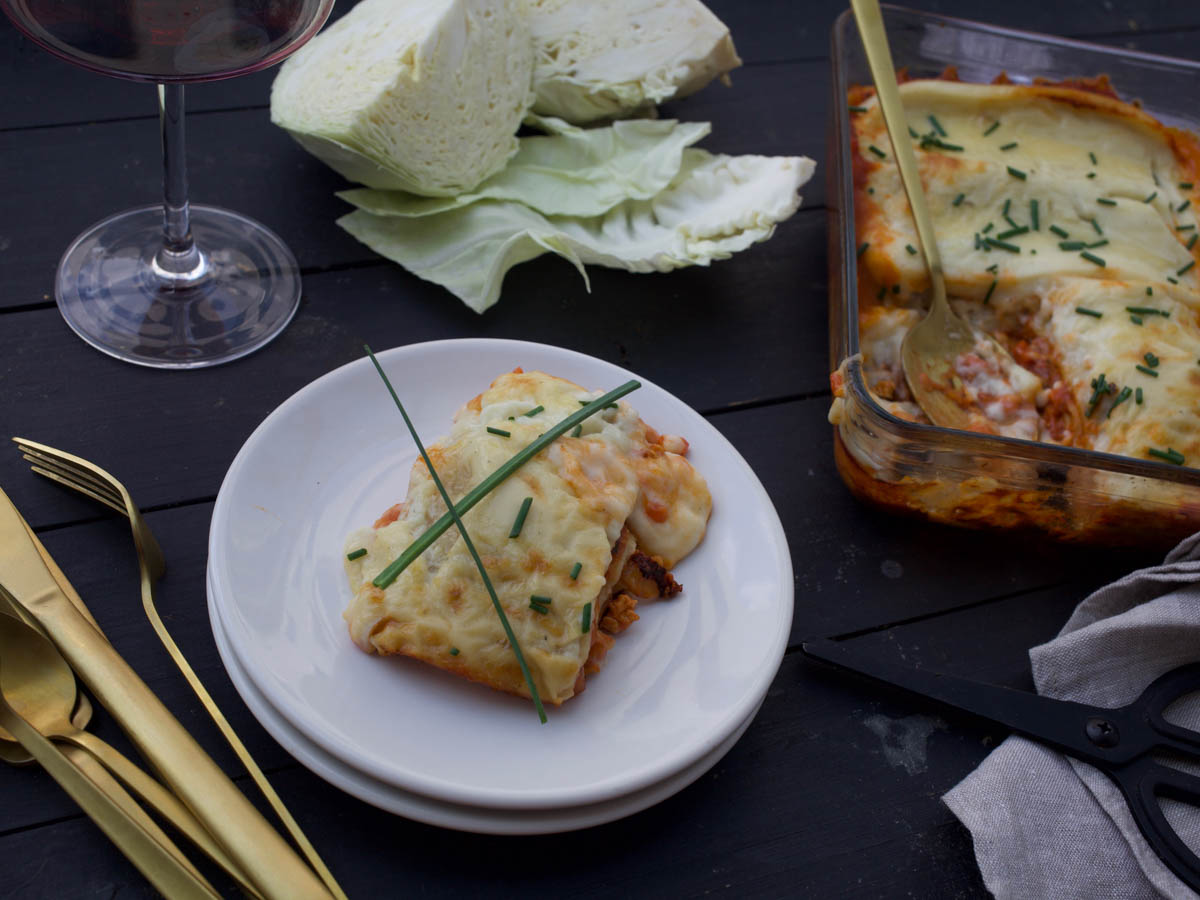
This Recipe Works If You Need
- A lower-carb, gluten-free take on lasagna that skips the pasta sheets entirely by using cabbage leaves instead.
- A fully plant-based comfort meal, complete with a dairy-free Bechamel made from soy milk.
- A budget-friendly dinner built around one cabbage, textured soy protein, and pantry staples.
- A make-ahead bake you can assemble in advance and slide into the oven when you need it.
- A clever way to use up a whole cabbage and win over even the cabbage skeptics at your table.
Why You’ll Love This Recipe
- It is lighter than classic lasagna. Cabbage leaves stand in for pasta, so you get all the layered comfort with far fewer carbs and more vegetables in every bite.
- The Bechamel is fully vegan. A simple roux of olive oil, flour, and soy milk, finished with nutmeg, gives you that creamy white sauce without any butter or cream.
- It is surprisingly easy. Even though it looks impressive, the steps are just boil, simmer, layer, and bake, with nothing fussy in between.
- It converts cabbage skeptics. Boiling the leaves mellows their flavor, so even people who think they dislike cabbage tend to come around to this one.
- It is satisfying and protein-rich. Textured soy protein and nutritional yeast give the filling a meaty, savory depth that keeps it filling.
Ingredient Notes
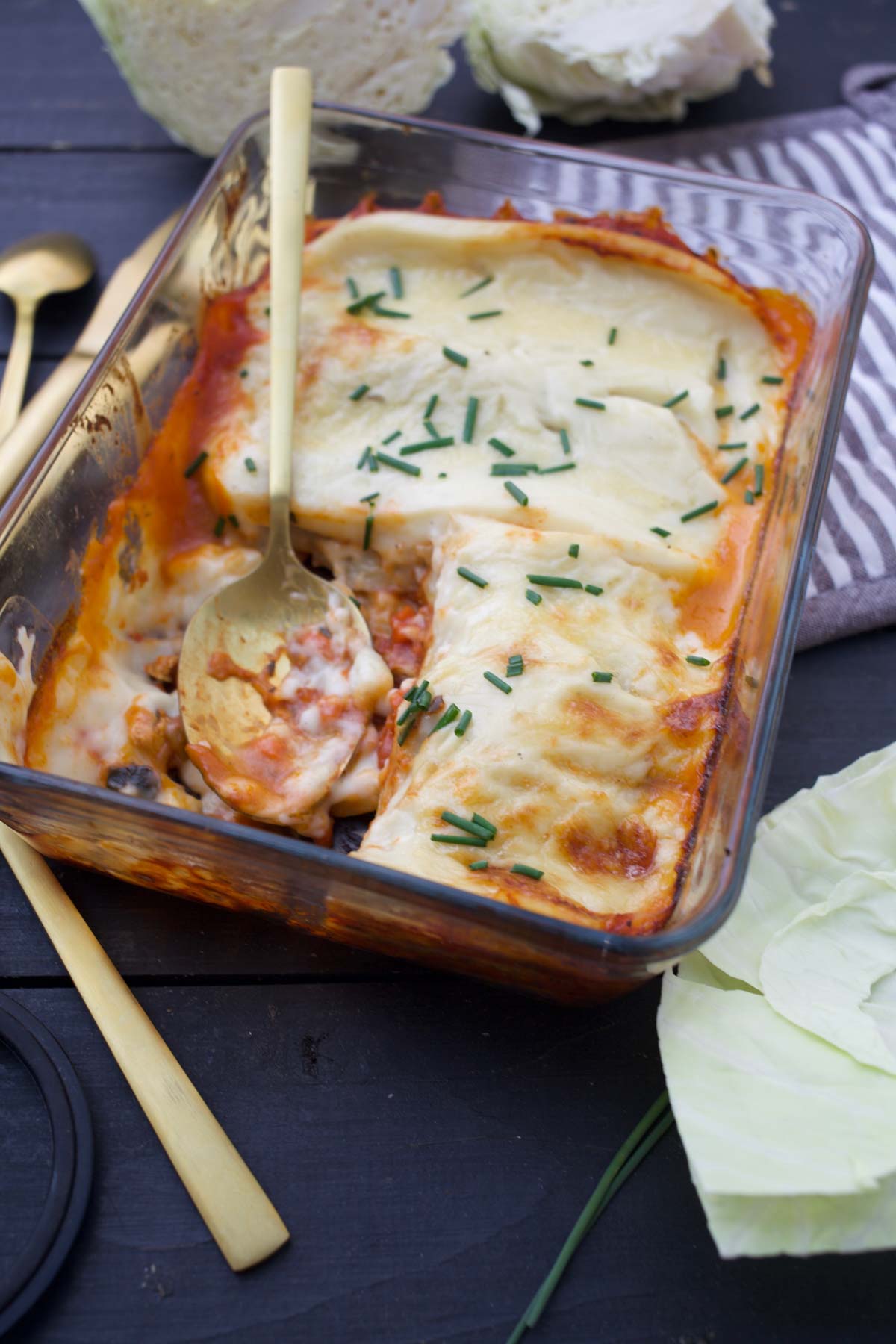
Cabbage is the star here, replacing the pasta sheets. Look for a firm, heavy head with tightly packed leaves and no soft spots. Green cabbage works best because the large outer leaves are wide and pliable enough to act as lasagna layers. Steam the leaves only until they start to soften so they stay flexible without tearing when you layer them.
Textured soy protein granules form the meaty base of the filling. The dry granules look unassuming, but once they soak up the tomato sauce and seasonings they turn savory and tender. Choose plain, unflavored granules so you control the seasoning yourself, and make sure they hydrate fully in the sauce before assembling.
Soy milk is what makes the vegan Bechamel possible. Reach for unsweetened, plain soy milk, since any sweetened or vanilla version will throw off a savory white sauce. Its higher protein content helps the sauce thicken into a properly creamy consistency once it cooks down with the roux.
Nutritional yeast brings a cheesy, umami note to the filling without any dairy. Buy it in flakes rather than powder for the best texture, and store it somewhere cool and dry. A half cup goes a long way toward giving the soy protein mixture that savory, almost-cheesy backbone.
Tomato sauce ties the filling together and helps the soy protein hydrate. A plain, good-quality passata or smooth tomato sauce works best here. Combined with the dried basil, oregano, and garlic powder, it builds the marinara-style flavor that runs through every layer.
Vegan cheese is sprinkled on top before baking for a golden, melty finish. Use a shredded variety that melts well so you get that classic browned lasagna crown. It is the final touch that makes the dish look and feel like a true lasagna.
Tips
- Do not over-boil the cabbage. You want the leaves just soft enough to fold and layer. Once they start to soften, pull them out and drain them on a paper towel. Leaves boiled too long turn mushy and will not hold the layers together.
- Whisk the roux constantly. When you add the flour to the hot oil, whisk until combined, then pour in the soy milk while stirring continuously. This is how you avoid lumps and get a smooth Bechamel. You know it is ready when it coats the back of a spoon and has visibly thickened.
- Drain the cabbage leaves well. Excess water from the leaves is the most common reason this kind of bake turns watery. Patting them dry on paper towels keeps each layer firm and prevents a soggy result.
- Let the filling absorb the sauce. Give the soy protein and tomato sauce a couple of minutes to combine off the heat so the granules drink up the liquid and the seasoning settles in before you assemble.
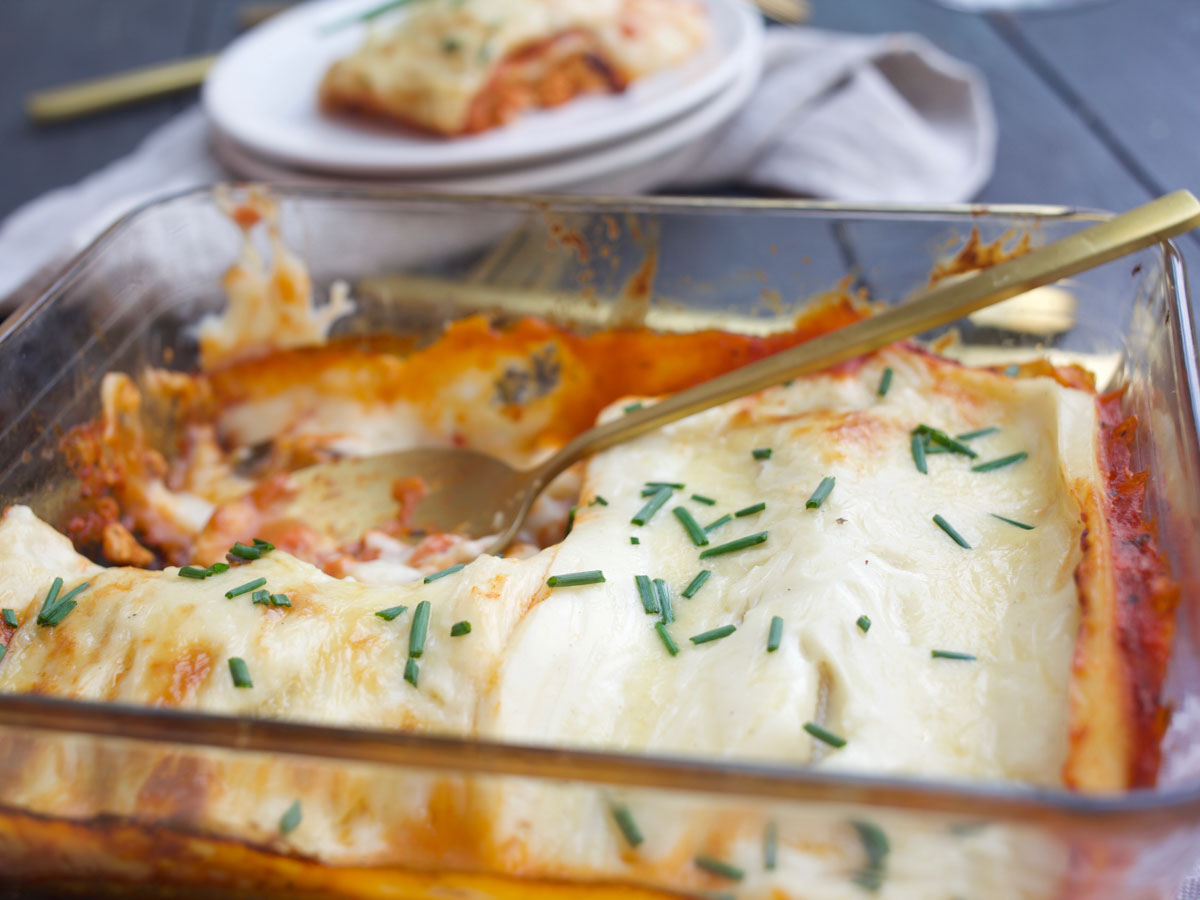
- Bake until the top is lightly golden. The visual cue is a Bechamel surface and cheese that have just turned golden on top, which tells you the layers underneath are hot and set.
Substitutions and Variations
- Swap the soy milk. If you want a soy-free Bechamel, an unsweetened oat or cashew milk will also thicken with the roux, though soy gives the creamiest result thanks to its protein.
- Change the protein. In place of textured soy protein granules, you can use cooked brown or green lentils for a whole-food filling that still soaks up the tomato sauce nicely.
- Add more vegetables. Sauteed mushrooms or grated carrot stirred into the filling add extra texture and stretch the dish further while keeping it vegan.
- Adjust the seasoning. The dried basil, oregano, and garlic powder give it an Italian profile, but a pinch of chili flakes or smoked paprika in the filling adds a little warmth if you like more spice.
Storage and Make Ahead
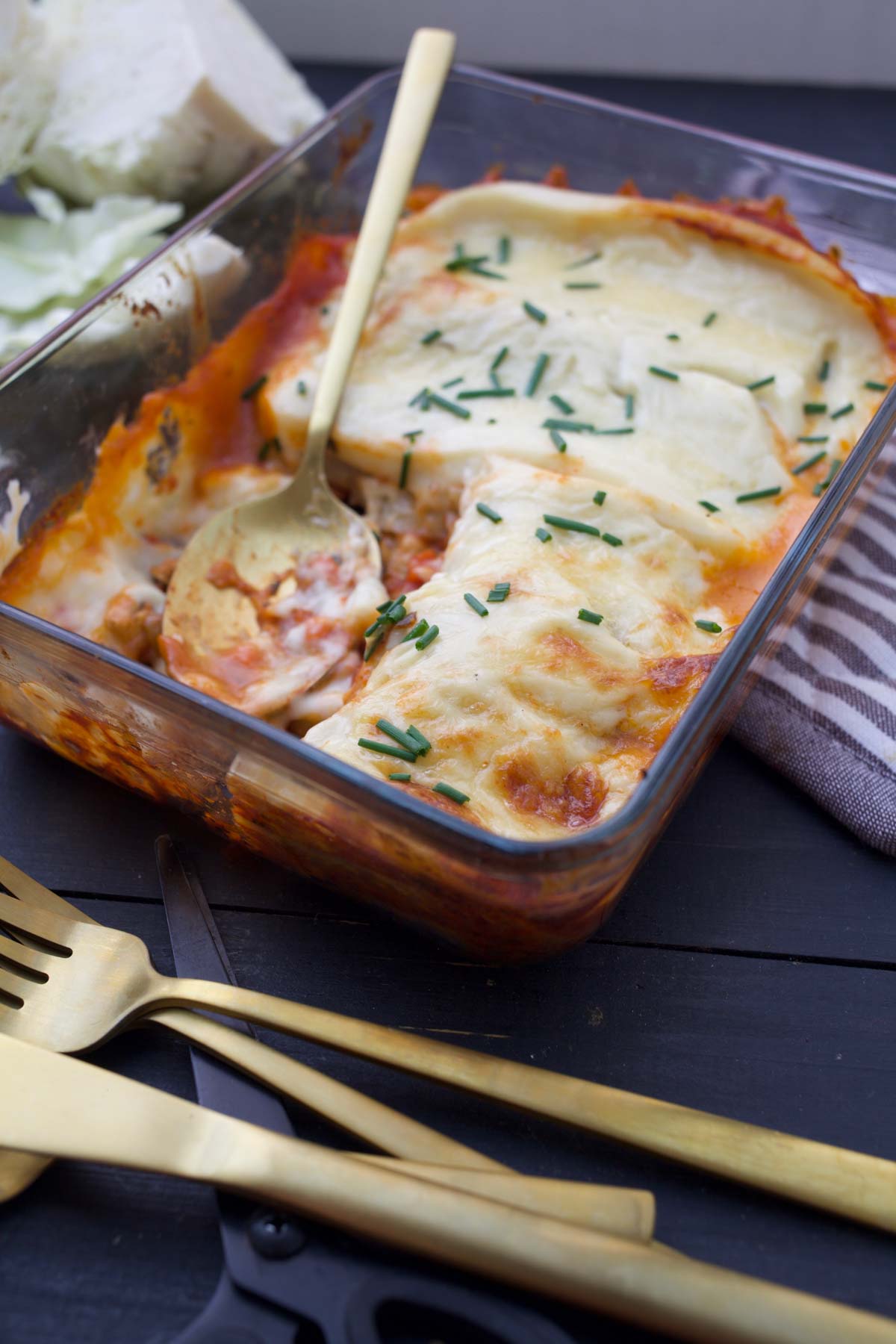
This vegan cabbage lasagna keeps well in the fridge for up to three days in an airtight container. Reheat individual portions in the oven or microwave until warmed through; the flavors actually settle and deepen overnight, so leftovers are excellent. You can also assemble the whole dish a day ahead, cover it, and refrigerate it unbaked, then bake it fresh when you are ready to serve.
If you are on a cabbage streak, do not stop here. Try this cozy cabbage casserole or learn the best way to cook cabbage in the oven. And if it is the lasagna craving talking, my vegan lasagna with mushrooms is the classic pasta version to keep in your back pocket. Do not forget to comment and tell me how it went, I look forward to reading your impressions!

Vegan Cabbage Lasagna
Ingredients
- 1 cabbage separated into leaves
For the vegan Bechamel:
- 3 Tbsp olive oil
- 2 Tbsp flour
- 2 cups soy milk
- ½ tsp nutmeg
- 1 tsp salt
- 1 tsp white pepper
For the filling:
- 1 onion finely chopped
- 1 clove garlic crushed
- 2 cups textured soy protein granules
- 1 cup tomato sauce
- ½ cup nutritional yeast
- 3 Tbsp fresh lemon juice from about 2 lemons
- 1 tsp salt
- 1 tsp dried basil
- 1 tsp oregano
- ½ tsp garlic powder
For the topping:
- ½ cup vegan cheese shredded
- 1 handful chives
- salt and pepper to taste
Instructions
- Heat a large pot of water, add 1 tsp salt, and bring to a boil.
- Preheat the oven to 200C (400F).
- Brush a lasagna baking dish with olive oil and set aside.
- Add about 6 thick, large cabbage leaves to the boiling water and cook until they start to soften, then drain on a paper towel.
- To prepare the bechamel:
- Heat a medium pot over medium heat and add the olive oil. When hot, add the flour and whisk until combined.
- Gradually add the soy milk, stirring continuously, and cook until thickened into a smooth sauce.
- Stir in the nutmeg, salt, and white pepper, then set aside.
- In a large skillet, heat some olive oil. Add the onion and garlic and saute until golden.
- Add the textured soy protein granules (first soaked in boiling water or broth for 10 minutes and squeezed dry) and the tomato sauce. Stir to combine and cook for about 2 minutes.
- Add the rest of the filling ingredients, stir, then turn off the heat and set aside.
- To assemble the lasagna, spread ¼ of the tomato filling over the bottom of the prepared dish.
- Cover with 2 large softened cabbage leaves, then repeat the layers with the rest of the filling and cabbage leaves.
- Pour the bechamel over the top layer, sprinkle with shredded vegan cheese, and bake until lightly golden on top.
- Top with fresh chives and serve.
Notes
Frequently Asked Questions
Yes. Boiling the cabbage leaves mellows their flavor and softens them so they layer like pasta sheets, while the savory textured soy protein filling and creamy vegan Bechamel deliver the same comforting taste as classic lasagna. Even cabbage skeptics tend to enjoy it once the leaves are cooked and layered with the sauces.
Green cabbage works best because its large outer leaves are wide and pliable enough to act as lasagna layers. Choose a firm, heavy head with tightly packed leaves and no soft spots, then steam about six thick leaves only until they start to soften so they fold without tearing.
Heat olive oil in a pot, whisk in flour until combined, then add soy milk while stirring continuously and cook until thick. Season with nutmeg, salt, and pepper. Unsweetened plain soy milk gives the creamiest result, and whisking constantly keeps the sauce smooth and free of lumps.
It is naturally low in carbs since cabbage leaves replace the pasta sheets, but the Bechamel uses 2 tablespoons of wheat flour for the roux. To make it fully gluten-free, swap that flour for a gluten-free all-purpose blend, which will still thicken the soy milk into a creamy sauce.
Yes. You can assemble the entire dish a day in advance, cover it, and refrigerate it unbaked, then bake it fresh when you are ready to serve. Already-baked leftovers keep in an airtight container in the fridge for up to three days and taste even better the next day.
Drain the boiled cabbage leaves well by patting them dry on paper towels before layering, and avoid over-boiling them. Excess water from the leaves is the main cause of a watery bake, so removing it keeps each layer firm and the finished lasagna holds together cleanly.






Made this for dinner tonight very tasty!!
Freaking delicious! I made this with beyond meat. I don’t always love nutritional yeast in things, but here it was perfect in the tomato sauce!
Thank you! <3
Such a unique recipe – and healthy as well! Yum!
Thank you for the constant inspiration, Ruxandra!
Thank you! Happy to hear you liked the recipe!