
Vegan Mapo Tofu
Vegan mapo tofu is a plant-based take on the classic Sichuan dish, made with soft tofu and shiitake mushrooms simmered in a spicy, savory sauce built from sriracha, soy sauce, ginger and garlic. It comes together in one pan in about 20 minutes and delivers all the bold, warming flavor of the original — no meat required. Serve it over rice for a nourishing, deeply satisfying meal.
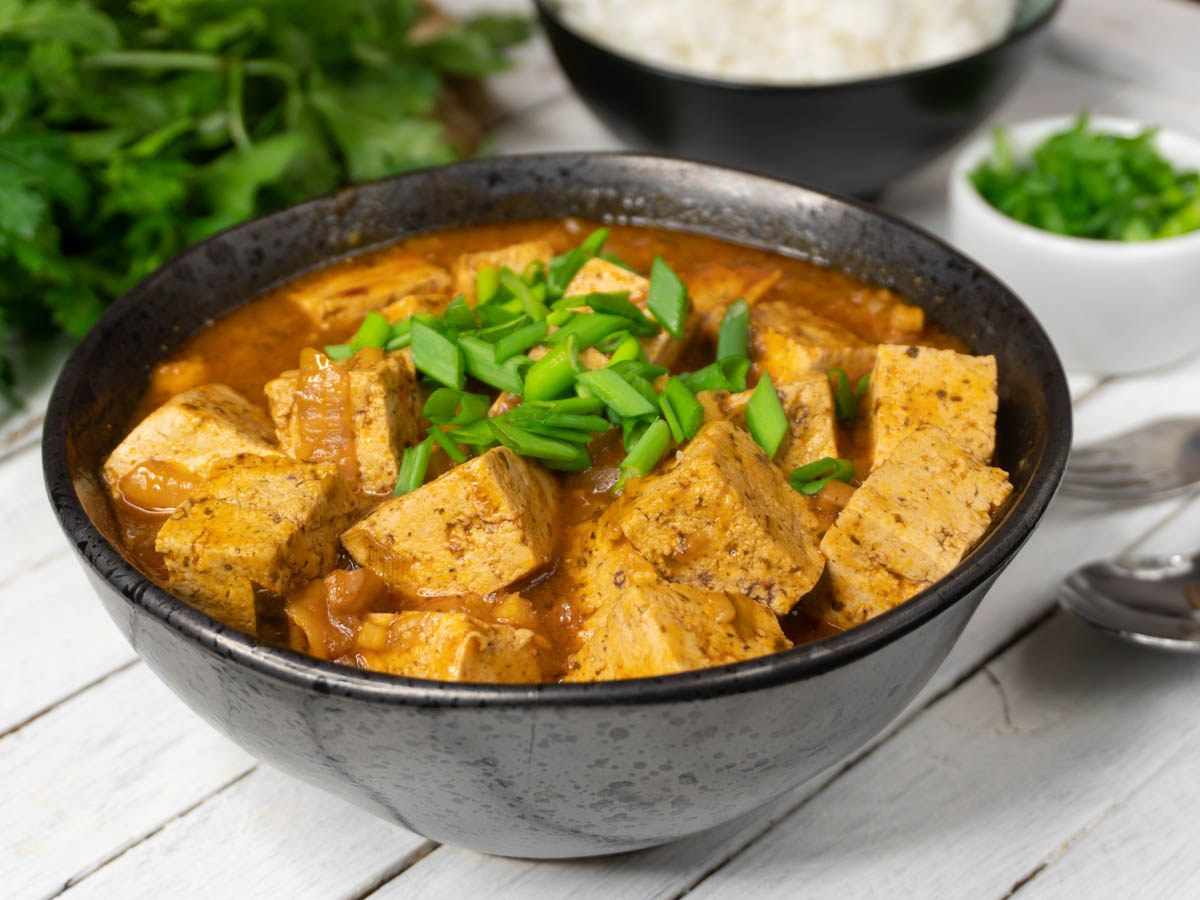
Today’s recipe is all about finding the balance between deliciousness and healthiness. My recipe today is here to prove exactly that: being vegan and being healthy is a choice that won’t keep you away from the tasty stuff! I think that as long as it won’t become a habit, eating a not-so-healthy meal from time to time won’t do any harm — but a dish like this one lets you have the comfort and the goodness at the same time.
Mapo tofu is a staple in Asian cuisine, but in my country this dish is not really mainstream. And I think that’s too bad since it’s so tasty and such a good addition to your cooking repertoire! Since it’s a staple in Asian cooking, I think you should try this dish at least once in a lifetime, even if you choose to prepare yourself a milder version.
How I Made This Mapo Tofu Vegan
I had to do a little bit of adapting, as the original recipe features meat, and of course, I completely eliminated it. In its place, dried shiitake mushrooms carry the deep, meaty, umami backbone that the pork usually provides. Since this recipe is all about balancing different flavors, I had to do quite a bit of trials until I managed to capture a perfect taste, not too little and not too much of anything. But I think I finally came to the right ratio of ingredients and I am ready to share it with you!
I also tried to make this recipe a little bit more simple, using more common ingredients. Although it still has an original, Asian taste, I wanted to make sure that this recipe is available to everyone ingredient-wise. I think you will be enchanted too by this recipe, as it perfectly captures the essence of the original mapo tofu.
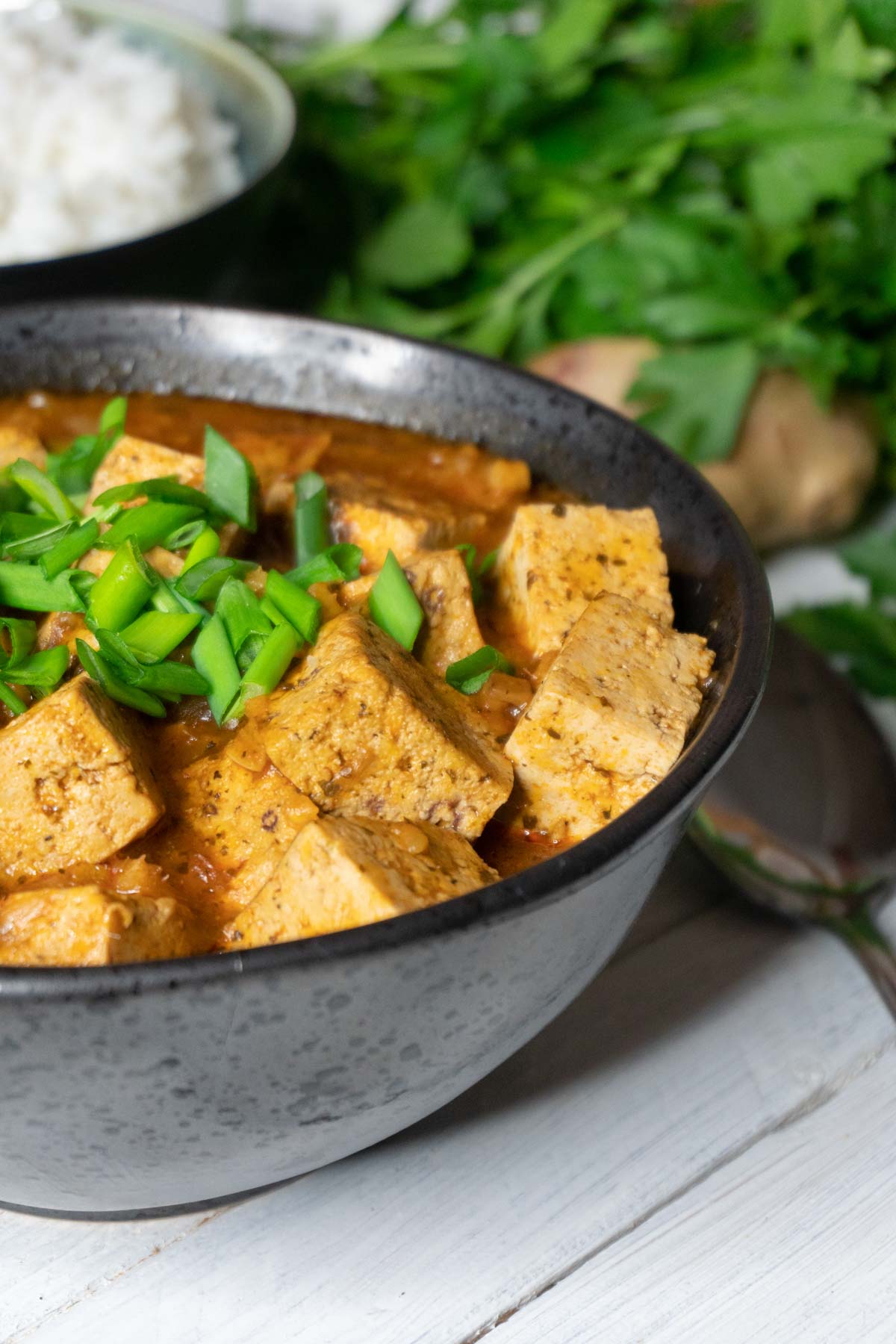
The Key Ingredients
Every ingredient here pulls its weight, and most of them are pantry staples once you keep a few Asian basics on hand:
- Tofu — use firm or medium-firm tofu, cut into cubes. It soaks up the sauce as it simmers, so the flavor works its way right through.
- Dried shiitake mushrooms — these are the secret. Rehydrating them creates a savory mushroom broth, and the mushrooms themselves add a meaty chew that stands in for the traditional pork. Don’t discard the soaking liquid; it becomes the base of your sauce.
- Sriracha — brings the heat and a touch of tang. Scale it up or down depending on how spicy you like things.
- Soy sauce — the main source of salt and umami depth. Reach for tamari if you need this to be gluten-free.
- Sesame oil — added at the end for that unmistakable toasty, nutty aroma. A little goes a long way.
- Fresh ginger and garlic — the aromatic foundation. Mince them finely so they melt into the sauce.
- Scallions — the white parts go in early with the aromatics; the green tops finish the dish as a fresh garnish.
- Corn starch — whisked with a little water into a slurry, this is what gives the sauce its glossy, clingy body.
- Rice vinegar and brown sugar — small amounts of each round out the sauce, balancing the heat and salt with a whisper of sweet and sour.
Why This Method Works
The magic of this recipe is in the layering. Rehydrating the dried shiitakes gives you two things at once: plump, savory mushrooms and a concentrated broth that becomes the body of the sauce, so nothing is wasted and every drop is flavorful. Building the aromatics first — garlic, ginger, onion and the white scallion parts sizzled in oil — releases their flavor into the fat before anything else goes in, which is what gives the finished dish its depth.
The corn starch slurry at the end is the step that turns a thin, watery pan into that signature glossy, spoonable sauce that coats each cube of tofu. Always mix the starch with cold water before it hits the hot pan; adding it dry would leave you with lumps. Stir it in and let it cook just until the sauce thickens, and you’ll get that restaurant-style finish.
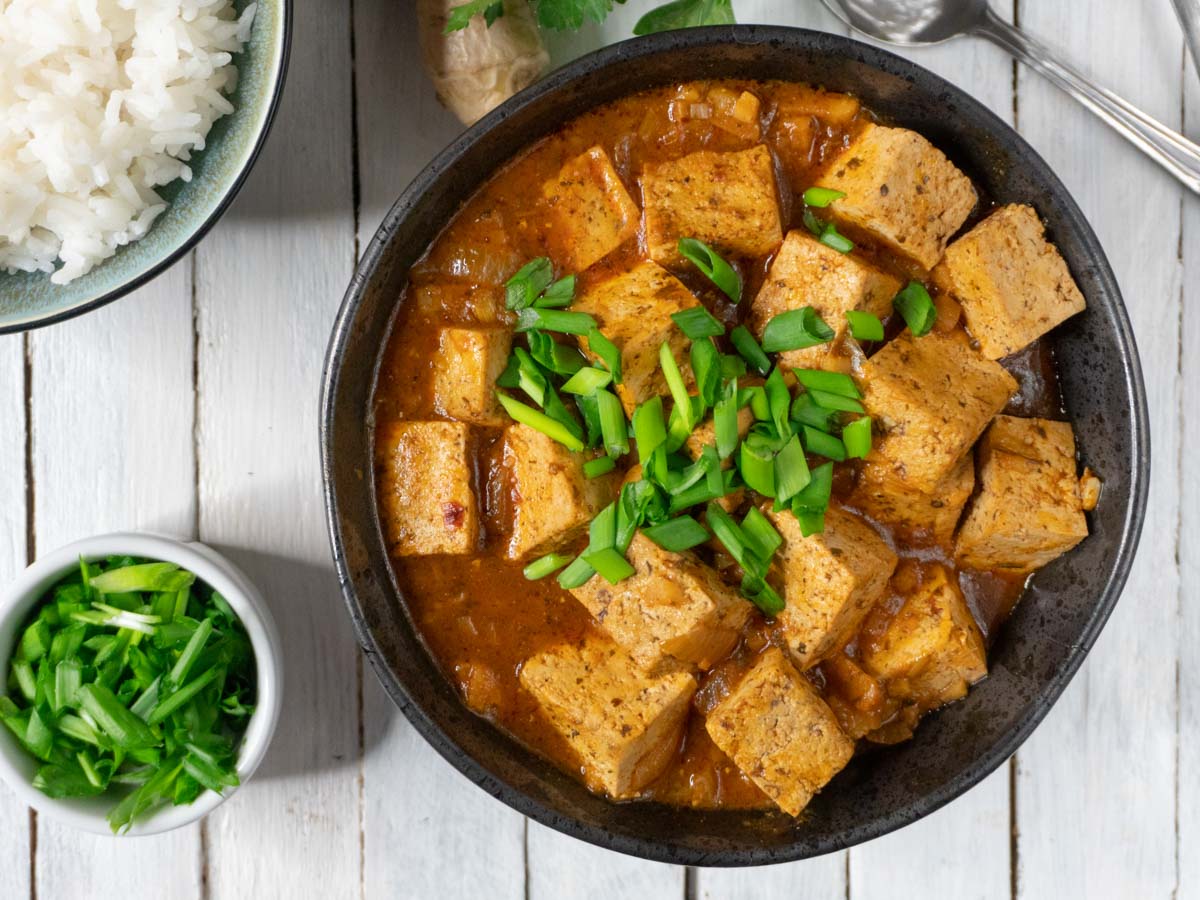
Tips For Getting It Just Right
- Handle the tofu gently. Once the tofu goes into the sauce, stir with a soft hand so the cubes stay intact rather than crumbling.
- Let the sauce reduce. Simmering until the liquid reduces by about half concentrates the flavor and gives the sauce more body before you even add the slurry.
- Taste and adjust the heat. Since this recipe is all about balancing flavors, taste before serving. Want it milder? Ease back on the sriracha. Want more punch? A little extra is easy to add.
- Finish with sesame oil off the heat. Sesame oil is best drizzled at the very end, since high heat dulls its aroma.
- Garnish generously. The green scallion tops add color and a fresh bite that cuts through the rich sauce.
What To Serve With Vegan Mapo Tofu
Mapo tofu is traditionally served over a bowl of steamed rice, which soaks up all that spicy sauce — and that’s exactly how I like it. If you’re building out a bigger Asian-inspired spread, pair it with another tofu favorite like this sticky Asian garlic tofu for contrast. And if you’re the kind of cook who loves a bit of fire on the table, browse more of my hot and spicy vegan recipes to round out the meal.
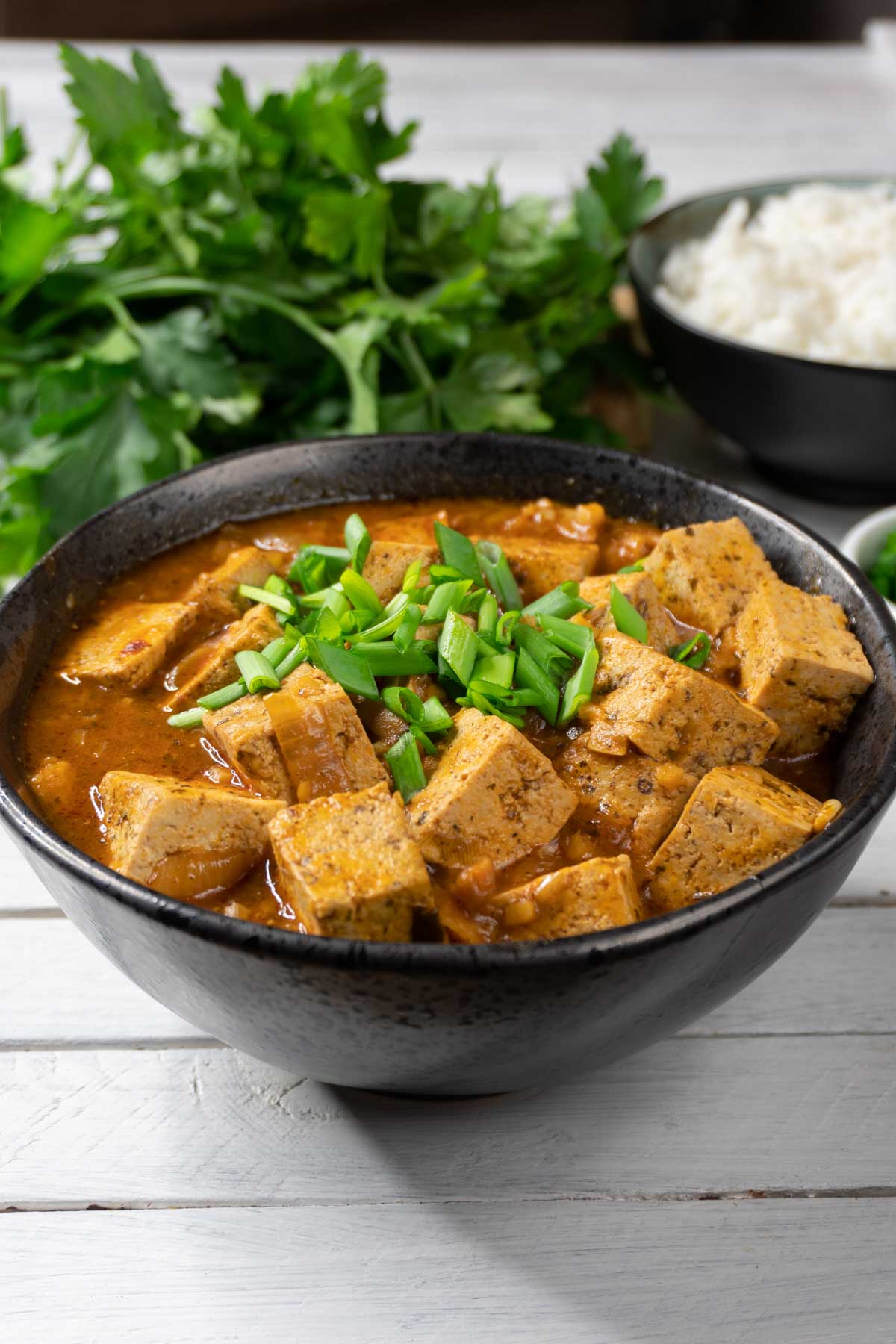
Storing And Making It Ahead
Leftover mapo tofu keeps well in an airtight container in the fridge for up to three days, and the flavors actually deepen overnight as the tofu keeps soaking up the sauce. Reheat it gently in a pan over low-medium heat, adding a splash of water if the sauce has thickened too much as it cooled. I’d hold off on adding the fresh scallion garnish and the final drizzle of sesame oil until you’re ready to serve, so they stay bright.
This dish is a great way to add more plant-based variety to your week. If you’re new to cooking this way and want more ideas, my vegan recipe collection is full of nourishing meals, and for cozy, saucy dinners you might also love browsing my vegan stews and chilis.
Follow me to the kitchen and then check out the detailed steps below. And once you give this vegan mapo tofu a try, don’t forget to come back here and rate the recipe and leave a comment telling me how it went — whether you kept it fiery with extra sriracha or dialed it down to a milder version. Your comments help me make my future recipes better and better; feedback is key!
Summarise & Save This Recipe
★ Add us as a trusted Google source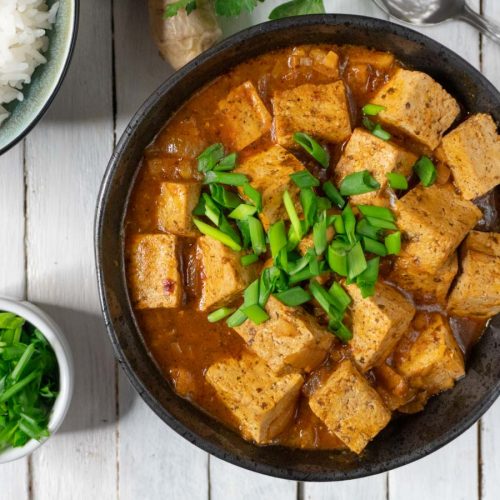
Vegan Mapo Tofu
Ingredients
- 1 ½ cup tofu cubed
- 4 dried shiitake mushrooms
- 1 red onion chopped
- 2 cloves garlic minced
- 2 Tbsp sriracha
- 2 Tbsp soy sauce
- 2 tsp sesame oil
- 2 Tbsp olive oil
- 1 tsp brown sugar
- 2 tsp fresh ginger minced
- 1 Tbsp corn starch
- 3 scallions
- ½ Tbsp rice vinegar
- 1 ½ cups water
- salt & pepper to taste
Instructions
- Pour 1 1/2 cups of water over the dried mushrooms, bring to a boil, and cook for 5 minutes.
- In a pan, heat the olive oil and saute the minced garlic, ginger, onion, and the white parts of the scallions.
- Take the mushrooms out of the water, chop them, and transfer to the pan. Season with salt and pepper.
- Add the sriracha, rice vinegar, and brown sugar, and cook for another 30 seconds.
- Add the soy sauce, tofu cubes, and mushroom broth. Simmer for 10 minutes, or until the liquid reduces by half.
- In a small bowl, combine the corn starch with 2-3 Tbsp of water, then stir it into your sauce. Cook for another minute, or until it thickens.
- Serve over rice and top with the chopped scallions and a drizzle of sesame oil.
Notes
Frequently Asked Questions
Mapo tofu is a classic dish from Sichuan cuisine made of soft tofu simmered in a spicy, savory sauce. The traditional version includes minced pork, but this vegan take swaps the meat for dried shiitake mushrooms while keeping the bold, warming flavor of the original.
Dried shiitake mushrooms are the key. Rehydrating them creates a rich mushroom broth for the sauce, and the mushrooms themselves add a meaty chew that stands in for the pork. Combined with sriracha, soy sauce, ginger and garlic, you get all the depth of the original with no animal products.
It has a good kick from the sriracha, but you are fully in control of the heat. Use the 2 tablespoons the recipe calls for a medium spice level, add more if you love fire, or scale it back for a milder, family-friendly version.
Yes. The only ingredient to watch is the soy sauce, which usually contains wheat. Swap it for tamari or a certified gluten-free soy sauce, and check that your sriracha is gluten-free, and the dish works well for a gluten-free diet.
Firm or medium-firm tofu works well here because it holds its cubed shape while still soaking up the sauce as it simmers. Stir gently once the tofu is in the pan so the cubes stay intact rather than breaking apart.
Keep leftovers in an airtight container in the fridge for up to three days; the flavors deepen overnight. Reheat gently in a pan over low-medium heat, adding a splash of water if the sauce has thickened, and add the fresh scallions and sesame oil only when serving.


Hi, Ruxandra. Where did you get your chilli bean paste and the black bean sauce in Bucharest?
Thanks for the delicious inspirations
Hi Andreea. Thank you for your appreciation! 🙂 I order all Asian foods from asianfood.ro
Tofu is always a good healthy choice.
Agree!