Carob vs Chocolate (and Cacao): Taste, Caffeine, Nutrition and How to Swap
Carob vs chocolate comes down to this: carob powder is the sweet, practically caffeine-free pulp of a Mediterranean pod, while cocoa, and the chocolate made from it, comes from cacao beans and is bitter, rich in fat and naturally caffeinated. Below you’ll find how carob tastes next to cacao, a side-by-side nutrition table, the caffeine and theobromine numbers, which one is healthier, how to swap carob for cocoa in recipes, and what carob chocolate really is.
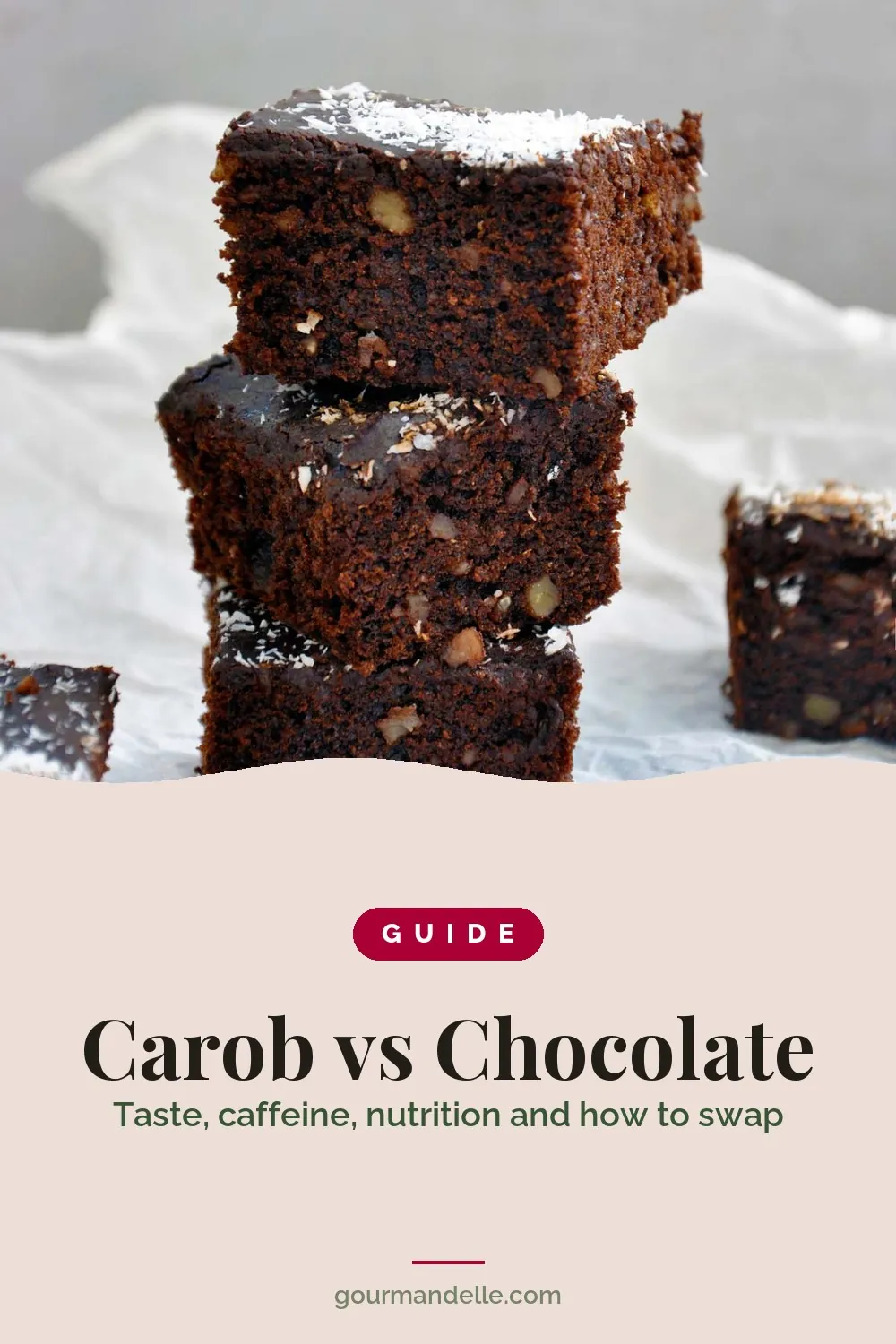
Both carob and cocoa show up in my recipes, and they do different jobs. My gluten-free brownies work with either one, which makes them a good test: carob makes them sweeter and milder, almost like fudge, while cocoa gives them proper dark chocolate flavor. If you’re deciding which one to buy, or wondering why your carob cake doesn’t taste like chocolate cake, this is the comparison I’d want.
Carob vs cocoa at a glance
- Where they come from: carob is the dried, ground pulp of the carob pod; cocoa and chocolate come from fermented, roasted cacao beans.
- Taste: carob is naturally sweet, with caramel and malt notes; cocoa is bitter and intensely chocolatey.
- Caffeine: below the detection limit in carob; about 230 mg per 100 g in cocoa, plus about 2 g of theobromine.
- Nutrition: carob has about 20 times less fat and nearly 3 times more calcium; cocoa has far less sugar and much more iron and magnesium.
- Swapping: 1:1 by volume, with about a quarter less sugar; not for ganache or mousse.
Table of Contents
- What’s the Difference Between Carob and Cacao?
- What Does Carob Taste Like?
- Carob vs Cocoa Nutrition (per 100 g)
- Does Carob Have Caffeine?
- Is Carob Healthier Than Chocolate?
- How to Substitute Carob for Cocoa Powder
- What About Carob Chocolate and Carob Chips?
- Carob or Cocoa: Which One Should You Use?
- Frequently Asked Questions
- Sources
What’s the Difference Between Carob and Cacao?
They look alike in a bowl, but they come from completely different plants. Carob (Ceratonia siliqua) is a Mediterranean tree from the legume family; carob powder is the dried, ground pulp of its pods, with the seeds removed. Cacao is the bean of the cacao tree; the beans are fermented and roasted, then pressed into cocoa powder and cocoa butter, the two building blocks of chocolate.
That origin explains almost everything else. Carob pulp is naturally sweet (mostly sucrose) and almost fat-free, while cacao beans are bitter and rich in fat, and they carry caffeine and theobromine that carob doesn’t have. So carob isn’t chocolate, and it isn’t a “fake” chocolate either: it’s its own ingredient with a chocolate-like color.

What Does Carob Taste Like?
Carob tastes sweet, warm and toasty, with notes of caramel and malt. If you bite into something made with carob expecting dark chocolate, it will seem mild; if you expect milk chocolate or fudge, you’ll find it much closer.
Does carob taste like chocolate? Not exactly. It has a similar color and a cocoa-like roundness, but none of chocolate’s bitterness or the melt-in-your-mouth richness that comes from cocoa butter. Some people find carob slightly fruity or earthy, especially raw carob.
Roasting makes a big difference. In one study, carob powders roasted at 120 and 150 °C were liked best, while raw powder and powder roasted at 180 °C were liked least. Roasting darkens the powder and adds caramel and coffee notes, but pushed too far it leaves a bitter edge. As a rule of thumb, the darker the carob powder, the more it was roasted, and the closer it tastes to chocolate.
Carob vs Cocoa Nutrition (per 100 g)
These numbers come from the USDA database for carob flour (carob powder) and unsweetened cocoa powder. The per-tablespoon line is my own calculation, using the USDA tablespoon weights (6 g of carob, 5.4 g of cocoa).
| Per 100 g | Carob powder | Unsweetened cocoa |
|---|---|---|
| Energy | 222 kcal | 228 kcal |
| Sugars | 49 g | 1.8 g |
| Fiber | 40 g | 37 g |
| Protein | 4.6 g | 19.6 g |
| Fat | 0.65 g | 13.7 g |
| Calcium | 348 mg | 128 mg |
| Iron | 2.9 mg | 13.9 mg |
| Magnesium | 54 mg | 499 mg |
| Caffeine | below detection limit | 230 mg |
| Theobromine | below detection limit | 2,060 mg |
| Per tablespoon | 13 kcal, 2.9 g sugars | 12 kcal, 0.1 g sugars |
The calories are almost identical, which surprises a lot of people. The real differences are elsewhere: carob has about 20 times less fat and nearly 3 times more calcium, while cocoa has far less sugar and much more iron, magnesium and protein.

Does Carob Have Caffeine?
Practically none. In lab tests, caffeine and theobromine in carob powders, syrups and pulp were below the detection limit. Unsweetened cocoa has around 230 mg of caffeine and 2,060 mg of theobromine per 100 g, so a tablespoon of cocoa brings roughly 12 mg of caffeine, and the darker the chocolate, the more theobromine it contains.
That’s the main reason people choose carob for evening desserts or when they’re avoiding stimulants. It also explains the dog question: theobromine is what makes chocolate dangerous for dogs, while the ASPCA lists carob as non-toxic to dogs and cats.
Is Carob Healthier Than Chocolate?
Not simply healthier, just different. Carob wins on fat, calcium and caffeine; cocoa wins on iron, magnesium, protein and sugar, since unsweetened cocoa has almost none. A bar of chocolate adds sugar and cocoa butter on top, while carob products often add vegetable fat and sugar of their own, so compare labels rather than names.
Two things worth keeping in mind:
- Carob is almost half sugar. That natural sweetness lets you cut the sugar in a recipe, but a dessert sweetened with carob isn’t sugar-free.
- No health claim for carob is authorised in the EU. Small studies with carob fiber preparations are interesting, especially for LDL cholesterol, and I’ve gathered them in my guide to carob benefits, along with who should be careful with carob.
How to Substitute Carob for Cocoa Powder
Carob swaps in for cocoa powder in most recipes. These are the rules that work, with the baking notes that make the difference:
- Use it 1:1 by volume: one tablespoon of carob for one tablespoon of cocoa. By weight, carob is about 10% heavier.
- Cut the sugar by about a quarter, because carob is already sweet. Taste the batter before you decide.
- Add a little fat. Carob has under 1% fat, so a splash of extra oil or butter keeps cakes and brownies moist.
- Use a bit less liquid: carob absorbs less, so reduce the liquid by 1-2 tablespoons for every ¼ cup of carob.
- Watch the oven. All that sugar makes carob scorch faster than cocoa.
Where carob shines: brownies, banana bread, muffins, energy balls, smoothies and hot drinks, where chocolate plays a supporting role. Where it doesn’t: ganache, mousse and flourless chocolate cake, which rely on melted chocolate and cocoa butter for their structure.
A few of my recipes that work with carob: gluten-free brownies (carob or cocoa), carob hemp truffles, almond-chocolate truffles, vegan biscuit salami and a carob smoothie with banana and orange. For the full list, see how to use carob powder to replace cocoa.

What About Carob Chocolate and Carob Chips?
Carob chocolate bars and carob chips are made with carob powder bound with vegetable fats instead of cocoa butter. That’s why they feel softer and a little waxy, and why carob chips hold their shape in the oven instead of melting into puddles. They’re handy in cookies and trail mix, but they won’t melt and set like chocolate in a glaze.
When you buy them, read the label: check the type of fat (palm, coconut or another vegetable fat), the sugar (many carob bars are sweetened on top of carob’s own sugars) and whether there’s any cocoa or milk in the mix if you’re avoiding them.
Carob or Cocoa: Which One Should You Use?
- Choose cocoa when you want deep, bitter chocolate flavor: ganache, mousse, dark chocolate cake, rich hot cocoa.
- Choose carob when you want a mellow, naturally sweet, caffeine-free dessert, or a lower-fat swap in brownies, muffins and smoothies.
- Mix them if you want the best of both: half carob and half cocoa gives a chocolatey flavor with a little less bitterness and caffeine.
Frequently Asked Questions
No. Carob comes from the pulp of the carob pod, a legume, while chocolate is made from fermented, roasted cacao beans. They look similar, but carob is naturally sweet, almost fat-free and practically caffeine-free.
Not exactly. Carob is sweet, with caramel and malt notes, closer to milk chocolate or fudge than to dark chocolate, and it has none of cocoa’s bitterness. Roasted carob tastes the most chocolatey.
It’s different rather than healthier. Carob has much less fat, more calcium and no caffeine, while cocoa has far less sugar and more iron, magnesium and protein.
Practically none: in lab tests, caffeine and theobromine in carob were below the detection limit. Unsweetened cocoa has around 230 mg of caffeine per 100 g.
Yes, swap it 1:1 by volume, cut the sugar by about a quarter and add a little extra fat. Skip it in ganache, mousse and flourless chocolate cake.
Yes, the ASPCA lists carob as non-toxic to dogs, while chocolate is dangerous for them because of its theobromine. Check the other ingredients in carob treats, though.
Carob powder is ground carob pod pulp: sweet, low in fat, caffeine-free. Cacao powder is ground cacao beans: bitter, higher in fat and protein, with caffeine and theobromine.
Sources
- USDA FoodData Central, Carob flour (FDC 173755) and Cocoa, dry powder, unsweetened (FDC 169593): fdc.nal.usda.gov
- Papaefstathiou E. et al., 2018, Food Sci Nutr (carob powder, syrup and pulp composition; caffeine and theobromine): PubMed 30510716
- Goulas V. et al., 2016, Int J Mol Sci (review of carob pod composition): PubMed 27834921
- Eldeeb G. et al., 2022, J Food Sci Technol (roasting carob powder: taste and composition): PubMed 35068556
- Regulation (EU) 432/2012 (list of authorised health claims): eur-lex.europa.eu
- ASPCA, Carob (non-toxic plants list): aspca.org