Carob Benefits: What Carob Is, Its Nutrition, and Who Should Be Careful
Carob benefits start with what carob powder actually is: the dried, ground pulp of the carob pod, naturally sweet, very low in fat, rich in fiber and calcium, and practically caffeine-free. Below you’ll find carob’s nutrition per 100 g and per spoon, what the studies show about cholesterol, blood sugar and digestion, the side effects worth knowing, and whether carob is OK for babies and dogs.
Carob powder shows up in more than 25 recipes on this blog, and not only in desserts. A spoonful goes into my vegan mititei, two into my vegan steak and four into my chickpea burgers, where it adds a deep brown color and a rounded, slightly sweet flavor without tasting like dessert. The two questions I get most are simple: is carob actually healthy, and is it safe for kids? This guide answers both, with the studies linked at the end.
Carob at a glance
- What it is: the dried, ground pulp of the carob pod (Ceratonia siliqua), a Mediterranean tree from the legume family.
- Nutrition: high in fiber (about 40 g per 100 g) and calcium, very low in fat, but almost half sugar.
- Caffeine: caffeine and theobromine were below the detection limit in lab tests.
- What studies suggest: small trials with carob fiber lowered LDL cholesterol; results for blood sugar are mixed.
- Who should be careful: people managing blood sugar, anyone allergic to carob or locust bean gum, and babies (not as a sweetener).
Table of Contents
- What Is Carob?
- Carob Nutrition per 100 g and per Tablespoon
- Carob Benefits: What the Studies Show
- Is Carob Healthy?
- Carob Side Effects and Who Should Be Careful
- Is Carob Safe for Babies and Kids?
- Is Carob Safe for Dogs?
- How I Use Carob Powder
- Raw vs Roasted Carob Powder
- Frequently Asked Questions
- Sources
What Is Carob?
Carob (Ceratonia siliqua) is a Mediterranean tree from the legume family, a distant relative of beans and chickpeas. Its fruit is a long, dark brown pod made of about 90% pulp and 10% seeds. The pulp is sweet (mostly sucrose), high in fiber and rich in tannins; the seeds are hard and nearly tasteless.
Several products come from the same pod:
- Carob powder (carob flour): the dried, ground pulp, without seeds. The two names describe the same thing.
- Carob syrup or molasses: concentrated pulp with 55-62 g of sugars per 100 g.
- Locust bean gum (E 410): the ground inner part of the seeds, used as a thickener. It’s not a cocoa substitute.
- Carob chips: carob powder bound with vegetable fat; softer than chocolate chips, and they hold their shape in the oven.

Carob Nutrition per 100 g and per Tablespoon
These numbers come from the USDA database for carob flour (carob powder). The tablespoon column is my own calculation, based on the USDA tablespoon weight of 6 g.
| Nutrient | Per 100 g | Per tablespoon (6 g) |
|---|---|---|
| Energy | 222 kcal | 13 kcal |
| Sugars | 49 g | 2.9 g |
| Fiber | 40 g | 2.4 g |
| Protein | 4.6 g | 0.3 g |
| Fat | 0.65 g | 0.04 g |
| Calcium | 348 mg | 21 mg |
| Potassium | 827 mg | 50 mg |
| Iron | 2.9 mg | 0.18 mg |
| Caffeine and theobromine | below the detection limit | below the detection limit |
European labels often say around 300 kcal per 100 g. That’s not an error: EU rules count fiber at 2 kcal per gram, while the USDA figure above doesn’t.
Compared with unsweetened cocoa, carob has about 20 times less fat and nearly 3 times more calcium, but far more natural sugar and much less iron and magnesium. Cocoa also brings around 230 mg of caffeine and 2 g of theobromine per 100 g, while carob is practically free of both.

Carob Benefits: What the Studies Show
The encouraging part is that carob powder’s nutrition shows up right on the label: it’s high in fiber and calcium, a source of iron and potassium, and very low in fat. That applies to the powder itself, not automatically to a brownie that contains a spoonful of it. Beyond nutrition, here’s what research has looked at:
- LDL cholesterol: in three small trials, preparations of carob fiber or pulp (8-15 g a day for 4-8 weeks) were followed by LDL reductions of 10-22%. They involved 47-88 people and used special preparations rather than shop-bought powder, but the results are promising.
- Blood sugar: the findings point in different directions. Some carob foods produced lower blood sugar responses than comparison foods, yet carob fiber taken together with glucose raised blood sugar. A 2026 review of 15 studies calls the effects “preliminary”.
- Digestion and diarrhea in kids: two older trials (1989 and 1998) gave special carob products to children with diarrhea alongside oral rehydration solution, and the diarrhea cleared faster. These weren’t regular carob powder, and rehydration remains the treatment.
- Caffeine-free: with no measurable caffeine or theobromine, carob suits an evening dessert or anyone avoiding stimulants.
- Antioxidants: the pulp contains polyphenols and tannins, and roasting increases them. That’s a lab finding, not a proven effect in people.
One more thing worth knowing: in the EU, no health claim for carob has been authorised. A claim for satiety and weight control has been on hold for years, and one for blood sugar (a carob pod extract) was rejected. Treat any promise that carob helps you lose weight, lowers blood sugar or “detoxes” with suspicion.
Is Carob Healthy?
Carob is a good everyday ingredient, with one big caveat: almost half of carob powder is sugar (about 40-49 g per 100 g, depending on the product). It’s naturally sweet, which is exactly why recipes with carob need less added sugar, but it isn’t sugar-free, and a recipe sweetened with carob can’t honestly be called “no added sugar”.
So is carob healthier than chocolate? It’s different rather than simply better. Carob wins on fat, calcium and caffeine; cocoa has far more iron, magnesium and protein and much less sugar. Carob is the pick for a mellow, sweet, caffeine-free flavor; cocoa is the pick for deep, bitter chocolate.
Carob Side Effects and Who Should Be Careful
For most people, carob is an ordinary food that’s fine in recipe amounts. A few situations call for care:
- Diabetes or blood sugar control: count carob powder and especially carob syrup as sweet ingredients.
- Allergy: rare but documented, mostly in people exposed at work to locust bean gum (asthma, rhinitis). In a small test, children allergic to peanuts didn’t react to carob, but if you have legume allergies, start with a small amount.
- Bloating: all that fiber can cause gas or discomfort if you’re not used to it. Start with a teaspoon.
- Medicines: like other high-fiber foods, carob may slow the absorption of some medicines, so take them a few hours apart.
- Pregnancy and breastfeeding: there are no specific studies. As a food, in recipe amounts, carob is well tolerated; carob supplements haven’t been studied.
Is Carob Safe for Babies and Kids?
This is where I’m more cautious than many recipes online. Babies start solid foods around 6 months, never before 4 months (WHO, ESPGHAN), and their first foods should have no added sugar or salt. Since carob powder is nearly half sugar, don’t use it as a sweetener for babies.
I couldn’t find any official guidance on the age or amount at which carob powder suits young children, so I don’t give amounts here. Ask your pediatrician, especially before the first birthday.
- Anti-reflux formulas thickened with locust bean gum should be used only on a doctor’s advice.
- For diarrhea, the treatment is oral rehydration solution, zinc and continued feeding (WHO). In the carob studies, carob was given on top of rehydration, never instead of it. If diarrhea lasts, contains blood or your child seems dehydrated, see a doctor.
For older kids, carob brownies or a carob smoothie are a dessert like any other: sweet, so enjoy them in moderation.
Is Carob Safe for Dogs?
Yes: the ASPCA lists carob as non-toxic to dogs, cats and horses. Chocolate is the problem, because dogs are sensitive to its theobromine, and the darker the chocolate, the more it contains. That doesn’t make every carob treat dog-friendly, though, so check the other ingredients first.
How I Use Carob Powder
The basic rule: swap cocoa for carob 1:1 (a tablespoon for a tablespoon) and cut the sugar by about a quarter. Carob has very little fat, so a splash of extra oil or butter keeps bakes moist, and because it’s so sweet it scorches easily, so keep an eye on the oven. It won’t work in ganache or mousse, where melted chocolate holds the structure.
In my kitchen, carob goes two ways:
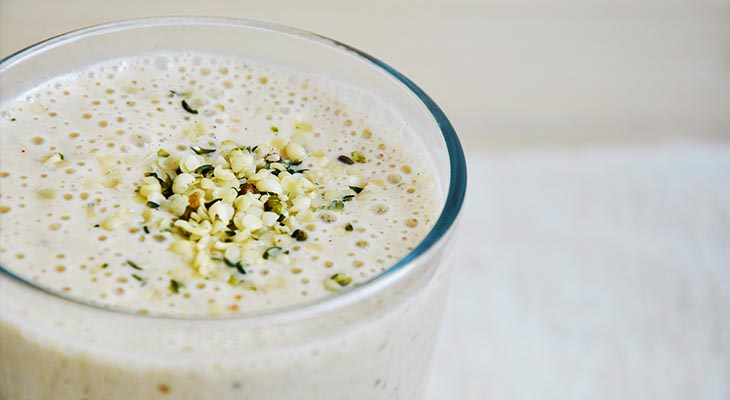
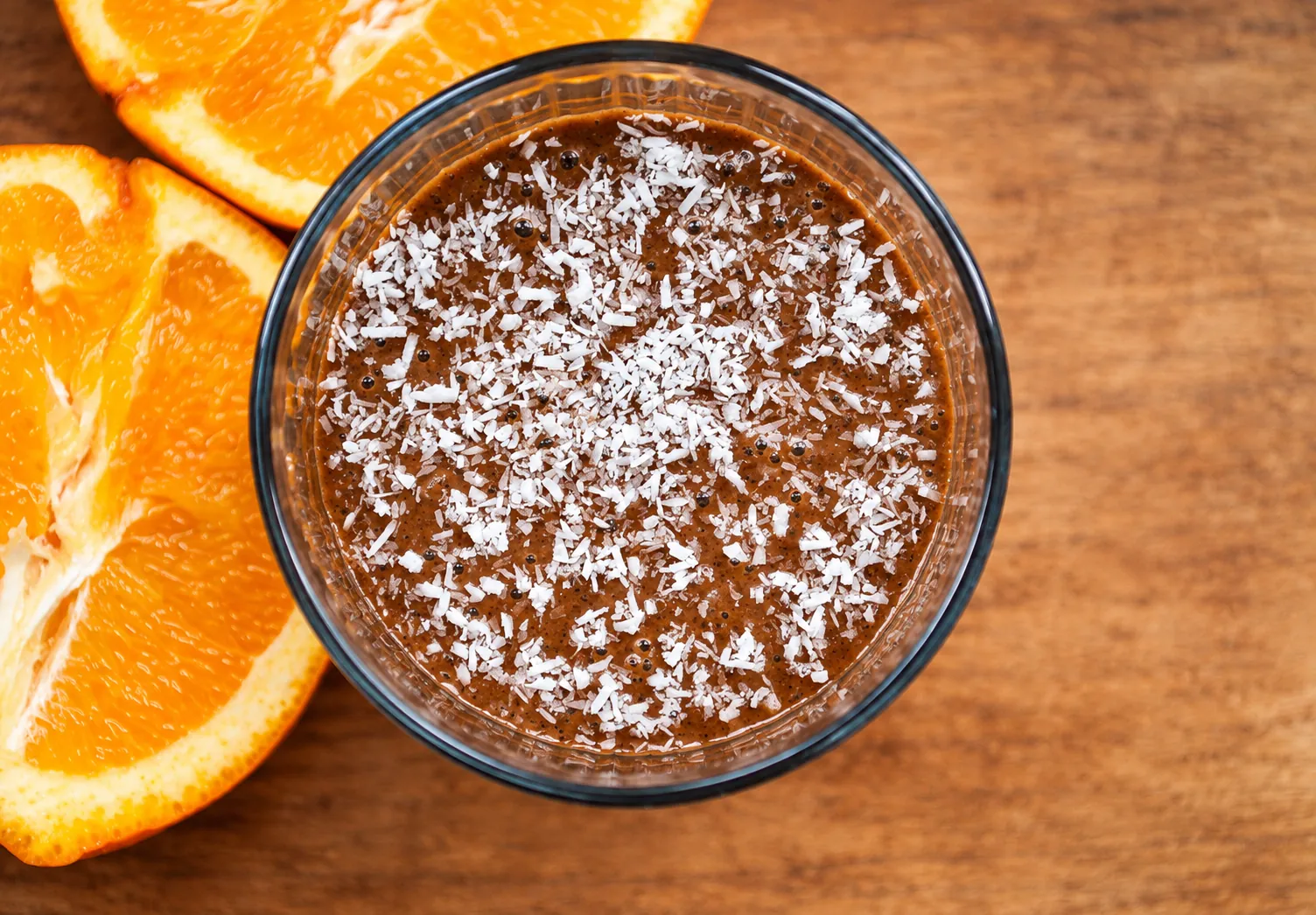
- Sweet: gluten-free brownies (4 tablespoons, cocoa works too), vegan biscuit salami (2 tablespoons), carob hemp truffles (3 tablespoons plus extra for rolling), almond-chocolate truffles, a raw chocolate raspberry cake and my carob smoothie with banana and orange (3 tablespoons).
- Savory: vegan mititei (1 tablespoon), vegan steak (2 tablespoons), vegan rack of lamb, a vegan pulled pork burger (2 teaspoons) and chickpea burgers (4 tablespoons). Here carob doesn’t read as sweet; it gives the color and roundness of a browned crust.
For more ideas, see how to use carob powder to replace cocoa, with 20+ carob-friendly recipes.
Raw vs Roasted Carob Powder
Roasting changes carob a lot. In one study, powders roasted at 120 and 150 °C were liked best, while raw powder and powder roasted at 180 °C were liked least. Roasting darkens the color and brings caramel and coffee notes, but pushed too far it turns slightly bitter.
- Raw carob powder: lighter and milder, nice in smoothies, raw desserts and oatmeal.
- Roasted carob powder: darker and closer to chocolate, better for brownies, cakes and hot drinks.
Many bags don’t say which one you’re buying. A good clue is the color: the darker the powder, the more it was roasted.

Frequently Asked Questions
Carob powder is high in fiber and calcium, a source of iron, very low in fat and practically caffeine-free. Small trials with carob fiber preparations lowered LDL cholesterol, but no health claim for carob is authorised in the EU.
It’s a nutritious ingredient with one catch: it’s almost half sugar. Use it like any sweet ingredient, and enjoy the fiber, calcium and lack of caffeine.
Practically none. In lab tests, caffeine and theobromine in carob powder, syrup and pulp were below the detection limit, while cocoa has around 230 mg of caffeine per 100 g.
Not simply healthier, just different. Carob has far less fat, more calcium and no caffeine; cocoa has much more iron, magnesium and protein and very little sugar.
Bloating if you’re not used to the fiber, rare allergic reactions, and a blood sugar effect from its natural sugars. Take medicines a few hours apart from high-fiber foods.
Not as a sweetener: babies’ first foods should have no added sugar, and carob powder is nearly half sugar. There’s no official guidance on age or amount, so ask your pediatrician.
Yes, the ASPCA lists carob as non-toxic to dogs, unlike chocolate. Still check the other ingredients in any carob treat.
Carob is naturally gluten-free. If you have celiac disease, choose a powder labeled gluten-free, since it can be cross-contaminated during processing.
Sources
- USDA FoodData Central, Carob flour (FDC 173755) and Cocoa, dry powder, unsweetened (FDC 169593): fdc.nal.usda.gov
- Papaefstathiou E. et al., 2018, Food Sci Nutr (carob powder, syrup and pulp composition; caffeine and theobromine): PubMed 30510716
- Goulas V. et al., 2016, Int J Mol Sci (review of carob pod composition): PubMed 27834921
- Eldeeb G. et al., 2022, J Food Sci Technol (roasting carob powder): PubMed 35068556
- Zunft H.J. et al., 2003, Eur J Nutr (carob fiber and LDL cholesterol): PubMed 14569404
- Ruiz-Roso B. et al., 2010, Plant Foods Hum Nutr (carob fiber and cholesterol): PubMed 20094802
- Gruendel S. et al., 2007, Br J Nutr (carob fiber, blood sugar and insulin): PubMed 17381962
- Victoria-Montesinos D. et al., 2026, Nutr Res (systematic review: carob and blood sugar): PubMed 42372710
- Loeb H. et al., 1989, J Pediatr Gastroenterol Nutr (carob powder in infant diarrhea): PubMed 2723939
- Akşit S. et al., 1998, Paediatr Perinat Epidemiol (carob bean juice in childhood diarrhea): PubMed 9620567
- Fiocchi A. et al., 1999, Clin Exp Allergy (carob in peanut-allergic children): PubMed 10202350
- Fewtrell M. et al., 2017, ESPGHAN (complementary feeding): PubMed 28027215
- Haiden N. et al., 2024, ESPGHAN (thickened infant formulas): PubMed 38766683
- World Health Organization, Diarrhoeal disease fact sheet: who.int
- EFSA, 2017, re-evaluation of locust bean gum (E 410): doi.org/10.2903/j.efsa.2017.4646
- Regulation (EU) 432/2012 (list of authorised health claims): eur-lex.europa.eu
- Regulation (EU) 2016/1411 (refused claim for a carob pod extract): eur-lex.europa.eu
- ASPCA, Carob (non-toxic plants list): aspca.org