How to Cook Quinoa (Fluffy, Never Mushy): Water Ratio, Times and Storage
To cook quinoa so it comes out fluffy, rinse it well in a fine sieve, then simmer it with 200 ml of water for every 100 g of quinoa (a heaping 1/2 cup of quinoa to about 3/4 cup plus 2 tablespoons of water), covered, on the lowest heat: 12-15 minutes for white quinoa, 18-22 minutes for red or black. Turn off the heat, leave the lid on for 5-10 more minutes, then fluff it with a fork. Below you’ll find my exact method with step-by-step photos, the ratio in grams and in cups, what changes for red, black and tricolor quinoa, how to store, freeze and reheat it, and the two mistakes that make it mushy.
The secret to good quinoa is mostly leaving it alone. The two mistakes I see most often are too much water and stirring it while it cooks, and both give you a soft, sticky pot. I measure the water, put the lid on, turn the heat down to the minimum and don’t touch it until it has rested. That’s how it comes out fluffy, and that’s how I make it whenever I serve it instead of rice.
The short version
- Ratio: 100 g quinoa to 200 ml water (white); about 220 ml for red or black.
- Rinse: 30-60 seconds in a very fine sieve, under cold running water, even if the bag says prewashed.
- Cook: heavy-bottomed pot with a lid, bring to a boil, then lowest heat with the lid on. White 12-15 min, red/black 18-22 min.
- Rest: 5-10 minutes off the heat, lid on, then fluff with a fork.
- Yield: in my kitchen, 100 g dry gives roughly 250-300 g cooked.
- Keeps: 3-4 days in the fridge (cool it quickly), 2-3 months in the freezer.
Table of Contents
- What Is Quinoa?
- White, Red, Black or Tricolor Quinoa?
- Do You Need to Rinse Quinoa?
- The Quinoa to Water Ratio (in Grams and Cups)
- How to Cook Quinoa on the Stove (My Method)
- Why Is My Quinoa Mushy (or Bitter, or Crunchy)?
- Can You Cook Quinoa in a Rice Cooker or Instant Pot?
- How to Store, Freeze and Reheat Cooked Quinoa
- How I Use Cooked Quinoa
- Quinoa Nutrition (per 100 g Cooked)
- Get My Free Plant-Based Protein Guide
- Sources
- Quinoa Cooking FAQ
What Is Quinoa?
Quinoa is the seed of a plant from the Andes (Chenopodium quinoa), not a true grain, but we cook and eat it like one. That’s why it’s called a pseudo-cereal. It’s naturally gluten-free, it cooks in about 15 minutes, and it has a mild, slightly nutty flavor that takes on whatever you season it with.
The seeds are covered in saponins, natural compounds that taste bitter and a little soapy. Most quinoa sold today has already been washed or polished to remove most of them, but there’s often a little left on the surface, which is why rinsing still matters (more on that below).
White, Red, Black or Tricolor Quinoa?
I cook white quinoa most often: it’s the most versatile, it cooks fastest and it comes out the fluffiest. For salads, I like tricolor, because the red and black seeds stay firmer and keep their shape.
| Quinoa | Water per 100 g | Simmer | Texture | Best for |
|---|---|---|---|---|
| White | 200 ml (3/4 cup + 2 tbsp) | 12-15 min | soft, fluffy, mild | side dishes, bowls, patties, breakfast |
| Red | about 220 ml (a scant 1 cup) | 18-22 min | firmer, chewier, holds its shape | salads, stuffed vegetables |
| Black | about 220 ml (a scant 1 cup) | 18-22 min | firmest, slightly crunchy, earthy | salads, a striking side |
| Tricolor | about 220 ml | 18-22 min | mixed: the white seeds end up a bit softer | salads, Buddha bowls |
Red and black quinoa have a tougher seed coat, so I give them a little more water and a few more minutes. I don’t have a favorite brand: I buy quinoa from the supermarket or from health food stores, organic when I can, and I look at the quality and the price.
Do You Need to Rinse Quinoa?
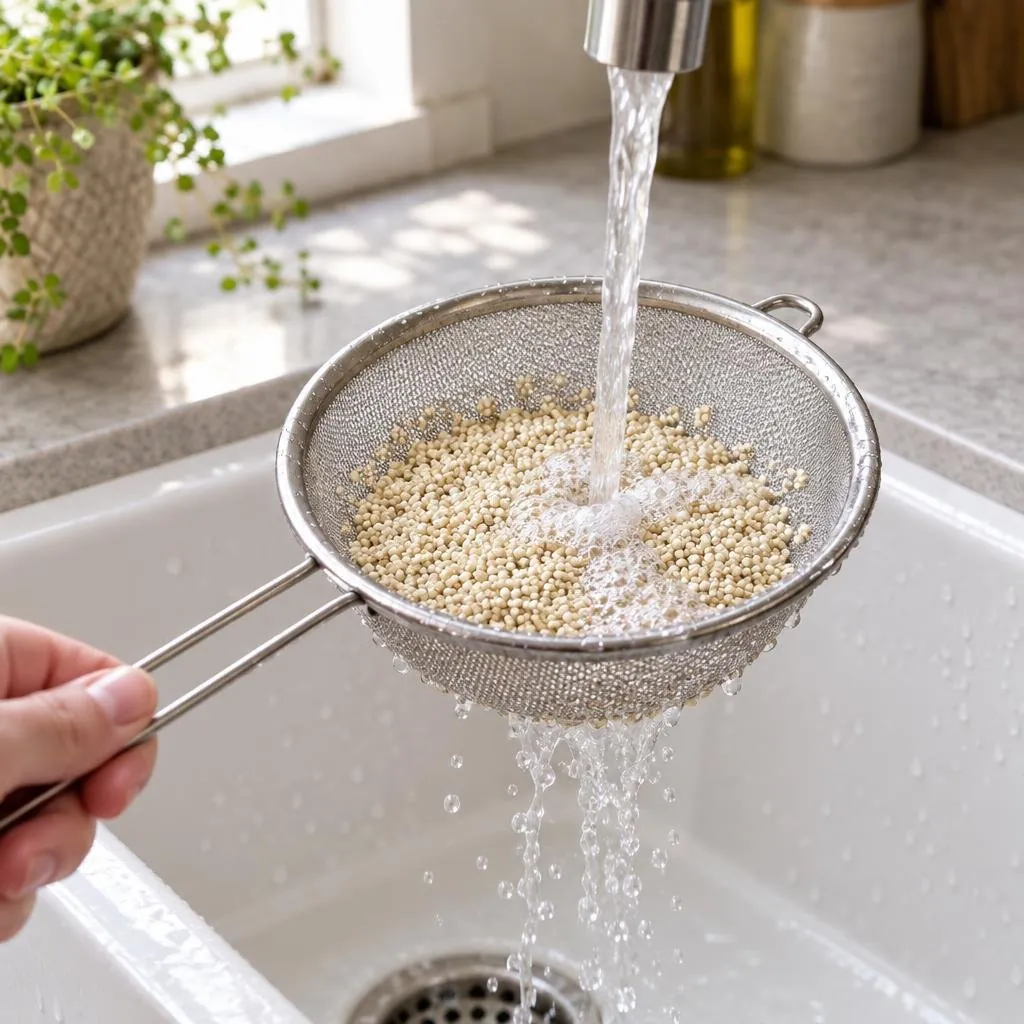
Yes, I always rinse it, even when the bag says prewashed. I put the quinoa in a very fine sieve and rinse it under cold running water for 30-60 seconds, stirring it gently with my hand. A regular colander won’t do, because the seeds slip right through the holes.
Rinsing washes off any saponins left on the surface, and those are what make quinoa taste bitter. It has happened to me: when I didn’t rinse it well enough, the quinoa came out slightly bitter. Rinsing won’t make quinoa “safer”, it just makes it taste better.
The Quinoa to Water Ratio (in Grams and Cups)
My ratio is 100 g of quinoa to 200 ml of water for white quinoa, and about 220 ml for red or black. That’s 1:2 by weight, and it’s the reason my quinoa doesn’t turn mushy.
If you’re used to cups, this is where it gets confusing. Many recipes and packets say “1 cup quinoa to 2 cups water”, but that’s by volume: 1 cup of dry quinoa weighs about 170 g, while 2 cups of water are about 475 ml, so nearly 1:3 by weight. That’s a lot more water than I use. In cups, my ratio works out like this:
| Dry quinoa | Water, white quinoa | Water, red / black quinoa |
|---|---|---|
| 100 g (a heaping 1/2 cup) | 200 ml (3/4 cup + 2 tbsp) | 220 ml (a scant 1 cup) |
| 170 g (1 cup) | 340 ml (a scant 1 1/2 cups) | 375 ml (a generous 1 1/2 cups) |
| 200 g (1 cup + 3 tbsp) | 400 ml (1 2/3 cups) | 440 ml (1 3/4 cups + 2 tbsp) |
Conversions use the USDA weight of 1 US cup of uncooked quinoa (170 g) and 1 cup = 237 ml. A kitchen scale is the most reliable way to measure quinoa.
Salt or stock: I add a little salt to the water. For savory dishes, I sometimes use vegetable stock instead of water, in the same amount.
How much does it make? In my kitchen, 100 g of dry quinoa gives roughly 250-300 g of cooked quinoa (about 1 1/3 to 1 2/3 cups), depending on the type and how much water it soaks up. That’s two generous side portions.
How to Cook Quinoa on the Stove (My Method)
I cook quinoa in a heavy-bottomed pot with a lid, on low heat, and I don’t stir it. A heavy base spreads the heat evenly, so the bottom doesn’t catch while the top is still underdone.
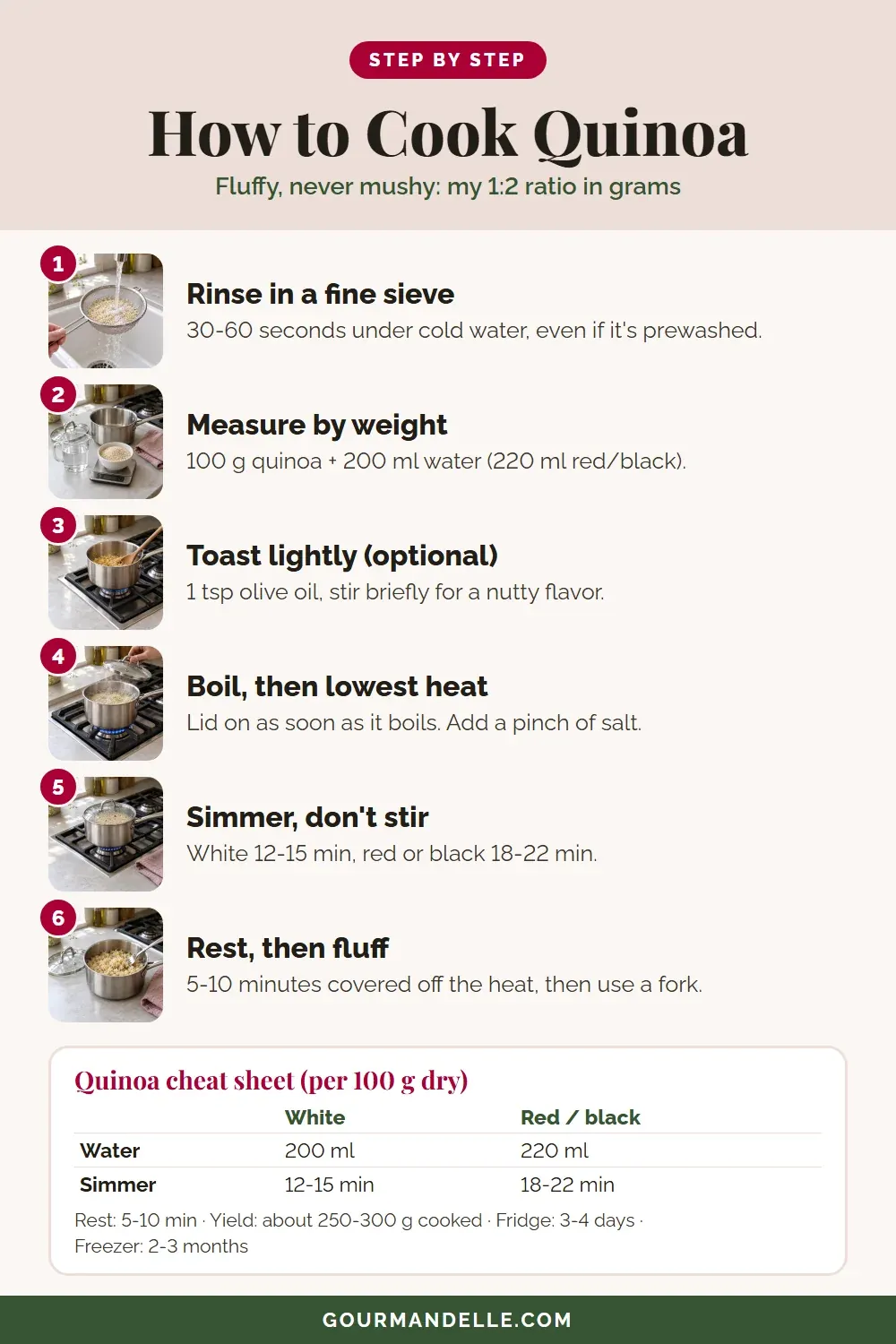
- Rinse. 100 g of quinoa in a very fine sieve, under cold running water, for 30-60 seconds, stirring gently. Let it drain for a minute.
- Toast (optional). For a subtle nutty flavor, warm 1 teaspoon of olive oil in the pot, add the drained quinoa and stir it briefly, just until it smells lightly toasted. I love this version, but plain is fine too.
- Add the water. Pour in 200 ml of water (220 ml for red or black quinoa) and a pinch of salt, or use vegetable stock.
- Bring to a boil, then turn the heat down. As soon as it boils, turn the heat to the lowest setting and put the lid on.
- Simmer, without stirring. White quinoa takes 12-15 minutes, red or black 18-22 minutes. It’s ready when the water has been absorbed and you see small steam holes on the surface. Each seed turns translucent and a tiny white spiral, the germ, comes loose around it.
- Rest. Turn off the heat and leave the pot covered for 5-10 more minutes. The steam finishes the cooking.
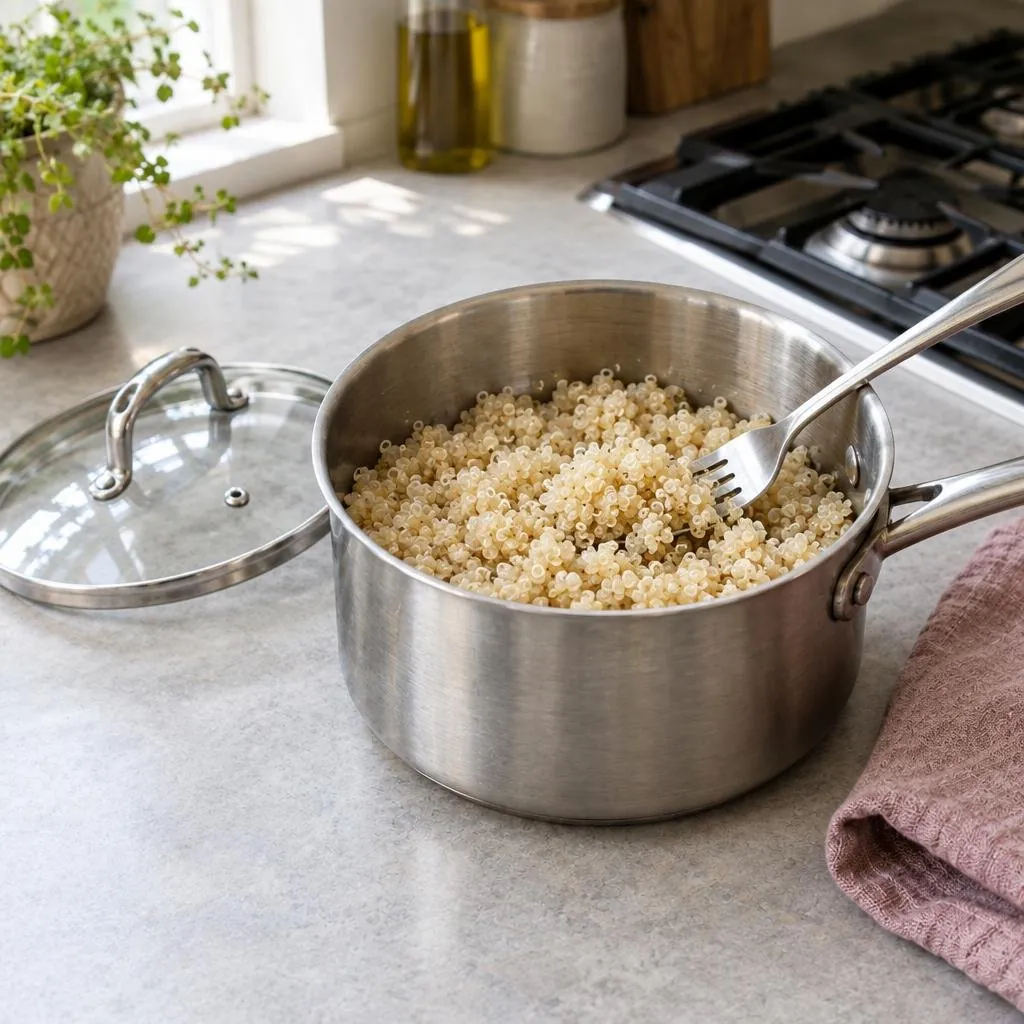
- Fluff. Lift the lid and fluff the quinoa gently with a fork.
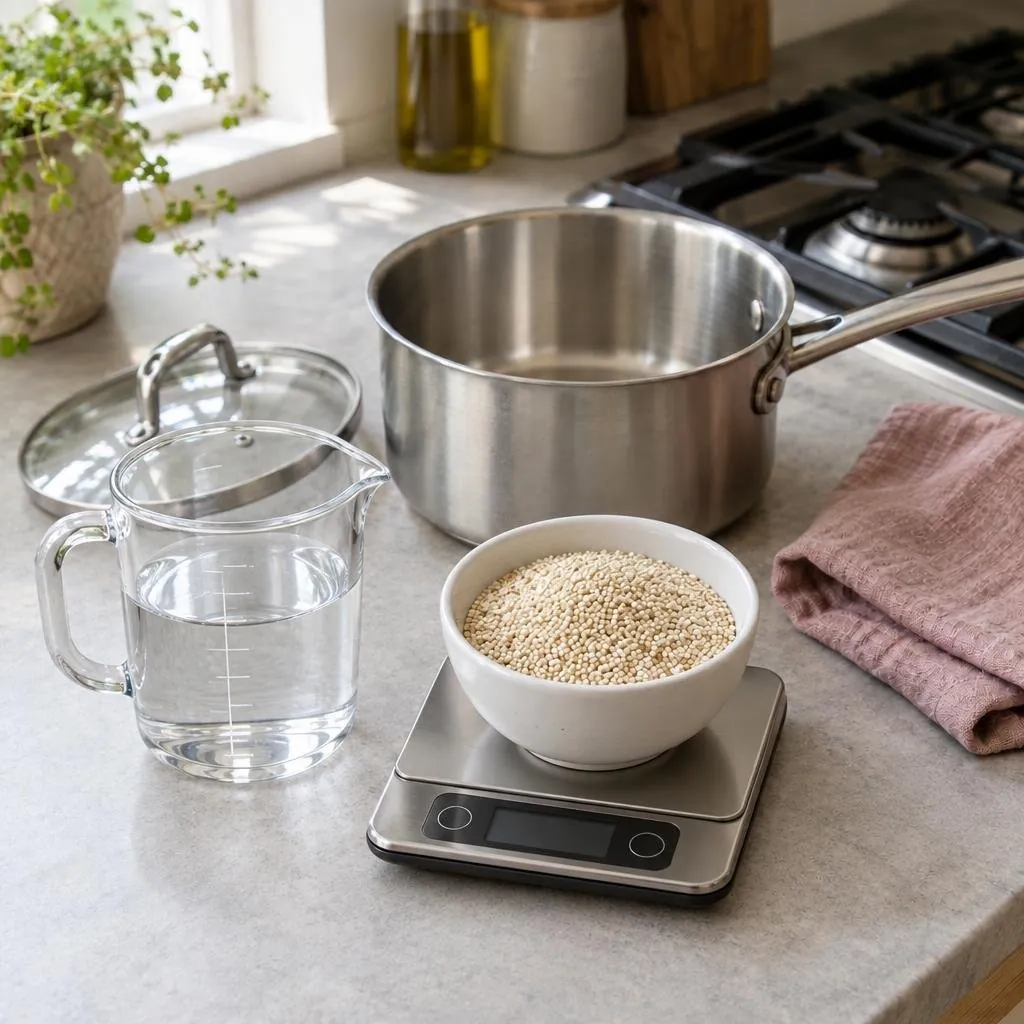
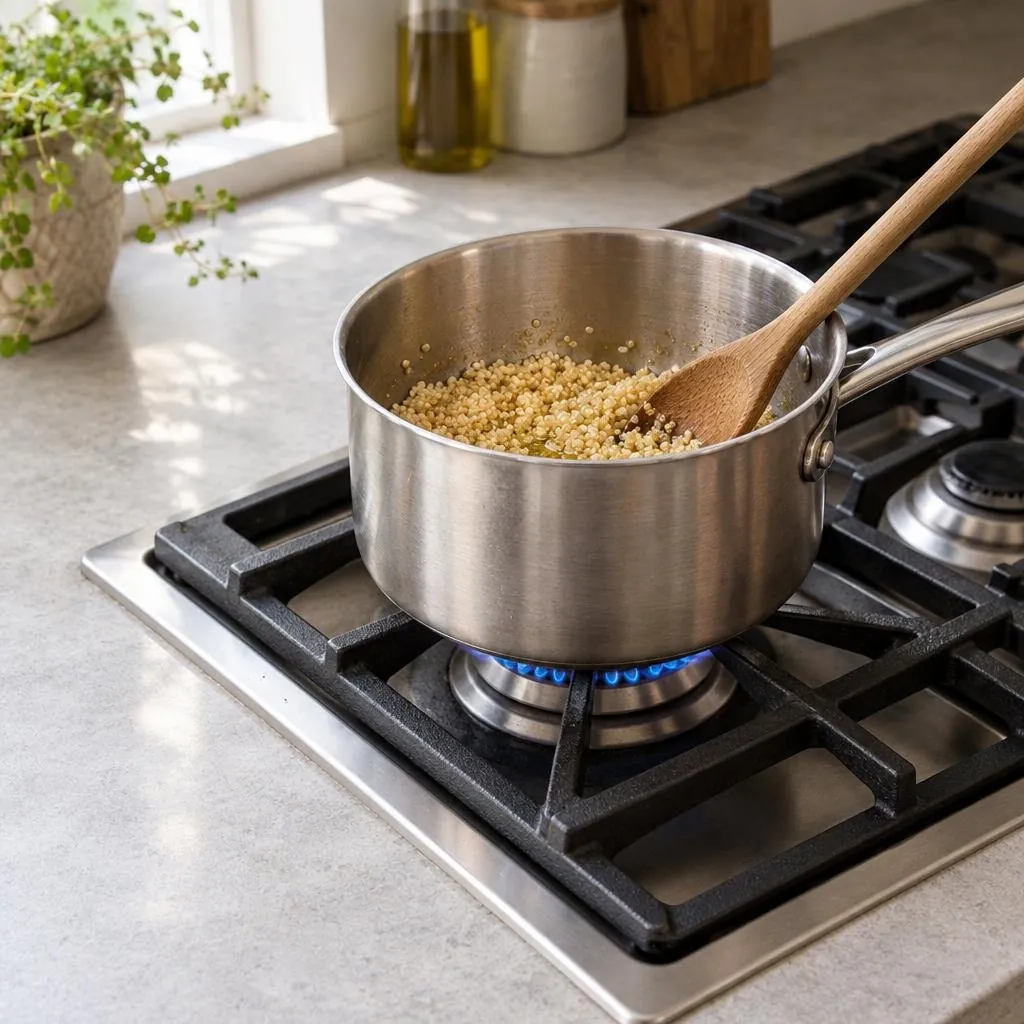
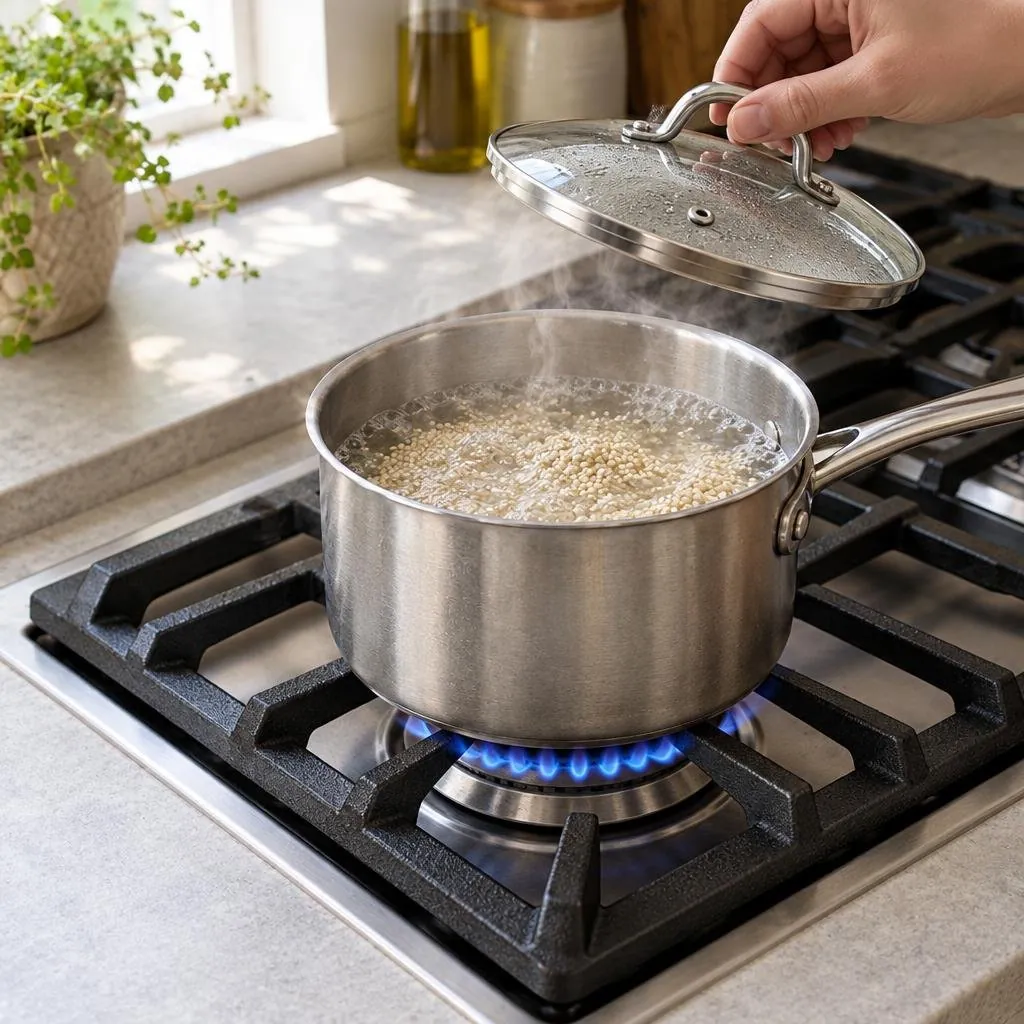
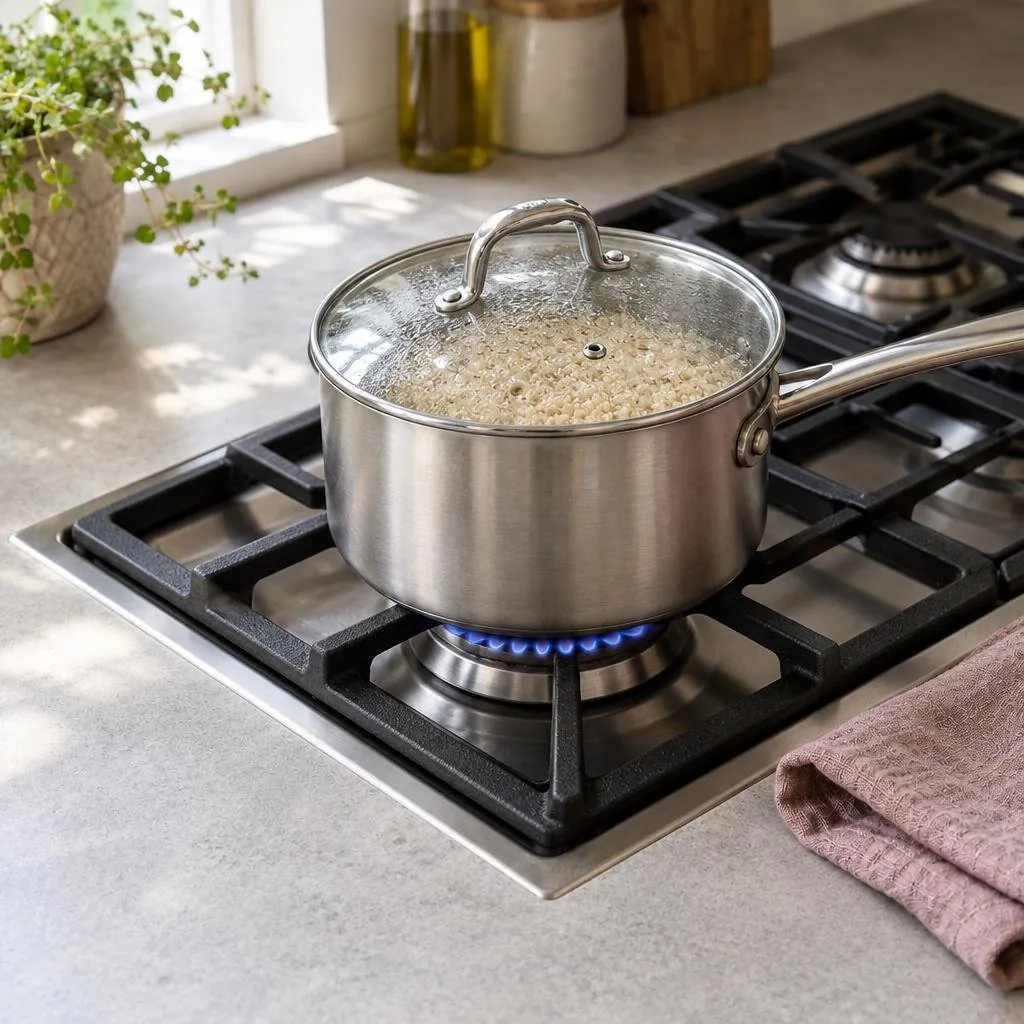
How to Cook Quinoa
Ingredients
- 100 g quinoa white; for red, black or tricolor see notes (US: 1/2 cup heaping)
- 200 ml water or vegetable stock; 220 ml for red, black or tricolor quinoa (US: 3/4 cup plus 2 tablespoons; a scant 1 cup for red, black or tricolor)
- 1 pinch salt less if using stock
- 1 tsp olive oil optional, for toasting
Instructions
- Put the quinoa in a very fine sieve and rinse it under cold running water for 30-60 seconds, stirring gently with your hand, even if the package says prewashed. Let it drain for a minute.
- Optional, for a subtle nutty flavor: warm the olive oil in a heavy-bottomed pot, add the drained quinoa and stir briefly, just until it smells lightly toasted.
- Add the water (or vegetable stock) and the salt to the pot.
- Bring to a boil, then turn the heat down to the lowest setting and put the lid on.
- Simmer without stirring: 12-15 minutes for white quinoa, 18-22 minutes for red or black, until the water is absorbed and small steam holes appear on the surface.
- Turn off the heat and leave the pot covered for 5-10 minutes.
- Lift the lid and fluff the quinoa gently with a fork.
Notes
Why Is My Quinoa Mushy (or Bitter, or Crunchy)?
The two most common mistakes are too much water and stirring while it cooks. Quinoa turns out best on low heat, left alone, with a rest at the end.
| The problem | Why it happens | The fix |
|---|---|---|
| Mushy, sticky | too much water, or stirred during cooking | measure by weight (100 g : 200 ml), don’t stir, let it rest with the lid on |
| Bitter or soapy | saponins not fully washed off | rinse for 30-60 seconds in a very fine sieve, even if it’s prewashed |
| Still crunchy | too little time, or red/black cooked like white | give red and black 18-22 minutes and about 220 ml of water per 100 g; rest it covered |
| Watery at the bottom | not quite done, or the lid came off too soon | put the lid back and leave it off the heat for another 5 minutes |
| Burnt bottom | thin pot, heat too high | use a heavy-bottomed pot and the lowest heat once it boils |
Can You Cook Quinoa in a Rice Cooker or Instant Pot?
Yes, though these aren’t methods I use myself. Cooks who use a rice cooker usually keep the same ratio as on the stove, use the white rice setting, and take the quinoa out as soon as it’s done instead of leaving it on “keep warm”. For an Instant Pot or other pressure cooker, recipes typically use a little less water (about 1:1½ by volume), 1 minute on high pressure and a 10-15 minute natural release. Check your appliance’s manual.
How to Store, Freeze and Reheat Cooked Quinoa
I keep cooked quinoa in an airtight container in the fridge for up to 3-4 days, and I always cool it quickly first. Spread it out in a wide, shallow container so it cools fast, then refrigerate it. Food safety advice for cooked grains is to chill them within about an hour, not to leave them to cool in the pot, and to keep the fridge at 4°C (40°F) or below.
Quinoa freezes really well. I freeze it in individual portions and use it within about 2-3 months. Freeze it once it has cooled, at -18°C (0°F).
To reheat, I put it in a pan or a small pot with 1-2 tablespoons of water, cover it and warm it until it’s steaming hot all the way through. Reheat only the portion you’ll eat, and only once. For cold salads, I thaw frozen quinoa overnight in the fridge.
How I Use Cooked Quinoa
I use quinoa in salads, Buddha bowls, vegetarian patties and stuffed vegetables, and as a side dish instead of rice. My favorite combination is quinoa with roasted vegetables, fresh herbs, chickpeas and a lemon and olive oil dressing. A few more ways I use it:
- Salads: my rainbow quinoa salad for meal prep, or this vegan quinoa salad. Tricolor quinoa is perfect here.
- Buddha bowls: quinoa as the base, roasted veggies, a legume and a good sauce. My vegan Buddha bowls have plenty of ideas.
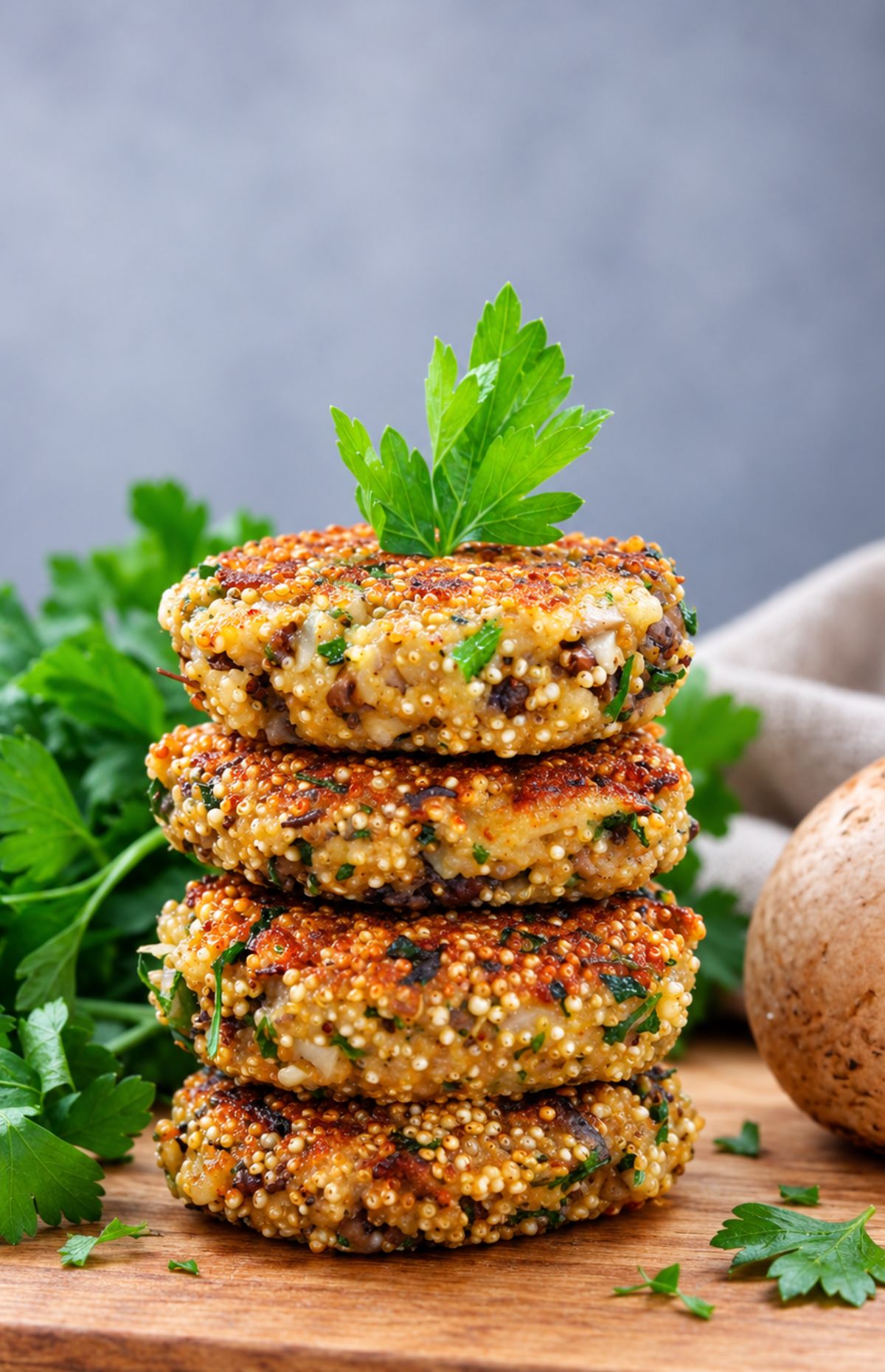
- Vegetarian patties: mushroom quinoa patties, quinoa cakes, quinoa balls, quinoa falafel or a broccoli-quinoa burger.
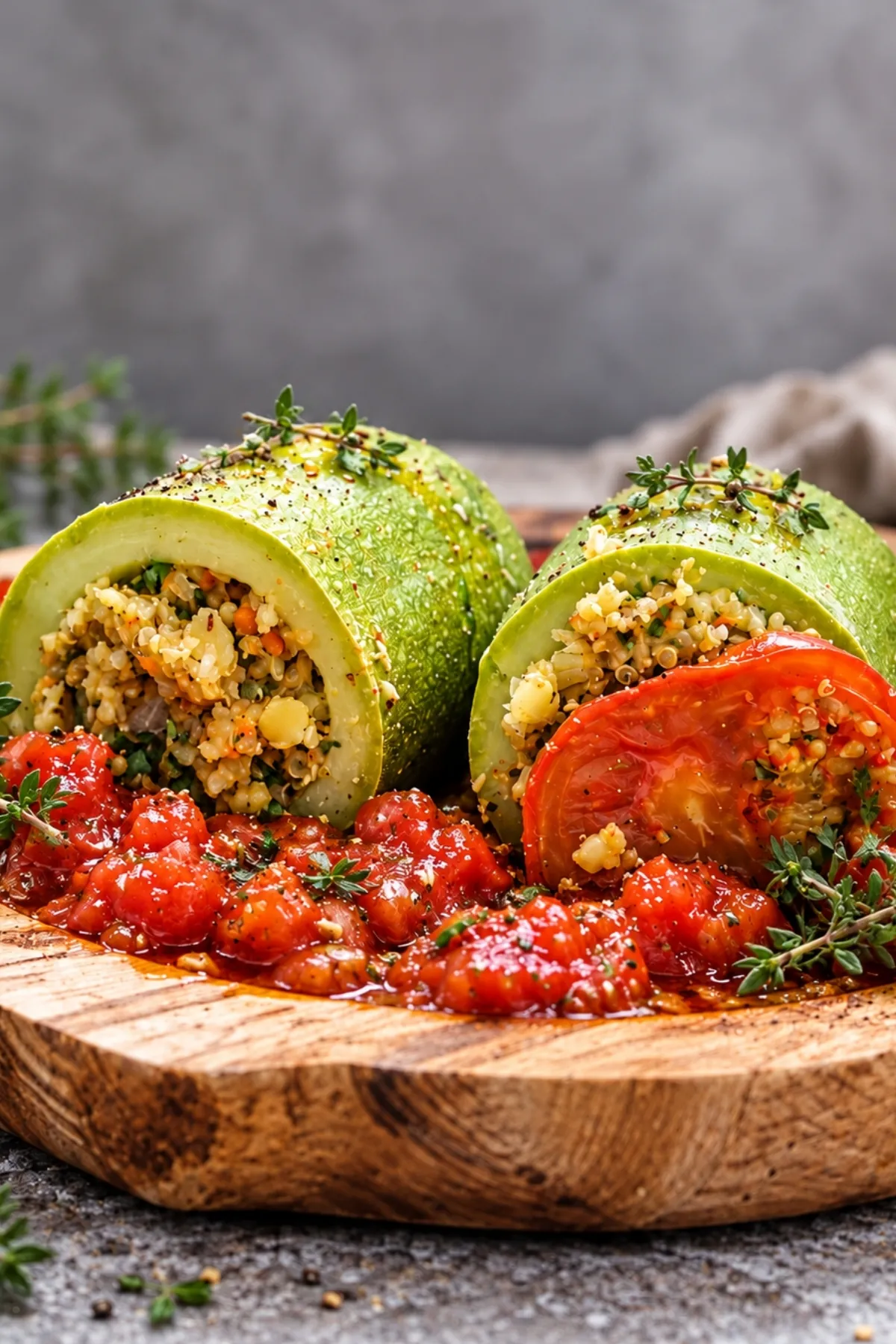
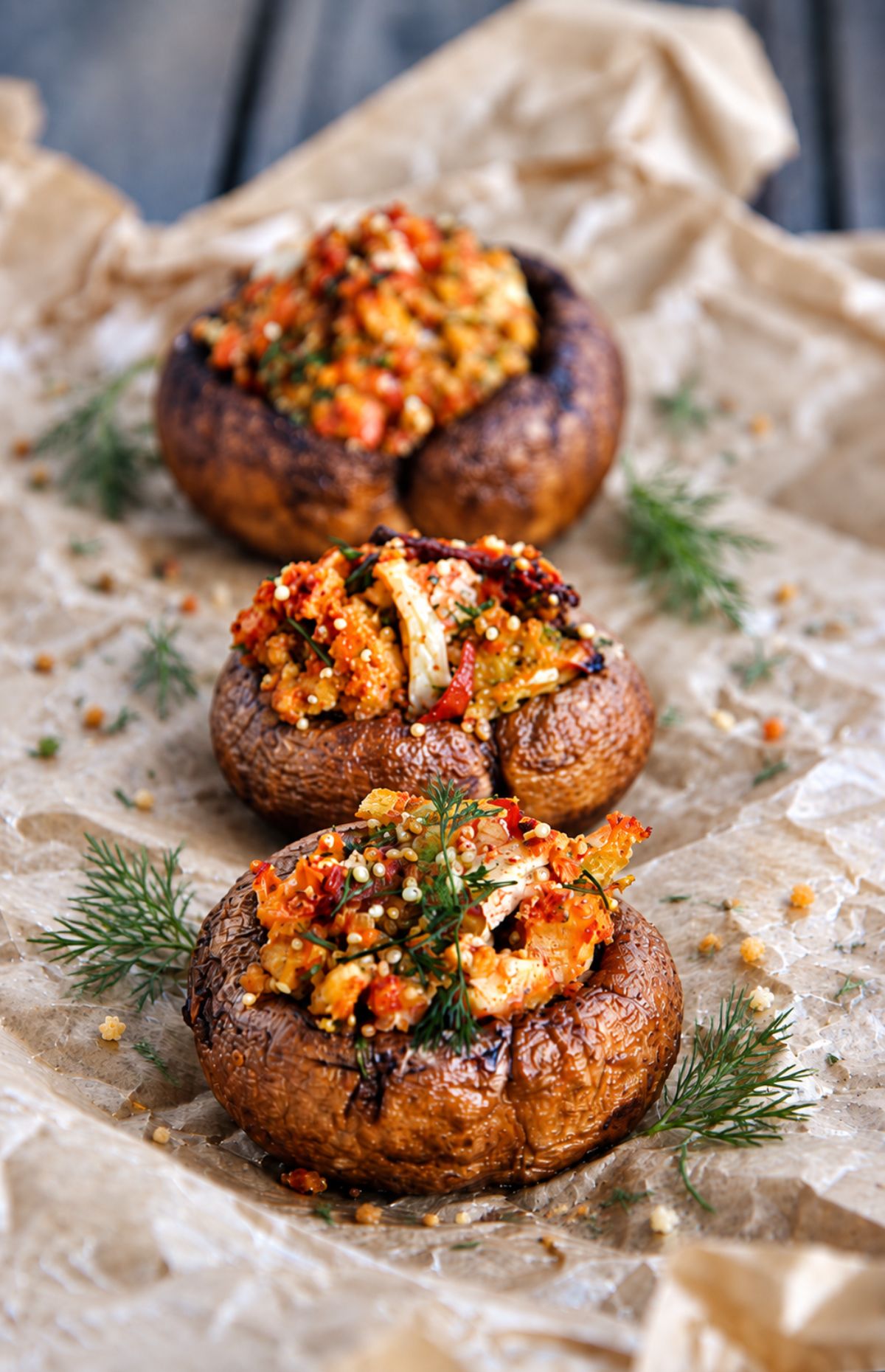
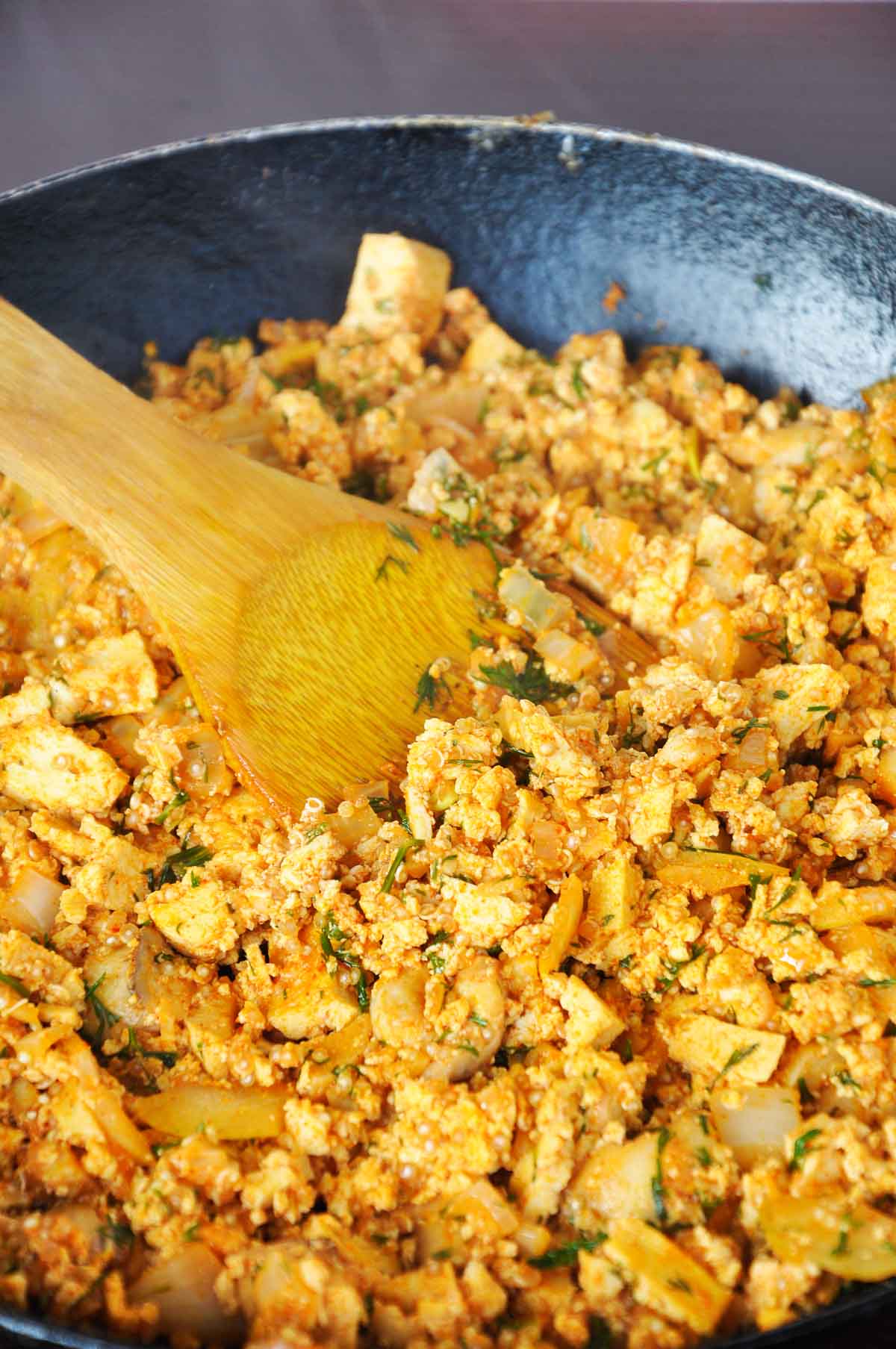
- Stuffed vegetables: stuffed zucchini with quinoa and lentils or stuffed mushrooms with quinoa and tofu. More in my stuffed vegetable recipes.
- Hearty mains: Mexican quinoa, quinoa fried rice (a good use for chilled leftover quinoa) and quinoa chili.
For the full list, see my best quinoa recipes. If you cook rice the same way, here’s my guide to cooking basmati rice.
Quinoa Nutrition (per 100 g Cooked)
Cooked quinoa is a source of protein and fiber, and a source of magnesium, manganese, folate and phosphorus. Here are the USDA values for 100 g of quinoa cooked in water, without salt or oil:
| Per 100 g cooked quinoa | Amount |
|---|---|
| Energy | 120 kcal |
| Protein | 4.4 g |
| Carbohydrates | 21.3 g |
| Fiber | 2.8 g |
| Fat | 1.9 g |
| Magnesium | 64 mg (17% of the reference intake) |
| Manganese | 0.63 mg (32%) |
| Folate | 42 µg (21%) |
| Phosphorus | 152 mg (22%) |
| Iron | 1.5 mg (11%) |
Source: USDA FoodData Central, “Quinoa, cooked” (FDC 168917). Percentages are of the EU nutrient reference values (Regulation 1169/2011).
Is quinoa a complete protein? Quinoa contains all nine essential amino acids, and it has more lysine than most grains, which is why it’s often called a complete protein. Its protein quality is still lower than that of eggs or milk, and a cup of cooked quinoa (185 g) has about 8 g of protein. So it’s a good source of protein rather than a high-protein food. Paired with chickpeas (my favorite), lentils, tofu or eggs, it makes a full meal. My guide to plant-based protein has more on combining proteins.
Is quinoa gluten-free? Quinoa is naturally gluten-free. It can, however, pick up traces of gluten if it’s grown or processed alongside wheat, barley or rye, and rinsing won’t remove them. If you have coeliac disease, buy quinoa labeled gluten-free (in the EU that means no more than 20 mg of gluten per kg). My gluten-free diet guide has more tips.
Is quinoa low FODMAP? Yes. Cooked quinoa is low FODMAP in a 1-cup (155 g) serving, according to Monash University testing. More in my low FODMAP diet guide.
Get My Free Plant-Based Protein Guide
If you’re cooking quinoa to get more plant protein on your plate, my free protein guide shows the vegetarian foods I rely on and how to combine them. I’ll email it to you:

Sources
- USDA FoodData Central, Quinoa, cooked (FDC 168917) and Quinoa, uncooked (FDC 168874): nutrition values and cup weights.
- El Hazzam et al., 2020, Molecules and Suárez-Estrella et al., 2018, J Sci Food Agric: quinoa saponins, bitterness and washing.
- Vega-Gálvez et al., 2010, J Sci Food Agric and Plant proteins review, 2020: quinoa’s amino acids and protein quality.
- UK Food Standards Agency, home food fact checker: cooling, storing and reheating cooked grains.
- USDA FoodKeeper app: storage times.
- Beyond Celiac, Is quinoa gluten-free? and Regulation (EU) 828/2014: gluten cross-contact and the EU gluten-free limit.
- Regulation (EU) 1169/2011: nutrient reference values.
- Monash University FODMAP program: FODMAP serving for quinoa.
Quinoa Cooking FAQ
I use 200 ml of water for 100 g of white quinoa, and about 220 ml for red or black quinoa. In cups, that’s a heaping 1/2 cup of quinoa to about 3/4 cup plus 2 tablespoons of water.
For 1 cup (170 g) of white quinoa, I use a scant 1 1/2 cups (340 ml) of water, and a generous 1 1/2 cups (375 ml) for red or black. The common “1 cup to 2 cups” ratio is more water than I use and can make quinoa soft.
White quinoa simmers for 12-15 minutes and red or black quinoa for 18-22 minutes, covered, on the lowest heat. Then it rests off the heat with the lid on for 5-10 minutes.
I always do, for 30-60 seconds in a very fine sieve, even when the package says prewashed. Rinsing removes leftover saponins, which make quinoa taste bitter.
No. Stirring is one of the two most common reasons quinoa turns sticky and mushy. Put the lid on, keep the heat low, leave it alone, and fluff it with a fork only after it has rested.
In my kitchen, roughly 250-300 g, depending on the type and how much water it absorbs. That’s about two side portions.
Up to 3-4 days in an airtight container, as long as you cool it quickly (ideally within about an hour) and refrigerate it at 4°C (40°F) or below.
Yes, it freezes very well. Freeze it in individual portions and use it within about 2-3 months. Reheat it in a pan with 1-2 tablespoons of water, or thaw it in the fridge for cold salads.
Quinoa is naturally gluten-free, but it can be cross-contaminated with gluten during growing or processing. If you have coeliac disease, choose quinoa labeled gluten-free.
Quinoa contains all nine essential amino acids, so it’s often called a complete protein. With about 8 g of protein per cooked cup, it’s a source of protein rather than a high-protein food, so pair it with legumes, tofu or eggs.
Yes. I sometimes do this for savory dishes. Use the same amount of stock as water, and add less salt, because stock is usually salted.