
Chinese Eggplant with Garlic Sauce
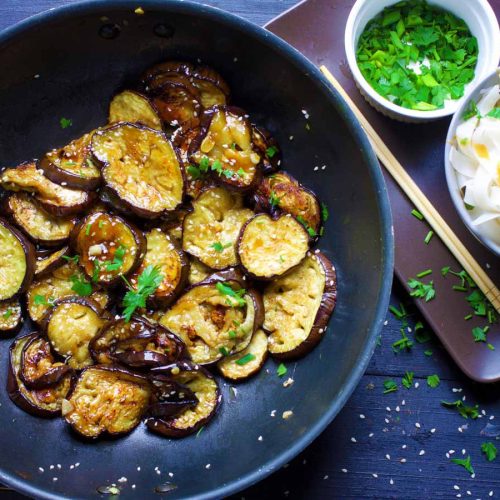
Chinese eggplant with garlic sauce is a stir-fried dish where soft, pan-fried eggplant gets coated in a sticky, savory-sweet garlic and ginger sauce built from soy sauce (or tamari), coconut sugar, and a touch of tapioca flour to thicken. It comes together as a satisfying vegan main or side, and it is one of my favorite ways of cooking eggplant. Serve it over rice or rice noodles and you have dinner.
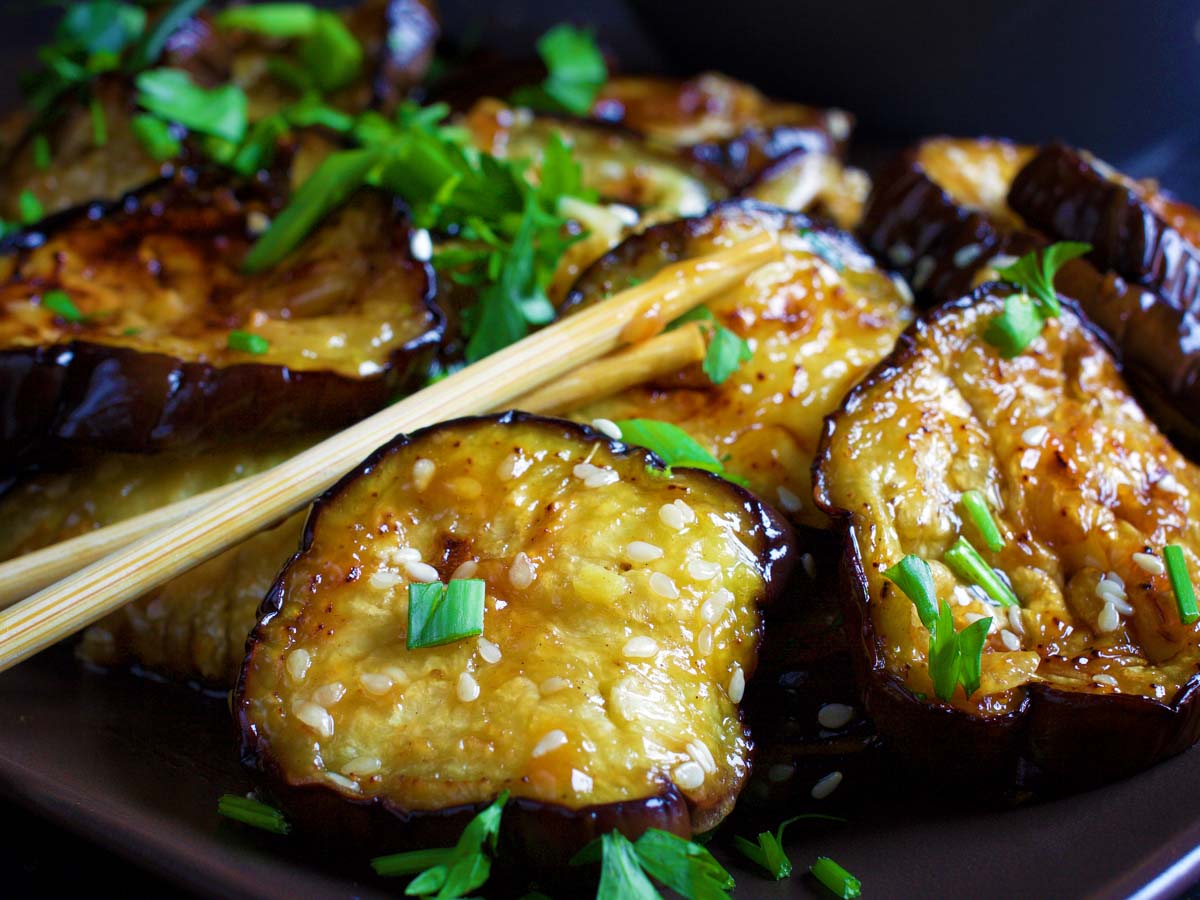
I’m a huge eggplant fan, as you have probably noticed from the many eggplant recipes I have on my blog, so I couldn’t miss this one when it came up as part of a month of cooking vegan Asian recipes. I find the combination of eggplant and garlic absolutely perfect, so when I discovered this popular Chinese recipe I immediately wanted to give it a try. What sold me is how different it is from other eggplant dishes I’ve made — both the cooking method and that unique sticky garlic sauce set it apart, and I just love everything about it.
Why salt the eggplant first
Salting the eggplant at the start was a technique I’d never used before. I usually buy young, small eggplants that aren’t very bitter, but this method draws out excess moisture and helps eliminate any bitterness so the eggplant tastes even better. Here’s why it works: sprinkling sea salt on the slices and letting them rest pulls water out of the spongy flesh, which means the eggplant fries up golden and soft instead of soggy, and it soaks up less oil in the pan. This is definitely something I’ll remember next time I cook with eggplants.
Give the slices a full 45 to 60 minutes under the paper towels, then pat them dry before coating. Don’t rush this step — the drier the eggplant goes into the pan, the better the sear.
The ingredients that make the sauce sticky
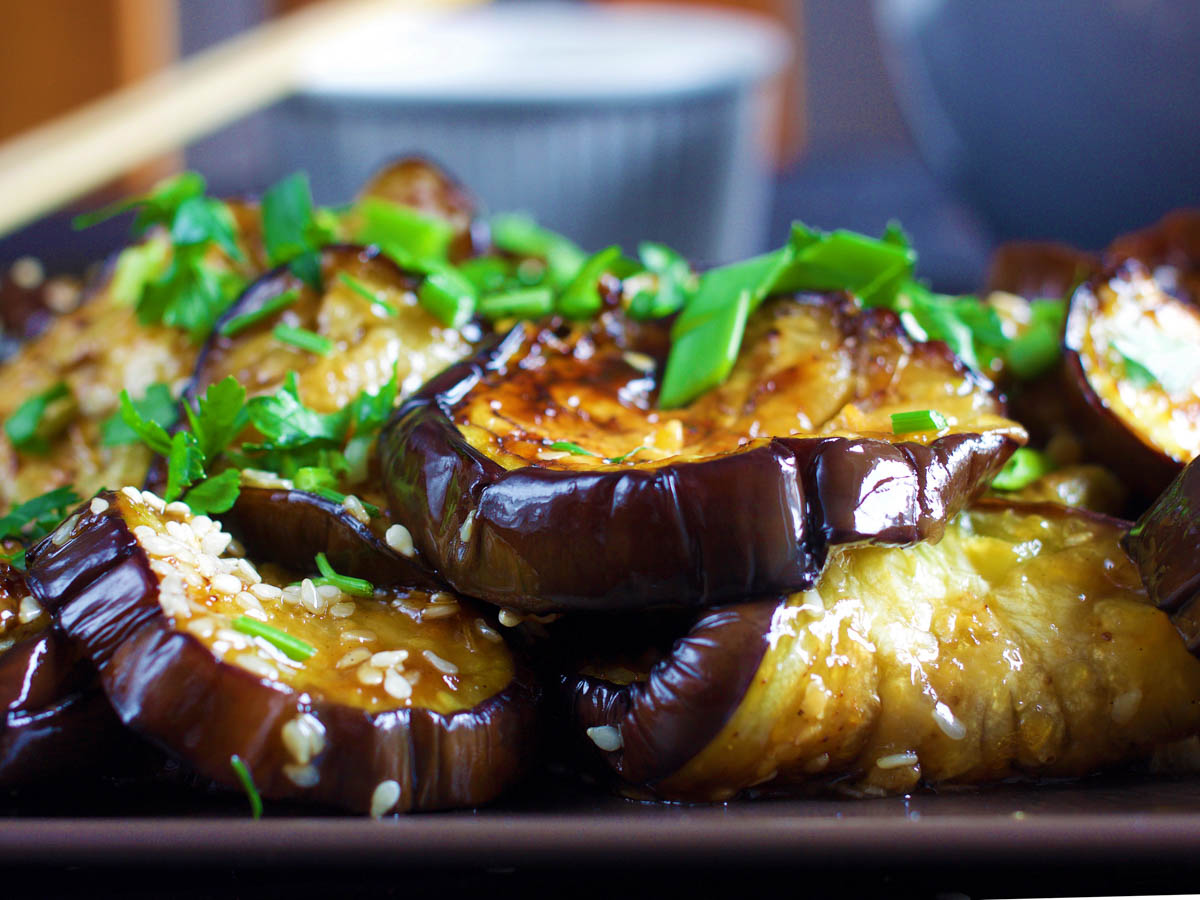
The magic here is in a short list of pantry ingredients. A few notes on the ones that matter most:
- Tapioca flour does double duty. A little tossed with the salted eggplant helps it crisp as it fries, and a little stirred into the sauce is what makes it glossy and sticky rather than watery.
- Soy sauce or tamari brings the salty, savory depth. Use tamari if you want the dish to stay gluten-free.
- Coconut sugar balances the salt of the soy sauce with a gentle caramel sweetness. It is what gives the sauce that moreish savory-sweet edge.
- Fresh garlic and ginger are stir-fried until fragrant so they perfume the oil before the eggplant goes in. Don’t swap them for powder here — the fresh aromatics are the whole point.
- Green onion, parsley, and sesame seeds finish the dish with color, freshness, and a little nutty crunch.
Tips for getting it right
This dish is simple, but a few small habits make the difference between golden, silky eggplant and a greasy pan:
- Fry in a single layer. Spread the eggplant across the pan so each piece touches the surface. Crowding steams the eggplant instead of frying it, so cook in batches if you need to.
- Mix the sauce ahead. Combine all the sauce ingredients in a small bowl before you start cooking. Once the garlic and ginger hit the hot oil, things move fast and you want the sauce ready to pour.
- Watch for the doneness cues. The eggplant is ready when both sides are golden and the flesh is soft all the way through, roughly 10 minutes. Then add it back to the wok and toss just until the sauce coats everything and thickens.
- Don’t overcook once the sauce is in. A few good stirs is all it takes — the tapioca thickens quickly, and over-stirring can break down the tender eggplant.
What to serve it with
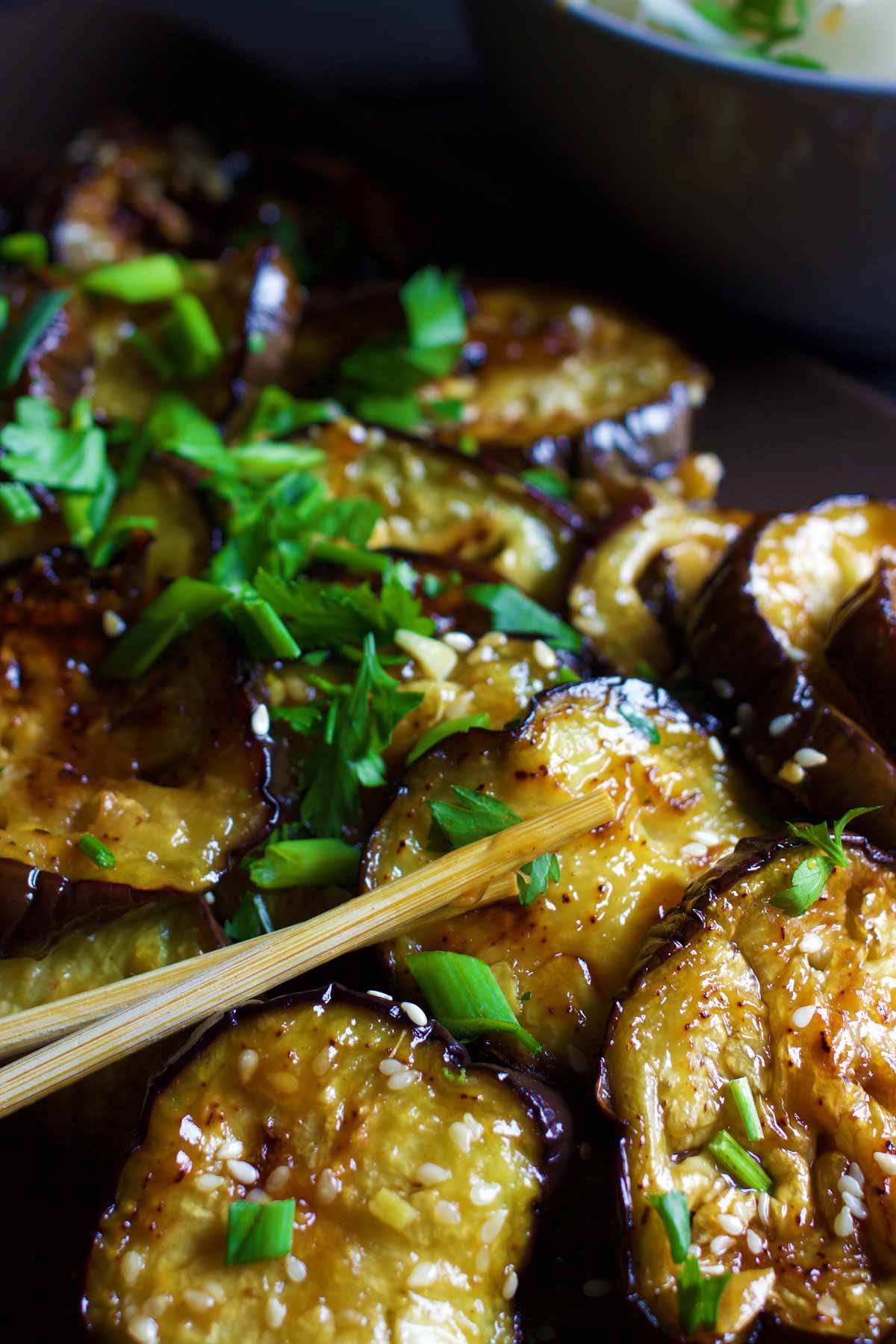
This eggplant is built to sit on top of something starchy that will catch the sauce. Steamed white rice is the classic choice, but I love it over a tangle of vegan noodles so every strand picks up the sticky garlic sauce. If you are making a bigger Asian-inspired spread, round it out with a simple stir-fried green or a light broth on the side. And if you happen to be as much of an eggplant person as I am, you’ll find plenty more ideas in my full collection of eggplant recipes.
Storing and making it ahead
Leftovers keep well in an airtight container in the fridge for up to 3 days. The eggplant softens further as it sits, so it is lovely spooned cold over rice or gently reheated in a pan with a splash of water to loosen the sauce. I wouldn’t freeze it — eggplant tends to turn mushy after thawing, and you lose that just-fried texture. If you want to get ahead, salt and dry the eggplant and mix the sauce earlier in the day, then all that’s left at dinnertime is the frying. Fun fact I stumbled on while making this: China is the world’s leading producer and consumer of eggplants, so it’s no surprise they know exactly how to cook this awesome veggie. For more ways to put the vegetable to work, browse my vegan eggplant recipes, or try the comforting stuffed aubergines with garlic sauce if this garlicky flavor is your thing.
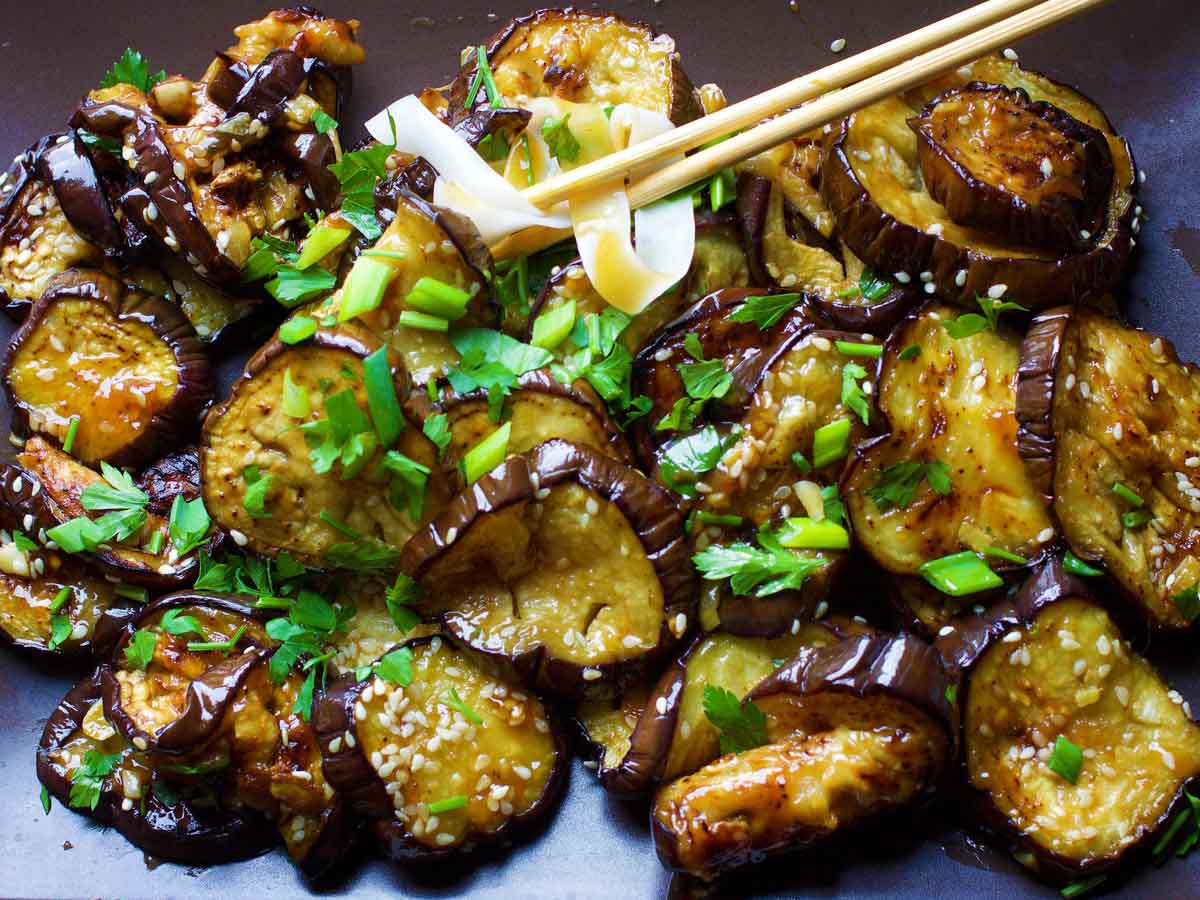
If you make this sticky Chinese eggplant, I’d love to know how it turned out — did the salting trick win you over the way it won me over? Please rate the recipe below and drop a comment with any tweaks you tried, especially if you served it over rice or noodles.
Chinese Eggplant with Garlic Sauce
Ingredients
For the eggplant:
- 3 eggplant sliced
- 1 tsp sea salt
- 1 tbsp tapioca flour for coating
- 4 cloves garlic minced
- 1 tsp ginger minced
- 2 tbsp oil
- 1 tbsp green onion chopped
- 1 tbsp parsley chopped
- 1 tbsp sesame seeds
For the sauce:
- 1 tsp tapioca flour for the sauce
- 2 ½ tbsp soy sauce or tamari
- ½ tbsp dark soy sauce optional
- 2 tsp coconut sugar
- ½ tbsp oil
Instructions
- Spread the sliced eggplant on a paper towel. Sprinkle sea salt on both sides of the eggplant slices, cover with another layer of paper towel, and let rest for 45-60 minutes. Pat dry.
- Meanwhile, in a small bowl combine all the sauce ingredients, mix well, and set aside.
- In a large bowl, combine the dry eggplant with the tapioca flour and toss to evenly coat every piece.
- Heat a large frying pan over medium heat and add the oil. Spread the eggplant across the bottom of the pan in a single layer.
- Fry the eggplant on both sides until golden and soft, about 10 minutes.
- Transfer to a plate and cook the remaining eggplant in batches.
- In a large wok, heat a little more oil, add the ginger and garlic, and stir-fry until fragrant.
- Add all the eggplant to the wok and pour the sauce over it. Stir a few times, until the eggplant is evenly coated and the sauce thickens. Sprinkle with sesame seeds.
- Top with the chopped greens and serve with rice noodles or rice on the side.
Notes
Frequently Asked Questions
Salting draws excess moisture out of the eggplant’s spongy flesh and helps eliminate any bitterness. Drier eggplant fries up golden and soft instead of soggy and soaks up less oil in the pan. Sprinkle sea salt on both sides of the slices, rest them under paper towels for 45 to 60 minutes, then pat dry before coating.
Yes, this recipe is fully vegan. The sticky sauce is built from soy sauce or tamari, coconut sugar, garlic, ginger, and oil, with no animal products at all. It is finished with green onion, parsley, and sesame seeds.
Yes. Use tamari in place of regular soy sauce, since standard soy sauce usually contains wheat. The recipe already uses tapioca flour rather than wheat flour to coat the eggplant and thicken the sauce, so with tamari the whole dish stays gluten-free.
Tapioca flour lightly coats the eggplant for crispness and thickens the sauce into a glossy, sticky glaze. Cornstarch is the closest one-to-one swap for both jobs. Arrowroot powder also works well for thickening the sauce.
Serve it over something starchy that catches the sauce. Steamed rice is the classic pairing, and rice noodles or other vegan noodles work beautifully too. A stir-fried green vegetable or a light broth on the side rounds it out into a full meal.
Keep leftovers in an airtight container in the fridge for up to 3 days. Reheat gently in a pan with a splash of water to loosen the sauce, or enjoy it cold over rice. Freezing is not recommended, as eggplant tends to turn mushy once thawed.


What would be a good substitute for coconut sugar?
Brown sugar works too.
When you indicate 3 large eggplant, do you mean large Italian eggplant or large Chinese/Japanese eggplant? I’d like to try and make this and want to get the right ones. Thanks.
Sorry, just figured it out. Don’t need to reply, Ruxandra.
It was very good, I used kamut floor as I did not have tapioca. But tasted so good.
Hi, this sounds great, but after I’ve salted my eggplant for other dishes, I always rinse the salt off then dry it so it’s not too salty. Do you have any comments on that. Thanks.
P.S. I’ll definitely be trying your recipe, sounds so easy!
Hi, Gail. This technique is good for older, larger eggplants which can be bitter. I used smaller ones which don’t have this issue. But of course, you can use this technique, just to be sure.
Can cornstarch be substituted for the tapioca flour?
Yes, but the texture will be different. Tapioca will make the sauce sticky and gooey, not just thick.
This was delicious! I did use a little too much salt on the first step of the eggplant – I will know better next time. Great flavor, enough sauce – perfect! Thank you!
Hi, Erin! Glad you liked it! <3
Served these over some basmati rice. Perfection! Thank you for your awesome vegan asian recipes!
Glad you liked them! You’re welcome!