
Vegan Pad Thai
This vegan Pad Thai is a quick, colorful Thai stir-fry you can put together in under 30 minutes — rice noodles tossed with julienned veggies, wood ear mushrooms, and a tangy sriracha-lime sauce, no fish sauce or egg needed. It delivers the sweet, salty, sour, and spicy balance the dish is loved for, using entirely plant-based ingredients. Make it when you want takeout-style flavor without leaving the kitchen.
Of course, I made the vegan version with bean sprouts, peas, that yummy sriracha sauce, and rice noodles. For me, exploring Asian cuisine through “veganized” recipes is a wonderful way of discovering new ways of cooking, interesting ingredients, and unique flavors. This one is part of my ongoing journey through world cuisines, and I hope you enjoy it too.
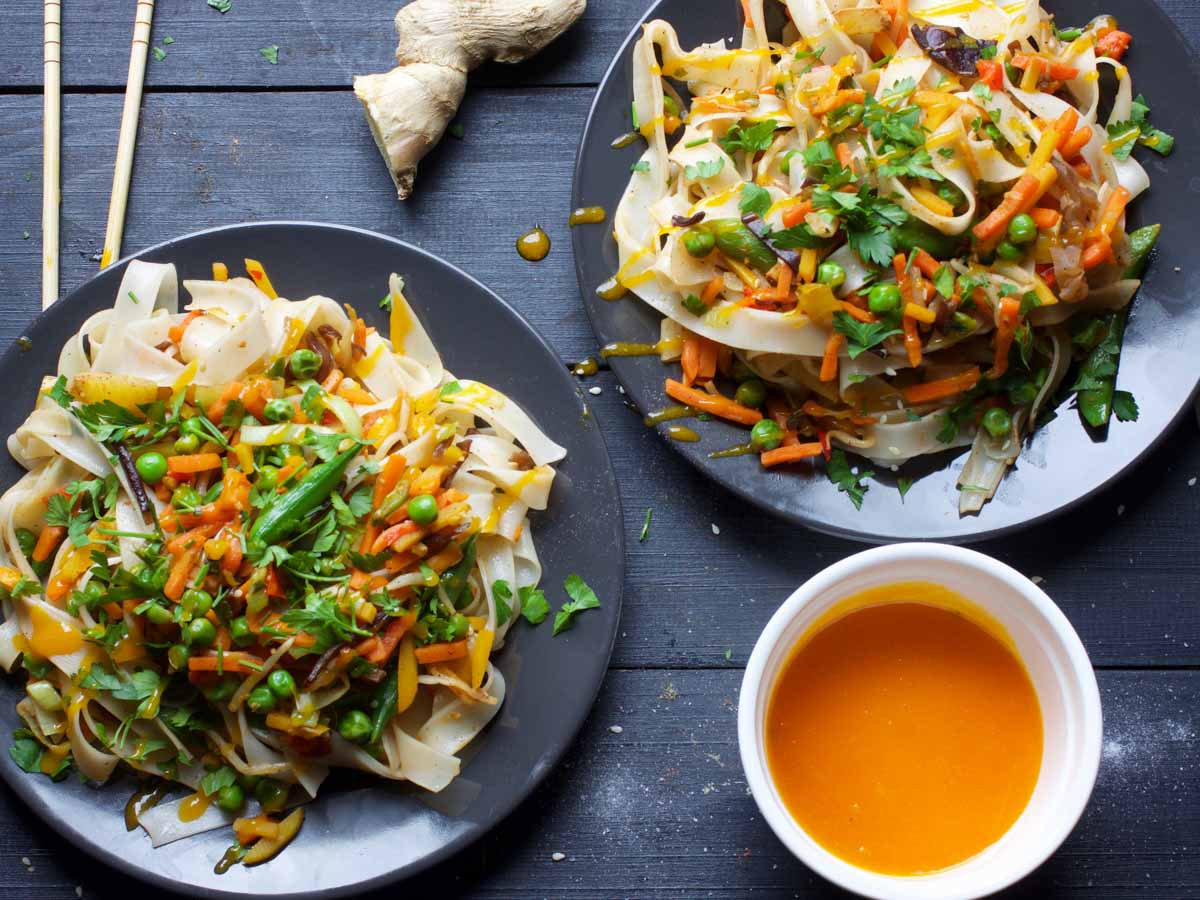
What Pad Thai actually is
Pad Thai is a world-known recipe originating from Thailand. “Pad Thai” means stir-fried in Thai, and it is essentially a vibrant, colorful, flavorful stir-fry with noodles, plenty of vegetables, and — in most traditional versions — meat or shrimp plus egg and fish sauce. The vegan version swaps those out entirely and leans on soy sauce for savory depth, lime for acidity, and sriracha for heat, so you still get that signature sweet-salty-sour-spicy profile. If you love this kind of cooking, it sits right alongside the other Asian recipes I keep coming back to.
The ingredients that make it work
The base is rice noodles — soak them in hot water rather than boiling, so they soften without turning to mush before they hit the wok. Julienned carrot, onion, and bell pepper, along with green peas, give color and crunch, while bean sprouts add that fresh, snappy bite you want in the finished plate.
I love Pad Thai with wood ear mushrooms. They have an awesome texture, and I always keep some brown wood ear mushrooms in my pantry to add to the stir-fries I’m making. They come dried, so hydrate them in hot water first, then slice. The sauce is a simple mix of soy sauce, sriracha, lime juice, and brown sugar, which covers salty, spicy, sour, and sweet in one go, with a clove of garlic and a little oil to carry everything.
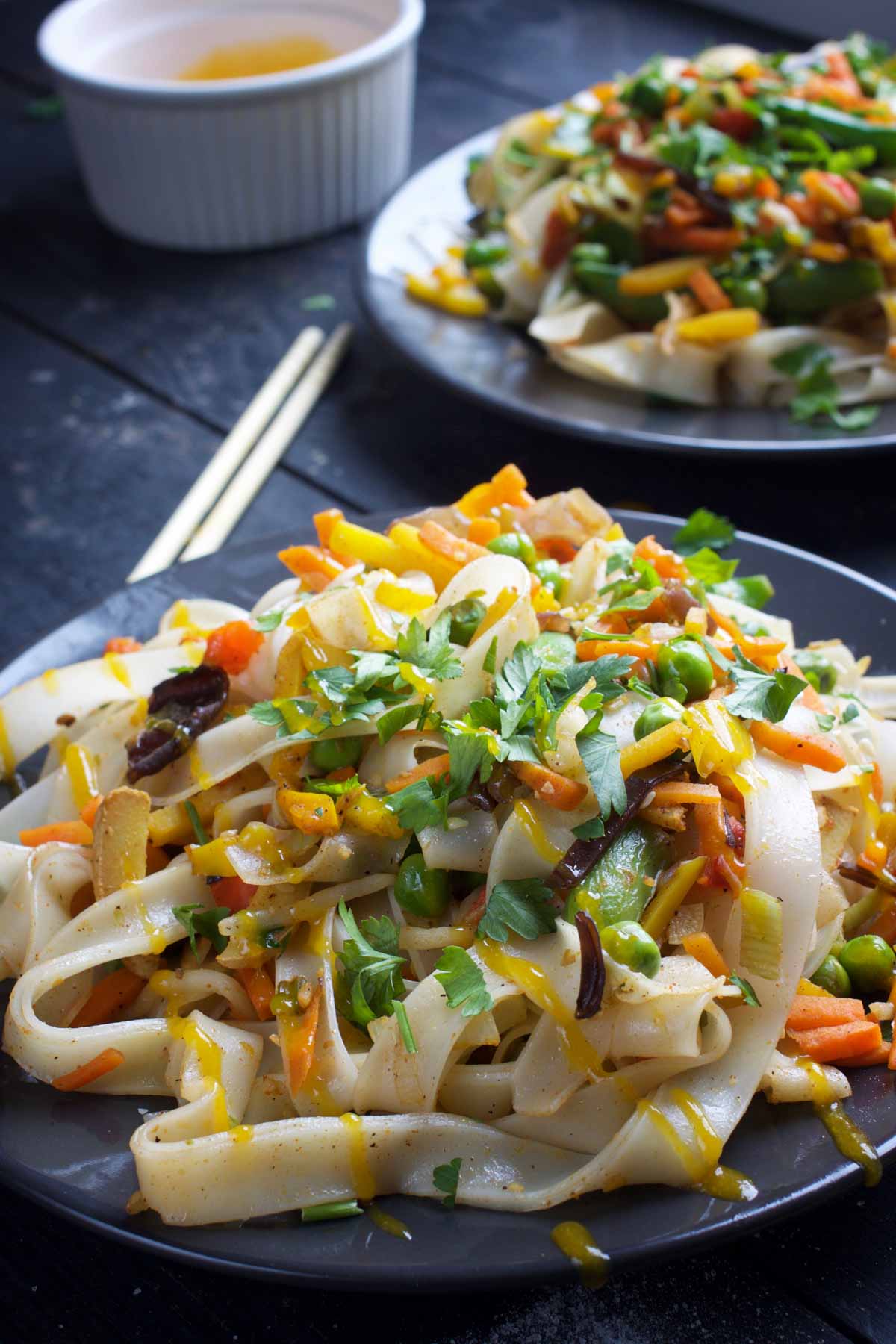
Tips for getting it right
- Prep everything before you turn on the heat. Stir-frying moves fast over medium-high heat, so having your julienned veggies, hydrated noodles, and mixed sauce ready keeps nothing from overcooking.
- Do not over-soak the noodles. They should be pliable but still slightly firm when they go in the wok; they finish cooking as they absorb the sauce.
- Add the noodles and bean sprouts last. A couple of minutes of tossing is enough — longer, and the sprouts lose their crunch and the noodles get sticky.
- Taste and adjust. If it needs more punch, add a splash more lime or soy sauce; more sriracha if you want it hotter.
Why the sauce balance matters
Pad Thai lives or dies on the balance of four tastes: salty from soy sauce, sour from lime, sweet from brown sugar, and heat from sriracha. Mixing the sauce in a separate bowl before it hits the wok means each element is evenly distributed, so no single note dominates. Pouring it over the vegetables while they still have some bite lets the sauce coat and glaze everything without steaming the veg into softness — that is what gives the dish its glossy, restaurant-style finish.
Finishing touches and what to serve alongside
When serving, sprinkle with chopped fresh parsley and a little extra sriracha. You can also finish with sesame seeds, roasted peanuts, and chili pepper flakes for crunch and a bit more fire. This makes a full meal on its own, but if you’re cooking for a table it pairs nicely with another stir-fry — I often make it alongside my vegan lo mein or a macrobiotic stir-fry with brown rice when I want a bigger spread.
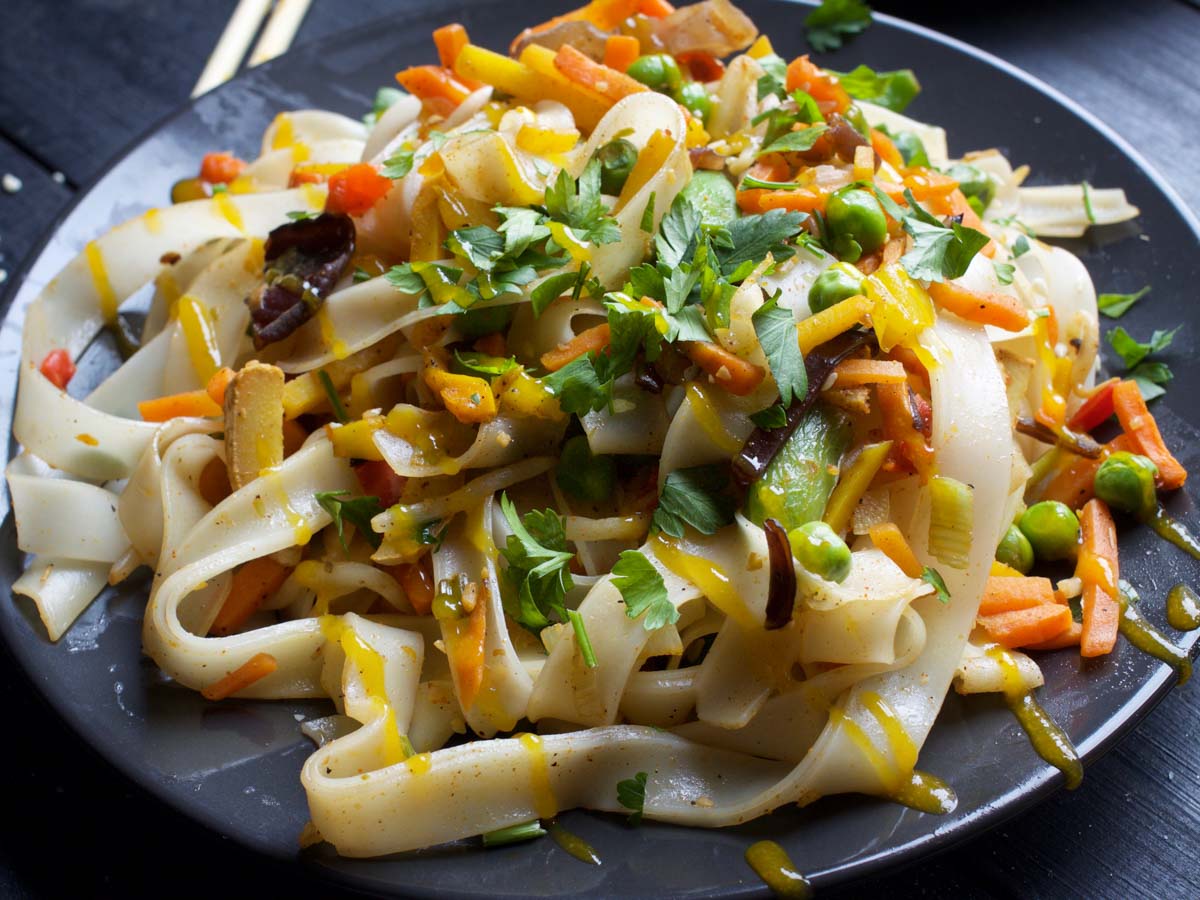
Make-ahead and storage
Pad Thai is best eaten fresh, while the noodles are glossy and the sprouts still crisp, but it keeps well for a quick next-day lunch. Store leftovers in an airtight container in the fridge for up to 3 days, and reheat in a hot pan with a splash of water to loosen the noodles rather than the microwave, which tends to make them gummy. If you want to get ahead, julienne the veggies and mix the sauce in advance so the actual cooking takes just minutes. For more noodle ideas, browse my collection of vegan noodle recipes, and if you’re after other stir-fries, my vegan lo mein is a good next stop.
If you give this vegan Pad Thai a try, I’d love to know how it turned out — did you go heavy on the sriracha or pile on the peanuts? Leave a star rating and drop a comment below with your tweaks so other readers can see them too.
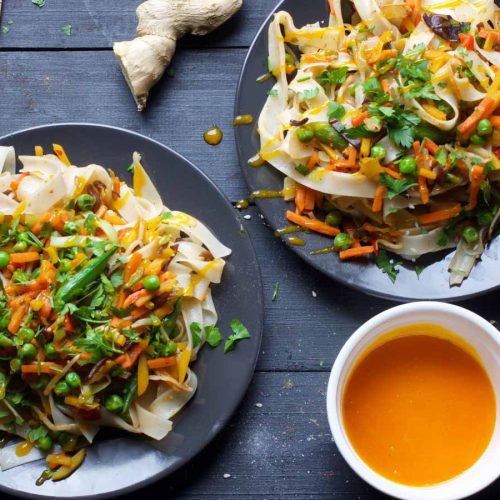
Vegan Pad Thai
Ingredients
- 1 carrot julienned
- ½ onion julienned
- ½ bell pepper julienned
- ⅓ cup wood ear mushrooms hydrated and sliced
- ½ cup green peas
- 1 cup rice noodles
- ⅓ cup bean sprouts
- fresh parsley chopped
- 1 clove garlic
For the sauce:
- 2 Tablespoons soy sauce
- 1 Tablespoon sriracha
- 1 Tablespoon lime juice
- 1 Tablespoon oil
- 1 Tablespoon brown sugar
Instructions
- Soak the rice noodles and wood ear mushrooms in hot water until fully hydrated.
- In a wok, heat some oil over medium-high heat. Sauté the onion, bell pepper, green peas, garlic, and carrot for 5 minutes.
- In a small bowl, mix the sauce ingredients, then pour over the veggies in the wok.
- Once the wood ear mushrooms are hydrated, slice them and add them to the wok.
- Add the rice noodles and bean sprouts, and continue to stir-fry for a couple of minutes more.
- That’s it! When serving, sprinkle with chopped parsley and a little extra sriracha. You can also add sesame seeds, roasted peanuts, and chili pepper flakes.
Notes
Frequently Asked Questions
Traditional Pad Thai usually contains egg, fish sauce, and sometimes shrimp or chicken, so it is not vegan by default. This version is fully plant-based: it uses soy sauce instead of fish sauce and skips the egg entirely, relying on rice noodles, vegetables, wood ear mushrooms, and a sriracha-lime sauce for flavor.
This recipe uses soy sauce as the main savory, salty base in place of fish sauce. Combined with lime juice for sourness, brown sugar for sweetness, and sriracha for heat, it recreates the balanced sweet-salty-sour-spicy profile without any animal products.
Wood ear mushrooms are a dried mushroom prized for their crisp, slightly chewy texture rather than a strong flavor. You hydrate them in hot water, then slice and stir-fry. They are a nice addition here, but if you cannot find them you can simply leave them out or swap in another mushroom you have on hand.
Soak the rice noodles in hot water until just pliable rather than boiling them, and keep them slightly firm before they go in the wok. Add them near the end of cooking and toss for only a couple of minutes, since they finish softening as they absorb the sauce. Overcooked or over-soaked noodles turn sticky and gummy.
The heat comes entirely from sriracha, so reduce or leave it out of the sauce for a milder dish. You can always add a little more at the table for anyone who wants it hotter, and skip the chili pepper flakes when garnishing.
Store leftovers in an airtight container in the fridge for up to 3 days. Reheat in a hot pan with a splash of water to loosen the noodles, rather than the microwave, which tends to make them gummy. It is best eaten fresh while the noodles are glossy and the bean sprouts still crisp.



Love all your vegan recipes! I tried 2 so far and can’t wait to try more! This pad thai was delicious btw!
Thank you! 😀