
Vegan Lo Mein | Ready in 15 minutes!
This vegan lo mein comes together in under 15 minutes: springy noodles tossed with stir-fried carrot, bell pepper, leek and shiitake, then finished with crumbled seasoned tofu and a glossy garlic-ginger sauce. It is a fast, protein-packed stir-fry that works just as well for a quick weeknight dinner as it does for meal-prep lunches. Think of it as my plant-based take on the classic Chinese noodle dish, built entirely from veggies, mushrooms and tofu.
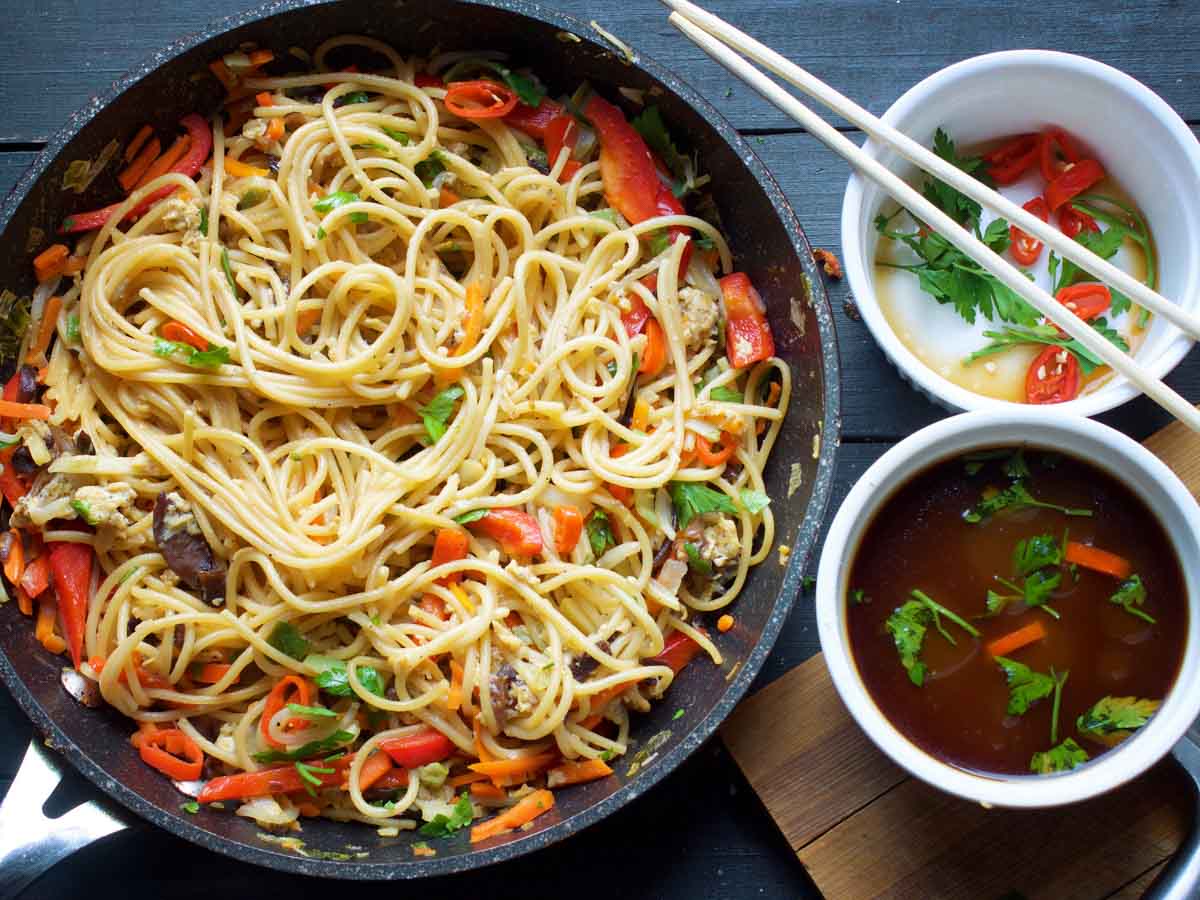
This one is part of my ongoing challenge of veganizing popular traditional recipes from cuisines around the world. Lo mein is traditionally made with thin wheat noodles, seasonings, veggies, soy sauce and sometimes poultry or pork. I made the vegan version with veggies, mushrooms and some tofu, to pack some extra protein into the meal. Instead of plain soy sauce I used a vegan fish sauce, following a super-smart recipe created by Sylvia (linked in the recipe card below) that adds that savory, briny depth traditional lo mein sauces rely on.
What goes into this vegan lo mein
Everything here is easy to find, and most of it is pantry-friendly. A few notes on the ingredients that make the biggest difference:
- Noodles — any long noodle you like works. Cook them just to the package directions so they stay springy once they hit the hot pan. If you want more ideas, I have a whole roundup of vegan noodle recipes.
- Vegan fish sauce — this is optional but recommended. It brings a savory, umami backbone the dish would otherwise miss. If you do not have it, plain soy sauce works as a simple stand-in.
- Shiitake mushrooms — sliced shiitake add a meaty, earthy bite that makes this feel substantial. Slice them thin so they cook quickly with the rest of the veggies.
- Tofu — firm tofu, crumbled straight into the pan and seasoned with nutritional yeast, turmeric, cumin and smoked paprika. That spice mix gives it warmth, color and a slightly cheesy, savory edge.
- The sauce — vegetable broth, vegan fish sauce, lime juice, maple syrup, garlic and ground ginger, thickened with a little tapioca flour so it clings to the noodles instead of pooling at the bottom of the pan.
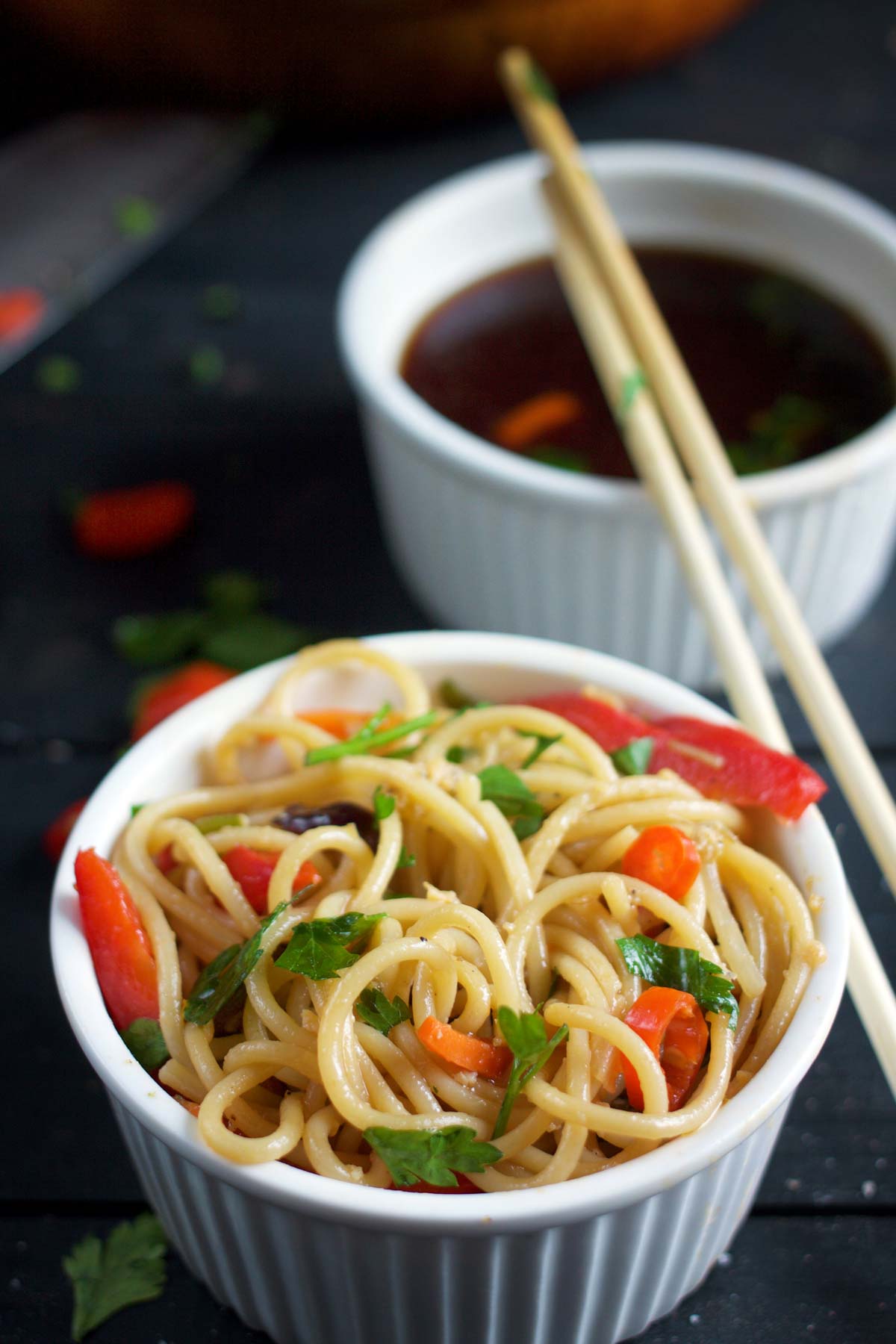
The secret is all in the timing
If there is one thing to get right, it is this: the whole dish depends on timing — adding ingredients at the right moment and not overcooking them. A good stir-fry is fast and hot. You want the veggies to stay crisp-tender with a little bite, not go soft and watery. Have everything prepped and within reach before you turn on the heat, because once the pan is going there is no time to chop.
- Cook and drain your noodles first, and have your sauce already mixed in a bowl so it is ready to pour in one go.
- Stir-fry the veggies over high heat until crisp-tender, keeping them moving so nothing scorches.
- Add the noodles and sauce, then push everything to the sides to make room and crumble the tofu into the middle so it can pick up the seasoning directly.
- Add the fresh chili slices at the very end so they keep their brightness and heat.
Why the tapioca flour matters
The little bit of tapioca flour whisked into the sauce is what turns a thin, watery liquid into a glossy coating that actually sticks to the noodles. As the sauce hits the hot pan the starch swells and thickens, wrapping every strand instead of sliding off. It is a small step that makes the difference between lo mein that tastes seasoned all the way through and one where the flavor sits at the bottom of the bowl. Adding the crumbled tofu directly to the seasoning in the pan works the same way: the dry tofu surface soaks up the spices instead of just being coated on the outside.
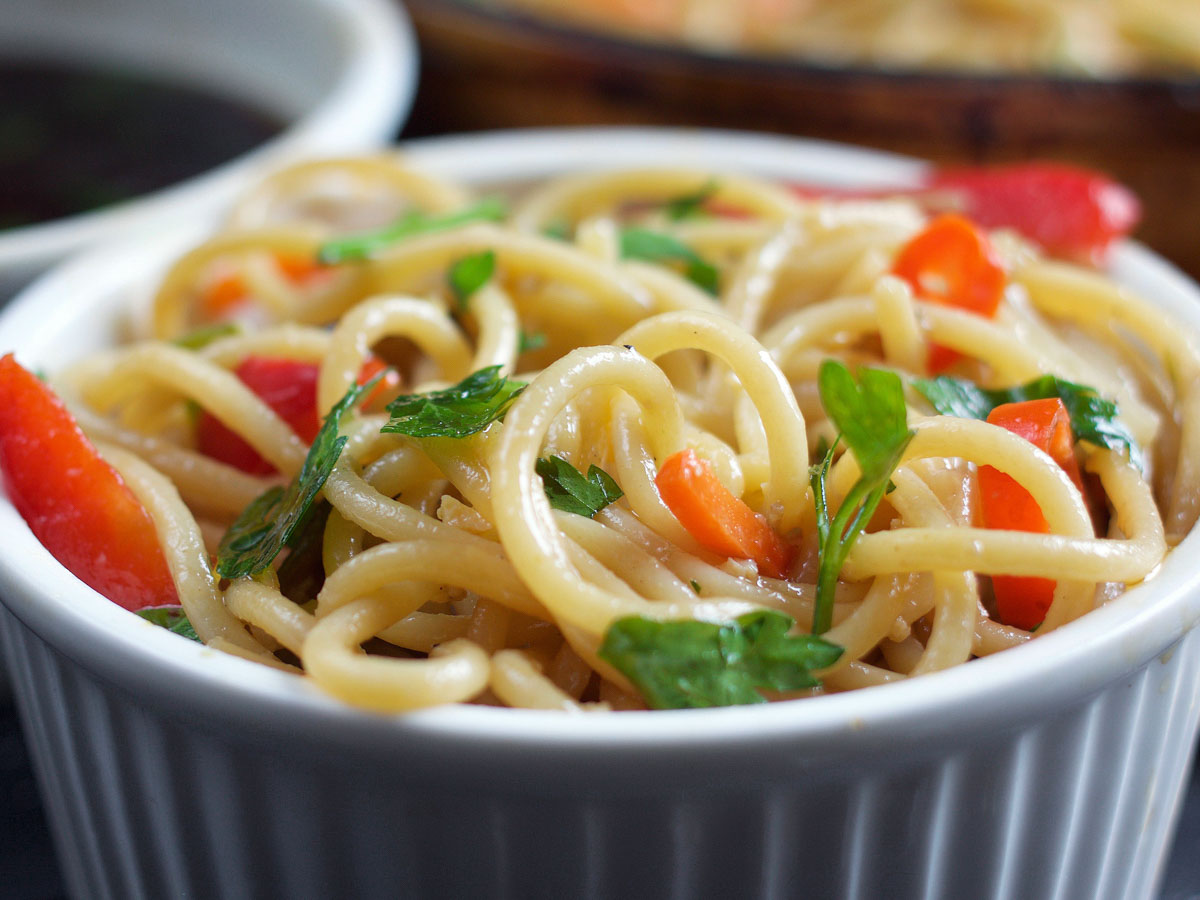
Easy swaps and variations
- No vegan fish sauce? Swap in soy sauce or tamari. You will lose a little of the briny complexity, but it still tastes great.
- Different veggies — broccoli florets, snap peas, cabbage or baby corn all fit the stir-fry beautifully. Use whatever is crisp and in season.
- More heat — leave the chili in longer, or add a second one. Less heat? Skip it entirely or remove the seeds.
- Gluten-free — use rice noodles and swap the soy sauce for tamari to keep the whole dish gluten-free.
- Extra protein — add more tofu, or toss in some edamame along with the veggies.
What to serve with it
This lo mein is filling enough to stand on its own, but it also plays well as part of a bigger spread. Serve it alongside a bowl of vegan pho for a comforting Asian-inspired dinner, or start the meal with a light soup like my vegan red lentil soup. If you are cooking your way through more of my world cuisines challenge, it makes a great centerpiece for a plant-based noodle night.
Storage and make-ahead tips
Lo mein keeps well in an airtight container in the fridge for up to 3 days, which makes it a solid meal-prep option. Reheat it in a hot pan with a splash of water or broth rather than the microwave, so the noodles loosen back up and the veggies do not turn mushy. If you want to prep ahead, you can mix the sauce and chop all the veggies in advance and store them separately, then the actual cooking takes just a few minutes when you are ready to eat. I would not recommend freezing it, as cooked noodles tend to go soft once thawed.
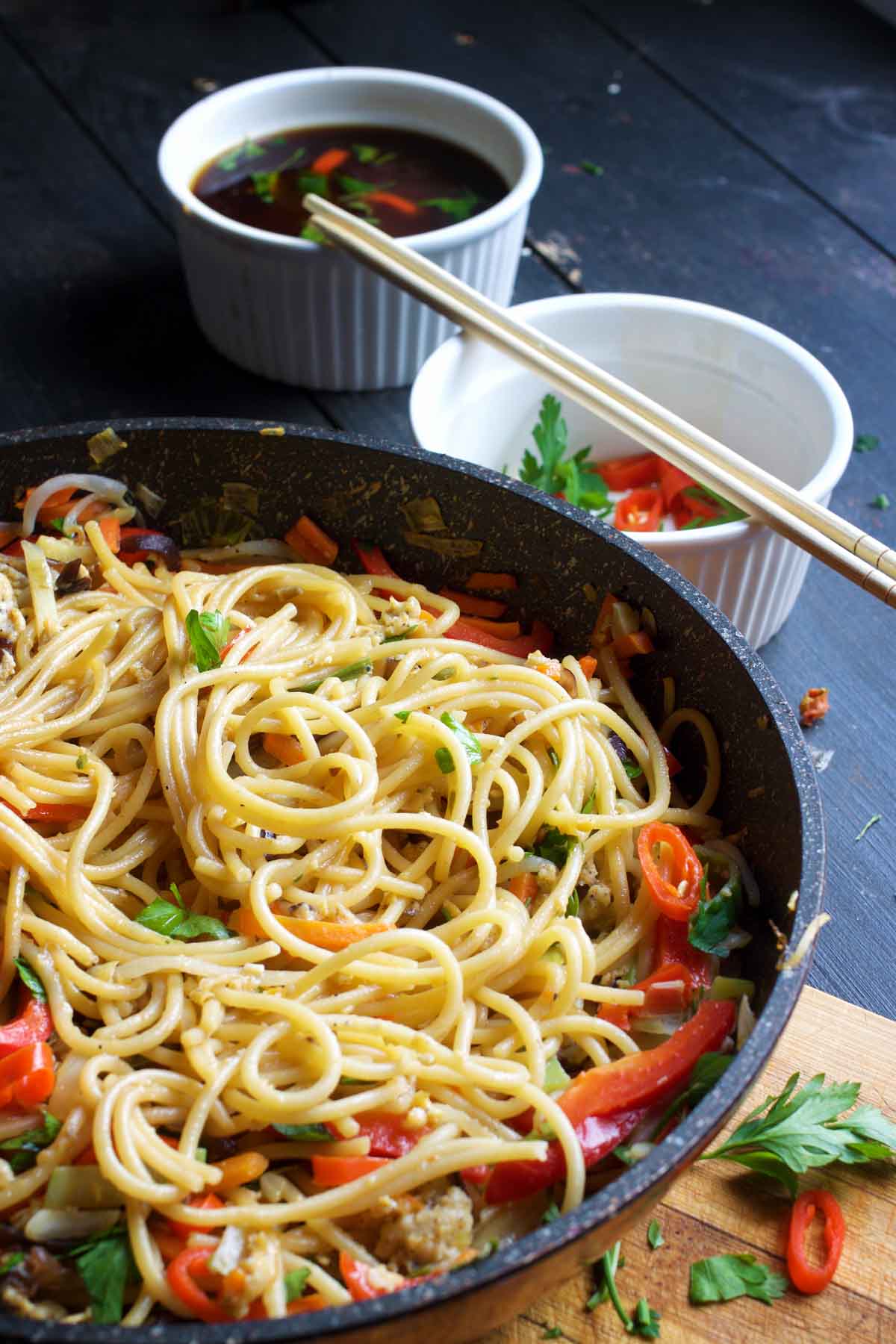
If you try this vegan lo mein, I would love to know how it turned out — did you keep the chili in or leave it out, and did you go with the vegan fish sauce or the soy sauce shortcut? Leave a star rating and a comment below with your tweaks so other readers can learn from your kitchen too.
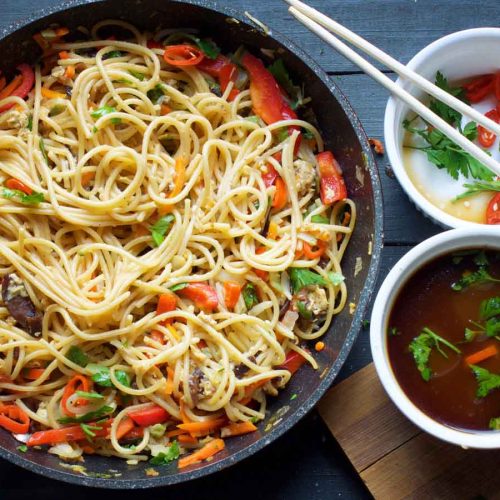
Vegan Lo Mein | Vegan Chow Mein
Ingredients
Sauce:
- ½ cup vegetable broth
- 3 Tbsp vegan fish sauce optional, but recommended; alternatively, use soy sauce
- 1 Tbsp lime juice
- 1 Tbsp maple syrup
- 1 clove garlic minced
- ½ tsp ground ginger
- 1 Tbsp tapioca flour
Stir Fry:
- 7 oz noodles
- 1 carrot cut into sticks
- 1 red bell pepper cut into sticks
- 3 Tbsp shiitake mushrooms sliced
- 1 leek sliced
- 1 Tbsp coconut oil
- 1 red hot chili pepper
Tofu scramble:
- ½ cup firm tofu
- 1 tsp nutritional yeast
- ¼ tsp turmeric
- ¼ tsp ground cumin
- ¼ tsp smoked paprika
- salt and pepper to taste
Instructions
- Cook the noodles according to the instructions on the package. Drain and set aside.
- Mix all the sauce ingredients in a medium bowl and set aside.
- In a large pan, stir-fry all the vegetables (except the chili pepper) with the coconut oil until crisp-tender.
- Add the noodles and the sauce, then mix everything together.
- Using a spatula, make some space in the middle of the pan. Crumble the tofu into the pan, breaking it up with your fingers. Pour the seasoning over the tofu and mix well. Cook for a few minutes, continuing to mix.
- Add the chili pepper slices and top with some fresh parsley.
Notes
Frequently Asked Questions
Both are Chinese noodle stir-fries, and this recipe works for either style. The main difference is texture: lo mein noodles are tossed with the sauce so they stay soft and saucy, while chow mein noodles are fried a bit more so they crisp up. This version leans lo mein, with the noodles tossed in a glossy sauce until every strand is coated.
Not as written, since standard lo mein noodles and soy sauce contain wheat. To make it gluten-free, use rice noodles and swap the soy sauce for tamari. The rest of the ingredients, including the tofu, veggies and spices, are naturally gluten-free.
No, it is optional but recommended. The vegan fish sauce adds a savory, briny depth that rounds out the sauce. If you do not have it or do not want to make it, plain soy sauce is a perfectly good stand-in, though the flavor will be a little simpler.
Cook the noodles just to the package directions, drain them, and set them aside until the veggies are ready. Since they finish cooking in the hot pan with the sauce, slightly undercooking them keeps them springy. Working fast over high heat and not overcooking is the key to good lo mein texture.
Yes. It stores in an airtight container in the fridge for up to 3 days, so it is great for meal prep. You can also mix the sauce and chop the veggies in advance and store them separately, then the final cooking takes only a few minutes. Reheat in a hot pan with a splash of water or broth rather than the microwave.
This recipe uses carrot, red bell pepper, leek and shiitake mushrooms, but lo mein is flexible. Broccoli, snap peas, cabbage and baby corn all work well. Choose crisp, quick-cooking vegetables and cut them into similar-sized pieces so they stir-fry evenly and stay crisp-tender.



Tapioca flour can be purchased very inexpensively at a Chinese or Vietnamese grocery store. It is called bột sắn and/or tapioca starch.
Thanks for the tip!
Made the vegan fish sauce and now I can’t stop putting it on everything! Thank you for this delicious lo mein recipe. My bf loved it too.
Yup! Sylvia’s recipe is amazing!