
Creamy Potato Soup Recipe with Rosemary and Sour Cream
This creamy potato soup recipe is the one I make most often once the weather turns cold: potatoes, onion and garlic softened in butter, simmered with a sprig of rosemary, blended silky-smooth and finished with full-fat sour cream. It is vegetarian and gluten-free (there is no flour in it), takes about 45 minutes, and all you need is a pot and an immersion blender.
For years I simply boiled everything together and blended it. It was good, but a little flat. Two small changes turned it into the soup my family now asks for: cooking the onion in butter first, and stirring the sour cream in off the heat, once the soup has cooled for a few minutes. The first time I poured cold sour cream straight into a bubbling pot, it split into tiny white flecks, and I have never made that mistake again.
Which Potatoes Make the Creamiest Soup
Yellow, all-purpose potatoes (Yukon Gold, if you are in the US) are my first choice. They are starchy enough to blend into a thick, velvety soup, but not so floury that they turn to glue. Russets work too and make a slightly thicker soup, so blend them very briefly. Waxy red or new potatoes stay firm and give a thinner, less creamy result, so I keep those for salads.
I cook the potatoes in plain water, not stock. That way the soup tastes of potatoes, butter and rosemary, and nothing covers them up. If you want a deeper, more savory soup, use vegetable stock instead, but add the salt at the end, since most stock is already salty.
Rosemary, Two Ways
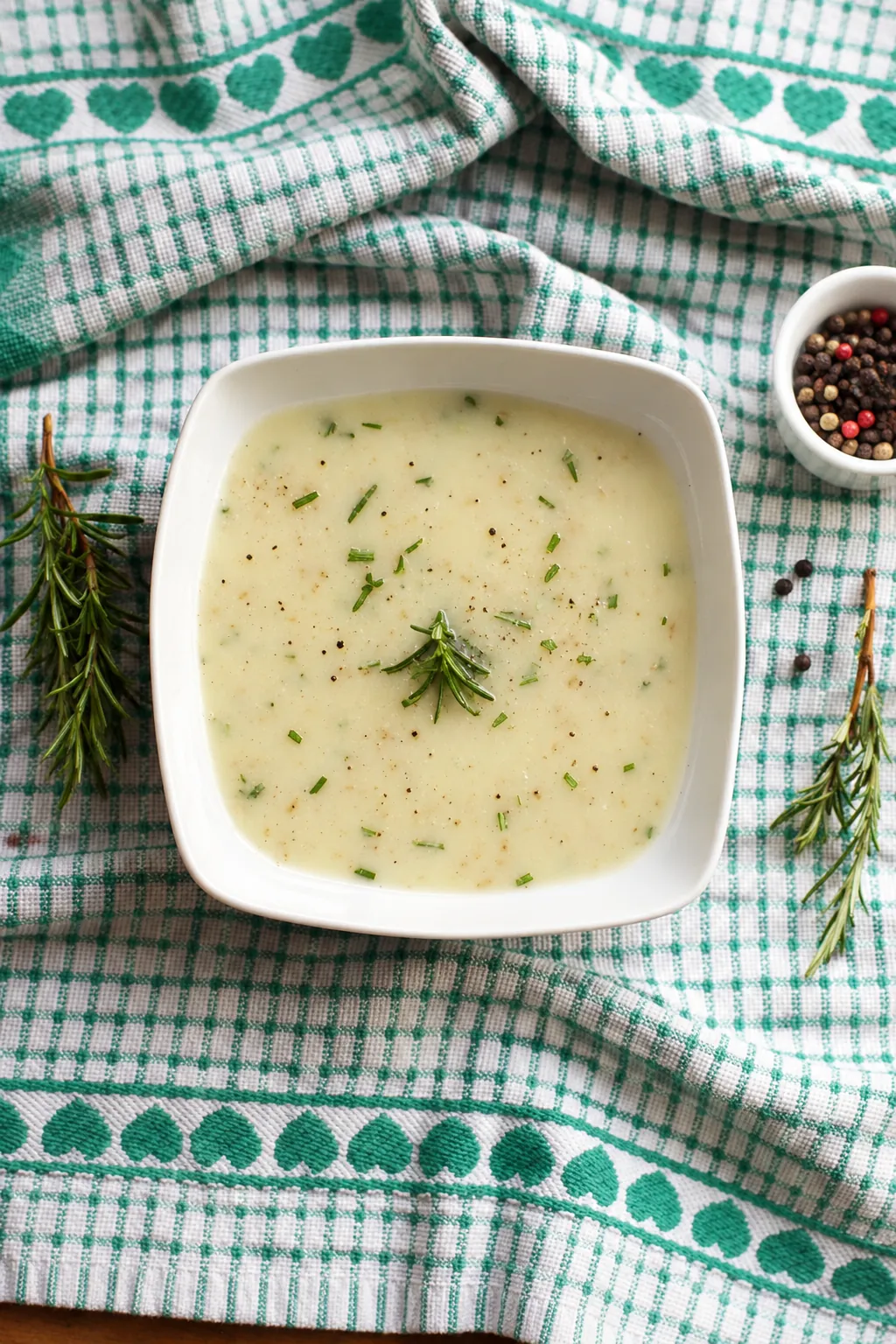
Rosemary is strong, so I use it twice and in small amounts. A whole sprig simmers with the potatoes and comes out before blending: it perfumes the whole pot, but its tough needles would make the soup bitter and stringy if you blended them in. Then a few fresh needles, chopped very fine, go in at the end and on top, which gives the soup those green flecks you see in the photos and a fresh, piney aroma.
No fresh rosemary? Use 1/2 teaspoon of dried rosemary, crushed between your fingers, and add it with the potatoes. Thyme is a good swap too.

How to Add Sour Cream to Potato Soup Without Curdling
This is the step that makes or breaks the soup. Sour cream is acidic, and when it hits boiling liquid, its milk proteins tighten and separate into little grains. Here is what keeps it smooth:
- Let the soup cool for 5 to 10 minutes off the heat before the sour cream goes in. Hot is fine, bubbling is not.
- Temper it. Whisk the sour cream in a bowl with a ladle of the warm soup, then stir that mixture back into the pot.
- Use full-fat sour cream. Fat protects the proteins. I use 30% sour cream; in the US, regular sour cream is usually around 20%, so crème fraîche is the closest match and the safest choice. Light sour cream is the most likely to split.
- Do not boil it again. Reheat leftovers gently, over low heat, stirring often.
If you only have heavy cream, it works too and is even less likely to curdle, but the soup loses the gentle tang that I love here.
Blend It Smooth, Not Gluey
Potatoes are full of starch, and the longer you blend them, the more starch they release. Blend for too long, especially in a powerful stand blender, and the soup turns sticky and gluey. I use the same hand blender I whip mashed potatoes with, right in the pot, and stop as soon as the soup looks silky, usually after about a minute.
If you use a stand blender, work in batches, fill it no more than halfway, take the small cap out of the lid and cover the hole with a folded towel so the steam can escape, then pulse just until smooth.

What to Serve with Creamy Potato Soup
- Crunchy on top: garlic croutons, toasted pumpkin seeds or a few crispy fried onions.
- Fresh on top: chopped chives, a little extra rosemary and a crack of black pepper.
- Rich on top: a spoon of sour cream, a little grated aged cheese, or a drizzle of butter melted with a rosemary sprig.
- On the side: crusty bread, a green salad with a sharp vinaigrette, or a grilled cheese sandwich.
If you like a chunkier bowl, try my loaded potato soup. For other takes on the same idea, there is a potato leek soup and a cream of potato soup with carrots and caraway, and you will find more cozy bowls in my fall soup recipes.
Making It Vegan
Swap the butter for olive oil and the sour cream for homemade vegan sour cream or a few spoons of cashew cream, stirred in at the end in the same way. The soup stays creamy, because most of the creaminess comes from the blended potatoes anyway.
Storing, Reheating and Freezing
Keep the soup in a closed container in the fridge for up to 4 days. It thickens as it sits, so loosen it with a splash of hot water while you reheat it over low heat, without letting it boil.
To freeze it, I freeze the soup before adding the sour cream, for up to 3 months. Potatoes and dairy can turn slightly grainy after freezing, so I thaw the soup in the fridge, warm it gently, blend it for a few seconds to smooth it out, and only then stir in the sour cream.
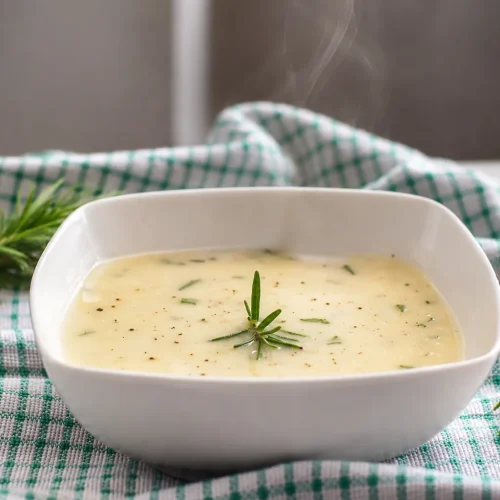
Creamy Potato Soup with Rosemary and Sour Cream
Equipment
- Large pot
- Immersion blender
Ingredients
- 2 lb potatoes yellow or all-purpose, peeled and cut into 1-inch cubes, 1 kg
- 1 onion large, chopped, 150 g
- 3 cloves garlic minced
- 3 tbsp butter 40 g
- 4 cups water hot, 1 liter
- 2 sprigs rosemary fresh
- 1 tsp salt or to taste
- ⅔ cup full-fat sour cream or crème fraîche 150 g
- ¼ tsp black pepper freshly ground
- 1 pinch nutmeg optional
- 1 tsp lemon juice optional
Instructions
- Melt the butter in a large pot over medium-low heat. Add the onion and cook for 5 to 6 minutes, stirring now and then, until soft and translucent but not browned. Add the garlic and cook for 1 more minute.
- Add the potatoes, hot water, salt and one whole rosemary sprig. Bring to a boil, then cover and simmer for about 20 minutes, until the potatoes fall apart when pressed with a spoon.
- Take out the rosemary sprig and move the pot off the heat. Let the soup cool for 5 to 10 minutes.
- Blend with an immersion blender just until smooth, about 1 minute. Stop as soon as it looks silky, or the potatoes turn gluey.
- In a bowl, whisk the sour cream with a ladle of the warm soup, then stir it back into the pot. Do not let the soup boil again.
- Strip the needles from the second rosemary sprig and chop them very finely. Stir in half, season with pepper, plus nutmeg and lemon juice if using, and taste for salt. Thin with a little hot water if needed. Serve topped with the rest of the rosemary and a pinch of pepper.
Notes
Potato Soup Questions
Take the pot off the heat and let the soup cool for 5 to 10 minutes, then whisk the sour cream with a ladle of soup before stirring it in. Use full-fat sour cream or crème fraîche, and do not let the soup boil again once the sour cream is in.
It was blended for too long. Blending releases starch from the potatoes, and too much of it makes the soup sticky. Blend only until smooth, about a minute with an immersion blender, and pulse briefly if you use a stand blender. Very floury potatoes, like Russets, turn gluey faster.
Yellow, all-purpose potatoes such as Yukon Gold. They blend into a thick, velvety soup without turning gluey. Russets make it thicker but need a very short blend, and waxy red or new potatoes give a thinner soup.
Yes. Use the same amount of heavy cream and stir it in at the end. Cream is less likely to curdle than sour cream, but the soup will taste milder, without the light tang that sour cream gives it.
Yes, for up to 3 months, ideally before you add the sour cream. Thaw it in the fridge, reheat it gently, blend it for a few seconds if it looks grainy, then stir in the sour cream.
To thicken it, simmer it uncovered for a few more minutes before adding the sour cream, or add one more cooked potato and blend. To thin it, stir in hot water a little at a time until it is as thick as you like.