Vegan Cream Cheese – cultured / with probiotics
Vegan cream cheese is a smooth, spreadable dairy-free spread made from soaked macadamia nuts blended until creamy, then cultured with probiotics for 48 hours to develop that signature tangy, slightly sour flavor. It spreads beautifully on bagels and toast, works as a base for dips, and stands in for dairy cream cheese in both savory and sweet recipes. If you have been missing that cool, tangy bite of classic cream cheese, this cultured version delivers it without a drop of dairy.
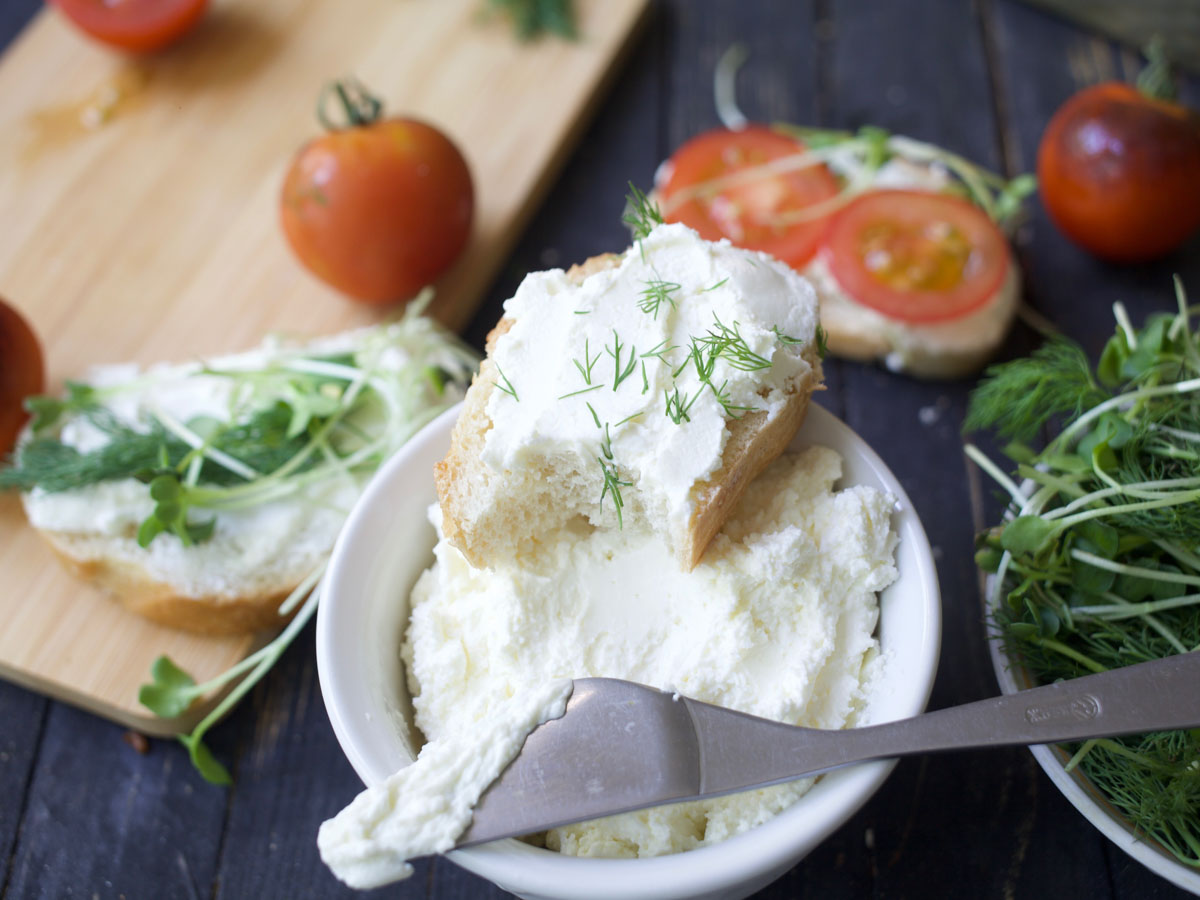
For a long time, I was convinced that going vegan would mean completely cutting out all the milk-associated products: cheese, cream, yogurt, milk, and so on. Although I figured I could live without them, since they are mostly side dishes that add a little flavor and spark to my food, I was still a little bit disappointed. But then something magical happened — I discovered cultured bacteria! Fresh yogurt, sour cream dips, smooth and filling cream cheese: I was all of a sudden in vegan heaven. I had some non-vegan friends try it, and they were all amazed by how delicious a vegan dairy substitute can be.
The ingredients that make it work
This recipe keeps the ingredient list short, and each one earns its place. Macadamia nuts are the heart of it. They are the softest, most buttery nut, low in fibre and high in fat, which is exactly why they blend into a texture that mimics dairy cream cheese so well. Soaking them overnight softens them further so the food processor can whip them completely smooth.
The probiotic powder (just open a couple of capsules) is what transforms a plain nut paste into cream cheese. As the live cultures ferment over 48 hours, they produce lactic acid, which is what gives real cultured cheese its tang. Coconut milk loosens the blend so it turns creamy rather than clumpy, and a little lemon juice at the end sharpens the flavor. Nutritional yeast and salt round it out with a savory, faintly cheesy note. Use full-fat coconut milk for a richer result, and reach for plain, unsweetened probiotic capsules with no added flavorings.
How to get the culture right
The one detail that trips people up is the metal. When you stir in the probiotic powder, use a wooden or silicone tool, not a metal one, and let the mixture sit in a glass or ceramic bowl. Metal can interfere with the live cultures, so keeping it away gives the fermentation the best chance to work.
After that, patience does the heavy lifting. Cover the bowl with a clean kitchen towel and leave it at room temperature for about 48 hours. Warmth speeds fermentation, so a cozy kitchen will culture faster than a cold one. You will know it is ready when it smells pleasantly tangy and sour, the way cream cheese should, rather than flat or bland. Only after culturing do you fold in the salt, lemon juice, and nutritional yeast, then whip it once more until fluffy. Adding the salt too early can slow the cultures down, which is why it goes in at the end. Trust me when I say the process is extremely easy; I was not sure of it myself until I tried it, and it is just so good.
Ways to serve it
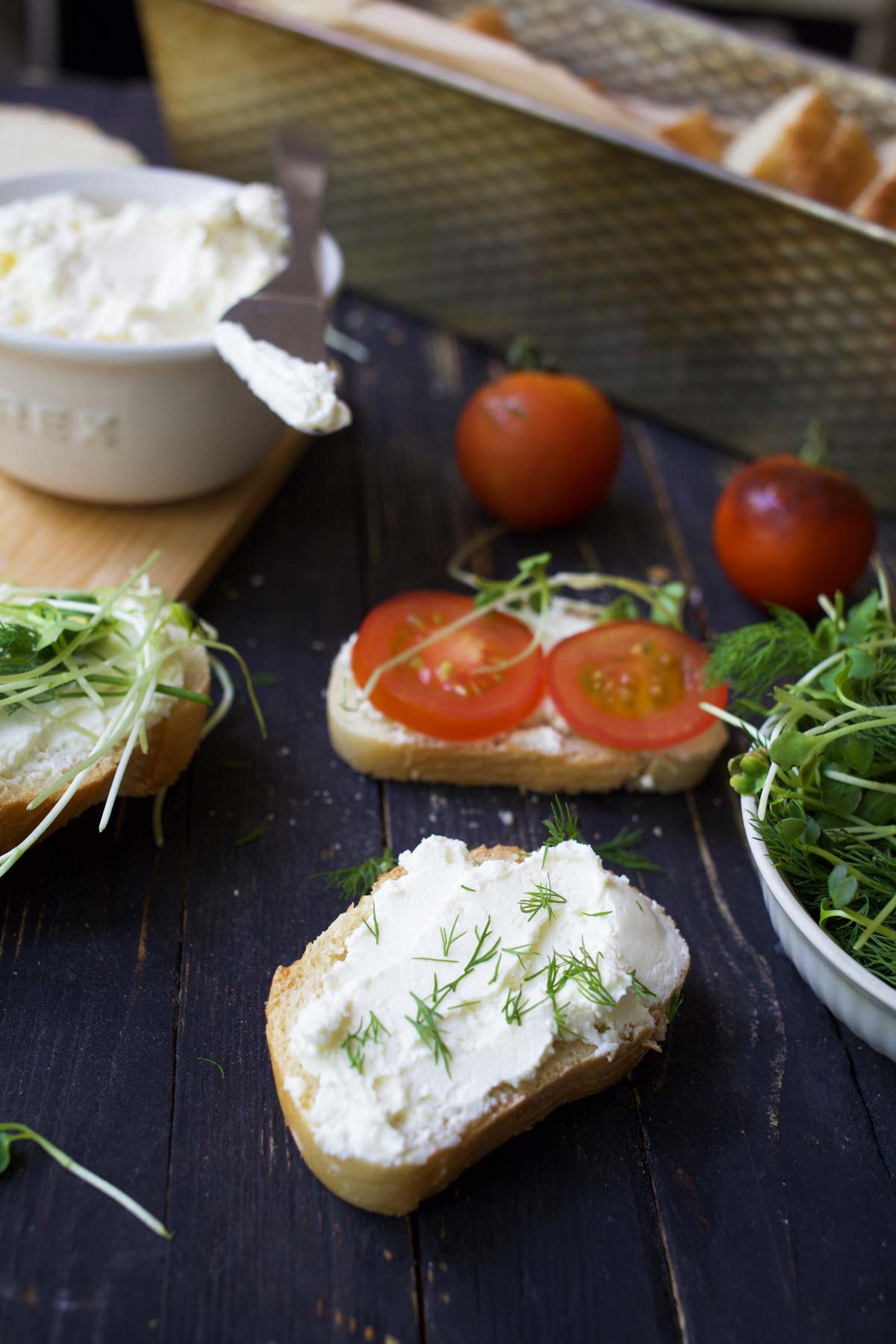
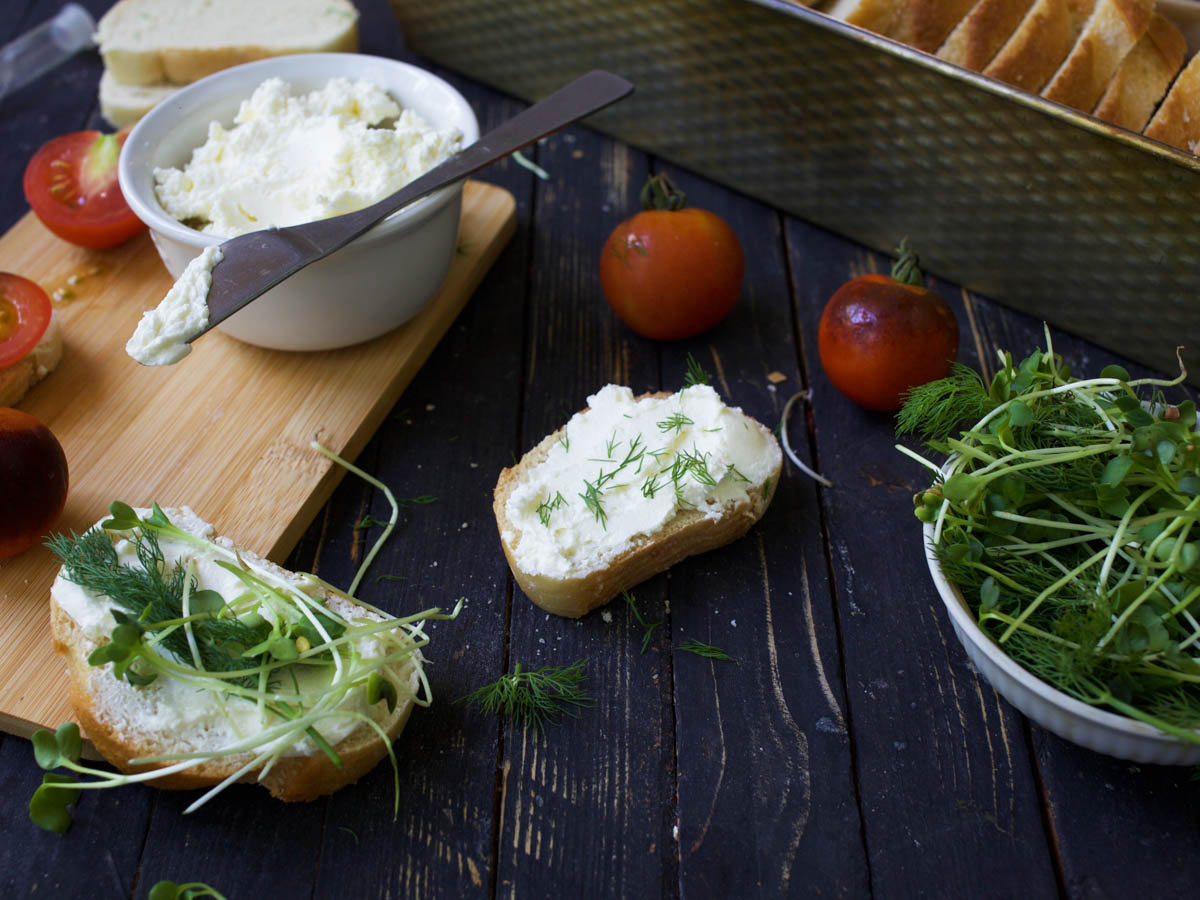
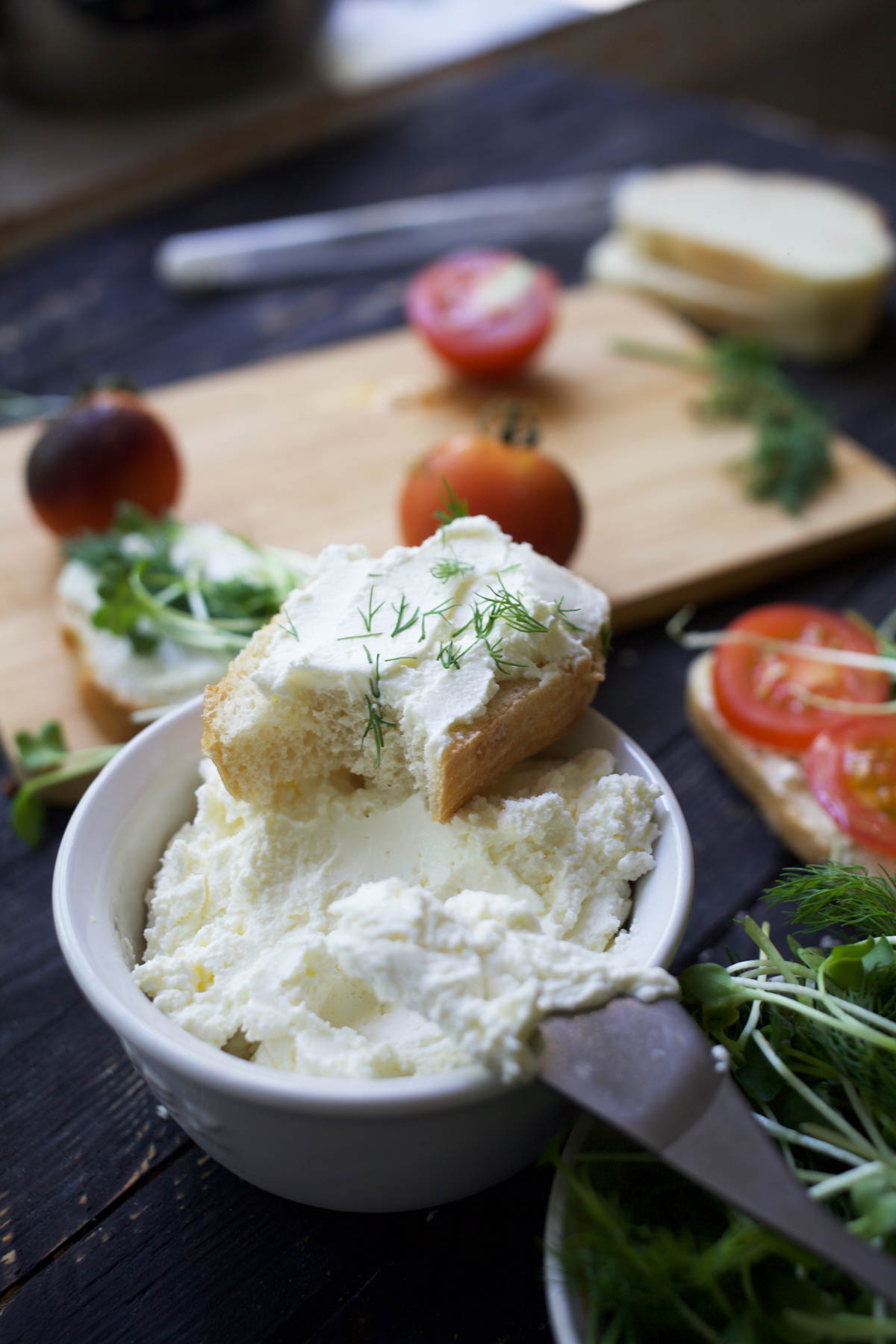
This cream cheese works wonders as a replacement in all kinds of recipes. Spread it thick on a warm bagel, swirl it into a dip, or use it as the creamy layer in a savory bake. It is the same base I lean on for these little cream cheese dip cups, and it plays beautifully alongside a warm red lentil creamy pate on a brunch board. On the sweet side, a cultured cream cheese like this is exactly what you want for frosting a vegan carrot cake or building a slice of vegan strawberry cheesecake. If you enjoy making your own dairy-free basics, my stretchy vegan mozzarella is a good next project.
Storing your cream cheese
Once it is cultured and seasoned, transfer the cream cheese to an airtight container and refrigerate it before use. Chilling firms it up and mellows the tang into something rounder and more spreadable. It keeps well in the fridge for about five to seven days, and you may notice the flavor deepen slightly as it sits, which is completely normal for a cultured spread. Give it a quick stir if any liquid separates on top. I would keep this one to the fridge rather than the freezer, since freezing can turn the smooth texture grainy once it thaws.
If you make this cream cheese, I would love to know how the 48-hour culture turned out for you and what you spread it on first. Leave a star rating and a comment below with your results or any tweaks you tried, like a different nut or an extra squeeze of lemon.
Vegan Cream Cheese – cultured / with probiotics
Ingredients
- 2 cups macadamia nuts soaked overnight
- ½ cup coconut milk to blend
- 1 tsp probiotic powder from probiotic capsules
- ½ tsp salt
- 2 Tbsp lemon juice
- 2 Tbsp nutritional yeast
Instructions
- Soak the macadamia nuts overnight.
- Discard the soaking water and add the nuts to a food processor.
- Blend until smooth, using the coconut milk or a little water to reach a creamy texture.
- Transfer the mixture to a bowl and add the probiotic powder. Use a non-metallic utensil to incorporate it, as metal can react with the probiotics.
- Cover with a kitchen towel and let sit at room temperature for about 48 hours.
- Once it’s cultured, add the salt, lemon juice, and nutritional yeast, and mix again until fluffy.
- Refrigerate before use.
Notes
Frequently Asked Questions
Yes. It is built entirely from plant ingredients: soaked macadamia nuts, coconut milk, probiotic powder, lemon juice, nutritional yeast, and salt. There is no dairy, egg, or animal product anywhere in the recipe, so it is fully vegan.
The live cultures in probiotic powder ferment the nut base over about 48 hours and produce lactic acid, which is what gives cultured cheese its signature tangy, slightly sour flavor. Without the probiotics you would have a plain nut paste rather than something that tastes like cream cheese. Just open a couple of plain, unflavored probiotic capsules to get the powder.
Macadamia nuts are the best choice here because they are soft and high in fat, so they blend into the smoothest, most cream-cheese-like texture. Raw cashews soaked overnight are the closest substitute if you cannot find macadamias. Firmer or more fibrous nuts will give a grainier result, so soak them well and blend longer.
Metal can interfere with the live cultures, so stir the probiotic powder in with a wooden or silicone tool and let the mixture ferment in a glass or ceramic bowl. Keeping metal away gives the good bacteria the best chance to do their work over the 48 hours.
Stored in an airtight container in the refrigerator, it keeps for about five to seven days. The flavor may deepen a little as it sits, which is normal for a cultured spread, and you can give it a quick stir if any liquid separates on top.
Yes, that is one of its best uses. This cultured cream cheese works as a direct replacement for dairy cream cheese in sweet recipes, so it is great for frosting a cake or building a no-bake cheesecake, as well as for savory spreads and dips.


Yikes, I did not read the recipe right and used an entire can of coconut milk. Will this ever ferment? Is it totally ruined??
Hi Erica. The proportions may be a bit off. I’m not sure.
Can I use non-canned coconut milk, just regular dairy free milk? Or is the canned coconut milk a must because of the creaminess/fat content? is it possible to make it with cashews instead? is there a minimum strength you’d recommend for the probiotic? Would it be possible to make this into a hard cheese by adding some sort of thickener? Sorry for all the questions!!
It needs the fat as well. Canned coconut milk is creamier. But you can try with cashews too. Any probiotic works as long as it has lactobacillus in it.
Hi,can I use homemade rejuvelac instead off the probiotics?if so, how much rejuvelac do I use?
Hi Anita. I’ve never used it so I don’t know if it will work, but you can surely give it a try.
Hi. Do you use canned coconut milk?
Hi! Yes. 🙂
Cum pot face rost de probiotice ? Se găsesc in farmacie?
Buna! Da, la orice farmacie. Eu iau probiotice cu lactobcilus acidophilus de obicei pt “lactate” vegane. Sunt ok si cele cu bifidobacterium (nu stiu daca asa se scrie dar era ceva cu bifidum). Incearca Probiorem.
what kind of probiotic do you use and what strength?
I use one with Lactobacillus acidophilus and Bifidobacterium lactis. I think it’s quite the regular kind.
Amazing recipe! I never thought of trying this at home, but it’s so easy!! 🙂
Thank you!
Looks very tasty
Thank you!