
How to Make Gomasio (Macrobiotic Sesame Salt)
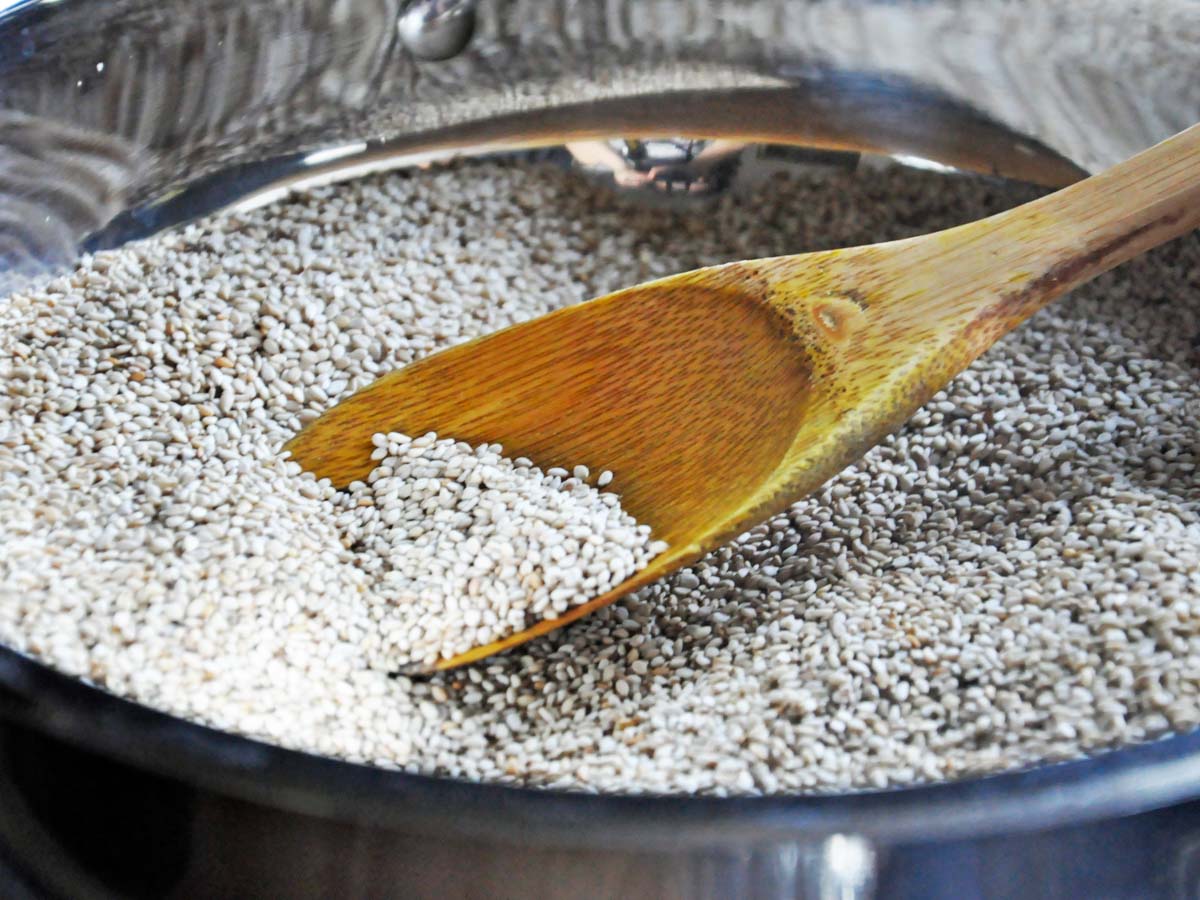
Gomasio is a Japanese macrobiotic condiment made from toasted sesame seeds ground with sea salt. It’s used as a low-sodium alternative to table salt — one teaspoon contains about 95% less sodium than the same amount of regular salt, while adding calcium, magnesium, and a nutty, rich flavor to any savory dish. You can make it at home in under 15 minutes with two ingredients.
This Recipe Works If You Need
- A low-sodium salt replacement with actual flavor
- A macrobiotic pantry condiment used daily on grains, soups, and salads
- A calcium-rich seasoning for plant-based diets
- A quick homemade alternative to store-bought gomasio
Why You’ll Love This Recipe
Most condiments add either flavor or nutrition — gomasio does both. The toasted sesame seeds bring a deep nuttiness that plain salt can’t match, and the grinding process releases the sesame oils so the flavor coats food more evenly. In macrobiotic cooking, gomasio is considered one of the most important daily condiments: George Ohsawa recommended it in his work on macrobiotic principles because sesame seeds are high in calcium, iron, and lignans. You’ll find yourself reaching for it on rice, roasted vegetables, miso soup, and salads instead of the salt shaker.
Ingredient Notes
Whole white sesame seeds — use raw, unhulled sesame seeds if possible. Unhulled seeds retain more calcium and fiber than hulled (white) sesame seeds. Both work, but unhulled gives a slightly more bitter, complex flavor.
Sea salt or Himalayan salt — use natural, unrefined salt. The ratio is typically 18:1 sesame to salt (18 parts sesame, 1 part salt) for a mildly salty result, or 10:1 for a saltier condiment. Start with 18:1 and adjust to taste.
Tips
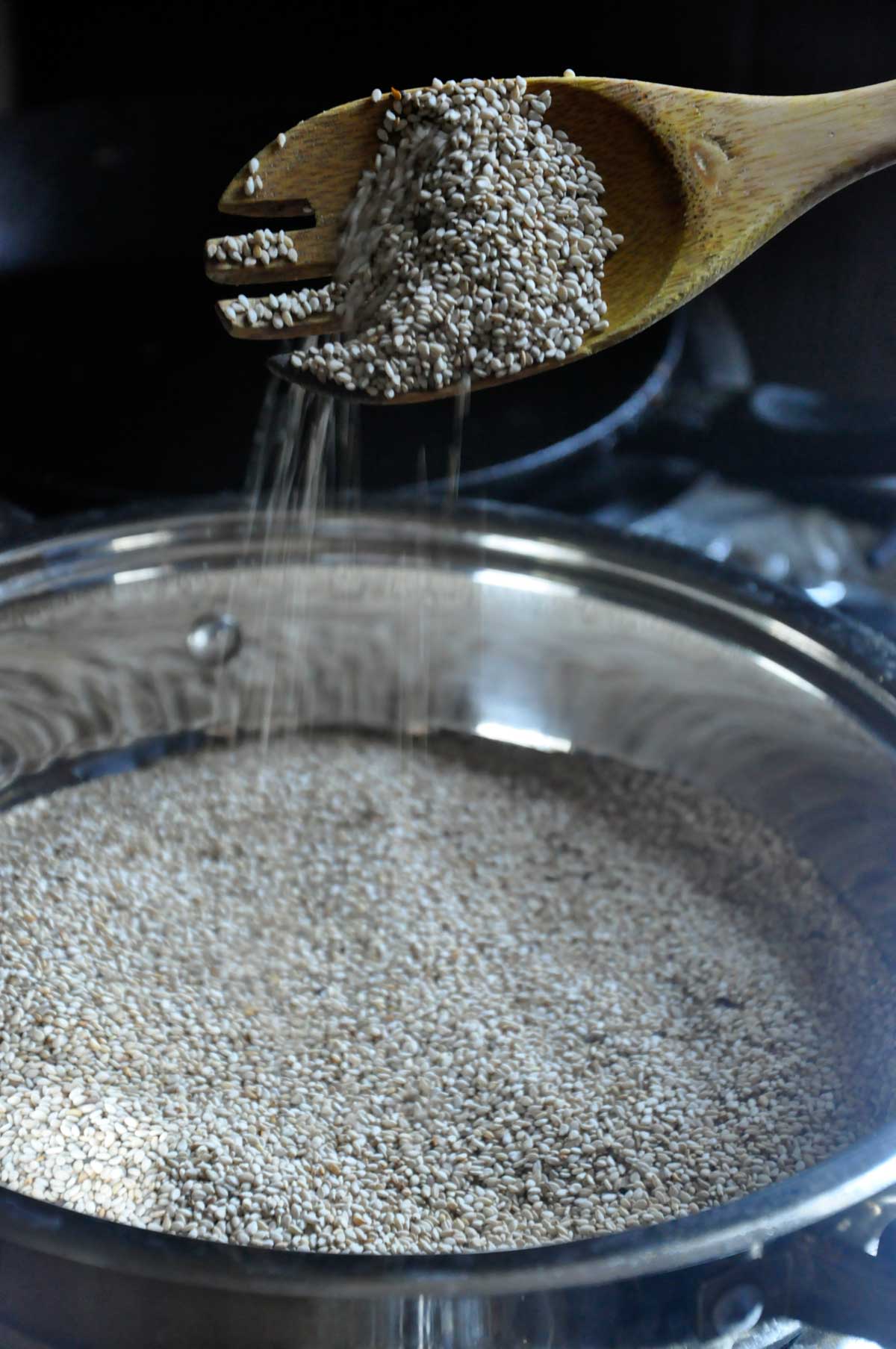
- Toast the sesame seeds in a dry pan over medium-low heat, stirring constantly — they go from toasted to burnt quickly; pull them when they start popping and smell nutty
- Grind using a suribachi (Japanese mortar) if you have one — the ridged surface grinds more efficiently than a smooth mortar; a regular mortar and pestle or spice grinder also works
- Don’t over-grind — the goal is a coarse, sandy texture with some whole seeds remaining, not a paste or powder
- Add the salt first to the grinding vessel, then add the seeds — the salt helps break down the seeds evenly
- Make small batches (2-3 tablespoons at a time) so it stays fresh; the oils in sesame seeds go rancid faster once ground
Substitutions and Variations
Black sesame seeds can replace white for a stronger, more bitter flavor and a dramatic dark color. Black sesame gomasio is particularly good on plain rice.
Mixed sesame — use half white, half black for a milder flavor than pure black but with more visual interest than pure white.
Seaweed gomasio — add a teaspoon of dried, crumbled nori or wakame to the grinding step for an umami-forward version that pairs well with Asian-style grain bowls.
Storage and Make Ahead
Store in a small glass jar with a tight lid at room temperature, away from direct light. Homemade gomasio keeps for 2-3 weeks before the ground sesame oils begin to oxidize. For longer shelf life, store in the fridge for up to 6 weeks.
If you’re eating macrobiotic, gomasio pairs naturally with the recipes in the 16 macrobiotic breakfast recipes roundup, or with the full week of meals in this vegan macrobiotic meal plan. It’s one of those condiments you make once and use every single day.
Summarise & Save This Recipe
★ Add us as a trusted Google source
Homemade Gomasio (Macrobiotic Sesame Salt)
Ingredients
- 18 Tbsps sesame seeds raw
- 1 Tbsp natural salt you can use sea salt, Himalayan, or any other natural salt you like
Instructions
- Heat your skillet (preferably cast iron skillet) over medium heat.
- Add salt.
- Move it around the skillet for a minute or so, then remove from heat and add into a large mortar and pestle.
- Put the skillet back on the stove and add sesame seeds.
- Heat sesame seeds until they start to crack – 2-3 minutes – while stirring continuously. Test the seeds if they’re ready by tasting them. If they burst with flavor and they’re dry it means they’re ready. If not, heat them a little bit more. Be careful not to burn them.
- Remove from heat.
- Add sesame seeds in the mortar and pestle. Grind them a bit, not too much.
- Store in an air-tight container or jar. It’s best stored in the fridge or a cool, dry place in the pantry.
Notes
FAQ
Gomasio (also spelled gomashio) is a Japanese condiment made from toasted sesame seeds ground with sea salt. It’s commonly used in macrobiotic cooking as a low-sodium alternative to table salt. The name comes from the Japanese words for sesame (goma) and salt (shio).
The traditional macrobiotic ratio is 18 parts sesame seeds to 1 part salt, which gives a mildly salty flavor. For a saltier result, use a 10:1 ratio. George Ohsawa recommended 18:1 as the standard daily-use ratio.
Gomasio is a good source of calcium, magnesium, iron, and healthy fats from sesame seeds, with significantly less sodium than table salt. Sesame seeds also contain lignans and sesamin, compounds associated with antioxidant activity. It’s a more nutritious seasoning than plain salt.
Stored in an airtight jar at room temperature, homemade gomasio keeps for 2-3 weeks. In the fridge, it lasts up to 6 weeks. Make small batches so it stays fresh and the sesame oils don’t go rancid.
Use gomasio anywhere you’d use salt: on rice, miso soup, roasted vegetables, salads, grain bowls, and cooked legumes. In macrobiotic cooking, it’s sprinkled directly on food at the table rather than used in cooking.




I havd been making this for 50 years. I love it on oatmeal, no sugar no milk no fruit just slow cooked oatmeal and gomasio
Great on a winter morning
Thanks for the tip on Himalayan Salt.
Loved it! It’s a great substitute for salt and it adds so much flavor to any meal.
Yup! I sprinkle it on almost all my savory meals.
GREAT TO HAVE THE RECIPE AGAIN. I USED TO MAKE GOMASIO AT HOME FOR MANY YRS AND THEN ONE OF MY MOVES CONTRIBUTED TO FORGETING ABOUT IT.
I ALSO ADD NUTRITIONAL YEAST FROM A RECIPE OF VEGAN DR NEAL BARNARD. IT COMES OUT DELICIOUS -W/ A CHEESY TASTE.
Gread idea with the nutritional yeast! 😀
Thanks for posting these recipes..i was after gomasio..its been awhile and i had a mental block
Thought you might like to know though that himalayan salt has recently been exposed as not from the Himalyas and the mining practises are not good either…
Thanks again
Maria
You’re welcome, Maria! I didn’t know that… I will use sea salt from now on.
Thanks, Leda! Didn’t know this.
Good stuff